

An apron belly — also called a pannus stomach or abdominal pannus — is a fold of skin and fatty tissue that hangs down from the lower abdomen, sometimes extending over the pubic area, thighs, or even the knees in more pronounced cases. It is a common concern that affects people of various body types and backgrounds, and understanding why it forms is the first step toward making informed decisions about managing it. This article explains the anatomy behind an apron belly, the main causes and contributing risk factors, how it differs from general abdominal fat, and what options may be worth discussing with a qualified practitioner.
Key Takeaways
- An apron belly is a fold of excess skin and subcutaneous fat that hangs from the lower abdomen; it is not simply a matter of carrying extra weight.
- Multiple factors contribute to its formation, including significant weight gain, pregnancy, hormonal changes, genetics, and previous abdominal surgery.
- The pannus can vary considerably in size and may be associated with skin irritation, hygiene challenges, and discomfort, not only cosmetic concerns.
- Lifestyle changes such as improved nutrition and physical activity can reduce overall body fat but may not fully address excess skin once it has lost elasticity.
- Surgical and non-surgical options exist, but suitability depends on individual anatomy, health status, and goals; a clinical assessment is always required.
What Is an Apron Belly?
The term apron belly describes a visible overhang of skin and subcutaneous adipose tissue (fat stored just beneath the skin) at the lower abdomen. Clinically, this structure is referred to as the abdominal pannus, from the Latin word for cloth or apron. The pannus forms when the lower abdominal wall accumulates enough fat and stretched skin that gravity causes it to droop downward, creating a fold or flap that rests over the pubic region.
It is important to distinguish the apron belly from two other types of abdominal fat. Subcutaneous fat sits directly beneath the skin and is the primary component of the pannus. Visceral fat, by contrast, surrounds the internal organs deeper within the abdominal cavity and is associated with metabolic health risks such as insulin resistance and cardiovascular disease. A person can have a significant apron belly composed mainly of subcutaneous fat while carrying relatively little visceral fat, and vice versa. This distinction matters because the two types of fat respond differently to interventions.
The pannus is sometimes graded by clinicians according to how far it extends. A mild pannus may only cover the pubic hairline, while a more pronounced one can reach the mid-thigh or lower. Beyond appearance, a larger pannus can cause practical difficulties including skin-on-skin friction, moisture accumulation, rashes, fungal infections, and lower back discomfort from the additional weight pulling on the lumbar spine.
The Main Causes of an Apron Belly
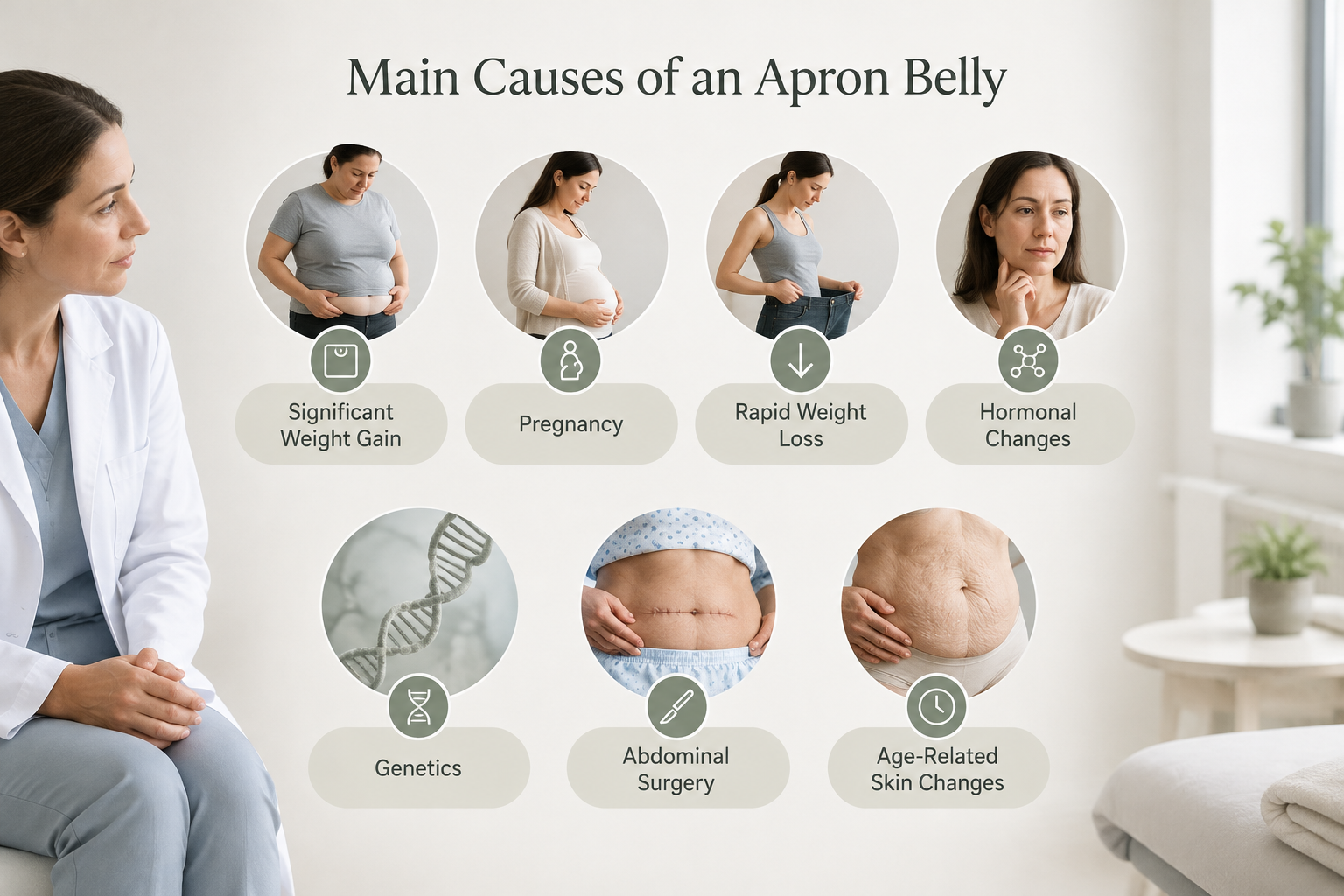
An apron belly rarely has a single cause. In most cases, several overlapping factors contribute to its development. Understanding these causes helps clarify why the condition is not simply the result of overeating or a lack of willpower, and why it can persist even after significant weight loss.
Significant Weight Gain
Substantial or prolonged weight gain is one of the most common contributors to an apron belly. When the body stores large amounts of subcutaneous fat in the lower abdominal region, the skin stretches to accommodate the increased volume. Over time, the connective tissue fibres within the skin — primarily collagen and elastin — become overstretched. If weight gain is rapid or sustained over many years, these fibres may lose their ability to fully recoil, leaving the skin with reduced elasticity even if body fat later decreases.
The lower abdomen is a preferential fat storage site for many people, particularly those with a higher proportion of body fat distributed around the trunk. This regional fat distribution means that even individuals who are not classified as having obesity can develop a noticeable lower abdominal overhang if fat accumulates disproportionately in that area.
Pregnancy and Postpartum Changes
Pregnancy is a significant and well-recognised cause of an apron belly, particularly after multiple pregnancies or when carrying a large baby. During pregnancy, the abdominal skin and underlying fascia (the connective tissue layer supporting the abdominal muscles) stretch considerably to accommodate the growing uterus. Hormonal changes during pregnancy also soften connective tissue to allow the pelvis and abdomen to expand, which can further reduce skin firmness.
After delivery, the uterus contracts and the abdominal volume decreases, but the stretched skin does not always return to its pre-pregnancy state. This is especially true when pregnancies are closely spaced, when significant weight is gained during pregnancy, or when the abdominal muscles separate — a condition known as diastasis recti. Diastasis recti involves a widening of the gap between the two vertical bands of abdominal muscle (the rectus abdominis), which can cause the lower abdomen to protrude and contribute to the appearance of an apron belly even in women who have returned to their pre-pregnancy weight.
Significant or Rapid Weight Loss
Paradoxically, losing a large amount of weight — whether through lifestyle changes, bariatric surgery, or other means — can make an apron belly more visible rather than less. When the body loses fat rapidly or in large quantities, the skin that was stretched over the larger volume does not always shrink back proportionally. The result is excess, loose skin that hangs from the lower abdomen.
This is particularly common after bariatric procedures such as gastric bypass or sleeve gastrectomy, where weight loss can be substantial and relatively rapid. The degree of skin laxity following major weight loss depends on factors including the amount of weight lost, the speed of loss, age at the time of loss, and individual skin quality. Younger skin with better collagen density tends to retract more effectively than older skin, though this varies considerably between individuals.
Hormonal Changes and Menopause
Hormonal shifts play a meaningful role in where the body stores fat and how well the skin maintains its structure. During the perimenopause and menopause transition, declining oestrogen levels are associated with a redistribution of body fat away from the hips and thighs toward the abdominal region. This shift in fat distribution can contribute to increased lower abdominal fullness and, in some cases, the development or worsening of an apron belly.
Oestrogen also influences collagen production and skin thickness. As oestrogen levels fall, the skin may become thinner and less elastic, reducing its ability to support the lower abdominal tissue effectively. Conditions associated with hormonal imbalance — such as polycystic ovary syndrome (PCOS) and hypothyroidism — can also promote abdominal fat accumulation and may contribute to the development of a pannus in some individuals.
Genetics and Body Fat Distribution
Genetic factors influence both where the body preferentially stores fat and the inherent quality of an individual’s skin and connective tissue. Some people are genetically predisposed to store a greater proportion of their body fat in the lower abdominal region, making them more susceptible to developing an apron belly even at a moderate overall body weight. Similarly, genetic variation in collagen structure and skin elasticity affects how well the skin responds to stretching and how readily it retracts after volume changes.
Family history can therefore be a useful indicator of individual risk. If close relatives developed a pronounced lower abdominal overhang following weight changes or pregnancy, there may be a higher likelihood of a similar pattern occurring. This does not mean the outcome is inevitable, but it does suggest that genetic predisposition is a genuine contributing factor rather than a lifestyle choice.
Previous Abdominal Surgery and Scarring
Certain abdominal surgeries can alter the distribution of fat and the structural integrity of the abdominal wall in ways that contribute to a pannus. Caesarean section (C-section) delivery, for example, involves an incision through the lower abdominal wall. Scar tissue that forms during healing can tether the skin to deeper structures, creating a shelf-like appearance above the scar while the tissue below it may hang more prominently. This is sometimes called a C-section shelf or C-section overhang and is a specific variant of the apron belly that many women find distressing.
Other abdominal procedures, including hernia repairs and certain gynaecological surgeries, can similarly affect the way abdominal tissue is distributed and supported, potentially contributing to or worsening a lower abdominal overhang.
Age-Related Changes in Skin Elasticity
Skin naturally loses collagen and elastin with age, a process that accelerates from the mid-thirties onward. As the structural proteins within the skin diminish, the skin becomes less able to support the weight of underlying fat and less capable of retracting after stretching. This age-related reduction in skin elasticity means that the same degree of weight gain or pregnancy that might not produce a lasting overhang in a younger person can result in a more persistent apron belly in an older individual.
Lifestyle factors that accelerate skin ageing — including smoking, prolonged sun exposure, and poor nutrition — can compound this effect by further reducing collagen synthesis and skin quality.
Why an Apron Belly Is Not Simply About Weight
A common misconception is that an apron belly is purely a consequence of being overweight and will resolve completely with weight loss. While reducing overall body fat can decrease the volume of the pannus, it does not address the excess skin component. Once skin has been significantly stretched and has lost its elasticity, it cannot reliably retract through diet and exercise alone, regardless of how much fat is lost.
This distinction is clinically important because it shapes realistic expectations. A person who loses a substantial amount of weight may find that their apron belly becomes less full but remains as a loose skin fold. In some cases, the fold may even become more noticeable after weight loss because the fat that previously filled it has reduced while the skin remains. Understanding this mechanism helps explain why some individuals seek clinical assessment even after achieving significant lifestyle improvements.
Health Implications Beyond Appearance
An apron belly is not only a cosmetic concern. The skin fold created by the pannus can trap moisture and warmth, creating an environment where skin irritation, intertrigo (a rash caused by skin-on-skin friction), and fungal or bacterial infections may develop. These conditions can be persistent and uncomfortable, and they may recur despite careful hygiene if the underlying structural cause is not addressed.
A larger pannus can also contribute to lower back pain by shifting the body’s centre of gravity forward and placing additional strain on the lumbar spine and hip flexors. Some individuals experience difficulty with physical activity, clothing fit, and personal hygiene, all of which can affect quality of life and self-confidence. In cases where recurrent skin infections or functional impairment are documented, surgical intervention may be considered on medical as well as cosmetic grounds, though this depends on individual circumstances and healthcare system criteria.
Lifestyle Factors That May Influence an Apron Belly
While lifestyle changes alone cannot reverse excess skin laxity, they remain an important part of managing an apron belly and supporting overall health. Reducing overall body fat through a sustainable calorie-appropriate diet and regular physical activity can decrease the fat component of the pannus, potentially reducing its size and the associated discomfort. Resistance training that targets the core and abdominal muscles may improve posture and provide some structural support to the abdominal wall, though it cannot tighten loose skin directly.
Maintaining a healthy weight after any intervention — surgical or non-surgical — is also important for preserving results. Significant weight fluctuations after treatment can affect outcomes and may contribute to recurrence of the overhang. Smoking cessation is relevant both for general health and because smoking impairs collagen synthesis and wound healing, which matters particularly for anyone considering surgical options.
Non-Surgical and Surgical Options Worth Discussing
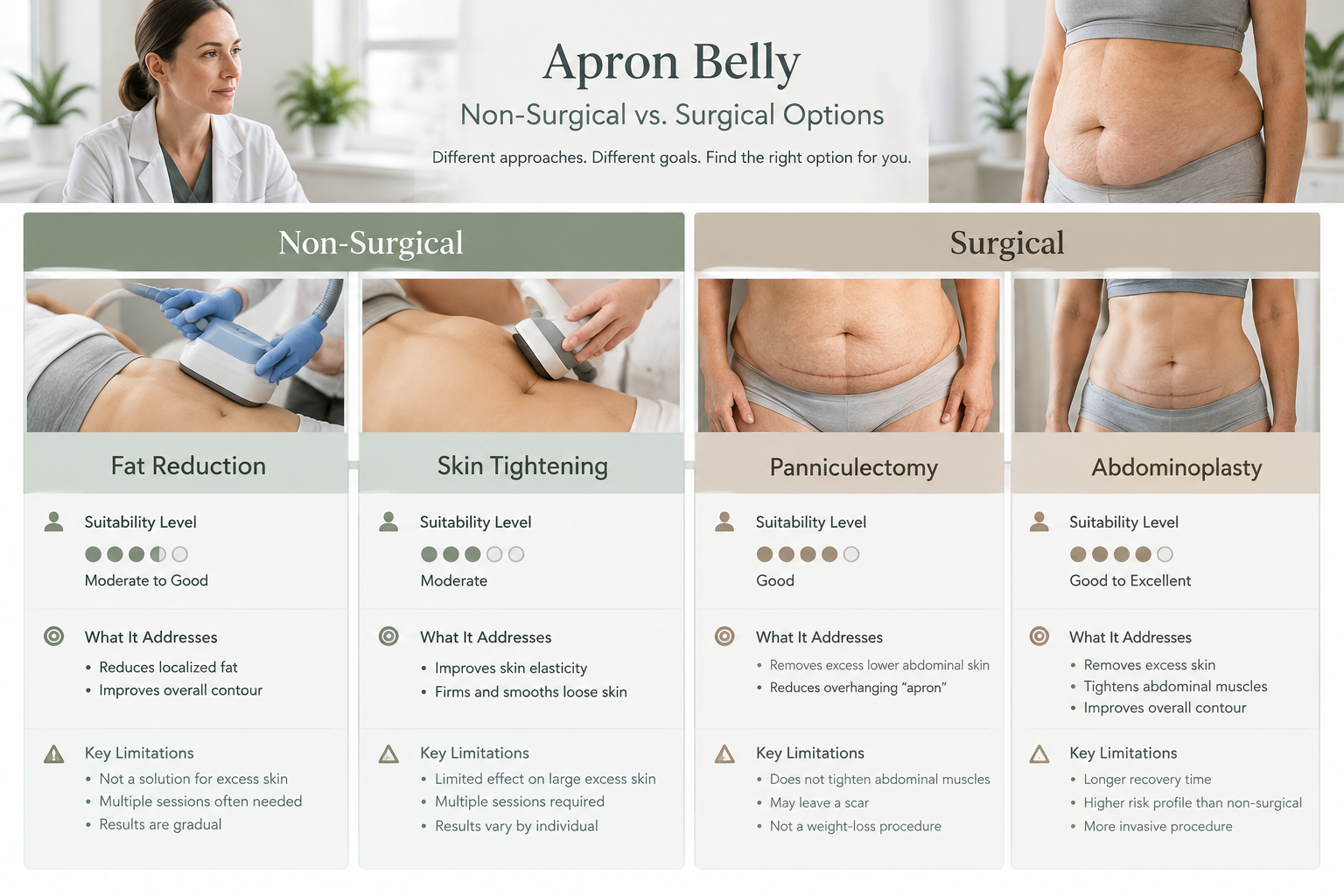
For individuals whose apron belly is primarily composed of excess subcutaneous fat with reasonable skin quality, certain non-surgical body contouring treatments may be worth discussing with a qualified practitioner. These include treatments designed to reduce localised fat deposits, such as cryolipolysis (fat freezing) or injectable fat-dissolving treatments, as well as skin-tightening technologies such as radiofrequency or high-intensity focused ultrasound (HIFU). It is important to understand that these approaches are generally more effective for mild to moderate concerns and are not substitutes for surgical intervention in cases involving significant excess skin.
For more pronounced cases — particularly where there is substantial excess skin following major weight loss, multiple pregnancies, or a C-section shelf — a panniculectomy or abdominoplasty (tummy tuck) may be the most effective option. A panniculectomy specifically removes the hanging pannus of skin and fat, while an abdominoplasty also addresses the underlying abdominal muscles and may produce a more comprehensive contour improvement. Both are surgical procedures that carry risks including infection, scarring, seroma (fluid accumulation), and recovery time, and suitability must be assessed individually by a qualified surgeon.
Non-surgical muscle-stimulating devices, such as those using high-intensity electromagnetic energy, are sometimes discussed in the context of abdominal contouring. These devices are designed to stimulate muscle contractions and may improve muscle tone, but they do not remove excess skin and are not a treatment for a significant apron belly. A realistic understanding of what each type of intervention can and cannot achieve is essential before making any decision.
Frequently Asked Questions
Can exercise alone get rid of an apron belly?
Exercise can reduce the fat component of an apron belly by contributing to overall fat loss, and core strengthening may improve posture and abdominal support. However, exercise cannot tighten skin that has lost its elasticity. If excess skin is a significant part of the overhang, physical activity alone is unlikely to resolve it fully, and a clinical assessment may be helpful to understand the options available.
Is an apron belly the same as visceral fat?
No. An apron belly is composed primarily of subcutaneous fat — fat stored beneath the skin — along with stretched skin. Visceral fat is stored deeper within the abdominal cavity, surrounding the internal organs. The two types of fat have different health implications and respond differently to interventions. It is possible to have an apron belly with relatively little visceral fat, and vice versa.
Does an apron belly always require surgery?
Not necessarily. The appropriate approach depends on the size of the pannus, the proportion of fat versus excess skin, overall health, and individual goals. Mild cases with good skin quality may respond to non-surgical fat reduction or skin-tightening treatments. More pronounced cases involving significant excess skin are generally better addressed surgically. A qualified practitioner can assess which options may be suitable after a clinical examination.
Can an apron belly cause health problems?
Yes, in some cases. A larger pannus can cause skin irritation, rashes, fungal infections, and hygiene difficulties due to moisture trapped in the skin fold. It may also contribute to lower back discomfort by altering posture and placing strain on the lumbar spine. These functional concerns are separate from cosmetic considerations and may be relevant when discussing treatment options with a healthcare provider.
Will losing weight make an apron belly disappear?
Weight loss can reduce the fat volume within the pannus and may make it less prominent. However, if the skin has lost significant elasticity, it may not retract fully after fat loss, and the overhang may persist as loose skin. In some cases, the fold can appear more noticeable after weight loss because the fat that previously filled it has reduced while the skin remains. This is why some people seek clinical advice even after achieving their weight loss goals.
Is a C-section shelf the same as an apron belly?
A C-section shelf is a specific type of lower abdominal overhang that develops above or around a caesarean section scar. Scar tissue can tether the skin to deeper structures, creating a ledge or shelf appearance. While it shares features with an apron belly, the involvement of scar tissue makes it a somewhat distinct concern that may require different treatment considerations. A surgeon experienced in post-caesarean body contouring can assess the most appropriate approach.
Understanding Your Apron Belly Before Exploring Treatment
An apron belly develops through a combination of factors — fat accumulation, skin stretching, loss of elasticity, hormonal changes, genetics, and sometimes surgical history — rather than through any single cause. Recognising this complexity is important because it shapes realistic expectations about what lifestyle changes can achieve and when clinical intervention may be worth considering.
If an apron belly is causing physical discomfort, recurrent skin problems, or significant impact on daily life and confidence, a consultation with a qualified practitioner — whether a dermatologist, plastic surgeon, or aesthetic medicine specialist — can help clarify the underlying composition of the pannus and identify which options are genuinely appropriate for your individual situation. There is no single solution that suits everyone, and a thorough assessment is always the right starting point before pursuing any treatment.