Smoker's Lines Filler in London
Fine vertical lines above the upper lip — commonly known as smoker’s lines, lipstick lines, or perioral lines — develop through a combination of repetitive lip pursing, collagen loss, and gradual thinning of the skin around the mouth. These lines and wrinkles are not exclusive to smokers and frequently appear in patients who have never smoked.
As a specialist aesthetics clinic in London, we offer smoker’s lines filler as a targeted, non-surgical treatment designed to soften the appearance of smoker’s lines, restore subtle volume to the upper lip area, and support the skin’s structural integrity without altering natural lip shape or proportions.
What Is Smoker's Lines Filler?
Smoker’s lines filler is a lines filler treatment that uses hyaluronic acid to address fine lines and deeper vertical creases around the mouth. Hyaluronic acid is a substance naturally present in the skin that diminishes with age, contributing to the volume loss that allows these lines to form and deepen over time.
Unlike thicker fillers used to add volume to the cheeks or jawline, the products selected for perioral line correction are typically low-viscosity formulations with specific properties that allow controlled, superficial placement within the thin dermis of the upper lip area. The ability to plump up the skin from within — without creating an unnatural result — is central to what makes hyaluronic acid filler a well-established choice for this concern.
Because the product is hyaluronic acid-based, it integrates gradually with surrounding tissue, attracts hydration, and remains reversible throughout its presence in the skin. This reversibility is a clinically important consideration in any treatment plan within aesthetic medicine involving the perioral region.
Who This Treatment May Suit
Patients who notice vertical lip lines at rest — rather than only during expression — may be suitable candidates for perioral filler. Concerns often include upper lip lines that cause lipstick or make-up to bleed, an aged or tired appearance around the mouth, or subtle flattening of the lip border where volume has been lost over time.
Suitability is always determined through clinical assessment by experienced facial aesthetics practitioners. Anatomy, skin quality, line depth, and individual goals all influence whether this approach is appropriate and what volume or technique is likely to achieve the desired results.
Smoothing Perioral Lines and Restoring Upper Lip Definition
Smoker’s lines tend to become more prominent as the skin around the mouth loses its structural support — collagen and elastin production declines, subcutaneous volume reduces, and the orbicularis oris muscle continues to contract with everyday movement. Repetitive lip pursing from actions such as speaking, drinking, and smoking accelerates this process considerably, producing lines that persist even when the face is fully at rest.
Filler for smoker’s lines is designed to address the visible consequence of that process. The goal is not to add excessive volume to the lips but to soften lines around the mouth and restore the appearance of the skin above the lip — and toward the corners of your mouth — to a less fatigued, more refined state. For patients seeking a long-lasting, non-surgical solution, perioral filler treatment in London remains one of the most clinically established treatment options available within medical aesthetics.
Consultation and Pricing
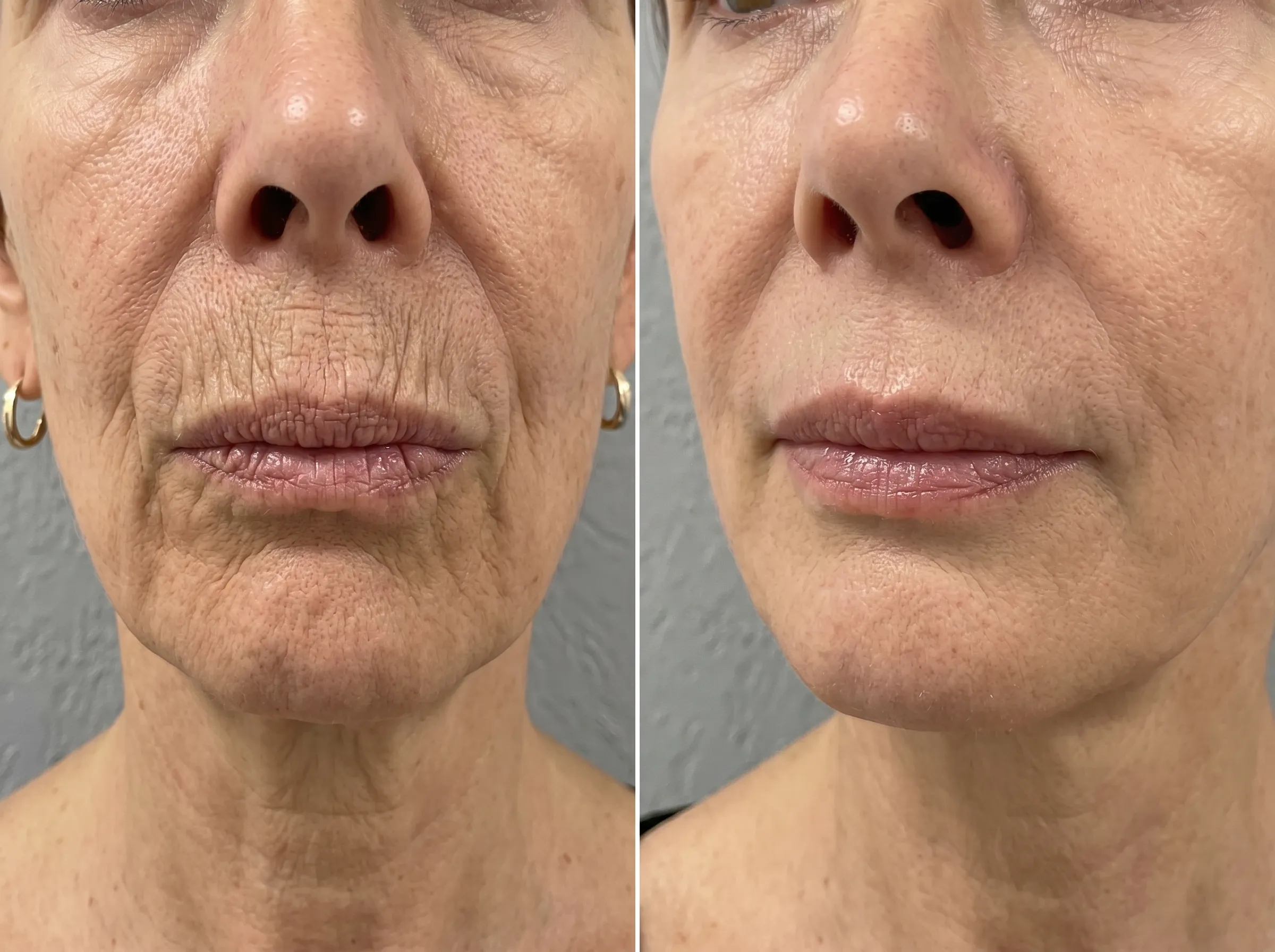
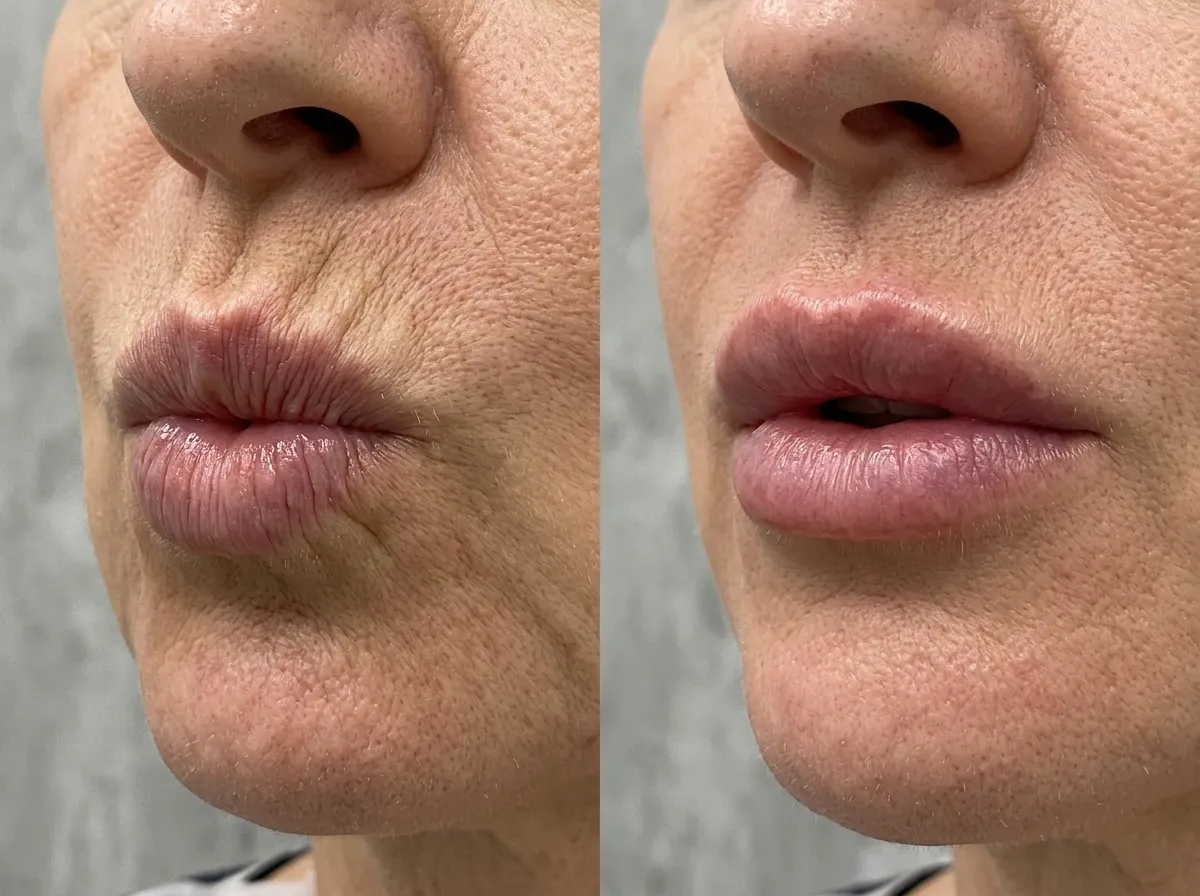
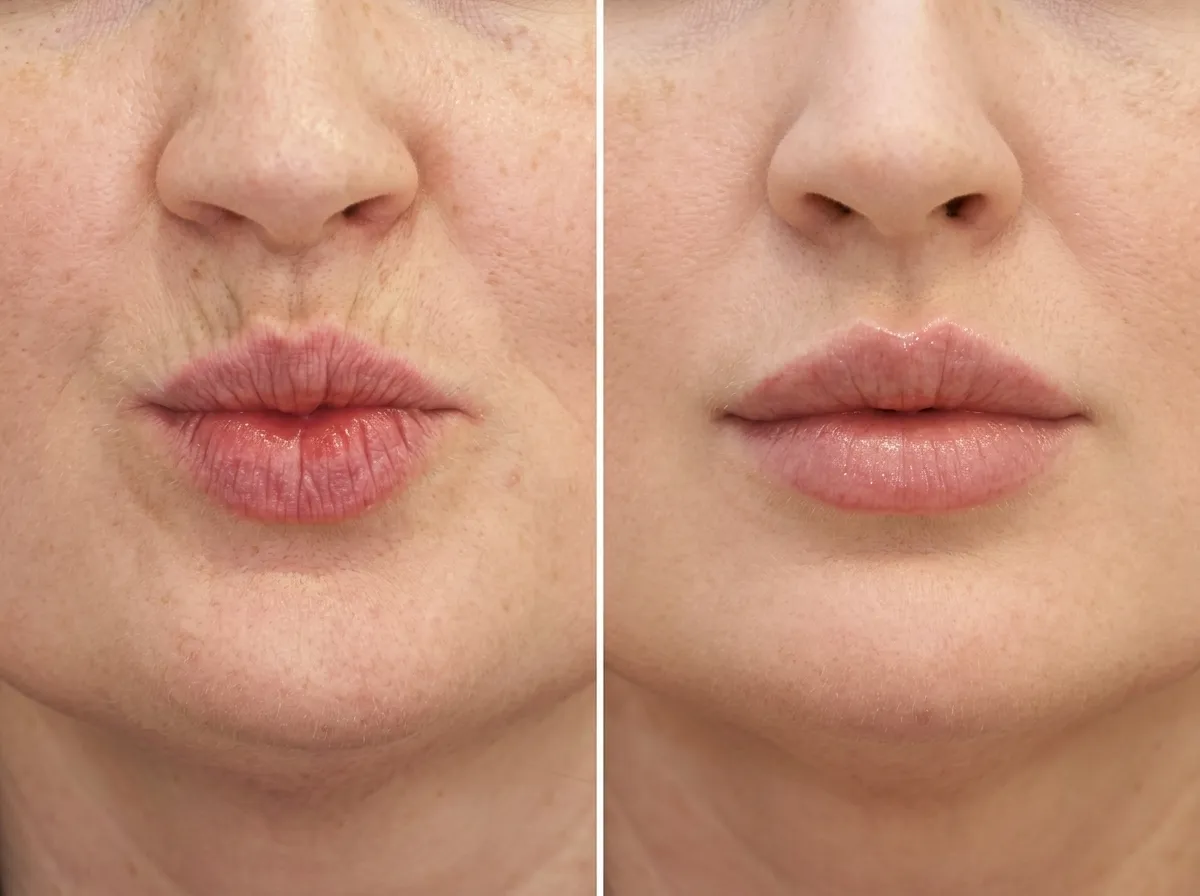
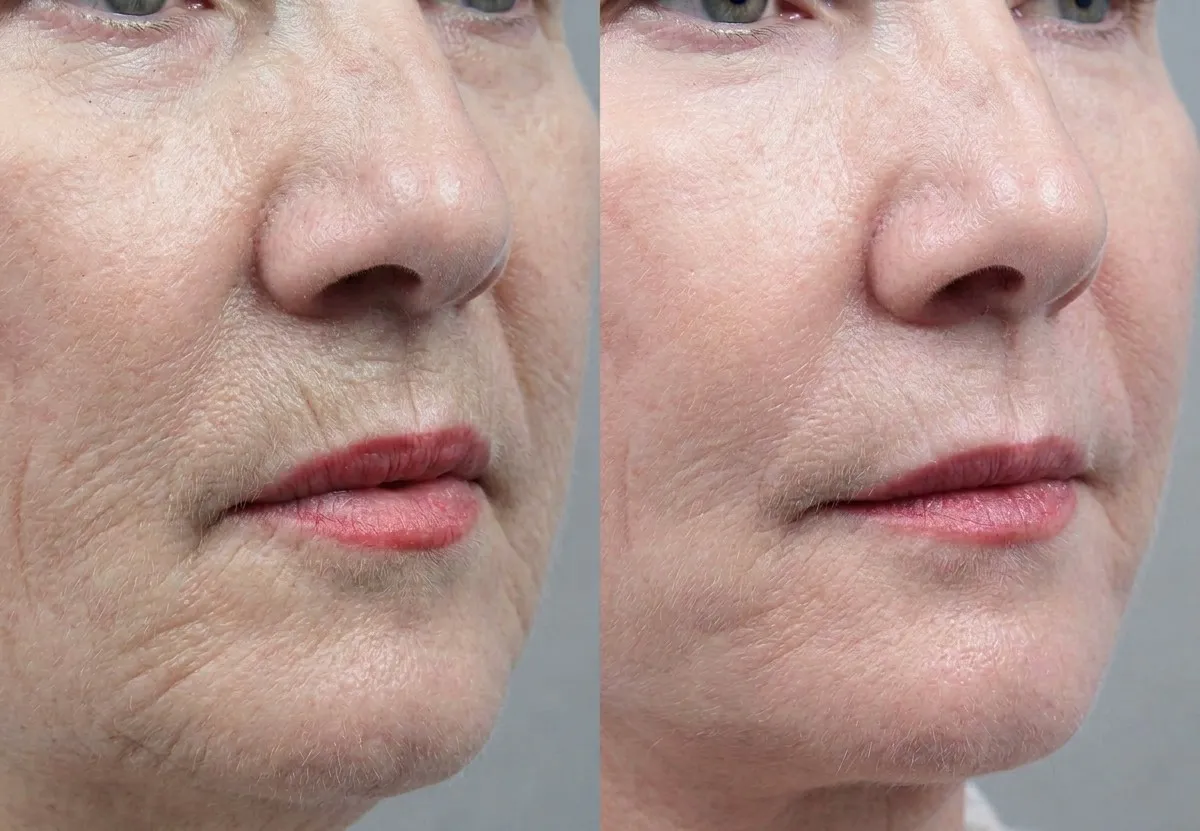
Filler treatment for perioral lines is intended to soften vertical creases above and around the mouth, improve the smoothness of the upper lip surface, and restore subtle definition to the lip border where volume loss has created a flattened appearance. Results are visible shortly after the injection and continue to refine as initial swelling subsides over the following days.
Individual outcomes vary depending on skin quality, line depth, lifestyle factors, and the volume of filler placed. The following are among the changes patients may typically expect to notice as results settle:
- Reduction in the visibility of fine and moderate vertical lip lines at rest
- Improved smoothness of the skin above the upper lip
- Subtle restoration of the lip border without alteration of lip size or shape
- A more refreshed and less fatigued overall perioral appearance
Before and After Smoker's Lines Filler
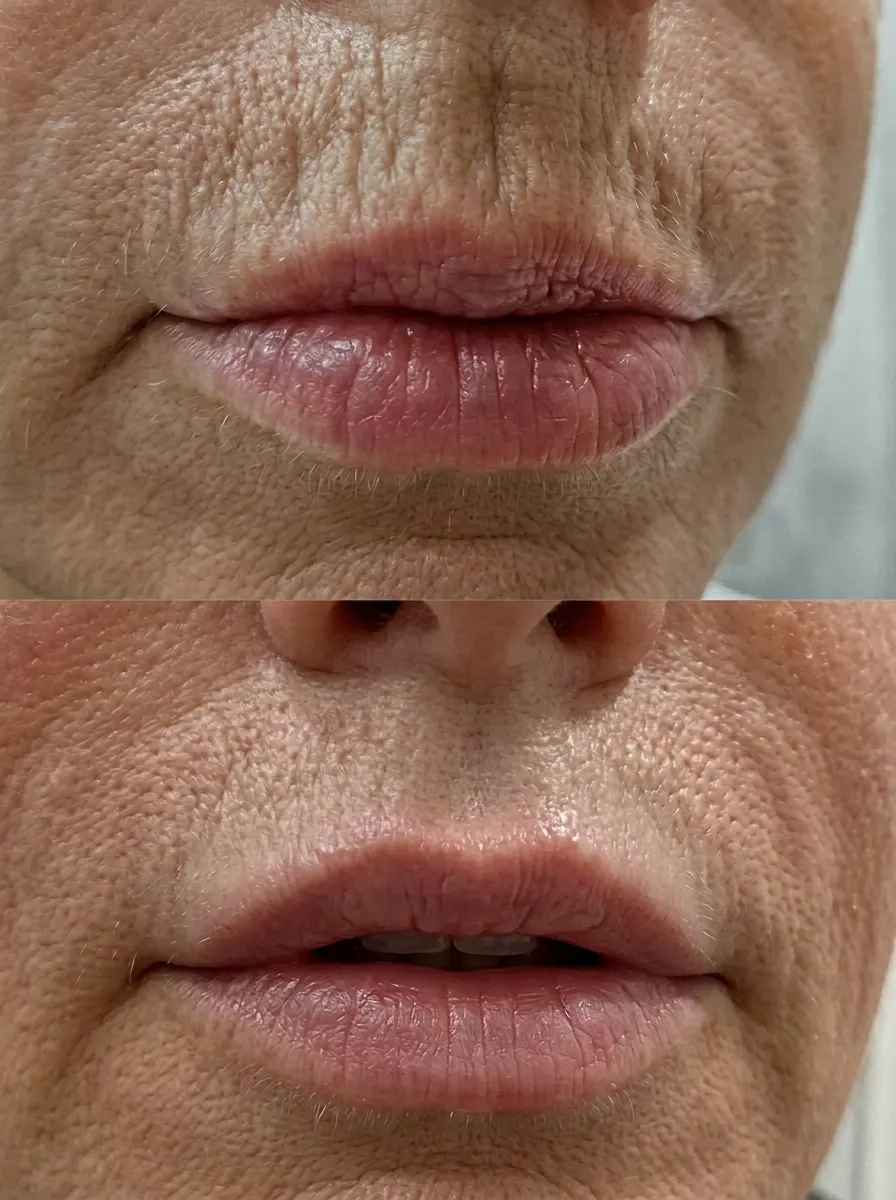
Filler treatment for perioral lines is intended to soften vertical creases above and around the mouth, improve the smoothness of the upper lip surface, and restore subtle definition to the lip border where volume loss has created a flattened appearance. Results are visible shortly after the injection and continue to refine as initial swelling subsides over the following days.
Individual outcomes vary depending on skin quality, line depth, lifestyle factors, and the volume of filler placed. The following are among the changes patients may typically expect to notice as results settle:
- Reduction in the visibility of fine and moderate vertical lip lines at rest
- Improved smoothness of the skin above the upper lip
- Subtle restoration of the lip border without alteration of lip size or shape
- A more refreshed and less fatigued overall perioral appearance
How Filler Placement Addresses Vertical Lip Lines
The perioral region demands particular precision during injection due to the thinness of the overlying dermis, the constant mechanical activity of the orbicularis oris, and the proximity of vascular structures. Product selection and placement depth are guided by whether lines are superficial, moderate, or deep, and whether they remain static at rest or are predominantly dynamic in nature.
A topical anaesthetic cream is applied prior to treatment to ensure patient comfort throughout. The filler is then introduced in small, measured quantities along or within the vertical lines, with placement designed to restore internal structural support to the skin rather than simply plump up the surface indiscriminately. This approach aims to produce a smooth, long-lasting result that moves appropriately with normal facial expression — a standard our aesthetics practitioners uphold across every treatment.
- Fine, superficial lines treated with low-viscosity, cohesive hyaluronic acid filler
- Moderate and deep lines addressed through careful intradermal or subdermal placement
- Product volume determined by line depth and individual anatomical presentation
- Technique adapted to minimise bruising, trauma, and post-treatment irregularity
- Reversibility is maintained throughout via a special enzyme if clinically indicated.
Results, Longevity and Recovery
Results from perioral filler are typically visible immediately after treatment, though optimal assessment is usually made at around two to three weeks once any initial swelling has fully subsided. Most patients are able to return to normal activities on the same day, making this a practical non-surgical treatment option for those with limited downtime.
The perioral area is subject to constant movement, which means filler in this region tends to metabolise more quickly than in more static areas of the face. Most patients find the long-lasting results remain visible between nine and fifteen months, with individual variation depending on the product used and their own metabolic rate.
- Initial visibility: immediately, though some swelling may be present
- Optimal assessment: approximately two to three weeks post-treatment
- Expected duration: nine to fifteen months for most patients
- Recovery: minimal; bruising and swelling are possible but typically resolve within several days
Safety, Risks and Important Considerations
Dermal filler in the perioral area is a medical procedure that requires thorough assessment, appropriate product selection, sound knowledge of perioral vascular anatomy, and informed patient consent before treatment proceeds. Whilst filler for smoker’s lines is a well-established and safe treatment when performed correctly, the upper lip region is technically demanding, and outcome quality is directly related to the clinical judgement and experience of the injecting practitioner.
Side effects and complications can occur. Common reactions include temporary bruising, swelling, redness, and tenderness at the injection site. More significant complications, including vascular events, are rare but possible, and patients should be fully informed of these risks during the consultation process. Treatment should never be approached as a consequence-free cosmetic procedure, regardless of how it is presented elsewhere.
Consideration | Why It Matters | What Is Usually Assessed |
Perioral vascular anatomy | The area contains arterial networks requiring careful avoidance during injection | Injection site mapping, vascular risk assessment |
Product viscosity and placement depth | Low-viscosity fillers are required for thin perioral skin | Line depth, skin quality, and tissue structure |
Volume selection | Under- or over-correction both carry risks in a high-movement area | Line severity, treatment goals, and anatomical response |
Dynamic vs static lines | Lines present only during movement may respond differently to filler | Expression pattern and baseline skin assessment |
Medical history and contraindications | Certain conditions and medications affect suitability and healing | Health questionnaire and clinical consultation |
Why Choose London Aesthetics for Smoker's Lines Filler
Our approach to perioral treatment in London centres on clinical precision, conservative product use, and outcomes that support natural facial expression. We treat smoker’s lines with the same level of anatomical care applied across every injectable treatment we offer.

Our Specialists and Clinical Team
Treatment at London Aesthetics is delivered by a dedicated practitioner team whose individual roles are clearly defined to ensure both clinical safety and consistent results.
- Angelika is a fully insured aesthetic practitioner with over eight years of international medical experience and an overseas medical degree. She practises in the UK under full certification and insurance for injectable treatments. Her clinical approach prioritises subtle, structured, and naturally refined results, combining advanced international techniques with strict UK safety standards.
- Dr. Ivan is a GMC-registered prescriber who provides the required face-to-face consultation and issues prescriptions for prescription-only products where clinically appropriate.

Responsible Consultation and Treatment Planning
Every patient presents differently, and treatment volume, technique, and product choice are always determined through direct clinical assessment rather than a standardised protocol.

Safety, Prescribing and Medical Standards
Dr. Ivan’s involvement as a GMC-registered prescriber ensures that any prescription-only element of treatment is handled in full compliance with UK regulatory requirements and clinical governance standards.

Natural-Looking Results and Controlled Outcomes
Our focus is on addressing the appearance of smoker’s lines in a way that respects the natural movement and character of the face, avoiding over-correction that can produce an unnatural or static result.

Aftercare and Ongoing Support
Patients receive clear aftercare guidance following treatment, and the team remains available to address any questions or concerns that arise during the recovery period or as results settle.
Trust signals and care principles:
- Face-to-face clinical assessment before every treatment
- Conservative, anatomy-led approach to product volume
- GMC-registered prescriber involved in all prescription-only pathways
- Fully insured practitioner with extensive international injectable experience
- Transparent communication about realistic expectations and potential risks
- Aftercare support is provided as standard
Please note: Angelika is an aesthetic practitioner, not a medical doctor. Face-to-face consultation and prescribing for any prescription-only products are provided by Dr. Ivan, a GMC-registered prescriber. Treatment is available to patients aged 18 and over only.
Frequently Asked Questions
What does a smoker's lines filler do?
Smoker’s lines filler uses hyaluronic acid to restore volume within the thin dermis of the upper lip area, softening the appearance of fine lines and moderate vertical creases that develop through ageing, repetitive lip pursing, and collagen loss. The treatment does not enlarge the lips. Instead, it addresses the structural deficit that allows perioral lines to form, improving surface smoothness and restoring a more refined appearance to the area around the mouth without altering facial expression or lip shape.
Who is usually a suitable candidate for a smoker's lines filler?
Suitable candidates are typically adults who have noticed vertical lines around the upper lip that are visible at rest, rather than only during expression. These lines — sometimes called smoker’s lines even in those who have never smoked — may cause cosmetic concern in their own right or may be accompanied by mild lip border flattening. Suitability depends on anatomy, skin quality, overall treatment goals, and a thorough assessment of medical history. A face-to-face consultation with our aesthetics practitioners is always required before any treatment plan is agreed upon.
How painful is the smoker's lines filler?
The perioral area can be sensitive, and most patients experience some level of discomfort during injection. A topical anaesthetic cream is applied before treatment to reduce sensation and improve comfort throughout the procedure. Many hyaluronic acid filler products used in this area also contain lidocaine, which provides additional numbing as the product is placed. Most patients describe the sensation as mild pressure or a brief sting rather than significant pain, and the injection process typically takes only a few minutes once numbing has taken effect.
How long do smoker's lines filler results usually last?
Results in the perioral area generally last between nine and fifteen months, though individual experience varies. The constant movement of the orbicularis oris muscle means that filler in this region metabolises more quickly than in areas of the face with less mechanical activity. Factors including the product used, the volume placed, the depth of injection, and individual metabolic rate all influence how long correction remains visible. A follow-up consultation can help assess whether a maintenance session is appropriate as results gradually diminish over time.
Are there risks or side effects with the smoker's lines filler?
Yes. Common side effects include temporary bruising, localised swelling, redness, and tenderness at the injection sites, most of which resolve within a few days. The perioral region contains arterial networks that require careful technique during injection, and vascular complications, whilst rare, are the most clinically serious risk associated with dermal filler in this area. Asymmetry, palpability of product, and migration are also possible. A thorough consultation, honest informed consent, and treatment by experienced facial aesthetics practitioners help to reduce these risks meaningfully.
Is there any downtime after the smoker's lines filler?
Most patients are able to return to normal activities on the day of treatment. Visible bruising or swelling may be present for several days, particularly given the sensitivity of the perioral skin and the constant movement it undergoes. Patients are generally advised to avoid strenuous exercise, excessive heat, alcohol, and blood-thinning supplements for twenty-four hours following treatment. Makeup should be kept away from injection sites for at least twelve hours. Any swelling that remains after the first few days typically continues to subside progressively over one to two weeks.
Can a smoker's lines filler be dissolved or reversed?
Yes. Because the treatment uses hyaluronic acid filler, it can be dissolved using hyaluronidase — an enzyme that breaks down hyaluronic acid within the tissue. Dissolution may be indicated in the event of an adverse reaction, a vascular complication, or if the patient is dissatisfied with the aesthetic outcome. It is a medical procedure in its own right and should be carried out by a practitioner with appropriate training and experience. The reversibility of hyaluronic acid filler is one of its clinically important properties compared to permanent injectable materials.
How is the right treatment plan decided?
The treatment plan is agreed upon following a face-to-face clinical assessment that takes into account the depth and distribution of perioral lines, skin quality, the degree of volume loss present, individual anatomy, and the patient’s own goals and expectations. Dr. Ivan provides the required consultation and issues any prescriptions for prescription-only products where clinically appropriate. Angelika then uses this assessment to guide product selection, placement technique, and the volume of filler required. No two presentations are identical, and the plan reflects individual anatomy rather than a standardised approach.