
Hand Filler Treatment in London
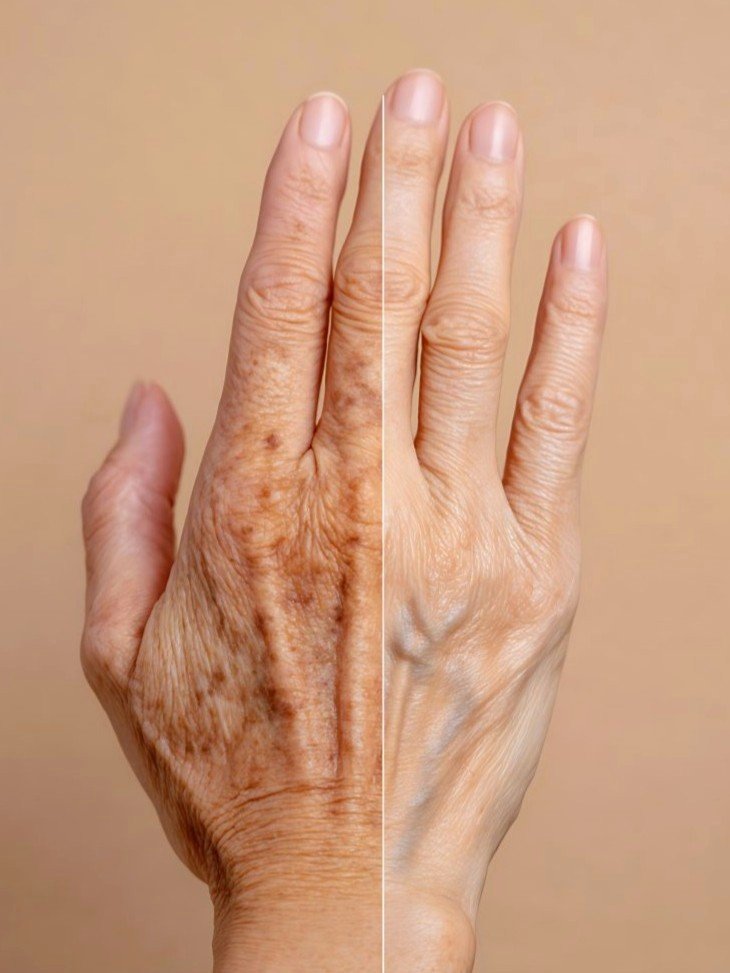
The backs of the hands often reveal age earlier than the face, as lost volume leaves skin thin, veins prominent and tendons more visible. Hand filler treatment is designed to address this pattern of ageing.
Using dermal filler to help restore volume beneath the skin, treatment aims to soften this appearance and support a more youthful hand contour, with suitability always confirmed through individual clinical assessment.
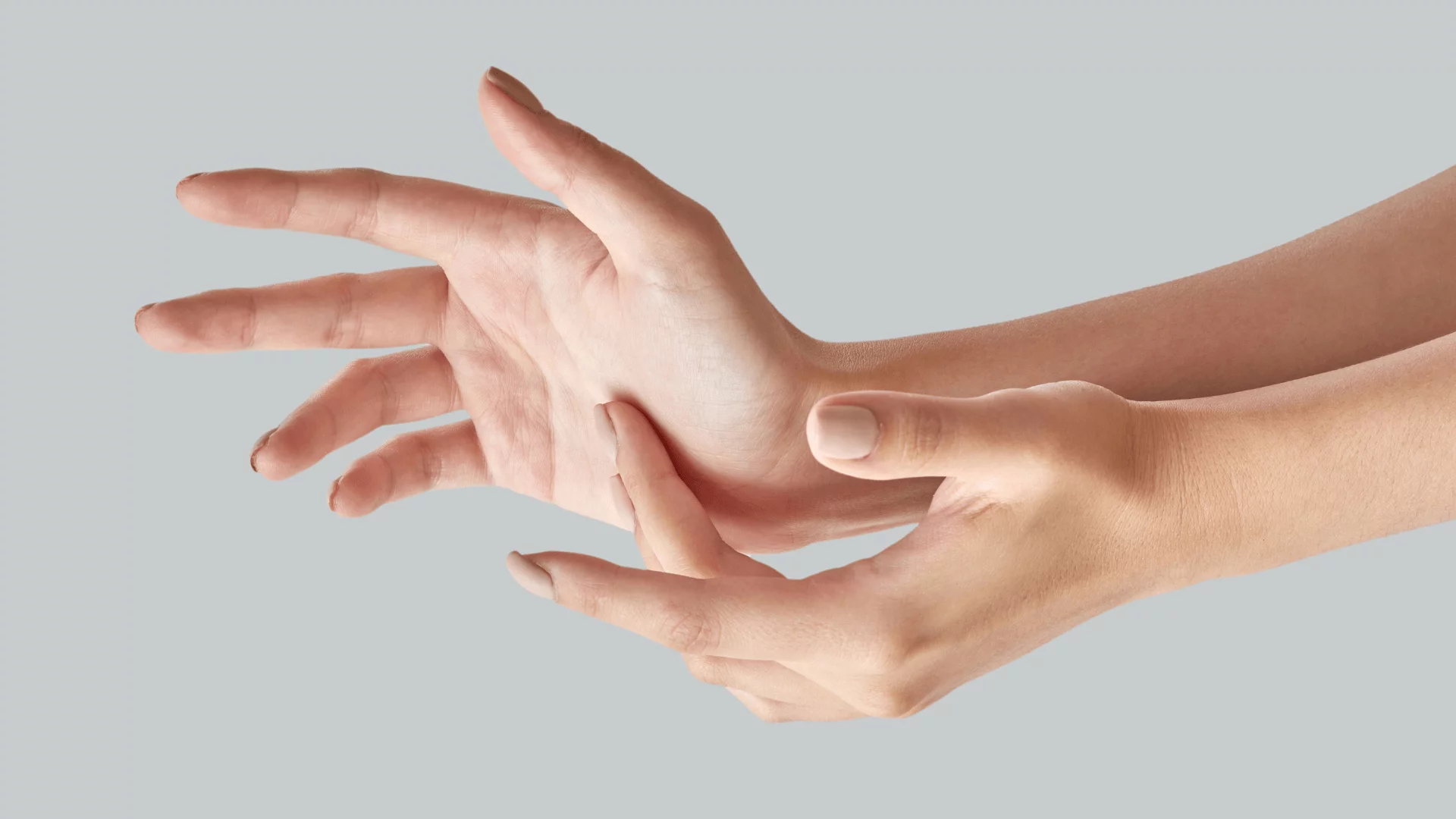
What Is Hand Filler Treatment?
Hand filler treatment involves injecting a dermal filler beneath the skin on the back of the hands to help restore lost volume and improve overall skin quality in the treated area.
Calcium hydroxylapatite filler, such as Radiesse, is designed to provide structural support and may help encourage the skin’s own collagen processes over time, while hyaluronic acid options attract and bind water to support hydration and elasticity.
Because hyaluronic acid formulations can be dissolved using an enzyme if required, they offer a reversible choice for patients who value this reassurance, whereas calcium hydroxylapatite based filler is not reversible in the same way.
Who This Treatment May Suit
Hand filler treatment may suit adults who feel their hands look older than their face, often due to visible veins, tendons, fine wrinkling or thinning skin associated with age and cumulative sun exposure.
Suitability depends on individual anatomy, skin condition, medical history and aesthetic goals, which is why a thorough consultation and clinical assessment are required before any cosmetic treatment plan is agreed.
Restoring Youthful Hands and Softening Visible Veins
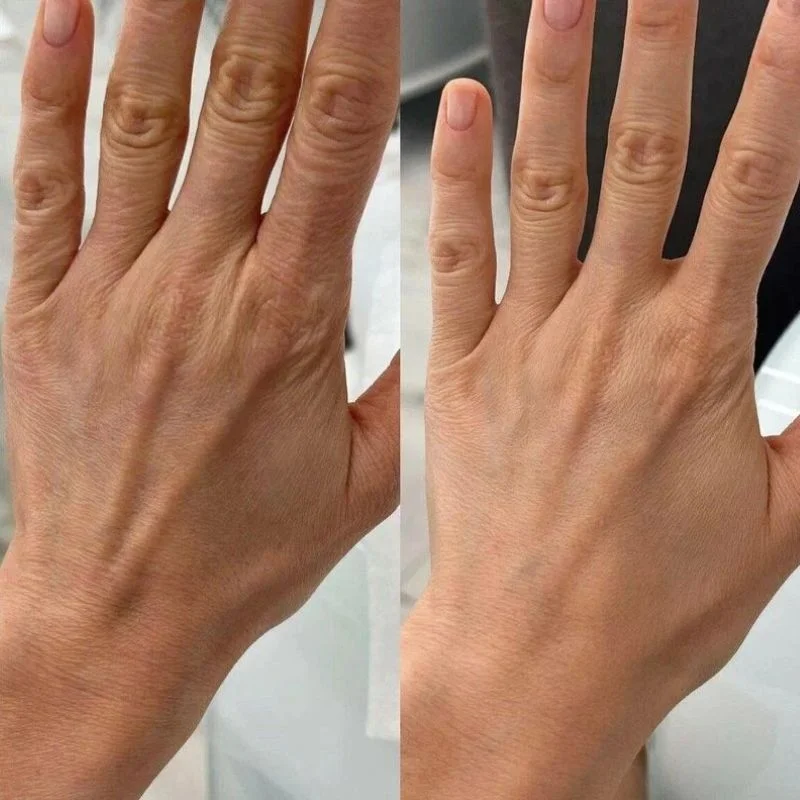
Many patients consider hand filler because they want their hands to better reflect the appearance of their overall skin, particularly where veins and tendons have become more pronounced with age.
Treatment is intended to improve the appearance of the back of the hands by adding volume beneath thinned skin, which may help soften the visibility of underlying structures and fine surface wrinkling without affecting hand function.
Consultation and Pricing
Treatment suitability, the personalised plan and final cost are confirmed only after consultation and clinical assessment, as pricing depends on anatomy, treatment scope, product volume and session count.
The figures below represent general market guidance only, based on publicly advertised prices reviewed in June 2026 across six London clinics. These are not our clinic’s prices and may not include consultation fees, promotional pricing, product volume differences or individual planning.
- Single syringe / per session: about £350–£500
- Course of treatment (multiple sessions): about £900–£1,500
- Profhilo (course of two sessions): about £900–£1,100
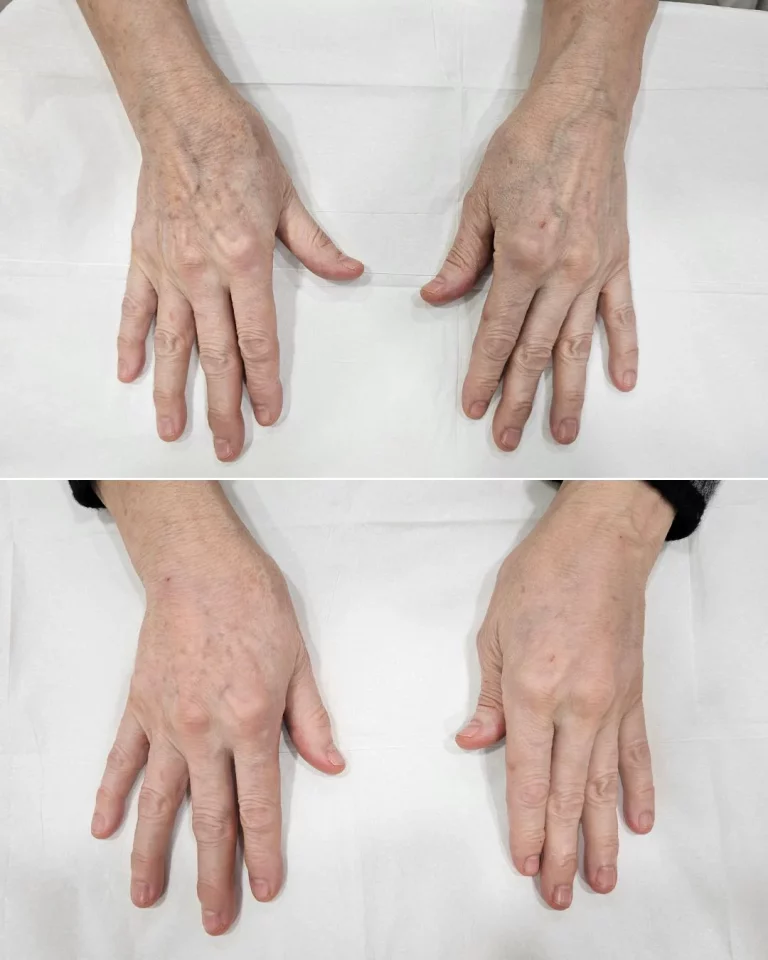
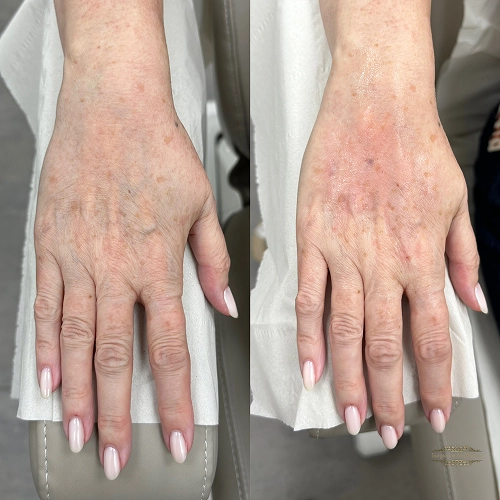
Before and After Hand Filler Treatment
Hand filler treatment is intended to improve the appearance of volume loss on the back of the hands, helping skin look smoother and less thin, with further settling over the following weeks.
Outcomes vary between individuals and depend on factors including skin quality and the specific filler used, so photographs of previous patients should not be read as a guarantee of outcome.
- Smoother appearance across the back of the hands
- Reduced visibility of prominent veins and tendons
- A more even, youthful contour
- Improved skin texture in the following weeks
How Filler Placement Restores Structure to Ageing Hands
During treatment, the practitioner injects filler into the subcutaneous layer on the back of the hand, where volume loss is most visible, working carefully around veins and tendons.
The aim is to restore lost volume gradually across the treatment area, creating a smoother surface that may help the hands sit in better proportion with the appearance of the rest of the skin.
- Filler is placed beneath the thinned skin layer
- Practitioners work carefully around veins and tendons
- Volume is restored gradually across the hand
- Technique is adjusted to individual anatomy
Results, Longevity and Recovery
Initial improvements are often visible shortly after treatment, with the area generally considered settled once any swelling has resolved within a few days.
Depending on the type of filler used, results may last from several months up to around a year, and recovery typically involves minimal downtime alongside a small risk of bruising.
- Initial improvement visible within a few days
- The area is generally considered settled once swelling resolves
- Results may last several months to around a year
- Recovery usually involves minimal downtime and possible bruising
Safety, Risks and Important Considerations
Dermal filler injections require careful clinical assessment, an appropriate choice of filler, sound anatomical knowledge of the hand and informed consent before any treatment plan proceeds.
As with any injectable treatment, side effects and complications can occur, including bruising or swelling, and hand filler treatment should never be presented as entirely risk-free; every patient is advised of relevant considerations during consultation.
| Consideration | Why It Matters | What Is Usually Assessed |
| Vein and tendon anatomy | The hands have a high density of visible structures close to the skin surface | Hand anatomy, vein pattern and skin thickness |
| Filler type selected | Calcium hydroxylapatite and hyaluronic acid behave differently once injected | Goals, reversibility preference and skin condition |
| Bruising and swelling | Mild bruising or swelling is a common short-term response to injection | Medical history, medication use and bleeding risk |
| Medical history | Certain conditions or medications may affect suitability for injectable treatment | Allergies, prior reactions and current health status |
Why Choose London Aesthetics for Hand Filler Treatment
Hand filler treatment at our central London clinic follows a structured, consultation-led approach that prioritises anatomical understanding over standardised packages.

Our Specialists and Clinical Team
Treatment at London Aesthetics is provided by a small clinical team with defined roles in assessment, prescribing and delivery of injectable treatment.
- Angelika is a fully insured UK aesthetic practitioner with over eight years of international medical experience, combining advanced international technique with strict UK safety standards.
- Dr. Ivan is a GMC-registered prescriber who provides the required face-to-face consultations and issues prescriptions for prescription-only products where clinically appropriate.

Personalised Treatment Planning
Every treatment plan is built from individual clinical assessment, taking into account hand anatomy, skin condition and the patient’s specific aesthetic goals.

Safety, Prescribing and Medical Standards
Where prescription-only products are required, Dr. Ivan provides face-to-face consultation and prescribing, ensuring treatment follows a compliant pathway aligned with UK certification and insurance standards.

Natural-Looking Results and Facial Balance
Angelika’s clinical approach favours subtle, structured outcomes, with hand filler treatment planned to support a natural, rejuvenated proportion rather than an overcorrected or artificial appearance.

Aftercare and Ongoing Support
Aftercare guidance is provided after every session, covering practical steps to support recovery and skin health, alongside availability for follow-up review if any concerns arise.
- Consultation-led planning for every patient
- GMC-registered prescribing support where clinically required
- Insured, certified practitioner with international clinical experience
- Structured aftercare and follow-up review
Angelika is an aesthetic practitioner and not a medical doctor. Dr. Ivan, a GMC-registered prescriber, provides face-to-face consultation and prescribing for prescription-only products where clinically required. Treatment is available only to patients aged 18 and over.
Frequently Asked Questions
What does hand filler treatment do?
Hand filler treatment uses a dermal filler injected beneath the skin on the back of the hands to help restore lost volume. As skin ages, hands can appear thinner, with veins, tendons and fine wrinkling more visible. The procedure is designed to improve the appearance of these changes by adding support beneath the skin, helping hands look smoother and more in proportion with the rest of the skin. The specific product and approach are agreed upon during consultation, based on anatomy and goals.
Who is usually a suitable candidate for hand filler treatment?
Suitable candidates are typically adults who notice visible volume loss, prominent veins or tendons, or signs of ageing and thinning skin on the back of the hands, often linked to sun exposure over time. Suitability is never assumed and depends on individual anatomy, skin condition, medical history and aesthetic goals. A clinical assessment during consultation confirms whether treatment is appropriate, and alternative approaches may be discussed where this option is not suitable for a particular patient at this time.
How painful is hand filler treatment?
Discomfort varies between individuals, though most patients describe the sensation as mild and brief rather than significantly painful. A topical numbing cream may be applied beforehand to improve comfort throughout the procedure. Some patients report a stinging or pinching sensation as filler is injected, given the sensitivity of the hands. Any discomfort typically resolves shortly after the session ends, and your practitioner can adjust technique where needed to support a more comfortable experience throughout.
How long do hand filler results usually last?
The longevity of results depends on the type of filler used, individual metabolism and lifestyle factors. Results from calcium hydroxylapatite based filler may last around a year in many patients, while hyaluronic acid options can vary in duration. A follow-up review allows your practitioner to assess how results are settling and whether maintenance may be appropriate to help sustain a youthful appearance over time.
Are there risks or side effects with hand filler treatment?
As with any injectable treatment, hand filler treatment carries potential risks and should never be considered entirely risk-free. Common short-term effects include mild bruising, swelling or tenderness at the injection site, which usually resolve within a short period. More serious complications are uncommon but can occur, which is why thorough clinical assessment, sound anatomical knowledge and an individualised treatment plan are essential before any session proceeds.
Is there any downtime after hand filler treatment?
Most patients experience minimal downtime following the procedure and are able to resume daily activities shortly afterwards. Some mild swelling or bruising around the injection site is common and typically resolves within a few days. Strenuous activity and excessive hand movement may be advised against for a short period after treatment. Specific aftercare guidance is provided following every session to support comfortable, appropriate recovery throughout.
Can hand filler treatment be dissolved or reversed?
Whether treatment can be reversed depends on the type of filler used. Hyaluronic acid-based fillers can typically be dissolved using an enzyme injection if required, offering reassurance for patients who value this option. Calcium hydroxylapatite-based filler, commonly used for hand rejuvenation, is not reversible in the same way, which is an important factor discussed during consultation when choosing the appropriate filler type for your goals.
How is the right treatment plan decided?
The right treatment plan is decided through thorough consultation and clinical assessment, taking into account the anatomy, skin condition, medical history and the patient’s aesthetic goals. Your practitioner will discuss suitable filler options, expected outcomes and relevant considerations across the treatment area before agreeing a bespoke plan. Where prescription-only products are involved, Dr. Ivan provides the required face-to-face consultation and prescribing as part of a compliant, structured pathway.