
Marionette Line Filler Treatment in London
The lines that run from the corners of the mouth down towards the chin — sometimes called puppet lines or oral commissure lines — are among the more structurally complex signs of ageing in the lower face. They deepen not simply because skin ages, but because the underlying fat pads diminish and ligament support gradually loosens.
Marionette line filler offers a targeted, non-surgical way to address this change. By restoring lost volume along the marionette lines and supporting the surrounding facial structure, treatment can soften the fold, lift a downturned expression, and help the lower face look more balanced and refreshed.
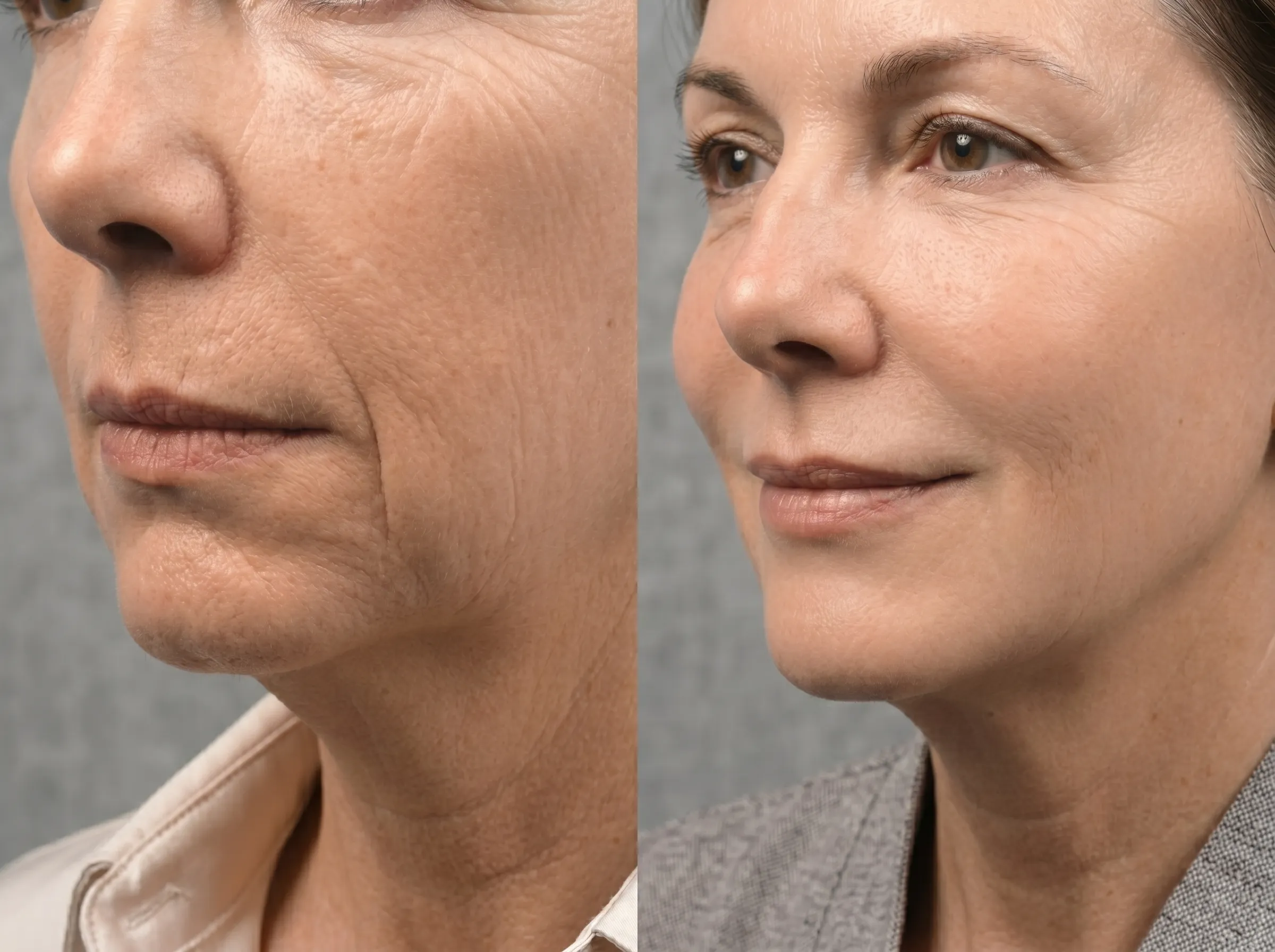
What Is Marionette Line Filler Treatment?
Marionette line filler is an injectable cosmetic treatment that uses hyaluronic acid dermal filler to address the folds that form between the corners of the mouth and the chin. Hyaluronic acid is a substance found naturally within the skin, and the filler integrates into surrounding tissue to restore structural support where volume has been lost.
Treatment is not simply a matter of filling the visible line. Effective filler placement takes into account the depth of the lines, the degree of laxity in the surrounding skin, and the position of the oral commissure. This is why marionette line treatment in London should always be approached with a thorough clinical assessment beforehand.
Because hyaluronic acid fillers are reversible using an enzyme called hyaluronidase, they are considered among the more adjustable options within non-surgical aesthetics. This reversibility makes them a clinically appropriate first choice for treating marionette lines in the most suitable patients.
Who This Treatment May Suit
Adults who notice a persistent downturned appearance around the corners of the mouth — even when their expression is neutral — are often well-suited to this treatment. Marionette lines develop progressively with natural ageing and are influenced by factors including collagen loss, facial movement patterns, and changes in the distribution of facial fat.
Suitability depends on individual anatomy, skin quality, depth of the lines, and overall treatment goals, and is always confirmed following clinical assessment. Those with very deep-set lines or significant lower face laxity may require a more comprehensive treatment plan, which the consulting team can advise on during your appointment.
Softening the Fold Between the Mouth and Chin
Marionette lines develop as the structural support of the lower face diminishes. As collagen production slows with age and the soft tissue anchors that hold the cheek in place weaken, the skin begins to descend, creating a fold that runs from the corners of the mouth down towards the chin.
Filler along the marionette lines works by restoring volume in the areas where this support has been lost. When placed accurately, it can lift the corner of the mouth, reduce the shadow created by the fold, and smooth the transition between the lower cheek and the chin — helping the lower face look less fatigued without altering natural facial movement.
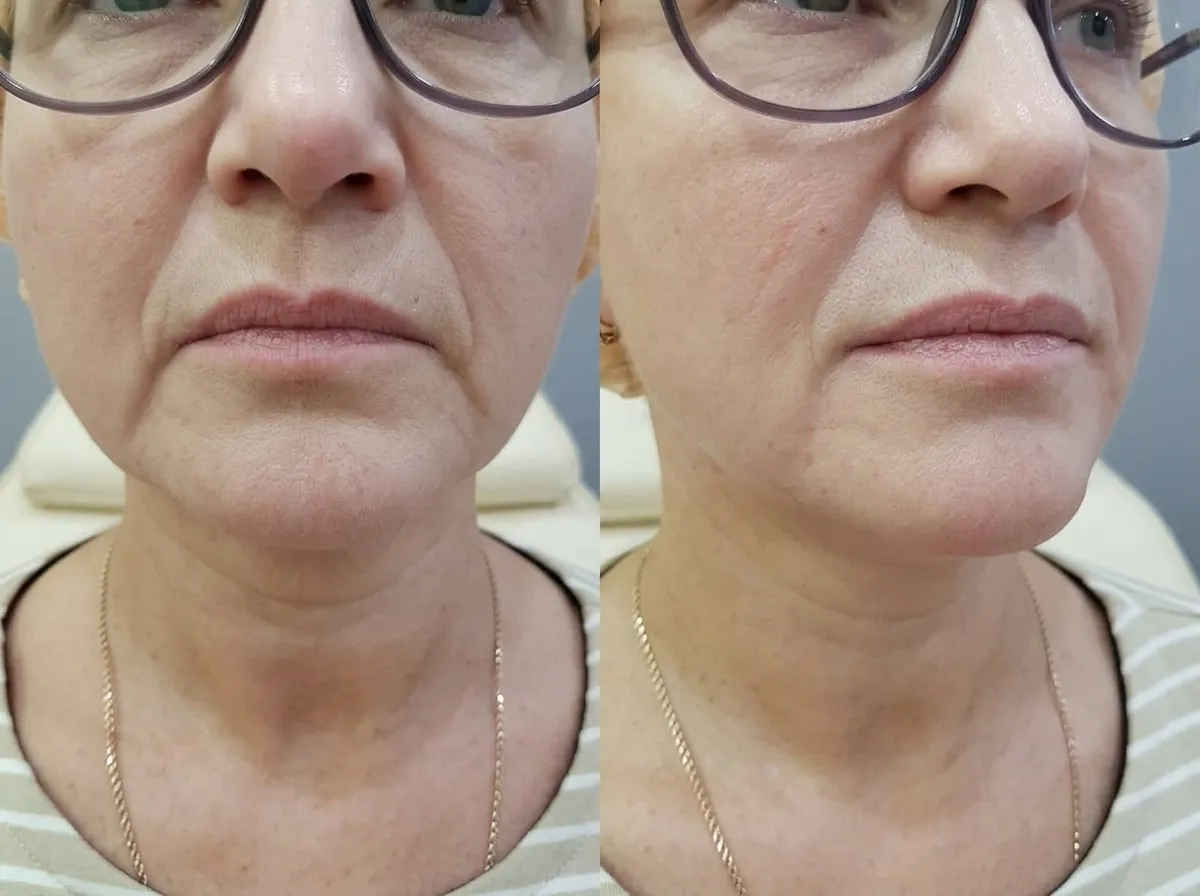
Consultation and Pricing
Treatment suitability, the appropriate volume of filler, and the overall treatment plan are confirmed during your initial consultation and clinical assessment. Final cost depends on the depth of the lines, facial anatomy, product volume required, and the complexity of placement.
The following figures represent general London market guidance only, based on publicly advertised prices reviewed in May 2026 across six London clinics. These are not our clinic’s prices and may not reflect consultation fees, technique complexity, filler brand, or individual treatment planning.
- 1ml treatment (single area): about £290–£500
- 2ml treatment (two areas or deeper correction): about £500–£800
- Premium specialist clinics per session: about £500–£850
- Dissolving (hyaluronidase): available where clinically appropriate
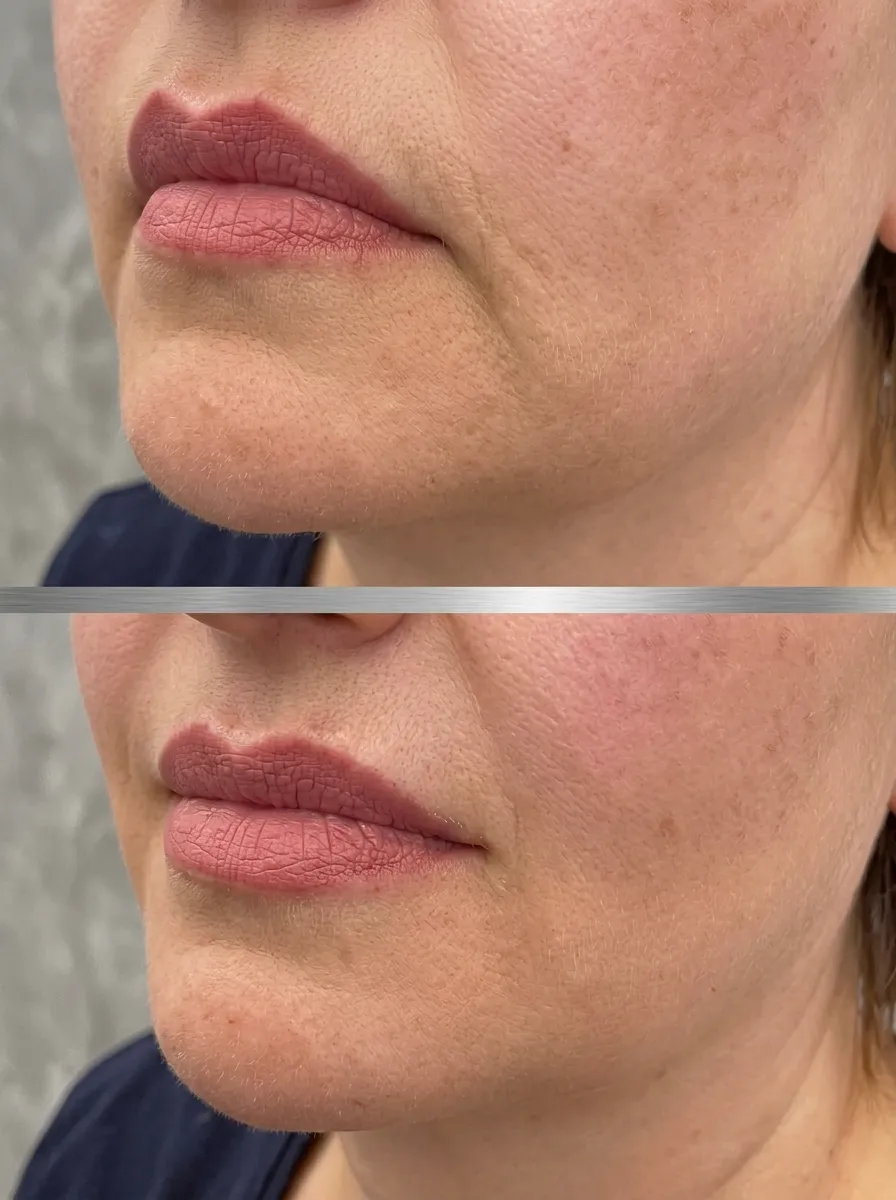
Before and After Marionette Line Filler
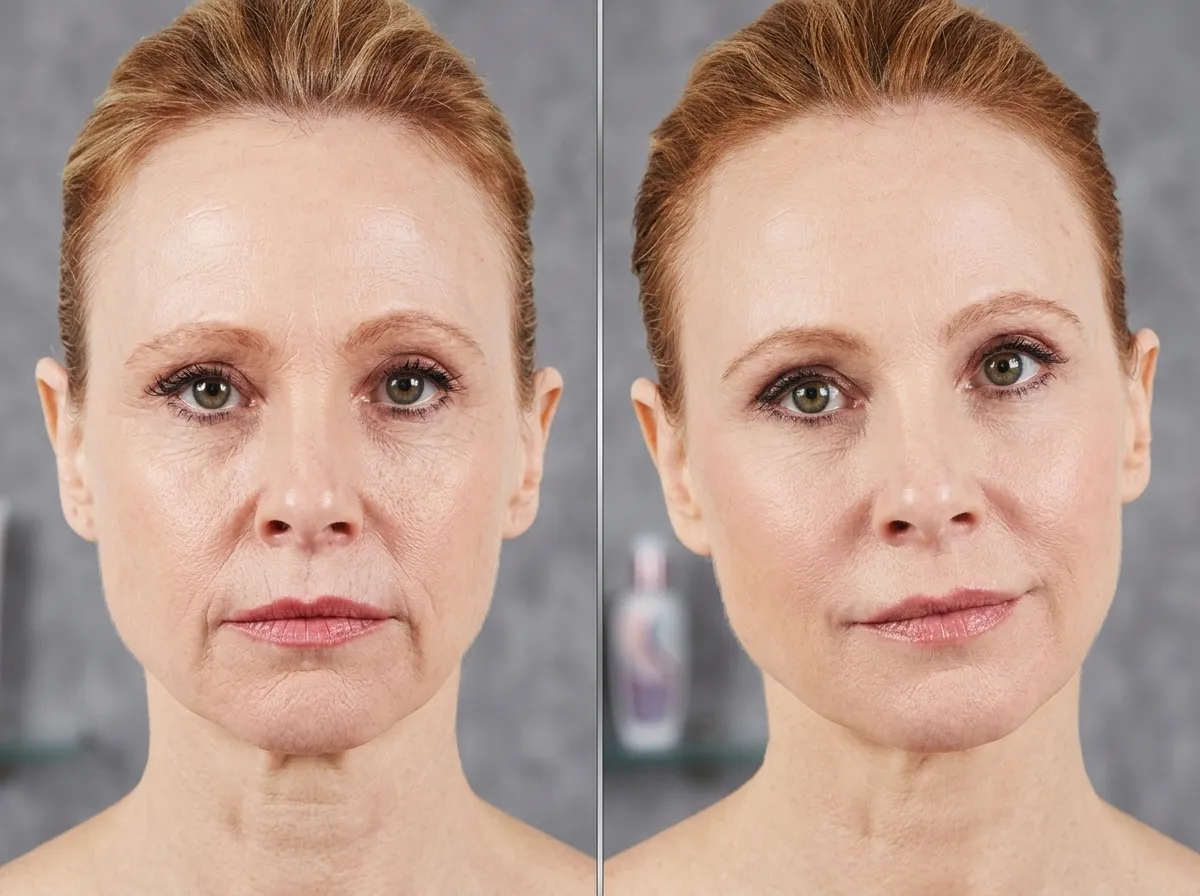
Before treatment, the marionette lines typically appear as distinct folds running from the oral commissure down toward the chin, often giving the face a drawn or downturned quality even at rest. Filler used along these lines is intended to soften the fold, restore volume where the tissue has receded, and reduce the visual heaviness in the lower face.
Results are visible immediately after treatment, though the appearance of marionette lines continues to refine as the filler integrates with surrounding tissue over the following days. Optimal results are generally assessed at the two-week mark.
What patients may typically notice as results settle:
- Reduced depth of the fold from the corners of the mouth to the chin
- A softer, less downturned resting expression
- Improved transition between the lower cheek and the jaw
- A more balanced and refreshed overall lower face appearance
How Filler Placement Supports the Lower Face Structure
The anatomy of the marionette line area involves overlapping structures — including the depressor anguli oris muscle, the oral commissure, and the soft tissue of the prejowl sulcus. Accurate filler placement takes all of these into account to avoid over-correction or unnatural stiffness in an area that is constantly involved in facial movement.
Depending on the depth of the lines and the degree of lower face volume loss, filler adds volume in a layered or targeted manner. Established lines may require slightly more product placed at different tissue depths to achieve the best possible result, while earlier or shallower lines often respond well to conservative placement with a single session.
Key technical considerations in treating marionette lines:
- Assessment of depth and the cause of marionette lines before injection
- Product selection matched to the tissue layer and the filler brand’s rheological properties
- Technique choice — needle or cannula — based on anatomy and vascular risk
- Volume calibrated to restore a natural-looking result without over-filling
- Avoidance of tension or distortion at the oral commissure lines
Results, Longevity and Recovery
Results from the marionette line filler are visible immediately, with further refinement occurring within a few days as any initial swelling settles. The treatment area typically looks its best at two weeks, once the filler has integrated fully.
Longevity depends on the filler brand, the volume placed, individual metabolism, and skin condition. Most patients find that results are visible for between 9 and 15 months, with maintenance treatments helping to preserve the improvement over time.
- Immediate visibility: results are visible on the day of treatment
- Settled appearance: typically at 10–14 days
- Duration: approximately 9–15 months, depending on the filler used and individual factors
- Recovery: mild swelling, redness, or bruising may occur and usually resolves within a few days
Downtime: minimal; most patients return to normal activities the same day
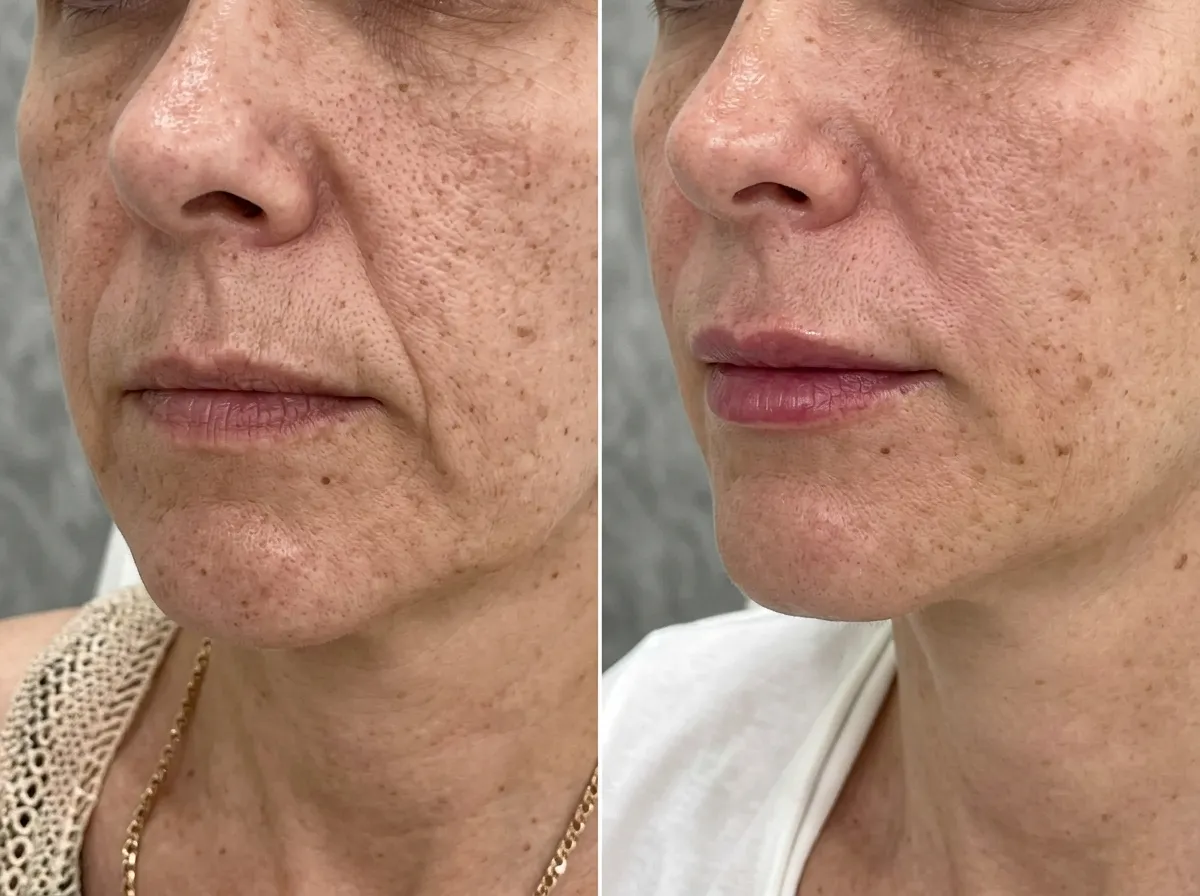
Safety, Risks and Important Considerations
Dermal filler treatment for marionette lines requires thorough clinical assessment, appropriate product selection, and a detailed understanding of lower face anatomy. The mouth and chin region involves active musculature and a network of blood vessels that must be carefully considered during injection planning.
As with all injectable cosmetic treatments, side effects can occur. Common effects include temporary bruising, redness, and swelling at the injection site. Rarer but more serious complications are possible and should be discussed openly during your consultation. Treatment should never be approached as routine or consequence-free.
Consideration | Why It Matters | What Is Usually Assessed |
Depth and cause of marionette lines | Shallow and deep lines require different approaches | Skin laxity, volume loss, ligament involvement |
Facial vascular anatomy | The lower face has significant vascular structures | Injection technique, cannula vs needle selection |
Medical history and contraindications | Certain conditions or medications affect suitability | Allergies, blood-thinning medications, skin conditions |
Product volume and filler brand | Over-filling creates unnatural results | Tissue quality, restoration goals, aesthetic balance |
Reversibility planning | Hyaluronidase can dissolve the HA filler if required | Access to dissolving treatment and follow-up support |
Why Choose London Aesthetics for Marionette Line Filler
Our clinical approach to treating marionette lines is built on accurate anatomical assessment, conservative product use, and a shared commitment to results that respect your natural facial structure.

Our Specialists and Clinical Team
The clinic is led by a practitioner-prescriber team with complementary clinical experience across injectable treatments and facial aesthetics.
- Angelika is a fully insured UK aesthetic practitioner with over 8 years of international medical experience and an overseas medical degree. She practises under full certification and insurance for injectable treatments in the UK. Her technique combines advanced international methods with strict UK safety standards, with a clinical focus on subtle, structured, and naturally refined results.
- Dr. Ivan is a GMC-registered prescriber who provides the required face-to-face consultations and issues prescriptions for prescription-only products where clinically appropriate.

Responsible Consultation and Treatment Planning
No two patients present the same lower face anatomy, and treatment volume, technique, and product selection are decided on an individual basis following consultation.

Safety, Prescribing and Medical Standards
All prescription-only products are prescribed by Dr. Ivan following a face-to-face clinical consultation. The clinic operates in full compliance with UK regulatory and safety standards for injectable cosmetic treatments.

Natural-Looking Results and Controlled Outcomes
The clinical aim is to soften the fold and restore lower face volume without creating an overfilled or static appearance. Facial movement and natural expression are preserved throughout.

Aftercare and Ongoing Support
Detailed aftercare guidance is provided following every treatment, and the team remains available to address any questions or concerns during the recovery period. Follow-up assessments are arranged where clinically appropriate.
Key care and clinical standards:
- Face-to-face consultation with a GMC-registered prescriber before treatment
- Treatment available to patients aged 18 and over only
- Premium hyaluronic acid filler brands selected for safety and reversibility
- Individual treatment planning — no fixed or one-size protocol
- Aftercare instructions provided and follow-up support available
Treatment at London Aesthetics is provided by Angelika, an aesthetic practitioner who is not a medical doctor. Dr. Ivan, a GMC-registered prescriber, conducts face-to-face consultations and issues prescriptions for prescription-only products where clinically required. Treatment is available to patients aged 18 and over only.
Frequently Asked Questions
What does marionette line filler do?
Marionette line filler uses hyaluronic acid to restore volume along the folds that run from the corners of the mouth down towards the chin. By placing filler at the appropriate tissue depth, the treatment reduces the visual depth of the fold, softens the oral commissure lines, and lifts a downturned expression. The intention is to achieve a more rested and balanced lower face appearance without altering natural facial movement or expression. Individual outcomes depend on anatomy, volume of filler used, and baseline skin condition.
Who is usually a suitable candidate for marionette line filler treatment?
Adults who have noticed deepening folds between the corners of the mouth and the chin — particularly where these create a downturned or fatigued appearance at rest — are often considered suitable candidates. Suitability is always confirmed during a clinical consultation, where factors such as skin laxity, depth of the lines, overall facial structure, and medical history are assessed. Patients with very pronounced lower face sagging may benefit from a more comprehensive treatment plan discussed at that appointment.
How painful is the marionette line filler?
Most patients describe the treatment as mildly uncomfortable rather than painful. A topical anaesthetic cream is applied to the area before injection to reduce sensation, and many hyaluronic acid fillers contain lidocaine, which further numbs the tissue as treatment progresses. The lower face area can be more sensitive than some other injection sites, but the procedure is generally well tolerated. Any discomfort typically resolves very quickly after the session, and most patients report feeling at ease throughout.
How long do marionette line filler results usually last?
Results from marionette line filler typically last between 9 and 15 months, though this varies depending on the filler brand used, the volume placed, and individual factors such as metabolism and skin quality. Deeper lines may require slightly more product to achieve lasting improvement and may benefit from a maintenance session sooner than shallower corrections. At your follow-up assessment, the clinical team can advise on the appropriate timing for any top-up treatment based on how your result has settled.
Are there risks or side effects with marionette line filler?
Yes. As with all injectable cosmetic treatments, side effects are possible. The most commonly reported effects include temporary bruising, mild swelling, and redness at or near the injection site, which typically resolve within a few days. Less common effects include asymmetry, lumpiness, or prolonged swelling. Rare but serious complications, including vascular occlusion, can occur and are discussed during the pre-treatment consultation. Informed consent is a mandatory part of the process, and treatment is never presented as risk-free.
Is there any downtime after the marionette line filler?
Downtime is generally minimal. Most patients are comfortable returning to their normal daily routine on the same day, though some visible swelling or bruising may be present for several days following treatment. It is advisable to avoid strenuous exercise, excessive heat, alcohol, and blood-thinning supplements for at least 24 hours after treatment. Makeup should not be applied to the injection sites for the first 12 hours. Any minor swelling usually resolves within a few days, and the appearance of marionette lines continues to improve as the filler settles.
Can marionette line filler be dissolved or reversed?
Yes. Because hyaluronic acid fillers are used, the treatment can be reversed using hyaluronidase, an enzyme that dissolves the filler material if required. This may be recommended in cases of asymmetry, over-correction, or if a complication arises. Dissolving treatment is available at the clinic, where clinically appropriate, and the team will advise you on this option during your initial consultation. This reversibility is one of the reasons hyaluronic acid fillers remain the most widely used product for treating marionette lines.
How is the right treatment plan decided for marionette line filler?
The treatment plan is determined during your consultation, where the clinical team assesses the depth of the lines, the degree of lower face volume loss, your skin quality, and your aesthetic goals. Filler volume, product choice, and injection technique are tailored to your unique facial anatomy rather than applied to a standard protocol. Dr. Ivan conducts the prescribing consultation, and Angelika designs the treatment approach based on that clinical assessment. The final plan is always discussed and agreed upon with you before any treatment begins.