

The temples are one of the first areas of the face to lose volume with age, yet they are frequently overlooked in aesthetic consultations. As fat pads diminish and bone resorbs over time, the sides of the forehead can develop a hollow, sunken appearance that subtly alters the overall shape of the face. Temple filler treatment uses injectable dermal fillers to restore this lost volume, helping to re-establish a smoother facial contour. This article explains how temple volume loss occurs, what the treatment involves, what realistic results look like, and what risks and alternatives a prospective patient should understand before booking a consultation.
Key Takeaways
- Temple hollowing is a natural consequence of age-related fat loss and bone resorption, and it can affect the perceived shape of the upper face and brow position.
- Dermal fillers — most commonly hyaluronic acid-based products — are used to restore volume to the temple area, with results typically lasting between 12 and 24 months depending on the product and individual factors.
- The temple region contains important vascular structures, making practitioner experience and anatomical knowledge critical to safe treatment.
- Results vary between individuals; a thorough consultation and facial assessment are essential before proceeding.
- Temple filler is not suitable for everyone, and alternatives such as collagen stimulators or surgical approaches may be more appropriate in some cases.
Why Temple Volume Matters for Facial Appearance
The temples occupy the lateral upper face, sitting between the outer edge of the eyebrow and the hairline, and between the forehead and the cheekbone. In youth, this area is gently convex — slightly rounded and full — which contributes to the heart-shaped or oval facial silhouette commonly associated with a youthful appearance. Volume in the temples also provides structural support to the overlying skin and soft tissue, and it influences the apparent position of the brow tail.
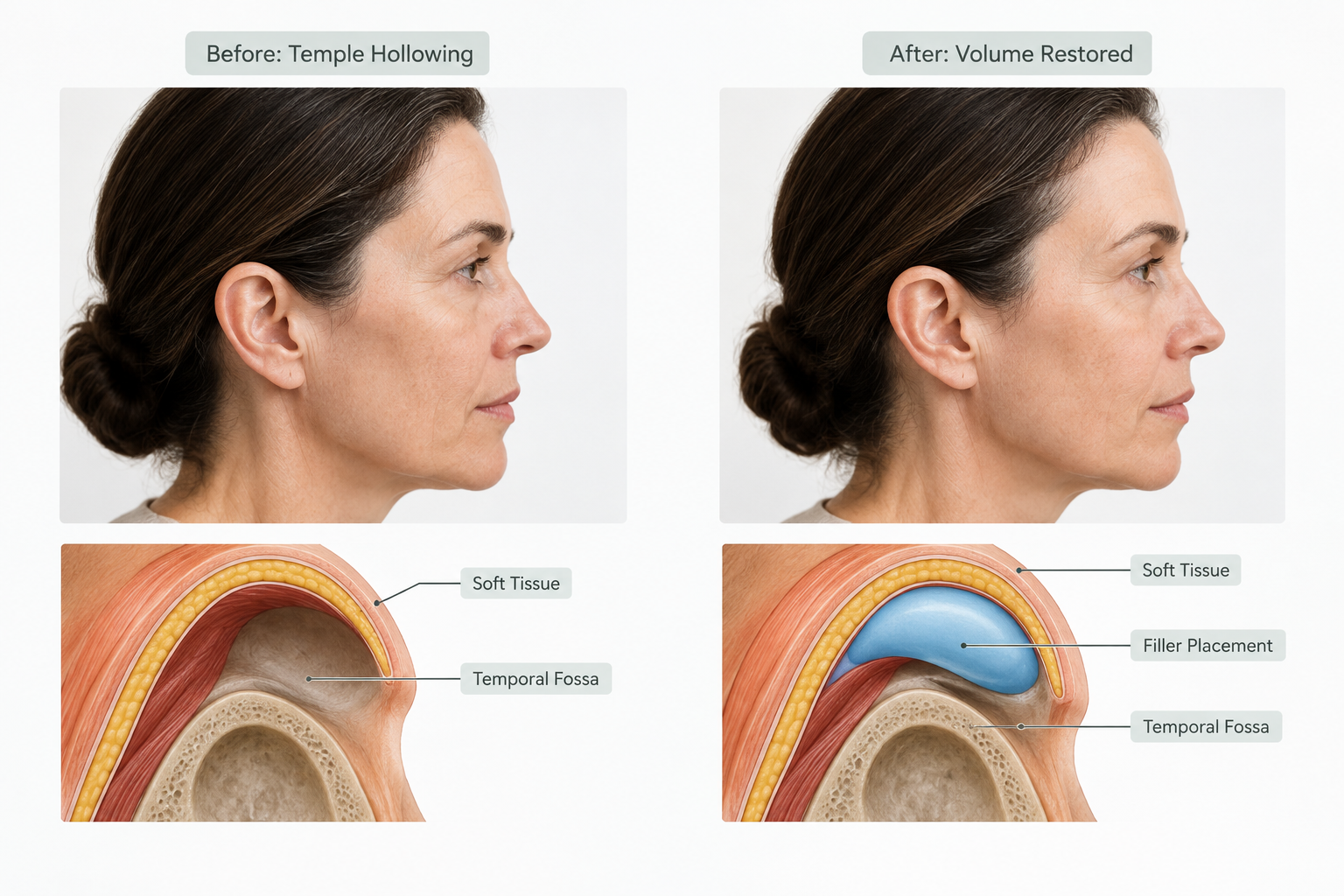
As the face ages, several changes occur simultaneously. Subcutaneous fat compartments in the temple region reduce in volume. The underlying temporalis muscle may also thin with age. Bone resorption at the temporal fossa gradually deepens the hollow. The result is a progressively concave temple that can make the face appear skeletonised, tired, or gaunt — even in individuals who maintain a healthy body weight. This hollowing can also cause the brow tail to descend slightly, contributing to a heavier or more aged appearance around the eye.
Understanding these anatomical changes is important because it explains why restoring temple volume is not simply a cosmetic preference. For many patients, addressing temple hollowing forms part of a broader facial rejuvenation approach that considers the face as a three-dimensional structure rather than a collection of isolated lines and wrinkles.
What Is Temple Filler Treatment?
Temple filler treatment involves injecting a dermal filler product into the temporal fossa — the concave area at the side of the head — to restore lost volume and improve the contour of the upper face. The procedure is performed by a trained aesthetic practitioner, typically a doctor, dentist, or nurse prescriber with specialist training in facial anatomy and injectable treatments.
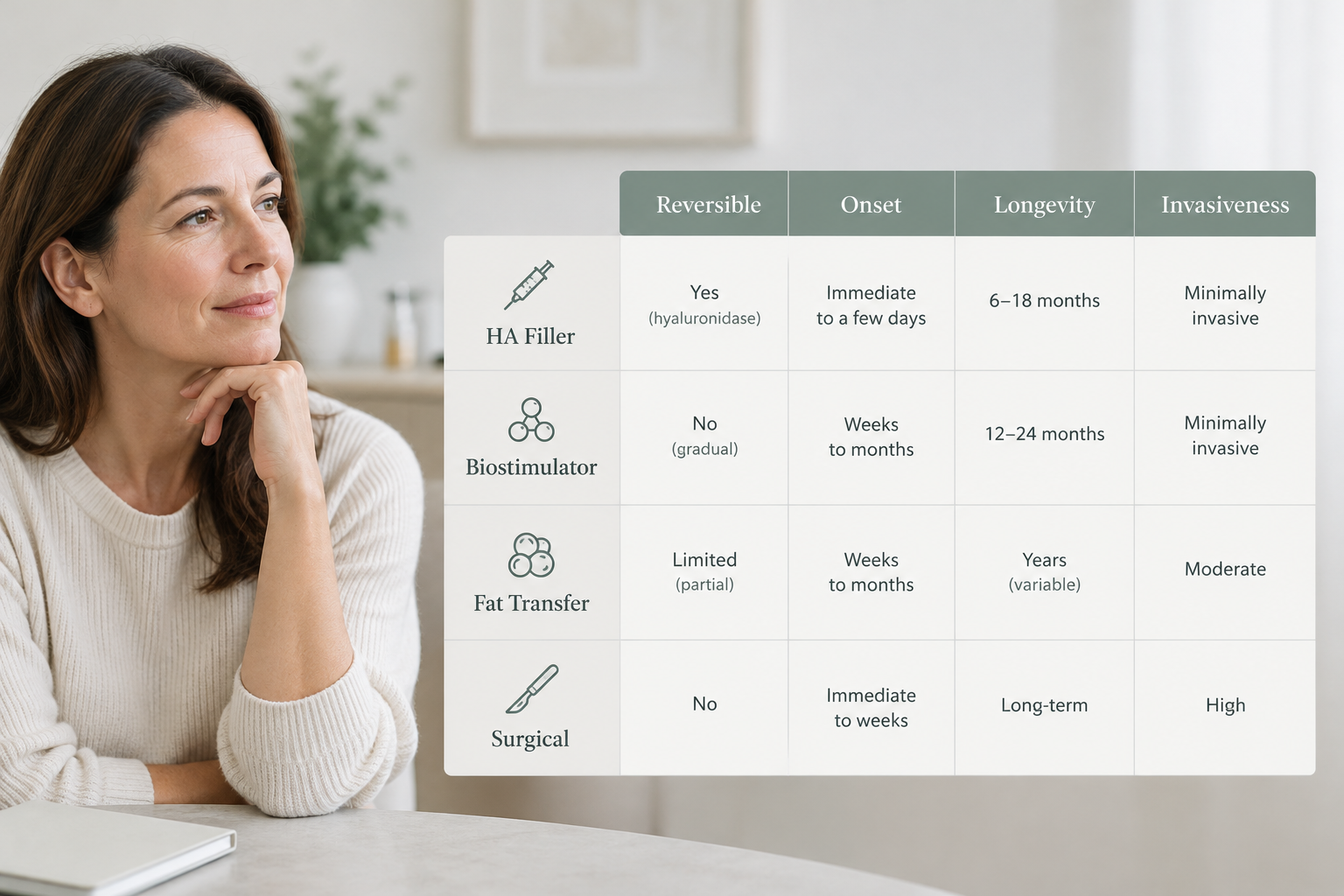
The most commonly used products for temple volumisation are hyaluronic acid (HA) fillers. Hyaluronic acid is a naturally occurring substance found in connective tissue throughout the body, and HA-based fillers are reversible using an enzyme called hyaluronidase. This reversibility is considered an important safety feature, particularly in a vascular area such as the temple. Thicker, more cohesive HA formulations are generally preferred for temple treatment because they provide structural lift and volume rather than superficial hydration.
Calcium hydroxylapatite (CaHA) fillers, such as Radiesse, are also used by some practitioners for temple volumisation. These products stimulate collagen production in addition to providing immediate volume, and they are not reversible with hyaluronidase. Poly-L-lactic acid (PLLA), a collagen biostimulator, is another option that works gradually over several months by encouraging the body’s own collagen synthesis. The choice of product depends on the degree of volume loss, the patient’s anatomy, the practitioner’s assessment, and individual treatment goals.
How Temple Filler Restores Volume
When a hyaluronic acid filler is injected into the temple region, it physically occupies space within the tissue, pushing the overlying skin and soft tissue outward to recreate a more convex contour. The filler integrates with surrounding tissue and attracts water molecules, which contributes to its volumising effect. The result is a smoother, fuller lateral upper face that more closely resembles the youthful facial shape.
Collagen-stimulating products such as poly-L-lactic acid work differently. Rather than providing immediate volume through physical bulk, PLLA particles trigger a controlled inflammatory response that stimulates fibroblasts — the cells responsible for producing collagen — to generate new collagen fibres over time. This means results develop gradually over several weeks to months, and multiple treatment sessions are usually required. The trade-off is that results from collagen biostimulators may last longer than those from standard HA fillers, though individual response varies considerably.
Regardless of the product used, the goal of temple filler treatment is to restore the natural convexity of the temporal region, support the overlying soft tissue, and improve the overall balance and proportion of the face. It is not intended to dramatically alter facial structure but rather to subtly correct age-related volume loss.
What the Treatment Appointment Involves
A temple filler appointment typically begins with a detailed consultation, during which the practitioner assesses the degree of temple hollowing, reviews the patient’s medical history, discusses treatment goals, and explains the procedure, expected outcomes, and potential risks. Photographs are usually taken for reference.
Before injection, the skin is cleansed and a topical anaesthetic cream may be applied to reduce discomfort. Many filler products also contain lidocaine, a local anaesthetic, within the formulation, which helps to improve comfort during the procedure. The practitioner will then inject the filler using either a needle or a blunt-tipped cannula. Cannulas are often preferred in the temple area because they may reduce the risk of inadvertent vascular injury compared with sharp needles, though both techniques are used by experienced practitioners.
The injection itself is generally brief, often taking only a few minutes per side. The practitioner may massage the area gently to ensure even distribution of the product. The entire appointment, including consultation and aftercare advice, typically lasts between 30 and 60 minutes. Patients are usually able to return to normal activities the same day, though strenuous exercise and certain activities are generally advised against for 24 to 48 hours.
Expected Results and How Long They Last
Results from hyaluronic acid temple filler are visible immediately after treatment, though some initial swelling is normal and the final result becomes clearer once this subsides, usually within one to two weeks. The treated area should appear smoother and more rounded, with improved lateral facial contour. In some cases, patients also notice a subtle improvement in brow position as the supporting tissue is restored.
The longevity of temple filler results depends on several factors, including the type and volume of product used, the individual’s metabolism, lifestyle factors such as sun exposure and smoking, and the degree of movement in the area. Hyaluronic acid fillers in the temple region typically last between 12 and 24 months, with some patients reporting results at the longer end of this range due to the relatively low movement in the temporal area compared with more dynamic facial zones such as the lips or nasolabial folds.
Collagen biostimulators such as poly-L-lactic acid may produce results that last two years or longer in some patients, though this varies. Calcium hydroxylapatite fillers generally last 12 to 18 months in this area. Maintenance treatments are required to sustain results over time, and the frequency of these will depend on how the individual metabolises the product.
Risks and Side Effects of Temple Filler
Temple filler treatment carries risks that prospective patients should understand clearly before proceeding. The temple region is anatomically complex and contains several important vascular structures, including the superficial temporal artery and its branches. Inadvertent injection into or compression of a blood vessel can, in rare cases, lead to serious complications including vascular occlusion — a blockage that restricts blood flow to surrounding tissue. In very rare cases, this can result in skin necrosis (tissue death) or, if the ophthalmic circulation is affected, visual disturbance or vision loss. These are rare but serious risks that underline the importance of choosing a practitioner with thorough knowledge of facial vascular anatomy and experience in managing complications.
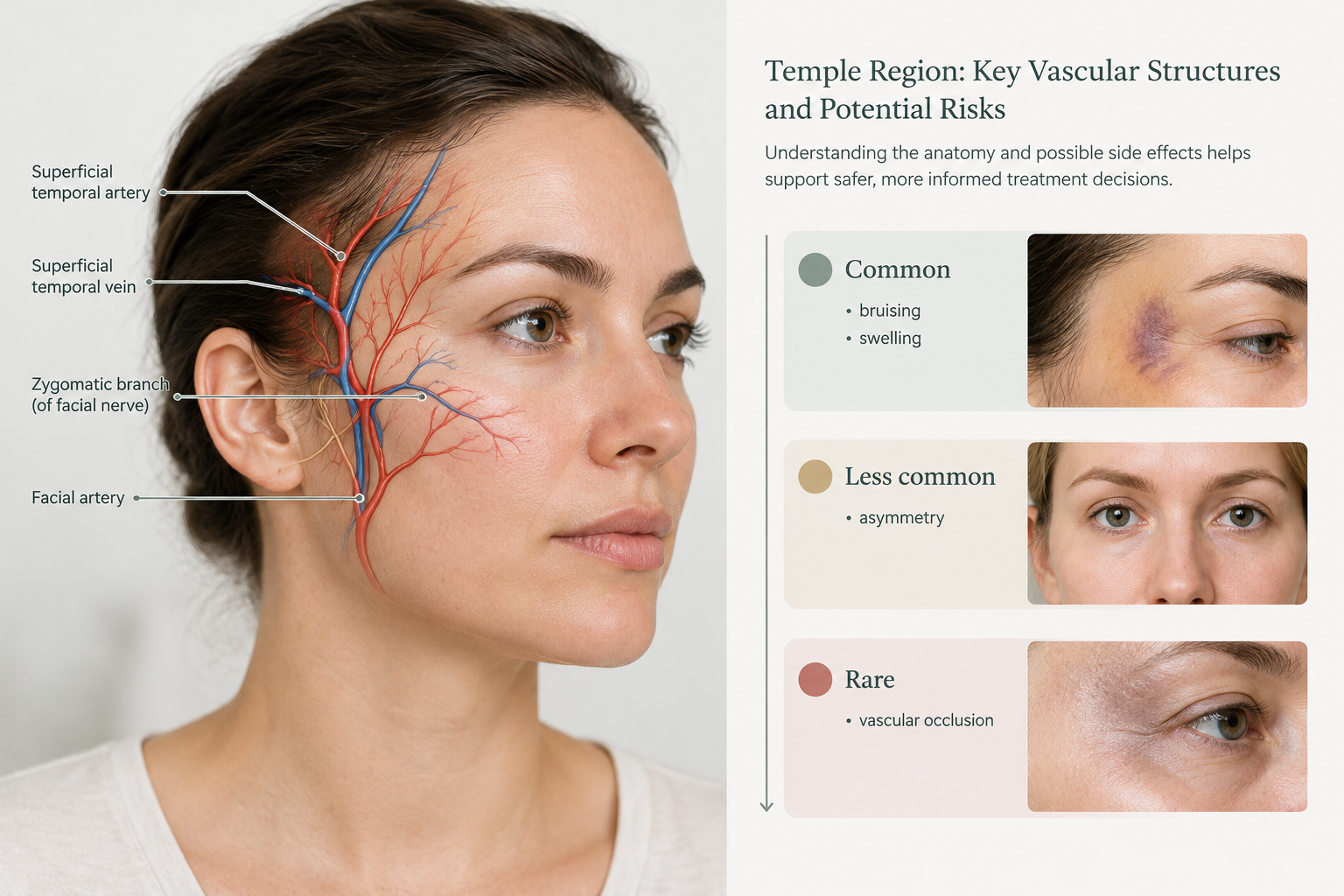
More common and less serious side effects include temporary bruising, swelling, redness, and tenderness at the injection site. These typically resolve within a few days to two weeks. Asymmetry, lumpiness, or an unnatural appearance can occur if the product is not distributed evenly, and these issues may require correction with additional filler or, in the case of HA products, dissolution with hyaluronidase. Infection is a rare but possible complication with any injectable procedure.
Delayed complications such as inflammatory nodules or biofilm-related reactions are uncommon but have been reported with dermal fillers in general. Patients with a history of cold sores should inform their practitioner, as injectable procedures can occasionally trigger a recurrence. Filler migration — where the product moves from the intended area — is less common in the temple than in more mobile facial zones but remains a possibility.
Patients should ensure their practitioner has access to hyaluronidase and is trained in its use, and that the clinic has a clear protocol for managing vascular complications. Asking about the practitioner’s training, experience, and complication management protocols before treatment is entirely reasonable and advisable.
Who May Be Suitable for Temple Filler
Temple filler treatment may be appropriate for adults who have developed noticeable hollowing or concavity in the temporal region due to age-related volume loss. It may also be considered by younger patients who have naturally thin temples and wish to improve facial balance, though age-related volume loss is the most common indication.
Suitable candidates are generally in good overall health, have realistic expectations about what the treatment can achieve, and understand that results are temporary and require maintenance. A thorough consultation with a qualified practitioner is necessary to determine individual suitability.
Who May Not Be Suitable
Temple filler treatment may not be appropriate for individuals who are pregnant or breastfeeding, as injectable treatments are generally avoided during these periods. People with active skin infections, inflammatory skin conditions, or autoimmune disorders affecting the skin in the treatment area may also not be suitable candidates. Those with a known allergy to any component of the filler product, including lidocaine, should discuss this with their practitioner before proceeding.
Patients taking blood-thinning medications such as warfarin, aspirin, or certain supplements may have an increased risk of bruising and should discuss their medication history with the practitioner. Individuals with a history of severe allergic reactions, keloid scarring, or certain connective tissue disorders may require additional assessment. Previous filler treatments in the area should always be disclosed, as the presence of existing product can affect treatment planning.
Temple Filler as Part of a Broader Facial Rejuvenation Plan
Temple volume loss rarely occurs in isolation. Age-related changes affect the entire face simultaneously, and addressing the temples alone may not achieve the most balanced or natural-looking result. Many practitioners approach facial rejuvenation holistically, considering how changes in the temples relate to changes in the cheeks, midface, jawline, and brow.
For example, restoring temple volume may complement cheek filler treatment, which addresses midface volume loss and can improve the appearance of nasolabial folds. Brow-lifting treatments using botulinum toxin may also be considered alongside temple filler to address brow descent. A practitioner experienced in full-face assessment will consider how each treatment area interacts with others to achieve a proportionate and natural result, rather than treating each zone in isolation.
This holistic approach is sometimes referred to as liquid facelift or non-surgical facial rejuvenation, though these terms encompass a wide range of treatments and should not be taken to imply that injectable treatments can replicate the results of surgical procedures.
Alternatives to Temple Filler
For patients who are not suitable for or do not wish to pursue injectable fillers, several alternatives may be worth discussing with a qualified practitioner.
- Collagen biostimulators: Products such as poly-L-lactic acid (Sculptra) or calcium hydroxylapatite (Radiesse) stimulate the body’s own collagen production and may provide longer-lasting volume improvement than standard HA fillers, though results develop gradually and multiple sessions are typically needed.
- Autologous fat transfer: Fat harvested from another area of the patient’s body can be injected into the temples. This surgical approach may offer longer-lasting results but carries the risks associated with any surgical procedure, including anaesthesia, donor site recovery, and variable fat survival rates.
- Thread lifting: Absorbable threads can be used to lift and reposition soft tissue in the upper face, though their role in addressing temple volume loss specifically is limited compared with their use in cheek or brow lifting.
- Surgical temporal augmentation: In cases of significant volume loss, surgical implants or fat grafting performed by a plastic surgeon may be considered. This is typically reserved for more advanced cases where non-surgical options are unlikely to achieve a satisfactory result.
- Skin quality treatments: Where the primary concern is skin laxity or texture rather than volume loss, treatments such as radiofrequency, ultrasound-based skin tightening, or laser resurfacing may be more appropriate, though these do not address volume deficit directly.
The most appropriate option depends on the individual’s anatomy, degree of volume loss, treatment goals, medical history, and personal preferences. A consultation with an experienced practitioner is the best way to assess which approach may be most suitable.
Frequently Asked Questions
How much filler is typically used in the temples?
The volume of filler used varies depending on the degree of hollowing and the individual’s anatomy. Practitioners generally use a conservative amount to achieve a natural result, and the specific volume is determined during the consultation and assessment. It is not appropriate to specify exact volumes here, as treatment should always be tailored to the individual by a qualified practitioner.
Is temple filler painful?
Most patients describe the procedure as mildly uncomfortable rather than significantly painful. Topical anaesthetic cream applied before treatment and lidocaine within many filler formulations help to reduce discomfort. Some patients experience a sensation of pressure during injection. Individual pain tolerance varies, and any concerns about discomfort should be discussed with the practitioner beforehand.
How soon will I see results from temple filler?
With hyaluronic acid fillers, volume improvement is visible immediately after treatment. However, initial swelling can temporarily affect the appearance, and the final result is usually clearer after one to two weeks once swelling has resolved. Collagen biostimulators produce gradual results that develop over several weeks to months.
Can temple filler be dissolved if I am unhappy with the result?
Hyaluronic acid fillers can be dissolved using hyaluronidase, an enzyme that breaks down HA. This is one of the reasons HA-based products are commonly preferred in the temple area. Calcium hydroxylapatite and poly-L-lactic acid products are not reversible in the same way, which is an important consideration when choosing a product.
Will temple filler affect my hairline or scalp?
Temple filler is injected into the temporal fossa and does not directly affect the hairline or scalp. However, any swelling or bruising in the area may temporarily extend toward the hairline. This is a normal post-treatment response and resolves as the swelling subsides.
How do I choose a practitioner for temple filler?
Given the vascular complexity of the temple region, it is important to choose a practitioner with specific training in facial anatomy, injectable treatments, and complication management. Relevant qualifications, professional registration, and experience in treating the temple area are all worth verifying. Asking about the practitioner’s approach to vascular complications and whether they carry hyaluronidase is entirely appropriate.
Can temple filler improve the appearance of my brows?
Restoring volume to the temple area may provide some support to the lateral brow, which can subtly improve the appearance of brow descent associated with volume loss in this region. However, temple filler is not a brow-lifting treatment in the conventional sense, and significant brow ptosis may require additional or alternative approaches such as botulinum toxin or surgical intervention.
Is Temple Filler the Right Approach for Your Facial Concerns?
Temple filler treatment can be an effective way to address age-related volume loss in the upper face, helping to restore a more youthful and balanced facial contour. For patients with noticeable temple hollowing, the procedure may produce meaningful improvements in facial proportion and overall appearance. Results from hyaluronic acid fillers are visible quickly, are reversible, and can last one to two years or more with appropriate maintenance.
However, temple filler is not a universally suitable treatment, and it carries real risks that should be weighed carefully. The vascular anatomy of the temple region means that practitioner selection is particularly important — this is not an area where inexperience or inadequate training can be overlooked. Patients should seek a thorough consultation with a qualified and experienced practitioner who can assess their individual anatomy, discuss realistic outcomes, and explain the full range of options available.
For those with more advanced volume loss, or where injectable treatment alone is unlikely to achieve a satisfactory result, alternatives such as collagen biostimulators, fat transfer, or surgical approaches may be worth exploring. A good practitioner will present these options honestly and help the patient make an informed decision based on their specific goals and circumstances. If you are considering temple filler, a detailed face-to-face consultation is the essential first step.