

Bruising after tear trough filler is one of the most common concerns patients raise both before and after treatment. The under-eye area is particularly prone to discoloration because the skin there is exceptionally thin and the tissue beneath it is dense with small, delicate blood vessels. Understanding what normal bruising looks like, how long it typically lasts, and what you can do to support healing can make the recovery period far less stressful — and help you plan your schedule more realistically.
Key Takeaways
- Tear trough filler bruising is a common but temporary side effect, typically resolving within 7 to 14 days depending on severity.
- Bruising progresses through a predictable colour sequence — from red or purple, through blue and green, to yellow — before fading completely.
- Technique matters: a blunt-tip cannula generally carries a lower bruising risk than a sharp needle, though neither method eliminates the possibility entirely.
- Cold compresses, topical arnica, and avoiding blood-thinning medications before treatment can meaningfully reduce bruising risk and duration.
- Certain warning signs — including skin blanching, sudden vision changes, or rapidly expanding bruising — require immediate medical attention and should not be confused with normal post-treatment discoloration.
Why the Under-Eye Area Bruises More Easily
The periorbital area is one of the most technically demanding regions for filler injection, and bruising here tends to be more visible and longer-lasting than in other facial zones. The skin beneath the eye — the infraorbital region — is among the thinnest on the entire face, sometimes measuring less than half a millimetre. Beneath that skin lies a network of small veins, capillaries, and lymphatic vessels, including branches of the infraorbital artery. When a needle or cannula passes through this tissue, even a minor disruption to one of these vessels can cause blood to leak into the surrounding tissue, producing the discoloration known clinically as ecchymosis.
The visibility of under-eye bruising is compounded by the fact that there is very little overlying tissue to absorb or conceal the leaked blood. In other areas of the face — the cheeks, for example — a small amount of bleeding may go unnoticed beneath thicker skin. Under the eye, even a modest bruise can appear dramatic. This does not mean something has gone wrong; it reflects the anatomy of the area rather than an error in technique.
Lymphatic drainage in the periorbital area is also relatively sluggish compared with other facial regions, which means that both bruising and swelling can take longer to clear. Fluid accumulation in this zone is normal and expected in the first few days after treatment.
How Common Is Bruising After Tear Trough Filler?
Bruising is frequently described as a common side effect of under-eye filler, but the actual incidence varies considerably depending on technique, patient factors, and how bruising is defined. One retrospective series examining over 1,400 filler treatments found a bruising rate of approximately 4.3%, suggesting that while bruising is a well-recognised risk, it does not affect the majority of patients. Other studies report higher rates, particularly when sharp needles are used or when patients have not followed pre-treatment preparation advice. The honest answer is that bruising is possible for anyone receiving tear trough filler, but it is not inevitable.
Individual factors play a significant role. Patients who are naturally bruise-prone — whether due to genetics, skin type, or medication use — are more likely to experience visible discoloration after treatment. Age is also relevant, as skin becomes thinner and blood vessels more fragile over time, increasing the likelihood of post-injection bruising in older patients.
Bruising Timeline: What to Expect Day by Day
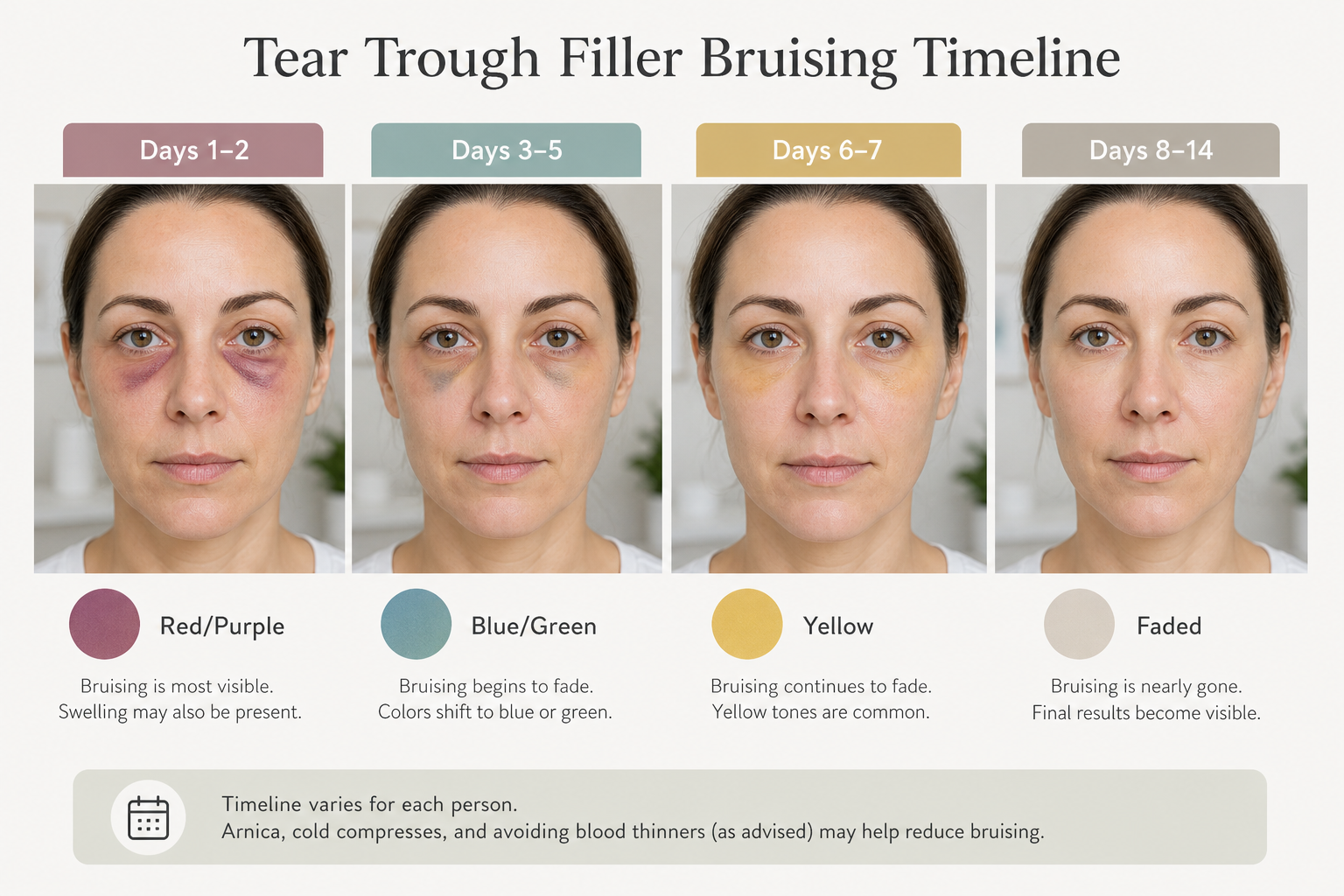
Tear trough filler bruising follows a broadly predictable pattern, though the pace of resolution varies between individuals. The following timeline reflects typical progression for mild to moderate bruising.
| Days After Treatment | What You May Notice | What Is Happening |
|---|---|---|
| Days 1–2 | Red, purple, or dark bruising at the injection site; possible swelling | Blood has leaked from disrupted vessels into surrounding tissue; inflammation peaks |
| Days 3–5 | Bruise deepens to blue or blue-green; swelling begins to reduce | Haemoglobin in leaked blood begins to break down into biliverdin, producing a greenish hue |
| Days 6–7 | Colour shifts toward yellow or light brown | Biliverdin converts to bilirubin, which appears yellow; bruise is fading |
| Days 8–14 | Discoloration fades; skin returns to normal tone | Bilirubin is reabsorbed; tissue healing is largely complete |
Mild bruising often resolves within five to seven days. More significant bruising — particularly if a larger vessel was disrupted — may take up to two weeks to fade completely. The filler settling period, during which the hyaluronic acid filler integrates with surrounding tissue and any residual swelling subsides, typically spans two to four weeks. For this reason, most practitioners recommend a review appointment at around two weeks post-treatment to assess the final result accurately.
The Science Behind the Colour Change
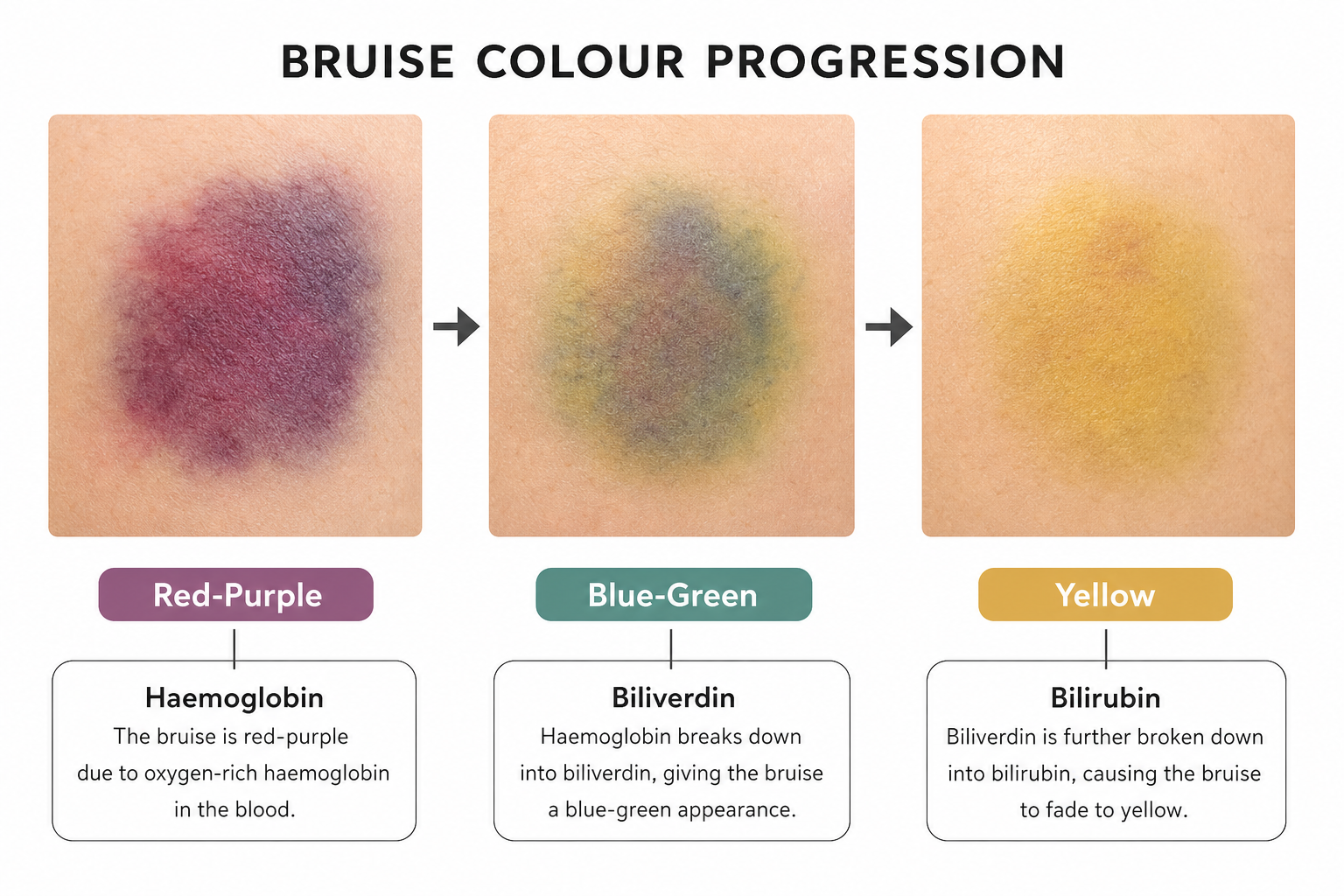
The colour progression of a bruise is not random — it reflects the stepwise breakdown of haemoglobin, the oxygen-carrying protein in red blood cells. When blood leaks into tissue, haemoglobin is initially broken down into a compound called biliverdin, which has a blue-green colour. Biliverdin is then converted to bilirubin, which appears yellow or light brown. As bilirubin is gradually reabsorbed by the body, the discoloration fades entirely. This process takes time because the enzymes responsible for haemoglobin breakdown work at a fixed rate — there is no way to significantly accelerate the chemistry itself, though certain aftercare measures can support the surrounding tissue and circulation.
Understanding this sequence is practically useful: a bruise that turns green or yellow is not worsening — it is healing. Patients who are alarmed by a colour change from purple to green on day four can be reassured that this represents normal progression toward resolution.
Factors That Influence How Long Bruising Lasts
Injection Technique: Cannula vs. Needle
The choice between a blunt-tip cannula and a sharp needle is one of the most significant technique-related factors affecting bruising risk. A sharp needle creates multiple puncture points as the injector places filler along the tear trough, and each puncture carries a small risk of vessel disruption. A blunt-tip cannula, by contrast, is introduced through a single entry point and guided beneath the skin without cutting through tissue in the same way. Because the cannula tip is rounded rather than sharp, it tends to push vessels aside rather than pierce them, reducing the likelihood of bleeding.
Clinical evidence broadly supports a lower bruising rate with cannula technique, though the difference is not absolute. Cannulas are not universally preferred for tear trough treatment — the anatomy of the area, the depth of correction required, and the practitioner’s training and experience all influence which approach is most appropriate. A skilled injector using a needle may produce less bruising than a less experienced practitioner using a cannula. Technique and experience are inseparable from instrument choice.
Pre-Treatment Risk Factors
Several factors increase the likelihood of bruising and are largely within the patient’s control in the days before treatment. Blood-thinning medications and supplements — including aspirin, ibuprofen, fish oil, vitamin E, and certain herbal preparations — reduce the blood’s ability to clot, meaning that any vessel disruption during injection is more likely to result in visible bruising. Patients are generally advised to avoid these where medically safe to do so for approximately one week before treatment, though this should always be discussed with the prescribing clinician before stopping any prescribed medication.
Alcohol consumption in the 24 to 48 hours before treatment also has a blood-thinning effect and is best avoided. Caffeine is a less commonly discussed but relevant factor — it causes vasodilation and may increase bleeding tendency at the injection site. Avoiding coffee and other caffeinated drinks on the day of treatment is a simple precaution that some practitioners recommend.
Individual Healing and Skin Type
Some patients are simply more bruise-prone than others, regardless of technique or preparation. Genetic factors, skin thickness, and the fragility of individual blood vessels all contribute to how readily bruising occurs and how quickly it resolves. Skin tone can also affect how bruising appears: in patients with darker skin tones, bruising may present differently — sometimes as a darker discoloration rather than the classic purple-to-yellow sequence — and may be harder to detect in its early stages. This does not mean healing is slower, but it does mean that the visual cues used to track resolution may differ.
Aftercare: How to Support Healing
Cold and Warm Compresses
Applying a cold compress or ice pack to the treated area in the first 24 to 48 hours after treatment helps constrict blood vessels, reduce inflammation, and limit the extent of bruising. The compress should be wrapped in a clean cloth rather than applied directly to the skin, and used for short intervals of around ten minutes at a time to avoid cold injury. After the first 48 hours, the approach changes: switching to a warm compress from day two or three onward can help improve local circulation and encourage the reabsorption of leaked blood, potentially speeding resolution. This transition from cold to warm is a clinically useful step that is often overlooked in standard aftercare advice.
Topical and Oral Arnica
Arnica montana is one of the most widely recommended remedies for post-injection bruising. Topical arnica gel applied gently to the bruised area may help reduce discoloration and swelling, though it should not be applied directly to broken skin or open puncture sites. Oral arnica tablets are also commonly used, with some patients beginning a course in the days before treatment as a preventive measure. The evidence base for arnica is modest rather than definitive, but it is generally well tolerated and widely used in aesthetic practice as a supportive measure.
Bromelain and Other Supplements
Bromelain, an enzyme derived from pineapple, has anti-inflammatory properties and is sometimes recommended to support bruise resolution after filler treatment. It is available as a supplement and is thought to help break down proteins involved in bruising and swelling. Fresh pineapple contains bromelain naturally, though the concentration in supplement form is considerably higher. Vitamin K cream applied topically may also help accelerate bruise fading by supporting the clotting cascade in superficial tissue. These supplements are generally considered safe adjuncts, but patients taking prescribed medications should check for interactions before use.
Lifestyle Adjustments
Sleeping with the head elevated for the first few nights after treatment reduces fluid accumulation in the periorbital area and can help limit both swelling and bruising. Avoiding strenuous exercise for at least 48 hours is important because physical exertion increases blood pressure and circulation, which can worsen bruising at the injection site. UV exposure should also be avoided during the healing period — sunlight can darken post-inflammatory discoloration and prolong the time it takes for a bruise to fade, a factor that is rarely mentioned but clinically relevant. Avoiding alcohol in the days following treatment supports healing for the same reasons it is avoided beforehand.
Makeup and Camouflage
Most practitioners advise waiting at least 24 hours before applying makeup to the treated area to allow puncture sites to close and reduce infection risk. Once makeup is permitted, a colour-correcting concealer can be highly effective at neutralising the discoloration. The principle is straightforward: colours opposite each other on the colour wheel cancel each other out. A peach or orange-toned colour-correcting concealer applied beneath a standard concealer counteracts the blue and purple tones of a fresh bruise. As the bruise progresses to yellow, a lavender-toned corrector may be more effective. Applying a setting powder over the top helps the coverage last through the day.
Distinguishing Bruising from the Tyndall Effect
Not all discoloration under the eye after filler treatment is bruising. The Tyndall effect is a separate phenomenon that can cause a persistent bluish or greyish hue beneath the skin, and it is important to distinguish it from post-injection bruising because the cause and management are entirely different. The Tyndall effect occurs when hyaluronic acid filler is placed too superficially — too close to the skin surface — and scatters light in a way that produces a blue tint. Unlike bruising, which develops immediately after treatment and fades within one to two weeks, the Tyndall effect does not resolve on its own and may persist for months or until the filler is dissolved using hyaluronidase. If a bluish discoloration under the eye is still present several weeks after treatment and was not there before, it is worth discussing with your practitioner to determine whether it represents residual bruising or a Tyndall effect.
Warning Signs That Require Immediate Attention
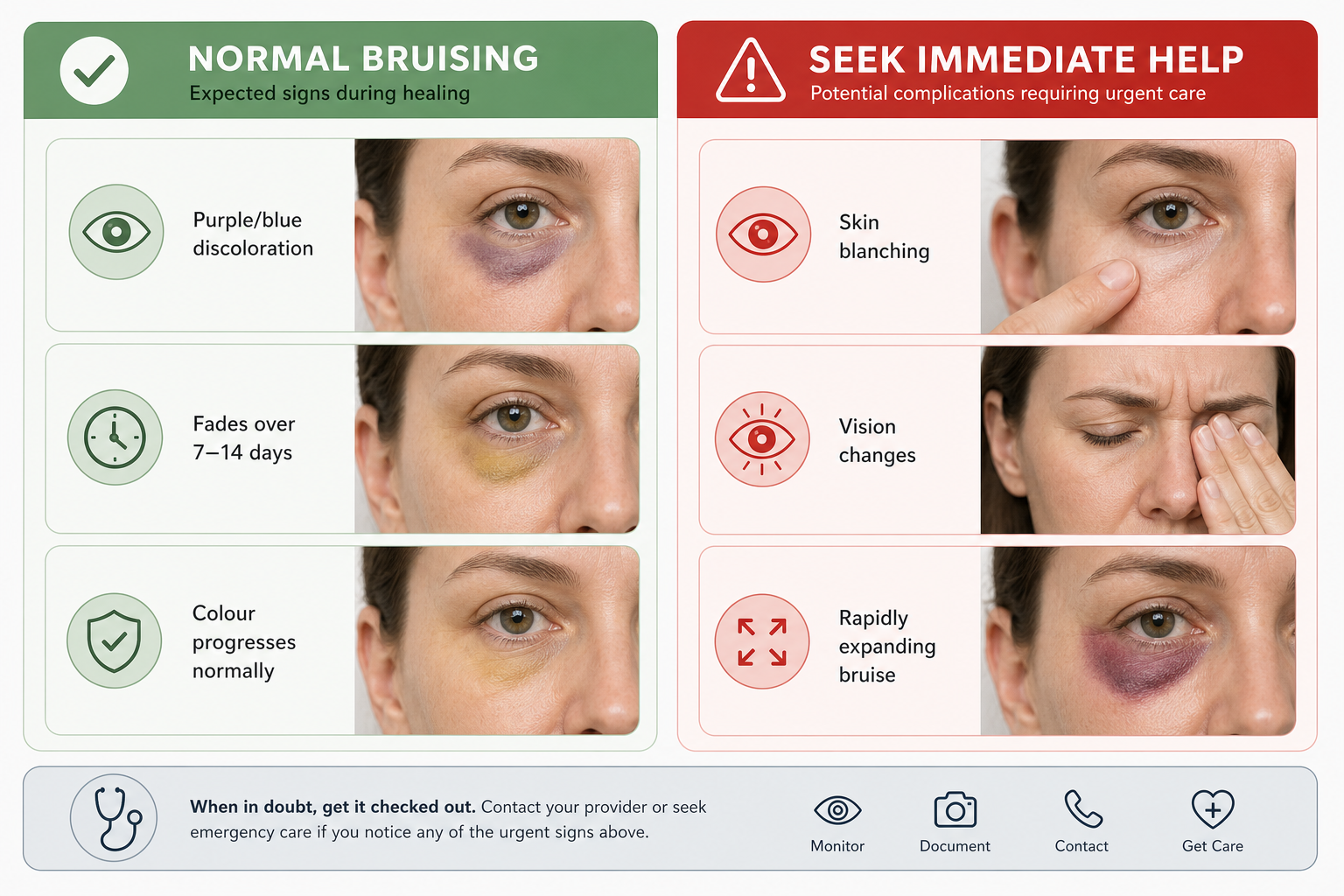
The vast majority of bruising after tear trough filler is a normal, temporary side effect that resolves without intervention. However, certain signs indicate a more serious problem that requires prompt medical assessment. Vascular compromise — where filler inadvertently compresses or enters a blood vessel, restricting blood flow to surrounding tissue — is a rare but serious complication that can cause lasting harm if not treated quickly. The warning signs of vascular compromise are distinct from normal bruising and include skin blanching (a sudden white or pale discoloration of the skin), a mottled or net-like skin pattern, severe or disproportionate pain, and any changes to vision, including blurring or loss of sight. A rapidly expanding bruise that grows significantly in size within the first hour after treatment is also a reason to contact your practitioner immediately.
Bruising accompanied by increasing warmth, redness, and tenderness beyond the first 48 hours may suggest infection rather than normal healing and should be assessed by a clinician. Bruising that shows no improvement after two to three weeks is also worth reviewing, as prolonged discoloration can occasionally indicate a haematoma — a localised collection of blood — that may benefit from professional treatment. In-clinic options for stubborn bruising include pulsed-dye laser and intense pulsed light (BBL/photofacial) treatments, which can accelerate the breakdown of haemoglobin in the skin and speed resolution.
| Normal Post-Treatment Bruising | Seek Immediate Medical Attention |
|---|---|
| Purple, blue, or green discoloration at the injection site | Skin blanching or sudden white/pale patches |
| Mild tenderness and swelling in the first 48 hours | Mottled or net-like skin pattern (livedo reticularis) |
| Colour progressing from purple to green to yellow | Sudden or severe pain disproportionate to the procedure |
| Gradual fading over 7–14 days | Any change in vision, including blurring or loss of sight |
| Bruise stable or reducing in size | Rapidly expanding bruise within the first hour |
Swelling vs. Bruising: Understanding the Difference
Swelling and bruising often occur together after tear trough filler, but they are distinct processes with different timelines. Swelling — caused by the body’s inflammatory response to injection and by the water-attracting properties of hyaluronic acid filler — typically peaks within the first 24 to 72 hours and then gradually subsides over one to two weeks. It may make the under-eye area look fuller or puffier than the intended result, which can be alarming if patients are not prepared for it. Bruising, by contrast, is caused by blood leaking from disrupted vessels and follows the colour-change timeline described above. Both are temporary, but swelling generally resolves before bruising in mild cases. Patients should be aware that the result visible at day three or four — when both swelling and bruising may be at their most noticeable — does not reflect the final outcome of treatment.
Planning Around Downtime: Scheduling Advice
One of the most practical questions patients ask is how far in advance of a social event they should book their tear trough filler appointment. Given that bruising can last up to two weeks in some cases, booking at least two to three weeks before any important occasion is a sensible minimum. This also allows time for the filler settling period to complete and for a review appointment to take place if any adjustment is needed. Patients who are known to bruise easily, or who are having tear trough filler for the first time, may prefer to allow a full three to four weeks of buffer. The downtime associated with tear trough filler is generally described as minimal in the sense that most patients can return to work and daily activities within a day or two, but visible bruising may require makeup coverage for up to two weeks.
Common Myths About Under-Eye Filler Bruising
Myth: Bruising means something went wrong. Bruising after tear trough filler does not indicate an error or a complication. It is a predictable consequence of injecting into a vessel-dense area with thin skin. Even highly experienced practitioners working with optimal technique cannot guarantee a bruise-free outcome for every patient.
Myth: A larger bruise means more filler was used. The size of a bruise reflects the amount of blood that leaked from a disrupted vessel, not the volume of filler placed. A small amount of filler can produce a significant bruise if a vessel is nicked, while a larger volume placed with a cannula may produce no bruising at all.
Myth: Bruising that turns green means it is infected. Green discoloration is a normal stage in haemoglobin breakdown and indicates that the bruise is healing, not that infection is present. Infection typically presents with increasing redness, warmth, swelling, and pain — not with the colour progression described above.
Myth: You should massage the bruise to help it heal faster. Massaging a fresh bruise can worsen it by disrupting the clotting process and spreading leaked blood further into surrounding tissue. Gentle cold compress application is preferable in the first 48 hours; massage of the treated area should be avoided unless specifically advised by your practitioner.
Frequently Asked Questions
How long does tear trough filler bruising typically last?
Mild bruising after tear trough filler usually resolves within five to seven days. More significant bruising may take up to 10 to 14 days to fade completely. The exact duration depends on the extent of vessel disruption, individual healing capacity, and how well aftercare advice is followed.
Can I speed up the healing of a bruise after under-eye filler?
While you cannot significantly accelerate the underlying chemistry of haemoglobin breakdown, several measures may support faster resolution. These include cold compresses in the first 48 hours followed by warm compresses from day two or three, topical arnica gel, bromelain supplements, head elevation during sleep, and avoiding alcohol, strenuous exercise, and UV exposure during the healing period.
Is it normal for bruising to look worse on day two or three?
Yes. Bruising often appears to worsen in the first 48 to 72 hours as blood continues to spread through the tissue and the inflammatory response peaks. This is a normal part of the healing process and does not indicate that the bruise is getting worse in a medically significant sense. The colour change from red-purple to blue-green that follows is also a normal sign of healing.
When can I wear makeup after tear trough filler?
Most practitioners advise waiting at least 24 hours before applying makeup to the treated area. Once permitted, a peach or orange-toned colour-correcting concealer applied beneath a standard concealer can effectively neutralise the blue and purple tones of a bruise.
Does a cannula reduce bruising compared to a needle?
A blunt-tip cannula generally carries a lower bruising risk than a sharp needle for tear trough filler because it is less likely to pierce blood vessels. However, the difference is not absolute, and practitioner skill and experience are equally important factors. Some anatomical situations may make a needle the more appropriate choice regardless of bruising risk.
When should I be concerned about bruising after tear trough filler?
Contact your practitioner immediately if you notice skin blanching, a mottled skin pattern, severe or worsening pain, any change in vision, or a bruise that expands rapidly in the first hour after treatment. These may indicate vascular compromise, which requires urgent assessment. Bruising that shows no improvement after two to three weeks should also be reviewed.
Will the bruising affect my final results?
Bruising itself does not affect the outcome of tear trough filler. Once the discoloration and any associated swelling have fully resolved — typically by two weeks — the filler will have settled and the result can be properly assessed. A review appointment at around two weeks is the appropriate time to evaluate whether any refinement is needed.
Planning Your Recovery with Realistic Expectations
Tear trough filler bruising is a well-understood, temporary side effect that resolves on its own in the majority of cases within one to two weeks. Knowing what to expect — the colour progression, the typical timeline, and the aftercare steps that genuinely help — makes the recovery period considerably easier to manage. Choosing a qualified and experienced practitioner, preparing appropriately in the days before treatment, and following post-treatment care advice all contribute to a smoother recovery and a lower likelihood of significant bruising.
If you are considering tear trough filler and have concerns about bruising risk — particularly if you take blood-thinning medications, have a history of easy bruising, or have an important event approaching — these are exactly the kinds of factors to discuss during a thorough consultation. A practitioner who takes time to assess your individual anatomy, medical history, and expectations before recommending treatment is best placed to advise on technique, timing, and realistic downtime for your specific situation.