

Skin laxity is one of the most common concerns patients bring to aesthetic clinics, yet the range of available skin tightening treatments can make choosing the right approach genuinely confusing. Radiofrequency, focused ultrasound, laser resurfacing, microneedling, and energy-based body contouring devices all claim to firm and lift — but they work through different mechanisms, suit different skin types and areas, and deliver results on very different timescales. This article compares the leading non-surgical and minimally invasive options so you can approach a consultation with a clearer understanding of what each treatment involves, what it can realistically achieve, and where its limitations lie.
Quick Comparison
| Treatment | Mechanism | Common Areas | Sessions Typically Needed | Onset of Results | Longevity | Downtime | Best Suited To |
|---|---|---|---|---|---|---|---|
| Radiofrequency (RF) | Thermal energy heats dermis to stimulate collagen remodelling | Face, jowls, neck, abdomen, thighs | 3–6 (some devices: 1–2) | 1–3 months | 1–2 years with maintenance | Minimal to none | Mild to moderate laxity; all skin tones |
| High-Intensity Focused Ultrasound (HIFU) | Focused ultrasound energy targets SMAS layer and deep dermis | Brow, jawline, neck, décolletage | 1–2 per year | 2–6 months | 12–18 months | Minimal; possible temporary tenderness | Mild to moderate laxity; facial lifting |
| Fractional Laser Resurfacing | Controlled thermal injury triggers collagen and elastin renewal | Face, neck, décolletage, hands | 1–3 | 1–3 months | 1–3 years | 3–10 days depending on ablation level | Skin texture, fine lines, mild laxity |
| Radiofrequency Microneedling | Microneedles deliver RF energy directly into dermis | Face, neck, body | 3–4 | 4–8 weeks after final session | 1–2 years | 1–3 days redness/swelling | Skin texture, pores, mild to moderate laxity |
| Ultrasound Body Contouring (e.g. focused RF body devices) | Deep thermal energy targets subdermal tissue | Abdomen, arms, thighs, buttocks | 4–6 | 2–4 months | Variable; maintenance recommended | Minimal | Body skin laxity after fat reduction or weight loss |
| Plasma Fibroblast | Ionised plasma arc causes controlled skin contraction | Eyelids, perioral area, neck | 1–2 | 4–8 weeks | 2–3 years | 5–10 days (crusting, swelling) | Localised laxity; not suitable for darker skin tones |
| Thread Lift | Absorbable sutures mechanically lift and stimulate collagen | Midface, jowls, brows, neck | 1 (may repeat after 12–18 months) | Immediate mechanical lift; collagen over months | 12–24 months | 3–7 days bruising/swelling | Moderate laxity; patients not ready for surgery |
Why Skin Loses Firmness Over Time
Understanding why skin becomes lax helps explain why different treatments target different tissue layers. Skin firmness depends primarily on collagen and elastin fibres within the dermis, as well as the integrity of the superficial musculoaponeurotic system (SMAS) — a fibromuscular layer beneath the facial fat compartments. From the mid-twenties onwards, collagen production gradually slows, existing fibres become less organised, and elastin loses its recoil capacity. Sun exposure, smoking, significant weight fluctuation, and genetic factors all accelerate this process. The result is skin that appears thinner, less resilient, and less able to maintain its position against the effects of gravity.
Non-surgical skin tightening treatments work by stimulating the body’s own collagen remodelling response rather than physically removing excess skin. This means results are generally more gradual and more modest than surgical options such as a facelift or abdominoplasty — a distinction that is important to understand before choosing a treatment pathway.
Radiofrequency Skin Tightening
Radiofrequency (RF) skin tightening is one of the most widely used non-invasive approaches for facial and body laxity. RF devices deliver controlled thermal energy into the dermis and subdermis, raising tissue temperature to a level that causes immediate collagen fibre contraction and, over subsequent weeks and months, stimulates new collagen and elastin production through a wound-healing response. Because RF energy is not absorbed selectively by melanin, it is generally considered suitable for all Fitzpatrick skin types — an important advantage over some laser-based approaches.
Monopolar and bipolar RF devices differ in how deeply energy penetrates. Monopolar devices such as Thermage tend to reach deeper tissue layers and are often used for facial and body tightening in a single treatment session, though results develop gradually over three to six months. Multipolar and fractional RF platforms typically require a course of treatments — often four to six sessions — and are commonly used for facial rejuvenation, neck laxity, and body areas including the abdomen and inner thighs. Results from RF skin tightening are generally described as subtle to moderate rather than dramatic, and maintenance sessions are usually recommended to sustain improvement.
The treatment experience varies by device. Most RF sessions involve a warming or heating sensation, and some patients find higher-energy protocols uncomfortable. Topical anaesthetic cream is sometimes applied beforehand. Downtime is typically minimal — mild redness or swelling that resolves within hours to a day — making RF a practical option for patients who cannot accommodate significant recovery time.
High-Intensity Focused Ultrasound (HIFU)
High-intensity focused ultrasound, commonly referred to as HIFU, delivers focused acoustic energy to precise tissue depths — typically 1.5 mm, 3 mm, and 4.5 mm — creating small thermal coagulation points without damaging the overlying skin surface. At the 4.5 mm depth, HIFU targets the SMAS layer, the same anatomical plane addressed during surgical facelift procedures. This depth of action is a distinguishing feature of HIFU compared with most surface-level RF devices, and it is the basis for HIFU’s reputation as a non-surgical lifting treatment for the brow, jawline, and neck.
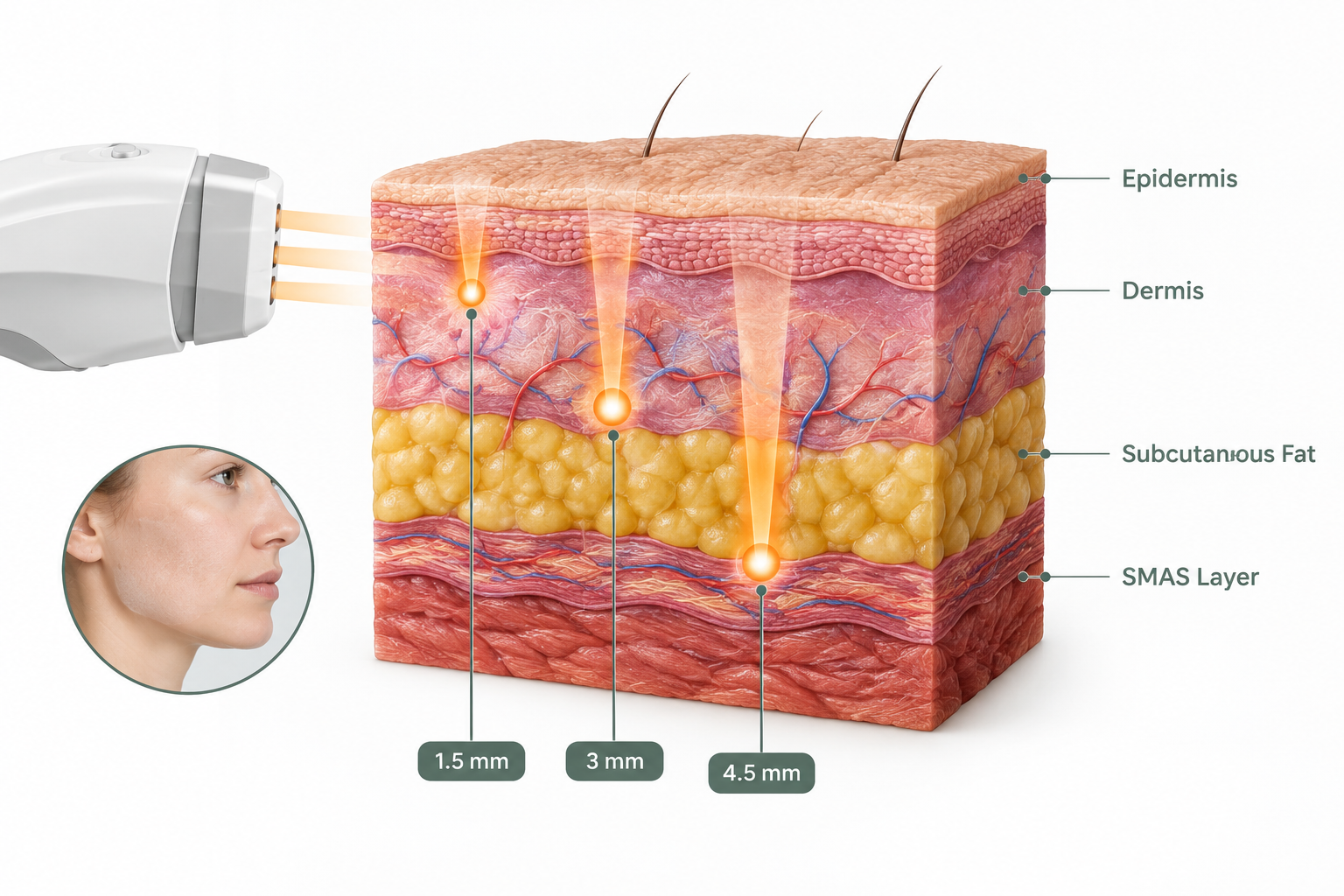
Clinical evidence for HIFU in facial lifting is reasonably well established, with multiple studies demonstrating measurable improvements in skin laxity and patient-reported satisfaction, though the degree of lift is considerably less than surgical intervention. Results typically become visible two to six months after treatment as collagen remodelling progresses, and a single annual or biannual session is often sufficient for maintenance in suitable candidates. HIFU is not recommended for patients with active skin infections, open wounds, or implanted metal devices in the treatment area, and it may be less effective in patients with very significant skin laxity who may be better served by surgical consultation.
Discomfort during HIFU treatment can be notable, particularly over bony areas. Practitioners may offer pain relief options, and the level of discomfort varies between devices and individual pain thresholds. Temporary redness, mild swelling, or tingling are common in the days following treatment; more significant adverse effects are uncommon but have been reported, including temporary nerve sensitivity and, rarely, fat atrophy with older or incorrectly calibrated devices.
Radiofrequency Microneedling
Radiofrequency microneedling combines two established mechanisms: the micro-injury stimulus of traditional microneedling and the thermal collagen remodelling effect of radiofrequency energy. Fine insulated needles penetrate the dermis to a controlled depth, then deliver RF energy directly at the needle tips. Because the energy is deposited within the dermis rather than at the skin surface, the epidermis is largely spared, which reduces the risk of post-inflammatory hyperpigmentation and makes the treatment more suitable for a broader range of skin tones than some ablative laser options.
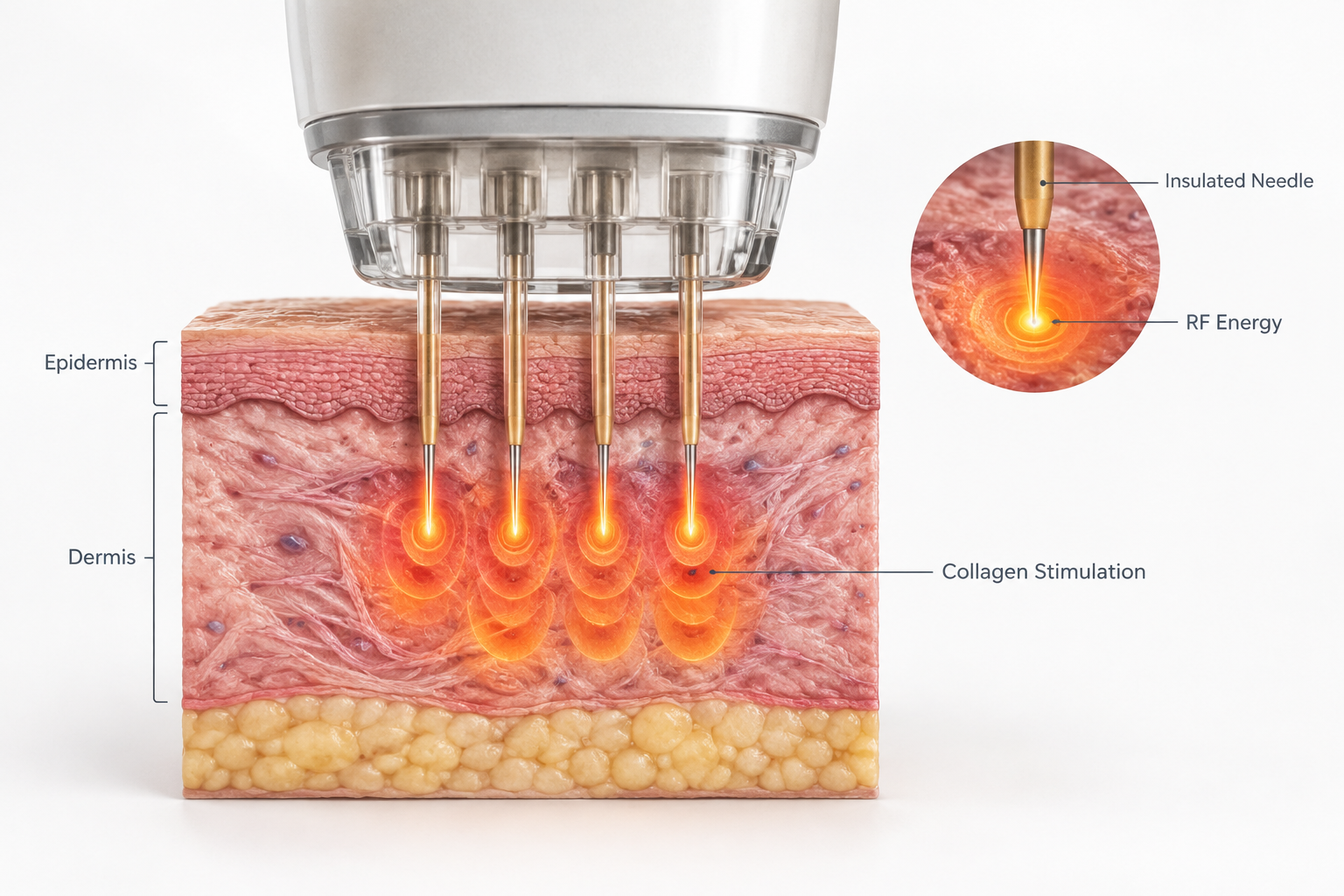
Radiofrequency microneedling is particularly effective for improving skin texture, enlarged pores, acne scarring, and mild to moderate skin laxity on the face and neck. It is also used on body areas including the abdomen and décolletage. A typical course involves three to four sessions spaced four to six weeks apart, with results becoming more apparent over the following two to three months as collagen remodelling continues. Downtime is generally short — one to three days of redness and mild swelling — though this varies with needle depth and energy settings. Devices in this category include Morpheus8, Genius, and Sylfirm X, among others, each with slightly different needle configurations and energy delivery profiles.
Fractional Laser Resurfacing
Fractional laser resurfacing treats a fraction of the skin surface at a time, creating microscopic columns of thermal injury surrounded by untreated tissue. This approach accelerates healing compared with fully ablative laser resurfacing while still stimulating significant collagen and elastin renewal. Two main categories exist: ablative fractional lasers (such as fractional CO2 and Er:YAG) remove tissue within each treatment column, while non-ablative fractional lasers (such as Fraxel Restore) heat tissue without vaporising it.
Ablative fractional laser resurfacing delivers more pronounced skin tightening and resurfacing results but requires more downtime — typically five to ten days of redness, swelling, and skin peeling — and carries a higher risk of post-inflammatory hyperpigmentation in darker skin tones. Non-ablative fractional treatments involve less downtime (two to five days of redness) but generally require more sessions to achieve comparable improvement. Fractional laser resurfacing is particularly well suited to patients with fine lines, uneven skin texture, and mild to moderate laxity, especially on the face, neck, and décolletage. It is less commonly used for body skin tightening due to the larger surface areas involved and the associated recovery burden.
Plasma Fibroblast Treatment
Plasma fibroblast treatment uses a handheld device to create a controlled arc of ionised plasma between the device tip and the skin surface. This causes localised skin contraction and stimulates fibroblast activity — the cells responsible for producing collagen and elastin. The treatment is most commonly used for areas of localised skin laxity such as upper and lower eyelids, perioral lines, and the neck, where the degree of skin contraction achievable can be clinically meaningful.
An important limitation of plasma fibroblast treatment is its unsuitability for darker skin tones (Fitzpatrick types IV–VI), where the risk of post-inflammatory hyperpigmentation or hypopigmentation is significantly elevated. Downtime is more substantial than most energy-based treatments — small carbon crusts form at each treatment point and typically take seven to ten days to resolve, during which sun avoidance and careful aftercare are essential. Evidence for plasma fibroblast treatment is less extensive than for RF or HIFU, and results vary considerably depending on device quality, practitioner technique, and patient skin characteristics. Patients should be cautious about the wide variation in device quality and practitioner training in this category.
Thread Lifts
Thread lifts are a minimally invasive rather than non-invasive option, involving the insertion of absorbable sutures — typically made from polydioxanone (PDO), polylactic acid (PLLA), or polycaprolactone (PCL) — beneath the skin using fine needles or cannulas. Barbed or coned threads mechanically reposition tissue to create an immediate lifting effect, while the suture material also stimulates a collagen response around the thread as it gradually absorbs over several months.
Thread lifts are generally positioned between energy-based non-surgical treatments and surgical facelift procedures in terms of the degree of correction they can achieve. They may be suitable for patients with moderate facial laxity affecting the midface, jowls, brows, or neck who are seeking a more visible lift than energy-based devices can provide but who are not ready or suitable for surgery. Results typically last twelve to twenty-four months depending on the thread material and individual tissue response. Risks include bruising, swelling, asymmetry, thread visibility or palpability, and, less commonly, infection or thread migration. A thorough consultation with a qualified and experienced practitioner is particularly important for this procedure.
Body Skin Tightening: Specific Considerations
Skin laxity on the body — particularly the abdomen, inner thighs, upper arms, and buttocks — presents different challenges from facial laxity. The surface areas are larger, the skin may be thicker, and laxity is often more pronounced, particularly following significant weight loss or pregnancy. Non-surgical body skin tightening treatments can produce meaningful improvement in mild to moderate laxity, but patients with significant excess skin following major weight loss are unlikely to achieve satisfactory results without surgical intervention such as abdominoplasty or brachioplasty.
It is also important to distinguish between skin tightening and fat reduction. Devices such as cryolipolysis (CoolSculpting), injectable fat dissolvers, and ultrasonic cavitation primarily target subcutaneous fat rather than improving skin quality or firmness. Some combination devices — such as Emsculpt Neo, which combines radiofrequency with high-intensity focused electromagnetic (HIFEM) muscle stimulation — address both fat reduction and skin tightening simultaneously, though the degree of skin tightening achieved varies between patients. Choosing a treatment based on the primary concern — whether that is skin laxity, fat volume, or muscle tone — is an important part of the consultation process.
Risks, Side Effects, and Limitations Across Treatments
All skin tightening treatments carry some degree of risk, and no non-surgical option is without limitations. Common side effects across energy-based treatments include temporary redness, swelling, and tenderness at the treatment site. More significant risks — such as burns, blistering, scarring, or changes in skin pigmentation — are uncommon when treatments are performed correctly by trained practitioners using appropriate settings, but they are not impossible. The risk of adverse effects is generally higher with ablative treatments, higher energy settings, and in patients with darker skin tones or active skin conditions in the treatment area.
A consistent limitation across all non-surgical skin tightening options is that results depend heavily on the degree of existing laxity, the patient’s age, skin quality, lifestyle factors, and individual collagen response. Patients with very significant skin laxity are unlikely to achieve the degree of correction that surgical procedures can provide. Results are also not permanent — collagen remodelling continues to be affected by ageing, sun exposure, and lifestyle, meaning that maintenance treatments are typically needed to sustain improvement over time.
Who May Be Suitable — and Who May Not
Suitable candidates for non-surgical skin tightening treatments are generally adults with mild to moderate skin laxity who have realistic expectations about the degree of improvement achievable without surgery. Patients in good general health, with stable weight, and who are committed to sun protection and skin care are likely to see better and longer-lasting results. Most energy-based treatments are not recommended during pregnancy or breastfeeding, and some are contraindicated in patients with implanted electronic devices such as pacemakers, active skin infections, or certain autoimmune skin conditions.
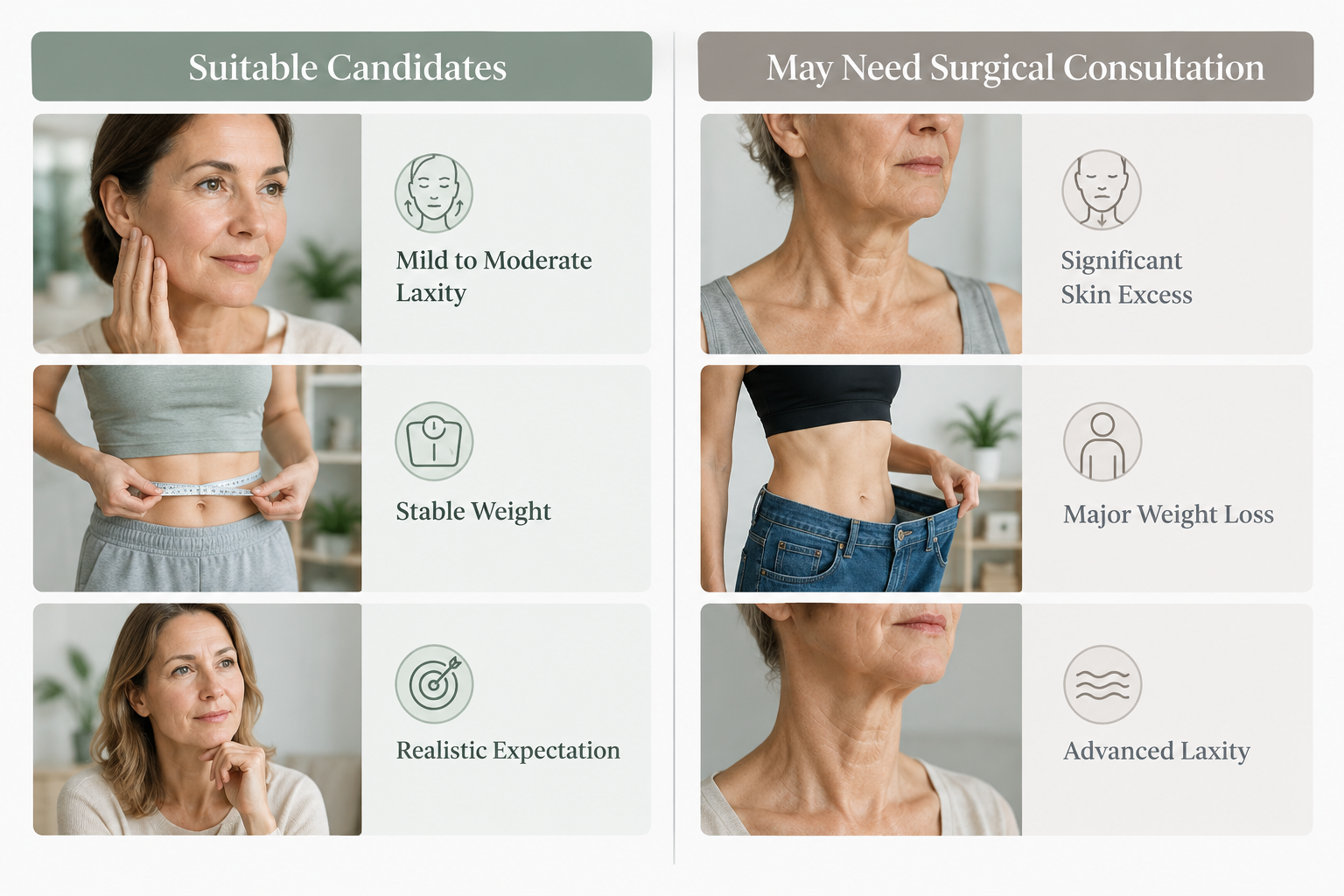
Patients with darker skin tones require careful treatment selection, as some laser and plasma-based treatments carry a higher risk of pigmentation changes. Radiofrequency-based treatments and radiofrequency microneedling are generally considered more suitable across a wider range of skin tones, though individual assessment remains essential. Age alone is not a disqualifying factor, but very advanced skin laxity in older patients may be better addressed through a surgical consultation rather than repeated non-surgical treatments that are unlikely to achieve meaningful correction.
Frequently Asked Questions
How many sessions will I need?
The number of sessions depends on the treatment type and the degree of laxity being addressed. Some devices — such as certain monopolar RF platforms and HIFU — are designed for single annual treatments, while others such as radiofrequency microneedling and multipolar RF typically require a course of three to six sessions. Your practitioner will recommend a treatment plan based on your individual assessment.
When will I see results from a skin tightening treatment?
Because most non-surgical skin tightening treatments work by stimulating collagen remodelling, results are gradual rather than immediate. Initial changes may be visible within four to eight weeks, but the full effect typically develops over two to six months after treatment. Thread lifts are an exception, providing an immediate mechanical lift alongside the longer-term collagen response.
Are skin tightening results permanent?
No non-surgical skin tightening treatment produces permanent results. The collagen stimulated by treatment continues to be affected by the natural ageing process, sun exposure, and lifestyle factors. Most treatments are expected to maintain improvement for one to two years, after which maintenance sessions are typically recommended.
Can skin tightening treatments be combined?
Combination approaches are common in clinical practice. For example, HIFU may be used to address deeper tissue laxity while radiofrequency microneedling improves surface skin quality. Thread lifts are sometimes combined with energy-based treatments. However, combining treatments requires careful planning to avoid overlapping risks, and the timing between procedures matters. A qualified practitioner can advise on appropriate combinations for your specific concerns.
Is there a non-surgical treatment that matches surgical results?
Non-surgical skin tightening treatments cannot replicate the degree of correction achievable with procedures such as a surgical facelift, neck lift, or abdominoplasty. They are most appropriate for patients with mild to moderate laxity or those who wish to delay or complement surgical intervention. Patients with significant skin excess are generally better served by a surgical consultation.
Does skin tightening hurt?
Discomfort varies considerably between treatments and individuals. HIFU can be notably uncomfortable, particularly over bony areas. Radiofrequency treatments typically produce a warming or heating sensation that most patients tolerate well. Radiofrequency microneedling involves needle penetration and may require topical anaesthetic. Thread lifts involve local anaesthetic injections. Practitioners can discuss pain management options at consultation.
How do I know which skin tightening treatment is right for me?
The most appropriate treatment depends on the area of concern, the degree of laxity, your skin tone, medical history, lifestyle, and realistic goals. A thorough in-person assessment by a qualified aesthetic practitioner or dermatologist is the most reliable way to identify which option — or combination of options — is likely to be most effective and safe for your individual situation.
Choosing a Skin Tightening Treatment: Matching the Option to Your Goals
No single skin tightening treatment is universally superior — the right choice depends on where laxity is most pronounced, how much improvement is realistic without surgery, your skin tone, your tolerance for downtime, and how frequently you are prepared to return for maintenance. HIFU remains a strong option for patients seeking facial lifting with minimal downtime and is one of the few non-surgical treatments that targets the deeper SMAS layer. Radiofrequency-based treatments — whether standalone or combined with microneedling — offer versatility across skin tones and body areas, with a well-established safety profile. Fractional laser resurfacing delivers meaningful skin quality improvement alongside tightening but requires more recovery time. Thread lifts provide a more visible mechanical lift for moderate laxity but carry a different risk profile and require a practitioner with specific procedural expertise.
For body skin laxity, managing expectations is particularly important. Non-surgical options can produce genuine improvement in mild to moderate cases, but significant skin excess — especially following major weight loss — is unlikely to respond adequately to energy-based treatments alone. If you are uncertain whether a non-surgical approach is appropriate for your degree of laxity, a consultation that includes an honest discussion of surgical alternatives is worthwhile.
Before committing to any skin tightening treatment, seek a consultation with a qualified and experienced practitioner who can assess your skin in person, explain the realistic outcomes for your specific situation, and recommend a treatment plan that reflects your goals rather than a one-size-fits-all protocol. Asking about the practitioner’s training, the device being used, and what results are genuinely achievable for your degree of laxity are all reasonable and important questions to raise.