

Key Takeaways
- Polynucleotides are a bio-stimulator derived from purified DNA fragments that stimulate fibroblast activity and support collagen and elastin synthesis in the under-eye skin.
- They are most effective for improving skin quality, fine lines, crepey under-eye skin, and dark circles caused by skin thinning or poor microcirculation — not for filling hollow tear troughs or removing true eye bags.
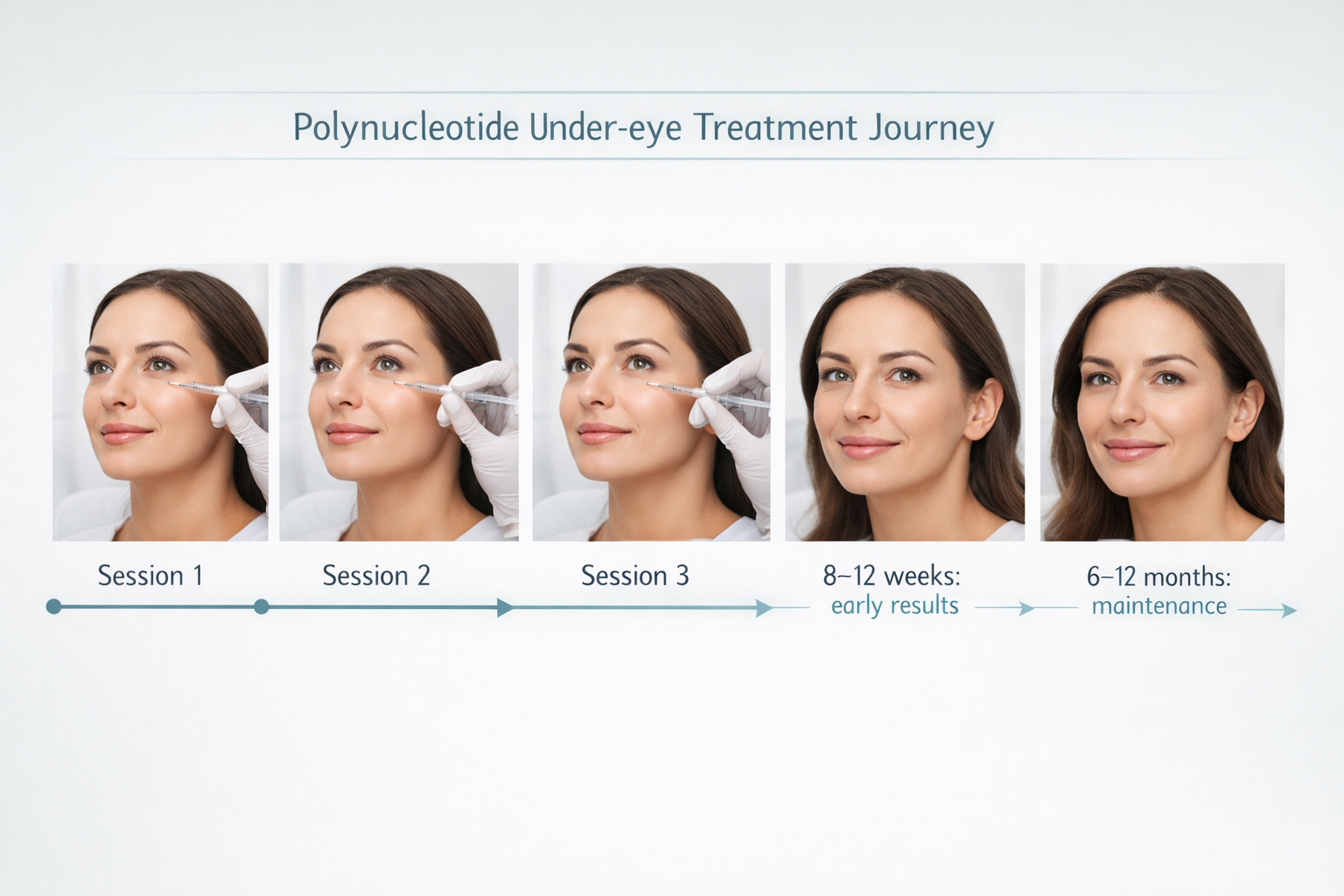
- Results are gradual and typically become visible over 8–12 weeks; a course of two to four sessions is usually recommended.
- Polynucleotide treatment is a non-volumising treatment and works differently from hyaluronic acid tear trough filler — the two approaches address different concerns and can sometimes be combined.
- A consultation with a qualified medical practitioner is essential to determine whether polynucleotides, filler, or a combination protocol is appropriate for your specific anatomy and concerns.
What Are Polynucleotides and Why Are They Used Under the Eyes?
Polynucleotides — often abbreviated to PN or referred to by the scientific term polydeoxyribonucleotide (PDRN) — are long chains of purified DNA fragments derived from salmon or trout sperm. The DNA is extensively processed and purified to remove proteins that could trigger an immune response, leaving behind the nucleotide building blocks that the body can use to support cellular repair and regeneration. Because of their origins, polynucleotide products are not suitable for people with a fish or seafood allergy, and they are not vegan-friendly — a consideration that is rarely mentioned in patient-facing information but is worth knowing before booking.
The under-eye area is one of the most structurally delicate regions of the face. The skin here is significantly thinner than elsewhere, has fewer sebaceous glands, and is subject to constant movement from blinking and facial expression. These factors make it particularly prone to early signs of ageing, including fine lines, skin laxity, crepey texture, and changes in pigmentation. Polynucleotide injections have gained considerable interest in periorbital rejuvenation precisely because their regenerative mechanism targets skin quality at a cellular level rather than simply adding volume.
How Do Polynucleotides Work Under the Eyes?
When a CE-marked polynucleotide product is injected into the superficial dermal layer of the under-eye skin, the purified DNA fragments are taken up by local cells and used as raw material for cellular repair. The primary mechanism involves fibroblast stimulation — fibroblasts are the cells responsible for producing collagen and elastin, the structural proteins that give skin its firmness and elasticity. By providing nucleotide building blocks, polynucleotides encourage fibroblasts to increase their output of collagen and elastin, gradually improving the extracellular matrix that supports the skin from within.
Beyond collagen and elastin synthesis, polynucleotides also promote angiogenesis — the formation of new small blood vessels — which can improve microcirculation in the periorbital area. This is relevant to dark circles that have a vascular component, where sluggish circulation causes haemoglobin breakdown products to accumulate and show through thin skin. Additionally, polynucleotides have hydrophilic properties, meaning they attract and retain water within the tissue, contributing to improved skin hydration and plumpness without adding structural volume in the way that hyaluronic acid filler does.
This combination of fibroblast stimulation, improved microcirculation, and deep hydration is why polynucleotides are described as a bio-stimulator rather than a filler. The improvement is driven by the body’s own regenerative processes, which is why results develop gradually over weeks rather than appearing immediately after treatment.
What Can Polynucleotides Treat Under the Eyes — and What They Cannot
Understanding which under-eye concerns polynucleotides can realistically address — and which they cannot — is essential for setting appropriate expectations. Under-eye concerns are not a single problem; they have different underlying causes that respond differently to different treatments.
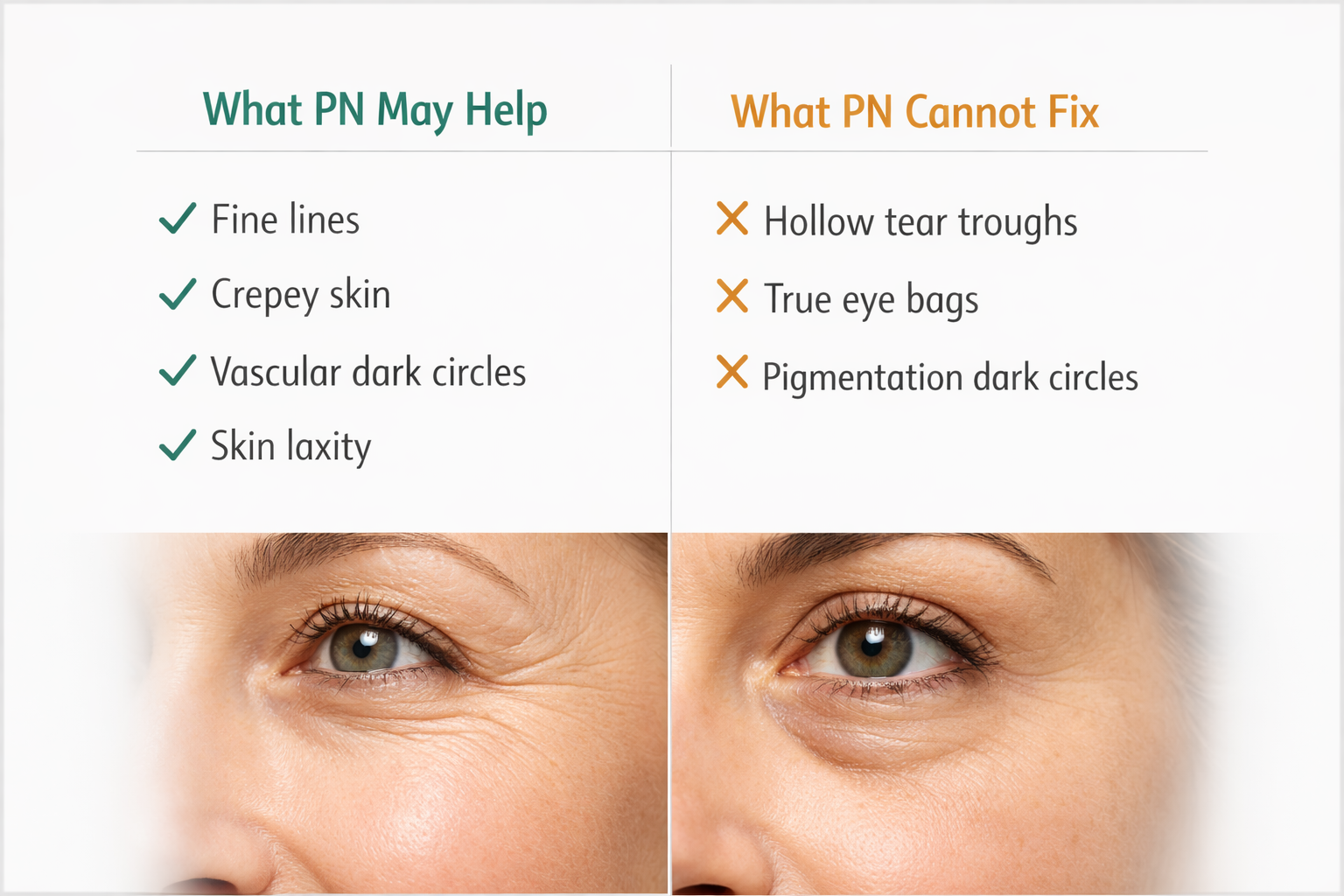
What polynucleotides may help with
- Fine lines and crepey under-eye skin: Improved collagen and elastin production can reduce the appearance of superficial fine lines and the thin, papery texture that develops as skin loses structural support with age.
- Skin quality and texture: Patients often report a noticeable improvement in overall skin quality improvement — skin appears smoother, more hydrated, and less dull after a course of treatment.
- Vascular dark circles: Where dark circles are caused by visible blood vessels or poor microcirculation showing through thin skin, the angiogenic and skin-thickening effects of polynucleotides may reduce their appearance over time.
- Skin laxity and thinning: The regenerative effect on the extracellular matrix can improve skin elasticity and thickness in the periorbital area, which tends to become progressively thinner with age.
- Crow’s feet and periorbital lines: Some practitioners treat the lateral orbital area as well as the under-eye skin, with polynucleotides supporting skin quality improvement in these fine-line-prone zones.
What polynucleotides cannot fix
- Hollow tear troughs: A true tear trough deformity — where there is a visible groove or hollow between the lower eyelid and the cheek — requires volume replacement. Polynucleotides are a non-volumising treatment and will not fill a structural hollow. Hyaluronic acid tear trough filler is the more appropriate option for this concern.
- True eye bags: Herniated orbital fat — the puffiness caused by fat pads pushing forward beneath the eye — is a structural issue that polynucleotides cannot address. Surgical blepharoplasty or, in some cases, carefully placed filler may be more appropriate.
- Pigmentation-based dark circles: Dark circles caused by excess melanin production in the skin — often genetic or sun-related — are a pigmentation concern. Polynucleotides have limited direct effect on melanin synthesis, and patients with this dark circle subtype may see less improvement than those with vascular or structural causes.
- Significant skin excess: Where there is notable loose skin or hooding around the eye, polynucleotides alone are unlikely to produce a significant lifting effect. More advanced skin laxity may require assessment for surgical or energy-based options.
Polynucleotides vs. Tear Trough Filler: Key Differences
The comparison between polynucleotide treatment and hyaluronic acid (HA) tear trough filler is one of the most common questions patients have, and the two approaches are genuinely different in mechanism, outcome, and ideal candidate profile.
| Characteristic | Polynucleotides (PN) | Hyaluronic Acid Tear Trough Filler |
|---|---|---|
| Treatment type | Bio-stimulator / regenerative | Dermal filler / volumiser |
| Mechanism | Fibroblast stimulation, collagen and elastin synthesis, improved microcirculation | Immediate volume replacement with cross-linked HA gel |
| Primary goal | Skin quality improvement, fine lines, vascular dark circles | Filling hollow tear troughs, reducing shadow-based dark circles |
| Onset of results | Gradual — visible at 8–12 weeks | Immediate, with some swelling settling over 2 weeks |
| Longevity | 6–12 months; maintenance every 3–6 months | 9–18 months depending on product and individual metabolism |
| Key risk | Temporary swelling, bruising; fish allergy contraindication | Tyndall effect (bluish discolouration), vascular occlusion, migration |
| Reversibility | Not reversible; effects fade naturally | Reversible with hyaluronidase enzyme |
| Ideal candidate | Skin quality concerns, fine lines, crepey skin, vascular dark circles | Hollow tear trough, volume loss, shadow-based dark circles |
| Sessions required | Course of 2–4 sessions, 2–4 weeks apart | Often 1 session; top-up as needed |
One important safety distinction is the Tyndall effect — a bluish discolouration that can occur when HA filler is placed too superficially in thin under-eye skin. Because polynucleotides do not add a gel-like substance in the same way, this particular risk does not apply to them. However, polynucleotides carry their own considerations, including the fish-derived origin and the need for multiple sessions before results become apparent.
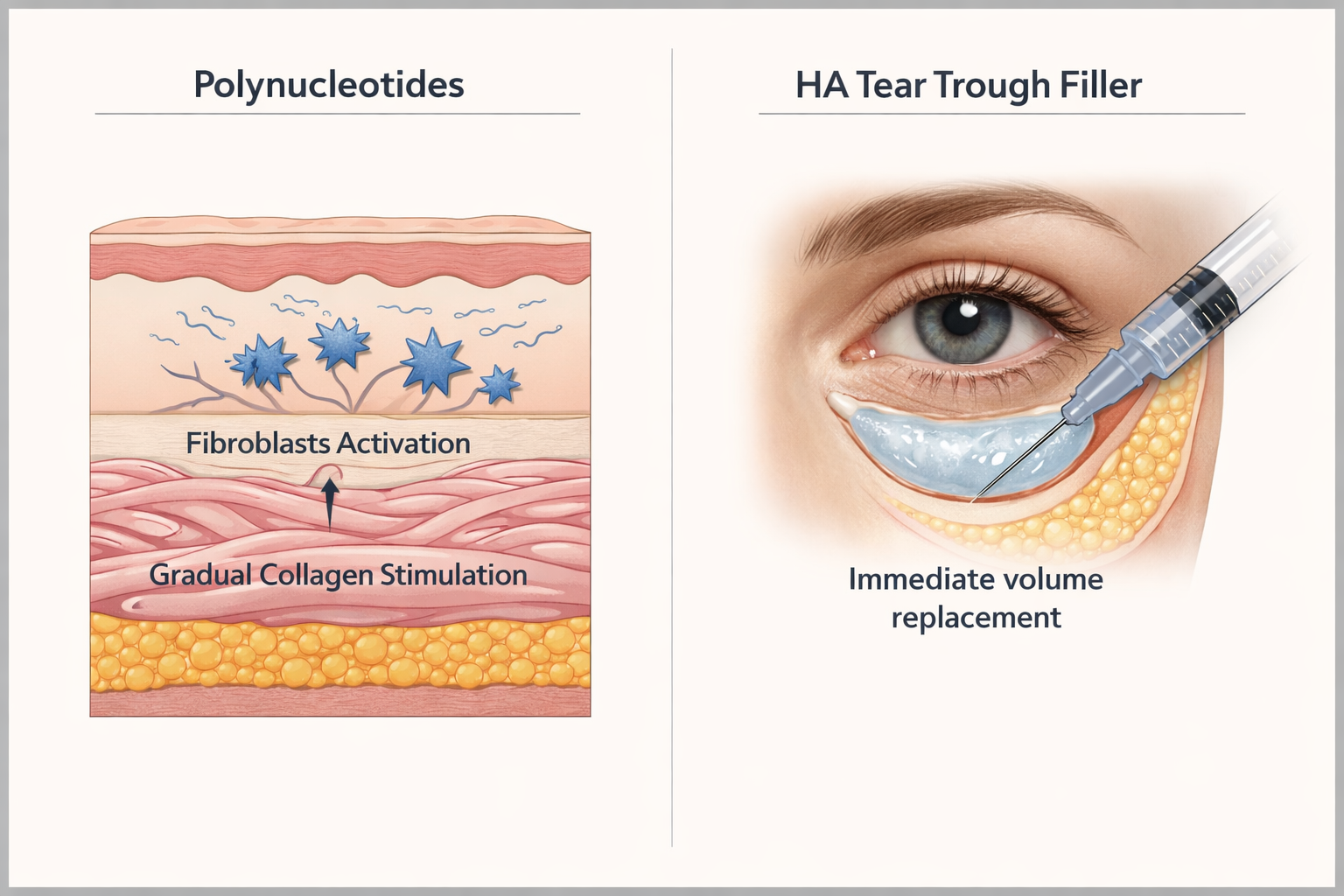
Many practitioners now use a combination protocol — treating with polynucleotides first to improve skin quality and thickness, then assessing whether tear trough filler is still needed. In some cases, improving the skin itself reduces the appearance of hollowness sufficiently that filler becomes unnecessary or can be used more conservatively.
Polynucleotide Products Used for Under-Eye Treatment
Several CE-marked polynucleotide products are used in clinical practice for periorbital rejuvenation, and they differ in their concentration, molecular weight, and formulation. Products specifically developed or indicated for the delicate under-eye area include Plinest Eye, Rejuran i (the ‘i’ denoting ophthalmic-grade formulation), Nucleofill Soft, Vitaran I, and Ameela, among others. Some practitioners also use hybrid products such as Juvelook, which combines PDRN with poly-D,L-lactic acid (PDLLA) for a combined regenerative and biostimulatory effect.
The choice of product is a clinical decision based on the patient’s skin condition, the degree of concern being treated, and the practitioner’s training and experience with specific formulations. Patients should not select a product themselves; the appropriate choice should be made during a thorough consultation with a qualified medical practitioner who is familiar with the range of available options.
What to Expect During Treatment
A polynucleotide under-eye treatment session typically follows a structured process. At the initial consultation, the practitioner will assess the under-eye area, discuss the patient’s concerns and medical history, and determine whether polynucleotides are appropriate or whether an alternative or combination approach would be more suitable.
On the day of treatment, a topical anaesthetic (numbing cream) is usually applied to the under-eye area for 20–30 minutes before the injections begin. The polynucleotide solution is then administered using a fine needle — typically a 30G needle — or in some cases a blunt-tipped micro-cannula, depending on the technique preferred by the practitioner and the specific area being treated. The product is delivered as small intradermal injections, sometimes called micro-boluses, into the superficial dermal layer of the skin rather than into deeper tissue. The entire treatment session usually takes 30–45 minutes including preparation time.
Immediately after treatment, small raised bumps or blebs may be visible at the injection sites. These are normal and typically resolve within 24–48 hours. Some bruising and mild swelling around the delicate under-eye area is common and usually settles within a few days.
How Many Sessions Are Needed and How Long Do Results Last?
Polynucleotide treatment for the under-eye area is not a single-session procedure. Because the mechanism relies on stimulating the body’s own regenerative processes, a course of treatment is required to build a meaningful response. Most practitioners recommend a course of two to four sessions spaced two to four weeks apart, though the exact protocol depends on the individual’s skin condition and the product being used.
Results develop gradually over the course of treatment and continue to improve for several weeks after the final session. Most patients notice meaningful changes at around 8–12 weeks, with peak results typically apparent at three to six months as collagen remodelling progresses. The improvements are not permanent; skin quality improvement tends to last approximately 6–12 months before a maintenance session is recommended. Individual longevity varies depending on age, skin condition, lifestyle factors such as sun exposure and smoking, and how the body responds to treatment.
Side Effects, Risks, and Who May Not Be Suitable
Polynucleotide injections in the under-eye area are generally well tolerated, but side effects and risks should be understood before proceeding. Common and expected side effects include temporary redness, swelling, bruising, and the small injection-site bumps described above. These typically resolve within a few days and are considered part of the normal treatment response rather than complications.
Less common but possible adverse effects include prolonged swelling, infection at injection sites, and asymmetry. Because the under-eye area has a rich vascular supply and very thin skin, technique and practitioner experience are particularly important in this region.
Polynucleotide treatment may not be suitable for everyone. Contraindications include:
- Known allergy to fish or seafood
- Pregnancy or breastfeeding
- Active skin infection or inflammation in the treatment area
- Autoimmune conditions (depending on type and severity — requires individual assessment)
- Patients under 18 years of age
- Certain blood-thinning medications (which may increase bruising risk — discuss with your practitioner)
Patients who follow a vegan lifestyle should also be aware that polynucleotides are derived from animal sources and may wish to consider this before proceeding.
Aftercare Following Under-Eye Polynucleotide Treatment
Following treatment, standard aftercare advice typically includes avoiding strenuous exercise, alcohol, and exposure to heat (including saunas and hot showers) for 24–48 hours, as these can increase swelling and bruising. Makeup should generally be avoided for at least 12 hours to reduce the risk of introducing bacteria to the injection sites. Sleeping with the head slightly elevated on the night of treatment may help minimise swelling around the eyes.
Sun protection is important both immediately after treatment and as an ongoing habit, as UV exposure can accelerate collagen breakdown and reduce the longevity of results. Patients should apply a broad-spectrum SPF daily and avoid prolonged sun exposure during the recovery period.
How Polynucleotides Compare to Other Under-Eye Treatments
Beyond tear trough filler, several other treatments are used for periorbital rejuvenation, and understanding where polynucleotides sit within this landscape helps patients make informed decisions.
Profhilo is another injectable skin booster that uses high-concentration HA to stimulate collagen and elastin production. While both Profhilo and polynucleotides aim to improve skin quality, they work through different mechanisms — Profhilo uses HA as a biostimulatory scaffold, while polynucleotides provide DNA building blocks for cellular repair. Profhilo is not typically used in the immediate under-eye area due to its flow characteristics, whereas specific polynucleotide formulations are designed for this delicate zone.
PRP (platelet-rich plasma) is an autologous treatment — derived from the patient’s own blood — that also stimulates fibroblast activity and tissue regeneration. PRP avoids the fish-derived origin concern and may suit patients who prefer an autologous approach, though it requires blood draw and processing, and the evidence base for under-eye use is still developing. Some practitioners offer a combination protocol using both PN and PRP for enhanced regenerative effect.
Anti-wrinkle injections (botulinum toxin) address dynamic lines caused by muscle movement — such as crow’s feet — by temporarily relaxing the underlying muscle. They do not improve skin quality, hydration, or dark circles, and work through an entirely different mechanism. Botulinum toxin and polynucleotides can be used together as part of a broader periorbital rejuvenation plan.
Energy-based devices such as radiofrequency or laser treatments may also be considered for skin tightening and texture improvement around the eyes, though these carry their own considerations and are typically assessed separately.
What Does Under-Eye Polynucleotide Treatment Cost in the UK?
Pricing for polynucleotide under-eye treatment in the UK varies depending on the clinic, location, practitioner experience, and the specific product used. As a general guide, a single session typically ranges from approximately £150 to £500, with London and premium clinic pricing often at the higher end of this range. A course of three sessions — which is a common recommendation — may cost between £500 and £1,200 in total, with some clinics offering course discounts. Ongoing maintenance sessions are an additional cost to factor into the overall investment.
It is worth noting that the cheapest option is not always the safest or most effective. The under-eye area is anatomically complex and requires precise injection technique. Choosing a qualified medical practitioner with specific training and experience in periorbital treatments is more important than minimising cost.
Frequently Asked Questions
Can polynucleotides remove eye bags?
No. True eye bags caused by herniated orbital fat — where fat pads push forward beneath the eye — are a structural issue that polynucleotide injections cannot address. If puffiness is caused by fluid retention or mild skin laxity, some improvement in skin quality may make the area appear slightly better, but polynucleotides are not a treatment for true eye bags. A clinical assessment is needed to determine the cause of puffiness and the most appropriate approach.
Do polynucleotide injections under the eyes hurt?
The under-eye area is sensitive, but topical numbing cream is applied before treatment to reduce discomfort. Most patients describe the injections as mildly uncomfortable rather than painful. Some stinging or pressure may be felt during the injection, and the area may feel tender for a day or two afterwards.
Can I combine polynucleotides with tear trough filler?
Yes, a combination protocol is used by many practitioners. A common approach is to complete a course of polynucleotide treatment first to improve skin quality and thickness, then reassess whether tear trough filler is still needed. In some cases, the skin improvement alone is sufficient; in others, a smaller amount of filler may be used more safely on improved skin. The sequencing and suitability of combination treatment should be discussed with your practitioner.
How soon will I see results from polynucleotide under-eye treatment?
Results develop gradually. Some patients notice early improvements in skin hydration and texture within a few weeks of starting treatment, but meaningful changes in skin quality, fine lines, and dark circles typically become visible at around 8–12 weeks. Peak results are usually apparent at three to six months as collagen remodelling progresses.
Are polynucleotides safe for the under-eye area?
When administered by a qualified medical practitioner using an appropriate CE-marked polynucleotide product, under-eye polynucleotide treatment has a generally favourable safety profile. The most common side effects — bruising, swelling, and temporary injection-site bumps — are mild and self-resolving. However, the under-eye area requires precise technique, and the treatment is not suitable for everyone. A thorough consultation to assess medical history, allergies, and anatomy is essential before proceeding.
How is the dark circle subtype relevant to whether polynucleotides will work for me?
Dark circles have different underlying causes, and this significantly affects how well polynucleotides are likely to work. Vascular dark circles — caused by visible blood vessels or poor microcirculation showing through thin skin — tend to respond reasonably well, as polynucleotides can improve microcirculation and skin thickness. Structural or shadow-based dark circles caused by a hollow tear trough are better addressed with filler. Pigmentation-based dark circles caused by excess melanin are less likely to respond significantly to polynucleotides alone. A practitioner can help identify which type or combination of types is present.
Is Polynucleotide Treatment Right for Your Under-Eye Concerns?
Polynucleotide injections represent a genuinely useful option within regenerative aesthetics for patients whose primary under-eye concerns relate to skin quality — fine lines, crepey texture, skin thinning, and vascular dark circles. The evidence base, including a 2026 narrative review comparing HA fillers and polynucleotides for periorbital rejuvenation and prospective observational data on polynucleotide injections for periorbital rhytides, supports their role in improving skin quality outcomes in this area, while also acknowledging that results vary between individuals and that the evidence continues to develop.
Polynucleotides are not the right choice for every under-eye concern. Patients with a hollow tear trough deformity, true eye bags, or predominantly pigmentation-based dark circles are unlikely to achieve their goals with polynucleotides alone and should discuss alternative or combination approaches with their practitioner. The treatment also requires a commitment to a course of sessions and realistic expectations about the gradual, natural-looking results that follow.
If you are considering polynucleotide treatment for the under-eye area, a consultation with a qualified medical practitioner who can assess your specific anatomy, identify the underlying causes of your concerns, and recommend an appropriate treatment plan — whether that is polynucleotides, tear trough filler, a combination protocol, or an alternative approach — is the most important first step.