

Key Takeaways
- Microneedling stimulates the skin’s natural healing response, which can gradually reduce dark spots, post-inflammatory hyperpigmentation, melasma, and sun damage over a course of treatments.
- Most patients require between three and six sessions, spaced four to six weeks apart, before significant fading becomes visible.
- Combining microneedling with depigmenting serums such as tranexamic acid or vitamin C may improve outcomes compared with microneedling alone, according to emerging clinical evidence.
- Darker skin tones can be treated safely, but require conservative protocols and careful practitioner selection to reduce the risk of treatment-induced post-inflammatory hyperpigmentation.
- Microneedling does not permanently eliminate pigmentation; maintenance sessions and consistent sun protection are important for sustaining results.
What Is Hyperpigmentation and Why Is It Difficult to Treat?
Hyperpigmentation is a broad term for areas of skin that appear darker than the surrounding tone due to excess melanin production. Melanin is the pigment produced by specialised cells called melanocytes, and when these cells become overactive — whether from sun exposure, inflammation, hormonal shifts, or injury — the result is uneven skin tone that can be difficult to correct.
The challenge with hyperpigmentation is that it exists at different depths within the skin. Epidermal pigmentation, such as sun spots and many post-acne marks, sits closer to the surface and tends to respond more readily to treatment. Dermal pigmentation, which includes deeper melasma, is embedded further into the skin structure and is considerably harder to shift. Some presentations, such as melasma, involve both layers simultaneously, which is why a single treatment cycle rarely resolves the concern entirely.
Common types of hyperpigmentation include post-inflammatory hyperpigmentation (PIH), which develops after acne, eczema, or any skin trauma; melasma, which is often hormonally driven and frequently affects the cheeks, forehead, and upper lip; solar lentigines (sun spots or age spots) caused by cumulative UV exposure; and acne-related dark spots that persist long after a breakout has healed. Each type responds differently to treatment, and understanding which type is present is an important first step before choosing an approach.
How Microneedling Works for Hyperpigmentation
Microneedling — also referred to as collagen induction therapy — uses a device fitted with fine needles to create controlled micro-injuries across the skin’s surface. These tiny punctures trigger the skin’s natural wound-healing response, prompting the release of growth factors, the activation of fibroblast cells, and the production of new collagen and elastin. The result is a process of dermal remodelling that gradually improves skin texture, firmness, and tone.
In the context of hyperpigmentation, microneedling works through two complementary mechanisms. First, the accelerated cell turnover that follows treatment helps replace pigmented surface cells with newer, less discoloured ones. As the skin cycles through its renewal process more rapidly, dark spots can begin to fade. Second, the micro-channels created during treatment significantly enhance transdermal delivery of topical agents applied immediately after the procedure. This means that brightening serums — such as vitamin C, tranexamic acid, or niacinamide — can penetrate far more deeply than they would when applied to intact skin, potentially amplifying their depigmenting effect.
Microneedling also appears to influence melanocyte activity. The wound-healing cascade may help regulate the overactive melanocytes responsible for excess pigment, though the precise mechanism is still being studied. What the evidence does support is that repeated sessions produce cumulative improvements in uneven skin tone, particularly when combined with appropriate topical agents and diligent sun protection.
Types of Hyperpigmentation Microneedling May Help
Microneedling is most commonly used for the following pigmentation concerns:
- Post-inflammatory hyperpigmentation (PIH): Dark marks left after acne, minor injuries, or inflammatory skin conditions. PIH that sits within the epidermis tends to respond well to microneedling, particularly when combined with brightening actives.
- Melasma: A hormonally influenced pigmentation pattern that typically appears symmetrically across the face. Microneedling can be effective for melasma, though results are more variable than for PIH, and the risk of worsening is higher if protocols are not carefully managed.
- Sun spots and age spots (solar lentigines): Flat, well-defined patches caused by cumulative UV exposure. These are often epidermal and can respond well to a course of microneedling sessions.
- Acne-related dark spots: Residual discolouration following breakouts, distinct from active acne scarring. Microneedling addresses both the pigmentation and any associated textural irregularity.
- General uneven skin tone and photoaging: Diffuse discolouration from sun damage or ageing that lacks a single defined cause.
Microneedling is generally less effective for deep dermal pigmentation or pigmentation with a strong hormonal component that is not being managed medically. A qualified practitioner can assess which type of pigmentation is present and whether microneedling is likely to be beneficial.
Treatment Protocol: Sessions, Spacing, and Needle Depth
A typical microneedling treatment protocol for hyperpigmentation involves three to six sessions, with each session spaced four to six weeks apart. This spacing allows the skin sufficient time to complete its healing cycle before the next treatment is applied. Some clinics use shorter intervals of two to four weeks for superficial pigmentation concerns, though this depends on individual skin response and the device used.
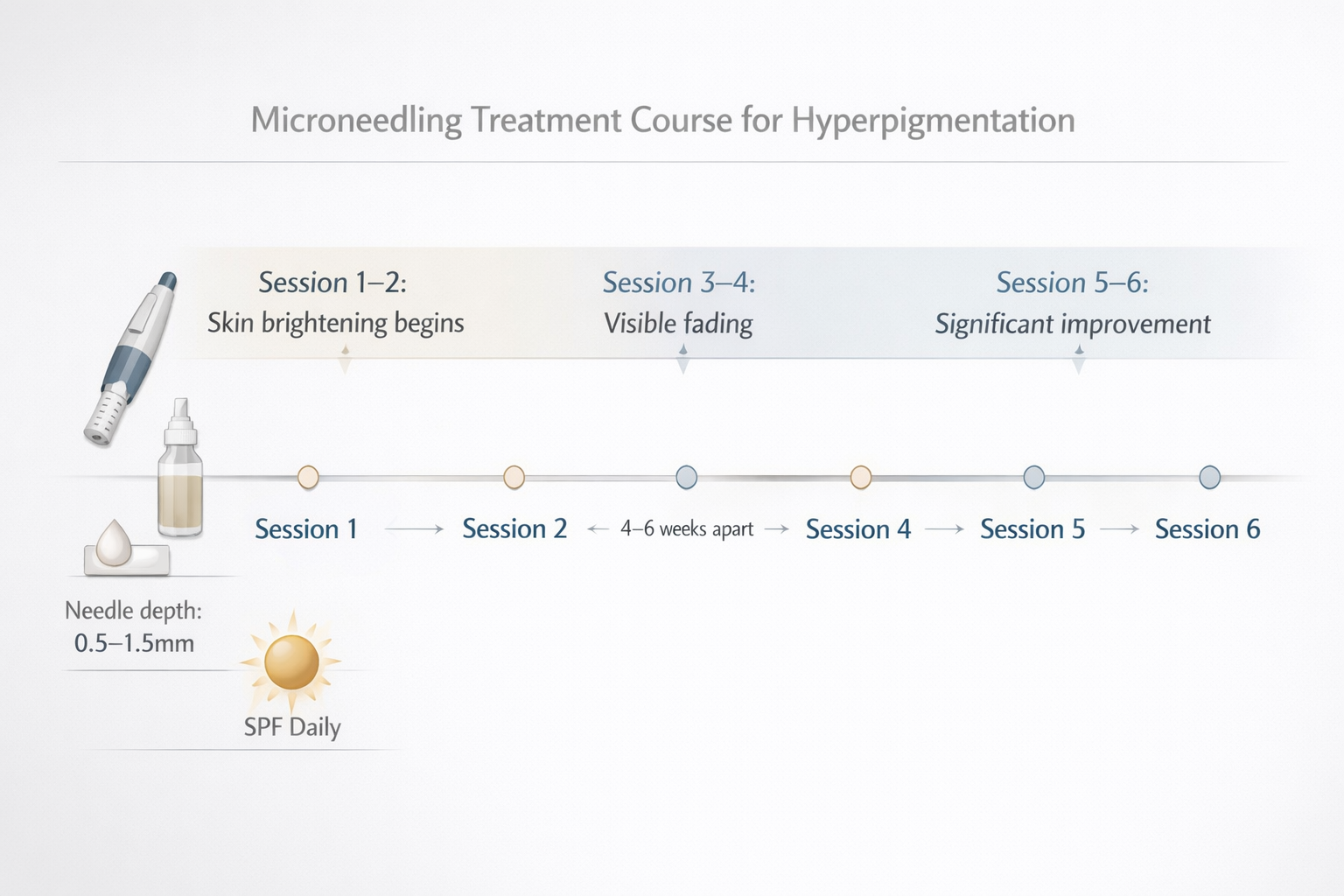
Needle depth is an important variable. For pigmentation specifically, depths of approximately 0.5 to 1.5 mm are commonly used. Shallower depths target the epidermis and are appropriate for surface-level dark spots and PIH, while slightly deeper settings may be used to encourage more significant dermal remodelling. Deeper needle penetration is not automatically better — excessive depth increases the risk of trauma and, paradoxically, can trigger new post-inflammatory pigmentation, particularly in darker skin tones.
Devices used in professional settings include motorised pen-style tools such as the Dermapen and SkinPen, which allow precise control over needle depth and speed. These differ meaningfully from at-home dermarollers, which offer no depth control and carry a higher risk of uneven pressure, skin trauma, and infection — all of which can worsen hyperpigmentation rather than improve it.
Maintenance sessions every six to twelve months are often recommended after completing an initial course, particularly for melasma, which has a tendency to recur with sun exposure or hormonal fluctuation.
Combining Microneedling with Brightening Serums
One of the most clinically relevant aspects of microneedling for hyperpigmentation is its ability to enhance the absorption of topical agents. The micro-channels created during treatment temporarily increase skin permeability, allowing active ingredients to reach layers they would not normally penetrate when applied to the surface alone.
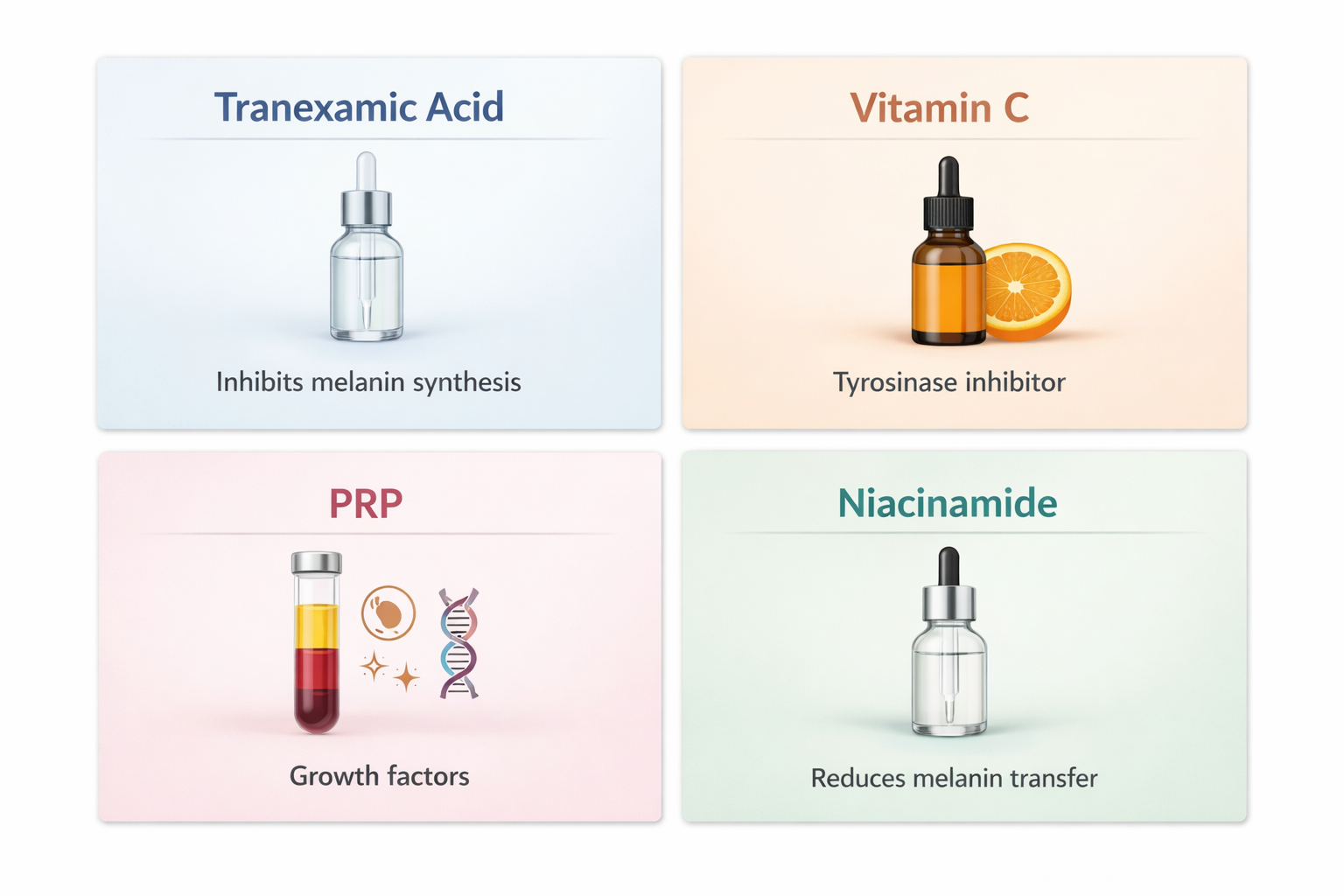
Tranexamic acid is among the most studied agents for use alongside microneedling in pigmentation treatment. It works by inhibiting the interaction between melanocytes and keratinocytes, effectively reducing melanin synthesis. A 2025 randomised controlled trial published in PMC compared microneedling combined with tranexamic acid or vitamin C against a TCA chemical peel for melasma, finding that the microneedling combination approaches produced meaningful improvements with a favourable safety profile. A separate split-face study also found tranexamic acid to be effective when delivered via microneedling channels for melasma reduction.
Vitamin C (ascorbic acid) is a well-established antioxidant that inhibits the enzyme tyrosinase, which plays a central role in melanin production. Applied immediately after microneedling, vitamin C serums may achieve deeper penetration and a more pronounced brightening effect than topical application alone.
Platelet-rich plasma (PRP) is another option sometimes combined with microneedling. PRP contains growth factors derived from the patient’s own blood and may support skin repair and pigment regulation. Peer-reviewed research published in the Journal of Clinical and Aesthetic Dermatology has compared PRP with tranexamic acid as adjuncts to microneedling for melasma, with both showing benefit, though evidence continues to develop.
Niacinamide is a gentler brightening agent that reduces the transfer of melanin to skin cells and supports the skin barrier. It is often used in post-treatment skincare rather than during the procedure itself. Retinoids and hydroquinone are sometimes incorporated into pre- or post-treatment regimens under practitioner guidance, though they require careful timing to avoid irritation.
Microneedling and Darker Skin Tones
Skin type is one of the most important considerations when planning microneedling for hyperpigmentation. The Fitzpatrick skin type scale, which ranges from Type I (very fair) to Type VI (very dark), helps practitioners assess how a patient’s skin is likely to respond to treatment-induced trauma.
For patients with Fitzpatrick Types IV through VI, microneedling carries a meaningful risk of triggering new post-inflammatory hyperpigmentation if the treatment is too aggressive. The skin’s melanocytes in these phototypes are more reactive, meaning that inflammation from any source — including the controlled micro-injuries of microneedling — can stimulate excess pigment production rather than reduce it.
This does not mean microneedling is unsuitable for darker skin tones. In fact, compared with certain laser treatments, microneedling is often considered a safer option for melanin-rich skin because it does not generate heat that can directly stimulate melanocytes. However, conservative protocols are essential: shallower needle depths, longer intervals between sessions, and careful pre-treatment conditioning with agents such as vitamin C or niacinamide to stabilise melanocyte activity before treatment begins.
Radiofrequency (RF) microneedling, which combines standard microneedling with heat energy delivered through the needles, requires additional caution in darker skin tones. The thermal component introduces a risk of heat-induced pigmentation that is not present with standard microneedling, and this should be discussed thoroughly with a practitioner experienced in treating diverse skin types.
Pre-treatment preparation — including stopping retinoids and exfoliating acids five to seven days before a session, avoiding significant sun exposure for several days prior, and ensuring no active skin infections are present — applies to all skin types but is especially important for those at higher PIH risk.
Microneedling vs. Laser, Chemical Peels, and Topical Treatments
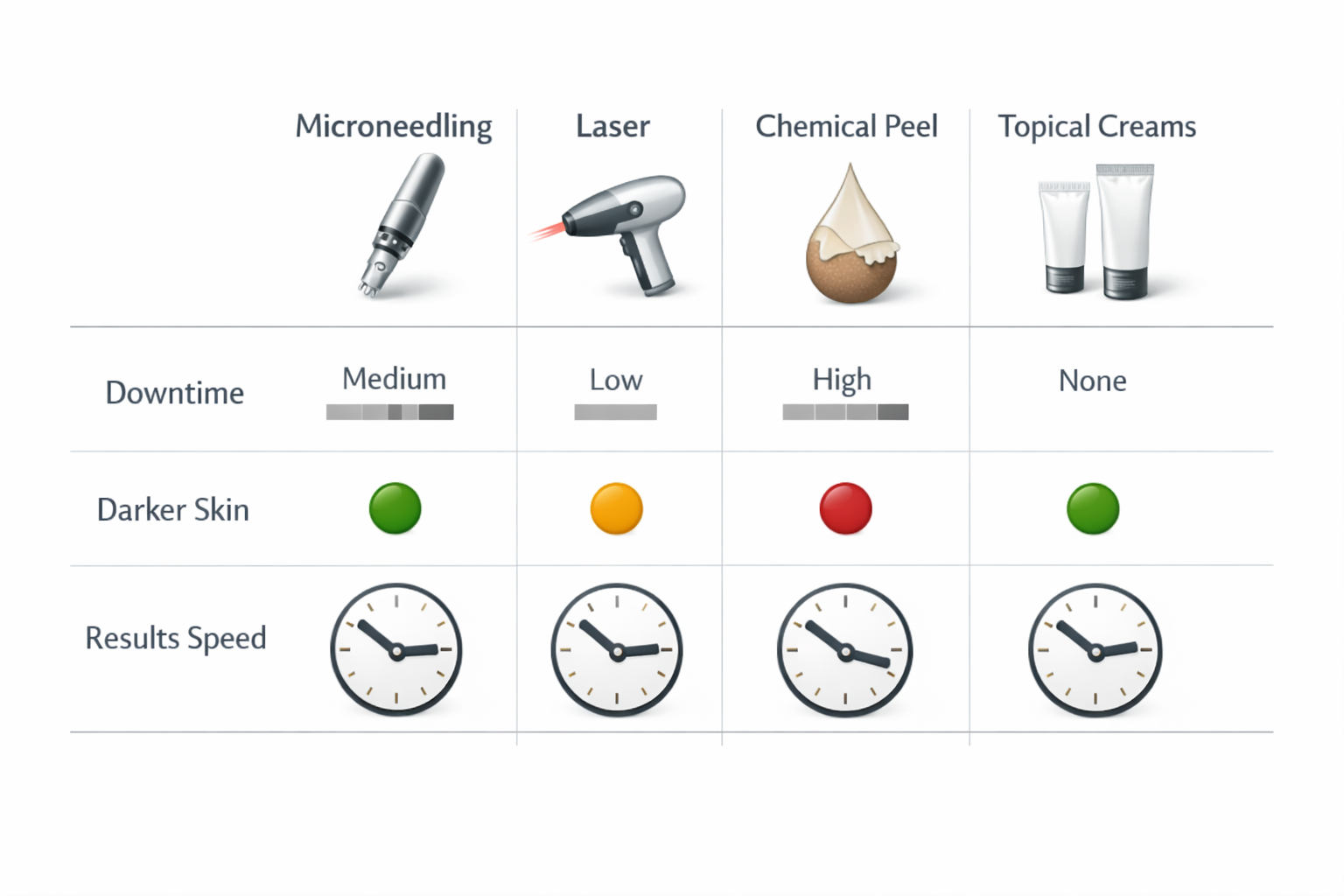
| Treatment | Mechanism | Downtime | Darker Skin Suitability | Results Timeline | Key Limitation |
|---|---|---|---|---|---|
| Microneedling | Controlled micro-injuries, cell turnover, enhanced serum absorption | 1–3 days redness | Generally suitable with conservative protocol | 3–6 months for full course | Multiple sessions required; melasma may recur |
| Laser (IPL, Picosure, ablative) | Targeted light energy destroys pigmented cells | 3–10 days depending on type | Higher PIH risk for Types IV–VI; requires specialist | 1–3 sessions; faster visible change | Heat-induced PIH risk; not universally suitable |
| Chemical peels (TCA, glycolic, salicylic) | Controlled exfoliation removes pigmented surface layers | 3–7 days peeling | Moderate risk; superficial peels safer | 2–6 sessions; 4–8 weeks | Depth control critical; risk of rebound pigmentation |
| Topical treatments (hydroquinone, retinoids) | Inhibit melanin synthesis or accelerate cell turnover | None | Generally suitable; hydroquinone requires monitoring | Months of consistent use | Slow; hydroquinone has long-term use restrictions |
Microneedling occupies a useful middle ground: it offers more active intervention than topical creams alone, with less downtime and a more favourable safety profile for diverse skin tones than many laser options. Chemical peels and microneedling are sometimes combined in a staged treatment plan, though they should not be performed simultaneously. The right approach depends on the type and depth of pigmentation, the patient’s skin type, and their tolerance for downtime and treatment frequency.
What to Expect Before, During, and After Treatment
Before treatment: A thorough consultation should assess the type and cause of hyperpigmentation, Fitzpatrick skin type, medical history, current medications, and any contraindications. Patients are typically advised to stop retinoids and exfoliating acids five to seven days before their appointment, avoid significant sun exposure in the days prior, and arrive with clean skin free of active infections or open lesions.
During treatment: A topical numbing cream is usually applied thirty to forty-five minutes before the procedure to minimise discomfort. The microneedling device is then passed systematically across the treatment area. Most patients describe the sensation as a mild scratching or vibrating pressure. The procedure typically takes thirty to sixty minutes depending on the area being treated. A brightening serum — such as tranexamic acid or vitamin C — is often applied during or immediately after needling to take advantage of the enhanced transdermal delivery window.
Immediately after: Redness, mild swelling, and a sensation similar to mild sunburn are normal and expected. These effects typically resolve within one to three days. The skin may feel tight or slightly sensitive during this period.
In the days and weeks following: Gentle, barrier-supportive skincare is recommended. Avoid active ingredients such as retinoids, AHAs, BHAs, and vitamin C in the first three to five days post-treatment. Broad-spectrum SPF 30 or higher is non-negotiable from the day after treatment and should be applied consistently throughout the course. Sun exposure without adequate protection can directly undermine results and trigger new pigmentation.
Realistic Results: What a Course of Treatment May Achieve
Realistic expectations are an important part of any pigmentation treatment plan. Microneedling produces gradual, cumulative improvements rather than dramatic overnight changes. After the first one or two sessions, some patients notice a subtle improvement in skin brightness and texture, but significant fading of dark spots typically becomes more apparent from the third session onward.
By the end of a full course of four to six sessions, many patients with PIH and sun-related pigmentation report meaningful lightening and a more even skin tone. Melasma tends to respond more slowly and less predictably, and complete clearance is not a realistic expectation for most patients — partial improvement and better management of the condition are more appropriate goals.
Full results from a treatment course are generally visible two to three months after the final session, as collagen remodelling and cell renewal continue after treatment ends. Results are not permanent. Without ongoing sun protection and periodic maintenance sessions, pigmentation is likely to return, particularly for melasma and in patients with significant ongoing sun exposure.
Risks, Side Effects, and Who Should Avoid Microneedling
Microneedling is considered a minimally invasive procedure with a well-established safety record when performed by a qualified practitioner using appropriate protocols. However, it is not without risk, and patients should be aware of the following:
- Post-inflammatory hyperpigmentation: Paradoxically, microneedling can trigger new PIH, particularly in darker skin tones or if aftercare is not followed correctly. This risk is reduced with conservative needle depths, appropriate session spacing, and diligent sun protection.
- Infection: Any procedure that breaches the skin barrier carries a small risk of infection. Using a reputable clinic with sterile, single-use needle cartridges significantly reduces this risk.
- Prolonged redness or sensitivity: Most redness resolves within a few days, but some patients experience longer-lasting sensitivity, particularly if the skin barrier is compromised.
- Temporary worsening of pigmentation: Some patients notice that existing dark spots appear temporarily more prominent in the days immediately following treatment before they begin to fade.
Microneedling is generally not recommended for patients with active acne or skin infections in the treatment area, a history of keloid scarring, current pregnancy or breastfeeding, severe eczema or rosacea affecting the treatment area, blood-thinning medications that may increase bruising, or known photosensitivity. A thorough pre-treatment consultation with a qualified practitioner is the appropriate way to assess individual suitability.
Frequently Asked Questions
Can microneedling make hyperpigmentation worse?
It can, in some cases. If the treatment is too aggressive, if aftercare is not followed, or if the skin is exposed to significant UV radiation without protection after treatment, new post-inflammatory hyperpigmentation can develop. This risk is higher in darker skin tones and is why conservative protocols and experienced practitioners matter. Temporary darkening of existing spots in the first few days after treatment is relatively common and usually resolves as healing progresses.
How many microneedling sessions are needed for hyperpigmentation?
Most treatment protocols for hyperpigmentation involve three to six sessions, spaced four to six weeks apart. The exact number depends on the type and severity of pigmentation, the patient’s skin type, and how the skin responds to initial sessions. Melasma typically requires more sessions and ongoing maintenance than PIH or sun spots.
How soon will I see results from microneedling?
Some improvement in skin brightness and texture may be noticeable after the first two sessions, but meaningful fading of dark spots usually becomes apparent from the third session onward. Full results from a complete course are generally visible two to three months after the final treatment, as the skin continues to remodel.
Is microneedling safe for dark skin tones?
Microneedling can be performed safely on darker skin tones, but it requires a conservative approach — shallower needle depths, longer intervals between sessions, and pre-treatment conditioning. It is generally considered safer than many laser treatments for Fitzpatrick Types IV–VI because it does not generate heat. Choosing a practitioner with specific experience in treating diverse skin types is important.
Is microneedling better than laser for hyperpigmentation?
Neither treatment is universally superior. Laser treatments can produce faster results for certain types of pigmentation, particularly well-defined sun spots, but carry a higher risk of heat-induced pigmentation in darker skin tones. Microneedling is more versatile across skin types, has less downtime, and is often preferred for diffuse pigmentation or when combined with brightening serums. The best option depends on the specific pigmentation type, skin tone, and individual circumstances.
Does microneedling permanently remove dark spots?
Microneedling does not permanently eliminate hyperpigmentation. Results can be long-lasting with consistent sun protection and maintenance sessions, but pigmentation — particularly melasma — has a tendency to recur with UV exposure, hormonal changes, or skin inflammation. Ongoing SPF use and periodic top-up treatments are part of a realistic long-term management strategy.
Is Microneedling the Right Approach for Your Hyperpigmentation?
Microneedling is a well-supported option for reducing hyperpigmentation, particularly post-inflammatory dark spots, sun damage, and mild to moderate melasma. Its ability to stimulate cell turnover, support dermal remodelling, and enhance the penetration of brightening serums makes it a versatile tool in pigmentation management — and one that can be used across a wider range of skin tones than many laser alternatives.
That said, it is not a quick fix or a permanent solution. A realistic treatment plan involves multiple sessions, consistent sun protection, appropriate aftercare, and in many cases, ongoing maintenance. The type of pigmentation, its depth, the patient’s Fitzpatrick skin type, and their overall skin health all influence how well microneedling is likely to work. Combination approaches — pairing microneedling with tranexamic acid, vitamin C, or PRP — appear to offer improved outcomes compared with microneedling alone, based on emerging clinical evidence.
If you are considering microneedling for hyperpigmentation, a consultation with a qualified practitioner who can assess your specific pigmentation type and skin tone is the appropriate starting point. They can advise on whether microneedling is suitable, which adjunct serums may be beneficial, and what results are realistic for your individual situation.