

Microneedling creates thousands of controlled micro-injuries in the skin to stimulate collagen production and improve skin texture, tone, and firmness. What happens in the hours and days after your treatment matters considerably — the right aftercare can support your skin’s healing response, while the wrong choices can increase the risk of irritation, infection, or prolonged redness. This guide explains each aftercare step clearly, outlines a realistic recovery timeline, and highlights what to avoid so you can make the most of your treatment.
Key Takeaways
- The first 24 to 72 hours after microneedling are the most critical period for skin recovery — keeping the skin clean, calm, and hydrated is the priority during this window.
- Sun protection is essential throughout the recovery period, as freshly treated skin is significantly more vulnerable to UV damage and post-inflammatory pigmentation.
- Certain skincare ingredients — including retinoids, exfoliating acids, and vitamin C — should be paused for several days after treatment to avoid irritating healing skin.
- Redness, mild swelling, and skin sensitivity are normal in the first one to three days; persistent or worsening symptoms should be assessed by your practitioner.
- Following your clinic’s specific aftercare instructions takes priority over general guidance, as needle depth, device type, and individual skin response all influence recovery.
What Happens to Your Skin After Microneedling
Microneedling — also referred to as collagen induction therapy — uses fine needles to create controlled micro-channels in the dermis and epidermis. This triggers the skin’s natural wound-healing cascade, which involves three overlapping phases: inflammation, proliferation, and remodelling. The inflammatory phase begins immediately after treatment and typically peaks within the first 24 to 48 hours. During this phase, the skin may appear red, feel warm, and feel tight or sensitive — responses that reflect normal healing activity rather than a problem.
The proliferation phase follows over the next several days, during which the skin begins producing new collagen and elastin fibres. The remodelling phase, which drives the visible improvements in skin texture and firmness, continues for weeks to months after treatment. Understanding this process helps explain why aftercare is not simply about comfort — it is about protecting and supporting an active biological process that determines how well your results develop.
Microneedling Aftercare: The First 24 Hours
The immediate post-treatment period requires the most careful attention. Your skin’s barrier has been temporarily disrupted, making it more permeable and reactive than usual. During the first 24 hours, the focus should be on keeping the skin clean, calm, and lightly moisturised.
Cleansing
Use a gentle, fragrance-free cleanser and lukewarm water to wash your face. Avoid hot water, which can increase inflammation and worsen redness. Pat the skin dry with a clean, soft towel — do not rub. Most practitioners recommend waiting at least four to six hours before washing the face after treatment, though your clinic may give you a specific timeframe based on the depth of needling used.
Moisturising
Applying a gentle, hydrating serum or moisturiser helps support the skin barrier during the early healing phase. Hyaluronic acid serums are commonly recommended because hyaluronic acid is well tolerated by sensitive skin and helps maintain hydration without causing irritation. Avoid any product containing active ingredients such as retinol, glycolic acid, salicylic acid, or vitamin C during this period, as these can cause significant irritation on compromised skin.
Avoiding Makeup
Makeup should be avoided for at least 24 hours after microneedling, and ideally for 48 hours. Applying foundation, concealer, or powder to skin with open micro-channels increases the risk of introducing bacteria and potentially causing a breakout or infection. If you need to attend an event, discuss timing with your practitioner before booking your appointment.
Sun Exposure
Freshly treated skin is highly vulnerable to ultraviolet radiation. Avoid direct sun exposure on the day of treatment. If you must go outdoors, use a broad-spectrum mineral sunscreen with SPF 30 or higher — mineral formulations containing zinc oxide or titanium dioxide are generally better tolerated on post-treatment skin than chemical sunscreen filters, which can cause stinging on disrupted skin.
Days Two to Three: Managing Redness and Sensitivity
Redness and mild swelling are expected during the first two to three days after microneedling. The skin may also feel dry, tight, or slightly rough as the surface begins to shed. This is a normal part of the healing process and does not indicate a complication.
Continue Gentle Skincare
Maintain the same gentle cleansing and moisturising routine established on day one. Layering a fragrance-free, occlusive moisturiser over a hyaluronic acid serum can help reduce the sensation of tightness and support barrier repair. Avoid any product that contains alcohol, synthetic fragrance, essential oils, or exfoliating agents, as these are likely to cause stinging and may prolong redness.
Do Not Pick or Exfoliate
As the skin begins to shed, it may feel flaky or rough in patches. It is important not to pick, scratch, or manually exfoliate the skin during this period. Disrupting the natural shedding process can damage newly forming tissue and may increase the risk of post-inflammatory hyperpigmentation, particularly in individuals with medium to deeper skin tones.
Cooling the Skin
If redness or warmth feels uncomfortable, a cool (not ice-cold) compress applied gently to the skin can provide relief. Avoid applying ice directly to the skin, as extreme cold can damage delicate healing tissue. Some practitioners recommend specific post-procedure cooling masks or barrier repair products — follow your clinic’s guidance on this.
Sun Protection Remains Essential
Continue applying a broad-spectrum mineral sunscreen every morning, even if you are spending most of the day indoors. UV exposure through windows can still affect healing skin. Wearing a wide-brimmed hat when outdoors provides additional protection during the recovery period.
Days Four to Seven: Skin Settling and Barrier Recovery
By day four, most patients notice that redness has significantly reduced and the skin feels more comfortable. Some individuals experience a period of mild dryness or subtle peeling as the outer skin layers continue to renew. The skin barrier is still in the process of recovering during this week, so the approach to skincare should remain conservative.
Reintroducing Products Gradually
Once redness has resolved and the skin feels settled — typically around day five to seven — you may begin reintroducing your usual skincare products cautiously. Start with one product at a time and observe how your skin responds before adding another. If any product causes stinging, redness, or irritation, discontinue it and allow more time before trying again.
When to Reintroduce Active Ingredients
Active skincare ingredients such as retinoids, alpha hydroxy acids (AHAs), beta hydroxy acids (BHAs), and high-concentration vitamin C should generally be avoided for at least five to seven days after microneedling, and sometimes longer depending on needle depth and individual skin sensitivity. Your practitioner will advise on the appropriate timeline for your specific treatment. Reintroducing actives too early is one of the most common causes of prolonged irritation after microneedling.
Exercise and Heat Exposure
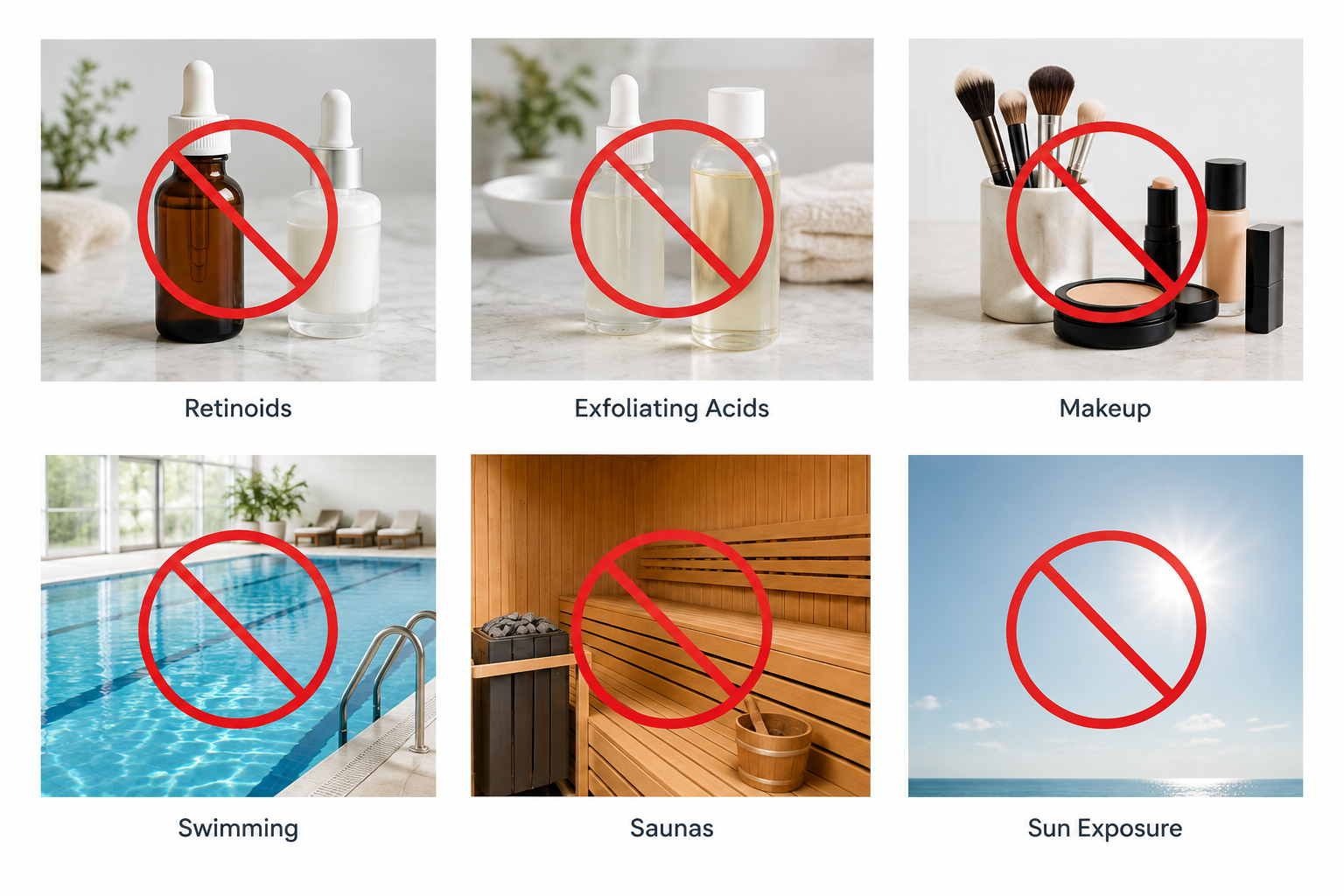
Strenuous exercise, saunas, steam rooms, and hot baths should be avoided for at least 48 to 72 hours after treatment, and some practitioners recommend extending this to five days. Heat and sweat can increase inflammation, introduce bacteria to healing micro-channels, and worsen redness. Light walking is generally acceptable, but activities that significantly raise body temperature or cause heavy sweating are best postponed.
What to Avoid After Microneedling
Certain activities and products carry a meaningful risk of interfering with healing or causing adverse effects. The following should be avoided during the recovery period:
- Retinoids and retinol: These vitamin A derivatives accelerate cell turnover and can cause significant irritation on post-treatment skin. Pause for at least five to seven days, or as directed by your practitioner.
- Exfoliating acids (AHAs and BHAs): Glycolic acid, lactic acid, salicylic acid, and similar ingredients should be avoided until the skin has fully settled, typically for five to seven days or longer.
- Vitamin C serums: High-concentration ascorbic acid can sting and irritate healing skin. A gentler vitamin C derivative may be tolerated sooner, but check with your practitioner.
- Benzoyl peroxide: This acne treatment is too harsh for post-microneedling skin and should be paused during recovery.
- Alcohol-based toners and astringents: These strip the skin barrier and should be avoided until the skin has fully recovered.
- Makeup with SPF: While SPF is important, makeup-format SPF products are not a substitute for a dedicated sunscreen and should be avoided in the first 24 to 48 hours.
- Swimming pools and open water: Chlorinated water and natural bodies of water carry a risk of bacterial or chemical irritation to healing skin. Avoid for at least 72 hours.
- Waxing, threading, or depilatory creams: Hair removal treatments on or near the treated area should be avoided for at least one to two weeks.
- Other skin treatments: Chemical peels, laser treatments, IPL, and other aesthetic procedures should not be performed on the same area until the skin has fully healed. Your practitioner will advise on appropriate intervals.
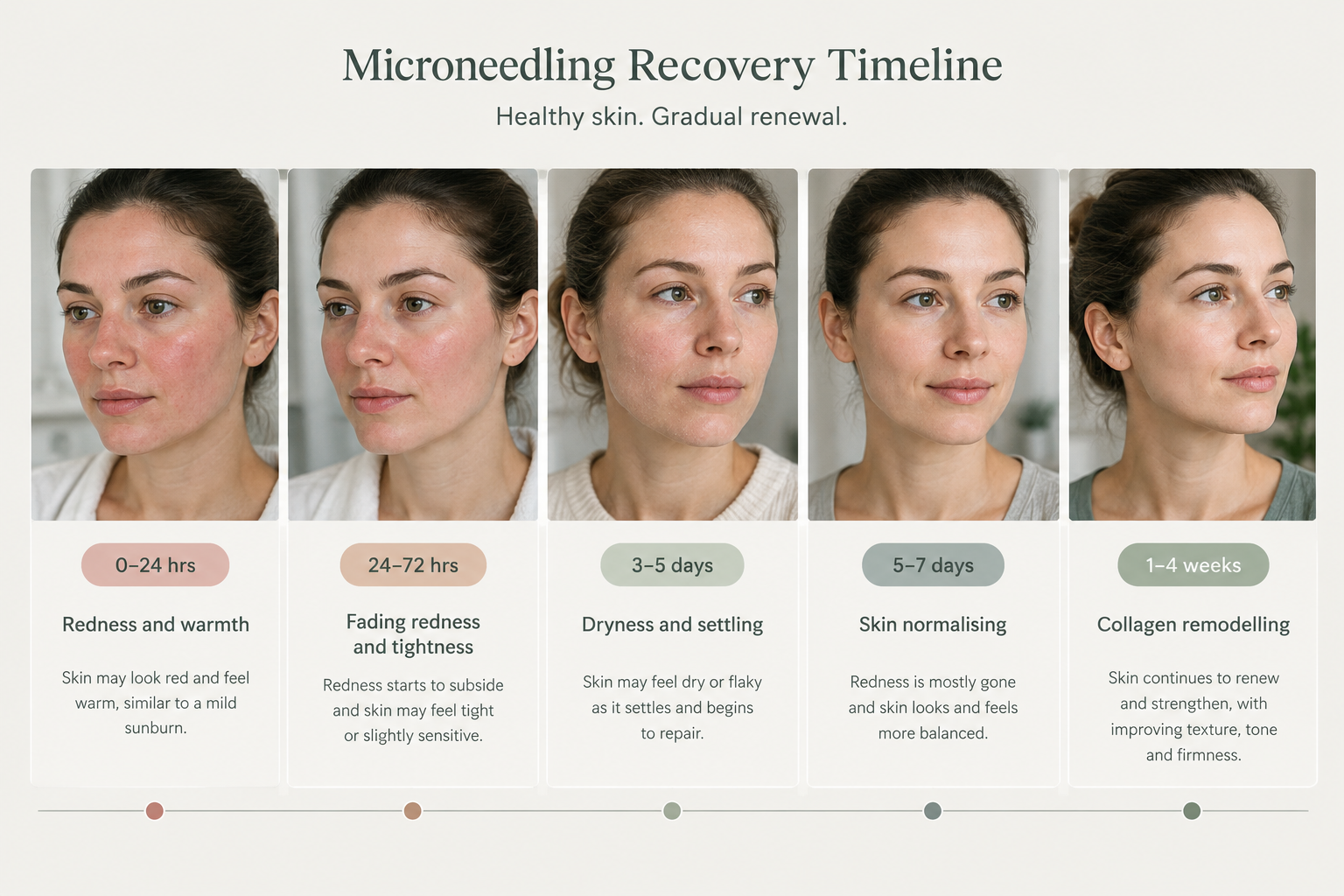
Microneedling Recovery Timeline at a Glance
| Time After Treatment | What to Expect | Key Aftercare Focus |
|---|---|---|
| 0–24 hours | Redness, warmth, mild swelling, skin sensitivity | Gentle cleansing, hyaluronic acid, mineral SPF, no makeup |
| 24–72 hours | Redness fading, possible tightness or mild flaking | Continue gentle routine, avoid heat and exercise, no actives |
| 3–5 days | Skin settling, possible dryness or subtle peeling | Barrier-supportive moisturiser, continued SPF, no picking |
| 5–7 days | Most redness resolved, skin feeling more normal | Gradual reintroduction of usual products, continued SPF |
| 1–4 weeks | Skin texture improving, collagen remodelling underway | Full skincare routine, consistent sun protection |
Recommended Products for Microneedling Aftercare
The ideal post-microneedling skincare routine is simple rather than elaborate. The goal is to support barrier repair and hydration without introducing unnecessary ingredients that could cause irritation.
Gentle Cleanser
A fragrance-free, low-foaming cleanser that does not disrupt the skin’s pH is appropriate for the recovery period. Micellar water used with a soft cotton pad can be a useful alternative for the first day if the skin feels particularly sensitive.
Hyaluronic Acid Serum
Hyaluronic acid is a naturally occurring molecule in the skin that attracts and retains moisture. A serum containing low and high molecular weight hyaluronic acid can help maintain hydration in the upper and deeper layers of the skin during recovery. Apply to slightly damp skin for best absorption.
Barrier Repair Moisturiser
Look for a moisturiser containing ingredients such as ceramides, niacinamide (in low concentrations), panthenol, or squalane. These ingredients support the skin barrier without causing irritation. Avoid moisturisers that contain fragrance, essential oils, or active exfoliating ingredients.
Mineral Sunscreen
A broad-spectrum mineral sunscreen with SPF 30 or higher is non-negotiable during the recovery period. Zinc oxide-based formulations are generally the best-tolerated option on post-treatment skin. Reapply every two hours when outdoors.
Potential Side Effects and When to Seek Advice
Microneedling carries a risk of side effects, and understanding the difference between expected reactions and signs that warrant clinical assessment is important for patient safety.
Expected side effects that typically resolve within a few days include redness resembling mild sunburn, warmth, mild swelling, skin tightness, and temporary sensitivity. Some individuals experience minor pinpoint bleeding during the procedure itself, which is normal at deeper needle depths.
Side effects that should prompt contact with your practitioner include redness or swelling that worsens after 72 hours rather than improving, signs of infection such as increasing pain, pus, or crusting, the development of cold sore lesions in individuals with a history of herpes simplex (a known trigger risk with microneedling), prolonged or unusual bruising, and any allergic reaction to products applied after treatment. Post-inflammatory hyperpigmentation — darkening of the skin in treated areas — is a recognised risk, particularly in individuals with Fitzpatrick skin types IV to VI, and should be discussed with your practitioner before treatment.
How Aftercare Affects Your Results
The collagen induction process stimulated by microneedling continues for weeks after treatment, and the quality of your aftercare during this period can influence the outcome. Consistent sun protection is particularly important: UV exposure on healing skin can trigger post-inflammatory pigmentation and may counteract the skin-brightening effects of treatment. Keeping the skin well hydrated supports the environment in which new collagen fibres form. Avoiding harsh ingredients during the early recovery phase prevents unnecessary inflammation that could interfere with the healing cascade.
Visible improvements in skin texture, pore appearance, and fine lines typically become more noticeable two to four weeks after a single session, as collagen remodelling progresses. Most practitioners recommend a course of three to six sessions spaced four to six weeks apart for more significant concerns such as acne scarring or deeper textural irregularities. Maintenance sessions may be recommended every three to six months thereafter, depending on individual skin goals and response.
Aftercare Considerations for Different Skin Types and Concerns
Aftercare needs can vary depending on skin type, the concern being treated, and the depth of needling used. Individuals with sensitive or reactive skin may need to extend the period of avoiding active ingredients and should introduce new products particularly cautiously. Those with a history of acne may notice a temporary increase in breakouts in the days following treatment — this is not uncommon and usually settles, but persistent or severe breakouts should be discussed with the treating practitioner.
Individuals with a history of cold sores (herpes simplex virus) should inform their practitioner before treatment, as microneedling can trigger an outbreak. Antiviral prophylaxis is sometimes recommended in these cases. People with darker skin tones should be particularly diligent about sun protection and avoiding heat, as the risk of post-inflammatory hyperpigmentation is higher. If you are using prescription skincare such as tretinoin or hydroquinone, your practitioner will advise on when it is safe to resume these treatments.
Frequently Asked Questions
Can I wear makeup the day after microneedling?
Most practitioners recommend avoiding makeup for at least 24 to 48 hours after microneedling. Applying cosmetics to skin with open micro-channels increases the risk of irritation and bacterial contamination. When you do return to makeup, choose mineral-based, fragrance-free formulations and apply with clean brushes or sponges.
How long does redness last after microneedling?
Redness typically resembles mild sunburn and usually fades within 24 to 72 hours for most patients. Individuals with sensitive skin or those who have had deeper needling may experience redness for up to five days. If redness persists beyond this or worsens, contact your practitioner.
When can I return to exercise after microneedling?
Light activity such as walking is generally acceptable after 24 hours. Strenuous exercise, hot yoga, saunas, and activities that cause significant sweating are best avoided for at least 48 to 72 hours, and some practitioners advise waiting up to five days. Heat and sweat can increase inflammation and introduce bacteria to healing skin.
Can I use my usual vitamin C serum after microneedling?
High-concentration vitamin C serums — particularly those containing L-ascorbic acid — can cause stinging and irritation on post-treatment skin and should be paused for at least five to seven days. Some gentler vitamin C derivatives may be tolerated sooner, but it is best to check with your practitioner before reintroducing any active ingredient.
Is it normal for skin to peel after microneedling?
Mild flaking or peeling in the days following microneedling is normal and reflects the natural shedding of the outermost skin layer as renewal occurs. Allow this process to happen naturally — do not pick, peel, or manually exfoliate the skin, as this can disrupt healing and increase the risk of pigmentation changes.
How soon can I have another microneedling session?
Most practitioners recommend spacing microneedling sessions four to six weeks apart to allow the skin to complete its healing and collagen remodelling cycle before the next treatment. Having sessions too close together does not accelerate results and may increase the risk of skin sensitivity or barrier disruption.
Can I apply a sheet mask after microneedling?
Sheet masks should be used with caution after microneedling. Only masks containing simple, soothing ingredients such as hyaluronic acid or centella asiatica extract are appropriate in the early recovery period. Avoid any mask containing active ingredients, fragrance, alcohol, or essential oils. Check the full ingredient list before applying anything to post-treatment skin.
Getting the Most from Your Microneedling Recovery
Microneedling aftercare is not complicated, but it does require consistency and a willingness to simplify your skincare routine temporarily. The most important principles — gentle cleansing, adequate hydration, diligent sun protection, and avoiding harsh ingredients — apply to virtually every patient regardless of skin type or the concern being treated.
Your clinic’s specific aftercare instructions should always take priority, as the appropriate recovery approach depends on the needle depth used, the device type, any serums applied during treatment, and your individual skin history. If you are unsure whether a product or activity is safe during your recovery, contact your practitioner rather than guessing. Protecting the healing process in the days after treatment is one of the most effective ways to support the collagen remodelling that delivers the results microneedling is designed to achieve.