

Key Takeaways
- Masseter Botox involves injecting botulinum toxin into the masseter muscle to reduce the force of jaw clenching and teeth grinding (bruxism).
- Functional relief — reduced jaw pain and tension headaches — may begin within one to two weeks, while any cosmetic jawline change typically takes longer to become visible.
- The treatment is considered an off-label use of botulinum toxin for bruxism in many countries, including the US, meaning it is not formally licensed for this indication despite widespread clinical use.
- Results typically last three to six months, and maintenance treatments are usually needed to sustain the benefit.
- Masseter Botox does not replace a mouth guard or address the underlying causes of bruxism; a combined approach is often more effective than any single treatment.
What Is Bruxism and Why Does the Masseter Muscle Matter?
Bruxism is the involuntary grinding, clenching, or gnashing of teeth. It affects an estimated 8–31% of the general population and is broadly divided into two types: sleep bruxism, which occurs during the night and is classified as a sleep-related movement disorder, and awake bruxism, which involves daytime jaw clenching, often linked to stress, anxiety, or habitual tension. The two types can coexist, and many people are unaware they grind their teeth at all until a dentist identifies enamel erosion or a partner notices the sound during sleep.
The masseter muscle is the primary muscle responsible for chewing. It runs along the side of the jaw, connecting the cheekbone to the lower jawbone, and is one of the strongest muscles in the body relative to its size. In people with bruxism, the masseter is chronically overactivated — contracting with far more force than normal chewing requires. Over time, this leads to masseter hypertrophy, where the muscle enlarges due to repeated heavy use, much like any muscle that is consistently overworked. The result can be a visibly squared or widened lower face, persistent jaw pain, tension headaches, and progressive dental damage including enamel erosion and tooth sensitivity.
The temporomandibular joint (TMJ) — the hinge connecting the jaw to the skull — is also placed under significant strain by overactive jaw muscles. Chronic bruxism is a recognised contributor to temporomandibular joint disorder (TMD), a condition that can cause clicking, locking, or pain in the jaw joint, as well as referred pain in the neck, ears, and temples. Addressing the muscular overactivity driving this strain is where masseter Botox enters the picture.
It is also worth noting that sleep bruxism has a documented association with obstructive sleep apnea (OSA). Patients presenting with nocturnal bruxism are sometimes advised to undergo OSA screening, as treating an underlying sleep disorder may reduce bruxism severity. A qualified practitioner should take a thorough medical history before recommending any treatment.
How Masseter Botox Works for Teeth Grinding
Masseter Botox involves injecting a small, carefully measured amount of botulinum toxin type A (BoNT-A) — most commonly known by the brand name Botox, though other formulations such as Dysport and Xeomin contain the same active ingredient — directly into the masseter muscle on each side of the face. Botulinum toxin is a neuromodulator: it works by temporarily blocking the nerve signals that instruct a muscle to contract. Specifically, it inhibits the release of acetylcholine at the neuromuscular junction, preventing the muscle from receiving the chemical message to tighten.
When injected into the masseter, botulinum toxin does not paralyse the muscle entirely. Instead, it reduces the maximum force the muscle can generate. Normal functions such as chewing, speaking, and swallowing are preserved, but the involuntary, high-force clenching associated with bruxism is significantly diminished. This bite force reduction is the primary therapeutic mechanism. With less forceful contraction occurring repeatedly over months, the masseter muscle gradually reduces in bulk — a process called disuse atrophy — which is also responsible for the jawline slimming effect that many patients notice as a secondary benefit.
Clinical research supports this mechanism. A randomised controlled trial published in a peer-reviewed journal found that low-dose botulinum toxin type A significantly reduced nocturnal bruxism activity compared to placebo, with improvements in jaw pain and sleep quality reported by participants. Longitudinal studies using myotonometry — a technique that measures muscle stiffness and tone — have confirmed measurable reductions in masseter muscle activity following BoNT-A injection. Research examining dosage and bite force has demonstrated that the reduction in biting pressure correlates with the dose administered, though individual anatomy means the optimal amount varies between patients.
What the Treatment Involves
A masseter Botox appointment is typically brief, often completed within 20 to 30 minutes including consultation time. Before any injection, a qualified practitioner will assess your jaw anatomy, review your medical history, discuss your symptoms, and confirm that the treatment is appropriate for you. They may palpate the masseter to assess its size and identify the optimal injection points.
The injections themselves are administered bilaterally — into both sides of the jaw — using a fine needle. Most patients describe the sensation as a mild pinch. Topical anaesthetic cream is not always necessary but can be applied beforehand if preferred. The number of injection points and the total dose used will depend on the size of the masseter, the severity of symptoms, and the practitioner’s clinical judgement. As a general guide, doses in the range of 15 to 30 units of botulinum toxin per side are commonly reported in clinical literature for this indication, though individual assessment is essential and units are not directly interchangeable between different botulinum toxin brands.
In some cases where jaw tension is particularly widespread, a practitioner may also consider the temporalis muscle — a fan-shaped muscle at the temple that also contributes to jaw clenching — as a secondary injection site. This is less common and depends on individual presentation.
There is no significant downtime. Most people return to normal activities immediately. The injection sites may be slightly tender or show minor redness for a few hours, but this typically resolves quickly.
When Results Appear and How Long They Last
The timeline for masseter Botox results differs depending on whether you are seeking functional relief or a cosmetic change to the jawline, and understanding this distinction helps set realistic expectations.
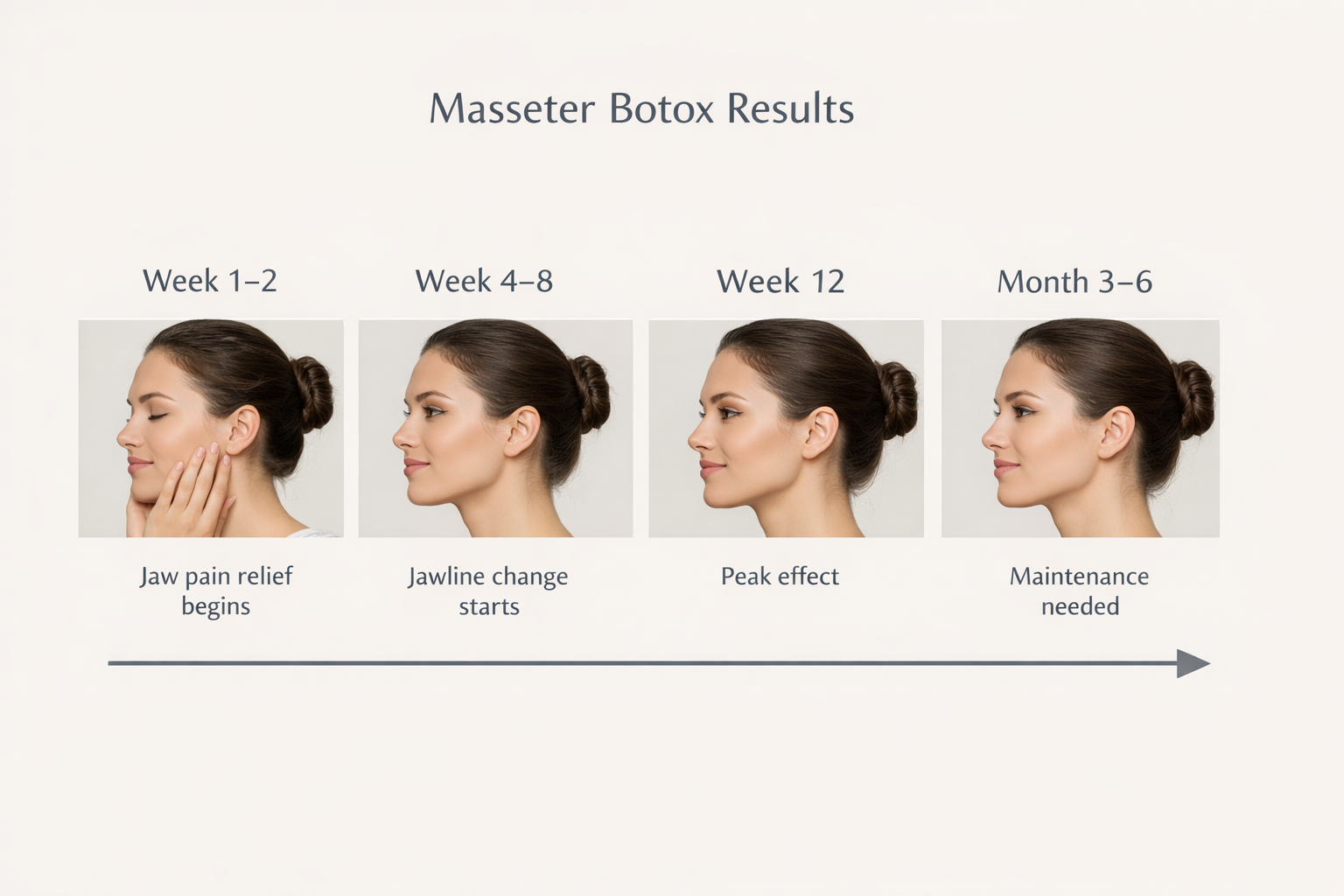
Functional relief — reduced jaw pain, less tension on waking, fewer tension headaches — tends to appear earlier, often within one to two weeks of treatment, as the muscle’s contractile force begins to diminish. Many patients notice they are waking with less jaw soreness within the first fortnight.
Cosmetic jawline slimming, if relevant, takes considerably longer. The visible reduction in masseter bulk that produces a softer, more oval lower face shape results from gradual muscle atrophy, which typically becomes noticeable between four and twelve weeks post-injection, with the peak cosmetic effect often seen around the twelve-week mark.
The effects of botulinum toxin are temporary. As the nerve signals gradually recover over the following months, the masseter muscle regains its activity. Most patients find that results last between three and six months, with an average closer to three to four months for functional benefit. Cosmetic changes may persist slightly longer as the muscle takes time to rebuild its bulk. Regular maintenance treatment — typically two to four sessions per year — is needed to sustain both the therapeutic and cosmetic effects.
If a patient stops having treatments altogether, the masseter muscle will gradually return to its previous size and activity level. There is no permanent change to the muscle from the treatment itself, though some patients report that their bruxism habits feel less entrenched after a period of reduced muscle activity.
Masseter Botox vs. Mouth Guard: Understanding the Difference
| Feature | Masseter Botox | Mouth Guard / Night Guard |
|---|---|---|
| Mechanism | Reduces muscle contraction force via neuromodulator | Creates a physical barrier to protect teeth |
| Addresses muscle overactivity | Yes — reduces bite force | No — muscle still contracts at full force |
| Protects teeth from wear | Indirectly, by reducing grinding force | Directly, by absorbing impact |
| Jaw pain relief | Often significant | Variable; may not reduce muscle tension |
| Headache relief | Frequently reported | Less consistent |
| Jawline slimming | Possible secondary benefit | None |
| Duration of effect | 3–6 months per treatment | Ongoing while worn nightly |
| Maintenance | Repeat injections 2–4 times per year | Nightly use; periodic replacement |
| Invasiveness | Minimally invasive injections | Non-invasive dental appliance |
| Suitable for daytime clenching | Yes | Limited (not practical to wear during the day) |
A mouth guard (also called a night guard or occlusal splint) is often the first-line recommendation from dentists for bruxism. It works by placing a protective layer between the upper and lower teeth, absorbing the impact of grinding and preventing further enamel erosion. However, a mouth guard does not reduce the force with which the masseter contracts — the muscle still works at full intensity, meaning jaw pain, headaches, and masseter hypertrophy may persist even with consistent use.
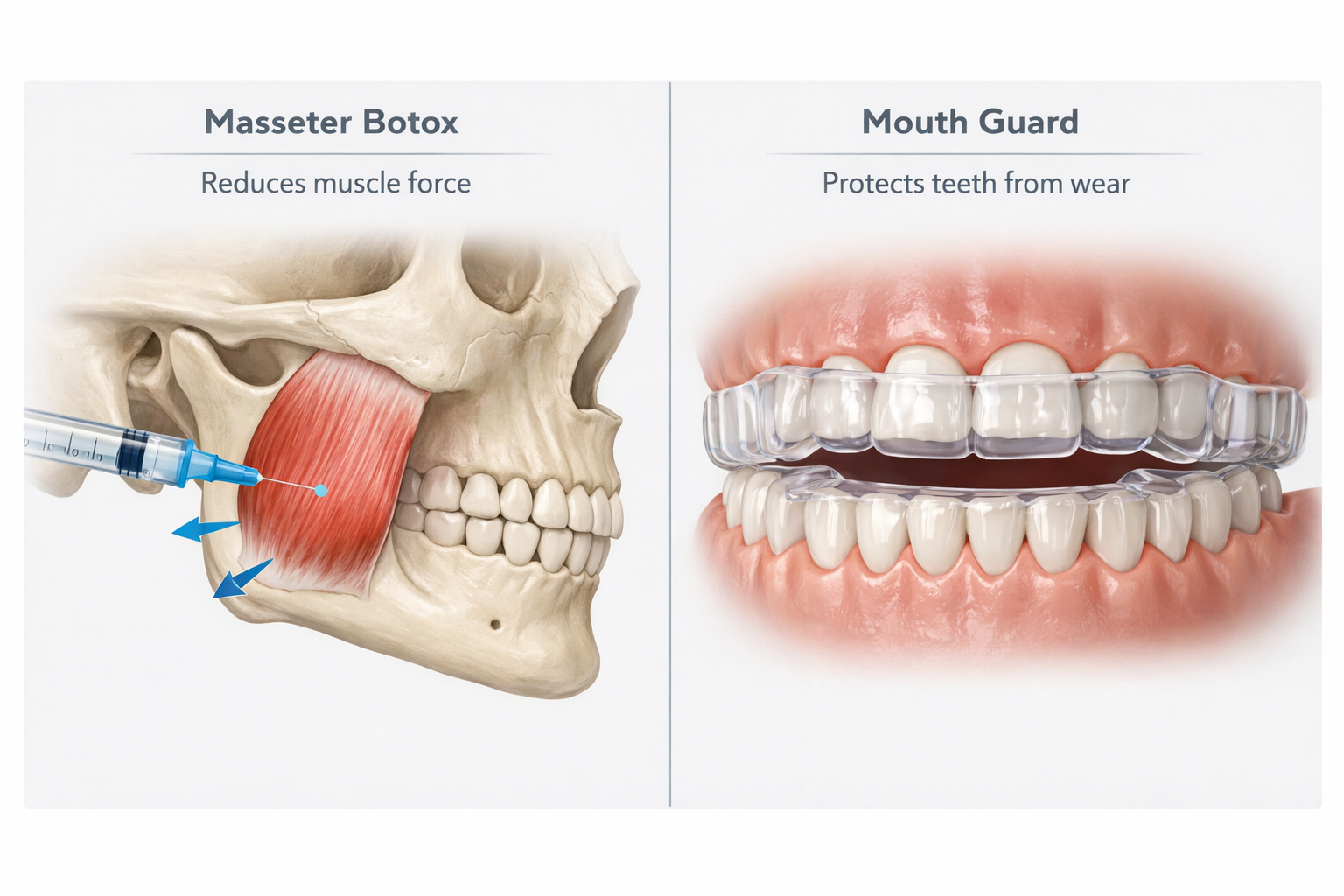
Masseter Botox addresses the problem at the muscular level, reducing the force of contraction rather than simply protecting the teeth from its consequences. For patients whose primary complaints are jaw pain, morning headaches, or facial tension — rather than tooth wear alone — botulinum toxin treatment may offer more meaningful relief. Many practitioners recommend a combination approach: using masseter Botox to reduce muscle overactivity while continuing to wear a night guard to protect the teeth, particularly during the period before the injections take full effect. Stress management, physiotherapy, and behavioural strategies may also complement both treatments as part of a holistic plan.
Who May Be a Suitable Candidate
Masseter Botox for bruxism may be worth discussing with a qualified practitioner if you experience one or more of the following:
- Persistent jaw pain or soreness, particularly on waking
- Chronic tension headaches originating at the temples or jaw
- Documented enamel erosion or tooth sensitivity attributed to grinding
- Visible masseter hypertrophy (a noticeably squared or widened lower jaw)
- Symptoms of TMJ disorder, such as jaw clicking or limited mouth opening
- Inadequate relief from a mouth guard or other conservative treatments
- Daytime jaw clenching that a night guard cannot address
The treatment may also appeal to patients who have both functional symptoms and a cosmetic interest in jawline slimming — the dual-purpose nature of masseter Botox means that addressing the therapeutic concern can simultaneously produce a softer lower face contour, which some patients find an additional benefit rather than a separate goal.
Who May Not Be Suitable
Masseter Botox is not appropriate for everyone. A thorough consultation is essential to identify any contraindications. The treatment is generally not recommended for:
- People who are pregnant or breastfeeding
- Individuals with neuromuscular conditions such as myasthenia gravis or Lambert-Eaton syndrome, where botulinum toxin could exacerbate muscle weakness
- Those with a known allergy to botulinum toxin or any of its components
- Patients with an active infection at or near the planned injection site
- People taking certain medications that may interact with botulinum toxin, including some antibiotics and muscle relaxants
Patients with significant dental restorations, implants, or planned dental procedures should inform their practitioner, as it is generally advisable to avoid dental work in the weeks immediately before or after masseter injections to reduce the risk of complications or altered bite mechanics.
Side Effects and Risks
Masseter Botox is considered a minimally invasive procedure with a well-established safety profile when performed by an experienced practitioner. However, like any medical treatment, it carries potential side effects and risks that patients should understand before proceeding.
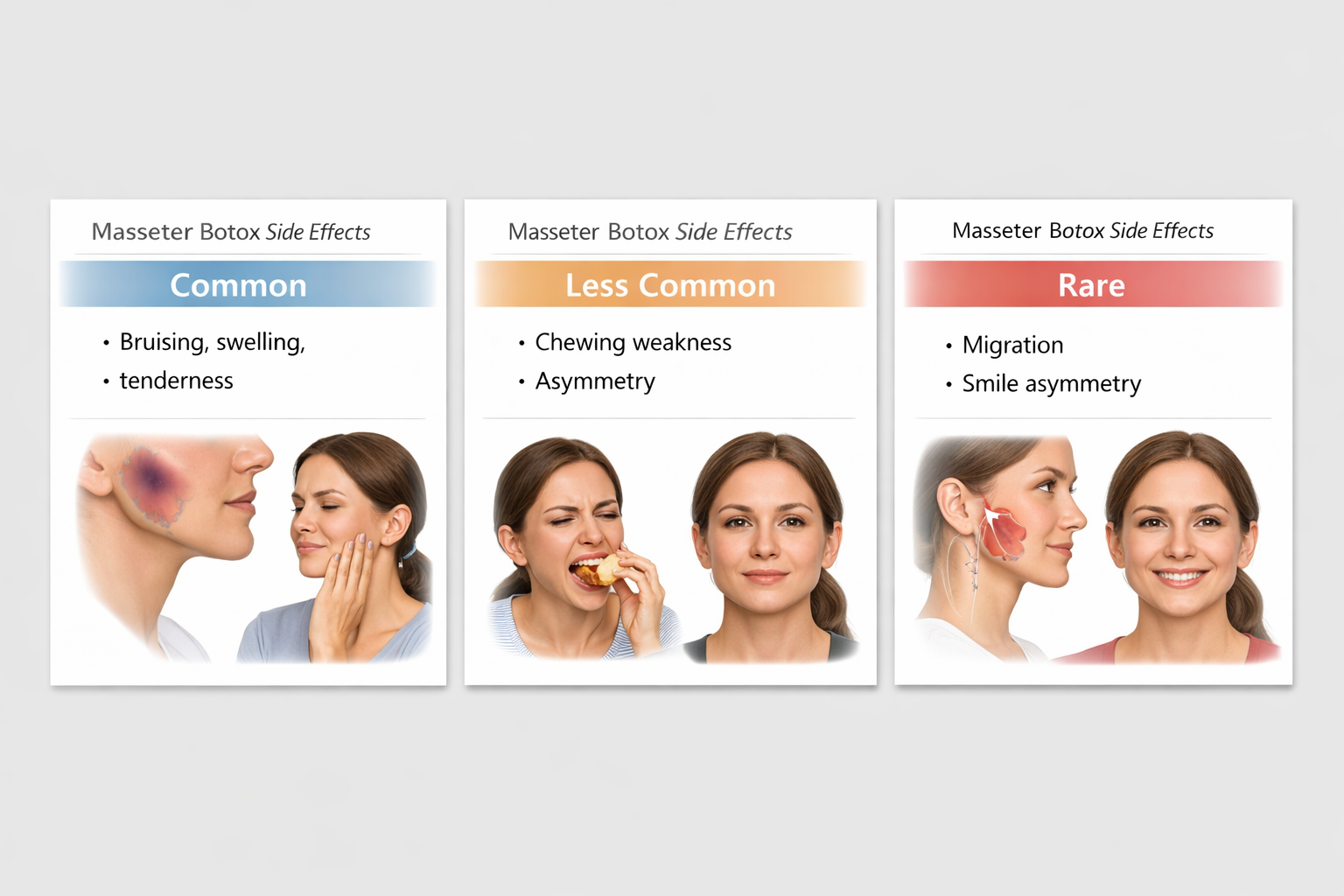
Common and usually temporary side effects include bruising, swelling, or tenderness at the injection sites, which typically resolve within a few days. Some patients notice mild soreness in the jaw for the first day or two after treatment.
Less common effects may include temporary weakness when chewing harder foods, a slightly altered bite sensation, or asymmetry if the botulinum toxin affects the two sides differently. These effects are generally temporary and resolve as the treatment wears off, though they should be discussed with the treating practitioner.
Rare but more significant risks include unintended spread of botulinum toxin to adjacent muscles, which could cause asymmetry of the smile or, very rarely, difficulty swallowing. The risk of migration is reduced by avoiding massage of the treated area and following aftercare instructions carefully.
A consideration that is rarely discussed in patient-facing information is the potential long-term effect of repeated masseter Botox on jaw bone density. Some researchers have raised the theoretical concern that sustained reduction in masseter muscle activity over many years could reduce the mechanical loading on the mandible, potentially affecting bone remodelling. The clinical significance of this in practice is not yet well established, and most patients receiving treatment two to four times per year over a typical treatment period are unlikely to be at meaningful risk. However, it is a reasonable question to raise with your practitioner, particularly if you are considering very long-term maintenance.
There is also a small body of evidence suggesting that some individuals may develop reduced responsiveness to botulinum toxin with repeated use over many years, potentially due to the development of neutralising antibodies. This is more commonly associated with higher doses and more frequent treatments. An experienced practitioner will use the lowest effective dose and appropriate intervals to minimise this risk.
Aftercare Following Masseter Botox
Aftercare for masseter Botox is straightforward. In the 24 hours following treatment, it is generally advised to:
- Avoid rubbing or massaging the treated area, as this may cause the botulinum toxin to migrate
- Avoid strenuous exercise, which can increase blood flow and potentially affect how the product settles
- Avoid alcohol and excessive heat, including saunas and hot baths
- Remain upright for several hours after the appointment
Most practitioners recommend a follow-up appointment two to four weeks after the initial treatment to assess the result and determine whether any adjustment is needed. This is particularly useful for first-time patients, as the optimal dose for an individual’s anatomy may take one or two sessions to establish accurately.
The Off-Label Status of Masseter Botox for Bruxism
In many countries, including the United States, the use of botulinum toxin for bruxism is considered an off-label use. This means that while botulinum toxin products are licensed for various cosmetic and medical indications, bruxism is not among the formally approved indications in most regulatory frameworks. Off-label prescribing is a well-established and legal medical practice — clinicians regularly use licensed medicines for indications supported by clinical evidence but not formally listed on the product licence. The growing body of research on botulinum toxin for bruxism supports its use in appropriate patients, but patients should be aware of this status and discuss it with their practitioner as part of informed consent.
Choosing a Qualified Practitioner
The safety and effectiveness of masseter Botox depend significantly on the skill and knowledge of the person performing the treatment. The masseter is a complex anatomical structure, and incorrect injection placement can lead to asymmetry, unwanted muscle weakness, or inadequate results. When selecting a provider, consider the following:
- Look for a practitioner with recognised medical qualifications — such as a doctor, dentist, or nurse prescriber — who has specific training in facial anatomy and injectable treatments
- Ask about their experience with masseter injections specifically, not just general cosmetic botulinum toxin use
- Ensure a full medical history and consultation is conducted before any treatment is agreed
- Ask what happens if you experience side effects or are unhappy with the result
- Be cautious of providers offering very low prices without a proper consultation process
A qualified injector will take time to understand your symptoms, assess your anatomy, explain realistic outcomes, and discuss alternatives. They will not pressure you into treatment or minimise the risks involved.
Frequently Asked Questions
Is masseter Botox painful?
Most patients describe the injections as a brief, mild pinch. The masseter is a relatively accessible muscle and the needles used are fine. Discomfort is generally minimal and short-lived. Topical anaesthetic cream can be applied beforehand if you are particularly sensitive.
How many units of Botox are needed for teeth grinding?
Dosage varies depending on the size of the masseter muscle and the severity of symptoms. Clinical literature commonly references a range of approximately 15 to 30 units of botulinum toxin per side for this indication, but the appropriate amount for any individual should be determined by a qualified practitioner following a physical assessment. Units are also not directly interchangeable between different botulinum toxin brands.
Will masseter Botox change the shape of my face?
In patients with masseter hypertrophy — where the muscle has enlarged due to chronic overuse — botulinum toxin treatment can gradually reduce the muscle’s bulk, producing a softer, less squared lower face contour. This effect is not immediate and typically becomes visible over several weeks to months. Not everyone will notice a significant cosmetic change, particularly those without pronounced masseter enlargement to begin with.
Is masseter Botox better than a night guard for bruxism?
They work differently and are not direct alternatives. A night guard protects the teeth from wear but does not reduce the force of muscle contraction. Masseter Botox reduces the muscular force itself, which may provide better relief for jaw pain and headaches. Many practitioners recommend using both together, particularly for patients with significant enamel erosion or dental restorations that need protection.
How often will I need repeat treatments?
Most patients require maintenance treatment every three to six months to sustain the benefit. The exact interval depends on how quickly the botulinum toxin wears off for the individual, which varies between patients. Over time, some people find that their symptoms remain more manageable between sessions as habitual muscle patterns are disrupted.
Can masseter Botox help with headaches?
Tension headaches associated with jaw clenching and overactive jaw muscles are frequently reported to improve following masseter Botox treatment. By reducing the force and frequency of involuntary muscle contractions, the treatment may relieve the muscular tension that contributes to these headaches. However, headaches have many causes, and a practitioner should assess whether jaw-related muscle tension is a likely contributing factor before recommending this treatment for headache relief specifically.
What happens if I stop having masseter Botox treatments?
If maintenance treatments are discontinued, the masseter muscle will gradually return to its previous level of activity and size. There is no permanent change to the muscle from the treatment. Bruxism symptoms are likely to return to their pre-treatment level over time, though some patients report that the period of reduced muscle activity has helped them become more aware of clenching habits, which may support behavioural changes.
Is Masseter Botox Worth Considering for Your Jaw Symptoms?
For people living with persistent jaw pain, morning headaches, or the dental consequences of chronic teeth grinding, masseter Botox offers a clinically supported, minimally invasive option that addresses the problem at its muscular source. The evidence base — while still growing — includes randomised controlled trials and longitudinal studies demonstrating meaningful reductions in bruxism activity and associated symptoms following botulinum toxin injection into the masseter muscle.
The treatment is not a cure. It does not address the underlying causes of bruxism, whether those are stress, sleep disorders, or habitual patterns, and it requires ongoing maintenance to sustain its effects. It works best as part of a broader management plan that may include a night guard, stress management strategies, and where relevant, assessment for conditions such as obstructive sleep apnea that can drive nocturnal grinding.
Patients who have found limited relief from conservative measures, or who experience significant jaw pain and tension headaches alongside their grinding, may find masseter Botox a worthwhile addition to their treatment approach. Those with a secondary interest in jawline slimming may also benefit from the cosmetic effect that follows muscle reduction over time.
If you are considering this treatment, a consultation with an experienced and qualified practitioner is the appropriate starting point. They can assess whether your symptoms are likely to respond, discuss realistic expectations, and help you decide whether masseter Botox — alone or in combination with other approaches — is the right option for your situation.