

Key Takeaways
- Botulinum toxin type A is used by men for both cosmetic purposes — such as softening forehead lines and crow’s feet — and medical conditions including hyperhidrosis (excessive sweating).
- Male facial anatomy typically requires higher unit counts than female anatomy due to greater muscle mass and thicker skin, making an experienced, male-aware injector important.
- Botox for axillary hyperhidrosis (underarm sweating) can reduce sweating significantly and tends to last longer than cosmetic treatment — often six to twelve months per session.
- Natural-looking results are achievable when technique is tailored to masculine facial anatomy; the feminisation risk is real but avoidable with a qualified practitioner.
- The number of men seeking aesthetic tweakments has grown substantially, driven by shifting attitudes to male grooming, video conferencing culture, and greater awareness of non-surgical options.
Why More Men Are Choosing Botox
Male Botox — colloquially known as Brotox — has moved firmly into the mainstream. According to figures from the American Society of Plastic Surgeons, men accounted for more than half a million botulinum toxin treatments in 2023 alone, a number that has grown year on year. In the UK, men now represent a meaningful and rising proportion of all injectable treatments performed at aesthetic clinics.
Several factors have driven this shift. The widespread adoption of video conferencing during and after the pandemic made many men acutely aware of how they appear on screen. Social media has normalised male grooming and aesthetic self-care. Workplace competitiveness and the desire to appear energetic and engaged have also been cited by patients as motivating factors. Perhaps most significantly, the stigma that once surrounded cosmetic treatments for men has diminished considerably, particularly among younger generations.
Men seek Botox for two broad reasons: cosmetic improvement and medical treatment. On the cosmetic side, the most common goals are softening dynamic wrinkles — lines that form through repeated facial movement — without losing a masculine, characterful appearance. On the medical side, hyperhidrosis, or excessive sweating, is one of the most frequently treated conditions, and one where botulinum toxin type A has a well-established evidence base.
How Botulinum Toxin Works
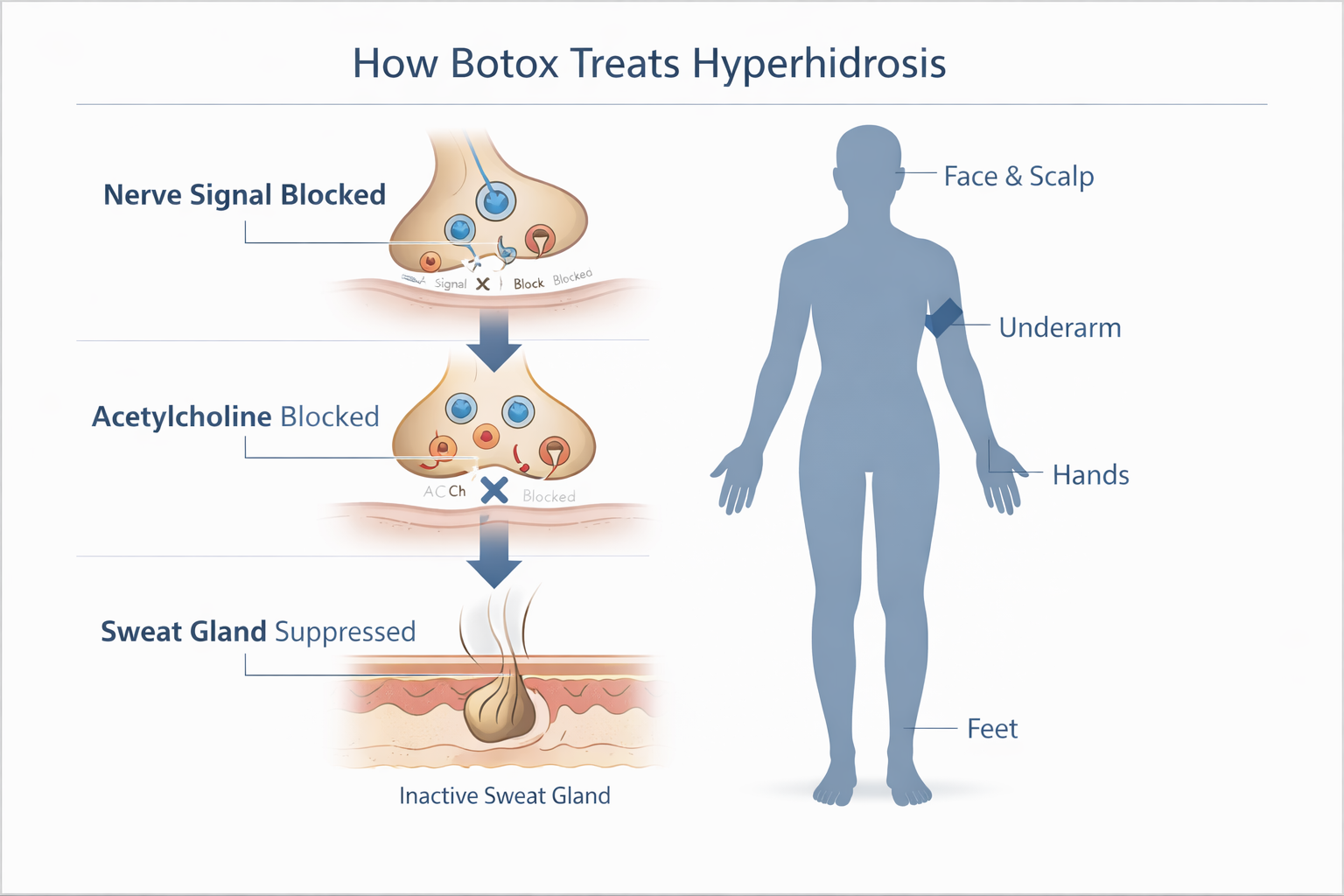
Botulinum toxin type A is a neuromodulator — a substance that temporarily modifies how nerve signals are transmitted. When injected into a muscle or near a sweat gland, it blocks the release of acetylcholine, the chemical messenger responsible for triggering muscle contraction or sweat production. The muscle or gland becomes temporarily less active, which is what produces the smoothing effect on wrinkles or the reduction in sweating.
The effect is not permanent. Nerve endings gradually regenerate their ability to release acetylcholine, which is why results require maintenance. For cosmetic use, this typically means repeat treatment every three to four months. For hyperhidrosis, the effect tends to last considerably longer — often six to twelve months — because sweat glands appear to respond differently to the toxin than facial muscles do.
It is worth clarifying that botulinum toxin does not destroy nerves or glands. It temporarily suppresses their activity. When used for sweating, it does not impair the body’s overall ability to regulate temperature; the treated area simply produces less sweat, and the body compensates through other sweat glands without meaningful thermoregulatory consequence for most patients.
How Male Botox Differs from Female Treatment
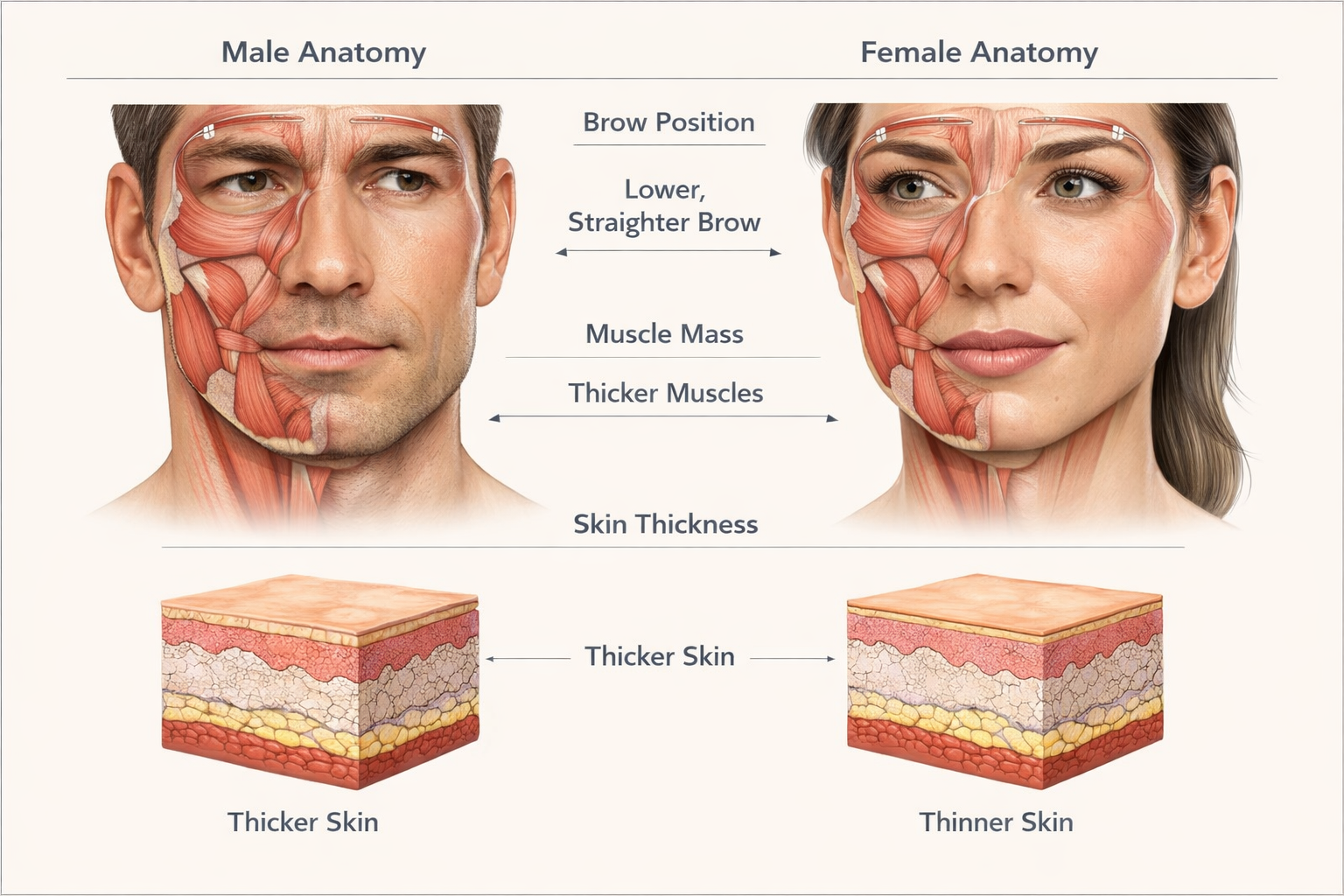
Masculine facial anatomy presents distinct considerations that a skilled injector must account for. Men generally have greater facial muscle mass, particularly in the frontalis (forehead), corrugator (frown), and masseter (jaw) muscles. Skin tends to be thicker. These anatomical differences mean that the same dose used in a female patient may produce a noticeably weaker effect in a man.
As a result, higher unit counts are typically required. While generalised dosing figures vary between practitioners and products, men commonly require roughly 30 to 50 percent more units per area than women to achieve a comparable result. This has a direct bearing on cost, which is why some clinics apply a male supplement to their standard pricing.
Technique also differs. One of the most important male-specific considerations is brow position. Women’s brows are typically arched and sit above the orbital rim, whereas men’s brows tend to sit lower and flatter. Injecting the frontalis too aggressively or in the wrong pattern can cause the brow to drop further, creating a heavy or feminised appearance — a genuine feminisation risk that an experienced injector will actively work to avoid. Men with a receding hairline also require a modified approach, since the standard injection pattern may need to be adjusted to avoid visible injection sites or unnatural-looking results near the hairline.
The goal for most male patients is not the smooth, line-free result that some women seek. It is a refreshed, natural-looking appearance that retains character and masculine definition. A good injector will discuss this distinction clearly during consultation.
Popular Cosmetic Treatment Areas for Men
The most frequently requested cosmetic areas for male Botox follow a broadly similar pattern to female treatment, but with different aesthetic goals and dosing requirements.
Forehead lines are the most common request. Horizontal lines across the forehead are often deeper in men due to greater muscle activity and thicker skin. Treatment aims to soften these lines while preserving enough movement to avoid a frozen or expressionless result.
Glabellar lines — the vertical frown lines between the brows, sometimes called the “11s” — are another frequent concern. These lines can give a permanently stern or fatigued appearance. Botulinum toxin injected into the corrugator and procerus muscles reduces the muscular activity that creates them.
Crow’s feet, the lines that fan out from the outer corners of the eyes, are commonly treated in men who want to look less tired without dramatic change.
Masseter treatment is growing in popularity among men, though for different reasons than in women. While jaw slimming is a common female goal, men more often seek masseter injections to address bruxism (teeth grinding) or TMJ-related jaw tension, with any aesthetic slimming effect being secondary. Men with very strong masseter muscles may require higher doses to achieve a functional result.
Platysmal bands — the vertical cords that can become visible in the neck — are occasionally treated in men, as are bunny lines (wrinkles across the nose bridge) and a lip flip to subtly increase upper lip visibility. These are less common requests but are performed by experienced practitioners.
Preventative Botox is an emerging trend among younger men, typically those in their mid-twenties to early thirties. The rationale is that reducing repetitive muscle movement before deep static lines form may slow their development. Evidence for this approach is still developing, and it is not appropriate for every patient, but it is a conversation worth having with a qualified practitioner if you are noticing early dynamic wrinkles.
Botox for Hyperhidrosis: What Men Should Know
Hyperhidrosis — excessive sweating beyond what the body needs for temperature regulation — affects an estimated 2 to 3 percent of the population, though many cases go undiagnosed. Men are disproportionately affected in social and professional contexts: sweating through shirts during meetings, damp handshakes, and discomfort in formal clothing are commonly reported concerns. For men who exercise regularly or work in physically demanding environments, the impact on daily life can be significant.
Botulinum toxin type A is one of the most effective treatments available for primary hyperhidrosis, and it is FDA-approved for axillary hyperhidrosis (excessive underarm sweating). The mechanism is the same as for cosmetic use: acetylcholine blockade prevents the nerve signals that would otherwise stimulate sweat glands in the treated area.
Treatment Areas for Hyperhidrosis
Axillary hyperhidrosis (underarm sweating) is the most commonly treated form. Multiple small injections are placed across the underarm skin, targeting the eccrine sweat glands just beneath the surface. Results typically begin within a week and reach full effect within two weeks. Most patients experience a substantial reduction in sweating — published data from the International Hyperhidrosis Society suggests reductions of 80 to 87 percent are achievable — and the effect commonly lasts six to twelve months, considerably longer than cosmetic facial treatment.
Palmar hyperhidrosis (hand sweating) can also be treated with botulinum toxin, though the procedure is more uncomfortable due to the density of nerve endings in the palms. A topical anaesthetic or nerve block is often used. Results are effective but the procedure requires a practitioner experienced in this specific technique.
Plantar hyperhidrosis (foot sweating) and craniofacial hyperhidrosis (sweating of the face and scalp) are less commonly treated but are recognised off-label applications. Inguinal hyperhidrosis (groin sweating) is another area where botulinum toxin has been used, though evidence is more limited and the procedure requires careful patient selection.
How Hyperhidrosis Botox Compares to Alternatives
Before considering botulinum toxin, many patients will have tried prescription-strength antiperspirants containing aluminium chloride. These are a reasonable first step for mild to moderate cases but are often insufficient for severe hyperhidrosis and can cause skin irritation with prolonged use. Iontophoresis — a technique that passes a mild electrical current through water to temporarily reduce sweat gland activity — is effective for palmar and plantar hyperhidrosis but requires frequent sessions and is less practical for underarm use. miraDry is a microwave-based device that permanently destroys sweat glands in the underarm area; it offers a long-term solution but is more expensive, involves more downtime, and is irreversible. Botulinum toxin sits between these options: more effective than topical treatments, less invasive and irreversible than miraDry, but requiring repeat treatment every six to twelve months.
What to Expect at Your Appointment
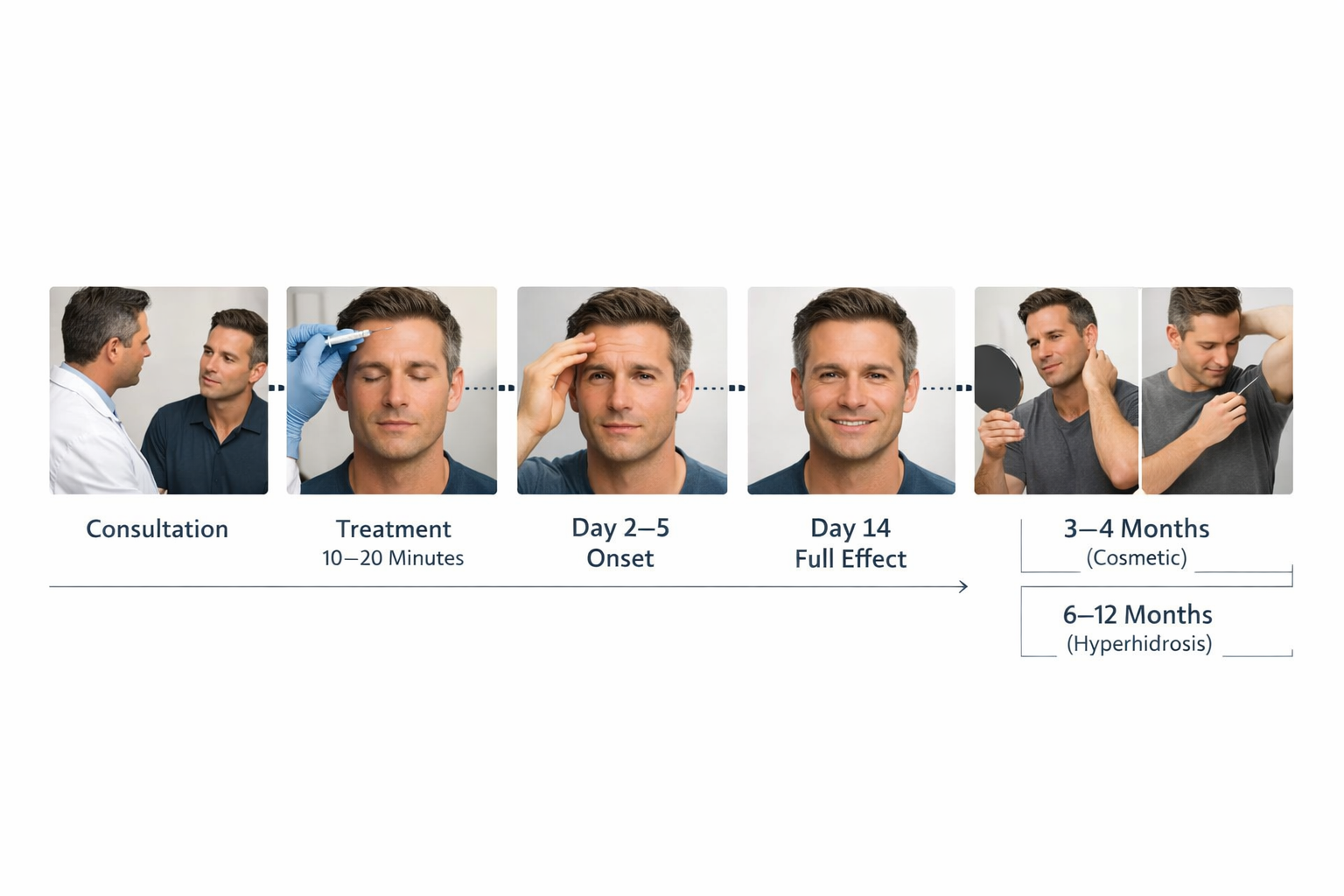
A responsible clinic will begin with a consultation before any treatment is performed. For cosmetic male Botox, this involves a facial assessment — often with photographs — to evaluate muscle strength, skin quality, brow position, hairline, and the patient’s aesthetic goals. For hyperhidrosis, the consultation may include a starch-iodine test to map the areas of most active sweating.
The treatment itself is brief. Most sessions take between ten and twenty minutes. A fine needle is used to place small amounts of botulinum toxin at precise points. Discomfort is generally mild — often described as a brief sting — and most patients tolerate the procedure without anaesthetic, though a topical numbing cream can be applied beforehand if preferred. For palmar or plantar hyperhidrosis, stronger anaesthesia is usually recommended.
After treatment, patients are typically advised to avoid strenuous exercise, alcohol, and exposure to significant heat (saunas, hot showers) for 24 hours. Lying flat and rubbing the treated area are also generally discouraged in the immediate post-treatment period. These precautions are intended to minimise the risk of the toxin migrating away from the intended injection site.
Results from cosmetic treatment begin to appear within two to five days, with the full effect visible at around two weeks. For hyperhidrosis, the onset is similar, with sweating reduction becoming apparent within the first week. Cosmetic results typically last three to four months; hyperhidrosis results commonly last six to twelve months, though individual variation exists.
Factors That Affect How Long Results Last in Men
Several factors influence how quickly botulinum toxin metabolises in male patients specifically. Men who train regularly at the gym or engage in high-intensity physical activity tend to have faster metabolisms and greater muscle activity, both of which can shorten the duration of cosmetic results. Larger, stronger muscles may also require more frequent retreatment to maintain the desired effect.
For hyperhidrosis, physical activity level is less of a factor in duration, since sweat gland suppression appears to be more stable than muscle relaxation over time. However, individual variation in response is real, and some patients find their results last at the shorter end of the expected range.
Retreatment before the effect has fully worn off — sometimes called a top-up — is not generally recommended, as repeated treatment at short intervals does not meaningfully extend results and may increase cumulative dose. A qualified practitioner will advise on appropriate timing based on your individual response.
Risks and Side Effects
Botulinum toxin treatment is generally well tolerated, but it is not without risk. Common and usually temporary side effects include redness, mild swelling, and bruising at injection sites. A headache in the hours following treatment is occasionally reported, particularly after forehead injections.
More significant but less common risks include eyelid drooping (ptosis) or brow drooping, which can occur if the toxin spreads beyond the intended area. In male patients, the feminisation risk — where an incorrectly placed or over-dosed injection alters brow shape or facial expression in a way that looks incongruous with masculine anatomy — is a specific concern that underscores the importance of choosing an injector with genuine experience treating men.
Allergic reactions to botulinum toxin are rare but possible. Patients with certain neuromuscular conditions, those taking specific medications (including some antibiotics and blood thinners), and those who are pregnant or breastfeeding are generally not suitable candidates. A thorough medical history review at consultation is essential to identify any contraindications relevant to your situation.
For hyperhidrosis treatment, compensatory sweating — increased sweating in untreated areas — is sometimes cited as a concern. While this can occur, it is generally mild and not a significant problem for most patients treated for axillary hyperhidrosis.
How Much Does Male Botox Cost in the UK?
Pricing for male Botox in the UK varies depending on the clinic, the practitioner’s experience, the product used, and the number of areas treated. As a general guide, a single cosmetic area (such as forehead lines or glabellar lines) may cost in the region of £150 to £250, with many clinics pricing by area rather than by unit. Because men typically require higher unit counts, some clinics apply a male supplement of £25 to £50 per session, or price male treatment separately from the outset.
Hyperhidrosis treatment tends to be priced differently, often as a standalone procedure. Axillary hyperhidrosis treatment in the UK commonly ranges from £400 to £600 per session, reflecting the larger number of injection points and the volume of product required. London-based clinics typically sit at the higher end of these ranges.
It is worth noting that while cost is a reasonable consideration, choosing a provider primarily on price carries meaningful risk. The skill and experience of the injector — particularly their familiarity with masculine facial anatomy — has a direct bearing on both the safety and the quality of the outcome.
Choosing the Right Practitioner for Male Botox
Not all aesthetic practitioners have equivalent experience treating male patients. Because masculine facial anatomy, dosing requirements, and aesthetic goals differ meaningfully from female treatment, it is worth seeking a practitioner who can demonstrate specific experience with male patients.
When researching providers, ask to see before-and-after photographs of male patients they have treated. Ask about their approach to brow position and feminisation risk. Confirm that they use licensed botulinum toxin products — such as Botox (Allergan), Bocouture, or Azzalure — sourced through legitimate medical supply channels. A qualified practitioner will conduct a thorough consultation before treatment, will not pressure you into additional procedures, and will be transparent about realistic outcomes and potential risks.
In the UK, botulinum toxin is a prescription-only medicine. It must be prescribed by a qualified prescriber — a doctor, dentist, nurse prescriber, or pharmacist prescriber — following a face-to-face or remote clinical assessment. Treatment should only be administered by a trained and appropriately insured practitioner. Be cautious of providers offering unusually low prices, operating without a consultation process, or unable to explain their qualifications and product sourcing clearly.
Frequently Asked Questions
Will male Botox make me look frozen or unnatural?
Not if the treatment is performed correctly. Natural-looking results are achievable when dosing and technique are tailored to your facial anatomy and aesthetic goals. The aim for most male patients is a refreshed appearance, not the elimination of all expression. Communicating this clearly with your practitioner during consultation is important.
Is Botox for excessive sweating safe for men?
Botulinum toxin type A is FDA-approved for axillary hyperhidrosis and has a well-established safety record when administered by a qualified practitioner. It does not impair the body’s ability to regulate temperature overall. Side effects are generally mild and temporary. A medical consultation is required to confirm suitability.
How often will I need treatment?
For cosmetic use, most men return every three to four months, though this varies with muscle strength, metabolism, and activity level. For hyperhidrosis, retreatment is typically needed every six to twelve months. Your practitioner will advise based on your individual response.
Does male Botox hurt?
Most patients describe the injections as a brief, mild sting. Facial treatment is generally well tolerated without anaesthetic. Palmar or plantar hyperhidrosis treatment is more uncomfortable, and a numbing cream or nerve block is usually recommended for those areas.
Is Botox more expensive for men?
It can be. Because men typically require higher unit counts due to greater muscle mass, some clinics charge a supplement or price male treatment separately. This is a legitimate reflection of the additional product required rather than arbitrary pricing.
Can younger men benefit from preventative Botox?
Some men in their mid-twenties to early thirties choose preventative Botox to slow the development of dynamic wrinkles before they become deeply set. The evidence base for this approach is still developing, and it is not appropriate for everyone. A consultation with a qualified practitioner is the right starting point to assess whether it may be relevant for you.
Are there alternatives to Botox for hyperhidrosis?
Yes. Prescription-strength antiperspirants are a reasonable first step for mild cases. Iontophoresis is effective for hand and foot sweating. miraDry offers a more permanent solution for underarm sweating but involves greater cost and downtime. Your practitioner can help you assess which option is most appropriate for your situation.
Is Male Botox Worth Considering for Your Goals?
Botulinum toxin type A has a strong evidence base for both cosmetic and medical use, and the growing number of men choosing treatment reflects a genuine shift in how male grooming and self-care are perceived. For men bothered by dynamic wrinkles, jaw tension, or hyperhidrosis, it offers a non-surgical option with a well-understood mechanism, manageable side effects, and no meaningful downtime.
The key variables are realistic expectations, appropriate dosing for masculine facial anatomy, and the skill of the practitioner. Male Botox is not a one-size-fits-all treatment, and the feminisation risk — while avoidable — is a genuine consideration that makes choosing an experienced, male-aware injector more important than it might initially seem.
If you are considering treatment for the first time, a thorough consultation with a qualified practitioner is the appropriate starting point. This allows your anatomy, goals, medical history, and suitability to be assessed individually before any decision is made. The right treatment, performed by the right person, can deliver natural-looking results that align with your goals — whether cosmetic, medical, or both.