

Understanding the lip filler healing process helps set realistic expectations and reduces unnecessary concern during recovery. Swelling, tenderness, and uneven appearance in the first few days are a normal part of how the tissue responds to hyaluronic acid filler — not a sign that something has gone wrong. This article explains each stage of lip recovery in plain terms, from the appointment itself through to final results, including what is normal, what warrants attention, and how to support a smooth recovery.
Key Takeaways
- Swelling and bruising after lip filler are expected and typically peak within 24 to 72 hours before gradually resolving over one to two weeks.
- Final results are generally not visible until swelling has fully settled, which can take up to four weeks in some patients.
- The healing timeline varies between individuals depending on the volume of filler used, injection technique, individual anatomy, and lifestyle factors.
- Most side effects during recovery are temporary; however, certain symptoms — such as skin colour changes, severe pain, or vision disturbance — require prompt medical assessment.
- Following aftercare guidance from your practitioner supports healing and helps protect the result.
What Happens During the Lip Filler Appointment
Before the healing process begins, it helps to understand what occurs during the treatment itself. Lip filler injections typically use a hyaluronic acid-based dermal filler, which is a gel-like substance injected into or around the lips to add volume, define the border, or improve symmetry. Hyaluronic acid is a naturally occurring substance in the body, which is one reason it is widely used for this purpose.
A topical anaesthetic cream is usually applied to the lips beforehand to reduce discomfort. Many hyaluronic acid fillers also contain lidocaine, a local anaesthetic, within the formulation itself, which helps manage sensation during the procedure. The injections are placed using a fine needle or, in some cases, a blunt-tipped cannula. The choice of technique depends on the practitioner’s assessment and the specific areas being treated.
The appointment typically takes between 30 and 60 minutes, including consultation, preparation, and the injections themselves. Mild discomfort, pressure, and a stinging sensation are common during the procedure. Immediately afterwards, the lips will appear swollen — often noticeably so — and this is the beginning of the healing process rather than the final result.
The Lip Filler Healing Timeline: Stage by Stage
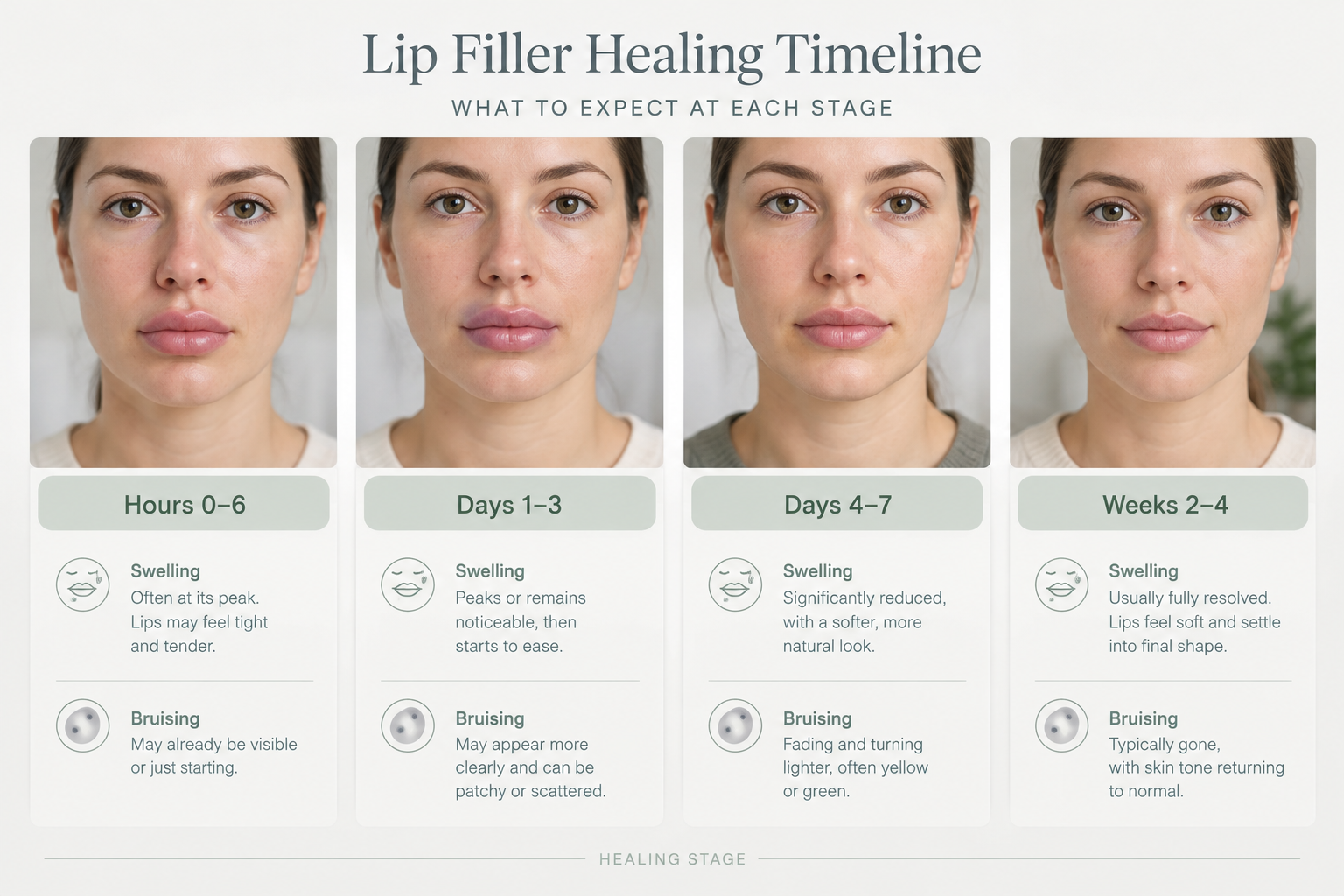
The lip filler healing process unfolds in recognisable stages. While individual experiences vary, the following timeline reflects what most patients can reasonably expect.
Immediately After Treatment: Hours 0 to 6
In the first few hours after lip filler injections, swelling is at its most dramatic. The lips may appear significantly larger than intended, feel tight or tender, and look uneven or lumpy. This is a normal inflammatory response to the injections and does not reflect the final outcome. Small red marks or pinpoint bruises may be visible at injection sites. Some patients also notice mild numbness if lidocaine was used in the filler formulation, which typically fades within a few hours.
Applying a clean, cold compress gently to the lips during this period can help reduce swelling and discomfort. Avoid pressing firmly or massaging the area unless specifically instructed to do so by your practitioner, as the filler is still settling into position. Strenuous physical activity, alcohol, and excessive heat — including saunas and hot showers — are generally advised against in the first 24 hours, as these can increase blood flow to the area and worsen swelling and bruising.
Day 1 to Day 3: Peak Swelling and Bruising
Swelling typically peaks between 24 and 72 hours after lip filler treatment. During this stage, the lips may feel firm, look disproportionately large, and appear asymmetrical. Bruising, if it develops, usually becomes more visible during this window. The extent of bruising varies considerably between patients and depends on factors including skin tone, the number of injection points, individual blood vessel anatomy, and whether blood-thinning medications or supplements were taken before the procedure.
Tenderness when touching the lips is common at this stage. Some patients also notice small bumps or ridges beneath the skin surface, which are usually caused by localised swelling around injection points rather than filler displacement. Sleeping with the head slightly elevated during the first night or two may help reduce morning swelling. Continuing to avoid alcohol, vigorous exercise, and heat exposure during this period supports the healing process.
Days 4 to 7: Swelling Begins to Subside
By the end of the first week, most patients notice a meaningful reduction in swelling. The lips begin to look and feel softer, and the initial dramatic appearance starts to settle. Bruising, if present, typically fades during this period, progressing through the usual colour changes — from darker purple or blue tones toward yellow or green — before resolving. Any residual tenderness usually diminishes significantly by day five to seven.
At this stage, the lips may still appear slightly uneven or feel firmer than expected. This is normal and does not necessarily indicate a problem. The filler continues to integrate with the surrounding tissue during this period. Patients often find that the appearance improves noticeably between days four and seven, which can be reassuring after the more pronounced swelling of the first few days.
Weeks 2 to 4: Settling and Integration
Between two and four weeks after lip filler treatment, the remaining swelling resolves and the filler fully integrates with the surrounding lip tissue. The lips become softer and more natural in feel and appearance. Any minor asymmetry that was present during the swelling phase often corrects itself as the tissue settles. This is the period during which the true result of the treatment becomes visible.
Hyaluronic acid filler absorbs water from the surrounding tissue as it settles, which can cause a slight change in volume during this phase. Some patients feel the lips look slightly smaller at four weeks than they did at one week — this is a normal part of the process and reflects the filler reaching its stable, integrated state rather than the filler dissolving. A follow-up appointment is often recommended at around two to four weeks to assess the result and discuss whether any refinement is appropriate.
Beyond Four Weeks: Final Results and Longevity
After four weeks, the lip filler healing process is generally complete and the result can be assessed accurately. Hyaluronic acid lip fillers typically last between six and twelve months, though this varies depending on the specific product used, the volume injected, individual metabolism, and lifestyle factors. Some patients find results last longer; others notice the filler metabolising more quickly. Repeated treatments over time may have a cumulative effect on the duration of results, though this varies between individuals.
As the filler gradually breaks down, the lips return toward their pre-treatment appearance rather than changing shape abruptly. If a patient wishes to maintain the result, a top-up treatment is usually recommended before the filler has fully dissolved, as this typically requires less product than the initial treatment.
What Is Normal During Lip Filler Recovery
Several experiences during the lip filler healing process are expected and do not indicate a complication. Understanding what is normal can reduce unnecessary anxiety during recovery.
- Swelling: Expected at all stages of early recovery; most pronounced in the first 72 hours.
- Bruising: Common, particularly around injection points; typically resolves within one to two weeks.
- Tenderness: Normal for the first several days; should gradually improve.
- Lumps or firmness: Often caused by localised swelling; usually resolves as swelling settles.
- Asymmetry: Frequently present during the swelling phase; often improves as healing progresses.
- Dryness or flaking: The lip skin may feel drier than usual during healing; a gentle, unfragranced lip balm can help.
- Itching: Mild itching around the injection sites can occur as the tissue heals.
Symptoms That Require Prompt Medical Attention
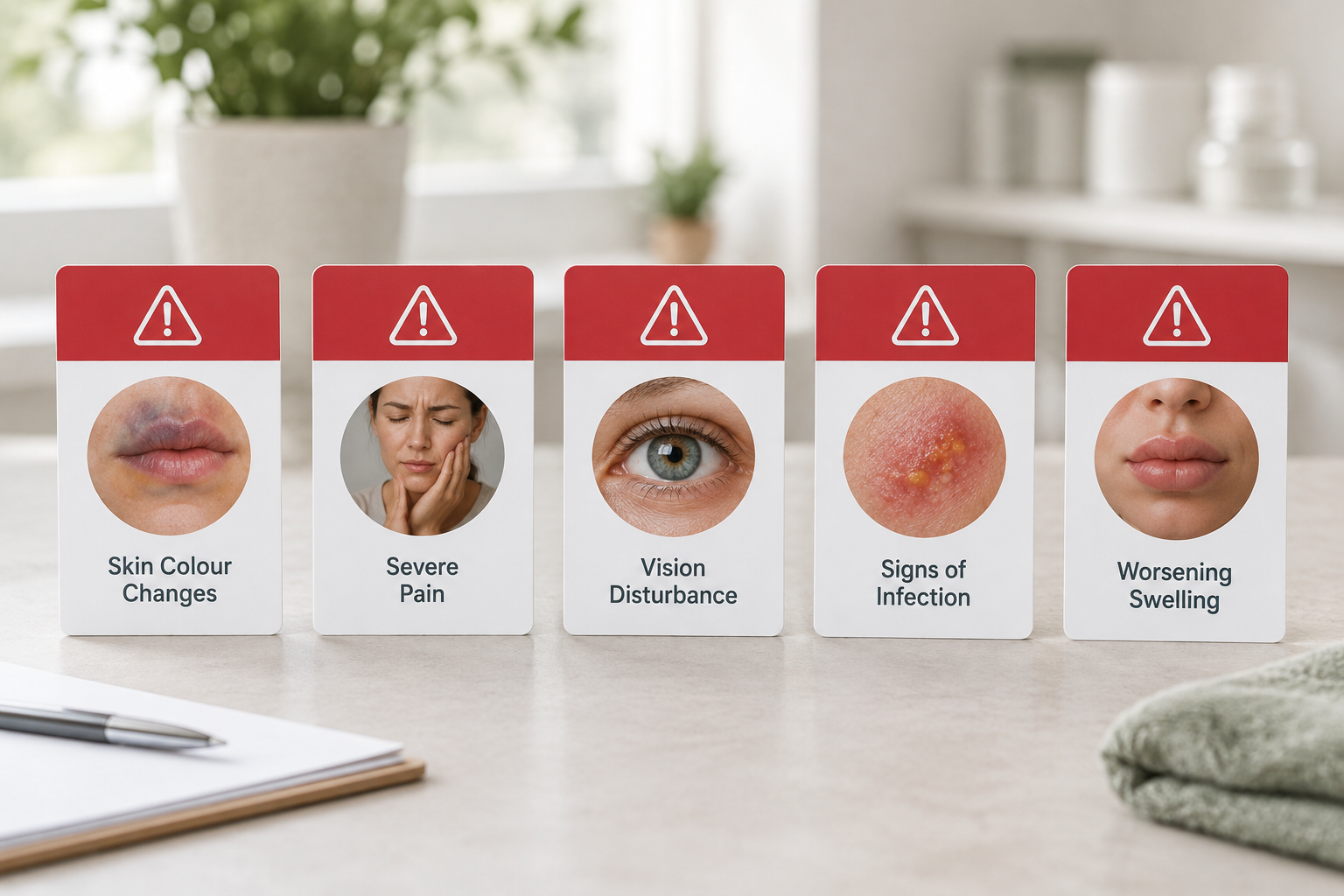
While most experiences during lip filler recovery are temporary and benign, certain symptoms require prompt assessment by a qualified medical professional. Vascular occlusion — a rare but serious complication in which filler inadvertently compresses or enters a blood vessel — can restrict blood supply to the surrounding tissue. Early signs may include skin that appears white, mottled, or unusually pale around the lips or nose, severe pain that is disproportionate to the procedure, or a dusky discolouration of the skin. This is a medical emergency and requires immediate contact with the treating practitioner or an emergency service.
Other symptoms that warrant prompt attention include:
- Vision changes or disturbance following treatment
- Severe or worsening pain beyond the first 48 hours
- Signs of infection such as increasing redness, warmth, pus, or fever
- Skin that feels hard, unusually firm, or shows signs of tissue breakdown
- Swelling that is worsening rather than improving after 72 hours
- An allergic reaction, including widespread rash, difficulty breathing, or facial swelling beyond the treated area
Patients should always be provided with clear aftercare instructions and an emergency contact number by their practitioner before leaving the clinic. If there is any doubt about a symptom during recovery, seeking assessment promptly is the appropriate course of action.
Factors That Influence the Lip Filler Healing Process
The lip filler healing process is not identical for every patient. Several factors influence how quickly swelling resolves, how much bruising occurs, and how the final result appears.
Volume of Filler Used
Larger volumes of filler generally produce more pronounced initial swelling and may take longer to fully settle. Patients receiving their first lip filler treatment often experience more noticeable swelling than those having a top-up, partly because the tissue is less accustomed to the filler and partly because a larger volume may be used to achieve the initial result.
Injection Technique and Practitioner Experience
The technique used — including the number of injection points, the depth of placement, and whether a needle or cannula is used — affects the degree of trauma to the tissue and therefore the extent of swelling and bruising. An experienced practitioner with a thorough understanding of lip anatomy can minimise unnecessary tissue disruption, which may support a smoother recovery.
Individual Anatomy and Skin Characteristics
Some patients bruise more easily than others due to differences in blood vessel anatomy, skin thickness, and individual physiology. Patients with thinner skin or more superficial blood vessels may notice more visible bruising. Age-related changes in skin quality can also influence how the tissue responds to injections.
Medications and Supplements
Certain medications and supplements increase the risk of bruising by affecting blood clotting. These include aspirin, ibuprofen and other non-steroidal anti-inflammatory drugs, warfarin, fish oil, vitamin E, and some herbal supplements such as ginkgo biloba and garlic. Patients are generally advised to avoid these where medically safe to do so in the days before treatment. Any changes to prescribed medications should only be made after discussion with the prescribing doctor.
Lifestyle Factors
Alcohol consumption before or shortly after treatment increases bruising risk by dilating blood vessels. Smoking may impair tissue healing more broadly. Staying well hydrated, avoiding excessive heat, and following aftercare guidance consistently all support a smoother recovery.
Aftercare Guidance During the Healing Process
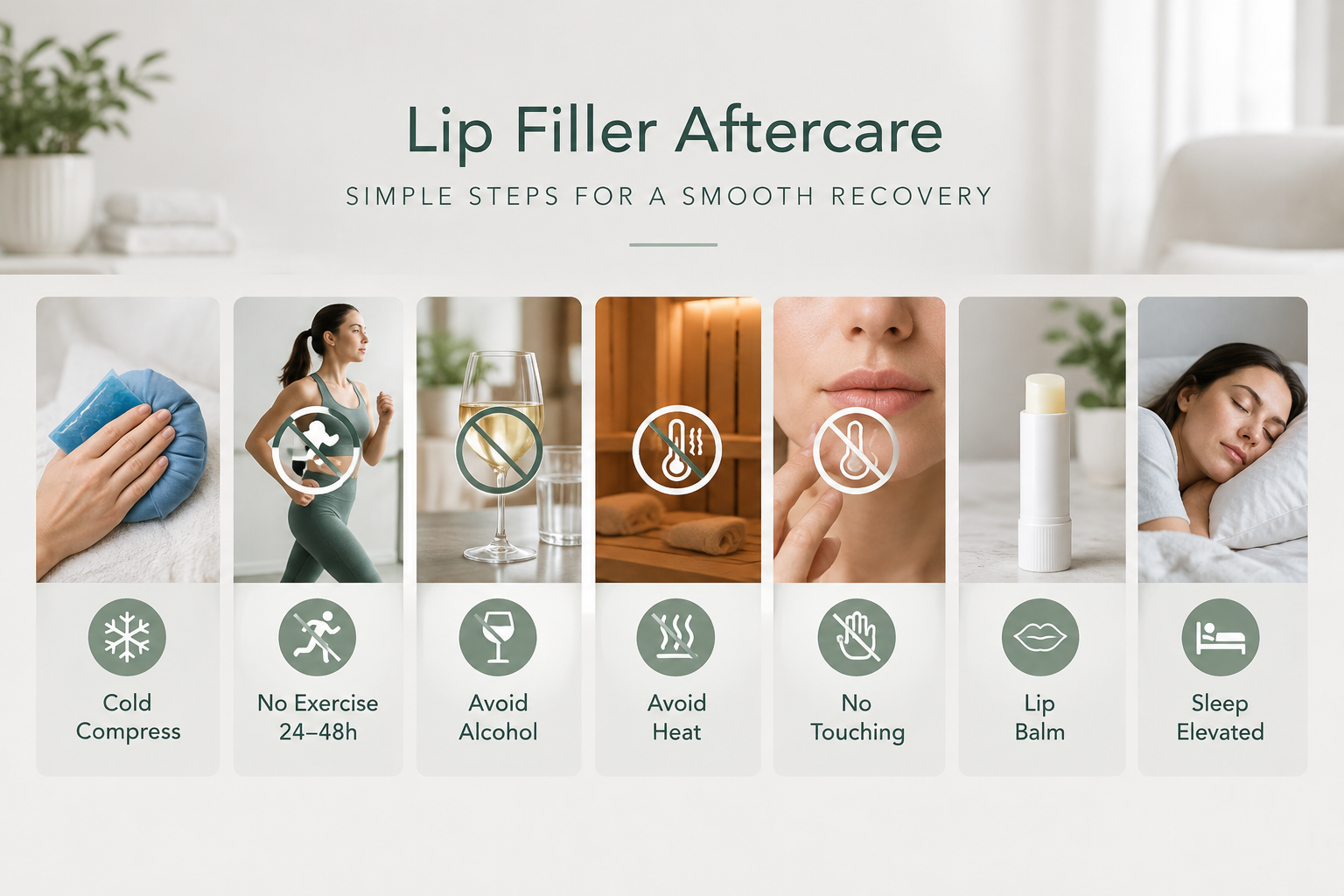
Aftercare during the lip filler healing process is designed to minimise swelling and bruising, protect the filler while it settles, and reduce the risk of complications. Specific guidance varies between practitioners and products, but the following principles are widely recommended.
- Apply a clean cold compress gently to the lips in the first 24 hours to help reduce swelling — avoid direct ice contact with the skin.
- Avoid strenuous exercise for at least 24 to 48 hours after treatment.
- Avoid alcohol for at least 24 hours after treatment.
- Avoid excessive heat, including saunas, steam rooms, and very hot showers, for 24 to 48 hours.
- Avoid touching, pressing, or massaging the lips unless specifically instructed by your practitioner.
- Avoid dental procedures that require significant stretching of the mouth for at least two weeks where possible.
- Avoid wearing tight face masks or anything that applies sustained pressure to the lips during the first week.
- Use a gentle, unfragranced lip balm to manage dryness.
- Sleep on your back with your head slightly elevated during the first night or two if possible.
- Attend any recommended follow-up appointment to allow the practitioner to assess the result.
Managing Expectations: What the Result Will Look Like
One of the most common sources of concern during the lip filler healing process is the gap between the immediate post-treatment appearance and the final result. The lips immediately after treatment — swollen, possibly bruised, and often asymmetrical — do not represent the outcome of the procedure. Patients who are not prepared for this can experience significant anxiety during the first few days.
The final result of lip filler treatment is typically visible at around four weeks, once all swelling has resolved and the filler has fully integrated. At this point, the lips should feel soft and natural, and the volume, shape, and symmetry achieved should reflect the treatment plan discussed during the consultation. If the result at four weeks does not meet expectations, a follow-up appointment allows the practitioner to assess whether a small refinement is appropriate. Hyaluronic acid filler can also be partially or fully dissolved using an enzyme called hyaluronidase if the result is unsatisfactory, which is one of the practical advantages of this filler type.
Alternatives to Lip Filler
For patients who are concerned about the recovery period associated with lip filler injections, or who are not suitable candidates for hyaluronic acid filler, it is worth understanding that alternative approaches exist. These include lip flip treatments using botulinum toxin, which can subtly enhance the appearance of the upper lip with minimal downtime, though the effect is more limited in scope than filler. Skin booster injections around the lip area may improve hydration and fine lines without adding significant volume. For patients seeking a more permanent solution, surgical options such as lip implants or a lip lift procedure exist, though these carry different risk profiles and recovery considerations. Each option has its own suitability criteria, limitations, and expected outcomes, and a thorough consultation with a qualified practitioner is necessary to determine which approach may be appropriate for an individual’s goals and anatomy.
Frequently Asked Questions
How long does swelling last after lip filler?
Swelling after lip filler typically peaks within 24 to 72 hours and then gradually reduces over the following week. Most visible swelling resolves within seven to ten days, though subtle residual swelling can persist for up to four weeks in some patients. The timeline varies depending on the volume of filler used, individual physiology, and how closely aftercare guidance is followed.
When will I see the final result of my lip filler?
The final result is generally visible at around four weeks after treatment, once all swelling has fully resolved and the filler has integrated with the surrounding tissue. Assessing the outcome before this point — particularly in the first week — is not reliable because swelling significantly alters the appearance of the lips.
Is it normal for lips to feel lumpy after filler?
Yes, small lumps or areas of firmness are common in the first one to two weeks after lip filler and are usually caused by localised swelling around injection points rather than filler displacement. These typically resolve as swelling settles. If lumps persist beyond four weeks or are accompanied by other symptoms, a follow-up assessment with the treating practitioner is appropriate.
Can I wear lipstick during the healing process?
Most practitioners advise avoiding lipstick and lip products for at least 24 hours after treatment to reduce the risk of introducing bacteria to the injection sites. After this initial period, a gentle lip balm is usually acceptable. Patients should follow the specific guidance provided by their practitioner regarding cosmetic products during recovery.
What should I do if I think something has gone wrong?
If you experience symptoms such as skin colour changes around the lips or nose, severe or worsening pain, vision disturbance, signs of infection, or swelling that is increasing rather than improving after 72 hours, contact your treating practitioner immediately. If you cannot reach them and symptoms are severe, seek emergency medical assessment. Do not wait to see if symptoms resolve on their own when vascular or infectious complications are suspected.
Does the lip filler healing process get easier with repeat treatments?
Many patients report that subsequent lip filler treatments involve less pronounced swelling and bruising than their first treatment, particularly when a smaller top-up volume is used. However, this is not guaranteed and individual responses vary. The healing process follows broadly the same stages regardless of whether it is a first or repeat treatment.
Planning Your Recovery: What to Consider Before Treatment
Understanding the lip filler healing process before booking a treatment allows patients to plan appropriately. Scheduling treatment at least two weeks before an important event — such as a wedding, photoshoot, or significant social occasion — gives swelling and bruising adequate time to resolve and allows the result to settle. Patients with a history of cold sores should inform their practitioner, as lip injections can trigger an outbreak; antiviral medication may be recommended prophylactically in some cases.
A thorough consultation with a qualified and experienced practitioner is the most important step before any lip filler treatment. This should include a discussion of your goals, a review of your medical history, an explanation of the procedure and its risks, and clear aftercare instructions. Choosing a practitioner with appropriate medical training and a sound understanding of facial anatomy significantly influences both the safety of the procedure and the quality of the result. If you have questions about the healing process, the products being used, or what to expect at each stage of recovery, raise them during the consultation — a responsible practitioner will welcome these questions and answer them clearly.