

Lip filler is one of the most commonly requested aesthetic treatments worldwide, yet it remains one of the most misunderstood. Whether you are considering fuller lips, improved symmetry, or subtle definition, understanding how dermal filler works in this area — and what realistic outcomes look like — is essential before booking a consultation. This guide covers the mechanism, treatment experience, expected results, risks, longevity, and the key questions worth asking a qualified practitioner.
Key Takeaways
- Most lip fillers use hyaluronic acid, a substance naturally found in the body, which can be dissolved if needed — making it a reversible option compared to some alternatives.
- Results typically last between six and twelve months, though this varies depending on the product used, the volume injected, and individual metabolism.
- Common side effects include swelling, bruising, and tenderness; serious complications are rare but possible and are more likely when treatment is performed by an inadequately trained injector.
- Lip filler is not suitable for everyone — medical history, anatomy, and individual goals all influence whether treatment is appropriate.
- A thorough consultation with a qualified, experienced practitioner is the most important step before proceeding.
What Is Lip Filler?
Lip filler refers to injectable dermal filler placed into or around the lips to add volume, improve shape, enhance definition, or address asymmetry. The vast majority of lip fillers used in clinical practice today are based on hyaluronic acid (HA), a naturally occurring polysaccharide found in connective tissue and skin. Hyaluronic acid attracts and retains water molecules, which is what gives HA-based fillers their volumising and hydrating properties when injected into lip tissue.
Several brands of hyaluronic acid filler are used for lip augmentation, including Juvederm, Restylane, Belotero, and others. Each product has a slightly different formulation, cross-linking density, and rheological profile — meaning they behave differently in tissue in terms of firmness, spreadability, and how naturally they integrate. The choice of product is a clinical decision made by the practitioner based on the patient’s anatomy, the desired outcome, and the specific area being treated.
Lip filler is distinct from permanent lip implants and from fat transfer procedures. It is also different from lip flip treatments using botulinum toxin, which relax the muscle around the upper lip to create the appearance of a slightly fuller lip border without adding volume. These are separate procedures with different mechanisms, results, and risk profiles.
What Can Lip Filler Address?
Lip filler can be used to address a range of concerns, though it is important to understand that not every concern is equally well suited to this treatment. Common reasons patients seek lip augmentation include:
- Volume loss: Lips naturally lose volume with age as collagen and fat diminish. Filler can restore some of this lost fullness.
- Thin lips: Some patients have naturally thin lips and seek modest augmentation for proportion rather than dramatic enlargement.
- Asymmetry: Differences in size or shape between the upper and lower lip, or between the left and right sides, can sometimes be improved with careful filler placement.
- Border definition: The vermilion border — the edge where the lip meets the surrounding skin — can become less defined with age. Filler placed along this border may improve definition.
- Cupid’s bow shape: The characteristic double curve of the upper lip can be enhanced or refined with targeted placement.
- Perioral lines: Fine lines around the mouth, sometimes called smoker’s lines or lipstick lines, may be partially addressed with filler, though this area requires careful technique and realistic expectations.
Lip filler cannot change the fundamental structure of the mouth, correct significant anatomical asymmetry caused by underlying bone or muscle, or produce results that look natural beyond a certain volume threshold. Practitioners with experience in facial anatomy are best placed to advise on what is achievable for a given patient.
How Does the Treatment Work?
Hyaluronic acid lip filler is injected directly into the lip tissue using a fine needle or, in some cases, a blunt-tipped cannula. The choice between needle and cannula depends on the area being treated, the practitioner’s technique, and the product being used. Cannulas are sometimes preferred for certain areas because they may reduce the risk of bruising and vascular injury, though both approaches are used in clinical practice.
The hyaluronic acid gel integrates into the tissue and binds water, creating volume and structure. Because HA is a substance the body recognises, it is gradually broken down by an enzyme called hyaluronidase over time. This natural degradation is what makes HA filler temporary — and it is also why hyaluronidase can be used therapeutically to dissolve filler if a complication occurs or if the patient is unhappy with the result.
Before injection, a topical anaesthetic cream is typically applied to the lips and surrounding area to reduce discomfort. Many HA fillers also contain lidocaine — a local anaesthetic — within the gel itself, which helps manage pain during the procedure. The injection process usually takes between fifteen and thirty minutes, though the full appointment including consultation, preparation, and aftercare advice will take longer.
What to Expect During and After Treatment
Most patients describe the sensation of lip filler injections as a mild to moderate stinging or pressure. The topical anaesthetic and lidocaine within the filler significantly reduce discomfort for most people, though individual pain tolerance varies. The lips are a sensitive area, and some patients find the treatment more uncomfortable than others.
Immediately after treatment, the lips will appear swollen — often more swollen than the intended final result. This initial swelling is normal and expected. Bruising is also common, particularly around the injection sites, and may take several days to resolve. Tenderness and firmness in the treated area are typical in the first few days.
Most practitioners advise patients to avoid strenuous exercise, alcohol, and excessive heat — such as saunas or hot baths — for at least twenty-four to forty-eight hours after treatment. Pressure on the lips, such as sleeping face-down, is also generally discouraged in the immediate post-treatment period. Makeup can usually be applied after a short period, though specific aftercare instructions will vary by clinic and product.
The majority of swelling resolves within one to two weeks. The final result becomes more apparent once the swelling has fully settled, which is why many practitioners recommend a review appointment at two weeks to assess the outcome and determine whether any refinement is needed.
How Long Do Lip Filler Results Last?
Lip filler longevity varies between individuals and depends on several factors, including the specific product used, the volume injected, the patient’s metabolism, lifestyle factors such as smoking and sun exposure, and how active the treated area is. The lips are a highly mobile area — they move constantly during speaking, eating, and facial expression — which tends to accelerate the breakdown of filler compared to less mobile areas of the face.
As a general guide, most hyaluronic acid lip fillers last between six and twelve months, with some patients reporting results closer to six months and others maintaining results for longer. Thinner, softer products designed for subtle enhancement may break down more quickly than denser formulations. Patients who metabolise filler quickly may find that results fade sooner than average.
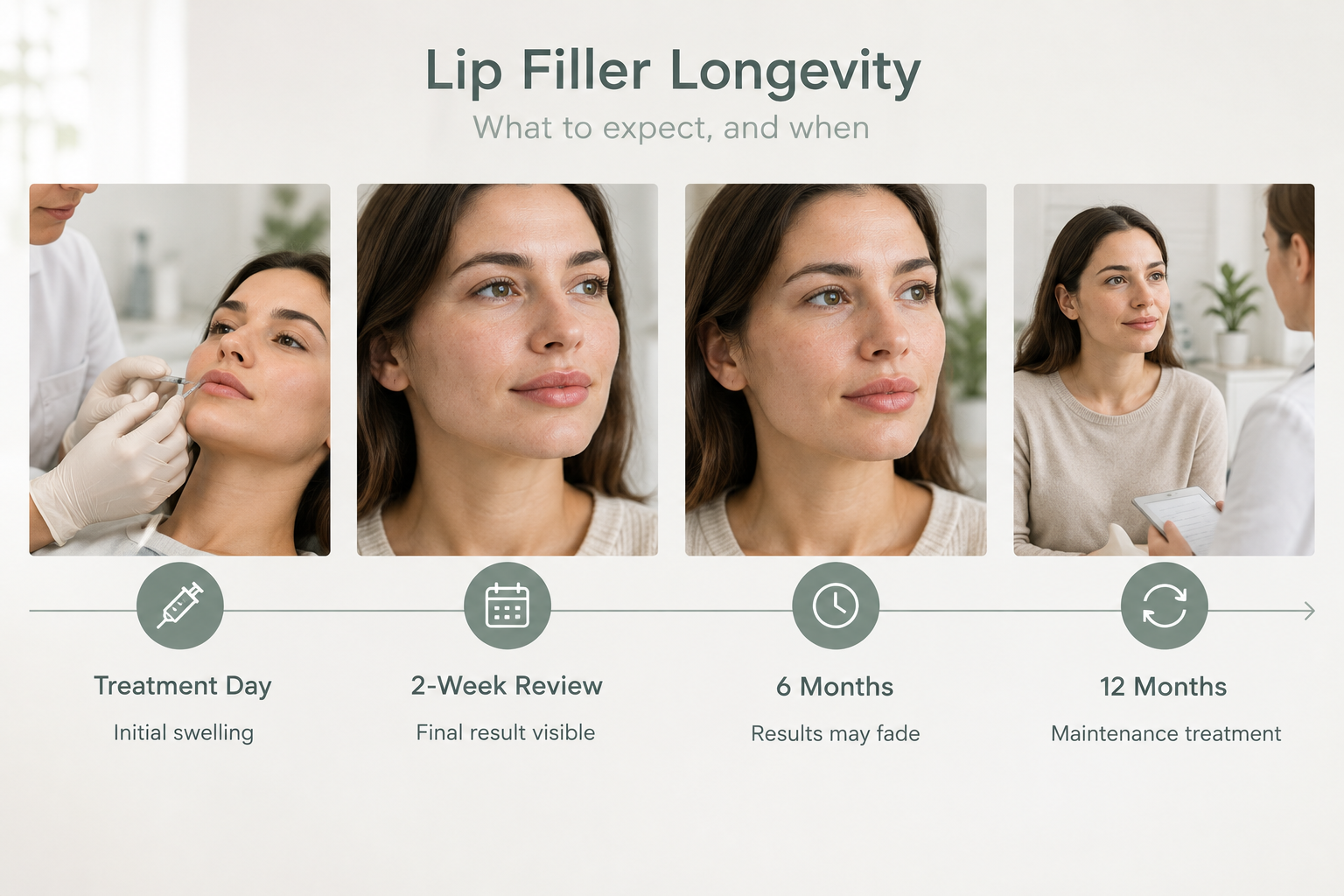
Repeat treatments are required to maintain results. Over time, some patients find that their lips retain a degree of improvement between treatments, though this should not be assumed. Each treatment should be assessed on its own merits, and the volume and product used may be adjusted at each session based on the current state of the lips.
Risks and Side Effects
Lip filler carries a range of possible side effects and risks, which vary in frequency and severity. Understanding these before treatment is an important part of informed consent.
Common Side Effects
- Swelling: Expected and typically resolves within one to two weeks.
- Bruising: Common at injection sites; usually resolves within one to two weeks.
- Tenderness: The lips may feel sore or sensitive for several days.
- Lumps or irregularities: Small lumps may be felt in the days after treatment; many resolve as swelling settles, but persistent lumps may require assessment.
- Asymmetry: Minor asymmetry is common immediately after treatment due to uneven swelling and usually resolves as healing progresses.
Less Common but Serious Risks
- Vascular occlusion: One of the most serious complications of any facial filler, this occurs when filler is inadvertently injected into or compresses a blood vessel, potentially restricting blood flow to surrounding tissue. In the lip area, this can cause tissue damage. Prompt recognition and treatment with hyaluronidase are critical. This risk underscores the importance of choosing a practitioner with appropriate training in managing complications.
- Infection: Any injectable procedure carries a risk of infection. Signs include increasing redness, warmth, pain, or discharge beyond the expected post-treatment period.
- Allergic reaction: Rare with hyaluronic acid fillers, but possible. Reactions to lidocaine or other components of the formulation can also occur.
- Nodules or granulomas: Inflammatory reactions to filler material can occasionally develop, sometimes weeks or months after treatment.
- Tyndall effect: Superficially placed filler can create a bluish discolouration visible through the skin, though this is more commonly associated with under-eye filler than lip treatment.
- Herpes reactivation: Patients with a history of cold sores (herpes simplex virus) may experience a flare-up following lip injections. Prophylactic antiviral medication is sometimes recommended for patients with a known history.
The risk of serious complications is significantly influenced by practitioner skill, anatomical knowledge, and the clinical environment. Choosing a qualified, experienced injector working in an appropriate clinical setting reduces — but does not eliminate — these risks.
Who May Be a Suitable Candidate?
Lip filler may be suitable for adults who have realistic expectations, are in good general health, and have a specific, achievable concern they wish to address. Suitable candidates are typically those who:
- want to restore volume lost through ageing;
- seek modest enhancement of naturally thin lips;
- wish to improve lip symmetry or border definition;
- understand that results are temporary and require maintenance;
- have discussed their goals with a qualified practitioner and received appropriate advice.
A thorough consultation should include a review of medical history, current medications, and any previous aesthetic treatments. Patients who are pregnant or breastfeeding are generally advised to postpone elective cosmetic procedures. Those with active infection, inflammation, or skin disease in or around the treatment area should not proceed until the condition has resolved.
Who May Not Be Suitable?
Lip filler is not appropriate for everyone. Factors that may affect suitability include:
- Pregnancy or breastfeeding: Elective injectable treatments are generally not recommended during these periods.
- Active infection or cold sore: Treatment should be postponed until the infection has fully resolved.
- Bleeding disorders or anticoagulant medication: These may increase the risk of bruising and bleeding. A practitioner should be informed of any relevant medications, including aspirin, warfarin, and certain supplements.
- Autoimmune conditions: Some conditions may affect healing or increase the risk of inflammatory reactions.
- Unrealistic expectations: Patients seeking results that are not achievable with filler — or who are seeking treatment to address a psychological concern rather than a physical one — may not be appropriate candidates. A responsible practitioner will discuss this sensitively.
- Previous permanent filler: The presence of permanent or semi-permanent filler in the lips from previous treatments can complicate new injections and increases certain risks.
Alternatives to Lip Filler
Lip filler is not the only option for patients interested in improving the appearance of their lips. Depending on the specific concern, the following alternatives may be worth discussing with a practitioner:
- Lip flip with botulinum toxin: A small amount of botulinum toxin injected into the orbicularis oris muscle around the upper lip causes it to relax slightly, rolling the lip outward and creating the appearance of a fuller upper lip. This does not add volume and the effect is subtle, but it may suit patients who want a minimal change without filler. Results typically last two to three months.
- Polynucleotides: Polynucleotide injections are increasingly used in the perioral area to improve skin quality and hydration. They do not add volume in the same way as HA filler but may improve the texture and condition of the skin around the lips.
- Skin boosters: Highly diluted hyaluronic acid injections designed to improve hydration and skin quality rather than add structural volume. These may be used in the lip area to improve texture and fine lines.
- Fat transfer: Autologous fat transfer involves harvesting fat from another area of the body and injecting it into the lips. Results may be longer-lasting than HA filler, but the procedure is more invasive, requires a recovery period, and carries its own risks. Results can also be less predictable.
- Surgical lip augmentation: Procedures such as lip lift surgery address the shape and position of the lip rather than volume alone. These are permanent surgical interventions with associated recovery and risks, and are typically considered when non-surgical options are insufficient.
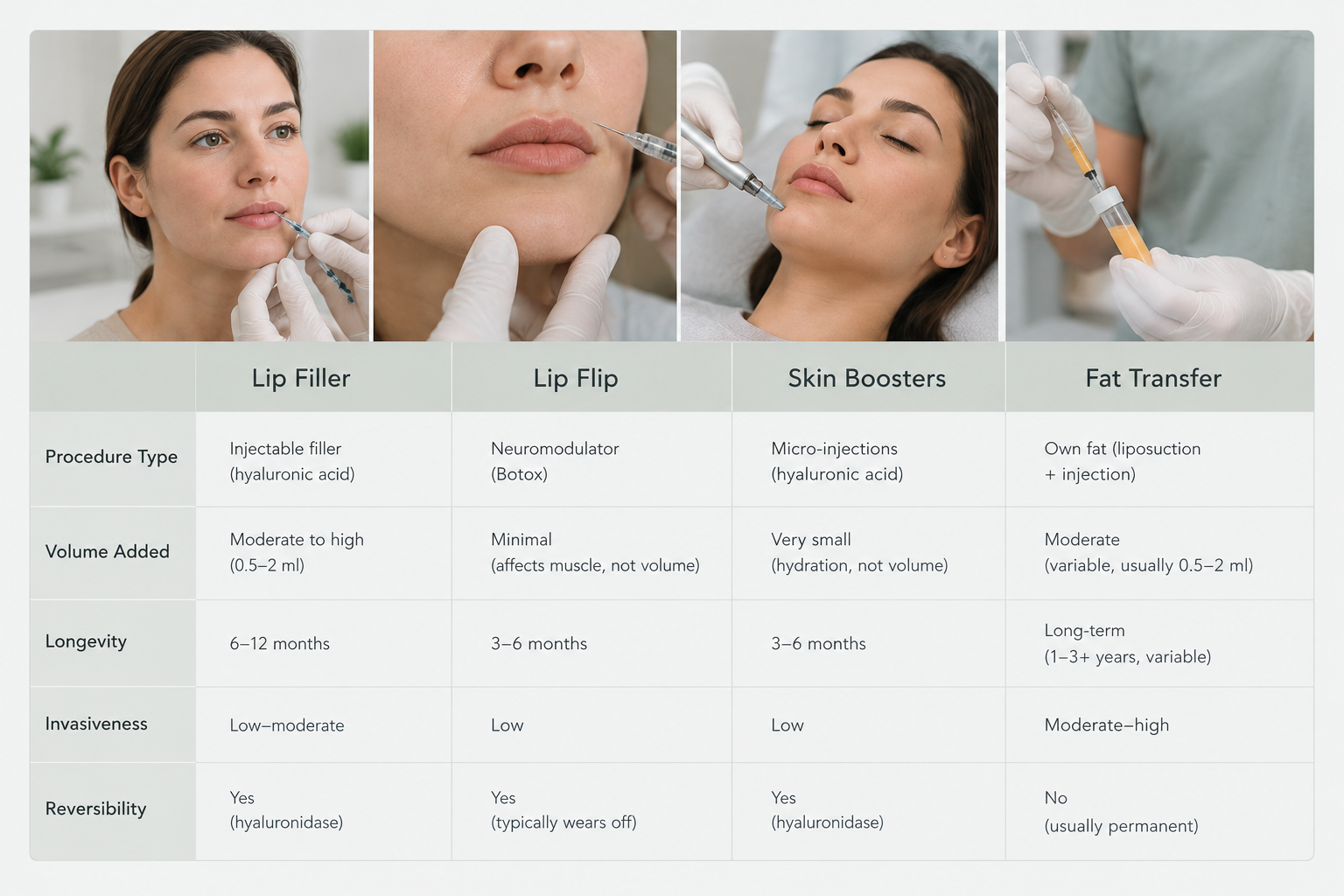
The most appropriate option depends on the patient’s specific concern, anatomy, medical history, and preferences. A qualified practitioner can help determine which approach — or combination of approaches — may be most suitable.
Choosing a Practitioner
The safety and quality of lip filler treatment is closely linked to the skill, training, and clinical judgement of the practitioner performing it. Lip augmentation requires a thorough understanding of facial anatomy, injection technique, product selection, and complication management. Regulatory requirements for who can legally administer injectable treatments vary by country, so it is important to verify that a practitioner meets the relevant standards in your region.
When assessing a practitioner, consider whether they hold a recognised medical, dental, or nursing qualification with specific training in aesthetic medicine. Ask whether they have experience managing complications, including vascular occlusion, and whether hyaluronidase is available on-site. A practitioner who conducts a thorough consultation, discusses risks honestly, and does not pressure you into treatment is a positive sign. Be cautious of practitioners who offer very low prices, skip the consultation, or are unable to explain the risks and limitations of treatment clearly.
Reviewing before-and-after photographs of the practitioner’s own work can be helpful, though photographs should be interpreted with caution — lighting, angles, and editing can all affect how results appear.
Frequently Asked Questions
Does lip filler hurt?
Most patients experience mild to moderate discomfort during lip filler injections. Topical anaesthetic cream is applied beforehand, and most modern HA fillers contain lidocaine within the gel to reduce pain during injection. The lips are a sensitive area, so some discomfort is expected, but the procedure is generally well tolerated. Individual pain tolerance varies.
Can lip filler be dissolved?
Yes. Hyaluronic acid filler can be dissolved using an enzyme called hyaluronidase, which breaks down the HA gel. Dissolution is used both to manage complications and to reverse results a patient is unhappy with. It is one of the key advantages of HA-based fillers over permanent alternatives. Dissolution is a medical procedure in its own right and should be performed by a qualified practitioner.
How much filler is typically used?
The volume of filler used varies depending on the patient’s anatomy, the degree of enhancement sought, and the practitioner’s assessment. Many practitioners start conservatively — often with 0.5 to 1 ml — particularly for first-time patients, and build gradually over subsequent sessions if more volume is desired. A conservative approach reduces the risk of an unnatural appearance and allows the patient to assess results before committing to more.
Will my lips look unnatural?
When performed by a skilled practitioner using an appropriate volume and product for the patient’s anatomy, lip filler can produce natural-looking results. Overfilling, poor product selection, or inadequate technique are the most common reasons for an unnatural appearance. Communicating clearly with your practitioner about the look you want — and being open to their clinical advice about what is achievable — is important.
How soon can I wear lipstick after lip filler?
Most practitioners advise waiting at least twenty-four hours before applying lipstick or lip products to reduce the risk of introducing bacteria to the injection sites. Specific aftercare guidance will be provided by your clinic.
Can I have lip filler if I get cold sores?
A history of cold sores (herpes simplex virus) does not automatically disqualify someone from lip filler, but it is an important factor to disclose. Lip injections can trigger a herpes reactivation. Practitioners may recommend prophylactic antiviral medication before treatment for patients with a known history of cold sores. Always inform your practitioner of this history during the consultation.
Is there a minimum age for lip filler?
Regulatory requirements and clinical guidelines on minimum age for cosmetic injectable treatments vary by country. In many regions, practitioners are advised not to treat patients under eighteen for elective cosmetic procedures. Some jurisdictions have introduced or are introducing legislation specifically restricting cosmetic procedures for minors. Check the regulations applicable in your country and ensure your practitioner follows current guidance.
Is Lip Filler the Right Choice for You?
Lip filler can be a safe and effective option for patients who have a clear, realistic goal, choose a qualified and experienced practitioner, and understand both the benefits and the limitations of the treatment. It is not a permanent solution, it carries genuine risks, and the quality of the outcome is closely tied to the skill of the person performing it.
The most important step is a thorough, honest consultation with a practitioner who takes time to understand your concerns, assesses your anatomy, explains what is and is not achievable, and discusses the risks openly. If you feel pressured, rushed, or that your questions are not being answered clearly, it is reasonable to seek a second opinion before proceeding.
For patients with realistic expectations and appropriate candidacy, lip filler — when performed well — can provide meaningful improvement in lip volume, shape, and definition. For those who are uncertain, starting conservatively and reviewing results before committing to more volume is a sensible approach that most experienced practitioners will support.