

Bruising after lip filler is one of the most common concerns patients raise before booking a treatment. While it is a normal and expected response to injection, the extent of bruising varies considerably between individuals, and there are practical steps that can reduce both the likelihood and the severity of it. This article explains why bruising occurs, what influences how much you may experience, and what you can do before and after your appointment to support a smoother recovery.
Key Takeaways
- Bruising after lip filler is a normal side effect caused by small blood vessel disruption during injection, not a sign that something has gone wrong.
- Certain medications, supplements, and lifestyle habits can increase bruising risk and are worth discussing with your practitioner before treatment.
- Practitioner technique, needle choice, and product placement all influence how much bruising occurs.
- Most lip filler bruising resolves within five to ten days, though this varies between individuals.
- Persistent, worsening, or unusually painful bruising should always be assessed by a qualified medical professional.
Why Does Lip Filler Cause Bruising?
Bruising occurs when small blood vessels beneath the skin are disrupted during the injection process. The lips are a highly vascular area, meaning they contain a dense network of blood vessels, which makes bruising more likely here than in some other treatment areas. When a needle or cannula passes through tissue, it may nick or compress a small vessel, allowing blood to leak into the surrounding tissue. This pooled blood is what appears as a bruise on the surface of the skin.
The hyaluronic acid filler itself does not cause bruising directly. The bruising is a mechanical response to the injection rather than a reaction to the product. This distinction matters because it means the risk is influenced more by technique, anatomy, and individual factors than by the specific filler brand used.
Bruising in the lip area can appear immediately after treatment or may develop over the following twelve to twenty-four hours as blood continues to disperse through the tissue. It typically presents as a purple, blue, or reddish discolouration around the injection sites and may extend slightly beyond the lip border. Swelling often accompanies bruising in the first day or two, which can make the bruised area appear more prominent initially.
Factors That Influence How Much You Bruise
Not everyone bruises equally after lip filler, and several factors contribute to individual variation. Understanding these can help you and your practitioner take appropriate steps to reduce the risk.
Blood-Thinning Medications and Supplements
Medications that affect blood clotting or platelet function significantly increase bruising risk. These include prescribed anticoagulants such as warfarin and newer oral anticoagulants, as well as over-the-counter anti-inflammatory medications such as aspirin and ibuprofen. If you take any of these for a medical condition, you should not stop them without speaking to the prescribing doctor first. Your aesthetic practitioner needs to know about all medications you are taking so they can assess the risk appropriately.
Several commonly used supplements and herbal products also have blood-thinning properties and are worth avoiding in the days before treatment if your practitioner advises it. These include fish oil, vitamin E, garlic supplements, ginkgo biloba, ginseng, and St John’s Wort. The evidence on exactly how much these supplements affect bruising risk from cosmetic injections is not definitive, but many practitioners recommend pausing them for approximately one week before treatment as a precautionary measure.
Alcohol Consumption
Alcohol causes temporary vasodilation, meaning it widens blood vessels and reduces the blood’s ability to clot efficiently. Drinking alcohol in the twenty-four to forty-eight hours before lip filler treatment is generally associated with increased bruising. Most practitioners advise avoiding alcohol for at least twenty-four hours before your appointment and for a similar period afterwards while the injection sites are still healing.
Skin Fragility and Individual Anatomy
Some people have naturally more fragile capillaries or thinner skin, which makes bruising more likely regardless of the treatment. Older patients may bruise more easily due to age-related changes in skin and vessel integrity. Certain medical conditions affecting clotting or connective tissue can also increase susceptibility. These are factors worth discussing during your pre-treatment consultation.
Practitioner Technique and Injection Approach
The skill and technique of the injecting practitioner has a meaningful influence on bruising outcomes. An experienced practitioner who is familiar with the vascular anatomy of the lip area can reduce the risk of vessel disruption through careful placement, appropriate injection depth, and controlled technique. The number of injection points used, the volume injected per site, and the speed of injection all play a role.
The choice between a sharp needle and a blunt-tipped cannula is also relevant. Cannulas are designed to push tissue aside rather than cut through it, which can reduce the risk of puncturing blood vessels. However, cannulas are not universally superior for every technique or treatment area, and the decision about which instrument to use is a clinical one based on the specific treatment plan and the practitioner’s training and experience.
Timing in Your Menstrual Cycle
Some patients report increased bruising and skin sensitivity during certain phases of the menstrual cycle, particularly in the days before and during menstruation. Hormonal fluctuations during this time may affect vascular reactivity and platelet function. While the clinical evidence on this specific relationship is limited, some practitioners suggest scheduling elective treatments in the week following menstruation if bruising is a significant concern for you.
How to Reduce Lip Filler Bruising Before Treatment
Preparation in the days leading up to your appointment can meaningfully reduce the risk of significant bruising. The following steps are commonly recommended, though you should always follow the specific pre-treatment guidance provided by your own practitioner.
- Avoid blood-thinning supplements such as fish oil, vitamin E, and herbal products for approximately five to seven days before treatment, unless your practitioner advises otherwise.
- Avoid non-prescribed anti-inflammatory medications such as ibuprofen and aspirin for at least forty-eight hours before treatment, unless they are prescribed for a medical condition.
- Avoid alcohol for at least twenty-four to forty-eight hours before your appointment.
- Stay well hydrated in the days before treatment. Good hydration supports healthy tissue and may support recovery, though it does not directly prevent bruising.
- Discuss arnica with your practitioner. Oral arnica montana is widely used in aesthetic practice as a pre-treatment supplement to reduce bruising. The clinical evidence for its effectiveness is mixed and not conclusive, but it is generally considered low-risk and is commonly recommended by practitioners as a precautionary measure.
- Avoid vigorous exercise on the day of treatment, as elevated heart rate and blood pressure can increase bleeding at injection sites.
- Inform your practitioner of all medications, supplements, and relevant medical history at your consultation.

How to Reduce Bruising After Lip Filler
Post-treatment care in the first twenty-four to forty-eight hours can influence how quickly bruising resolves and how extensive it becomes. The injection sites remain vulnerable during this period, and certain activities or products can worsen bruising or slow healing.
Applying Cold Compresses
Applying a cold compress or ice pack wrapped in a clean cloth to the treated area immediately after treatment can help constrict blood vessels and reduce both bruising and swelling. Cold should be applied gently and not pressed firmly against the lips, as pressure on fresh filler is not recommended. Apply for short intervals of a few minutes at a time rather than continuously. Avoid placing ice directly on the skin.
Keeping the Head Elevated
Sleeping with your head slightly elevated on the first night after treatment can help reduce fluid pooling in the lip area, which may limit the extent of swelling and bruising. Lying flat allows fluid to accumulate more easily in the treated tissue.
Avoiding Heat and Exercise
Heat causes vasodilation and increases blood flow to the skin, which can worsen bruising and swelling in the early recovery period. Avoid hot showers, saunas, steam rooms, sunbathing, and vigorous exercise for at least twenty-four to forty-eight hours after treatment. Most practitioners recommend avoiding strenuous physical activity for a similar period.
Avoiding Alcohol and Blood-Thinning Substances
The same substances that increase bruising risk before treatment continue to be relevant in the immediate post-treatment period. Avoiding alcohol and non-prescribed anti-inflammatory medications for at least twenty-four hours after lip filler treatment supports the natural clotting process and reduces the risk of bruising worsening.
Arnica Gel and Oral Arnica
Topical arnica gel is commonly used after cosmetic injections to help reduce bruising. Some patients find it helpful, and it is generally well tolerated on intact skin. Oral arnica montana tablets are also frequently recommended by practitioners both before and after treatment. As noted earlier, the clinical evidence base for arnica in this context is not robust, but it is widely used in aesthetic practice and is considered low-risk when used as directed. Always check with your practitioner before applying any topical product to the treated area in the first twenty-four hours.
Avoiding Makeup on the Lips Immediately After Treatment
Applying makeup directly to the injection sites too soon after treatment carries a small risk of introducing bacteria into the skin while it is still healing. Most practitioners advise waiting at least a few hours, and ideally until the following day, before applying lip products. When you do resume makeup use, choose clean applicators and avoid pressing firmly on the lips.
How Long Does Lip Filler Bruising Last?
Most bruising after lip filler resolves within five to ten days. Mild bruising may fade within three to five days, while more significant bruising can take up to two weeks to fully clear. The colour of the bruise typically changes as it heals, progressing from purple or blue through green and yellow before fading entirely. This colour progression reflects the normal breakdown of haemoglobin in the tissue and is not a cause for concern.
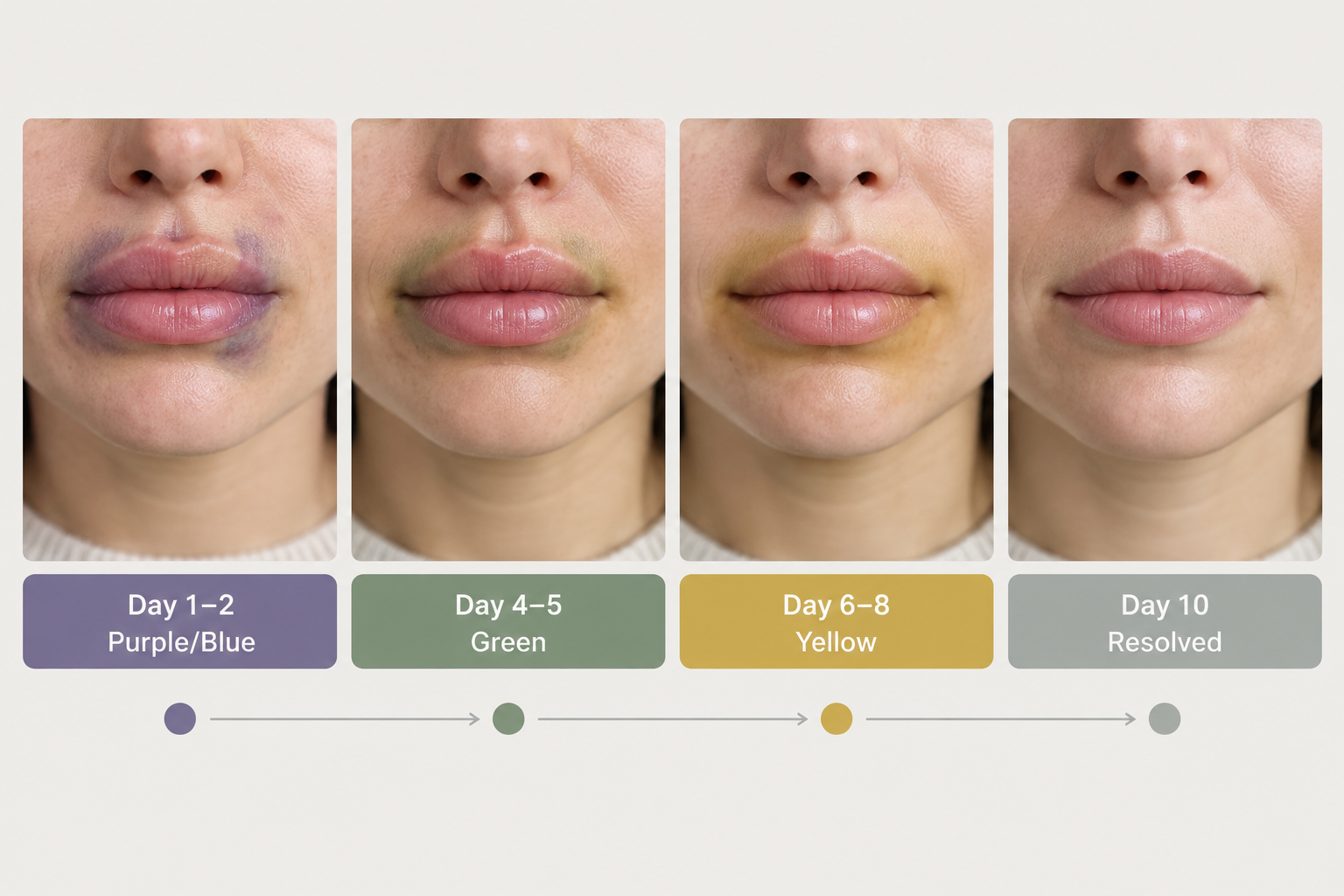
Swelling often accompanies bruising and may make the lips appear uneven or more bruised than they actually are in the first few days. Most swelling settles within three to five days, though some residual swelling can persist for up to two weeks. The final result of lip filler treatment is generally best assessed at the two-week mark, once both bruising and swelling have fully resolved.
If you have an important event approaching, it is worth planning your lip filler appointment at least two to three weeks in advance to allow adequate time for bruising and swelling to resolve. Discussing your timeline with your practitioner at the consultation stage allows them to advise on the most appropriate scheduling.
Covering Bruising With Makeup
Once the injection sites have closed and your practitioner has confirmed it is safe to apply makeup, colour-correcting products can be effective at concealing lip filler bruising. A peach or orange-toned colour corrector applied before foundation can neutralise the purple and blue tones of a bruise. Setting with a light powder helps the coverage last. Avoid heavy rubbing or pressing on the lips while applying or removing makeup during the healing period.
When to Contact Your Practitioner
Bruising after lip filler is expected and in most cases resolves without any intervention. However, certain signs warrant prompt contact with your treating practitioner or, in urgent cases, medical attention.
- Bruising that is worsening significantly after the first twenty-four to forty-eight hours rather than stabilising or improving.
- Bruising accompanied by increasing pain, particularly pain that is disproportionate to what you experienced immediately after treatment.
- Skin that appears white, grey, or mottled in or around the treated area, which may indicate a vascular complication affecting blood supply to the tissue. This requires urgent assessment.
- Bruising accompanied by signs of infection such as increasing redness, warmth, swelling, or discharge from the injection sites.
- Bruising that has not improved at all after two weeks.
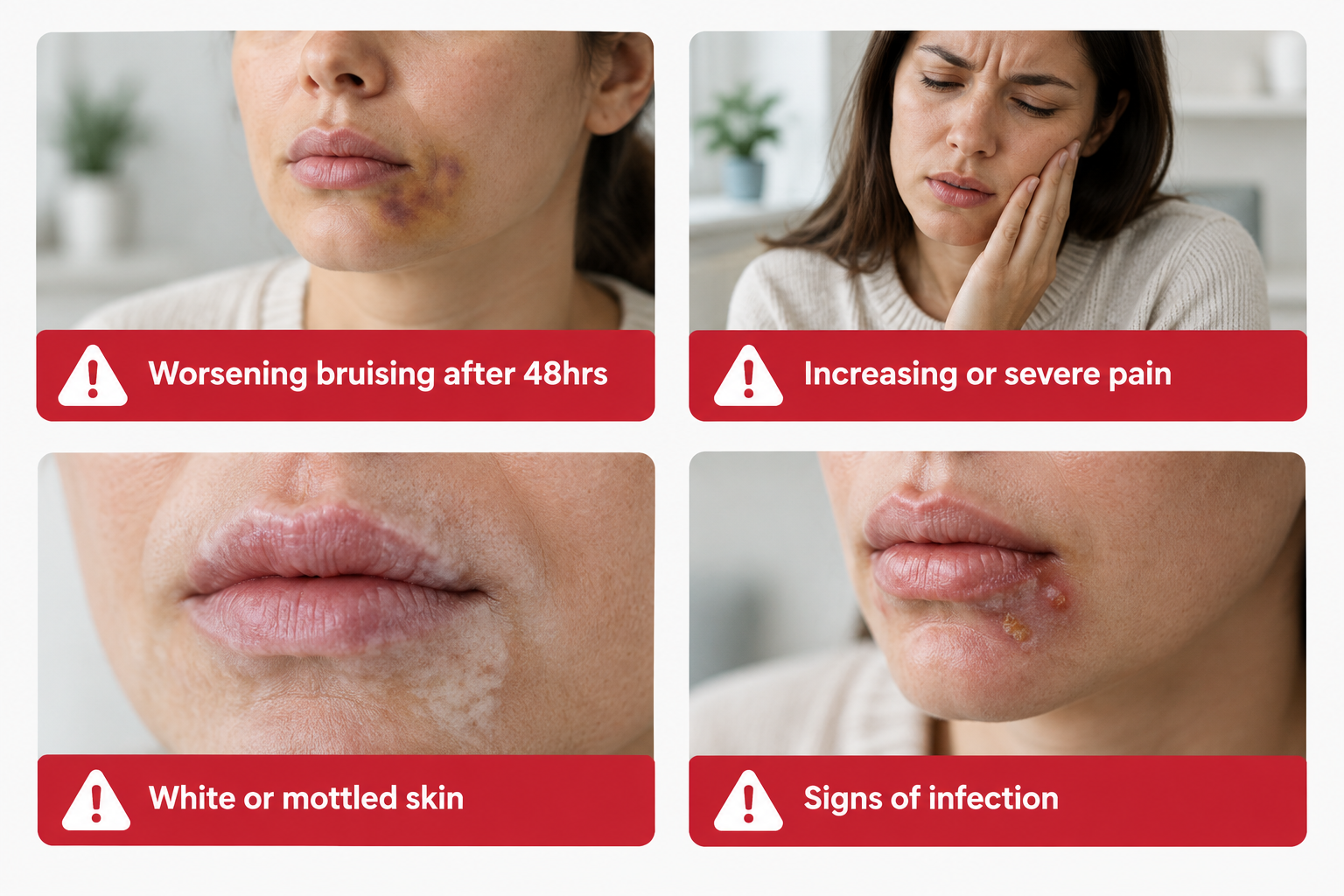
Vascular occlusion is a rare but serious complication of lip filler treatment in which filler material compresses or enters a blood vessel, restricting blood flow to the surrounding tissue. It does not always present with bruising, but any unusual skin colour changes, blanching, or severe pain after lip filler should be treated as a potential emergency and assessed immediately by a qualified medical professional.
Frequently Asked Questions
Is bruising after lip filler normal?
Yes. Bruising is a common and expected side effect of lip filler injections. The lips are a highly vascular area, and some degree of bruising occurs in a significant proportion of patients. It does not indicate that something has gone wrong, provided it follows a normal pattern of gradual improvement over five to ten days.
Can I prevent bruising entirely?
Bruising cannot be guaranteed to be prevented entirely, but the steps outlined in this article can meaningfully reduce the likelihood and severity of it. Avoiding blood-thinning substances before treatment, choosing an experienced practitioner, and following post-treatment care guidance all contribute to a lower bruising risk.
Does the type of filler affect bruising?
The hyaluronic acid filler product itself does not directly cause bruising. Bruising is primarily a mechanical response to the injection process. However, the viscosity of the product, the volume injected, and the technique used to place it can all influence the degree of tissue disruption and therefore the bruising outcome.
Does a cannula reduce bruising compared to a needle?
A blunt-tipped cannula may reduce the risk of puncturing blood vessels compared to a sharp needle, which can lower bruising risk in some cases. However, cannulas are not universally appropriate for all lip filler techniques, and the decision about which instrument to use is a clinical one. An experienced practitioner using either instrument with appropriate technique can achieve good outcomes.
Can I use arnica to reduce bruising?
Oral arnica montana and topical arnica gel are widely used in aesthetic practice to help reduce bruising. The clinical evidence for their effectiveness is mixed and not conclusive, but they are generally considered low-risk and are commonly recommended by practitioners. Discuss their use with your practitioner before starting them.
How soon after lip filler can I wear lipstick?
Most practitioners advise waiting at least a few hours after treatment before applying any lip products, and ideally until the following day. This reduces the risk of introducing bacteria to the injection sites while they are still healing. Follow the specific guidance provided by your own practitioner.
Will bruising affect my final lip filler result?
Bruising itself does not affect the final result of lip filler treatment. Once bruising and swelling have fully resolved, typically by the two-week mark, the filler will have settled into its final position. Assessing the result before this point is not reliable, as swelling can distort the appearance of the lips.
Planning Your Lip Filler Treatment With Bruising in Mind
Lip filler bruising is a manageable and temporary side effect rather than an unavoidable drawback of treatment. With appropriate preparation, a skilled practitioner, and sensible aftercare, many patients experience only mild bruising that resolves within a few days. Others may bruise more significantly due to individual anatomy, medication use, or other factors, and this is worth discussing openly at your consultation so that expectations are realistic and timing can be planned accordingly.
Choosing a qualified and experienced practitioner who understands the vascular anatomy of the lip area and uses careful technique is one of the most meaningful steps you can take to reduce bruising risk. A thorough pre-treatment consultation should include a review of your medications, supplements, medical history, and any previous bruising experiences with injections. This information allows your practitioner to tailor their approach and provide personalised pre- and post-treatment guidance.
If you are considering lip filler and bruising is a concern, raise it directly at your consultation. A responsible practitioner will give you an honest assessment of your individual risk, explain the steps that can be taken to minimise it, and help you plan your treatment at a time that suits your schedule and commitments.