

Lip filler injections using hyaluronic acid dermal fillers are one of the most commonly performed aesthetic treatments, but the recovery period is often less well understood than the procedure itself. Knowing what to expect in the hours and days after treatment, and which aftercare steps genuinely support healing, can make a meaningful difference to your comfort, your results, and your safety.
Key Takeaways
- Swelling, tenderness, and minor bruising after lip filler injections are normal and typically resolve within one to two weeks.
- Avoiding heat, strenuous exercise, alcohol, and pressure on the lips in the first 24 to 48 hours supports the initial healing process.
- Final results are not visible immediately; the lips settle gradually as swelling subsides over one to two weeks.
- Certain symptoms — including severe pain, skin discolouration, or signs of infection — require prompt contact with your practitioner rather than home management.
- Good aftercare does not replace the importance of choosing a qualified, experienced injector and having a thorough pre-treatment consultation.
What Happens to the Lips Immediately After Filler Injections
Immediately after hyaluronic acid filler is injected into the lips, the tissue responds to both the filler volume and the physical act of injection. The lips will appear swollen, and this swelling is often more pronounced than the intended final result. This is a normal physiological response: the needle or cannula creates minor trauma to the tissue, and the hyaluronic acid filler itself attracts water molecules, which temporarily increases the volume further. Most patients also notice some redness, firmness, and sensitivity at the injection sites.
Bruising is also common and occurs when small blood vessels are disrupted during injection. The extent of bruising varies considerably between individuals and depends on factors including skin type, medication use, the injector’s technique, and the specific anatomy of the treatment area. Bruising may not appear immediately and can develop or deepen over the first 24 to 48 hours before beginning to fade.
It is important to understand that the lips seen immediately after treatment do not represent the final outcome. Swelling distorts the shape and volume, and the filler itself needs time to integrate with the surrounding tissue. Most practitioners advise patients to wait at least two weeks before assessing their results or considering any top-up treatment.
The Lip Filler Recovery Timeline
Understanding the typical recovery timeline helps set realistic expectations and reduces unnecessary concern about normal post-treatment changes.
First 24 Hours
Swelling is usually at its most significant during the first 24 hours after lip filler injections. The lips may feel tight, tender to the touch, and noticeably larger than intended. Some patients experience mild throbbing or a sensation of pressure. Bruising may begin to appear, particularly at injection points. Lumps or unevenness may be felt beneath the skin; these are usually caused by swelling and the filler settling rather than a placement problem, and they typically resolve without intervention.
Days Two to Four
Swelling often peaks around day two before beginning to subside. Bruising, if present, may appear more visible as it spreads slightly before fading. The lips may still feel firm or uneven. Tenderness usually decreases during this period. Patients are advised to continue following aftercare guidance and to avoid manipulating the lips.
Days Five to Ten
Most of the initial swelling resolves during this period, and the lips begin to look and feel more natural. Bruising typically fades significantly by day seven to ten, though this varies between individuals. The filler starts to feel softer and more integrated with the surrounding tissue. The shape of the lips becomes clearer, though minor asymmetry or unevenness may still be present as the filler continues to settle.
Two Weeks and Beyond
By approximately two weeks after treatment, the majority of swelling and bruising has resolved and the lips reflect a more accurate representation of the final result. This is the appropriate point to assess whether the outcome meets expectations and to discuss any concerns with the treating practitioner. If a review appointment was included in the treatment plan, it typically takes place around this time.
Practical Aftercare Steps in the First 48 Hours
The first 48 hours after lip filler treatment are the most important period for aftercare. The following steps are commonly recommended by practitioners to support healing and reduce the risk of complications.
Apply a Cold Compress
Applying a cold compress or ice pack wrapped in a clean cloth to the lips can help reduce swelling and discomfort in the hours immediately following treatment. Ice should never be applied directly to the skin. Cold compresses can be applied gently for short intervals — typically around ten minutes at a time — and should not be pressed firmly against the lips, as pressure on freshly injected filler is not advisable in the early stages.
Keep the Head Elevated
Sleeping with the head slightly elevated on an extra pillow during the first night after treatment may help reduce fluid accumulation in the lips and limit overnight swelling. Lying flat can allow fluid to pool in the treated area.
Stay Hydrated
Drinking adequate water supports overall tissue health and may help the hyaluronic acid filler integrate more effectively, as hyaluronic acid is hydrophilic — meaning it binds to water. Staying well hydrated is a simple and beneficial step during the recovery period.
Avoid Touching or Massaging the Lips
Unless specifically instructed by the treating practitioner, patients should avoid touching, pressing, or massaging the lips after filler injections. Manipulation of the filler in the early stages may displace it before it has had time to settle. Some practitioners do recommend gentle massage in specific circumstances — for example, if a small lump is present — but this should only be done following direct clinical advice.
Use Gentle Lip Products
Applying a fragrance-free, gentle lip balm can help keep the lips comfortable and moisturised during recovery. Avoid lip products that contain strong active ingredients, exfoliants, or fragrances in the days immediately after treatment. Lipstick and other cosmetics applied directly to the lips are generally best avoided for at least 24 hours to reduce the risk of introducing bacteria to the injection sites.
What to Avoid After Lip Filler Injections
Certain activities and exposures are associated with increased swelling, bruising, or a higher risk of complications after lip filler treatment. Most practitioners advise avoiding the following for a defined period after injections.

Strenuous Exercise
High-intensity physical activity increases blood flow and heart rate, which can worsen swelling and bruising in the treated area. Most practitioners recommend avoiding strenuous exercise for at least 24 to 48 hours after lip filler injections. Light walking is generally considered acceptable.
Alcohol
Alcohol acts as a vasodilator and can increase bruising and swelling. It is advisable to avoid alcohol for at least 24 hours before and after lip filler treatment. Alcohol can also thin the blood, which may prolong bruising.
Heat Exposure
Heat causes blood vessels to dilate and can significantly worsen swelling and bruising after injections. Patients are typically advised to avoid saunas, steam rooms, hot baths, sunbathing, and sunbeds for at least 48 hours after treatment, and some practitioners recommend a longer period of sun avoidance. Excessive heat may also affect the stability of the filler in the early stages of integration.
Dental Appointments
Dental procedures that require significant manipulation of the lips or mouth should ideally be scheduled well before or at least two weeks after lip filler treatment. The pressure and movement involved in dental work can displace filler that has not yet fully settled, and the risk of introducing bacteria near fresh injection sites is also a consideration.
Facial Treatments and Massage
Facials, facial massage, microdermabrasion, laser treatments, and similar procedures should be avoided for at least two weeks after lip filler injections. These treatments can apply pressure or heat to the treated area and may affect filler placement or increase the risk of adverse reactions.
Kissing and Pressure on the Lips
Firm pressure on the lips — including kissing — is generally advised against for at least 24 to 48 hours after treatment to avoid displacing the filler before it has settled.
Managing Swelling and Bruising
Swelling and bruising after lip filler injections are expected and do not indicate that something has gone wrong. However, there are practical steps that may help manage these effects during recovery.
Arnica, available as a topical cream or oral supplement, is commonly used by patients to help reduce bruising after injectable treatments. Some practitioners recommend it as a supportive measure, though the clinical evidence for its effectiveness in this context remains limited. If considering arnica supplements, it is worth checking with a pharmacist or practitioner, particularly if taking other medications.
Over-the-counter pain relief such as paracetamol can be used to manage discomfort if needed. Non-steroidal anti-inflammatory drugs (NSAIDs) such as ibuprofen and aspirin are generally best avoided in the immediate post-treatment period, as they can thin the blood and potentially worsen bruising. Always follow the guidance of your treating practitioner regarding pain management after injections.
Concealer can be applied carefully over bruising once the injection sites have closed, typically after 24 hours, using a clean brush or applicator rather than fingers to minimise the risk of introducing bacteria.
Recognising Normal Versus Concerning Symptoms
Most post-treatment symptoms after lip filler injections are mild and resolve within one to two weeks. However, certain symptoms require prompt attention from a qualified medical professional and should not be managed at home or dismissed as normal healing.
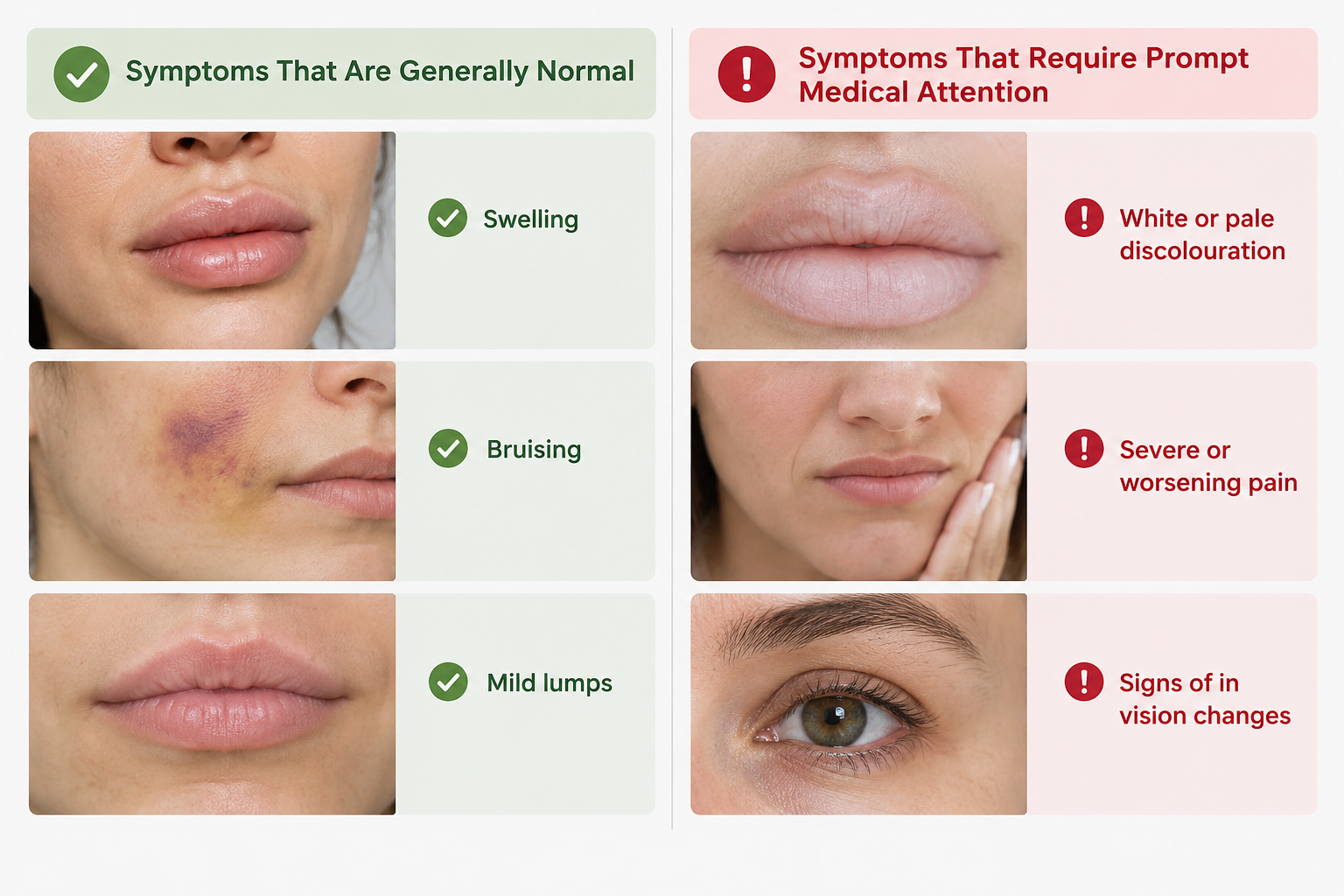
Symptoms That Are Generally Normal
- Swelling, particularly in the first 48 to 72 hours
- Tenderness and sensitivity at injection sites
- Bruising that develops within the first 24 to 48 hours and gradually fades
- Mild lumps or unevenness that soften over one to two weeks
- Temporary asymmetry as swelling resolves unevenly
- Slight itching at injection sites as the tissue heals
Symptoms That Require Prompt Medical Attention
- Severe or worsening pain that does not improve or intensifies after the first few hours
- White or pale discolouration of the skin around the lips, which may indicate vascular compromise — a rare but serious complication in which filler obstructs blood supply to the tissue
- Skin that appears mottled, blue, or dusky in colour around the treated area
- Signs of infection including increasing redness, warmth, pus, or fever developing more than 48 hours after treatment
- Significant swelling that worsens beyond 72 hours rather than beginning to improve
- Vision changes or severe headache occurring shortly after treatment, which require immediate emergency assessment
Vascular occlusion — where filler inadvertently enters or compresses a blood vessel — is a rare but serious complication that requires immediate treatment. Recognising the early signs, particularly skin blanching or a sudden change in skin colour around the injection site, and contacting the treating practitioner or seeking emergency care without delay is essential. This is one of the key reasons why lip filler treatment should only be performed by a qualified and experienced practitioner who is trained to recognise and manage complications.
Eating and Drinking After Lip Filler
There are no strict dietary restrictions after lip filler injections, but some practical adjustments can make the recovery period more comfortable. Very hot foods and drinks should be avoided for the first 24 hours, as heat can worsen swelling. Very hard, crunchy, or chewy foods that require significant lip movement may be uncomfortable while the lips are swollen and tender. Soft foods and cool or room-temperature drinks are generally more comfortable during the first day or two after treatment.
Using a straw is sometimes suggested as a way to avoid direct contact between drinks and the lips, though some practitioners advise against it in the very early stages as the suction motion creates pressure on the lips. Following the specific guidance of the treating practitioner is advisable.
How Long Do Lip Fillers Last and When Is Maintenance Needed
Hyaluronic acid lip fillers are temporary. The duration of results varies depending on the specific product used, the volume injected, individual metabolism, lifestyle factors, and the treatment area. In general, lip filler results may last between six and twelve months, though some patients find results persist longer or shorter than this range. The lips tend to metabolise filler more quickly than some other facial areas due to their movement and vascularity.
Hyaluronic acid fillers can be partially or fully dissolved using an enzyme called hyaluronidase if the result is unsatisfactory or if a complication occurs. This is one of the reasons hyaluronic acid is the most widely used filler type for lip augmentation — the reversibility provides an important safety option that is not available with permanent or semi-permanent filler materials.
Maintenance treatments are typically required every six to twelve months to sustain the result. Some patients choose to allow the filler to fully dissolve between treatments; others prefer to maintain a consistent level of volume with regular top-up appointments. The appropriate interval depends on individual goals and how the body metabolises the product.
Factors That May Affect Recovery
Recovery after lip filler injections is not identical for every patient. Several factors can influence the extent of swelling and bruising and the overall healing timeline.
- Medications and supplements: Blood-thinning medications, aspirin, ibuprofen, fish oil, vitamin E, and certain herbal supplements can increase bruising. Patients are usually advised to avoid these where medically safe to do so in the days before treatment.
- Skin type and anatomy: Patients with thinner skin or more superficial blood vessels may bruise more easily.
- Volume of filler used: Larger volumes generally involve more injection points and may result in more pronounced initial swelling.
- Injector technique: The use of a cannula rather than a needle may reduce bruising in some cases, though both techniques are used by experienced practitioners.
- Previous filler history: Patients who have had lip filler before may have a different tissue response compared to first-time patients.
- Immune response: Individual immune responses vary, and some patients experience more pronounced swelling or a longer recovery period without any underlying problem.
Frequently Asked Questions
How long will my lips be swollen after filler?
Swelling after lip filler injections is typically most pronounced in the first 24 to 48 hours and begins to subside from around day three. Most of the visible swelling resolves within one to two weeks, though subtle changes may continue for slightly longer as the filler fully integrates with the surrounding tissue.
Can I wear lipstick after lip filler?
Most practitioners advise avoiding lipstick and other lip cosmetics for at least 24 hours after treatment to reduce the risk of introducing bacteria to the injection sites. After this initial period, gentle application using a clean applicator is generally acceptable, though it is worth following the specific guidance provided at your appointment.
Is it normal to feel lumps in my lips after filler?
Small lumps or areas of firmness are common in the first one to two weeks after lip filler injections and are usually caused by swelling or the filler settling. Most resolve without intervention as the tissue heals. If a lump persists beyond two weeks, feels hard, or is accompanied by other symptoms, it is worth discussing with the treating practitioner at a review appointment.
When can I exercise after lip filler?
Strenuous exercise is generally advised against for at least 24 to 48 hours after lip filler treatment, as increased blood flow can worsen swelling and bruising. Light activity such as walking is usually acceptable. Most practitioners recommend returning to normal exercise after 48 hours, though individual guidance may vary.
Can I dissolve lip filler if I am unhappy with the result?
Hyaluronic acid lip fillers can be dissolved using hyaluronidase, an enzyme that breaks down hyaluronic acid. This is one of the key advantages of hyaluronic acid-based fillers over non-reversible alternatives. Dissolution is typically performed by the treating practitioner or another qualified professional and is an option if the result is unsatisfactory or if a complication requires treatment.
What should I do if I think something is wrong after lip filler?
If you experience severe pain, skin discolouration, signs of infection, or any symptom that concerns you after lip filler treatment, contact the treating practitioner promptly. For symptoms such as skin blanching, a dusky or mottled appearance around the lips, or vision changes, seek urgent medical attention without delay. Do not wait to see if symptoms resolve on their own when these warning signs are present.
How soon can I have more filler added if I want more volume?
Most practitioners recommend waiting at least two weeks after the initial treatment before considering any additional filler, as this allows swelling to fully resolve and gives an accurate picture of the final result. Assessing the outcome before swelling has subsided can lead to overfilling. The appropriate timing for any top-up treatment should be discussed at a review appointment.
Making the Most of Your Lip Filler Recovery
Lip filler aftercare is a straightforward but genuinely important part of the treatment process. Following the guidance provided by a qualified practitioner — avoiding heat, alcohol, and pressure on the lips, staying hydrated, and allowing adequate time for swelling to resolve — supports a smoother recovery and helps ensure the final result reflects the intended outcome.
It is equally important to know when to seek help. The vast majority of post-treatment symptoms are normal and temporary, but recognising the early signs of a complication and acting quickly can make a significant difference to the outcome in the rare cases where something does go wrong. A good practitioner will provide clear aftercare instructions, offer a review appointment, and be accessible if concerns arise during recovery.
If you are considering lip filler treatment or have questions about recovery after a recent appointment, a consultation with a qualified and experienced aesthetic practitioner is the most reliable way to receive advice tailored to your individual circumstances, anatomy, and goals.