

Key Takeaways
- Laser hair removal for the back works by targeting melanin in the hair follicle, disabling its ability to regrow hair — a process known as selective photothermolysis.
- Most people require 6–8 sessions spaced 4–6 weeks apart to achieve significant, long-lasting reduction; men with coarse, dense back hair may need additional sessions.
- The right laser technology depends on your Fitzpatrick skin type — Alexandrite, diode, and Nd:YAG lasers each suit different skin tones.
- Clinical evidence supports an 80–90% reduction in back hair after a full course, with maintenance sessions typically needed once or twice a year thereafter.
- Laser hair removal is not suitable for grey, white, red, or very blonde hair, and a patch test and consultation are essential before starting treatment.
Why People Choose Laser Hair Removal for the Back
The back is one of the most requested treatment areas for laser hair removal, particularly among men. Coarse, dense back hair is difficult to manage independently — shaving is nearly impossible to do alone, and regular back waxing is both painful and expensive over time. For many people, unwanted back hair affects confidence at the beach, gym, or in intimate settings, and the appeal of grooming independence — not having to rely on someone else or book monthly waxing appointments — is a significant motivating factor.
Laser hair removal offers a practical alternative. Rather than managing regrowth every few weeks, a structured course of treatments can deliver permanent hair reduction that lasts for years, with only occasional maintenance sessions required. Understanding how the process works, what results are realistic, and whether you are a suitable candidate helps set appropriate expectations before committing to a course.
How Laser Hair Removal for the Back Works
Laser hair removal uses a principle called selective photothermolysis. A concentrated beam of light at a specific wavelength is directed at the skin, where it is absorbed by melanin — the pigment found in hair. Because the hair shaft and follicle contain significantly more melanin than the surrounding skin, the light energy converts to heat within the follicle, causing hair follicle damage that impairs or prevents future hair growth. The surrounding skin tissue is largely unaffected when the correct laser and settings are used.
The treatment does not destroy every follicle in a single session. Hair follicles cycle through three phases: the anagen (active growth) phase, the catagen (transitional) phase, and the telogen (resting) phase. Laser energy is only effective on follicles in the anagen phase, when the hair shaft is actively connected to the follicle and melanin concentration is highest. At any given time, roughly 20–30% of follicles on the back are in this active phase, which is why multiple sessions are necessary to treat the full area progressively.
Which Laser Technology Is Used — and Why It Matters
Not all lasers are the same, and the choice of technology should be matched to your Fitzpatrick skin type to maximise both safety and effectiveness. Using the wrong laser on a darker skin tone, for example, increases the risk of hyperpigmentation or burns. Three main laser types are used for back hair removal:
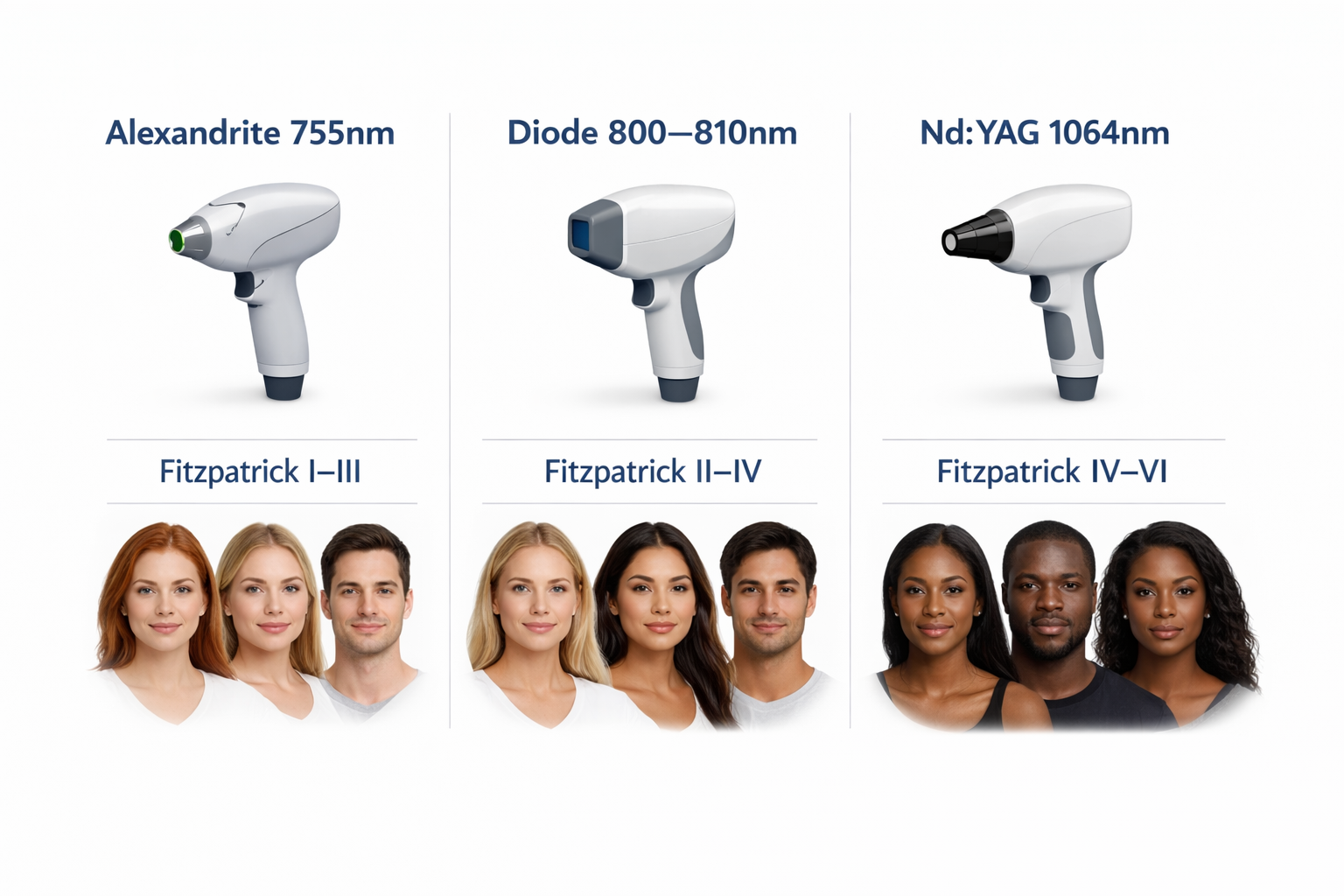
| Laser Type | Wavelength | Best For (Fitzpatrick Type) | Key Characteristic |
|---|---|---|---|
| Alexandrite laser | 755 nm | Types I–III (fair to medium skin) | Fast, highly effective on lighter skin with dark hair |
| Diode laser | 800–810 nm | Types II–IV (light to olive skin) | Versatile mid-range option; good penetration depth |
| Nd:YAG laser | 1064 nm | Types IV–VI (olive to dark skin) | Safer for darker skin tones; deeper penetration |
The Alexandrite laser at 755 nm is highly efficient at targeting melanin and works well for lighter skin tones with dark hair. The diode laser at 800–810 nm offers a useful middle ground, suitable for a broader range of skin tones. The Nd:YAG laser at 1064 nm penetrates more deeply and is less readily absorbed by epidermal melanin, making it the preferred choice for olive and darker skin tones where the risk of surface pigmentation changes is higher. Some clinics use dual-wavelength systems that combine Alexandrite and Nd:YAG capabilities, allowing the practitioner to adapt settings to your individual skin and hair profile. Medical-grade laser technology from established manufacturers is important — IPL (intense pulsed light) devices are sometimes marketed similarly but are not true lasers and generally produce less consistent results, particularly on coarser back hair.
How Many Sessions Are Needed for the Back?
Most people require 6–8 sessions to achieve significant, long-lasting reduction of back hair. Sessions are typically spaced 4–6 weeks apart to align with the hair growth cycle and ensure that follicles are treated during the anagen phase across successive appointments. Spacing sessions too closely together does not improve results and may increase the risk of skin irritation.
Men with coarse, dense back hair — which is common due to higher androgen levels — often find they need sessions toward the higher end of this range, or occasionally beyond it. Hormonal factors can continue to stimulate follicle activity even after a full course, which is why maintenance sessions are a realistic part of long-term management rather than a sign that the treatment has failed. After completing an initial course, most people find that one or two maintenance sessions per year are sufficient to keep regrowth minimal.
Progressive results are typical. After the first session, treated hairs enter a shedding phase over approximately 10–14 days — this hair shedding is normal and indicates that the follicles responded to treatment. By sessions three to four, most people notice a meaningful reduction in density and coarseness. By sessions six to eight, the back is typically much smoother, with any remaining hair finer and lighter than before treatment began.
What Results Are Realistic?
Clinical evidence consistently supports an 80–90% reduction in hair density after a full course of laser hair removal. It is important to use the term permanent hair reduction rather than permanent removal — some follicles may remain active or be reactivated by hormonal changes, meaning that complete, lifelong elimination of all hair is not a guaranteed outcome for most people. What most patients achieve is a dramatic, long-lasting reduction that makes the back smooth and largely hair-free, with any regrowth being finer and less noticeable than before treatment.
Results are most predictable in people with dark, coarse hair on lighter skin, where the contrast between hair melanin and skin melanin is greatest. Laser hair removal is not effective on grey, white, red, or very blonde hair, because these hair types contain insufficient melanin for the laser to target. If you have a mix of dark and lighter hairs on your back, the darker hairs will respond well while lighter ones may not. A qualified practitioner can assess your hair and skin profile during a consultation and give you a realistic picture of what to expect.
Session-by-Session: What Typically Happens
Session 1: The first appointment establishes your baseline. The practitioner will confirm your skin type, select the appropriate laser settings, and treat the full back area. You may feel a sensation often described as a rubber band snapping against the skin. The back, with its density of coarse hair, can feel moderately uncomfortable during a first session. Cooling devices — including integrated cooling handpieces or external Zimmer cooling systems — are used to reduce discomfort and protect the skin surface. Redness and temporary pinkness are common for a few hours afterward. Over the following 10–14 days, treated hairs shed progressively.
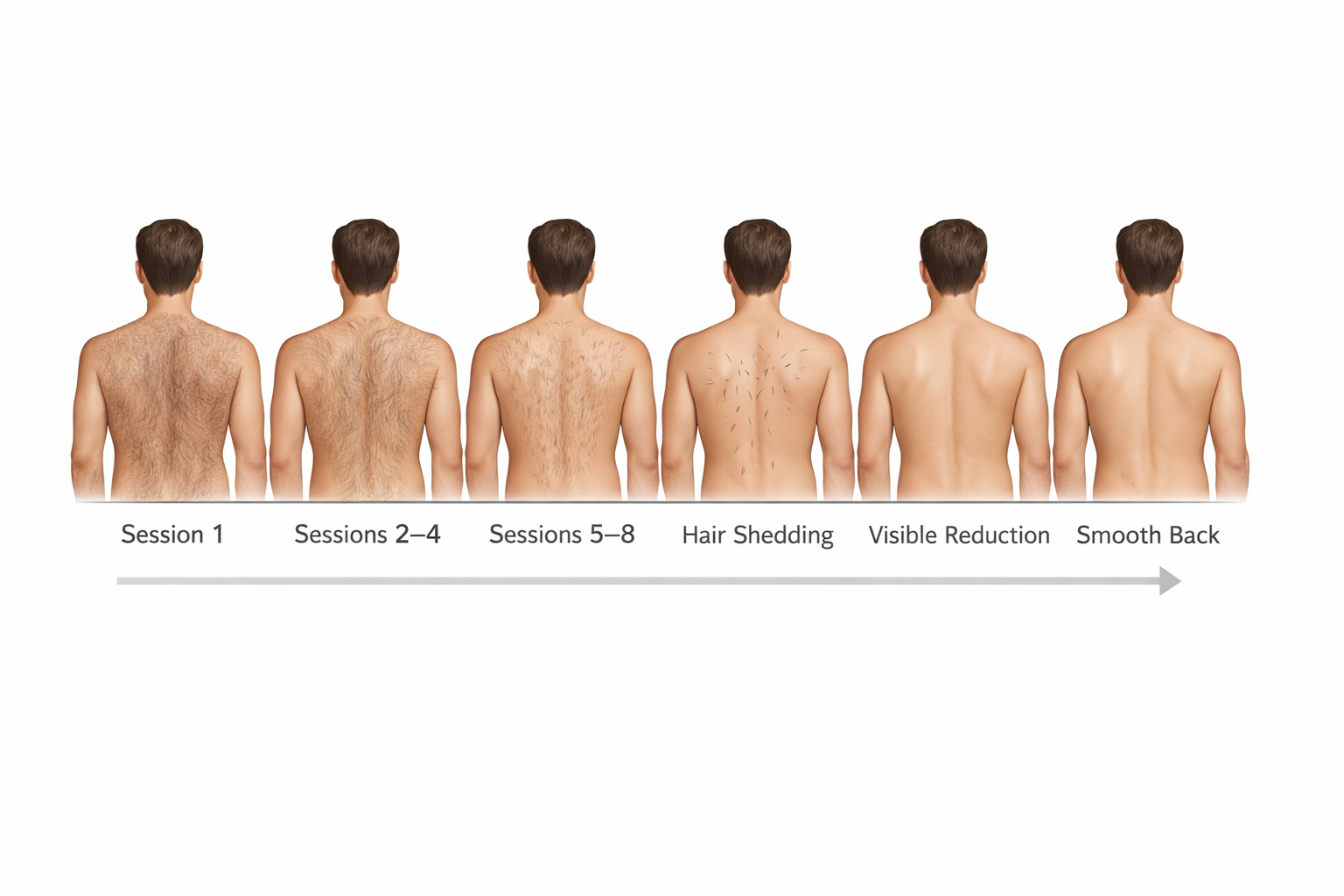
Sessions 2–4: Each subsequent session targets follicles that were in a resting phase during previous appointments. Hair density visibly decreases, and many people notice that regrowth is finer and slower. Discomfort typically reduces with each session as fewer active follicles remain to be treated.
Sessions 5–8: By this stage, the back is considerably smoother. Remaining hair is often sparse and finer. The practitioner may adjust laser settings to address any persistent areas. After completing the course, the back should require only occasional maintenance sessions to manage any hormonal regrowth.
How Much Does Back Laser Hair Removal Cost?
Pricing varies depending on the clinic, location, technology used, and whether you are treating the upper back, lower back, or the full back including shoulders. The following ranges reflect typical pricing in established clinics and should be used as a general guide rather than a fixed reference, as costs differ between providers.
| Treatment Area | Estimated Cost Per Session | Estimated Full Course (6–8 Sessions) |
|---|---|---|
| Upper back only | £100–£200 / $150–$300 | £600–£1,600 / $900–$2,400 |
| Lower back only | £80–£160 / $120–$250 | £480–£1,280 / $720–$2,000 |
| Full back | £200–£350 / $300–$500 | £1,200–£2,800 / $1,800–$4,000 |
| Full back + shoulders | £250–£450 / $350–$600 | £1,500–£3,600 / $2,100–$4,800 |
Many clinics offer package pricing for a full course, which typically works out more cost-effective than paying per session. When comparing cost against alternatives, it is worth considering that regular back waxing can cost £50–£100 per appointment, adding up to £600–£1,200 or more per year with no lasting reduction in hair growth. Over five years, the cumulative cost of waxing often exceeds the cost of a laser course that delivers long-term results.
Laser vs. Waxing vs. Shaving: A Practical Comparison
| Factor | Laser Hair Removal | Back Waxing | Shaving |
|---|---|---|---|
| Longevity of results | Long-lasting (years with maintenance) | 3–6 weeks | Days |
| Pain level | Moderate; reduces over sessions | High; consistent each time | Low (but difficult to reach) |
| 5-year cost estimate | One-time course + occasional top-ups | High (ongoing monthly cost) | Low (but impractical for back) |
| Ingrown hairs | Reduces risk over time | Common | Common |
| Independence | High after course completion | Requires appointment or assistance | Requires assistance or tools |
| Suitable for all hair colours | No (dark hair only) | Yes | Yes |
Pre-Treatment Preparation: What to Do Before Each Session
Proper pre-treatment preparation improves both safety and results. Your clinic will provide specific instructions, but the following checklist covers the standard requirements for most laser hair removal appointments on the back:
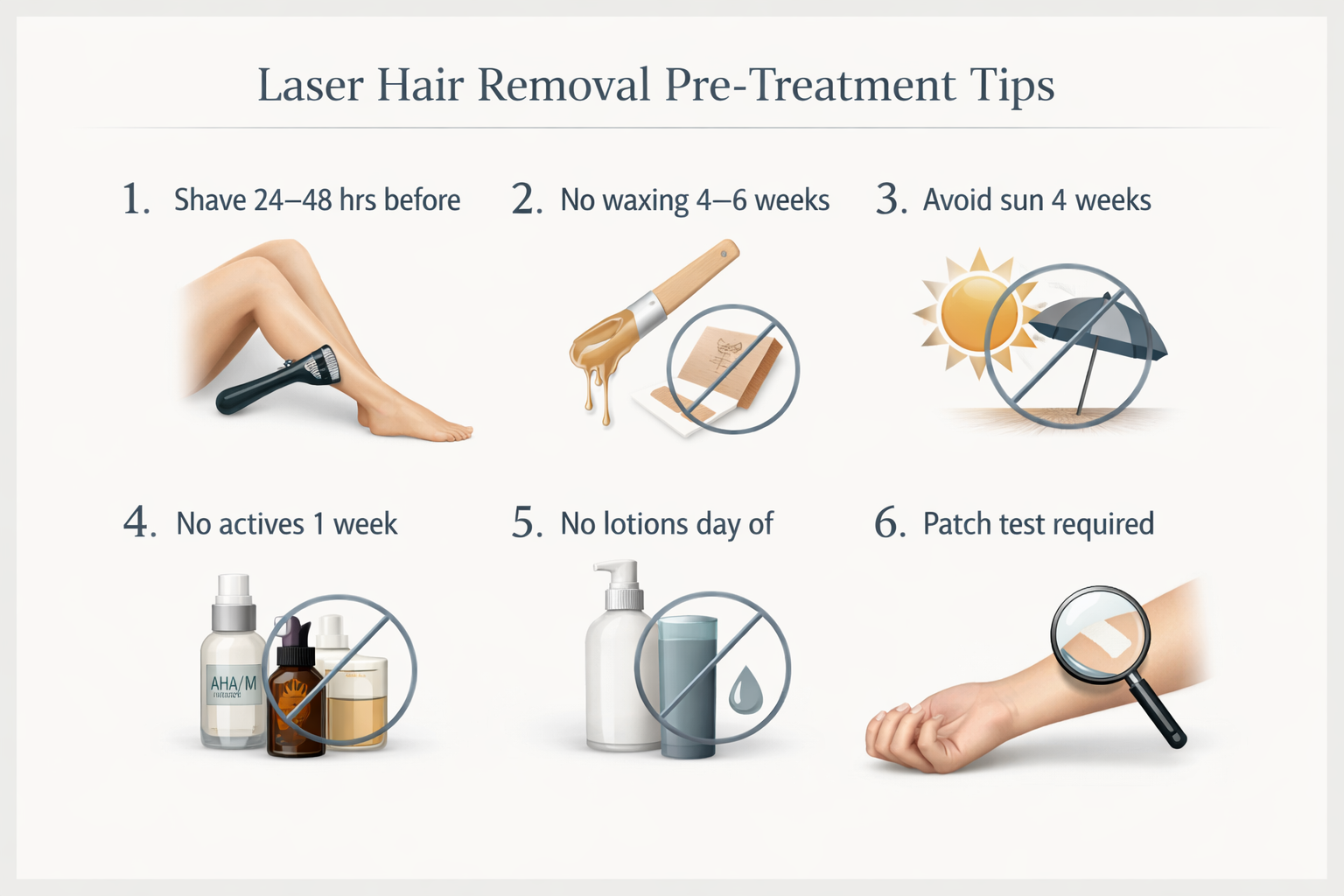
- Shave the back 24–48 hours before your appointment. The laser targets the follicle beneath the skin, not the hair above it. Surface hair can cause the laser energy to dissipate at skin level, reducing effectiveness and increasing the risk of surface burns. Shaving — rather than waxing or plucking — is required.
- Avoid waxing, plucking, or epilating for at least 4–6 weeks before treatment. These methods remove the hair root, which is the target of the laser. Without a root present, the treatment cannot work effectively.
- Avoid sun exposure and tanning for at least 4 weeks before each session. Tanned skin contains more surface melanin, which increases the risk of burns and pigmentation changes. This includes sunbeds and self-tanning products.
- Avoid retinoids, AHAs, and other active skincare ingredients on the back for at least one week before treatment. These can sensitise the skin and increase the risk of adverse reactions.
- Do not apply deodorants, lotions, or perfumed products to the treatment area on the day of your appointment.
- Attend a patch test and initial consultation before your first session. A patch test allows the practitioner to assess your skin’s response to the laser at the intended settings, reducing the risk of unexpected reactions.
Post-Treatment Aftercare: Do’s and Don’ts
Aftercare following laser hair removal for the back is straightforward but important for minimising side effects and supporting the best possible results.
- Do apply a cool compress or aloe vera gel to soothe any redness or warmth in the treated area.
- Do use SPF 30 or higher sunscreen on any exposed skin and avoid direct sun exposure for at least two weeks after each session.
- Do allow hair shedding to occur naturally over the 10–14 days following treatment — this is a normal part of the process and indicates follicle response.
- Don’t take hot showers, use saunas, or engage in intense exercise for at least 24 hours after treatment, as heat can aggravate post-treatment redness and swelling.
- Don’t use harsh exfoliants, retinoids, or fragranced products on the treated area for at least one week.
- Don’t pick or scratch the skin if temporary perifollicular swelling (small bumps around follicles) occurs — this is a common, short-lived reaction.
Pain and Comfort During Treatment
Most people describe the sensation of laser hair removal on the back as similar to a rubber band snapping against the skin, repeated across the treatment area. The back can be more uncomfortable than smaller areas during early sessions because of the density of coarse hair being treated — more active follicles means more heat generated per pass. Discomfort typically reduces noticeably from session three or four onward as hair density decreases.
Clinics use several strategies to manage discomfort. Topical numbing cream applied 30–60 minutes before the appointment can reduce sensation significantly. Integrated cooling systems within the laser handpiece, or external Zimmer cooling devices that blow cold air across the skin during treatment, help protect the skin surface and make the experience more tolerable. If you have concerns about pain, discuss numbing cream options with your clinic before your first appointment.
Risks, Side Effects, and Safety Considerations
Laser hair removal for the back is considered a well-established procedure when performed by a trained and qualified practitioner using appropriate medical-grade laser technology. However, like any energy-based treatment, it carries potential side effects and risks that should be understood before proceeding.
Common, temporary side effects include redness, mild swelling, and perifollicular oedema (small bumps around treated follicles) in the hours following treatment. These typically resolve within 24–48 hours. Temporary pinkness of the skin is normal and not a cause for concern.
Less common risks include hyperpigmentation (darkening of the skin) or hypopigmentation (lightening of the skin), particularly in people with darker skin tones or those who have had recent sun exposure. Using the correct laser for your Fitzpatrick skin type significantly reduces this risk. Blistering or scarring is rare but can occur if inappropriate settings are used or if aftercare instructions are not followed.
Certain medications — including some antibiotics, retinoids, and photosensitising drugs — can increase the risk of adverse reactions. Always disclose your full medication list and medical history during your consultation. Active skin conditions, open wounds, or infections in the treatment area are contraindications to treatment until resolved.
Who Is and Is Not a Suitable Candidate
Laser hair removal for the back is most effective in people with dark, coarse hair and a lighter to medium skin tone, where the contrast between hair and skin melanin is greatest. However, advances in Nd:YAG laser technology mean that people with darker skin tones can also be treated safely when the correct laser is selected and operated by an experienced practitioner.
Laser hair removal is not suitable for people with grey, white, red, or very blonde hair, as these hair types lack sufficient melanin for the laser to target effectively. It is also not recommended during pregnancy, for people with certain photosensitive conditions, or for those taking medications that significantly increase light sensitivity. A thorough consultation and patch test before beginning treatment are essential to confirm suitability.
Combining Back Treatment with Other Areas
Many people choose to combine back laser hair removal with treatment of adjacent areas such as the shoulders, back of neck, or chest. Treating multiple areas in the same session is practical and often more cost-effective, as some clinics offer combination pricing. If you are considering treating the back alongside other areas, discuss this during your initial consultation so that session timing and pricing can be planned accordingly.
Frequently Asked Questions
How long does a back laser hair removal session take?
A full back session typically takes between 30 and 60 minutes depending on the size of the area being treated and the laser system used. Adding shoulders or the back of the neck will extend the appointment time.
Will the hair grow back after laser hair removal on the back?
Laser hair removal delivers permanent hair reduction rather than permanent removal. Most people experience an 80–90% reduction after a full course. Some regrowth may occur over time, particularly in response to hormonal changes, which is why annual or biannual maintenance sessions are recommended to sustain results.
Can laser hair removal be done on all skin tones?
Yes, but the appropriate laser technology must be matched to your Fitzpatrick skin type. Nd:YAG lasers are the safest and most effective option for darker skin tones. A qualified practitioner will assess your skin during consultation and select the correct device and settings.
What happens if I miss a session or delay treatment?
Missing a session or extending the gap between appointments means that some follicles will have cycled out of the anagen phase and will not be treated at the optimal time. This can reduce overall effectiveness and may require additional sessions to achieve the same level of reduction. Try to keep sessions within the recommended 4–6 week spacing.
Is laser hair removal on the back safe for men with very dense hair?
Yes, though men with particularly coarse and dense back hair may require more sessions than average and may experience more discomfort during early treatments. Numbing cream and cooling devices help manage this. The practitioner may also adjust laser settings progressively as hair density reduces across the course.
Can I exercise after a back laser hair removal session?
It is advisable to avoid intense exercise for at least 24 hours after treatment. Heat and sweat can aggravate post-treatment redness and increase the risk of irritation in the treated area. Light activity is generally fine after this initial period.
How soon will I see results?
Hair shedding begins within a few days of the first session and continues over approximately 10–14 days. Visible reduction in hair density is usually noticeable after the second or third session, with more significant smoothness apparent from session four or five onward.
Is Laser Hair Removal for the Back Worth Considering?
For most people with dark, coarse back hair who are looking for a long-term solution, laser hair removal offers a meaningful and practical improvement over ongoing waxing or shaving. The upfront cost of a full course is higher than a single waxing appointment, but when compared against the cumulative cost and inconvenience of monthly waxing over several years, laser treatment often represents better value — alongside the significant benefit of grooming independence.
Realistic expectations are important. An 80–90% reduction in back hair is a well-supported outcome after a complete course, but it is not the same as permanent, total removal. Maintenance sessions are a normal part of sustaining results, particularly for men whose hormonal profile can continue to stimulate some follicle activity. People with grey, white, red, or very blonde hair will not benefit from laser treatment and should explore alternative options.
If you are considering laser hair removal for the back, a consultation with a qualified practitioner — including a patch test — is the appropriate first step. This allows your skin type, hair characteristics, and medical history to be assessed individually, and gives you the opportunity to ask questions about the technology being used, the expected number of sessions, and what results are realistic for your specific profile.