

Quick Comparison
| Feature | HydraFacial | Chemical Peel |
|---|---|---|
| Mechanism | Vortex suction technology: cleanse, extract, hydrate, infuse serums | Acid solution applied to skin to cause controlled exfoliation and cell turnover |
| Peel depth | Surface-level only | Superficial, medium, or deep depending on acid type and concentration |
| Downtime | None — suitable as a lunch break facial | Superficial: minimal; Medium: 5–7 days peeling; Deep: several weeks |
| Results onset | Immediate glow visible same day | Superficial: days; Medium/deep: 2–4 weeks as skin regenerates |
| Results longevity | Typically 4–6 weeks | Longer-lasting; collagen stimulation continues for months |
| Best for | Hydration, maintenance, sensitive skin, pre-event glow | Pigmentation, acne scarring, deeper lines, skin resurfacing |
| Sensitive skin suitability | High — suitable for most skin types including reactive skin | Variable — superficial peels may be tolerated; deeper peels carry more risk |
| Darker skin tones | Generally suitable | Caution required — risk of post-inflammatory hyperpigmentation with deeper peels |
| Typical UK cost | £150–£300 per session | £75–£500+ depending on peel depth and clinic |
| Treatment frequency | Monthly for maintenance | Superficial: every 4–6 weeks; Medium/deep: less frequently |
What Is a HydraFacial?
HydraFacial is a non-invasive facial treatment that uses a patented device to cleanse, extract, and hydrate the skin in a single session. The treatment relies on vortex suction technology — a spiral-tipped handpiece that simultaneously loosens debris from pores and delivers medical-grade serums into the skin. Unlike many facial devices, it combines physical extraction with serum infusion in one continuous motion rather than as separate steps.
A standard HydraFacial session follows a structured sequence: deep cleansing and gentle exfoliation, a mild acid peel step (typically using glycolic and salicylic acids at low concentrations), vortex-assisted extraction of blackheads and congestion, and finally serum infusion containing hyaluronic acid, antioxidants, and peptides. The entire process typically takes 30 to 45 minutes, which is why it is often described as a lunch break facial — there is no downtime and most people return to normal activities immediately.
Customisable boosters can be added to target specific concerns such as fine lines, hyperpigmentation, or redness, making the treatment adaptable to different skin types and goals. HydraFacial is generally considered suitable for all skin types, including sensitive and rosacea-prone skin, because the exfoliation is controlled and the simultaneous hydration minimises irritation.
What Is a Chemical Peel?
A chemical peel is a skin resurfacing treatment in which an acid solution is applied to the skin to cause controlled exfoliation. The acid breaks down the bonds between dead skin cells, accelerating cell turnover and stimulating the skin’s natural regeneration process. Depending on the acid used and its concentration, a peel can work at a superficial, medium, or deep level within the skin.
Superficial peels use milder acids — most commonly glycolic acid, lactic acid, mandelic acid, or low-concentration salicylic acid — to exfoliate the outermost layer of skin. They typically cause mild redness that resolves within a day or two and are suitable for regular use as part of a maintenance schedule. Medium-depth peels, often using trichloroacetic acid (TCA) or higher-strength glycolic acid, penetrate further into the dermis and can address more significant pigmentation, acne scarring, and early signs of ageing. Recovery from a medium peel usually involves visible peeling and flaking for five to seven days. Deep peels, such as phenol peels, reach the deeper dermis and require several weeks of recovery; they are performed less frequently and in more controlled clinical settings.
The mechanism of a chemical peel is fundamentally different from HydraFacial. Rather than hydrating and infusing the skin, a peel works through a degree of controlled damage — prompting the skin to shed its outer layers and rebuild. This stimulates collagen production over weeks and months, which is why the most significant improvements from medium and deep peels often become visible gradually rather than immediately.
How Each Treatment Addresses Common Skin Concerns
Acne and Oily Skin
Both treatments can be useful for acne-prone skin, but they work differently. HydraFacial’s vortex suction technology physically extracts congestion from pores and delivers salicylic acid serum to help reduce excess oil and bacteria. The result is cleaner, less congested skin without the inflammation that some acne-prone individuals experience after more aggressive treatments. Chemical peels — particularly salicylic acid peels — are well established for oily and acne-prone skin because salicylic acid is oil-soluble and penetrates the pore lining to reduce blockages and bacterial activity. For mild to moderate acne, a course of superficial salicylic acid peels may produce more sustained improvement in active breakouts than HydraFacial alone.
Pigmentation and Uneven Skin Tone
Chemical peels generally have a stronger evidence base for addressing hyperpigmentation, sun spots, and uneven skin tone. Medium-depth TCA peels and glycolic acid peels accelerate the shedding of pigmented surface cells and, over a course of treatments, can produce meaningful improvement in skin tone. For post-inflammatory hyperpigmentation — the dark marks left after acne or skin trauma — a carefully selected peel can be effective, though the choice of acid and concentration must be matched to the individual’s skin type. HydraFacial can improve the appearance of mild dullness and uneven tone through exfoliation and brightening serum infusion, but it is unlikely to produce the same degree of pigmentation correction as a targeted peel programme.
Fine Lines and Skin Ageing
For fine lines and early signs of ageing, both treatments offer some benefit but through different mechanisms. HydraFacial improves the appearance of fine lines primarily through hydration — plumping the skin with hyaluronic acid and peptide serums — and through gentle surface exfoliation. The effect is visible immediately but is largely temporary. Chemical peels, particularly medium-depth options, stimulate collagen production within the dermis, which can lead to more durable improvement in skin texture and fine lines over time. The collagen stimulation from a TCA peel, for example, continues for several months after the treatment, meaning results build progressively rather than appearing all at once.
Sensitive and Reactive Skin
HydraFacial is widely regarded as one of the more suitable facial treatments for sensitive skin suitability, including rosacea-prone skin. The simultaneous hydration during extraction reduces the likelihood of post-treatment irritation, and the treatment does not rely on the controlled damage mechanism that makes chemical peels unsuitable for some reactive skin types. Superficial peels using lactic acid or mandelic acid can be tolerated by some people with mild sensitivity, but anyone with active rosacea, eczema, or highly reactive skin should discuss peel suitability carefully with a qualified practitioner before proceeding.
Darker Skin Tones
This is an important consideration that is often underaddressed. HydraFacial is generally considered suitable across all Fitzpatrick skin types, including darker skin tones, because it does not rely on controlled injury to the skin. Chemical peels require more careful selection for individuals with Fitzpatrick skin types IV to VI. Deeper peels carry a meaningful risk of post-inflammatory hyperpigmentation in darker skin — the very concern many patients are trying to treat. Superficial peels using lactic acid or mandelic acid are generally considered safer options for darker skin tones, but the choice should always be made by an experienced practitioner who can assess individual risk. Medium and deep peels on darker skin should only be undertaken with significant caution and appropriate pre-treatment preparation.
Downtime and Recovery: A Practical Comparison
Downtime is one of the most significant practical differences between these two treatments. HydraFacial produces no downtime in the vast majority of cases. Most people experience a mild flush immediately after treatment that settles within a few hours, and the skin typically looks refreshed and luminous the same day. This makes it a practical option before events or during busy periods.
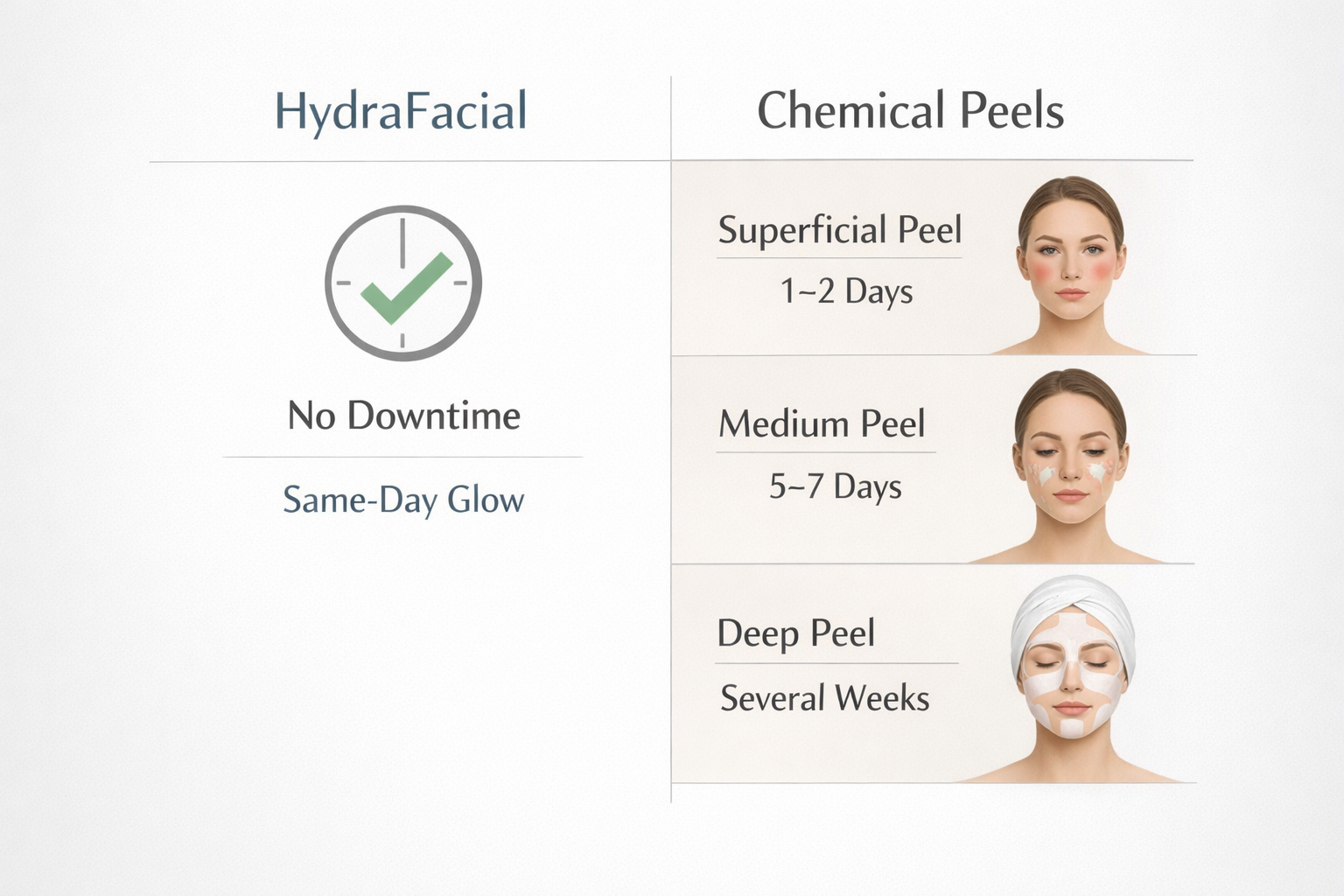
Chemical peel recovery varies considerably depending on peel depth. After a superficial peel, mild redness and some light flaking may occur over two to three days — manageable for most people but worth planning around. A medium-depth peel typically causes more pronounced redness, swelling, and visible peeling or flaking for five to seven days. During this period, the skin can look quite raw, and sun avoidance is essential. Deep peels involve a more significant recovery period of several weeks, with considerable redness, crusting, and sensitivity; these are performed less frequently and require careful post-treatment management.
Post-treatment aftercare matters for both treatments. After HydraFacial, it is generally advisable to avoid heavy makeup, intense heat, and active skincare ingredients such as retinoids or strong acids for at least 24 hours. After a chemical peel, sun protection is critical — the newly regenerated skin is more vulnerable to UV damage, and sun exposure during recovery can worsen pigmentation. Pre-treatment preparation for chemical peels often includes avoiding retinoids, exfoliants, and certain medications for one to two weeks beforehand; your practitioner will provide specific guidance based on the peel selected.
Results: What to Realistically Expect
HydraFacial delivers an immediate glow that is visible on the day of treatment. The skin typically looks cleaner, more hydrated, and more even-toned directly after the session. However, these results are not permanent. The hydration and surface-level improvements generally last around four to six weeks, which is why monthly treatments are commonly recommended for ongoing skin maintenance. HydraFacial is well suited to a maintenance schedule — keeping skin consistently healthy rather than correcting deeper structural concerns.
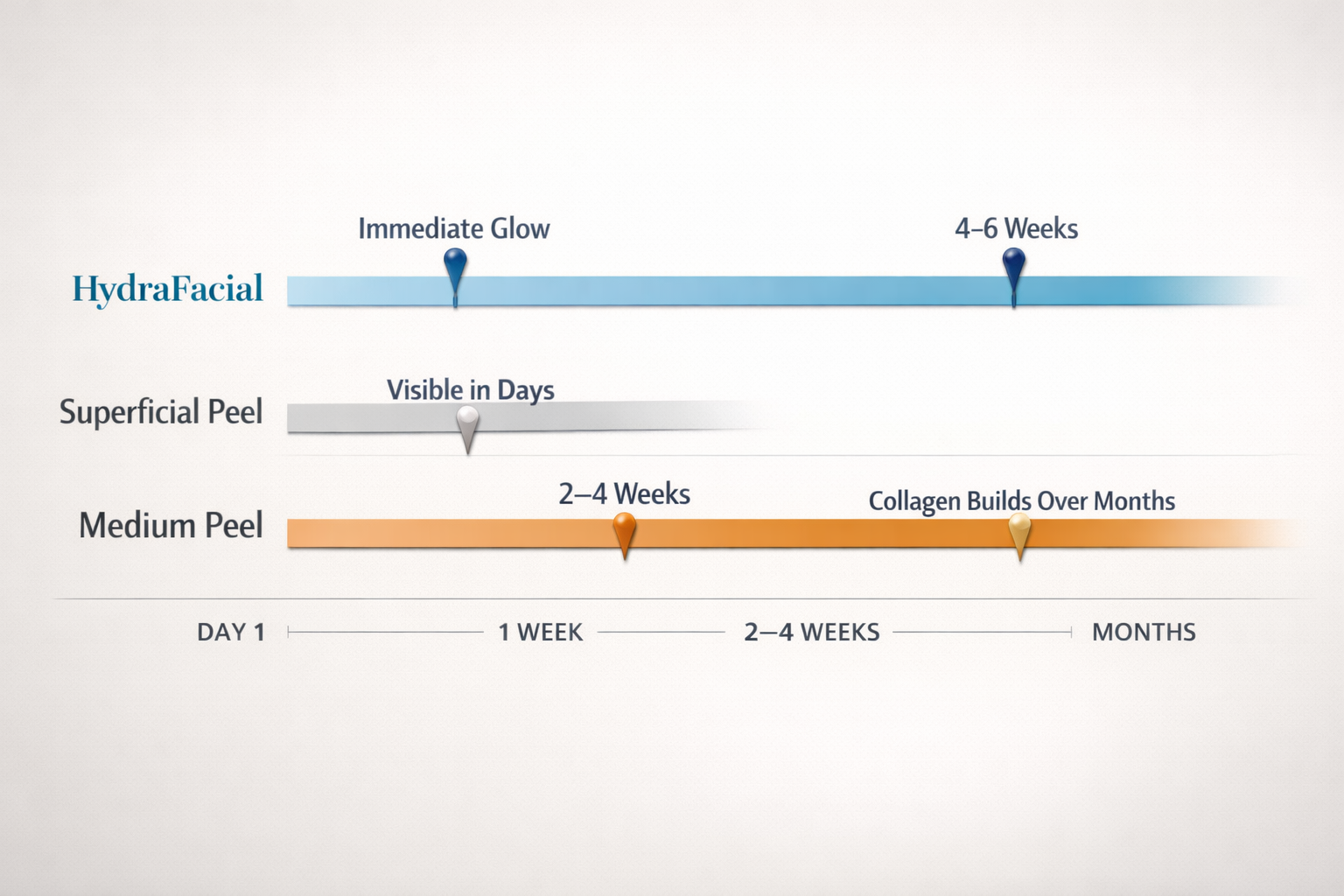
Chemical peel results follow a different timeline. After a superficial peel, mild improvement in skin texture and tone may be visible within a few days once any initial redness settles. After a medium-depth peel, the most significant improvements in skin texture, pigmentation, and fine lines typically become apparent two to four weeks after treatment, as the skin completes its regeneration cycle and new collagen begins to form. The long-term skin correction from a course of medium peels can be more durable than the results of HydraFacial alone, particularly for concerns such as acne scarring, sun damage, and deeper pigmentation.
It is worth noting that neither treatment produces permanent results. Both require ongoing maintenance to sustain improvement, and individual responses vary depending on skin type, age, lifestyle, and the specific concern being treated.
Can You Combine HydraFacial and Chemical Peel?
A combination approach is something that relatively few patients consider but that can offer genuine clinical benefit when planned appropriately. The two treatments are not necessarily in competition — they address different aspects of skin health and can complement each other within a structured treatment plan.
One practical approach is to use chemical peels for periodic correction — addressing pigmentation, acne scarring, or skin resurfacing — and HydraFacial for monthly maintenance in between. This allows the skin to benefit from the deeper structural improvements of a peel while maintaining hydration, clarity, and a healthy surface between sessions. Some clinics offer both treatments in the same session, though this depends on the peel type and concentration used; a superficial peel followed by HydraFacial hydration and serum infusion is more commonly combined than a medium or deep peel with HydraFacial on the same day.
Whether combining treatments is appropriate depends on individual skin condition, the specific products used, and the practitioner’s clinical judgement. A thorough consultation is essential before planning any combination protocol.
Cost Considerations
In the UK, HydraFacial sessions typically range from approximately £150 to £300 per treatment, depending on the clinic, location, and whether boosters are added. Because monthly treatments are often recommended for maintenance, the cumulative annual cost can be significant.
Chemical peel pricing varies considerably with peel depth. Superficial peels may be available from around £75 to £150 per session at reputable clinics, while medium-depth TCA peels typically range from £200 to £400 or more. Deep peels are considerably more expensive and are performed less frequently. A course of superficial peels — often four to six sessions — may represent a cost-effective approach for certain concerns such as mild pigmentation or acne-prone skin.
Cost should be considered alongside treatment frequency, expected results, and the specific concern being addressed. A single medium-depth peel that produces lasting improvement in pigmentation may represent better value for that concern than repeated HydraFacial sessions, while HydraFacial may be the more practical and cost-appropriate choice for ongoing skin maintenance and hydration.
Who May Not Be Suitable
Both treatments have contraindications that should be discussed during a consultation. HydraFacial is generally well tolerated, but it may not be appropriate for individuals with active skin infections, open wounds, or certain inflammatory skin conditions in the treatment area. Pregnancy is a reason to discuss suitability with a practitioner, as some of the serums used contain active ingredients whose safety in pregnancy has not been fully established.
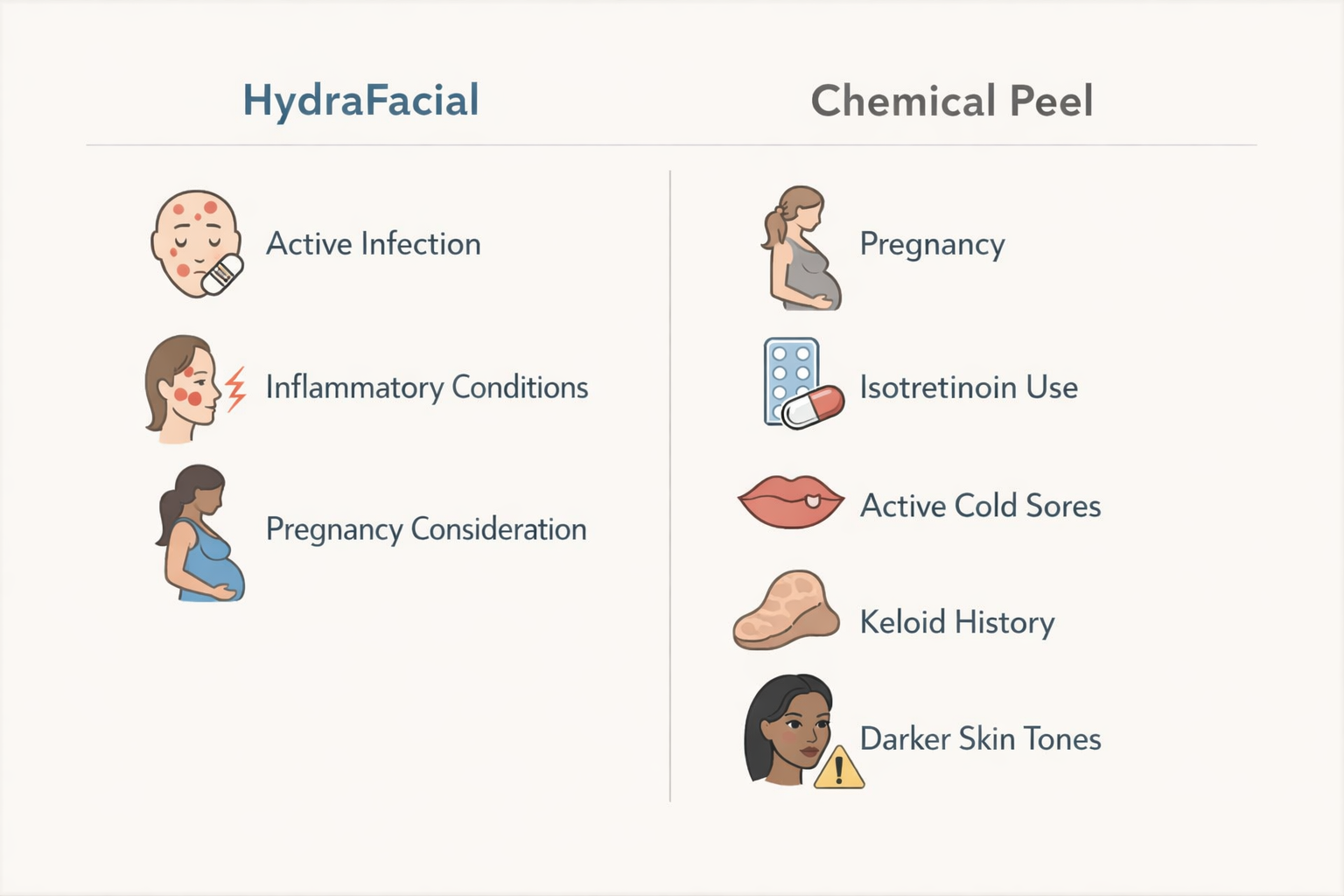
Chemical peels have a broader list of considerations. They are generally not recommended during pregnancy or breastfeeding. Individuals taking isotretinoin (a medication used for acne) should typically wait at least six months after stopping the medication before undergoing a peel, as the skin’s healing response may be impaired. Active cold sores, skin infections, or inflammatory conditions in the treatment area are contraindications. As noted above, deeper peels require particular caution in individuals with darker skin tones. Anyone with a history of keloid scarring should discuss this with their practitioner before proceeding with a medium or deep peel.
Emerging Options Worth Knowing About
The landscape of skin treatments continues to evolve. Exosome-boosted HydraFacial sessions — where exosome serums are infused during the treatment to support skin regeneration — are an emerging development, though clinical evidence for this specific combination is still accumulating. Hybrid peels such as PRX-T33, sometimes described as a biorevitalisation peel, aim to stimulate collagen production without the surface peeling and downtime associated with traditional chemical peels; these may be relevant for patients who want some of the corrective benefits of a peel without recovery time. These newer options are worth discussing with a practitioner who is familiar with the current evidence and can advise on suitability.
Frequently Asked Questions
Is HydraFacial better than a chemical peel for sensitive skin?
For most people with sensitive or reactive skin, HydraFacial is the more appropriate starting point. Its simultaneous hydration during extraction reduces irritation, and it does not rely on the controlled damage mechanism of a chemical peel. Superficial peels using lactic or mandelic acid may be tolerated by some individuals with mild sensitivity, but this should be assessed individually by a qualified practitioner.
How long do results last after each treatment?
HydraFacial results — particularly the hydration and immediate glow — typically last around four to six weeks. Chemical peel results vary by depth: superficial peel improvements may last a similar period, while medium-depth peels can produce longer-lasting changes in skin texture and pigmentation as collagen stimulation continues over several months.
Can I have a HydraFacial and a chemical peel on the same day?
Combining both treatments in a single session is possible in some cases — typically a superficial peel followed by HydraFacial hydration — but this depends on the specific products used and the practitioner’s assessment of your skin. Medium or deep peels are not generally combined with HydraFacial in the same session. Always discuss any planned combination with your practitioner beforehand.
Which treatment is better for acne scarring?
For established acne scarring, chemical peels — particularly medium-depth TCA peels — generally offer more meaningful improvement than HydraFacial alone, because they stimulate deeper collagen remodelling. HydraFacial can help with active congestion and mild post-inflammatory marks, but it is unlikely to significantly reduce textural scarring. A practitioner may recommend a combination approach or additional treatments such as microneedling for more pronounced scarring.
Is a chemical peel safe for darker skin tones?
Superficial peels using lactic acid or mandelic acid are generally considered safer options for darker skin tones (Fitzpatrick IV–VI), but the risk of post-inflammatory hyperpigmentation increases with peel depth. Medium and deep peels require significant caution and should only be performed by practitioners experienced in treating darker skin. HydraFacial does not carry this specific risk and is generally suitable across all skin tones.
How often should I have each treatment?
HydraFacial is commonly recommended monthly as part of a skin maintenance schedule. Superficial chemical peels can also be performed every four to six weeks in a course. Medium-depth peels are typically spaced further apart — every three to six months or as part of a planned course — and deep peels are performed infrequently. Your practitioner will recommend a treatment frequency based on your skin type, concern, and goals.
Do I need to prepare my skin before a chemical peel?
Yes. Pre-treatment preparation for a chemical peel typically involves avoiding retinoids, exfoliating acids, and certain active skincare ingredients for one to two weeks before the appointment. Some practitioners recommend a pre-conditioning programme using specific products to optimise results and reduce the risk of adverse reactions. Your practitioner will provide tailored guidance based on the peel selected and your skin history.
HydraFacial or Chemical Peel: Matching the Treatment to Your Goals
Neither HydraFacial nor chemical peel is universally superior — the better choice depends on what you are trying to achieve, your skin type, your tolerance for downtime, and how you want to structure your treatment plan over time.
HydraFacial is likely the more appropriate option if your priorities are immediate results with no downtime, ongoing skin maintenance, hydration, or if you have sensitive or reactive skin. It is a practical, low-risk treatment that suits most skin types and can be repeated regularly without recovery time. It works well as a standalone maintenance treatment or as part of a broader programme alongside more corrective procedures.
A chemical peel is likely the more appropriate option if you are targeting established pigmentation, acne scarring, sun damage, or more significant skin texture concerns, and you are willing to accept some degree of downtime in exchange for deeper, longer-lasting skin correction. The right peel type and depth should be selected by a qualified practitioner based on a thorough assessment of your skin, medical history, and goals.
For many patients, the most effective approach is not choosing one over the other but using both strategically — chemical peels for periodic correction and HydraFacial for maintenance in between. A consultation with an experienced aesthetic practitioner will help you determine which treatment, or combination of treatments, is most likely to address your specific concerns safely and effectively.