

Key Takeaways
- Shedding after laser hair removal is a normal sign that the treatment has damaged the targeted follicles — it is not regrowth.
- Gentle exfoliation starting around 5–7 days post-treatment can help loosen dead skin cells and encourage hairs to release more quickly.
- Waxing, plucking, or tweezing between sessions will undermine your results and should always be avoided.
- Not all hairs shed after every session — only follicles in the anagen (active growth) phase are effectively targeted each time.
- If you see little or no shedding, this does not always mean the treatment has failed; several factors influence how much shedding occurs per session.
What Is Shedding After Laser Hair Removal?
Laser hair removal works through a process called selective photothermolysis. The laser emits a specific wavelength of light that is absorbed by melanin — the pigment in the hair shaft. This energy converts to heat, which travels down the hair shaft and damages the follicle matrix responsible for producing new hair. The follicle is not immediately expelled; instead, the damaged hair remains in place while the body gradually pushes it out over the following days and weeks.
This process is what practitioners refer to as the shedding phase. The treated hairs are no longer actively growing, but they have not yet left the skin. As the body recognises the follicle damage and begins to clear the debris, the hairs work their way to the surface and fall out — often appearing as stubble or small dark specks. Understanding this mechanism helps explain why shedding takes time and why certain aftercare steps can support the process.
What Does Shedding Actually Look Like?
One of the most common sources of anxiety after a laser session is the appearance of what looks like new hair growth. In reality, what most people are seeing is the shedding process itself. The treated hairs push upward through the skin and may look like short stubble, blackhead-like dots, or a patchy distribution of dark specks across the treated area. This is not regrowth — it is the body expelling the damaged hair shaft.
Shedding vs. regrowth can be distinguished by texture and behaviour. Shedding hairs tend to slide out easily when you run a finger across the skin or wash the area; they do not feel firmly rooted. True regrowth, which may appear in later weeks from follicles that were not in the active growth phase during your session, tends to feel more anchored and may be finer than the original hair. If you are unsure whether what you are seeing is shedding or regrowth, your practitioner can help you assess this at your next appointment.
When Does Shedding Start and How Long Does It Last?
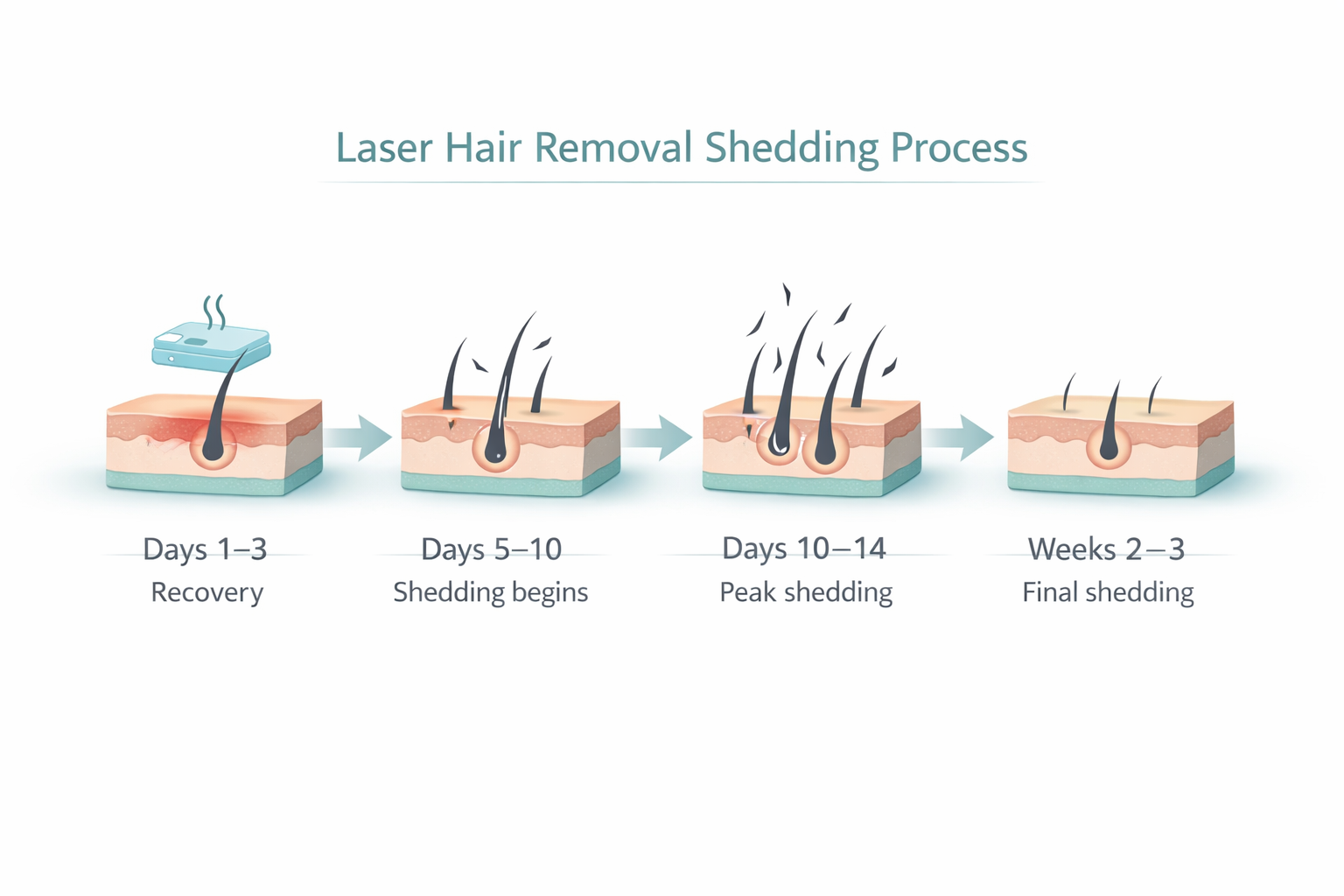
The shedding timeline varies between individuals and body areas, but a general pattern applies to most patients.
| Time After Treatment | What to Expect |
|---|---|
| Days 1–3 | Skin may appear red or feel sensitive. Hairs look unchanged. Avoid exfoliation and heat. |
| Days 5–10 | Shedding begins. Hairs start to loosen and push through the skin surface. Gentle exfoliation can begin around day 5–7. |
| Days 10–14 | Peak shedding phase for most body areas. Hairs release more readily with washing and light exfoliation. |
| Weeks 2–3 | Remaining treated hairs continue to shed. The treated area should feel noticeably smoother. |
Body area also influences timing. Facial hair tends to shed faster — often within 5–7 days — because facial skin has a higher cell turnover rate. Coarser, denser areas such as the legs, back, or bikini line may take the full two to three weeks to complete the shedding process. Underarm hair typically falls somewhere in between. If shedding extends beyond three weeks, it is worth discussing with your provider.
How to Speed Up Shedding After Laser Hair Removal
There are several safe, evidence-informed steps you can take to encourage the shedding phase without irritating the skin or compromising your results. The key principle is to support the skin’s natural clearing process rather than force hairs out prematurely.
1. Begin Gentle Exfoliation Around Day 5–7
Gentle exfoliation is the most effective way to help loosen dead skin cells that may be trapping treated hairs beneath the surface. Starting around five to seven days after your session — once initial redness and sensitivity have settled — use a soft washcloth or exfoliating mitt in small circular motions over the treated area during your shower. Aim to exfoliate two to three times per week rather than daily, as over-exfoliating can disrupt the skin barrier and cause irritation.
Keep pressure light. The goal is to remove the superficial layer of dead skin cells that can act as a physical barrier to shedding, not to scrub the skin aggressively. A mild, fragrance-free body wash used alongside the washcloth is sufficient for most people.
2. Consider a Chemical Exfoliant for Sensitive Skin
Physical scrubs are not suitable for everyone, particularly those with sensitive skin or areas prone to irritation such as the bikini line or underarms. A chemical exfoliant containing salicylic acid or lactic acid can be a gentler alternative. These ingredients dissolve the bonds between dead skin cells without requiring friction, making them particularly useful for preventing ingrown hairs during the shedding phase.
If you choose to use a chemical exfoliant, introduce it gradually — once per week initially — and ensure the product is fragrance-free and formulated for sensitive skin. Avoid using chemical exfoliants on skin that is still visibly red or reactive from the laser session.
3. Use Warm (Not Hot) Showers to Loosen Hairs
Warm water helps to open the pores and soften the skin around the treated follicles, making it easier for hairs to release naturally. A warm shower during the shedding phase — particularly when combined with gentle exfoliation — can noticeably accelerate the process. Avoid very hot water, which can increase skin sensitivity and inflammation in the treated area, especially in the first week post-treatment.
4. Moisturise Consistently with a Fragrance-Free Product
Keeping the skin well hydrated supports the skin barrier and helps maintain the flexibility of the skin surface, which can make it easier for hairs to work their way out. Apply a fragrance-free moisturiser to the treated area once or twice daily. Look for hypoallergenic formulations that are free from alcohol, artificial fragrances, and potential irritants. Ingredients such as aloe vera or ceramides can be particularly soothing if the skin remains slightly sensitive after your session.
5. Stay Well Hydrated
General hydration supports skin cell turnover throughout the body. While drinking more water will not dramatically accelerate shedding on its own, maintaining adequate hydration contributes to overall skin health and may support the natural clearing process during the shedding phase.
6. Wear Loose, Breathable Clothing Over Treated Areas
Friction from tight clothing can irritate the treated area and may also contribute to ingrown hairs by pushing shedding hairs back into the skin rather than allowing them to release freely. Opt for loose, breathable fabrics — particularly over areas such as the bikini line, underarms, or inner thighs — during the shedding phase.
What to Avoid During the Shedding Phase
Certain actions can interfere with the shedding process, damage the skin, or reduce the effectiveness of your overall treatment plan. The following should be avoided between sessions.
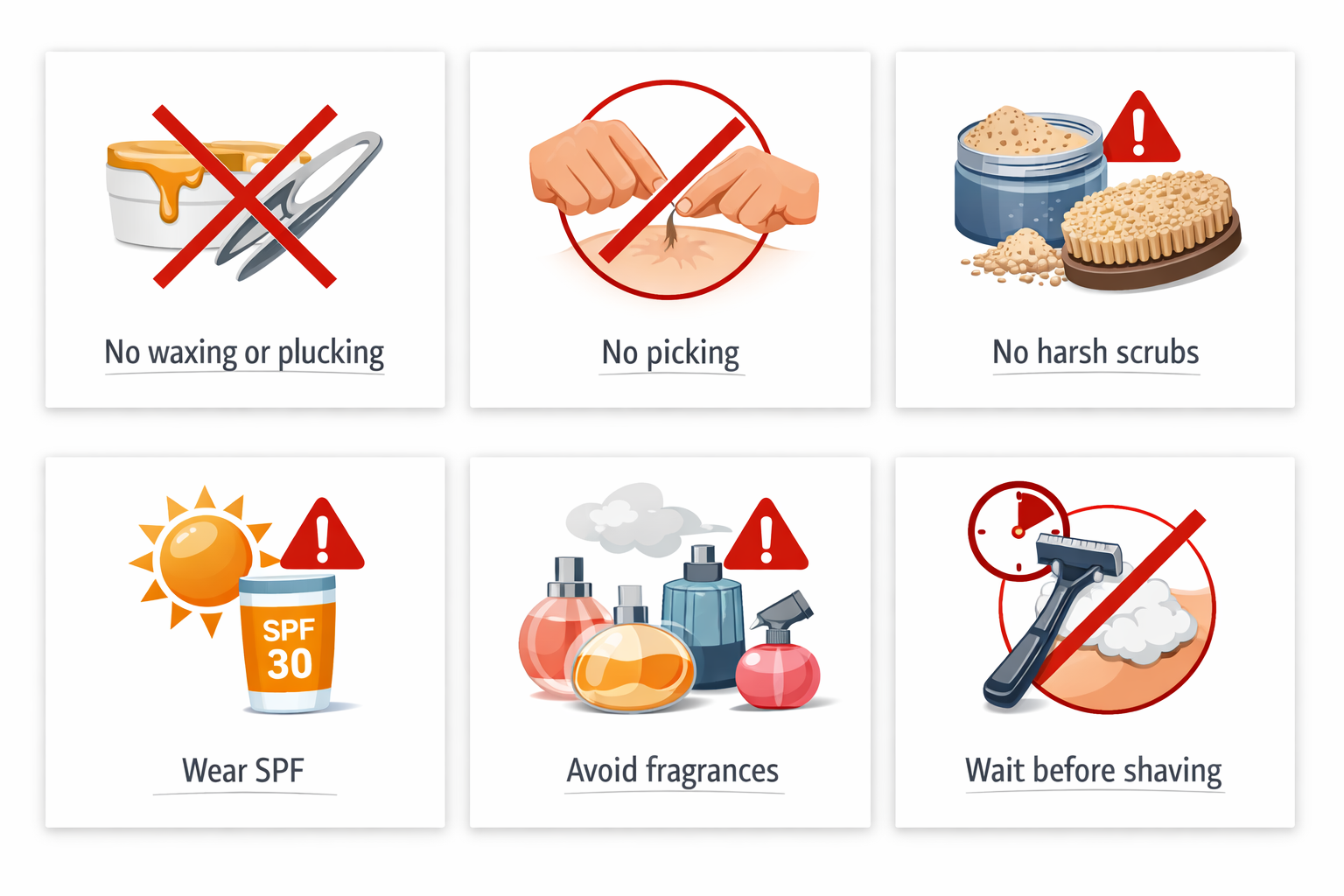
- Avoid waxing or plucking: Waxing and tweezing remove the hair shaft from the follicle entirely. Since laser hair removal targets the pigment within the hair shaft to reach and damage the follicle, removing the shaft between sessions means there is nothing for the laser to target at your next appointment. This significantly reduces treatment effectiveness. Always shave — never wax or pluck — if you need to manage hair between sessions.
- Do not pick or pull at shedding hairs: Forcing hairs out before they are ready can cause skin trauma, increase the risk of ingrown hairs, and potentially lead to post-inflammatory pigmentation, particularly on darker skin tones.
- Avoid harsh scrubs or over-exfoliating: Aggressive physical exfoliation can strip the skin barrier, cause micro-tears, and increase sensitivity. Stick to gentle methods and limit exfoliation to two to three times per week.
- Limit sun exposure and apply SPF: Laser-treated skin is more vulnerable to UV damage. Unprotected sun exposure can increase the risk of hyperpigmentation in the treated area. Apply a broad-spectrum SPF 30 or higher to any treated areas that will be exposed to sunlight, and avoid prolonged sun exposure during the shedding phase.
- Avoid alcohol-based or heavily scented products: These can irritate sensitised skin and disrupt the healing process. Stick to gentle, fragrance-free formulations until the skin has fully settled.
- Avoid shaving in the first five to seven days: Give the skin time to recover before introducing a razor. Shaving too soon after treatment can cause irritation and may interfere with the early shedding process.
Managing Ingrown Hairs During Shedding
Ingrown hairs are a relatively common occurrence during the shedding phase, particularly in areas with coarser or curlier hair such as the bikini line, underarms, or beard area. They occur when a shedding hair curls back into the skin rather than releasing freely, often because a layer of dead skin cells is blocking the exit point.
Gentle exfoliation — both physical and chemical — is the most effective preventive measure. A chemical exfoliant containing salicylic acid is particularly useful here, as salicylic acid is oil-soluble and can penetrate into the pore to help clear the blockage. Applying a warm compress to the affected area for a few minutes before exfoliating can also help soften the skin and encourage the hair to release.
Wearing loose clothing over treated areas reduces friction that can push hairs back into the skin. If an ingrown hair becomes inflamed, painful, or shows signs of infection, contact your provider rather than attempting to extract it yourself.
Why Isn’t My Hair Shedding? Troubleshooting Slow or Minimal Shedding
It is not unusual to experience less shedding than expected after a session, and this does not automatically mean the treatment has not worked. Several factors influence how much shedding occurs after any given appointment.
Hair Growth Cycle Timing
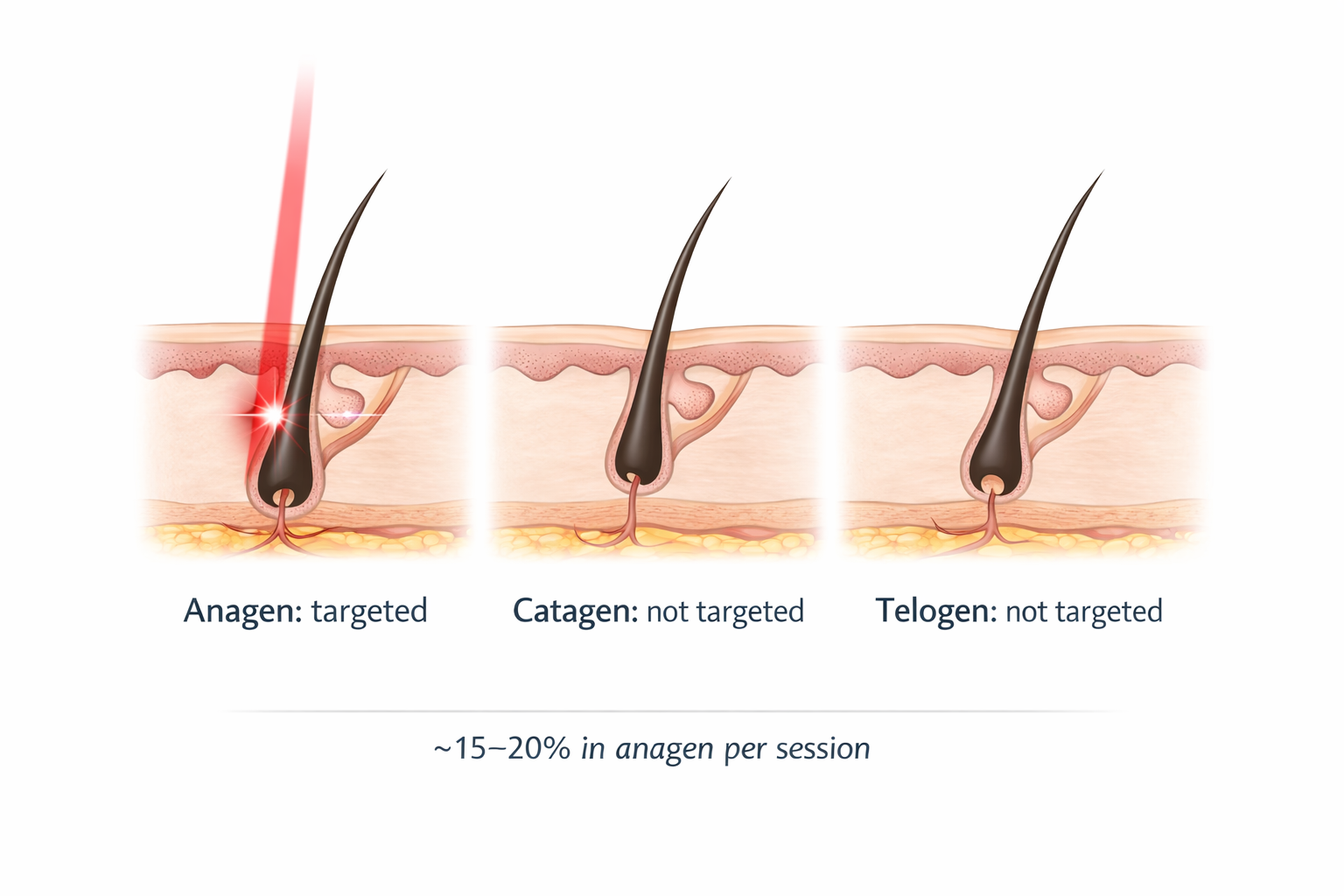
Laser hair removal is only effective on follicles in the anagen (active growth) phase, because this is when the hair shaft is fully connected to the follicle and melanin is most concentrated. At any given time, only approximately 15–20% of follicles in a given area are in the anagen phase. Follicles in the catagen or telogen (resting) phases are not effectively targeted and will not shed. This is why multiple sessions spaced four to six weeks apart are necessary — each session targets a different cohort of follicles as they cycle into the active growth phase.
Hair Colour and Type
Laser hair removal relies on melanin absorption to generate the heat needed for follicle damage. Fine, light, or grey hairs contain less melanin and may not absorb sufficient energy to trigger shedding. If you have lighter or finer hair, your practitioner may need to adjust laser settings or discuss whether laser hair removal is the most appropriate option for your hair type.
Hormonal Areas
Areas influenced by hormonal activity — such as the face, chin, and upper lip — often show less consistent shedding and may require more sessions than other body areas. Hormonal fluctuations can stimulate dormant follicles, which means new hairs may appear even after successful treatment of previously targeted follicles.
Laser Settings
If the laser energy was set conservatively — for example, to minimise discomfort or reduce the risk of side effects on sensitive skin — the follicle damage may be less pronounced, resulting in slower or less complete shedding. Discuss this with your provider if you consistently see minimal shedding across multiple sessions.
Shaving Timing Before Your Session
Shaving too far in advance of your appointment can result in a longer hair shaft being present at the time of treatment. While some shaft length is needed for the laser to target, very long hairs can dissipate energy before it reaches the follicle. Your provider will advise on the optimal shaving window — typically 24–48 hours before your session.
If you have completed two or more sessions and are seeing no shedding at all, it is worth raising this with your practitioner. They can review your treatment parameters and assess whether any adjustments are needed.
Shedding, Sessions, and Realistic Expectations
Understanding the cumulative nature of laser hair removal helps set realistic expectations for the shedding process. Because only a proportion of follicles are in the anagen phase at any one time, each session targets a different subset of hairs. This means shedding after each appointment represents only a fraction of the total hair in the treated area — not all of it at once.
Most patients require between six and nine treatment sessions to achieve significant long-term hair reduction, with sessions typically spaced four to six weeks apart for facial areas and six to eight weeks for body areas. With each session, the cumulative follicle damage increases, and many patients notice that regrowth between sessions becomes progressively finer, lighter, and slower. The shedding phase may also become less dramatic over time as fewer active follicles remain to be targeted.
Post-treatment aftercare — including the exfoliation and moisturising steps outlined above — supports each individual session but does not replace the need for a full course of multiple sessions to achieve the best possible outcome.
What to Do If Shedding Causes Itching or Bumps
Some patients experience mild itching, small raised bumps, or a sensation similar to mild sunburn in the treated area during the shedding phase. This is generally a normal response to the follicle damage and the skin’s clearing process. Applying a cool compress or a fragrance-free aloe vera gel can help soothe the skin. Avoid scratching the treated area, as this can introduce bacteria and increase the risk of irritation or pigmentation changes.
If you develop significant swelling, blistering, crusting, or signs of infection — such as increasing redness, warmth, or discharge — contact your provider promptly. These are not typical shedding responses and may require assessment and treatment.
Frequently Asked Questions
Can I shave during the shedding phase?
It is generally advisable to wait at least five to seven days after your session before shaving the treated area. After that point, shaving is safe and will not interfere with shedding — in fact, it can help remove loosened hairs. Never wax or pluck between sessions, as this removes the hair shaft that the laser needs to target at your next appointment.
Is it normal for shedding to look patchy?
Yes. Because only follicles in the anagen phase are effectively targeted, shedding tends to be uneven rather than uniform. Some areas may shed more completely than others, and this patchiness is a normal feature of the process rather than a sign that the treatment has not worked.
Can I use a loofah to speed up shedding?
A soft loofah used gently in circular motions can help remove dead skin cells and encourage shedding, provided the skin is no longer sensitive or red from the treatment. Avoid using a loofah in the first five days post-treatment, and do not apply heavy pressure, as this can irritate the skin barrier.
Why do some hairs seem to grow back after shedding?
What appears to be regrowth after shedding is often hairs from follicles that were not in the anagen phase during your session. These follicles were not effectively targeted and will continue their normal growth cycle until they are treated in a subsequent session. Over multiple sessions, the number of active follicles decreases and regrowth becomes progressively reduced.
How many sessions will I need before shedding becomes less noticeable?
Most patients begin to notice a meaningful reduction in hair density after three to four sessions, with shedding becoming less dramatic as fewer follicles remain active. A full course of six to nine sessions is typically recommended for significant long-term hair reduction, though individual results vary depending on hair type, colour, skin tone, and the area being treated.
Should I exfoliate if my skin is still red after treatment?
No. Wait until any redness, swelling, or sensitivity has fully resolved before introducing exfoliation — this is typically around five to seven days post-treatment, but may be longer if your skin is particularly reactive. Starting exfoliation too early can worsen irritation and potentially cause post-inflammatory pigmentation.
Getting the Most from Each Laser Session
Speeding up shedding after laser hair removal is largely about supporting the skin’s natural process rather than forcing it. Gentle exfoliation beginning around day five to seven, consistent moisturising with a fragrance-free product, warm showers, and loose clothing all contribute to a smoother, more efficient shedding phase. Equally important is knowing what to avoid — waxing, plucking, harsh scrubs, and unprotected sun exposure can all compromise your results or irritate the treated area.
If you are experiencing minimal shedding, patchy results, or persistent skin reactions, the most useful step is to discuss this with your laser practitioner before your next session. They can review your treatment parameters, assess your hair growth cycle timing, and make any necessary adjustments to optimise your outcomes. Laser hair removal is a cumulative process, and each session — supported by appropriate post-treatment aftercare — builds on the last toward meaningful, long-term hair reduction.