

Many people search for ways to reduce nose size naturally at home, hoping that exercises, makeup techniques, or topical remedies can reshape cartilage and bone. Understanding what is anatomically possible — and what is not — can save time, prevent disappointment, and help you make a genuinely informed decision about whether a professional option might be worth exploring.
Key Takeaways
- No home remedy, exercise, or topical product can permanently reduce the size of nasal bone or cartilage, because these are structural tissues that do not respond to external pressure or massage.
- Contouring makeup can create a convincing visual illusion of a slimmer or straighter nose without any physical change to the underlying structure.
- Facial exercises may support general muscle tone but have no clinically demonstrated ability to alter nasal shape or size.
- Non-surgical rhinoplasty using dermal filler is a clinically recognised option that can improve the appearance of the nose without surgery, though it adds volume rather than removing it and carries its own risks.
- Surgical rhinoplasty remains the only method that can permanently and structurally reduce nasal size, and it requires careful patient selection and recovery planning.
Why the Nose Cannot Be Reshaped at Home
The nose is composed of bone in its upper third and cartilage in its lower two thirds, covered by skin and soft tissue. Bone and cartilage are rigid structural materials. Unlike muscle, they do not hypertrophy or atrophy in response to exercise, and unlike fat, they cannot be dissolved, melted, or reduced through topical application. This is a fundamental point of anatomy that no home technique can overcome.
Claims that nose-slimming clips, nose-reshaping devices, or repeated pinching can alter cartilage shape are not supported by clinical evidence. Sustained external pressure on cartilage over short periods does not remodel it in a controlled or predictable way. In fact, prolonged or forceful pressure on nasal tissue carries a risk of bruising, skin irritation, and in extreme cases, disruption of blood supply to delicate nasal skin.
Swelling from allergies, sinus congestion, or skin conditions such as rosacea can temporarily make the nose appear larger. Addressing these underlying causes — through appropriate medical treatment — may reduce that temporary enlargement, but this is not the same as reducing the structural size of the nose itself.
What Nose Exercises Can and Cannot Do
Facial yoga and nose-shaping exercises are widely promoted online, with claims that repeated movements can slim the nose, lift the tip, or narrow the bridge. The muscles directly associated with the nose — the nasalis, procerus, and depressor septi nasi — control minor movements such as flaring the nostrils or wrinkling the skin across the bridge. Exercising these muscles does not alter the underlying bone or cartilage framework.
There is currently no peer-reviewed clinical evidence demonstrating that nasal exercises produce measurable changes in nasal dimensions. Some proponents suggest that strengthening the muscles around the nose may improve the overall appearance of the mid-face, but any such effect would be subtle and unrelated to actual nasal size reduction. Facial exercises are generally low-risk, but setting realistic expectations is important before investing significant time in them.
Breathing exercises, particularly those used in yoga and mindfulness practices, can improve nasal airflow and may reduce the appearance of nostril flaring associated with habitual mouth breathing, but again, this does not alter the physical structure of the nose.
Makeup Contouring: The Most Effective Non-Invasive Option
Makeup contouring is the most evidence-supported non-invasive method for making the nose appear smaller, slimmer, or more symmetrical. The technique uses the principles of light and shadow to create a visual illusion without any physical change to the nose itself.
Applying a matte contour shade — typically one to two shades darker than the natural skin tone — along the sides of the nose narrows its apparent width. Highlighting the centre of the bridge draws the eye inward and creates the impression of a more defined, slimmer profile. A small contour shadow beneath the tip can make the nose appear shorter. These effects are entirely temporary and wash away with makeup removal, but they can be highly convincing in photographs and in person.
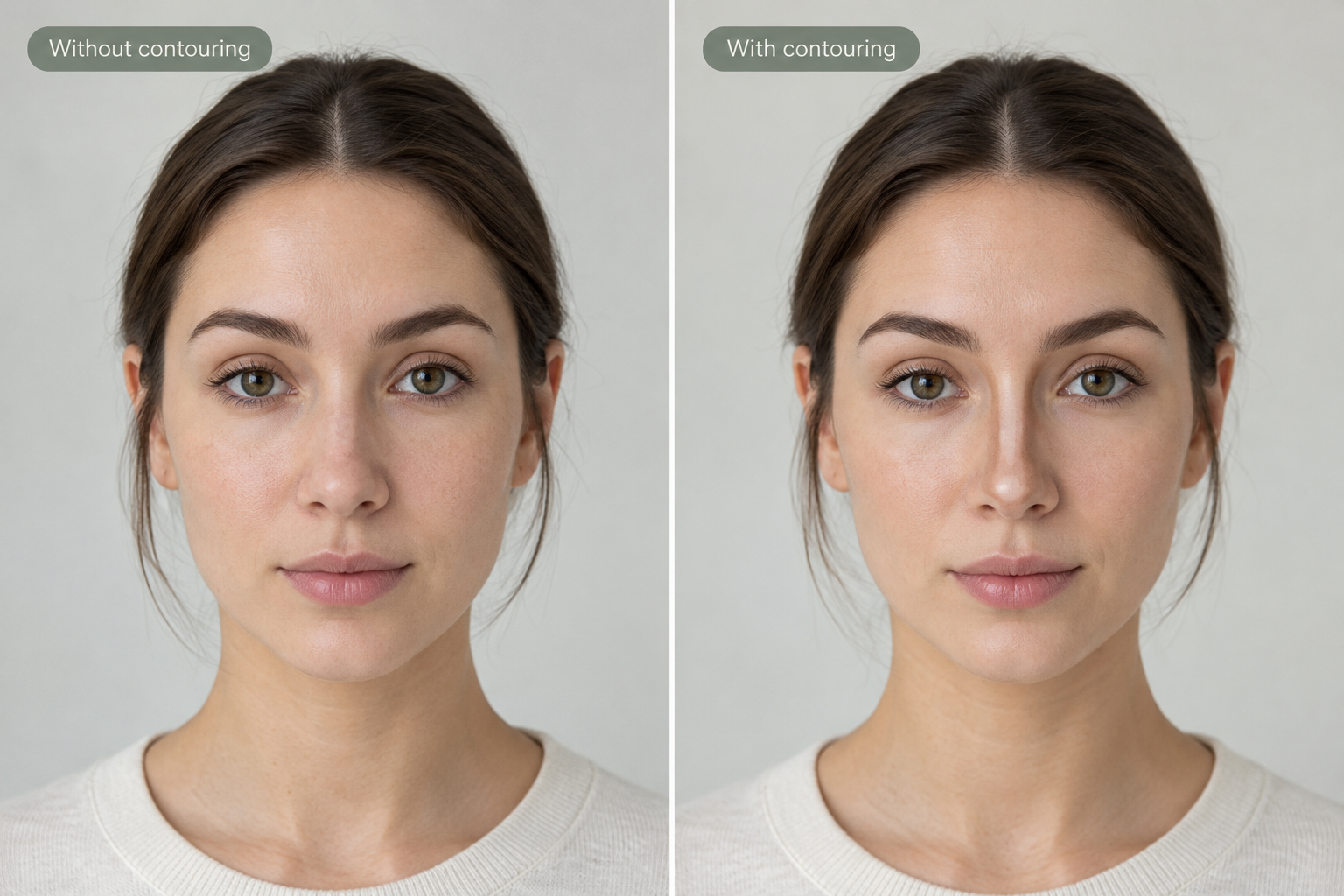
The limitations of contouring are practical rather than medical. The technique requires skill and practice to look natural, it does not translate to makeup-free situations, and it cannot change how the nose appears in profile. For people whose concern is primarily about how they look in photographs or on specific occasions, contouring may be a fully satisfying solution. For those seeking a change that is present without makeup, a professional option may be worth considering.
Skincare, Diet, and Lifestyle: Indirect Influences
Certain lifestyle factors can influence how the nose appears, even if they cannot alter its underlying structure. Chronic nasal congestion, high salt intake, alcohol consumption, and poor sleep can all contribute to facial puffiness, including around the nose and mid-face. Reducing these factors may allow the natural contours of the face to appear more defined.
Skin quality also plays a role. Enlarged pores, skin thickening associated with rhinophyma (a subtype of rosacea), or significant sebaceous gland activity can make the nasal tip appear bulbous. Dermatological treatment for rosacea or enlarged pores — including topical retinoids, azelaic acid, or in-clinic procedures such as laser therapy — may improve the appearance of the nasal skin without altering the cartilage beneath it. These are medical treatments that require professional assessment, not home remedies.
Sun protection is relevant because chronic sun damage can thicken nasal skin over time, particularly in fair-skinned individuals. Daily use of a broad-spectrum SPF may help preserve skin quality and prevent progressive thickening, though it will not reverse existing structural changes.
Non-Surgical Rhinoplasty: A Clinically Recognised Alternative
Non-surgical rhinoplasty, sometimes called a liquid nose job or non-surgical nose job, uses injectable dermal filler — most commonly hyaluronic acid — to reshape the appearance of the nose without surgery. A qualified practitioner places small amounts of filler at precise points to camouflage bumps, lift a drooping tip, improve symmetry, or create a straighter profile.
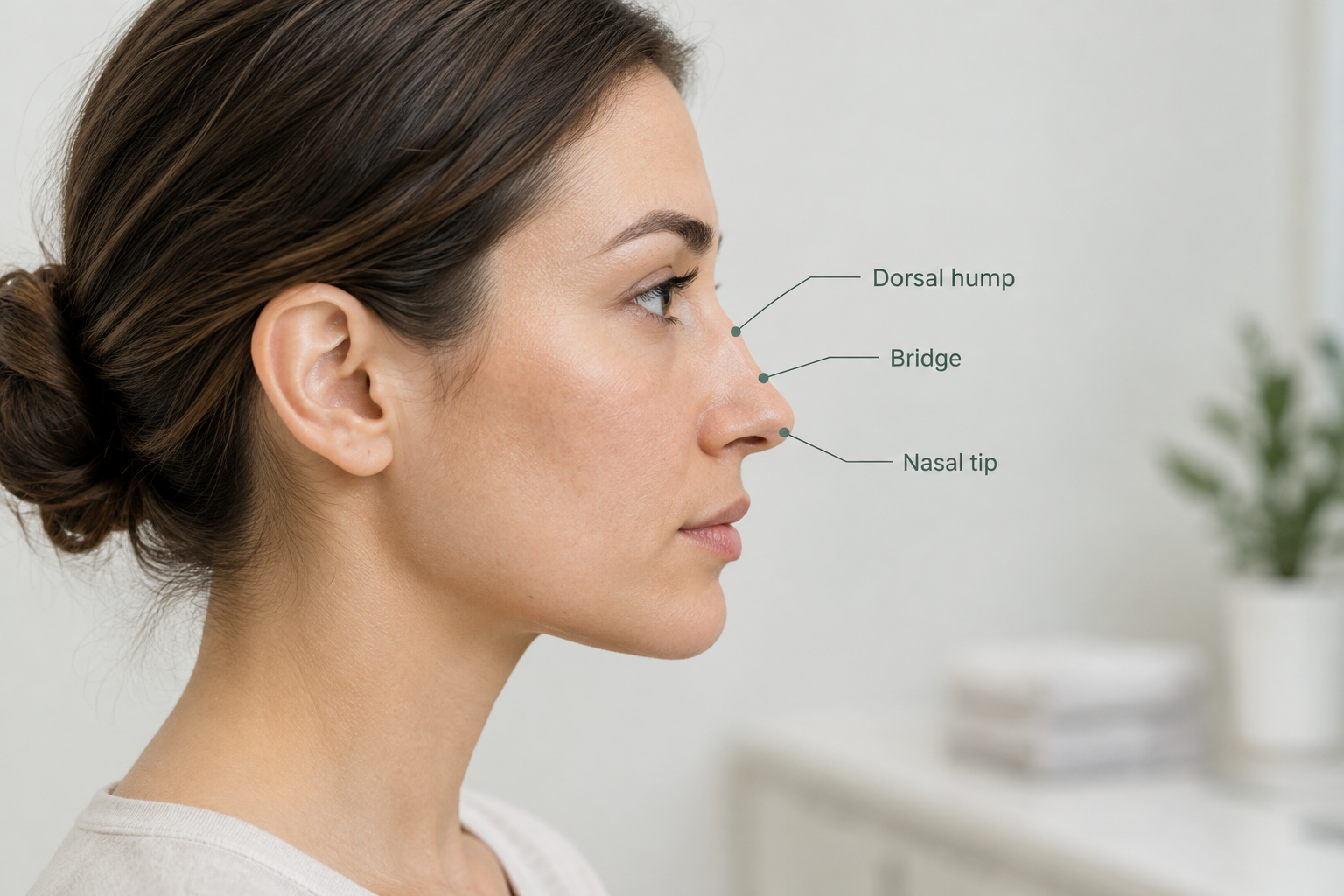
It is important to understand that non-surgical rhinoplasty adds volume rather than removing it. The technique works by redistributing visual proportions: for example, filling a depression above a dorsal hump can make the bump appear less prominent by creating a smoother overall line. This means it is not suitable for people whose primary concern is that the nose is too large overall, as adding filler to an already prominent nose may increase its apparent size.
Non-surgical rhinoplasty is best suited to specific concerns such as a visible dorsal hump, a drooping nasal tip, minor asymmetry, or a flat bridge that the patient wishes to appear more defined. Results are typically visible immediately and may last between nine and eighteen months depending on the filler used, the area treated, and individual metabolism. The procedure is reversible if hyaluronic acid filler is used, as the enzyme hyaluronidase can dissolve it if needed.
Risks of Non-Surgical Rhinoplasty
Non-surgical rhinoplasty carries meaningful risks that must be understood before proceeding. The nose has a complex and variable blood supply, and inadvertent injection of filler into or near a nasal artery can cause vascular occlusion — a blockage that may lead to skin necrosis (tissue death) or, in rare but serious cases, vision loss if filler migrates toward the ophthalmic circulation. This is one of the highest-risk areas for injectable treatments, and it should only be performed by a practitioner with advanced training in facial anatomy and vascular emergency management.
Other risks include bruising, swelling, asymmetry, infection, and filler migration. The risk of serious complications is significantly reduced when treatment is performed by an appropriately qualified medical professional in a clinical setting equipped to manage adverse events. Patients should ask about the practitioner’s training, their experience with nasal filler specifically, and their protocol for managing vascular complications before proceeding.
Surgical Rhinoplasty: The Only Permanent Structural Option
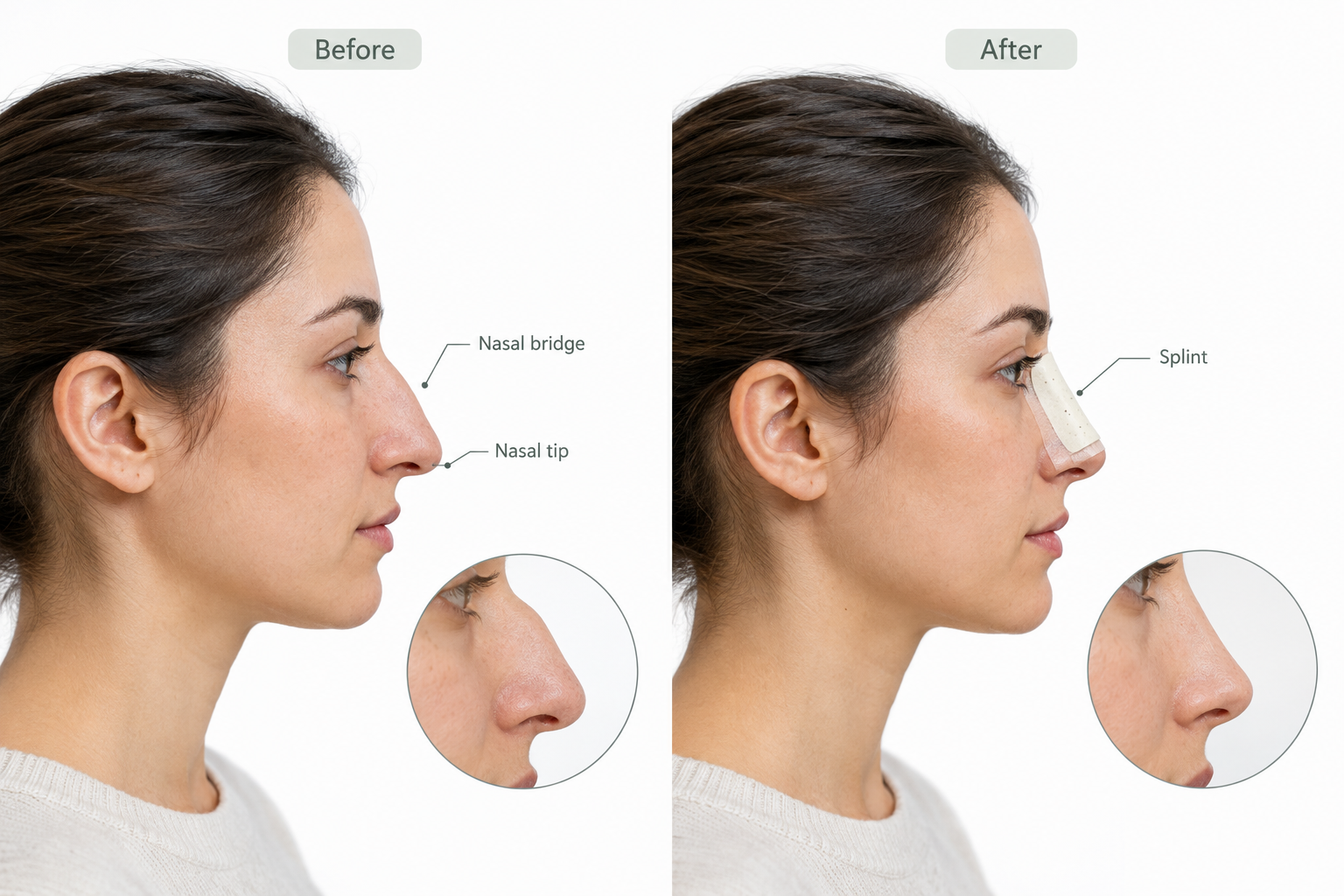
Surgical rhinoplasty is the only procedure that can permanently and structurally reduce the size of the nose. It can address the nasal bones, cartilage framework, and soft tissue to achieve changes in width, length, tip projection, and overall proportion. Rhinoplasty is one of the most technically demanding procedures in plastic and reconstructive surgery, and outcomes depend heavily on the surgeon’s skill, the patient’s anatomy, and the healing process.
Recovery from rhinoplasty typically involves significant swelling for several weeks, with a splint or cast worn for approximately one to two weeks after surgery. Final results may not be fully apparent for twelve months or longer, as residual swelling can persist and the tissues continue to settle. Risks include infection, bleeding, anaesthesia complications, asymmetry, breathing difficulties, and the possibility of revision surgery.
Rhinoplasty is not a decision to make lightly. Thorough consultation with a board-certified or equivalent plastic surgeon or ENT specialist, a clear discussion of realistic outcomes, and careful psychological assessment are all part of responsible pre-operative planning. Patients should be motivated by personal goals rather than external pressure, and should have realistic expectations about what surgery can and cannot achieve.
Comparing Your Options: A Practical Overview
| Method | What It Can Do | What It Cannot Do | Duration | Key Consideration |
|---|---|---|---|---|
| Home exercises | Support general facial muscle tone | Alter bone or cartilage structure | No lasting structural effect | No clinical evidence for nose reshaping |
| Makeup contouring | Create visual illusion of a slimmer nose | Change actual nasal structure | Temporary (washes off) | Effective for photos and occasions; requires skill |
| Skincare and lifestyle | Reduce puffiness; improve skin quality | Reduce bone or cartilage size | Variable; ongoing maintenance | Useful for skin-related concerns such as rhinophyma |
| Non-surgical rhinoplasty | Camouflage bumps; refine tip; improve symmetry | Reduce overall nasal size; remove tissue | 9–18 months typically | High-risk area; requires expert practitioner |
| Surgical rhinoplasty | Permanently reduce and reshape nasal structure | Guarantee a specific aesthetic outcome | Permanent (with natural ageing) | Significant recovery; revision may be needed |
Who May Be Suitable for Professional Nose Treatments
Suitability for any professional nose treatment depends on the specific concern, overall health, anatomy, and realistic expectations. Non-surgical rhinoplasty may be worth discussing with a qualified practitioner if the concern is a dorsal hump, a drooping tip, or minor asymmetry, and if the patient understands that the procedure adds volume rather than reduces it. It is generally not appropriate for people who want to make a large nose smaller overall, for those with very thin nasal skin, or for those with a history of previous rhinoplasty without careful assessment.
Surgical rhinoplasty may be appropriate for people with significant structural concerns that affect either appearance or breathing, who are in good general health, who are non-smokers or willing to stop smoking around the time of surgery, and who have stable psychological wellbeing and realistic expectations. Most surgeons recommend waiting until facial growth is complete — typically around age eighteen for women and slightly later for men — before performing rhinoplasty.
People who are pregnant or breastfeeding, who have active skin infections in the treatment area, or who have certain bleeding disorders or autoimmune conditions may not be suitable candidates for injectable or surgical treatments. A thorough medical consultation is essential before proceeding with any professional procedure.
Questions to Ask Before Any Nose Treatment
- What specific change am I hoping to achieve, and is that change realistically achievable with this method?
- Is the practitioner or surgeon appropriately qualified and experienced specifically in nasal treatments?
- What are the most common risks and complications associated with this procedure, and how would they be managed?
- For non-surgical rhinoplasty: what is the practitioner’s protocol if a vascular complication occurs?
- What is the expected recovery period, and how will this affect my daily life?
- Are there alternative approaches that might better suit my concern and anatomy?
- What happens if I am not satisfied with the result?
Frequently Asked Questions
Can ice or cold compresses reduce nose size?
Applying ice or cold compresses can temporarily reduce swelling after an injury or procedure, which may make the nose appear slightly smaller in the short term. Cold does not alter the underlying bone or cartilage, and any reduction in apparent size from this approach reflects reduced soft tissue swelling rather than any structural change. It is not a method for reducing nose size in a person without active swelling.
Do nose-slimming clips or devices work?
There is no clinical evidence that nose-slimming clips, nose-reshaping devices, or similar products can alter nasal cartilage or bone. Cartilage does not remodel predictably under the low-level pressure these devices apply over short periods. These products are not regulated as medical devices in most countries, and their safety and efficacy have not been established through independent clinical research.
Can essential oils or topical creams reduce nose size?
No topical product — including essential oils, creams, or serums — can penetrate to the level of nasal cartilage or bone, and none have been shown in clinical research to reduce nasal dimensions. Some products may temporarily tighten the surface of the skin, creating a very minor and short-lived visual effect, but this is not a meaningful reduction in nose size.
Is non-surgical rhinoplasty painful?
Most patients describe non-surgical rhinoplasty as mildly uncomfortable rather than significantly painful. Topical anaesthetic cream is typically applied before the procedure to reduce discomfort. The nose is a sensitive area, and some patients experience brief sharp sensations during injection. Swelling and tenderness for one to three days after treatment are common.
How long does swelling last after non-surgical rhinoplasty?
Initial swelling after non-surgical rhinoplasty typically subsides within one to two weeks, though subtle swelling may persist for up to four weeks. The final result becomes more apparent as swelling resolves. Bruising, if it occurs, usually fades within seven to ten days.
Can rhinoplasty also improve breathing?
Surgical rhinoplasty can be combined with functional procedures such as septoplasty (correction of a deviated septum) or turbinate reduction to improve nasal airflow alongside aesthetic changes. If breathing difficulty is a concern alongside appearance, this should be discussed with a surgeon who has experience in both functional and aesthetic nasal surgery.
Making a Realistic Decision About Your Nose
The desire to change the appearance of the nose is one of the most common aesthetic concerns, and it is entirely understandable. However, the anatomy of the nose means that home-based methods cannot deliver structural change. Exercises, clips, and topical products do not alter bone or cartilage, and investing significant time or money in them is unlikely to produce the results most people are hoping for.
Makeup contouring remains the most practical and accessible non-invasive option for creating the appearance of a slimmer or more refined nose, and for many people it is a fully satisfying solution. For those seeking a change that is present without makeup, non-surgical rhinoplasty with dermal filler can address specific concerns such as a dorsal hump or drooping tip — but it is a medical procedure with real risks, and it requires a highly skilled practitioner. It is not a substitute for surgery when the goal is overall size reduction.
Surgical rhinoplasty is the only option that can permanently and structurally reduce nasal size, and it deserves careful consideration, thorough research, and consultation with a qualified surgeon before any decision is made. If you are considering any professional nose treatment, a consultation with an appropriately trained medical professional is the most important first step — both to assess whether the treatment is suitable for your anatomy and goals, and to ensure that your expectations are realistic and well-informed.