

Back acne — often called bacne — is one of the most common yet least discussed skin concerns, affecting teenagers and adults alike. Because the back is difficult to see and reach, it can be harder to treat than facial acne, and many people struggle with it for years without finding an approach that genuinely works. This article explains what causes back acne, which treatments have meaningful evidence behind them, and when professional intervention may be worth considering.
Key Takeaways
- Back acne shares the same underlying mechanisms as facial acne — excess sebum, clogged follicles, and bacterial involvement — but the thicker skin and larger pores on the back can make it more persistent.
- Consistent use of evidence-based topical ingredients such as benzoyl peroxide, salicylic acid, and retinoids forms the foundation of most effective back acne treatment plans.
- Moderate to severe back acne, or acne that leaves scarring, often benefits from professional assessment and may require prescription treatments or clinic-based procedures.
- Lifestyle factors including sweat, friction, diet, and certain medications can worsen back acne and should be addressed alongside any treatment.
- Back acne scars and post-inflammatory hyperpigmentation are separate concerns from active acne and may require different treatment approaches.
What Causes Back Acne?
Back acne develops through the same core process as acne elsewhere on the body. Sebaceous glands in the skin produce sebum, an oily substance that normally lubricates the skin and hair follicles. When excess sebum combines with dead skin cells, the follicle can become blocked, forming a comedone — the technical term for a clogged pore. The bacterium Cutibacterium acnes (formerly known as Propionibacterium acnes) naturally lives on the skin and can proliferate within blocked follicles, triggering an inflammatory response that produces the red, swollen lesions most people recognise as acne spots.
The back has a particularly high density of sebaceous glands, which is one reason it is so prone to breakouts. The skin on the back is also thicker than facial skin, and pores tend to be larger, meaning blockages can become more deeply embedded and harder to clear with surface-level treatments alone. Several factors can worsen or trigger back acne specifically:
- Sweat and occlusion: Tight clothing, sports equipment, and backpack straps trap sweat and friction against the skin, a pattern sometimes called acne mechanica. Synthetic fabrics that do not breathe can make this worse.
- Hormonal fluctuations: Androgens stimulate sebum production, which is why back acne is common during puberty, around the menstrual cycle, and in people with conditions such as polycystic ovary syndrome (PCOS).
- Certain medications: Anabolic steroids, some antidepressants, lithium, and corticosteroids are among the medications associated with acne as a side effect.
- Diet: Evidence suggests that high-glycaemic diets and, in some individuals, dairy consumption may worsen acne, though the relationship is not universal and research is ongoing.
- Hair and skincare products: Conditioners, hair oils, and some body lotions can be comedogenic — meaning they may block pores — particularly when they come into contact with the back during rinsing or application.
- Genetics: A family history of acne increases the likelihood of developing it, and genetic factors influence sebum production, follicle size, and inflammatory response.
Types of Back Acne Lesions
Understanding the type of acne present helps determine the most appropriate treatment. Back acne can present as several distinct lesion types, and many people have a mixture of these at the same time.
- Comedones: Non-inflamed blocked pores. Open comedones (blackheads) have a darkened surface due to oxidation; closed comedones (whiteheads) remain beneath the skin surface.
- Papules: Small, raised, red or pink inflamed bumps without visible pus.
- Pustules: Inflamed lesions with a visible white or yellow centre containing pus.
- Nodules: Large, solid, painful lumps deep within the skin. These do not contain pus and are more likely to cause scarring.
- Cysts: Deep, pus-filled lesions that are often painful and carry a high risk of scarring. Cystic back acne typically requires professional medical treatment.
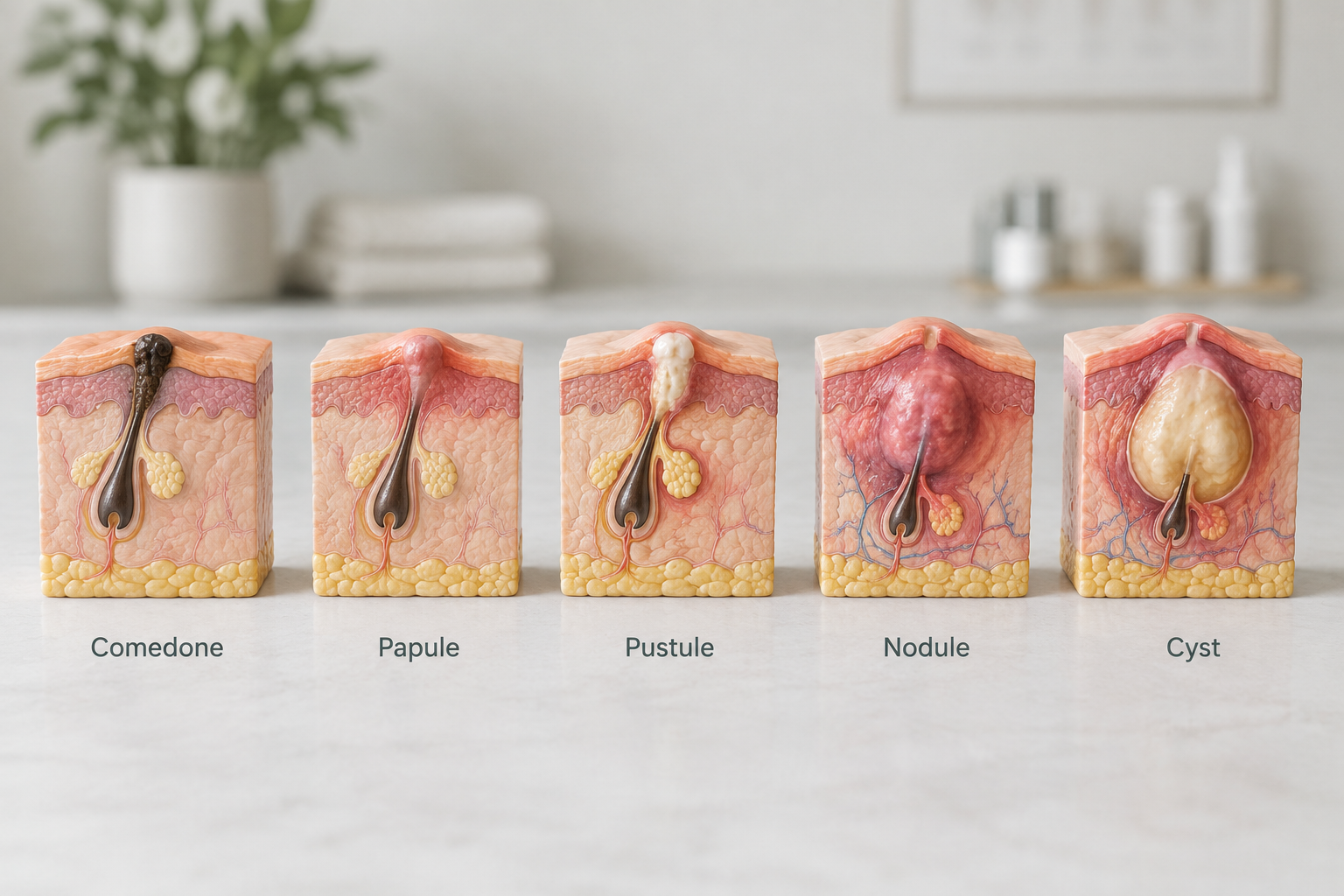
Mild back acne usually involves comedones and a small number of papules or pustules. Moderate acne involves more widespread papules and pustules. Severe acne involves nodules and cysts, often covering a larger area of the back, and carries a significant risk of permanent scarring without appropriate treatment.
At-Home and Over-the-Counter Treatments
For mild to moderate back acne, consistent use of evidence-based over-the-counter (OTC) ingredients can produce meaningful improvement over several weeks. The key is selecting the right active ingredients and using them regularly, as back acne rarely responds to occasional or inconsistent treatment.
Benzoyl Peroxide
Benzoyl peroxide is one of the most well-supported topical treatments for acne. It works by releasing oxygen into the follicle, which kills Cutibacterium acnes bacteria, and it also has mild keratolytic properties, meaning it helps loosen and shed dead skin cells that contribute to blockages. Concentrations of 2.5% to 5% are generally as effective as higher concentrations for most people while causing less dryness and irritation. Benzoyl peroxide is available in wash formulations, which are particularly practical for the back because they can be applied in the shower and rinsed off. Leave-on formulations may be more effective but are harder to apply to the back without assistance. One important practical note: benzoyl peroxide bleaches fabric, so it should be allowed to dry fully before contact with clothing or bedding.
Salicylic Acid
Salicylic acid is a beta-hydroxy acid (BHA) that is oil-soluble, allowing it to penetrate into the sebaceous follicle and help dissolve the debris that causes blockages. It also has mild anti-inflammatory properties. Salicylic acid is particularly useful for comedonal back acne — blackheads and whiteheads — and is available in body washes, sprays, and leave-on formulations at concentrations typically ranging from 0.5% to 2%. Body wash formulations containing salicylic acid are a practical starting point for back acne because they are easy to apply and rinse off in the shower.
Retinoids
Topical retinoids, including adapalene (available OTC in some countries at 0.1%) and stronger prescription versions such as tretinoin, work by normalising the rate at which skin cells shed, reducing the formation of comedones. Retinoids are among the most evidence-supported topical treatments for acne and are particularly effective for comedonal and inflammatory lesions. Applying a retinoid to the back can be logistically challenging without assistance, but spray formulations or asking a partner for help can make this more manageable. Retinoids increase photosensitivity, so sun protection is important during use, and they should be avoided during pregnancy.
Azelaic Acid
Azelaic acid has antibacterial and anti-inflammatory properties and also helps reduce post-inflammatory hyperpigmentation — the dark marks that acne lesions can leave behind. It is generally well tolerated and may be a useful option for people who find benzoyl peroxide or retinoids too irritating. Prescription-strength azelaic acid (15–20%) is more potent than OTC formulations.
Practical Hygiene and Lifestyle Adjustments
Alongside active ingredients, several practical habits can meaningfully reduce back acne. Showering promptly after exercise removes sweat and reduces the time bacteria and sebum remain on the skin. Wearing loose, breathable fabrics — particularly natural fibres such as cotton — reduces friction and occlusion. Washing pillowcases and bed sheets regularly limits the transfer of sebum and bacteria to the skin during sleep. Rinsing hair products off the back thoroughly after washing hair can reduce comedogenic product contact with back skin. These measures alone are unlikely to clear established back acne, but they support the effectiveness of topical treatments and reduce the likelihood of new breakouts.
Prescription Treatments for Back Acne
When OTC treatments have not produced adequate improvement after eight to twelve weeks of consistent use, or when back acne is moderate to severe, a consultation with a GP or dermatologist is appropriate. Prescription treatments offer greater potency and are often necessary for meaningful clearance of more significant back acne.
Topical Prescription Antibiotics
Topical antibiotics such as clindamycin and erythromycin reduce Cutibacterium acnes populations on the skin and have anti-inflammatory effects. They are typically prescribed in combination with benzoyl peroxide rather than alone, because using antibiotics without benzoyl peroxide increases the risk of antibiotic resistance developing. Topical antibiotics are generally used for a limited period — usually no longer than twelve weeks — for this reason.
Oral Antibiotics
Oral antibiotics, most commonly doxycycline or lymecycline in the UK, are often prescribed for moderate to severe inflammatory back acne. They reduce bacterial load and have systemic anti-inflammatory effects. Oral antibiotics are typically used for three to six months and are usually combined with a topical retinoid or benzoyl peroxide. They are not intended as a long-term solution due to concerns about antibiotic resistance and potential side effects including gastrointestinal upset and photosensitivity.
Hormonal Treatments
For women whose back acne is linked to hormonal fluctuations, combined oral contraceptive pills containing certain progestogens may help regulate sebum production. Spironolactone, an anti-androgen medication, is sometimes prescribed off-label for hormonal acne in women. These options are not appropriate for everyone and require a thorough medical assessment.
Isotretinoin
Oral isotretinoin (commonly known by the brand name Roaccutane in the UK) is the most potent treatment available for severe, nodular, or cystic back acne, or for acne that has not responded to other treatments and is causing scarring. Isotretinoin works by dramatically reducing sebum production, normalising skin cell turnover, and reducing inflammation. It is typically prescribed by a dermatologist and requires careful monitoring due to a significant side effect profile, which includes severe dryness of the skin, lips, and eyes, potential effects on mood, and serious teratogenicity — meaning it must not be taken during pregnancy. Despite these considerations, isotretinoin can produce long-term remission in many patients with severe acne and is considered a highly effective option when appropriately prescribed and monitored.
Professional Clinic Treatments for Back Acne and Scarring
Clinic-based treatments can complement medical management of active back acne and are particularly relevant for addressing acne scarring and post-inflammatory hyperpigmentation once active breakouts are under control. A qualified practitioner can assess which options are appropriate based on skin type, acne severity, and individual goals.
Chemical Peels
Chemical peels use acids — such as glycolic acid, salicylic acid, or trichloroacetic acid (TCA) — applied to the skin to exfoliate the surface layers, unclog pores, and stimulate cell turnover. For back acne, superficial to medium-depth peels may help reduce active breakouts and improve the appearance of post-inflammatory marks. Multiple sessions are usually required, and results vary depending on acne severity and skin type. Peels are generally not suitable during active, highly inflamed breakouts and should be performed by a trained practitioner.
Microneedling
Microneedling uses fine needles to create controlled micro-injuries in the skin, stimulating collagen production. It is primarily used for acne scarring rather than active acne and may help improve the texture of atrophic (depressed) scars on the back. Several sessions are typically needed, and results develop gradually over weeks to months as collagen remodelling occurs. Microneedling should not be performed over active, inflamed acne lesions.
Laser and Light Therapies
Various laser and light-based treatments have been used for acne and acne scarring. Blue light therapy targets Cutibacterium acnes bacteria, which produce porphyrins that are sensitive to certain wavelengths of light. Pulsed dye laser and intense pulsed light (IPL) can reduce redness and inflammation. Fractional laser treatments, such as fractional CO2 or fractional erbium lasers, are used for acne scarring and work by stimulating collagen remodelling. The evidence base for laser and light treatments in acne varies by device and indication, and multiple sessions are typically required. These treatments are generally more established for scarring than for active acne management.
Extraction and Comedone Removal
Professional extraction of comedones and pustules by a trained aesthetician or dermatologist can provide immediate improvement in the appearance of back acne. This is not a standalone treatment for ongoing acne but can be useful as part of a broader management plan. Attempting to extract back acne lesions at home carries a risk of introducing infection and worsening scarring.
Treating Back Acne Scars and Marks
Back acne scars and post-inflammatory hyperpigmentation (PIH) are distinct from active acne and require different approaches. PIH refers to the flat, darkened marks left after an acne lesion heals — these are not true scars but rather areas of excess melanin production triggered by inflammation. PIH often fades over time with consistent sun protection, but topical ingredients such as azelaic acid, niacinamide, vitamin C, and alpha-arbutin may help accelerate fading. Chemical peels and certain laser treatments can also address PIH.
True acne scars involve structural changes to the skin. Atrophic scars — which appear as depressions or pits — are the most common type following inflammatory back acne. Hypertrophic scars and keloids, which are raised and thickened, can also occur on the back and are more common in people with darker skin tones or a genetic predisposition. Raised scars on the back may respond to treatments such as corticosteroid injections, silicone-based products, or laser therapy, but keloids in particular can be challenging to treat and may recur. A dermatologist assessment is important before pursuing scar treatment, as the wrong approach can worsen certain scar types.
Who May Need Professional Assessment?
Not all back acne requires a clinic visit, but certain situations make professional assessment particularly worthwhile. Consider seeking medical or clinical advice if:
- Back acne has not improved after eight to twelve weeks of consistent OTC treatment.
- Lesions are deep, painful, or cystic — these carry a high risk of scarring and rarely respond to OTC products alone.
- Back acne is causing significant distress, affecting confidence, or interfering with daily activities such as exercise or choosing clothing.
- Scarring is already developing or has developed from previous breakouts.
- Back acne appears to be linked to a hormonal condition or medication.
- The skin is reacting badly to OTC treatments with significant irritation or worsening.
A GP can prescribe topical and oral medications and refer to a dermatologist when needed. Aesthetic clinics with qualified practitioners can offer complementary treatments for scarring and skin texture, but active moderate to severe acne should ideally be assessed medically first.
Realistic Expectations and Treatment Timelines
One of the most important things to understand about back acne treatment is that results take time. Most topical treatments require a minimum of eight to twelve weeks of consistent use before meaningful improvement becomes visible, because the skin’s natural renewal cycle takes approximately four to six weeks and treatments need time to influence this process. Starting a new product and abandoning it after two or three weeks because results are not yet apparent is one of the most common reasons back acne treatment fails.
Prescription treatments, including oral antibiotics and isotretinoin, also take weeks to months to produce their full effect. Isotretinoin courses typically last four to six months, and some patients experience an initial worsening of acne in the first few weeks before improvement begins. Clinic-based treatments for scarring generally require multiple sessions spaced several weeks apart, and the final results of collagen-stimulating treatments such as microneedling or fractional laser may not be fully apparent for three to six months after the last session.
Complete clearance is not guaranteed for everyone. Many people achieve significant improvement rather than total resolution, and some degree of ongoing maintenance — whether through continued use of topical products, periodic clinic treatments, or lifestyle management — may be needed to sustain results.
Frequently Asked Questions
Can back acne go away on its own?
Mild back acne sometimes improves without treatment, particularly if it is linked to a temporary trigger such as a change in diet, a new medication, or a period of increased sweating. However, moderate to severe back acne rarely resolves without intervention, and waiting without treatment increases the risk of scarring. Even mild acne that is causing distress is worth addressing rather than waiting indefinitely.
Is back acne different from facial acne?
Back acne and facial acne share the same underlying mechanisms, but the back has thicker skin, larger pores, and a higher density of sebaceous glands, which can make breakouts more persistent. The back is also harder to reach and treat consistently, and sweat and friction from clothing are more significant contributing factors than they typically are for the face.
Does diet affect back acne?
Evidence suggests that high-glycaemic foods — those that cause rapid spikes in blood sugar — may worsen acne in some individuals by increasing insulin and androgen levels, which in turn stimulate sebum production. Some research also links dairy consumption to acne, though the evidence is not conclusive and the effect varies between individuals. Dietary changes alone are unlikely to clear established back acne but may support other treatments.
Can I treat back acne scars at the same time as active acne?
Most scar treatments, including microneedling and laser procedures, should not be performed over active, inflamed acne lesions. The standard approach is to bring active acne under control first, then address residual scarring and pigmentation. A practitioner can advise on the appropriate timing based on your individual situation.
How long does it take to see results from back acne treatment?
Most topical treatments require eight to twelve weeks of consistent use before meaningful improvement is visible. Prescription oral treatments may take a similar timeframe. Clinic-based treatments for scarring typically require multiple sessions and results may continue to develop for several months after treatment ends. Patience and consistency are essential components of any effective back acne management plan.
Are there any treatments I should avoid for back acne?
Scrubbing the back vigorously with abrasive exfoliants can worsen inflammation and damage the skin barrier, making acne harder to treat. Picking or squeezing back acne lesions at home significantly increases the risk of infection and scarring. Using multiple new products simultaneously makes it difficult to identify what is helping or causing irritation. Introducing one new treatment at a time and allowing adequate time to assess its effect is a more reliable approach.
Making an Informed Decision About Back Acne Treatment
Getting rid of back acne is achievable for most people, but it requires a realistic understanding of the process. Mild back acne often responds well to consistent use of OTC ingredients such as benzoyl peroxide and salicylic acid, combined with practical lifestyle adjustments. Moderate to severe back acne, or acne that is causing scarring, generally benefits from professional medical assessment and may require prescription treatments. Clinic-based procedures can play a valuable role in addressing post-acne scarring and improving skin texture once active breakouts are managed.
The most important factors in successful back acne treatment are choosing an approach appropriate to the severity and type of acne present, using treatments consistently for long enough to assess their effect, and seeking professional guidance when OTC options are insufficient. If back acne is affecting your confidence or quality of life, a consultation with a GP, dermatologist, or qualified aesthetic practitioner is a practical and worthwhile step toward finding a treatment plan that works for your skin.