

Rosacea flare-ups can appear quickly and feel difficult to manage, particularly when redness, burning, or visible blood vessels intensify without obvious warning. Understanding what drives a flare-up and knowing which steps are genuinely helpful — versus those that may make things worse — can make a meaningful difference to how quickly your skin settles. This article explains the most effective approaches to calming a rosacea flare-up, from immediate at-home measures to professional treatments that may help reduce the frequency and severity of future episodes.
Key Takeaways
- Rosacea flare-ups are triggered by identifiable factors including heat, UV exposure, certain foods, alcohol, and stress; avoiding known triggers is one of the most effective long-term strategies.
- Immediate steps such as cooling the skin, using a gentle fragrance-free moisturiser, and avoiding active skincare ingredients can help reduce acute redness and discomfort.
- Prescription topical and oral treatments are available for rosacea and are more effective than over-the-counter products for moderate to severe flare-ups.
- Professional clinic treatments including laser therapy and intense pulsed light (IPL) may help reduce persistent redness and visible blood vessels over a course of sessions.
- Rosacea is a chronic condition; management focuses on reducing flare frequency and severity rather than achieving a permanent cure.
What Is a Rosacea Flare-Up?
Rosacea is a chronic inflammatory skin condition that primarily affects the central face — the cheeks, nose, chin, and forehead. It is characterised by episodes of flushing, persistent redness, visible small blood vessels (telangiectasia), and in some subtypes, papules and pustules that can resemble acne. A flare-up refers to a period when symptoms worsen beyond a person’s usual baseline, often triggered by an identifiable stimulus. Rosacea affects an estimated one in ten people with fair skin, though it can occur across all skin tones, and it tends to be underdiagnosed in people with darker complexions where redness may be less visually apparent.
There are four recognised subtypes of rosacea: erythematotelangiectatic rosacea (ETR), which involves flushing and visible vessels; papulopustular rosacea, which includes inflammatory bumps; phymatous rosacea, associated with skin thickening particularly around the nose; and ocular rosacea, which affects the eyes. The approach to calming a flare-up may differ slightly depending on which subtype is most prominent, which is one reason a dermatological assessment is valuable for anyone experiencing recurring or worsening symptoms.
Common Rosacea Triggers to Identify and Avoid
Identifying personal triggers is one of the most clinically supported strategies for reducing rosacea flare-up frequency. Triggers do not cause rosacea itself, but they activate the inflammatory and vascular responses that produce visible symptoms. Common triggers include sun exposure, heat, hot drinks, spicy food, alcohol (particularly red wine), vigorous exercise, cold wind, emotional stress, and certain skincare products containing alcohol, fragrance, or exfoliating acids.
The National Rosacea Society has documented that sun exposure is among the most frequently reported triggers, affecting the majority of rosacea patients. UV radiation stimulates vascular dilation and inflammatory pathways in already-sensitised skin. Keeping a simple trigger diary — noting what you ate, drank, your environment, and your stress levels on days when a flare occurs — can help identify patterns that are specific to you, since triggers vary considerably between individuals.
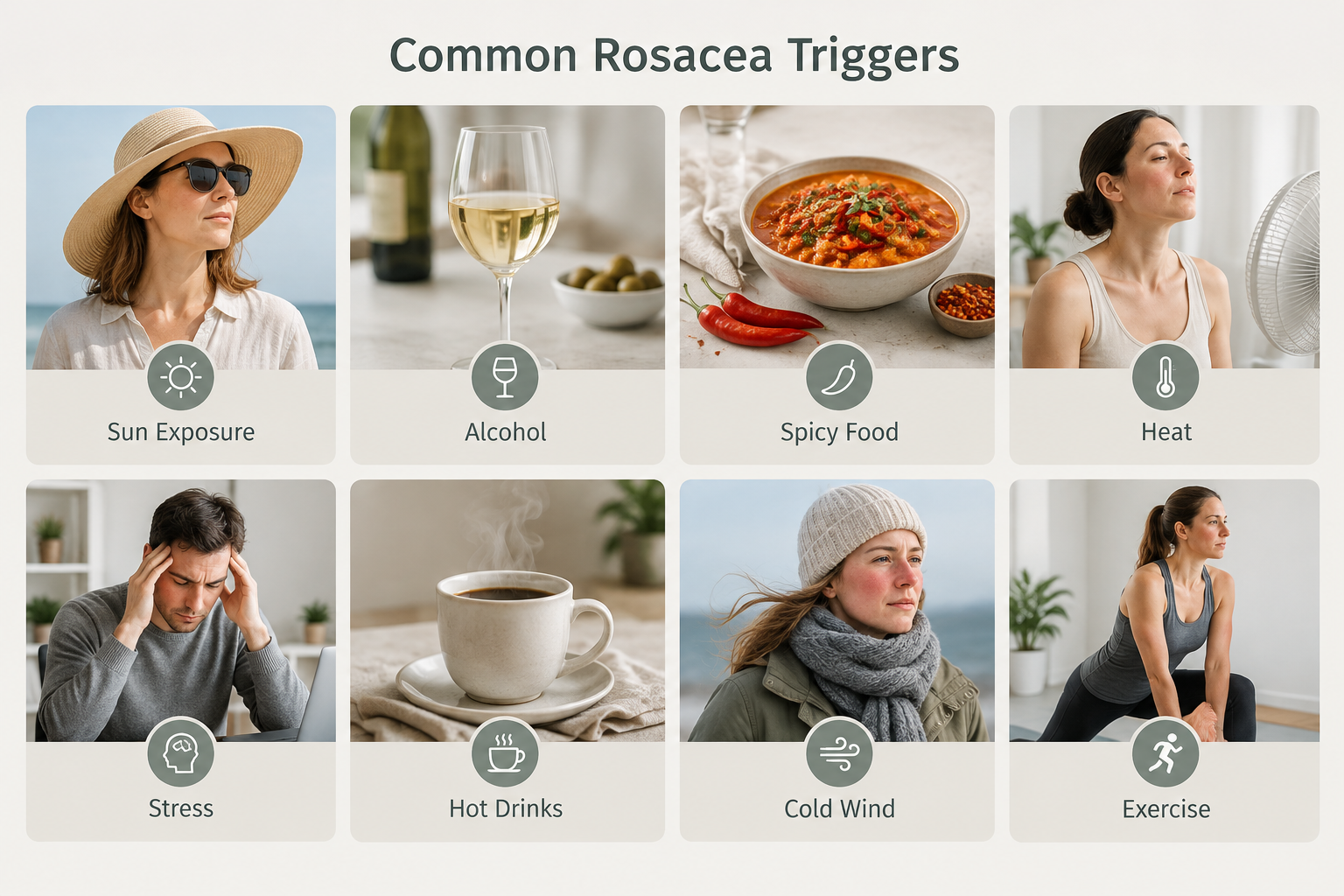
Alcohol causes peripheral vasodilation and may also promote the release of inflammatory mediators in the skin. Spicy foods and hot beverages similarly raise skin temperature and stimulate flushing responses. Stress activates the sympathetic nervous system, which can trigger facial flushing through neurogenic mechanisms. Recognising these connections does not mean eliminating all enjoyable activities, but it does allow for more informed choices about when and how to manage exposure.
Immediate Steps to Calm a Rosacea Flare-Up
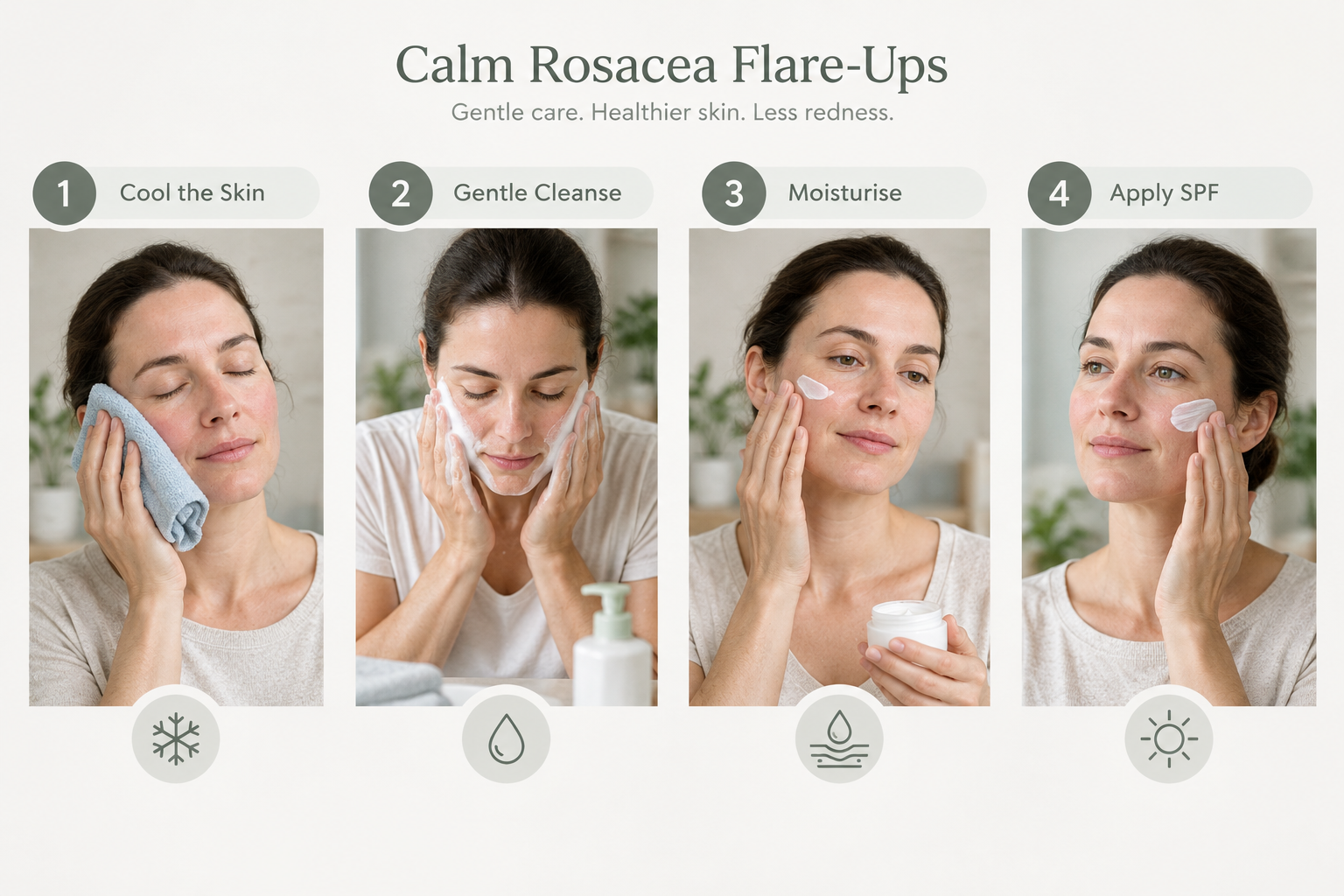
When a rosacea flare-up begins, the priority is to reduce skin temperature, minimise further irritation, and support the skin barrier without introducing additional inflammatory stimuli. The following steps are generally considered appropriate for acute flare management.
Cool the Skin Gently
Applying a cool (not ice-cold) compress to the affected area can help reduce vascular dilation and the sensation of heat and burning. A clean cloth dampened with cool water, held gently against the skin for several minutes, is a practical first step. Avoid applying ice directly to the skin, as extreme cold can itself cause irritation and may worsen reactive skin. Moving to a cooler environment — away from direct sunlight, heating, or humidity — supports the same goal.
Cleanse with a Gentle, Non-Irritating Product
If the skin needs cleansing during a flare, use a fragrance-free, soap-free, low-pH cleanser formulated for sensitive skin. Avoid foaming cleansers with sulphates, exfoliating cleansers, or anything containing alcohol, menthol, or citrus extracts. Cleanse with lukewarm water rather than hot, and pat the skin dry with a soft cloth rather than rubbing. Mechanical friction during a flare can worsen redness and discomfort.
Apply a Barrier-Supportive Moisturiser
Rosacea-affected skin frequently has a compromised skin barrier, which increases sensitivity and transepidermal water loss. Applying a fragrance-free, non-comedogenic moisturiser during a flare can help reduce tightness and support barrier function. Look for formulations containing ingredients such as ceramides, glycerin, or niacinamide, which have evidence for supporting barrier integrity and may have mild anti-inflammatory properties. Niacinamide in particular has been studied in the context of rosacea-prone skin and may help reduce redness over time with consistent use, though it is not a substitute for prescription treatment in moderate to severe cases.
Pause Active Skincare Ingredients
During a flare-up, temporarily discontinue any products containing retinoids, alpha hydroxy acids (AHAs), beta hydroxy acids (BHAs), vitamin C in high concentrations, or physical exfoliants. These ingredients, while potentially beneficial during stable periods for some rosacea patients, can significantly worsen inflammation, stinging, and redness during an active flare. Reintroducing them should be done gradually and only once the skin has settled, ideally with guidance from a dermatologist or aesthetic practitioner experienced in rosacea management.
Use Broad-Spectrum SPF Daily
Sun protection is not only a preventive measure — it is relevant during a flare as well. UV exposure can prolong and intensify a flare-up. A mineral sunscreen containing zinc oxide or titanium dioxide is generally better tolerated by rosacea-prone skin than chemical UV filters, which can cause stinging or irritation in sensitive individuals. SPF 30 or higher applied every morning, and reapplied during sun exposure, is a consistent recommendation from dermatological guidelines for rosacea management.
Over-the-Counter Products: What May Help and What to Avoid
The over-the-counter skincare market contains many products marketed for sensitive or redness-prone skin, but the evidence base for most of these in rosacea specifically is limited. A few ingredients have more clinical support than others.
Azelaic acid is available in lower concentrations over the counter in some countries and at prescription strength (15–20%) through a clinician. It has anti-inflammatory and antimicrobial properties and is one of the few topical ingredients with regulatory approval for rosacea in several countries. At prescription concentrations, azelaic acid has demonstrated meaningful reductions in papules, pustules, and erythema in clinical trials. Over-the-counter concentrations may offer some benefit for mild symptoms but are unlikely to be sufficient for moderate or severe rosacea.
Green-tinted colour-correcting products can provide cosmetic camouflage for redness during a flare, which some patients find helpful for managing the social and psychological impact of visible symptoms. These do not treat the underlying condition but can reduce the visibility of redness while the skin settles. Choose formulations specifically designed for sensitive skin and check that they do not contain fragrance or alcohol.
Products to avoid during a flare include those containing witch hazel, alcohol-based toners, menthol, camphor, eucalyptus oil, and high concentrations of fragrance. These are common irritants in rosacea-prone skin and can significantly worsen burning, stinging, and redness.
Prescription Treatments for Rosacea Flare-Ups
For anyone experiencing moderate to severe rosacea flare-ups, or flare-ups that do not respond adequately to gentle skincare measures, prescription treatment is the appropriate next step. A GP or dermatologist can assess which treatment is most suitable based on the rosacea subtype and symptom severity.
Topical Prescription Options
Metronidazole gel or cream (0.75% or 1%) is one of the most widely prescribed topical treatments for papulopustular rosacea. It has anti-inflammatory properties and has been shown in multiple clinical trials to reduce inflammatory lesions and erythema with regular use. It is generally well tolerated and is typically applied once or twice daily.
Ivermectin 1% cream is a newer topical option with evidence suggesting it may be more effective than metronidazole for papulopustular rosacea in some patients, with a favourable tolerability profile. It targets the Demodex mite, which is found in higher densities on rosacea-affected skin and is thought to contribute to the inflammatory response in some individuals.
Brimonidine tartrate gel is a topical alpha-adrenergic agonist that works by constricting superficial blood vessels, producing a visible reduction in facial redness within 30 minutes of application. It is specifically indicated for the erythema of rosacea rather than for inflammatory lesions. The effect is temporary — typically lasting several hours — and some patients experience rebound redness after the medication wears off, which is an important limitation to discuss with a prescriber.
Oxymetazoline hydrochloride cream is another topical vasoconstrictor approved in some countries for persistent facial erythema associated with rosacea. Like brimonidine, its effect is temporary and it does not address the underlying inflammatory process.
Oral Prescription Options
Low-dose doxycycline (40 mg modified-release, taken once daily) is the most commonly prescribed oral treatment for rosacea in many countries. At this sub-antimicrobial dose, doxycycline works primarily through anti-inflammatory mechanisms rather than as an antibiotic, which reduces the risk of antibiotic resistance. Clinical trials have demonstrated significant reductions in inflammatory lesion counts with this approach. Standard antibiotic doses of doxycycline or tetracycline may also be used for more severe cases, though the sub-antimicrobial approach is preferred where appropriate to minimise resistance concerns.
Oral isotretinoin at low doses is occasionally considered for severe or refractory rosacea, particularly phymatous rosacea, but this requires specialist oversight due to its side effect profile and monitoring requirements.
Professional Clinic Treatments for Rosacea
When rosacea involves persistent background redness, visible telangiectasia, or frequent flare-ups that are not adequately controlled by topical and oral treatments, professional clinic-based treatments may offer additional benefit. These treatments do not cure rosacea but may reduce the visibility of vascular changes and help extend the periods between flare-ups.
Laser and Intense Pulsed Light (IPL) Therapy
Vascular laser treatments — particularly the pulsed dye laser (PDL) and Nd:YAG laser — target oxyhaemoglobin in superficial blood vessels, causing selective thermal damage to visible telangiectasia and diffuse redness without significantly affecting surrounding tissue. Multiple clinical studies support the use of vascular lasers for reducing visible redness and telangiectasia in rosacea, with improvements typically becoming apparent after a course of two to four sessions spaced several weeks apart.
Intense pulsed light (IPL) therapy uses broad-spectrum light filtered to target vascular and pigmented structures in the skin. IPL is not a laser — it emits multiple wavelengths simultaneously — and its effectiveness for rosacea-associated redness and flushing has been supported by a number of clinical studies, though results vary depending on the device used, the operator’s experience, and the patient’s skin type. IPL is generally more suitable for lighter skin tones, as the risk of pigmentation changes is higher in darker skin. A thorough consultation and patch test are important before proceeding.
Both laser and IPL treatments for rosacea typically involve some post-treatment redness and mild swelling lasting one to several days. Sun avoidance and diligent SPF use are essential in the weeks following treatment. Multiple sessions are usually required for meaningful improvement, and maintenance treatments may be needed periodically as rosacea is a chronic condition.
LED Light Therapy
Low-level LED light therapy, particularly using yellow or red wavelengths, has been explored as a supportive treatment for rosacea-prone skin. Some studies suggest anti-inflammatory effects with repeated sessions, though the evidence base is less robust than for vascular laser or IPL. LED therapy is generally very well tolerated with no downtime, which makes it a reasonable adjunct for some patients, but it is unlikely to produce the same degree of vascular improvement as laser-based treatments.
Skincare and Prescription Management in a Clinic Setting
Aesthetic clinics and dermatology practices experienced in rosacea management can also provide structured skincare programmes, prescription access, and ongoing monitoring that may be more effective than self-managed approaches. A practitioner familiar with rosacea can help identify which treatments are appropriate for a specific subtype, advise on product selection, and adjust the management plan as the condition evolves.
Skincare Ingredients That May Support Rosacea-Prone Skin
Beyond the acute flare period, certain skincare ingredients may help support rosacea-prone skin and potentially reduce the frequency of flare-ups when used consistently as part of a gentle routine.
Niacinamide (vitamin B3) has demonstrated anti-inflammatory properties and may help strengthen the skin barrier, reduce transepidermal water loss, and modestly reduce redness with regular use. It is generally well tolerated by sensitive skin at concentrations of 2–5%. Centella asiatica extract (also known as cica) has been used in wound healing and has some evidence for soothing inflamed skin, though large-scale rosacea-specific trials are limited. Hyaluronic acid supports skin hydration without irritation and is appropriate for rosacea-prone skin. Ceramides help restore and maintain the skin barrier, which is frequently compromised in rosacea.
Retinoids are more complex in the context of rosacea. While some evidence suggests that low-concentration retinol or prescription tretinoin may benefit certain rosacea patients — particularly those with phymatous changes or skin texture concerns — retinoids can also trigger or worsen flare-ups, especially when introduced too quickly or used during active inflammation. Any use of retinoids in rosacea-prone skin should be approached cautiously and ideally guided by a clinician.
The Psychological Impact of Rosacea and Managing Stress Triggers
Rosacea has a well-documented impact on quality of life, self-confidence, and psychological wellbeing. Visible facial redness and unpredictable flare-ups can cause significant anxiety and social avoidance, and stress itself is a recognised rosacea trigger — creating a cycle that can be difficult to break. Acknowledging this connection is clinically relevant: stress management strategies such as mindfulness, regular physical activity at moderate intensity (avoiding overheating), and adequate sleep may support overall rosacea management alongside topical and medical treatments.
If rosacea is significantly affecting mental health or daily functioning, discussing this with a GP or dermatologist is appropriate. Some patients benefit from psychological support alongside dermatological treatment, and practitioners experienced in rosacea management will typically be aware of this dimension of the condition.
Frequently Asked Questions
How long does a rosacea flare-up typically last?
The duration of a rosacea flare-up varies considerably between individuals and depends on the trigger, the rosacea subtype, and whether any treatment is applied. Mild flare-ups triggered by a single identifiable cause — such as alcohol or heat — may settle within hours to a day or two with appropriate skin calming measures. More significant flare-ups, particularly those involving papules and pustules, may persist for several days to weeks without prescription treatment. Persistent background redness between flare-ups is common in established rosacea and may require ongoing management.
Can I wear makeup during a rosacea flare-up?
Makeup can be worn during a flare-up if the products are well tolerated, but it is worth choosing formulations specifically designed for sensitive skin that are fragrance-free and non-comedogenic. Mineral-based foundations are often better tolerated than liquid formulations containing alcohol or fragrance. Green colour-correcting primers can help neutralise redness. Remove makeup gently at the end of the day using a mild micellar water or gentle cleanser, avoiding rubbing or friction.
Is rosacea the same as acne?
Rosacea and acne are distinct conditions, though papulopustular rosacea can superficially resemble acne. Key differences include the absence of comedones (blackheads and whiteheads) in rosacea, the presence of background redness and flushing, and the typical age of onset — rosacea most commonly develops in adults over 30. Treatments that work for acne, such as benzoyl peroxide, can significantly irritate rosacea-prone skin. An accurate diagnosis is important before starting any treatment.
Will rosacea get worse over time if left untreated?
Rosacea is a progressive condition in many patients, meaning that without management, symptoms may worsen over time. Persistent inflammation can lead to more visible telangiectasia, more frequent and severe flare-ups, and in some cases phymatous changes such as rhinophyma (thickening of the nose). Early and consistent management — including trigger avoidance, appropriate skincare, and medical treatment where indicated — is generally associated with better long-term outcomes.
Are there foods that help reduce rosacea flare-ups?
No specific diet has been proven to treat rosacea, but avoiding personal dietary triggers — commonly spicy foods, hot beverages, and alcohol — can reduce flare frequency. Some research suggests that an anti-inflammatory dietary pattern rich in vegetables, omega-3 fatty acids, and low in processed foods may support skin health generally, though large-scale rosacea-specific dietary trials are limited. Keeping a food diary alongside a trigger diary can help identify individual dietary patterns that correlate with flare-ups.
Can laser treatment cure rosacea?
Laser and IPL treatments can significantly reduce visible redness, telangiectasia, and flushing in rosacea, but they do not cure the underlying condition. Rosacea is chronic, and vascular changes may gradually return over months to years after treatment. Maintenance sessions are typically needed periodically. Laser and IPL treatments are most effective when combined with ongoing trigger management, appropriate skincare, and medical treatment where indicated.
Managing Rosacea Long-Term: What to Discuss with a Practitioner
Calming an acute rosacea flare-up is an important immediate goal, but the most meaningful improvements in rosacea come from a consistent, personalised long-term management plan. This typically combines trigger identification and avoidance, a gentle daily skincare routine with appropriate sun protection, prescription topical or oral treatment during active phases, and consideration of professional treatments such as vascular laser or IPL for persistent vascular changes.
If you are experiencing frequent or severe rosacea flare-ups, or if your symptoms are not responding to over-the-counter measures, a consultation with a GP, dermatologist, or aesthetic practitioner experienced in rosacea management is a practical next step. A clinician can confirm the rosacea subtype, rule out other conditions that may mimic rosacea, and recommend a treatment approach tailored to your skin. Rosacea is manageable for most people with the right combination of strategies, and many patients achieve significant reductions in flare frequency and severity with appropriate care.