

Lip filler pricing varies considerably, and understanding what drives that variation can help you make a more informed decision before booking a consultation. The cost of lip filler treatment depends on several interconnected factors — from the type and volume of dermal filler used to the experience of the practitioner and the location of the clinic. This article explains each pricing factor clearly, outlines what you should expect to receive for your money, and covers the risks, realistic results, and alternatives worth considering.
Key Takeaways
- Lip filler prices typically reflect the type and amount of filler product used, practitioner qualifications, and clinic location — not just the treatment itself.
- Hyaluronic acid fillers are the most commonly used products for lip augmentation and are reversible with an enzyme called hyaluronidase.
- Cheaper treatments are not always better value; practitioner experience and clinical setting significantly affect both safety and results.
- Results from lip filler are temporary, typically lasting between six and eighteen months depending on the product and individual factors.
- A thorough consultation before treatment is essential to assess suitability, discuss realistic outcomes, and understand the full cost involved.
What Is Lip Filler and How Does It Work?
Lip filler refers to injectable dermal filler products used to add volume, improve shape, define the lip border, or enhance symmetry. The most widely used products contain hyaluronic acid, a naturally occurring substance found in the skin and connective tissue. When injected into the lips, hyaluronic acid attracts and retains water molecules, creating a plumping effect that can increase volume and improve contour.
Hyaluronic acid lip fillers are available in different formulations with varying thicknesses, known as rheological properties. Thinner, softer formulations are generally preferred for the lips because they integrate more naturally into delicate tissue and produce a less rigid result. Practitioners select the appropriate product based on the patient’s anatomy, the degree of enhancement desired, and the specific area being treated — for example, the body of the lip versus the vermilion border or Cupid’s bow.
Unlike some other cosmetic injectable treatments, hyaluronic acid lip filler is reversible. If a patient is unhappy with the result or experiences a complication, an enzyme called hyaluronidase can be injected to dissolve the filler. This reversibility is one reason hyaluronic acid products remain the standard choice for lip augmentation in most clinical settings.
How Much Does Lip Filler Cost?
Lip filler treatment in the United Kingdom typically ranges from approximately £150 to £600 or more per session, though prices outside this range do exist. In the United States, costs commonly fall between $500 and $1,000 or higher per syringe. These figures are general estimates; actual pricing depends on the specific factors discussed throughout this article and varies significantly between clinics, cities, and countries.
Most lip filler treatments use between 0.5 ml and 1 ml of product per session, though some patients may require more over time. The price quoted by a clinic usually reflects the cost per syringe or per millilitre of filler, so it is important to clarify exactly how much product is included in the quoted price and whether a top-up or review appointment is included.
It is also worth noting that the quoted treatment price may not represent the total cost. Consultation fees, follow-up appointments, and any corrective treatment if needed may be charged separately. Always ask for a clear breakdown before committing to treatment.
Key Factors That Affect Lip Filler Pricing
Type and Brand of Filler Product
The specific dermal filler product used is one of the most significant contributors to the overall cost. Hyaluronic acid fillers are manufactured by several companies and sold under different brand names, each with distinct formulations, longevity profiles, and price points at the wholesale level. Premium products from established manufacturers tend to cost more, and that cost is reflected in the treatment price. Some clinics use a single preferred product range; others offer a choice depending on the patient’s goals and budget.
The volume of filler used also directly affects cost. A 0.5 ml treatment will generally be less expensive than a 1 ml treatment using the same product. Patients seeking subtle enhancement may require less product than those wanting more significant volume, which means individual pricing can vary even within the same clinic.
Practitioner Qualifications and Experience
Practitioner expertise is arguably the most important factor in both the safety and the cost of lip filler treatment. Qualified medical professionals — including doctors, dentists, and registered nurses with specialist aesthetic training — typically charge more than non-medically qualified practitioners. This reflects their clinical training, their ability to manage complications, and their understanding of facial anatomy.
Lip filler injections carry real risks, including vascular occlusion — a rare but serious complication in which filler blocks a blood vessel, potentially causing tissue damage. A practitioner with appropriate medical training is better equipped to recognise and manage such complications promptly. Regulatory frameworks governing who can legally administer injectable treatments vary by country and are subject to ongoing change, so it is worth checking the current requirements in your region before booking.
Highly experienced practitioners with a strong clinical reputation or specialist focus in facial aesthetics may charge a premium that reflects their skill level and demand. While cost alone should not determine your choice of practitioner, it is reasonable to be cautious about prices that seem unusually low, as this may reflect reduced qualifications, less experience, or lower-quality products.
Clinic Location and Setting
Geographic location has a meaningful impact on lip filler pricing. Clinics in major cities, particularly in prime commercial areas, typically charge more than those in smaller towns or rural locations. This reflects higher operating costs including rent, staffing, and overheads rather than necessarily a difference in treatment quality.
The clinical setting also matters. A medically regulated clinic or aesthetic medicine practice with appropriate facilities, trained support staff, and emergency protocols in place will generally have higher running costs than a beauty salon or mobile treatment service. These costs are reflected in the price, and they also contribute to patient safety.
Volume of Product and Treatment Complexity
The amount of filler required to achieve a patient’s goals directly influences the total cost. A patient seeking subtle definition of the lip border requires less product than someone wanting significant volume enhancement. Patients who have had previous filler treatments may also need different volumes depending on how much residual product remains and what result they are trying to achieve.
Treatment complexity also plays a role. Correcting asymmetry, addressing the effects of previous filler, or treating multiple areas of the lip simultaneously may require more time, skill, and product — all of which can increase the price. Some practitioners charge a flat rate per session regardless of the volume used, while others price per millilitre of product.
Consultation and Aftercare Inclusion
Some clinics include a pre-treatment consultation, a follow-up review appointment, and aftercare advice within the overall treatment price. Others charge for these separately. A consultation is not simply an administrative step — it is a clinical assessment that determines whether lip filler is appropriate for you, identifies any contraindications, and allows the practitioner to understand your goals and manage your expectations. Clinics that include this as part of the package may appear more expensive upfront but may offer better overall value.
Aftercare and review appointments are also clinically important. Minor asymmetry or uneven distribution of filler can sometimes be addressed at a follow-up appointment, and knowing whether this is included in the price is useful information before you commit.
What Should Be Included in the Price?
When comparing lip filler prices between clinics, it helps to understand what a responsible treatment package should include. At minimum, you should expect a pre-treatment consultation to assess your suitability and discuss your goals, the filler product itself at the agreed volume, topical anaesthetic to reduce discomfort during the procedure, and clear aftercare instructions. A follow-up or review appointment within two to four weeks of treatment is also considered good clinical practice and should ideally be included or offered at no additional charge.
Some clinics also include hyaluronidase dissolution as part of their aftercare commitment if a patient is unhappy with the result or experiences a complication. This is worth asking about before treatment, as dissolution treatment can itself carry a cost if charged separately.
Risks, Side Effects, and Downtime
Lip filler treatment carries a range of possible side effects and risks that are important to understand before proceeding, regardless of the price paid. Common and expected side effects include swelling, bruising, tenderness, and temporary asymmetry in the days immediately following treatment. These effects typically resolve within one to two weeks and are not a sign of a problem.
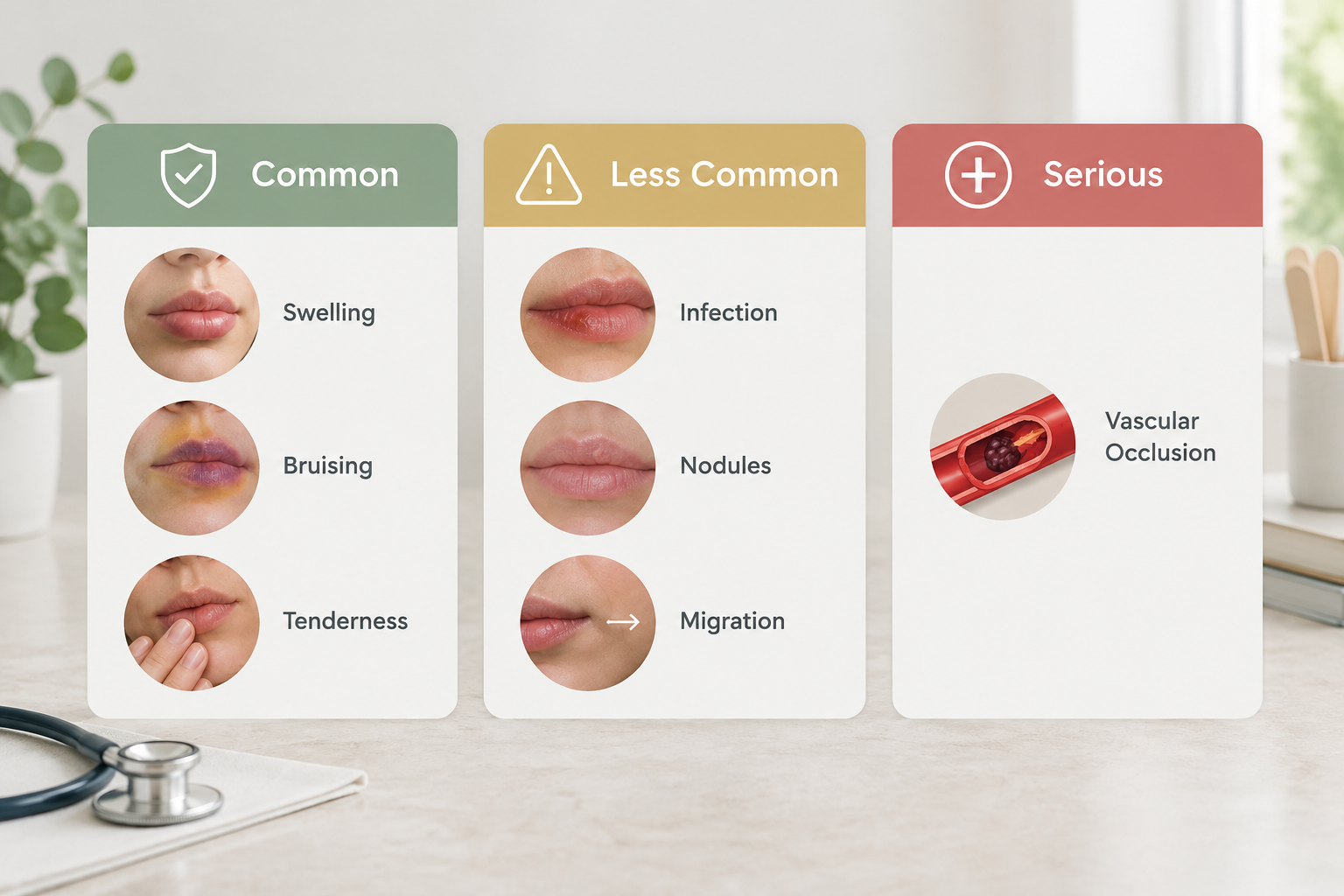
Less common but more significant risks include infection, nodule formation, filler migration, and allergic reaction. The most serious complication associated with lip filler is vascular occlusion, in which injected filler enters or compresses a blood vessel, restricting blood flow to surrounding tissue. If not recognised and treated promptly, this can lead to tissue necrosis. Vascular occlusion is rare but is a known risk of all injectable filler treatments in the lip area, and it underscores the importance of choosing a practitioner with appropriate medical training and access to hyaluronidase for emergency use.
Downtime after lip filler is generally minimal. Most patients can return to normal activities the same day, though swelling may be noticeable for several days. Strenuous exercise, alcohol, and significant heat exposure are typically advised against for the first 24 to 48 hours. Visible bruising, if it occurs, may take up to two weeks to fully resolve.
How Long Does Lip Filler Last?
Hyaluronic acid lip filler is a temporary treatment. Results typically last between six and eighteen months, though this varies considerably between individuals. Factors that influence longevity include the specific product used, the volume injected, the patient’s metabolism, lifestyle factors such as smoking and sun exposure, and how the lips move during everyday activities such as eating and speaking.

The lips are a high-movement area, which means filler tends to break down more quickly there than in areas with less movement, such as the cheeks. Patients who metabolise hyaluronic acid quickly may find their results fade toward the lower end of the expected range. Repeat treatments are required to maintain results, and the cumulative cost of maintenance sessions should be factored into any assessment of overall value.
Some patients find that after several rounds of treatment, results appear to last slightly longer, possibly because repeated treatments may have a cumulative effect on the tissue. However, this is not guaranteed and should not be assumed.
Who May Be Suitable for Lip Filler?
Lip filler may be suitable for adults who want to enhance lip volume, improve symmetry, define the lip border, or address volume loss associated with ageing. Suitability depends on a clinical assessment that takes into account medical history, current medications, and individual anatomy.
Lip filler is generally not recommended during pregnancy or breastfeeding. Patients with active infections, cold sores, or inflammatory skin conditions in or around the treatment area should wait until these have resolved. Certain blood-thinning medications and supplements may increase the risk of bruising and may need to be paused before treatment, subject to medical advice. Patients with a history of severe allergic reactions, autoimmune conditions, or certain connective tissue disorders should discuss their history carefully with a qualified practitioner before proceeding.
Realistic expectations are also an important part of suitability. Lip filler can enhance and refine the lips, but results depend on the patient’s existing anatomy, the skill of the practitioner, and the product used. A thorough consultation should include an honest discussion of what is and is not achievable.
Alternatives to Lip Filler
Lip filler is not the only option for patients interested in improving the appearance of their lips. The most appropriate alternative depends on the specific concern being addressed.
For patients primarily concerned with lip lines and perioral wrinkles rather than volume, small amounts of botulinum toxin injected around the lip border — sometimes called a lip flip — may soften vertical lines and create a subtle upward curl of the upper lip without adding significant volume. This is a different treatment with a different mechanism and outcome, and it is not a direct substitute for filler in patients seeking volume enhancement.
Lip blushing, a form of cosmetic tattooing, can improve the appearance of lip colour and definition but does not add volume. It is a semi-permanent procedure with its own set of considerations and risks. Surgical lip augmentation procedures exist but are less commonly performed and carry greater risks and recovery time than injectable treatments.
For patients whose primary concern is fine lines around the mouth, skin quality treatments such as resurfacing, chemical peels, or laser treatments may be more appropriate than filler. A qualified practitioner can help identify which approach best matches the underlying concern.
Questions to Ask Before Booking Lip Filler
- What are your qualifications, and are you registered with a relevant medical or regulatory body?
- Which filler product will be used, and why is it appropriate for my goals?
- How much product is included in the quoted price, and what happens if I need more?
- Is a consultation, follow-up appointment, and aftercare included in the price?
- Do you have hyaluronidase available on-site in case of a complication?
- What are the realistic results I can expect given my anatomy?
- What are the risks specific to my situation, and how would you manage a complication?
- How long should results last, and what will maintenance involve?
Frequently Asked Questions
Is cheaper lip filler safe?
Price alone does not determine safety, but very low prices can sometimes reflect reduced practitioner qualifications, less clinical experience, or lower-quality products. The most important factors for safety are the practitioner’s medical training, their knowledge of facial anatomy, and their access to emergency treatment such as hyaluronidase. Prioritising these factors over cost is advisable.
Can I pay for lip filler in instalments?
Some clinics offer payment plans or financing options for aesthetic treatments. If this is important to you, ask the clinic directly. Be aware that financing arrangements may carry interest, and the total cost over time should be factored into your decision.
Why does lip filler cost more in some cities?
Clinic operating costs — including rent, staffing, and overheads — are higher in major cities and prime commercial locations. These costs are reflected in treatment prices. A higher price in a city-centre clinic does not automatically mean better results, but it does not necessarily mean worse value either. Comparing what is included in the price is more useful than comparing headline figures alone.
How often will I need to repeat lip filler treatment?
Most patients find that hyaluronic acid lip filler lasts between six and eighteen months before a top-up is needed to maintain results. Individual variation is significant. Budgeting for one to two treatments per year is a reasonable starting point, though your practitioner can give a more personalised estimate based on the product used and your response to treatment.
Does lip filler hurt?
Most lip filler treatments use a topical anaesthetic cream applied before the procedure to reduce discomfort. Many filler products also contain lidocaine, a local anaesthetic, within the formulation itself. Some discomfort, pressure, or stinging during injection is common, but most patients find the procedure tolerable. Sensitivity varies between individuals.
Can lip filler be dissolved if I don’t like the result?
Yes. Hyaluronic acid lip filler can be dissolved using an enzyme called hyaluronidase, which breaks down the filler. Dissolution is generally effective but is itself a medical procedure with its own small risks, including allergic reaction. It is one of the key advantages of hyaluronic acid over non-reversible filler products.
Is there a minimum age for lip filler?
In the United Kingdom, regulations introduced in 2021 prohibit the administration of botulinum toxin and dermal fillers to anyone under the age of 18 for cosmetic purposes, regardless of parental consent. Age restrictions and regulatory requirements vary in other countries. Always check the current legal framework in your region.
Making an Informed Decision About Lip Filler Cost
Understanding how much lip filler costs means looking beyond the headline price. The total value of a treatment includes the qualifications and experience of the practitioner, the quality and suitability of the product used, the clinical setting, and what is included in terms of consultation, aftercare, and follow-up. A treatment that appears inexpensive but lacks these elements may carry greater risk and ultimately cost more if corrective treatment is needed.
Lip filler can produce meaningful aesthetic improvements when performed by a qualified practitioner using an appropriate product for the patient’s anatomy and goals. Results are temporary, maintenance is required, and risks — while manageable in experienced hands — are real. Taking time to research practitioners, ask the right questions, and attend a thorough consultation before committing to treatment is the most reliable way to make a decision that is both financially and clinically sound.