

Laser hair removal is one of the most popular long-term hair reduction treatments available, but the question of exactly how long results last is more nuanced than many clinics suggest. Most people achieve a significant and lasting reduction in hair growth after a full course of sessions, yet the outcome depends on several biological and technical factors that vary from person to person. This article explains what the evidence says about laser hair removal longevity, what influences how long results last, and what you can realistically expect before, during, and after treatment.
Key Takeaways
- Laser hair removal produces long-term hair reduction rather than guaranteed permanent removal for every patient, and results vary depending on hair colour, skin tone, treatment area, and hormonal factors.
- Most patients require between four and eight sessions to achieve a meaningful reduction, with maintenance sessions sometimes needed to address regrowth over time.
- Hair that does regrow after a full course is often finer and lighter than before, meaning even partial regrowth is usually less noticeable than the original hair.
- Hormonal changes — including those related to pregnancy, menopause, or conditions such as polycystic ovary syndrome — can stimulate new hair growth in previously treated areas.
- Choosing a qualified practitioner and an appropriate laser technology for your skin type significantly affects both safety and the durability of results.
What Laser Hair Removal Actually Does
Laser hair removal works through a process called selective photothermolysis. A concentrated beam of light is directed at the skin, where it is absorbed by melanin — the pigment found in hair follicles. The absorbed light energy converts to heat, which damages the follicle and impairs its ability to produce new hair. The key word here is damage rather than destruction: not every treated follicle is permanently disabled, which is why multiple sessions are required and why some regrowth can occur over time.
The treatment is most effective during the anagen phase of the hair growth cycle, when the follicle is actively producing hair and the connection between the shaft and the follicle is strongest. Because hair follicles cycle through anagen, catagen, and telogen phases independently of one another, only a proportion of follicles in any given area are in the ideal treatment phase at any one session. This is the primary reason a course of multiple treatments, spaced several weeks apart, is necessary to target the majority of follicles in a given area.
How Long Do Results Typically Last?
For most patients who complete a full course of laser hair removal sessions, results can last for several years. Many people experience a reduction in hair density and thickness that remains stable for two to six years or longer, though this varies considerably between individuals. Some patients report minimal regrowth for a decade or more, while others notice a gradual return of some hair within one to three years, particularly in hormonally sensitive areas.
It is important to understand that regulatory bodies and professional dermatology organisations generally classify laser hair removal as a method of long-term hair reduction rather than permanent hair removal. The distinction matters: while the treatment can produce lasting results, it does not guarantee that every follicle is permanently disabled. The US Food and Drug Administration (FDA), for example, permits the term “permanent hair reduction” to describe a long-term, stable reduction in the number of hairs that regrow after treatment — not the complete and irreversible elimination of all hair.
In practical terms, this means that after completing a recommended course, most patients will have noticeably less hair in the treated area, and what does regrow is typically finer and lighter. Periodic maintenance sessions — often once every twelve to twenty-four months — can help sustain results over the long term.
Factors That Influence How Long Laser Hair Removal Lasts
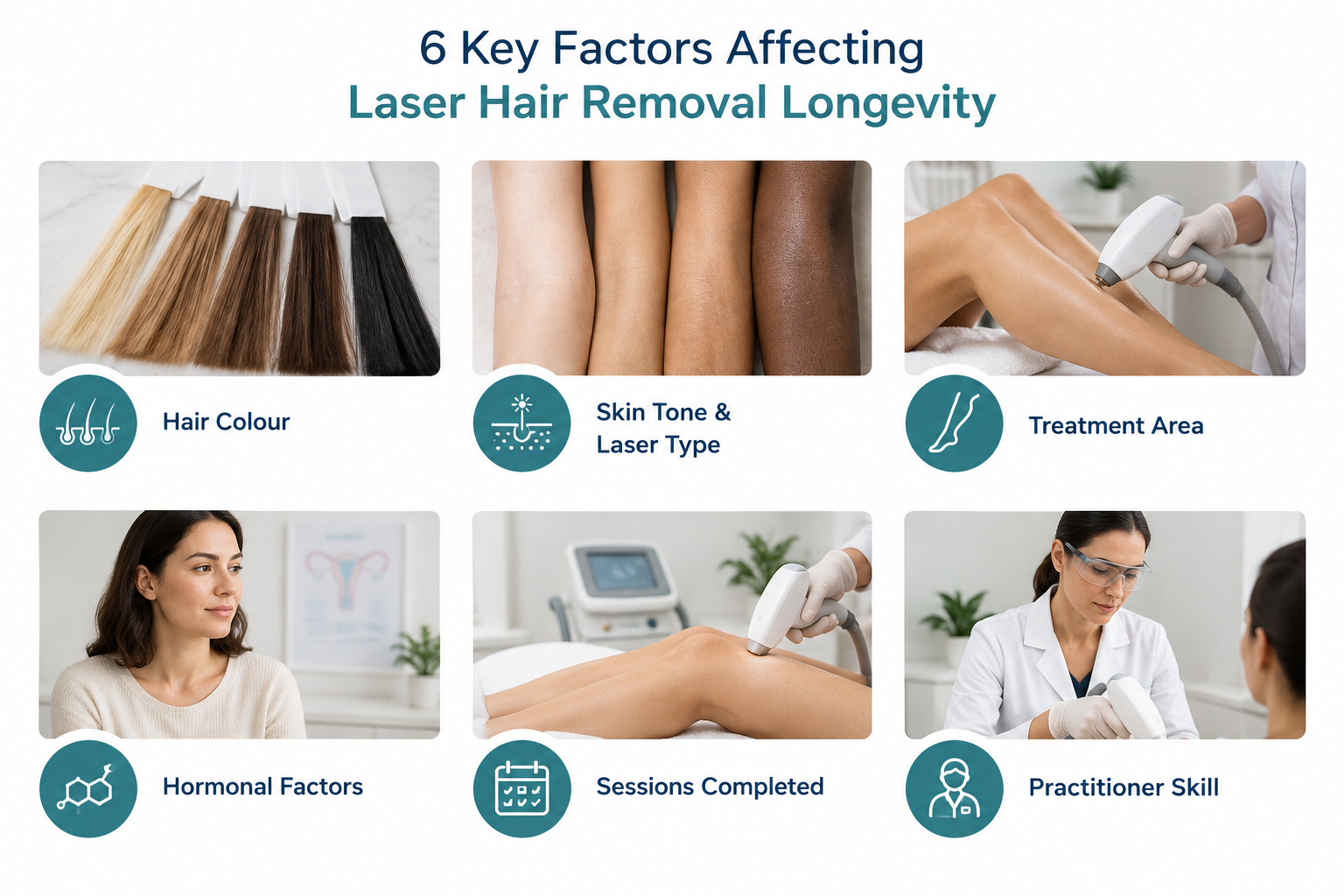
Several variables affect both the effectiveness of each session and the durability of results over time. Understanding these factors helps set realistic expectations before beginning treatment.
Hair Colour and Melanin Content
Laser hair removal relies on the contrast between the pigment in the hair follicle and the surrounding skin. Dark, coarse hair absorbs laser energy most efficiently, making it the most responsive to treatment. Blonde, red, grey, and white hairs contain little or no eumelanin — the dark pigment that absorbs laser energy — and are therefore significantly harder to treat effectively with most conventional laser systems. Patients with light-coloured hair may see less complete reduction and may experience faster regrowth compared to those with dark hair.
Skin Tone and Laser Technology
Different laser wavelengths are suited to different skin tones. Alexandrite lasers (755 nm) and diode lasers (800–810 nm) are commonly used for lighter skin tones, while Nd:YAG lasers (1064 nm) are generally considered safer and more appropriate for medium to darker skin tones because the longer wavelength penetrates deeper and is less readily absorbed by surface melanin. Using an inappropriate laser for a patient’s skin type can reduce effectiveness and increase the risk of side effects such as pigmentation changes. Advances in technology, including newer diode systems with longer pulse durations and integrated cooling, have expanded the range of skin tones that can be treated safely.
Treatment Area
The body area being treated has a meaningful effect on how long results last. Areas with a higher density of androgen-sensitive follicles — such as the face, neck, chin, and bikini line — tend to be more prone to regrowth over time, particularly in patients with hormonal influences on hair growth. Areas such as the legs, underarms, and back generally respond well and tend to maintain results for longer periods. Facial hair in women, in particular, often requires more maintenance sessions than body hair because facial follicles can be stimulated by hormonal fluctuations throughout life.
Hormonal Factors
Hormones play a significant role in hair growth, and hormonal changes can stimulate previously dormant follicles to become active even after successful laser treatment. Conditions such as polycystic ovary syndrome (PCOS), thyroid disorders, and changes associated with pregnancy, postpartum recovery, or menopause can all trigger new hair growth in treated areas. This does not mean laser hair removal is ineffective for patients with hormonal conditions — it can still produce meaningful reduction — but it does mean that maintenance sessions are more likely to be needed over time. Patients with known hormonal conditions should discuss this with their practitioner before beginning treatment.
Number of Sessions Completed
The completeness of the initial treatment course directly affects how long results last. Patients who complete the full recommended number of sessions are more likely to achieve a thorough reduction across the majority of follicles in the treatment area. Stopping treatment early — for example, after two or three sessions — typically results in partial reduction that is more likely to reverse as untreated follicles continue to cycle through active growth phases.
Practitioner Skill and Equipment Quality
The experience of the treating practitioner and the quality of the laser equipment used both influence outcomes. Appropriate energy settings, correct pulse duration, and adequate skin cooling are all important for achieving effective follicle damage while minimising the risk of adverse effects. Underpowered settings may reduce efficacy and longevity; overpowered settings increase the risk of burns, scarring, and pigmentation changes. Choosing a clinic with medically trained staff and well-maintained, clinically validated equipment is an important factor in achieving durable results.
How Many Sessions Are Needed?
Most patients require between four and eight sessions to achieve a clinically meaningful reduction in hair growth, though some individuals — particularly those with hormonal hair growth or lighter hair — may need more. Sessions are typically spaced four to eight weeks apart for body areas and four to six weeks apart for facial areas, to align with the hair growth cycle and ensure that follicles are targeted during the anagen phase.
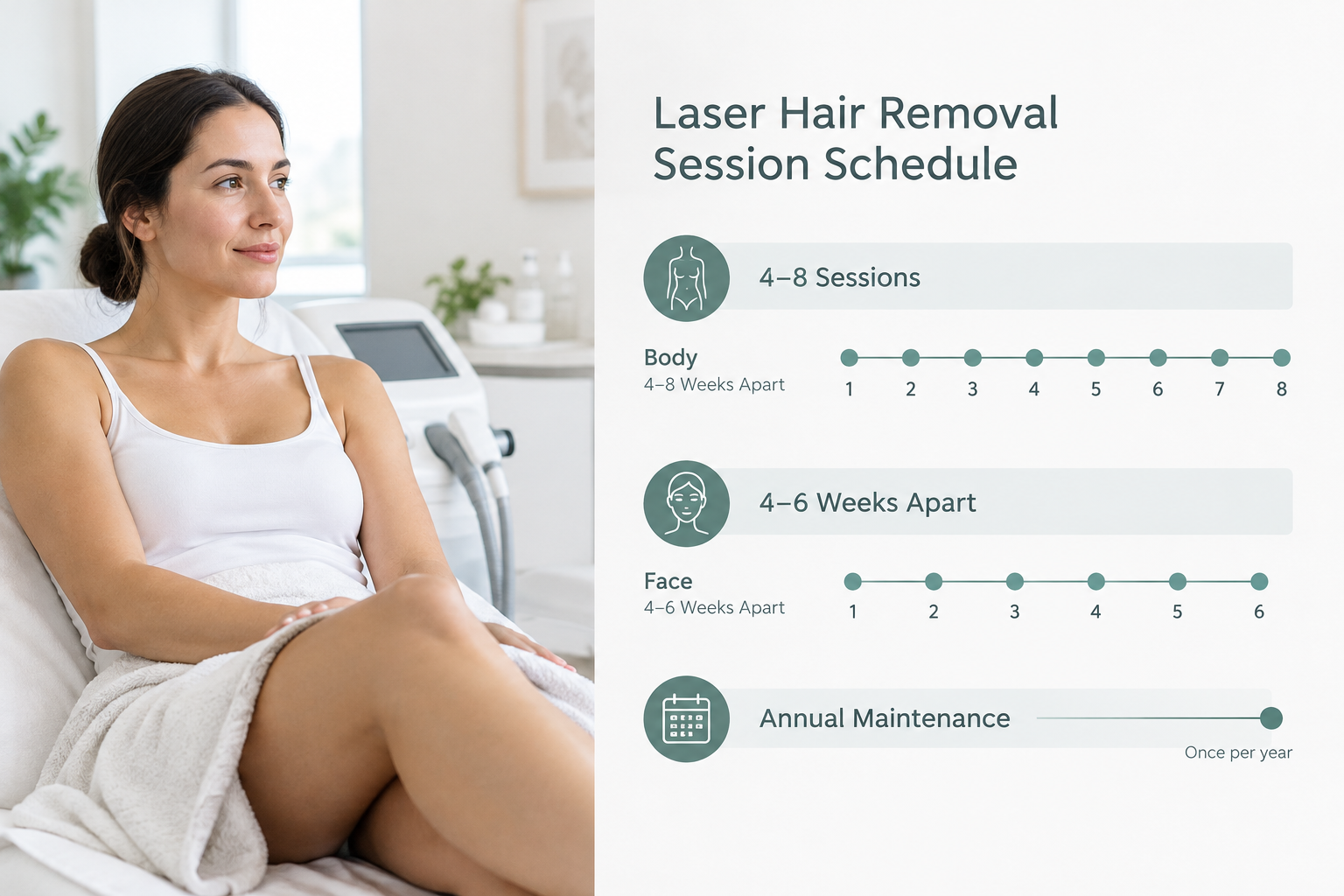
After completing the initial course, many patients choose to have one or two maintenance sessions per year to address any regrowth. The need for maintenance varies: some patients go many years without requiring additional treatment, while others — particularly those with hormonally driven hair growth — may benefit from more regular top-up sessions. A qualified practitioner can assess your individual response after each session and advise on the appropriate interval and total number of treatments for your specific situation.
What the Treatment Experience Involves
Before beginning laser hair removal, a consultation and patch test are typically recommended. The consultation allows the practitioner to assess your skin type, hair colour, medical history, and any medications that might affect treatment safety or efficacy. Certain medications — including some antibiotics, retinoids, and photosensitising drugs — may need to be paused before treatment. Patients who are pregnant or breastfeeding are generally advised to postpone laser hair removal until after this period.
During each session, the treatment area is cleaned and a cooling gel or integrated cooling device is applied to protect the skin surface. The laser handpiece is moved across the skin, delivering pulses of light energy. Most patients describe the sensation as a snapping or stinging feeling, similar to a rubber band flicking against the skin. The level of discomfort varies depending on the treatment area, the laser system used, and individual pain tolerance. Topical anaesthetic cream can be applied beforehand for more sensitive areas.
Sessions typically last between fifteen minutes and one hour depending on the size of the area being treated. Immediately after treatment, the skin may appear red and feel warm, similar to mild sunburn. This usually settles within a few hours to a day. Sun exposure should be avoided before and after sessions, and a broad-spectrum sunscreen should be applied consistently to treated areas throughout the course of treatment.
Risks and Side Effects
Laser hair removal is generally considered a well-tolerated procedure when performed by a qualified practitioner using appropriate equipment for the patient’s skin type. However, it is not without risk, and patients should be aware of the following potential side effects before proceeding.
- Temporary redness and swelling: The most common immediate side effects, typically resolving within hours.
- Skin irritation and sensitivity: The treated area may feel tender or sensitive for one to two days after each session.
- Pigmentation changes: Hyperpigmentation (darkening) or hypopigmentation (lightening) of the skin can occur, particularly in patients with darker skin tones or those who have had recent sun exposure. These changes are often temporary but can occasionally be longer-lasting.
- Blistering and burns: Rare when appropriate settings are used, but possible if the laser energy is too high for the patient’s skin type or if the skin is tanned at the time of treatment.
- Paradoxical hypertrichosis: An uncommon but recognised phenomenon in which laser treatment stimulates rather than reduces hair growth, most often reported in patients with darker skin tones or when low-fluence settings are used on fine, light hair.
- Scarring: Rare, but a possible complication of burns or inappropriate treatment.
- Eye injury: Appropriate protective eyewear must be worn by both the patient and the practitioner during treatment to prevent laser-related eye damage.
Patients with a history of keloid scarring, active skin infections, or certain skin conditions in the treatment area should discuss these factors with their practitioner before proceeding. A thorough pre-treatment assessment helps identify any contraindications and ensures the treatment plan is appropriate for the individual.
Who May Be Suitable for Laser Hair Removal
Laser hair removal may be suitable for adults who want a long-term reduction in unwanted hair and who have realistic expectations about the likely outcome. Patients with dark hair and lighter skin tones have historically achieved the most consistent results, though advances in laser technology — particularly Nd:YAG systems — have made the treatment more accessible to a wider range of skin tones.
Patients who may be less suitable, or who require careful assessment before treatment, include those with:
- Very light, blonde, red, grey, or white hair, where laser energy absorption is limited;
- Active tans or recent sun exposure in the treatment area;
- Certain photosensitising medications or medical conditions;
- A history of keloid scarring;
- Active skin infections, open wounds, or inflammatory skin conditions in the treatment area;
- Pregnancy or breastfeeding;
- Implanted electronic devices near the treatment area, depending on the laser system used.
A clinical assessment by a qualified practitioner is essential to determine individual suitability and to select the most appropriate laser system and settings.
Alternatives to Laser Hair Removal
For patients who are not suitable candidates for laser hair removal, or who are considering their options, several alternatives exist with different longevity profiles.
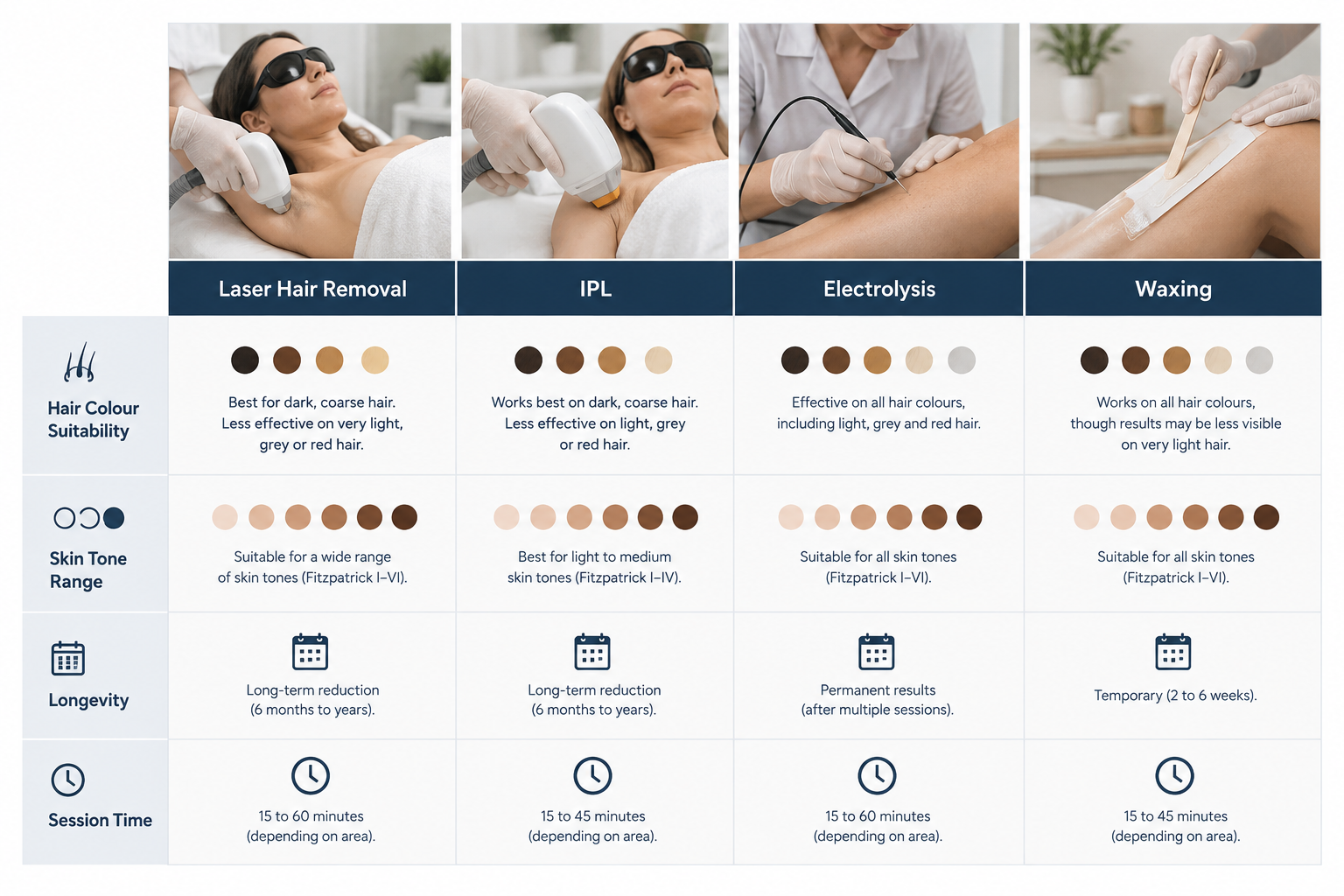
Intense Pulsed Light (IPL): IPL uses broad-spectrum light rather than a single laser wavelength to target hair follicles. It can be effective for hair reduction in patients with suitable hair and skin combinations, but is generally considered less precise than laser treatment and may require more sessions. IPL is not recommended for darker skin tones due to a higher risk of pigmentation side effects.
Electrolysis: Electrolysis is the only hair removal method currently recognised by the FDA as achieving permanent hair removal. It works by inserting a fine probe into each individual follicle and delivering an electrical current to destroy it. Electrolysis is effective for all hair colours and skin tones, including grey and white hair that laser cannot target, but it is time-consuming and better suited to smaller areas. It may also cause temporary redness and, rarely, scarring.
Waxing and threading: These methods remove hair at the root and can keep skin smooth for two to six weeks, but they do not damage the follicle and hair regrows fully. They are useful for maintenance between laser sessions but do not offer long-term reduction.
Shaving and depilatory creams: These are temporary methods that remove hair at or near the skin surface. They require frequent repetition and do not affect the follicle.
The right choice depends on the patient’s hair colour, skin tone, treatment area, budget, and tolerance for treatment time. A consultation with a qualified practitioner can help clarify which approach is most appropriate for individual circumstances.
Frequently Asked Questions
Is laser hair removal permanent?
Laser hair removal is classified as a method of long-term hair reduction rather than permanent removal. Most patients achieve a significant and lasting reduction in hair density and thickness, but some regrowth can occur over time, particularly in hormonally sensitive areas. Periodic maintenance sessions can help sustain results.
Can laser hair removal work on all skin tones?
Modern laser systems, particularly Nd:YAG lasers, can be used safely on a wider range of skin tones than older technologies. However, the risk of pigmentation side effects is higher in patients with darker skin if an inappropriate laser or setting is used. A thorough consultation and patch test are important for all patients, and especially for those with medium to dark skin tones.
Why is hair still growing after my laser sessions?
Hair growth after laser sessions can occur for several reasons: not all follicles are in the active growth phase during each session, some follicles may not have been fully disabled, or hormonal factors may be stimulating new growth. This is why multiple sessions are required and why maintenance treatments are sometimes recommended.
Does laser hair removal hurt?
Most patients describe the sensation as a snapping or stinging feeling during each pulse. Discomfort varies depending on the treatment area, the laser system, and individual sensitivity. Topical anaesthetic cream can be applied before treatment to reduce discomfort in more sensitive areas. Modern systems with integrated cooling mechanisms have improved comfort compared to older devices.
How soon will I see results?
Some reduction in hair density may be noticeable after the first or second session, but meaningful results typically become apparent after three to four sessions. The full benefit of a treatment course is usually visible several weeks after the final session, once treated hairs have shed and the skin has settled.
Can I have laser hair removal if I have PCOS?
Laser hair removal can be effective for patients with polycystic ovary syndrome, but hormonal influences on hair growth mean that regrowth is more likely over time. Patients with PCOS may need more sessions initially and are more likely to benefit from regular maintenance treatments. Managing the underlying hormonal condition alongside laser treatment may help improve and sustain results.
What should I avoid before and after laser hair removal?
Before treatment, patients are generally advised to avoid sun exposure, tanning, waxing, and plucking in the treatment area. After treatment, sun exposure should be avoided and broad-spectrum sunscreen applied consistently. Shaving between sessions is usually permitted, as it does not affect the follicle, but waxing and plucking should be avoided as they remove the hair root that the laser needs to target.
Planning Laser Hair Removal: What to Consider Before You Book
Laser hair removal can offer a meaningful and lasting reduction in unwanted hair for suitable candidates, but realistic expectations are essential. The treatment works best for patients with dark hair and is most durable in areas that are not heavily influenced by ongoing hormonal changes. Completing a full course of sessions, following pre- and post-treatment care instructions, and attending maintenance appointments when needed all contribute to longer-lasting results.
Before booking, it is worth asking a prospective clinic about the specific laser technology they use, whether it is appropriate for your skin tone and hair colour, the qualifications of the treating practitioner, and what a realistic outcome looks like for your individual situation. A reputable clinic will offer a thorough consultation, perform a patch test, and provide honest guidance about the number of sessions likely needed and the expected longevity of results for your specific case.
If you are considering laser hair removal, a consultation with a qualified medical or aesthetic practitioner is the appropriate starting point. They can assess your suitability, recommend the most appropriate laser system, and help you understand what results are realistic for your hair type, skin tone, and treatment area — giving you the information you need to make a well-informed decision.