

Key Takeaways
- Cryolipolysis uses controlled cooling to crystallise and permanently destroy submental fat cells without surgery or needles.
- Most patients see meaningful results within one to three months, with up to 20–25% fat reduction per treatment session.
- The CoolMini applicator is specifically designed for the smaller contours of the chin and neck area.
- Good candidates have pinchable submental fat, reasonable skin elasticity, and are close to their target body weight.
- Alternatives including Kybella (deoxycholic acid) injections, HIFU, and neck liposuction suit different goals and budgets — a qualified practitioner can help identify the most appropriate option.
What Causes a Double Chin?
A double chin — medically referred to as submental fullness — develops when a layer of fat accumulates beneath the chin and along the upper neck. Genetics play a significant role: some people store fat preferentially in the submental area regardless of their overall body weight. Ageing compounds the problem, as collagen loss and reduced skin elasticity allow the skin to sag, making even modest fat deposits more visible. Weight gain increases the volume of subcutaneous adipose tissue throughout the body, including under the chin, while hormonal shifts and gradual muscle weakening with age can further alter the appearance of the jawline and neck.
What makes submental fat particularly frustrating is that it tends to be resistant to diet and exercise. The number of fat cells in any given area is largely fixed from adolescence; caloric restriction can shrink those cells but rarely eliminates them entirely. This is why many people who are otherwise lean still carry noticeable fullness beneath the chin — and why targeted body contouring treatments have become a popular option for this area.
What Is Fat Freezing and How Does It Work?
Cryolipolysis is a non-invasive fat reduction technique based on the principle that fat cells are more vulnerable to cold temperatures than the surrounding skin, nerves, and blood vessels. When subcutaneous fat tissue is exposed to precisely controlled cooling, fat cells begin to crystallise at a temperature that leaves overlying skin and other structures unharmed. This selective vulnerability is the scientific foundation of the technology.
Once fat cells crystallise, they undergo a process called apoptosis — a form of programmed cell death. Over the following weeks, the body’s lymphatic system gradually clears the damaged cells from the treatment area. Because these cells are permanently destroyed rather than simply shrunk, the reduction in fat volume in that area is long-lasting. It is important to understand, however, that cryolipolysis is a body contouring tool rather than a weight-loss treatment; the total number of fat cells eliminated represents a localised reduction, not a significant change in overall body weight.
The CoolSculpting system — the most widely recognised FDA-cleared cryolipolysis platform — uses a dedicated CoolMini applicator designed specifically for smaller, curved treatment areas such as the chin and upper neck. The updated CoolSculpting Elite device features redesigned applicators intended to improve contact and coverage compared to the original system, though both generations operate on the same cryolipolysis principle.
The Treatment Experience: What Happens During a Session
A chin fat-freezing appointment typically begins with a consultation to assess the amount and distribution of submental fat, skin quality, and overall suitability. If the practitioner confirms you are a good candidate, the treatment itself follows a straightforward sequence.
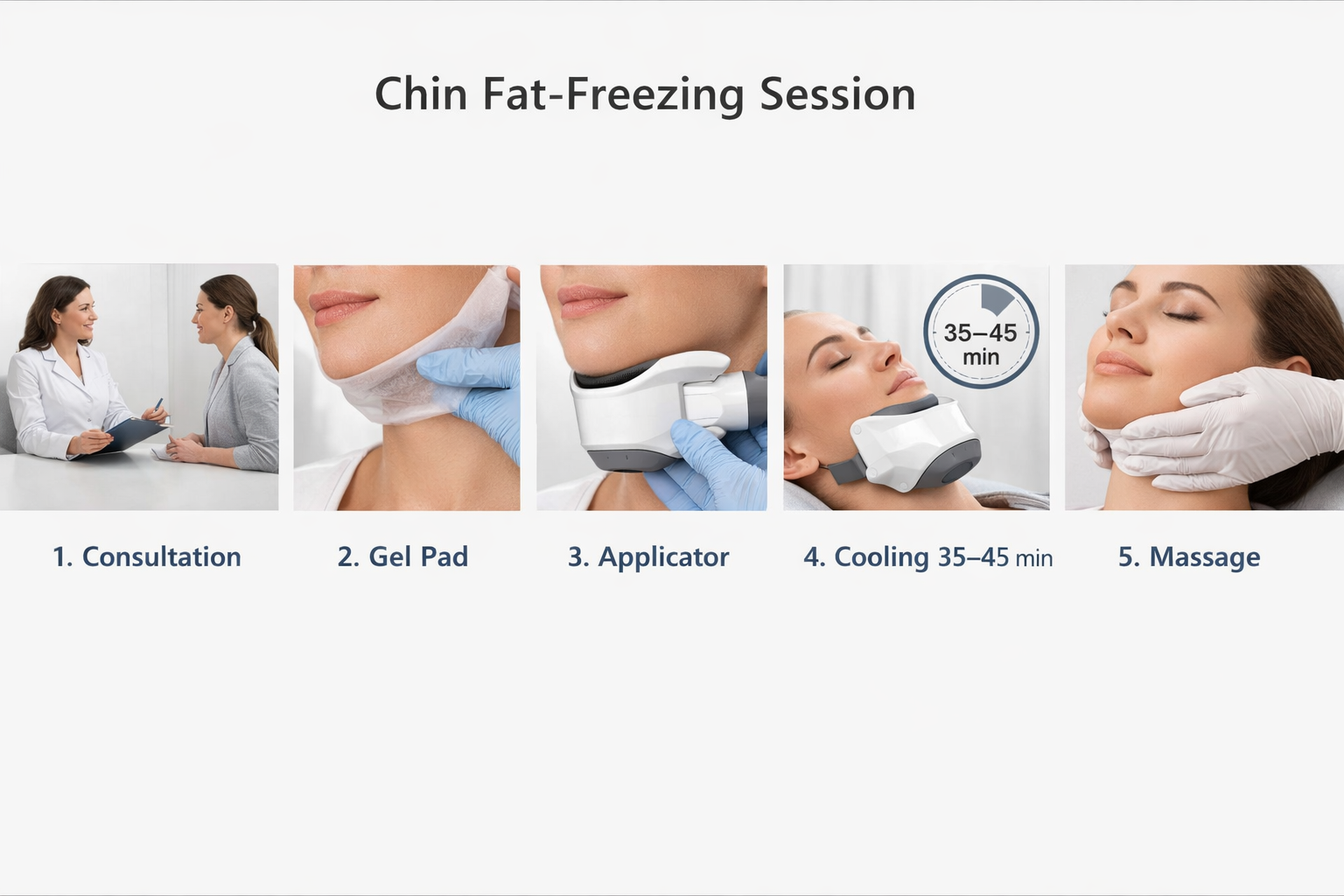
- Skin preparation: The chin and neck area is cleaned and assessed for the correct applicator positioning.
- Gel pad application: A protective gel pad is placed against the skin to shield it from direct contact with the cooling panels and to help maintain even temperature distribution.
- Applicator placement: The CoolMini applicator is positioned beneath the chin. Vacuum suction draws the tissue into the applicator cup, which may feel like a firm pulling or tugging sensation.
- Controlled cooling phase: The device delivers precisely regulated cooling to the submental fat for approximately 35 to 45 minutes. Most patients experience intense cold and some numbness during this phase, which typically becomes more comfortable as the area numbs.
- Post-treatment massage: At the end of the cooling cycle, the applicator is removed and the practitioner performs a brief manual massage of the treated area — usually around two minutes. This step can be temporarily uncomfortable but is considered important for optimising the fat-flushing process.
No anaesthesia, incisions, or injections are required. Most patients can return to their normal activities immediately after the appointment, making this a genuinely zero downtime procedure for the majority of people.
Who Is a Good Candidate?
Cryolipolysis works best for a specific profile of patient. Understanding candidacy honestly is important, because the treatment is not universally appropriate and results depend heavily on patient selection.
Characteristics of a Suitable Candidate
- Visible submental fullness that can be physically pinched — at least approximately one inch of pinchable fat is generally considered necessary for the applicator to work effectively.
- Body weight reasonably close to a healthy range; a BMI below 30 is commonly cited as a general guideline, though individual anatomy matters more than BMI alone.
- Good to moderate skin elasticity — the skin needs sufficient tone to contract smoothly as the fat layer reduces.
- Realistic expectations about the degree of improvement achievable with a non-surgical approach.
- Stable weight, since significant weight fluctuations after treatment can affect the longevity of results.
Who May Not Be Suitable
Certain medical conditions are contraindications to cryolipolysis. These include cryoglobulinaemia, cold agglutinin disease, paroxysmal cold haemoglobulinuria, and Raynaud’s disease — all conditions in which cold exposure can trigger serious physiological responses. Pregnancy and breastfeeding are also contraindications. People with significant skin laxity — where loose or sagging skin is the primary concern rather than excess fat — are unlikely to achieve satisfying results from fat freezing alone, and may be better served by skin-tightening treatments or surgical options. Very large fat deposits may also be more effectively addressed through neck liposuction. A thorough clinical assessment is essential before proceeding.
Results: What to Realistically Expect
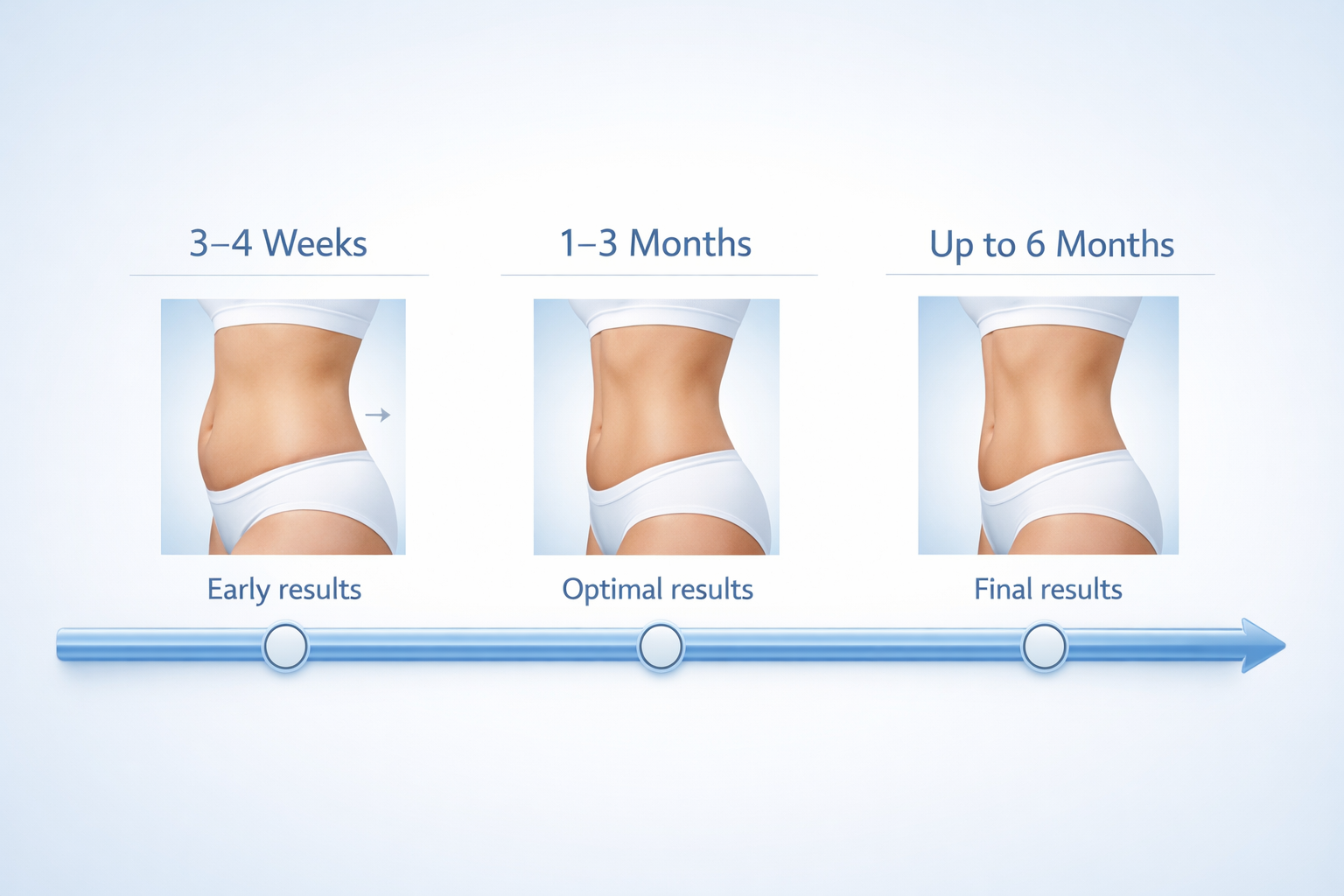
Cryolipolysis results develop gradually as the lymphatic system clears destroyed fat cells from the body. Understanding the typical timeline helps set realistic expectations.
| Timeframe | What You May Notice |
|---|---|
| 3–4 weeks post-treatment | Early visible reduction in submental fullness may begin to appear |
| 1–3 months post-treatment | Optimal results typically become apparent as the fat-flushing process progresses |
| Up to 6 months post-treatment | The body continues clearing treated fat cells; final results consolidate |
Clinical data associated with cryolipolysis suggests an average fat reduction of approximately 20–25% per treatment session in the targeted area. Most patients require one to two sessions beneath the chin to achieve their desired outcome, though this varies depending on the volume of submental fat present and individual response to treatment.
Because the destroyed fat cells are permanently eliminated, results in the treated area are long-lasting — provided body weight remains stable. Fat cells that have been destroyed do not regenerate. However, if a patient gains significant weight after treatment, remaining fat cells in the area (and elsewhere) can enlarge, which may partially diminish the improvement. Maintaining a stable weight is therefore an important part of preserving results over time.
Side Effects and Risks
Cryolipolysis has a well-established safety profile for appropriate candidates, but side effects do occur and patients should be informed about them before proceeding.
Common and Expected Side Effects
Temporary redness, swelling, bruising, numbness, tingling, and tenderness in the treated area are common in the days following a chin fat-freezing session. These effects are generally mild and resolve within a few days to a few weeks without intervention. The post-treatment massage phase can cause brief discomfort, and some patients experience a sensation of stiffness or sensitivity in the submental area for a short period.
Rare but Serious Risk: Paradoxical Adipose Hyperplasia
A rare complication called paradoxical adipose hyperplasia (PAH) has been documented with cryolipolysis. In PAH, the treated fat tissue paradoxically enlarges rather than reducing — the opposite of the intended effect. The exact mechanism is not fully understood, and the condition appears to occur more frequently in male patients, though it can affect anyone. PAH typically becomes apparent two to five months after treatment and requires surgical intervention to correct. While the incidence is considered low, patients should be made aware of this risk during their consultation. Choosing an experienced, qualified practitioner and using an appropriate applicator for the treatment area are important factors in minimising procedural risks.
How Much Does It Cost to Freeze a Double Chin?
The cost of chin cryolipolysis varies considerably depending on geographic location, the clinic’s pricing structure, the practitioner’s level of expertise, the number of applicator cycles used per session, and whether more than one session is recommended. In the US market, published price ranges for a single chin treatment session typically fall between approximately $700 and $2,000, with an average often cited around $1,400. UK and Australian pricing follows different market structures and should be confirmed directly with clinics.
Because cryolipolysis for a double chin is a cosmetic procedure, it is not covered by health insurance. Some clinics offer financing options or package pricing for multiple sessions. It is worth requesting a detailed breakdown of costs during your consultation — including whether the quoted price covers one or two applicator placements, and what follow-up is included — to make a meaningful comparison between providers.
Comparing Your Options: Fat Freezing vs. Alternatives
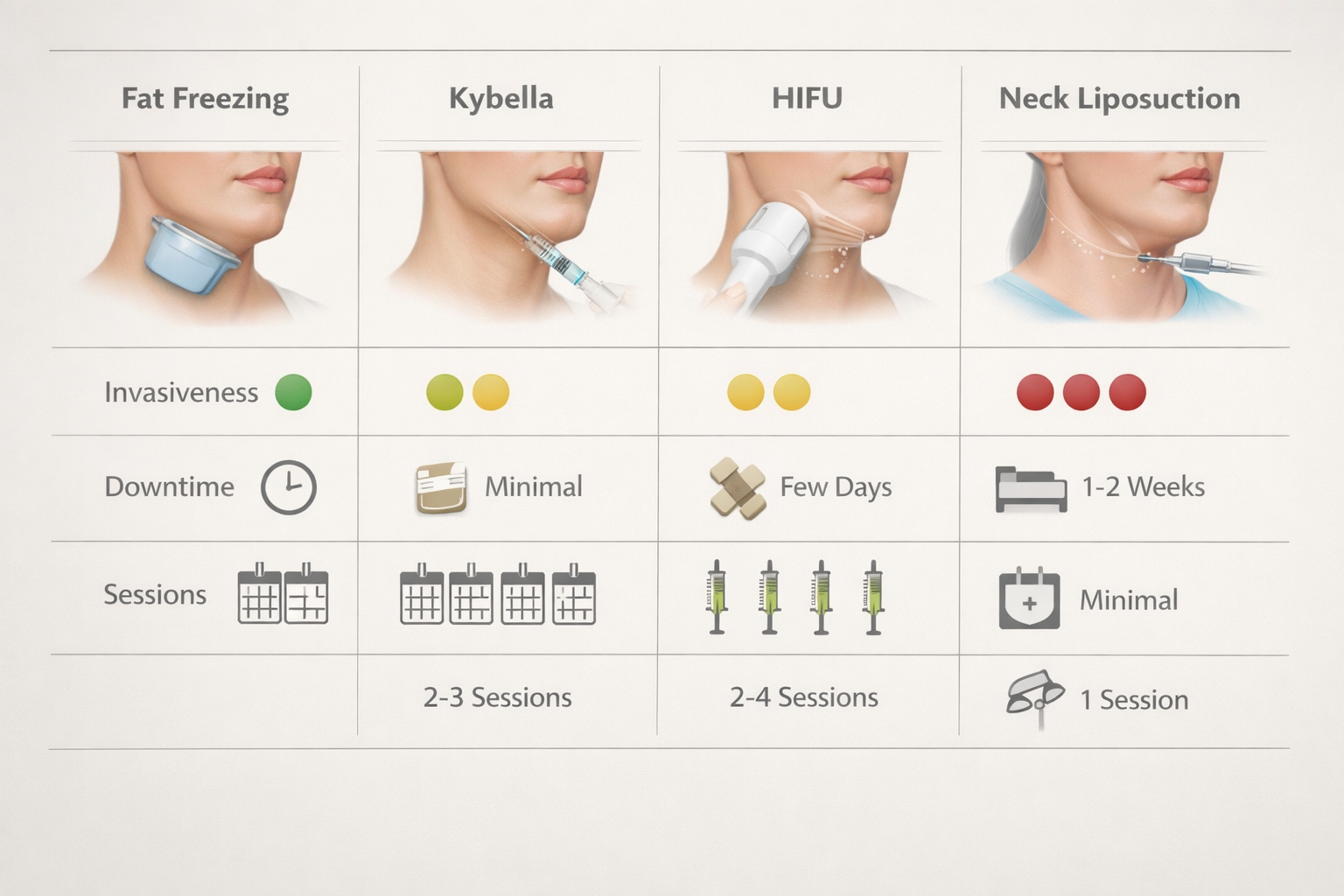
Several other treatments can address submental fat and jawline definition. Understanding how they compare helps clarify which approach may be most appropriate for a given patient’s goals, anatomy, and tolerance for downtime or invasiveness.
| Treatment | Type | Mechanism | Sessions Typically Needed | Downtime | Approximate Cost (per session) | Best Suited For |
|---|---|---|---|---|---|---|
| Cryolipolysis (fat freezing) | Non-invasive | Controlled cooling destroys fat cells | 1–2 | Minimal to none | $700–$2,000 | Pinchable submental fat, good skin elasticity |
| Kybella (deoxycholic acid) | Injectable | Destroys fat cell membranes via injection | 2–6 | Moderate (swelling, bruising for days–weeks) | $600–$1,800 | Small to moderate submental fat deposits |
| HIFU (e.g. Ultherapy) | Non-invasive | Ultrasound energy tightens skin and tissue | 1–2 | Minimal | $800–$2,500 | Skin laxity, mild lifting, complement to fat reduction |
| Radiofrequency skin tightening | Non-invasive | Heat energy stimulates collagen remodelling | Multiple | Minimal | $300–$1,500 | Mild skin laxity, maintenance, mild fat reduction |
| Neck liposuction | Surgical | Physical removal of fat via cannula | 1 (surgical) | Significant (1–2 weeks) | $2,500–$6,000+ | Larger fat volumes, patients wanting immediate dramatic results |
Fat Freezing vs. Kybella
Kybella (deoxycholic acid) is an injectable treatment that destroys fat cell membranes through a series of small injections into the submental fat. Like cryolipolysis, it produces permanent destruction of treated fat cells. The key differences lie in the treatment experience and timeline: Kybella typically requires more sessions — often two to six — and causes more pronounced swelling and bruising after each appointment, which can last one to two weeks. Some patients find the injection process more uncomfortable than the pulling sensation of a cryolipolysis applicator. Kybella may be preferred for patients with smaller fat deposits or those who are not suitable for the suction-based applicator, while fat freezing may appeal to those who prefer a single-session approach with minimal downtime.
Fat Freezing vs. Neck Liposuction
Submental liposuction physically removes fat through a small cannula under local or general anaesthesia, producing more immediate and often more dramatic results than any non-invasive approach. It is better suited to patients with larger volumes of submental fat or those who want the most significant possible change in a single procedure. The trade-off is meaningful: surgical risks, a recovery period of one to two weeks, and higher overall cost. For patients who are good candidates for non-invasive treatment and prefer to avoid surgery, cryolipolysis represents a reasonable alternative — though the degree of improvement will generally be more modest.
Combining Treatments for Skin Laxity
Patients who have both submental fat and noticeable skin laxity may benefit from combining fat freezing with a skin-tightening treatment such as HIFU or radiofrequency. Reducing fat volume alone can sometimes make loose skin more apparent, so addressing both concerns together — or sequentially — may produce a more balanced result. A practitioner experienced in facial and neck anatomy can advise on the most appropriate combination and sequencing for individual cases.
Men and Women: Different Goals, Same Treatment
Both men and women seek chin fat-freezing treatments, though their aesthetic goals often differ slightly. Women typically pursue a smoother, more youthful facial profile and a cleaner jawline transition. Men more commonly seek stronger jawline definition and a reduction in the appearance of a heavy or rounded chin. The cryolipolysis procedure itself is the same regardless of gender, but the number of cycles, applicator positioning, and the degree of reduction targeted may be tailored to the individual’s facial structure and goals. Men tend to have denser submental fat tissue, which may influence the number of sessions recommended.
Aftercare and Maintaining Your Results
Cryolipolysis requires no specific medical aftercare, but a few practical steps can support recovery and help maintain results. Staying well hydrated in the days following treatment supports the lymphatic system as it processes and clears destroyed fat cells. Avoiding alcohol and anti-inflammatory medications immediately after treatment may help reduce bruising, though specific aftercare instructions should be confirmed with your treating practitioner.
The most important factor in maintaining long-term results is weight stability. Because cryolipolysis permanently reduces the number of fat cells in the treated area, the improvement is durable — but the remaining fat cells throughout the body, including any that remain in the submental area, can still enlarge with weight gain. Patients who maintain a stable, healthy body weight after treatment are most likely to preserve their results over the long term. Periodic reassessment with a practitioner can help determine whether a maintenance session is appropriate if changes occur over time.
Frequently Asked Questions
Does freezing a double chin hurt?
Most patients describe the initial sensation as intense cold and a firm pulling feeling as the applicator draws tissue into the cup. The area typically becomes numb within a few minutes, making the cooling phase more comfortable. The brief massage performed at the end of the session can be temporarily uncomfortable as sensation returns. Overall, the procedure is generally well tolerated without anaesthesia.
How many sessions will I need?
One to two sessions is the typical recommendation for the submental area, depending on the volume of fat present and the degree of improvement desired. Some patients achieve their goal after a single session; others benefit from a second treatment after allowing three to four months for initial results to fully develop. Your practitioner should provide a personalised recommendation based on your assessment.
Is the fat reduction permanent?
The fat cells destroyed by cryolipolysis do not regenerate, so the reduction in those specific cells is permanent. However, remaining fat cells in the area can enlarge if body weight increases significantly, which may partially reduce the visible improvement. Maintaining a stable weight is the most effective way to preserve results.
Can fat freezing tighten loose skin under the chin?
Cryolipolysis targets fat cells and does not directly tighten skin. Patients with good skin elasticity generally see the skin contract naturally as the fat layer reduces. Those with significant skin laxity may find that fat reduction alone is insufficient and may benefit from a complementary skin-tightening treatment such as HIFU or radiofrequency, or in more pronounced cases, a surgical neck lift.
How soon will I see results?
Early changes may become visible from around three to four weeks after treatment. The most noticeable improvement typically appears between one and three months, as the lymphatic system continues clearing treated fat cells. The fat-flushing process can continue for up to six months after a session.
What is paradoxical adipose hyperplasia and how common is it?
Paradoxical adipose hyperplasia (PAH) is a rare complication in which the treated fat tissue enlarges rather than reducing. It appears to occur more frequently in male patients and typically becomes apparent two to five months after treatment. PAH requires surgical correction. While the incidence is considered low, it is an important risk to discuss with your practitioner before proceeding.
Is Freezing Your Double Chin the Right Approach for You?
Cryolipolysis is a well-established, non-invasive option for reducing stubborn submental fat in patients who meet the appropriate candidacy criteria. For someone with pinchable submental fat, reasonable skin elasticity, and realistic expectations, it offers a meaningful reduction in chin fullness — typically in the range of 20–25% per session — without surgery, needles, or significant recovery time. The results are durable provided weight remains stable, and the procedure is generally well tolerated.
It is not, however, a universal solution. Patients with significant skin laxity, very large fat deposits, or certain medical conditions may be better served by alternative or combined approaches. Kybella suits some patients who prefer an injectable method or have smaller deposits; neck liposuction remains the most effective option for those wanting dramatic, immediate change and who are willing to accept surgical risks and recovery. HIFU and radiofrequency treatments address skin laxity rather than fat volume and may complement rather than replace fat-freezing in some cases.
The most reliable way to determine whether chin cryolipolysis is appropriate for your specific anatomy and goals is a thorough consultation with a qualified, experienced aesthetic practitioner. A good consultation should include an honest assessment of your submental fat volume, skin quality, and the realistic degree of improvement you can expect — along with a clear discussion of alternatives if fat freezing is not the most suitable option for you.