

Key Takeaways
- Fat dissolving injections use compounds such as deoxycholic acid or phosphatidylcholine to disrupt fat cell membranes, allowing the body to clear the released fatty acids through the lymphatic system.
- The treatment targets localised subcutaneous fat in specific areas — it is not a weight-loss solution and is not appropriate for generalised obesity.
- Results typically become visible four to eight weeks after a session, with most people requiring two to six sessions spaced four to six weeks apart.
- Destroyed fat cells do not regenerate, but remaining fat cells in the treated area can still expand with significant weight gain.
- Safety and outcomes depend heavily on the product used, the treatment area, and the qualifications of the practitioner administering the injections.
What Are Fat Dissolving Injections?
Fat dissolving injections — also referred to as injection lipolysis or lipolysis injections — are a category of non-surgical fat reduction treatments that use injectable compounds to break down and permanently destroy fat cells in targeted areas of the body. Unlike weight-loss medications or dietary interventions, these injections act directly on localised fat deposits rather than reducing overall body fat or body weight.
The treatment has been used in various forms for several decades, with formulations evolving considerably over time. Today, several products are available across different markets, each with distinct active ingredients, regulatory approval status, and intended treatment areas. The most widely recognised include Kybella in the United States, Aqualyx across the UK and Europe, and Belkyra in Canada and parts of the EU. Newer products such as Lemon Bottle have gained significant attention in the UK market, though their regulatory standing warrants careful consideration.
Fat dissolving injections are best understood as a body contouring tool — a way to refine and reduce specific stubborn fat pockets that persist despite a stable weight and consistent lifestyle habits, rather than a shortcut to significant weight loss.
How Do Fat Dissolving Injections Work?
The mechanism behind injection lipolysis centres on disrupting the structural integrity of fat cell membranes. The most commonly used active ingredient is deoxycholic acid, a bile acid that occurs naturally in the body and plays a role in the digestion of dietary fat. When injected into subcutaneous fat, deoxycholic acid breaks down the phospholipid bilayer of adipocyte (fat cell) membranes, causing the cells to rupture in a process called cell lysis.
Once the fat cell membranes are disrupted, the fatty acids and cellular debris released are processed through an inflammatory response and subsequently cleared by the body’s lymphatic system over the following weeks. This is why results are gradual rather than immediate — the body needs time to metabolise and eliminate the breakdown products. The inflammatory response also explains why swelling is a predictable and often pronounced side effect in the days following treatment.
Some formulations use phosphatidylcholine (PPC), a phospholipid derived from soy lecithin, either alone or combined with deoxycholate (sodium deoxycholate) in what is commonly called a PCDC blend. Phosphatidylcholine is thought to emulsify fat and may also stimulate fibroblast activity, potentially offering a secondary benefit of mild collagen stimulation and improved skin elasticity in the treated area — though the evidence for this secondary effect is still developing.
Critically, the fat cells destroyed through injection lipolysis do not regenerate. This is what distinguishes the treatment from weight-loss approaches: once adipocytes are eliminated, they are gone permanently. However, the remaining fat cells in the treated area retain the capacity to expand if a person gains significant weight after treatment, which means long-term results are best maintained alongside a stable weight.
Fat Dissolving Injection Brands: What’s Available?
Several products are used for injection lipolysis, and understanding the differences between them is important when evaluating treatment options.
Kybella (deoxycholic acid) is the only FDA-approved injectable treatment for submental fat — the fat beneath the chin that creates the appearance of a double chin. Its approval is specific to this area, and use in other body regions constitutes off-label use. Kybella has the strongest regulatory backing in the US market and a well-established clinical evidence base for submental fat reduction.
Aqualyx is a widely used product across the UK and Europe, formulated with a compound called 3,6-dioxaoctanedioic acid combined with a slow-release system. It is used across a broader range of treatment areas than Kybella, including the abdomen, flanks, thighs, upper arms, and chin. Aqualyx is not FDA-approved but is used extensively in medically supervised settings in the UK and EU.
Belkyra is the brand name for deoxycholic acid in Canada and parts of Europe, essentially the same active ingredient as Kybella but marketed under a different name in different regulatory jurisdictions.
Lemon Bottle is a more recent product that has gained considerable popularity in the UK, marketed as a fat dissolving solution with a formulation that includes riboflavin (vitamin B2), bromelain, and lecithin. It has attracted significant social media attention, partly because it is promoted as causing less swelling and discomfort than traditional formulations. However, Lemon Bottle does not hold the same level of regulatory approval or independent clinical evidence as established products like Kybella or Aqualyx. The UK’s Medicines and Healthcare products Regulatory Agency (MHRA) has raised concerns about unlicensed injectable products being administered in non-medical settings. Anyone considering Lemon Bottle should seek treatment only from a qualified, medically trained practitioner and ask specifically about the product’s regulatory status.
Celluform and Celluform+ are PCDC-based formulations used in some European markets, with Celluform+ designed for facial fat and Celluform for body areas. These products are used off-label in many contexts and are less widely discussed in clinical literature than deoxycholic acid-based options.
Treatment Areas: Where Can Fat Dissolving Injections Be Used?
The most common and best-evidenced treatment area for injection lipolysis is submental fat — the localised fat deposit beneath the chin responsible for the appearance of a double chin. Kybella’s FDA approval is specific to this area, and clinical trial data for submental fat reduction with deoxycholic acid is more robust than for other body regions.
Beyond the chin, fat dissolving injections are used — typically on an off-label basis — across a range of body areas where localised fat deposits are resistant to diet and exercise. These include the abdomen and lower belly, the flanks and love handles, the inner and outer thighs, the upper arms, the back and bra-line area, and the jowl region along the jawline. The suitability of each area depends on the volume and depth of the fat deposit, the overlying skin quality, and the specific product being used.
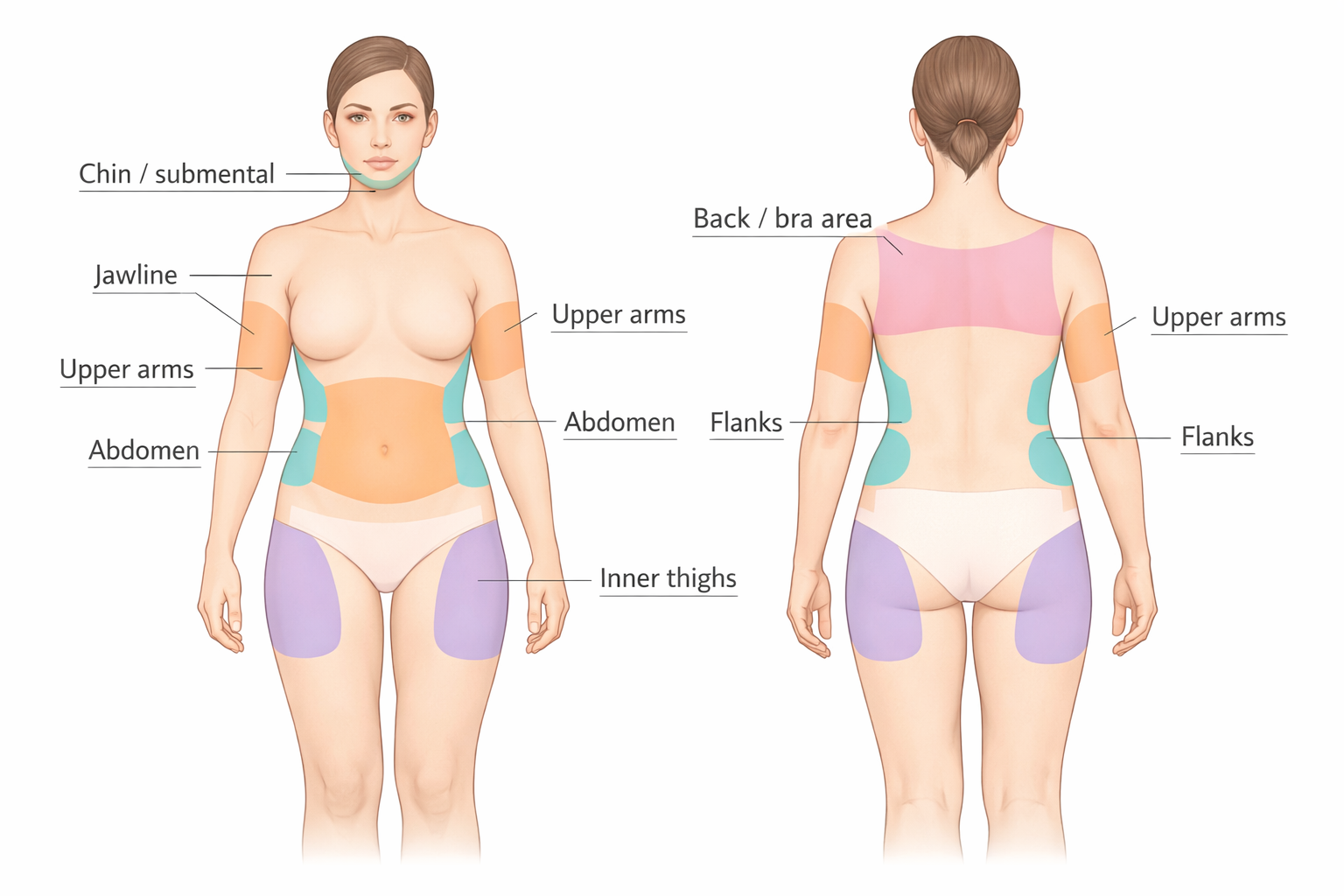
It is worth noting that fat dissolving injections work best on discrete, pinchable subcutaneous fat rather than deeper visceral fat (the fat surrounding internal organs). Visceral fat cannot be safely targeted with injectable lipolysis, and the treatment is not appropriate for generalised excess weight across large body areas.
Who May Be a Suitable Candidate?
Fat dissolving injections are most likely to produce satisfying results in people who meet a specific profile. A thorough consultation with a qualified practitioner is essential to determine individual suitability, but the following factors are generally associated with good candidacy:
- Being at or near a stable, healthy weight — the treatment is designed to refine specific areas, not to produce significant overall fat reduction
- Having clearly localised fat deposits that are resistant to diet and exercise
- Good to adequate skin elasticity in the treatment area — this is an important factor often underemphasised in patient-facing content
- Realistic expectations about the degree of change achievable through a non-surgical approach
- No active infection, inflammation, or skin disease in the intended treatment area
- Not pregnant or breastfeeding
- No known allergy to the product’s active ingredients
Skin elasticity deserves particular attention. When fat cells are destroyed and volume is reduced in a treatment area, the overlying skin needs sufficient elasticity to contract and conform to the new contour. In patients with poor skin laxity — particularly older patients or those who have experienced significant weight fluctuation — fat reduction without concurrent skin tightening can result in loose or sagging skin rather than a smoother appearance. In such cases, a practitioner may recommend combining fat dissolving treatment with a skin tightening procedure, or may advise that a different approach is more appropriate.
Fat dissolving injections are not a suitable treatment for people seeking significant weight loss, those with generalised obesity, or those whose excess fat is primarily visceral rather than subcutaneous.
What Happens During a Fat Dissolving Treatment?
A typical fat dissolving appointment begins with a consultation or pre-treatment assessment, during which the practitioner evaluates the treatment area, discusses the patient’s goals, reviews medical history, and confirms suitability. The skin is cleaned and the injection sites may be marked. A topical anaesthetic cream is sometimes applied to reduce discomfort, though this varies by practitioner and treatment area.
The injections are administered using a fine needle at multiple points across the treatment area, typically spaced approximately one centimetre apart to ensure even distribution of the product within the subcutaneous fat layer. The number of injection points varies depending on the size of the area being treated. The procedure itself usually takes between 20 and 45 minutes.
Discomfort during the injections is common and varies between individuals and treatment areas. Most patients describe a stinging or burning sensation during and immediately after injection, which typically subsides within minutes to hours. The chin area in particular can be sensitive due to the density of nerve endings in the submental region.
There is no requirement for anaesthesia or sedation, and patients can generally return to their normal daily activities on the same day, though strenuous exercise and exposure to heat (such as saunas or hot baths) are typically advised against for 48 hours following treatment.
Side Effects and Risks
Side effects following fat dissolving injections are common and, in most cases, expected as part of the body’s inflammatory response to the treatment. Understanding what is normal versus what requires medical attention is important for anyone considering this procedure.
Common side effects include swelling, bruising, redness, tenderness, and firmness or hardness at the injection site. Swelling is often pronounced, particularly in the submental area, and can persist for one to three weeks. Temporary numbness or altered sensation in the treated area is also frequently reported. These effects are generally self-limiting and resolve without intervention.
Less common but more serious risks include nerve injury, which in the submental area can cause temporary or, rarely, prolonged weakness of the marginal mandibular nerve — affecting the muscles that control the smile. Difficulty swallowing has been reported following chin treatments. Infection, scarring, skin deformity, and uneven fat reduction are also possible, particularly when treatment is administered by an inadequately trained provider or when an unlicensed product is used.
The US Food and Drug Administration (FDA) has issued warnings about unauthorised fat dissolving treatments administered in non-medical settings such as spas and beauty salons, where products may be unlicensed, improperly stored, or administered by individuals without appropriate medical training. These warnings reflect real patient harm that has occurred in such settings. Choosing a medically qualified and experienced practitioner is not merely a preference — it is a meaningful safety consideration.
Results: What to Expect and When
Fat dissolving injections produce gradual results rather than immediate visible change. In the first one to two weeks after treatment, the treated area typically appears more swollen and may feel firm or tender — this is the inflammatory phase during which fat cell debris is being processed. It is not uncommon for the area to look temporarily larger before it begins to reduce.
Visible reduction in the treated area generally becomes apparent four to eight weeks after a session, as the lymphatic system clears the breakdown products and swelling fully resolves. The full extent of results from a single session is usually assessable at around six to eight weeks, which is also when the next session is typically scheduled if further treatment is needed.
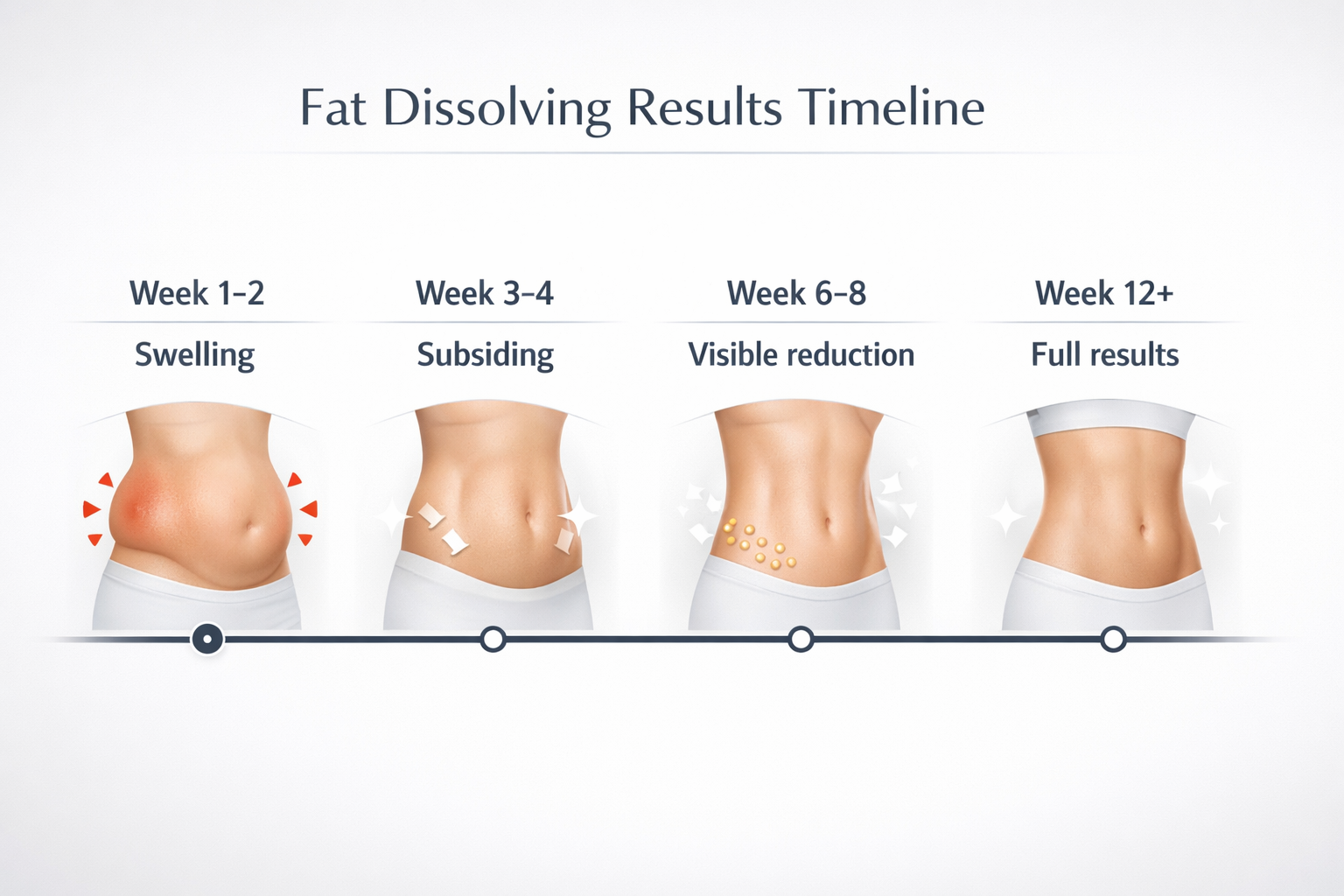
Most people require between two and six sessions to achieve their desired outcome, depending on the volume of fat in the treatment area, the product used, and individual response. Sessions are generally spaced four to six weeks apart. It is important to approach this treatment with a realistic treatment plan and an understanding that results accumulate gradually across multiple sessions rather than appearing dramatically after one appointment.
Because the destroyed fat cells do not return, the reduction achieved in the treated area is considered permanent in the sense that those specific cells are gone. However, if a person gains significant weight after treatment, the remaining fat cells in the area — and elsewhere in the body — can expand, partially diminishing the contour improvement. Maintaining a stable weight after treatment supports the longevity of before and after results.
Fat Dissolving vs CoolSculpting vs Liposuction
| Factor | Fat Dissolving Injections | CoolSculpting (Cryolipolysis) | Liposuction |
|---|---|---|---|
| Treatment type | Injectable, non-surgical | Device-based, non-surgical | Surgical |
| Mechanism | Chemical fat cell destruction (injection lipolysis) | Controlled freezing of fat cells | Mechanical removal of fat |
| Best for | Small, precise localised fat deposits | Larger, pinchable fat areas | Larger volumes; significant contouring |
| Sessions needed | 2–6 sessions typical | 1–3 sessions typical | Usually one procedure |
| Downtime | Minimal; return same day | Minimal; return same day | 1–4 weeks recovery |
| Results onset | 4–8 weeks per session | 8–12 weeks | Weeks to months (post-swelling) |
| Permanence | Permanent fat cell destruction | Permanent fat cell destruction | Permanent fat cell removal |
| Risks | Swelling, bruising, nerve injury (rare) | Paradoxical adipose hyperplasia (rare), numbness | Surgical risks, anaesthesia, scarring |
| Ideal candidate | Small stubborn fat pockets, good skin elasticity | Moderate localised fat, good skin elasticity | Larger fat volumes, good overall health |
Fat dissolving injections and CoolSculpting both achieve permanent fat cell destruction through non-surgical means, but they suit different situations. Injection lipolysis is particularly well suited to smaller, more precisely defined areas — such as the submental region or small deposits along the jawline — where a device applicator may not fit effectively. CoolSculpting tends to be more efficient for larger, flatter areas such as the abdomen or flanks, often requiring fewer sessions to treat a given volume of fat.
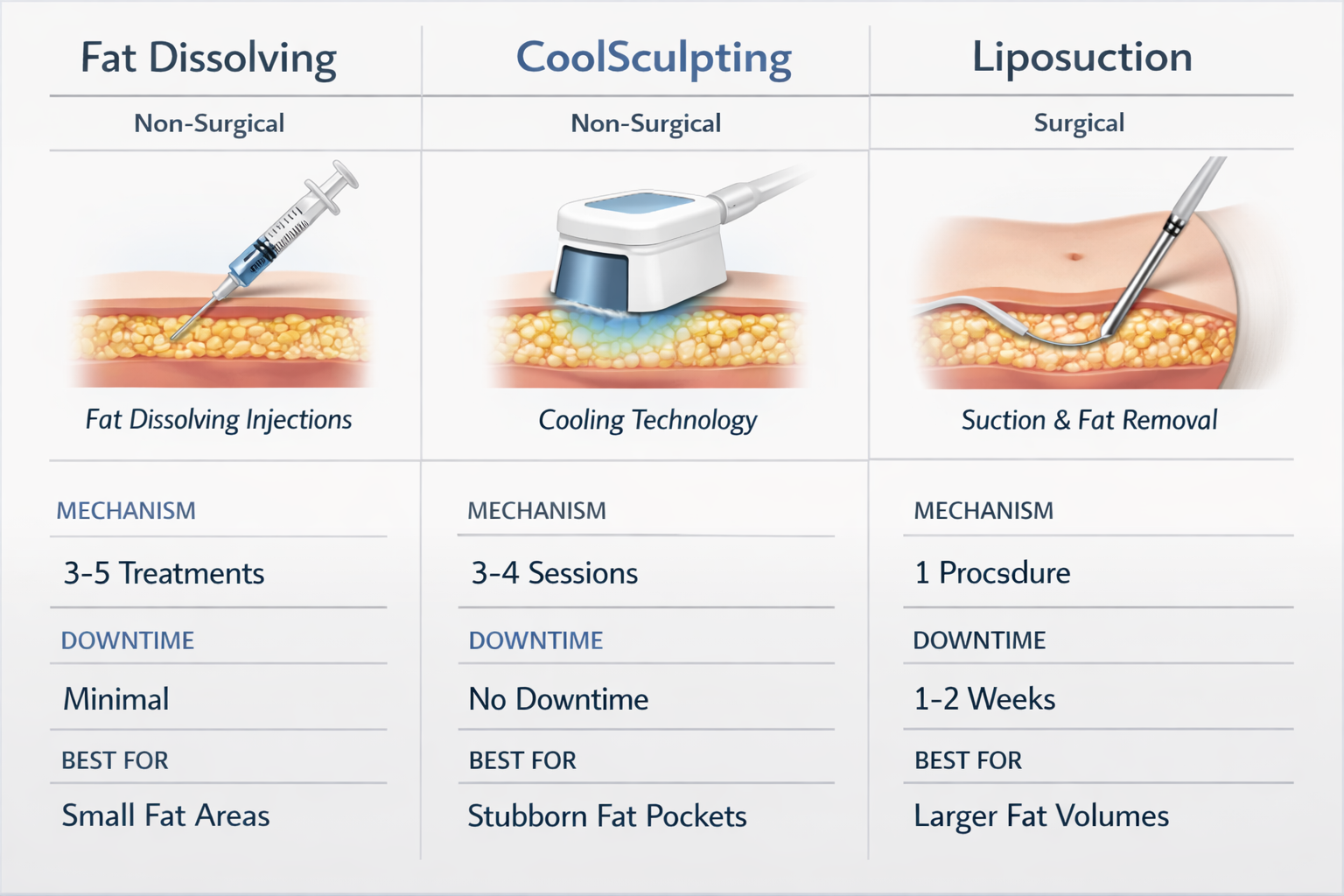
Liposuction remains the most effective option for removing larger volumes of fat and producing dramatic contouring changes in a single procedure, but it carries the risks and recovery associated with surgery and general or local anaesthesia. For patients seeking modest, gradual improvement without surgical intervention, non-surgical options such as injection lipolysis may be worth discussing with a qualified practitioner.
It is also worth distinguishing fat dissolving injections from weight-loss injections such as semaglutide (Ozempic, Wegovy). GLP-1 receptor agonists reduce overall body weight by suppressing appetite and altering metabolic signalling — they do not directly destroy fat cells in specific areas. Fat dissolving injections and weight-loss medications serve fundamentally different purposes and are not interchangeable, though some patients may use both as part of a broader body composition strategy under medical supervision.
Aftercare and Recovery
Following fat dissolving injections, specific aftercare instructions help manage side effects and support the best possible outcome. While individual guidance from your treating practitioner takes precedence, the following general principles apply across most formulations and treatment areas.
In the first 48 hours, avoid strenuous physical exercise, excessive heat (including saunas, steam rooms, and hot baths), and alcohol. These activities can increase blood flow to the treated area, potentially worsening bruising and swelling. Gentle movement and staying well hydrated are generally encouraged, as adequate hydration supports lymphatic clearance of the fat breakdown products.
Swelling typically peaks within the first two to three days and then gradually subsides over one to three weeks, depending on the treatment area and the individual’s inflammatory response. Applying a cool compress (not ice directly on the skin) can help manage discomfort in the early days. Avoid massaging the treated area unless specifically instructed to do so by your practitioner, as this can displace the product.
Most people can return to desk-based work and light daily activities on the day of treatment or the following day. Makeup can usually be applied to facial treatment areas after 24 hours if the skin is intact. Blood-thinning medications and supplements such as aspirin, ibuprofen, fish oil, and vitamin E are often advised against in the days before treatment to reduce bruising risk — always discuss your current medications with your practitioner at consultation.
Choosing a Provider: What to Look For
The safety and effectiveness of fat dissolving injections are significantly influenced by the qualifications and experience of the person administering them. The FDA has specifically warned about treatments performed in non-medical settings using unlicensed products, and similar concerns have been raised by regulatory bodies in the UK and EU.
When evaluating a provider, consider the following:
- Is the practitioner a licensed medical professional — such as a doctor, nurse prescriber, or dentist — with specific training in injectable aesthetics?
- Is the clinic operating under medical oversight, with access to emergency protocols if a complication arises?
- Can the practitioner clearly explain the product being used, its regulatory status, and its active ingredients?
- Are before and after results from real patients available for review?
- Is a thorough consultation offered before treatment, including a review of your medical history and an honest assessment of whether you are a suitable candidate?
- Are aftercare instructions provided in writing?
Be cautious of providers offering fat dissolving treatments at unusually low prices, in non-clinical environments, or without a prior consultation. The use of unlicensed or counterfeit products in unregulated settings has been associated with serious adverse outcomes including infection, scarring, and permanent tissue damage.
Frequently Asked Questions
Do fat dissolving injections actually work?
For suitable candidates with localised subcutaneous fat and good skin elasticity, injection lipolysis can produce meaningful and lasting reductions in targeted areas. The evidence base is strongest for submental fat reduction using deoxycholic acid (Kybella/Belkyra), where multiple clinical trials have demonstrated statistically significant fat reduction compared to placebo. Evidence for other body areas and newer products is less robust, and results vary between individuals.
Are the results permanent?
The fat cells destroyed by injection lipolysis do not regenerate, making the reduction in those specific cells permanent. However, remaining fat cells in the treated area and elsewhere in the body can still enlarge with weight gain. Maintaining a stable weight after treatment helps preserve the results long term.
How many sessions will I need?
Most people require between two and six sessions, spaced four to six weeks apart. The exact number depends on the size of the treatment area, the volume of fat being targeted, the product used, and how your body responds. Your practitioner should give you a realistic treatment plan after assessing the area at consultation.
Is the treatment painful?
Most patients experience a stinging or burning sensation during and immediately after injection, which typically fades within minutes to hours. The submental area can be particularly sensitive. Topical anaesthetic cream is sometimes used to reduce discomfort. Post-treatment soreness, swelling, and tenderness are common for several days.
Can I buy fat dissolving products online and inject them myself?
No. Injectable fat dissolving products should only be administered by a qualified, licensed medical professional in an appropriate clinical setting. Attempting self-injection carries serious risks including infection, tissue damage, nerve injury, and vascular complications. Regulatory bodies in both the US and UK have warned against the purchase and use of injectable products outside of licensed medical practice.
What is the difference between fat dissolving injections and weight loss injections?
Fat dissolving injections (injection lipolysis) destroy fat cells in specific localised areas through direct chemical action. Weight loss injections such as semaglutide work systemically by suppressing appetite and altering metabolic hormones to reduce overall body weight. They are entirely different treatments with different mechanisms, purposes, and appropriate patient profiles.
Can fat dissolving injections be combined with other treatments?
Yes, in appropriate candidates. For patients with mild skin laxity in the treatment area, some practitioners recommend combining fat dissolving injections with a skin tightening treatment — such as radiofrequency microneedling, Profhilo, or focused ultrasound — to help the skin contract as fat volume reduces. Combination approaches should always be planned by a qualified practitioner based on individual assessment.
Is Fat Dissolving the Right Approach for You?
Fat dissolving injections can be a genuinely effective option for the right candidate — someone at a stable weight with clearly defined, localised stubborn fat pockets and sufficient skin elasticity to accommodate the volume reduction. For submental fat in particular, the evidence supporting deoxycholic acid-based treatments is well established, and many patients achieve meaningful, lasting improvement through a course of sessions.
The treatment is not appropriate as a weight-loss strategy, is not suitable for large volumes of fat or generalised excess weight, and carries real risks when administered by unqualified providers or using unlicensed products. Managing expectations is essential: results are gradual, require multiple sessions, and depend significantly on individual factors including skin quality, fat volume, and how the body responds to the inflammatory process.
If you are considering fat dissolving injections, the most important first step is a thorough consultation with a medically qualified practitioner who can assess your specific anatomy, discuss realistic outcomes, explain the risks honestly, and recommend the most appropriate product and treatment plan for your goals. A well-chosen non-surgical body contouring approach, delivered safely by an experienced clinician, can produce results that are both satisfying and durable — but the decision deserves careful consideration rather than a rushed booking.