

Facial balancing is a non-surgical approach to improving the visual harmony between different areas of the face. Rather than targeting a single concern in isolation, the goal is to assess the face as a whole and use carefully placed treatments to create more proportionate, symmetrical, and naturally balanced features. For many patients, this approach produces more cohesive results than treating one area alone, though outcomes depend significantly on individual anatomy, the treatments chosen, and the skill of the practitioner.
Key Takeaways
- Facial balancing focuses on overall facial harmony rather than isolated feature enhancement, using a combination of non-surgical treatments tailored to individual anatomy.
- Common treatments include dermal fillers, botulinum toxin injections, and skin-quality treatments, often used together to address proportion, symmetry, and contour.
- Results are temporary and require maintenance; realistic expectations and a thorough consultation are essential before proceeding.
- Suitability depends on individual facial anatomy, medical history, and treatment goals — a qualified practitioner assessment is necessary.
- Risks exist with all injectable treatments, and choosing an experienced, medically trained practitioner significantly affects both safety and outcome.
What Is Facial Balancing?
Facial balancing refers to a treatment philosophy rather than a single procedure. It involves evaluating the face using principles of proportion — often drawing on concepts such as the golden ratio, facial thirds, and facial fifths — to identify areas where volume, contour, or symmetry may be improved. A practitioner trained in facial balancing considers how the forehead, brow, midface, nose, lips, chin, and jawline relate to one another before recommending any treatment.
The underlying principle is that isolated enhancement of one feature without considering its relationship to surrounding structures can sometimes produce results that appear unnatural or disproportionate. For example, adding volume to the lips without considering chin projection or jawline definition may shift the visual balance of the lower face in an unintended direction. A facial balancing approach attempts to account for these relationships from the outset.
This does not mean every patient requires multiple treatments simultaneously. In many cases, a single well-placed treatment — such as chin filler to improve the profile, or botulinum toxin to soften an asymmetric brow — can meaningfully improve overall facial harmony. The extent of treatment is guided by the individual’s anatomy and goals.
The Principles Behind Facial Proportion
Aesthetic practitioners use several anatomical frameworks to assess facial proportion. The concept of facial thirds divides the face horizontally into roughly equal segments: the upper third from the hairline to the brow, the middle third from the brow to the base of the nose, and the lower third from the base of the nose to the chin. Significant disproportion between these thirds — whether due to genetics, ageing, or previous treatment — can affect the overall impression of balance.
Facial fifths divide the face vertically into five segments of approximately equal width, each roughly corresponding to the width of one eye. This framework helps assess the width of the nose, the spacing of the eyes, and the lateral extent of the face. Practitioners also consider the relationship between the nose and chin when viewed in profile — a concept sometimes referred to as the Ricketts line or E-plane — to evaluate whether the lips, chin, and nose project in a harmonious way.
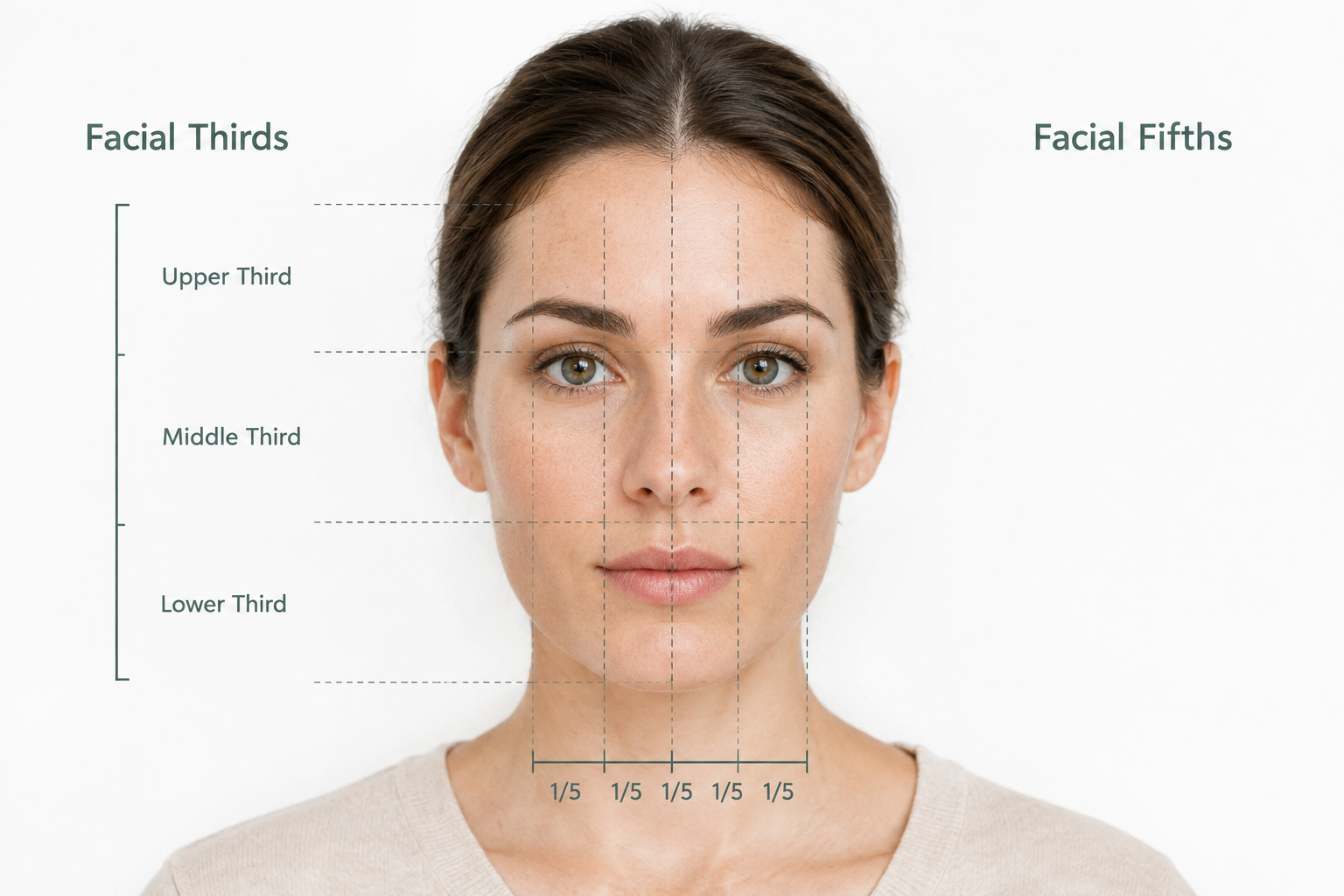
These frameworks are guides rather than rigid rules. Human faces are naturally asymmetric, and the goal of facial balancing is not to impose a mathematical ideal but to work with an individual’s existing features to create a result that looks natural and feels appropriate for that person. Cultural background, age, gender, and personal preference all influence what constitutes a desirable outcome for any given patient.
Common Treatments Used in Facial Balancing
Facial balancing typically draws on a combination of injectable and non-injectable treatments, selected according to the specific concerns identified during assessment. The most commonly used treatments include dermal fillers, botulinum toxin, and skin-quality treatments, though the precise combination varies considerably between patients.
Dermal Fillers
Hyaluronic acid dermal fillers are among the most frequently used tools in facial balancing. Hyaluronic acid is a naturally occurring substance in the body, and injectable forms can be used to restore or add volume, define contours, and improve symmetry in specific areas. Common treatment areas in a facial balancing context include the chin, jawline, cheeks, temples, nose (non-surgical rhinoplasty), and lips.
Chin filler, for instance, can improve the projection of a recessed chin and create a more defined lower facial profile, which in turn may make the nose appear more proportionate in relation to the rest of the face. Cheek filler can restore midface volume that diminishes with age, supporting the overlying skin and improving the transition between the midface and lower face. Jawline filler can define the mandibular border, contributing to a more structured facial silhouette.
Hyaluronic acid fillers are reversible using an enzyme called hyaluronidase, which is an important safety consideration. Results typically last between six and eighteen months depending on the product used, the area treated, and individual metabolism, though this varies between patients.
Botulinum Toxin
Botulinum toxin injections are used in facial balancing to relax specific muscles that may be contributing to asymmetry, unwanted movement patterns, or disproportionate features. Common applications include softening the masseter muscles (which can reduce the appearance of a wide or square lower face), lifting the brow, reducing the appearance of a gummy smile, and addressing chin dimpling caused by the mentalis muscle.
Botulinum toxin works by temporarily blocking nerve signals to the targeted muscle, reducing its activity. Effects typically become visible within one to two weeks and generally last three to six months, after which repeat treatment is required to maintain the result. The treatment is not permanent, and muscle activity gradually returns as the effect wears off.
Several botulinum toxin products are available for aesthetic use, including Botox (onabotulinumtoxinA), Dysport (abobotulinumtoxinA), and Azzalure (abobotulinumtoxinA). These products differ in their formulation and unit dosing, and units are not interchangeable between brands. Practitioner experience and technique significantly influence the outcome.
Non-Surgical Rhinoplasty
Non-surgical rhinoplasty — sometimes called a liquid nose job — uses small amounts of dermal filler to alter the appearance of the nose without surgery. It can be used to smooth a dorsal hump, improve tip definition, or correct minor asymmetries. In a facial balancing context, adjusting the apparent shape or projection of the nose can meaningfully affect how the rest of the face reads in terms of proportion.
Non-surgical rhinoplasty carries specific risks that are higher than those associated with filler in other areas, including a small but serious risk of vascular complications. This treatment should only be performed by practitioners with advanced training and a thorough understanding of nasal anatomy and vascular safety protocols.
Skin Quality Treatments
Facial balancing is not limited to volume and contour. Skin texture, tone, and quality also contribute to the overall impression of a healthy, harmonious face. Treatments such as polynucleotides, profhilo, chemical peels, microneedling, and laser or light-based therapies may be incorporated into a facial balancing plan to address skin laxity, pigmentation, fine lines, or overall radiance. These treatments do not alter facial structure but can complement structural treatments by improving the quality of the skin overlying the treated areas.
The Facial Balancing Consultation
A thorough consultation is the foundation of any facial balancing treatment plan. During the consultation, a qualified practitioner will assess the face from multiple angles — typically frontal, lateral (side), and oblique (three-quarter) views — to evaluate proportion, symmetry, volume distribution, skin quality, and the dynamic movement of facial muscles.
The practitioner should take a detailed medical history, including any previous aesthetic treatments, medications, allergies, and relevant medical conditions. Certain medications — including blood thinners — and conditions may affect suitability for injectable treatments. Pregnancy and breastfeeding are generally considered contraindications to most aesthetic injectable procedures.
Photographs are typically taken at the consultation to support treatment planning and to provide a baseline for comparison after treatment. A good practitioner will discuss realistic expectations clearly, explain the proposed treatments and their limitations, and give the patient adequate time to consider the plan before proceeding. Patients should feel comfortable asking questions and should not feel pressured to proceed at the same appointment.
What to Expect During and After Treatment
The experience of a facial balancing appointment depends on which treatments are being performed. Injectable treatments are generally carried out using fine needles or blunt-tipped cannulas, and a topical anaesthetic cream is often applied beforehand to reduce discomfort. Most patients describe the sensation as mild to moderate pressure or a brief stinging feeling, though individual pain tolerance varies.
Common side effects following injectable treatments include redness, swelling, bruising, and tenderness at the injection sites. These effects are typically temporary and resolve within a few days to two weeks, though bruising can occasionally persist longer. Swelling is often more pronounced in the first 24 to 48 hours and may temporarily affect the appearance of the treated area before settling.
Patients are usually advised to avoid strenuous exercise, alcohol, and excessive heat (such as saunas or hot baths) for 24 to 48 hours after injectable treatments. Specific aftercare instructions vary depending on the treatments performed and should be provided by the treating practitioner.
Results from dermal fillers are often visible immediately, though the final result becomes clearer once swelling has resolved — typically within one to two weeks. Botulinum toxin results take longer to appear, usually becoming visible within five to fourteen days. Skin quality treatments may require a course of sessions before significant improvement is seen, and results often develop gradually over several weeks.
How Long Do Facial Balancing Results Last?
Facial balancing results are not permanent. The longevity of results depends on the specific treatments used, the areas treated, the products chosen, and individual factors such as metabolism and lifestyle.
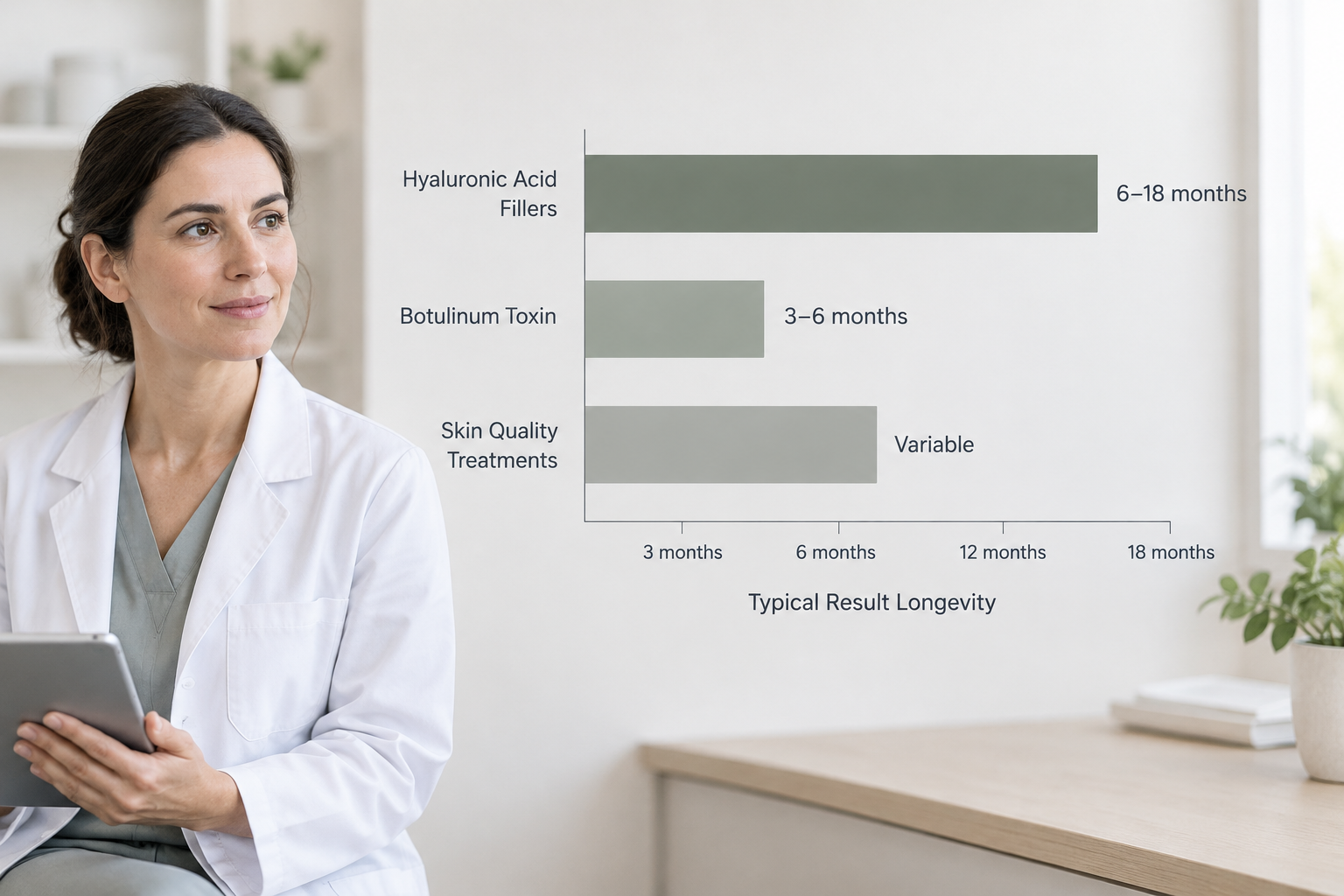
Hyaluronic acid dermal fillers typically last between six and eighteen months in most facial areas, though some products and areas may show effects for longer or shorter periods. Botulinum toxin effects generally last three to six months before muscle activity returns. Skin quality treatments vary considerably in their duration of effect depending on the treatment type and the concern being addressed.
Maintenance appointments are required to sustain results over time. Some patients find that with regular treatment, the interval between appointments can be extended as the treated tissues respond to repeated treatment, though this is not guaranteed and varies between individuals. A practitioner can advise on a realistic maintenance schedule based on the treatments used and the patient’s response.
Risks and Limitations of Facial Balancing
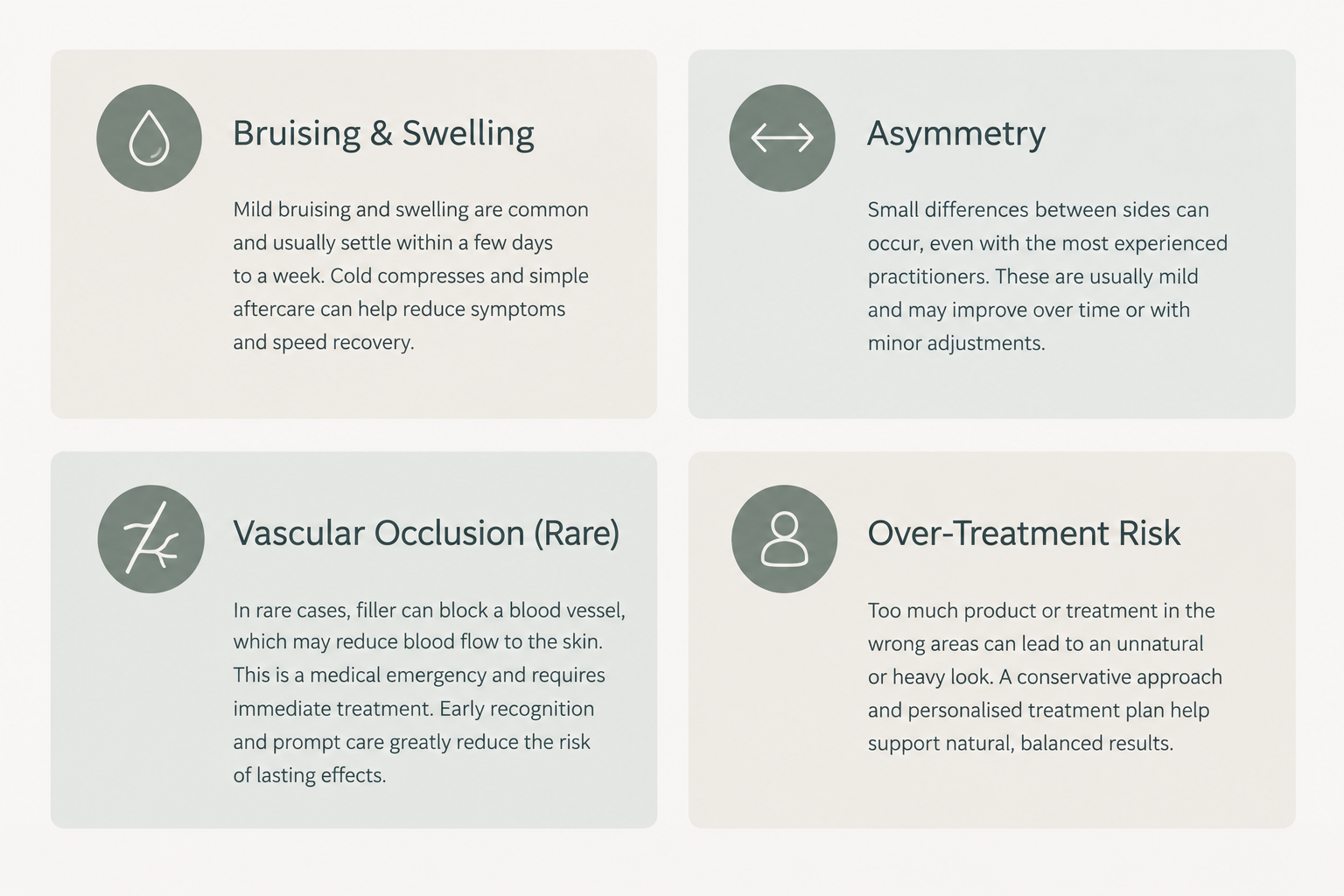
All injectable aesthetic treatments carry risks, and patients should be fully informed before proceeding. Common risks associated with dermal fillers and botulinum toxin include bruising, swelling, asymmetry, infection, and allergic reaction. More serious but less common risks include vascular occlusion — where filler inadvertently enters or compresses a blood vessel — which can in rare cases lead to tissue damage or, in extremely rare circumstances, vision changes. The risk of serious complications is significantly reduced when treatment is performed by a qualified, experienced practitioner using appropriate technique and safety protocols.
Facial balancing has inherent limitations. Non-surgical treatments cannot replicate the results of surgical procedures such as rhinoplasty, facelift, or blepharoplasty (eyelid surgery) in terms of the degree or permanence of change achievable. Patients with significant structural concerns, substantial skin laxity, or very specific anatomical goals may find that surgical options are more appropriate for their needs.
Results are also inherently variable. Individual anatomy, skin quality, tissue response, and the precise placement of treatments all influence the outcome. What works well for one patient may not produce the same result in another, even when the same treatment is used. Managing expectations through honest pre-treatment discussion is an important part of responsible practice.
Over-treatment is a meaningful risk in facial balancing. Adding volume to multiple areas without careful planning can result in a face that appears overfilled or unnatural. A conservative, staged approach — where treatments are introduced gradually and assessed before adding more — is generally considered safer and more likely to produce a natural-looking result.
Who May Be Suitable for Facial Balancing?
Facial balancing may be worth discussing with a qualified practitioner if you are concerned about facial asymmetry, disproportionate features, age-related volume loss, or the overall harmony of your facial appearance. It may be particularly relevant for patients who have previously had a single area treated and feel the result looks unbalanced in the context of the rest of their face.
Good candidates are generally adults in good general health who have realistic expectations about what non-surgical treatment can achieve. Patients who are pregnant or breastfeeding, have active skin infections or inflammatory conditions in the treatment area, have certain autoimmune conditions, or are taking medications that significantly increase bleeding risk may not be suitable for some or all injectable treatments. A full medical history review at consultation is essential to determine individual suitability.
Facial balancing is not appropriate for patients seeking dramatic structural change that only surgery can provide, or for those who are not prepared for the temporary nature of results and the need for ongoing maintenance.
Alternatives to Non-Surgical Facial Balancing
For patients whose concerns are better addressed through other means, several alternatives exist. Surgical options such as rhinoplasty, chin implants, orthognathic surgery, blepharoplasty, and facelift procedures can produce more significant and longer-lasting structural changes than non-surgical treatments. These carry their own risks, recovery periods, and costs, and require consultation with a qualified plastic or maxillofacial surgeon.
For patients primarily concerned with skin quality rather than structure, non-injectable treatments such as radiofrequency skin tightening, high-intensity focused ultrasound (HIFU), laser resurfacing, and medical-grade skincare may address their concerns without the need for injectables. These options are worth discussing during a consultation if injectable treatments are not preferred or suitable.
Some patients may also benefit from a referral to an orthodontist or dentist if dental or bite-related factors are contributing to facial imbalance, as these underlying structural issues cannot be corrected with surface-level aesthetic treatments.
Frequently Asked Questions
Is facial balancing the same as getting multiple fillers at once?
Not necessarily. Facial balancing is a treatment philosophy focused on overall facial harmony. It may involve a single treatment in one area or a combination of treatments across multiple areas, depending on what assessment reveals. The key distinction is that treatment decisions are guided by how each area relates to the face as a whole, rather than addressing concerns in isolation.
Will facial balancing make me look different or unnatural?
When performed conservatively by an experienced practitioner, facial balancing aims to enhance natural features rather than dramatically alter them. The risk of an unnatural appearance increases with over-treatment or poorly planned volume placement. A staged, conservative approach and open communication with your practitioner about your goals significantly reduce this risk.
How many sessions will I need?
This depends on the treatments involved and your individual starting point. Some patients achieve their initial goals in a single appointment, while others benefit from a phased approach across two or more sessions. Maintenance appointments are required over time to sustain results, as all non-surgical treatments are temporary.
Can facial balancing correct significant facial asymmetry?
Non-surgical facial balancing can improve the appearance of mild to moderate asymmetry in many cases. Significant structural asymmetry — particularly that involving the underlying bone or dental structures — may be better addressed through surgical or orthodontic means. A qualified practitioner can advise on what is realistically achievable for your specific anatomy.
Is there any downtime after facial balancing treatment?
Most patients experience some degree of redness, swelling, or bruising after injectable treatments, which typically resolves within a few days to two weeks. Social downtime is generally minimal, though some patients prefer to schedule treatment when they have a few days before a significant event. Specific downtime depends on the treatments performed and individual response.
How do I choose a practitioner for facial balancing?
Look for a medically qualified practitioner — such as a doctor, dentist, or nurse prescriber — with specific training and demonstrable experience in facial anatomy and aesthetic injectables. Ask about their qualifications, their approach to safety, and what happens if a complication occurs. A practitioner who takes time to assess your face thoroughly, discusses realistic expectations, and does not pressure you to proceed is a positive sign.
Is Facial Balancing the Right Approach for You?
Facial balancing offers a thoughtful, anatomy-led approach to non-surgical facial enhancement that may suit patients who want to improve overall facial harmony rather than address a single isolated concern. When performed by a qualified and experienced practitioner using appropriate techniques and a conservative treatment philosophy, it can produce natural-looking improvements in proportion, symmetry, and contour.
It is important to approach facial balancing with realistic expectations. Non-surgical treatments are temporary, require maintenance, and cannot replicate the results of surgery for patients with significant structural concerns. The quality of the outcome depends heavily on the skill and judgement of the practitioner, making the choice of provider one of the most important decisions in the process.
If you are considering facial balancing, a detailed consultation with a medically qualified aesthetic practitioner is the appropriate starting point. A thorough assessment of your facial anatomy, a clear discussion of your goals, and an honest conversation about what treatment can and cannot achieve will help you make an informed decision about whether this approach is right for you.