

Face laser treatment covers a broad range of technologies used to address skin texture, pigmentation, fine lines, acne scarring, redness, and overall skin quality. Because the term encompasses several distinct device types with different mechanisms and recovery profiles, understanding the differences is essential before deciding which option may be worth discussing with a qualified practitioner. This article explains how the main categories of facial laser treatment work, what each is typically used for, realistic outcomes, risks, and the factors that influence suitability.
Key Takeaways
- Facial laser treatments are not a single technology — ablative, non-ablative, and fractional lasers each work differently and suit different concerns and skin types.
- More aggressive treatments generally produce more noticeable results but require longer downtime and carry a higher risk of side effects.
- Skin tone, Fitzpatrick phototype, and individual medical history significantly influence which laser type may be appropriate and safe.
- Multiple sessions are often required for non-ablative and fractional approaches, while a single ablative treatment may produce more dramatic change with a longer recovery period.
- A thorough consultation with a qualified practitioner is necessary to assess suitability, set realistic expectations, and reduce the risk of complications.
What Is Face Laser Treatment?
Face laser treatment uses focused beams of light energy to interact with specific targets in the skin. The term “laser” stands for Light Amplification by Stimulated Emission of Radiation. In aesthetic medicine, different laser wavelengths are absorbed by different chromophores — the biological targets within the skin — such as water, melanin (the pigment responsible for skin colour and many pigmentation concerns), or oxyhaemoglobin (the pigment in blood vessels). By selecting the appropriate wavelength and delivery method, a practitioner can target a specific concern while minimising unintended effects on surrounding tissue.
The broad category of facial laser treatment includes fully ablative lasers, non-ablative lasers, and fractional lasers, each of which interacts with the skin in a distinct way. Some devices combine wavelengths or delivery modes to address multiple concerns in a single session. The right choice depends on the patient’s skin concern, skin tone, tolerance for downtime, and overall health — factors that can only be properly assessed during a clinical consultation.
Main Types of Facial Laser Treatment
Understanding the principal categories helps clarify why practitioners recommend different devices for different concerns, and why the same device may not be appropriate for every patient.
Ablative Lasers
Ablative lasers remove the outer layers of the skin — the epidermis and part of the dermis — through controlled vaporisation. The two most established ablative laser types used on the face are the carbon dioxide (CO2) laser and the erbium:YAG (Er:YAG) laser. CO2 lasers operate at a wavelength of 10,600 nanometres and are strongly absorbed by water in skin tissue, making them effective for deeper resurfacing. Er:YAG lasers operate at 2,940 nanometres, which is even more precisely absorbed by water, resulting in less thermal spread to surrounding tissue and a somewhat faster healing profile compared with CO2, though with less collagen-stimulating effect.
Ablative resurfacing is typically used for moderate to severe photoageing, deeper wrinkles, acne scarring, and significant skin texture irregularities. Because the outer skin layers are removed, the healing process involves a genuine wound-healing response, which stimulates new collagen production and skin remodelling. Results from a single ablative treatment can be substantial, but downtime is significant — typically one to three weeks of visible healing, with redness that may persist for several months. The risk of pigmentation changes, infection, and scarring is higher with ablative approaches, and these treatments require careful patient selection, particularly in individuals with darker skin tones.
Non-Ablative Lasers
Non-ablative lasers deliver heat energy into the dermis without removing the surface layer of skin. The epidermis remains largely intact, which means recovery is considerably shorter — often limited to mild redness and swelling for one to a few days. Common non-ablative laser wavelengths used on the face include 1064 nm Nd:YAG, 1320 nm Nd:YAG, and 1450 nm diode lasers. These devices stimulate collagen remodelling in the deeper skin layers without the wound-healing response associated with ablative treatment.
Non-ablative laser treatment is generally used for mild to moderate skin laxity, fine lines, superficial pigmentation, and overall skin quality improvement. Because the treatment is less aggressive, results are more gradual and typically require a course of sessions — often three to six treatments spaced several weeks apart — to achieve a meaningful improvement. The trade-off is a much more manageable recovery profile, making non-ablative options more practical for patients who cannot accommodate extended downtime.
Fractional Lasers
Fractional laser technology, introduced in the mid-2000s, delivers laser energy in a grid of microscopic columns called microthermal treatment zones, leaving surrounding tissue intact between each column. This approach allows the skin to heal more rapidly than fully ablative treatment while still stimulating meaningful collagen remodelling. Fractional lasers can be either ablative or non-ablative in nature.
Fractional ablative lasers — such as fractional CO2 and fractional Er:YAG devices — produce more noticeable results than non-ablative fractional options, with downtime typically ranging from five to ten days. Fractional non-ablative lasers, such as devices operating at 1550 nm or 1927 nm, offer a gentler profile with downtime of one to three days and are often used for pigmentation, fine lines, and mild textural concerns. Fractional technology has expanded the range of patients who can be treated, including some individuals with moderately darker skin tones, though careful assessment remains essential.
Vascular and Pigment-Specific Lasers
Some facial laser treatments are designed specifically to target vascular concerns or pigmentation rather than to resurface the skin broadly. Pulsed dye lasers (PDL), operating at 585–595 nm, are selectively absorbed by oxyhaemoglobin and are commonly used for redness, rosacea, facial telangiectasia (visible small blood vessels), and certain types of post-inflammatory redness. Q-switched and picosecond lasers deliver very short pulses of energy that fragment melanin particles, making them useful for treating pigmented lesions, melasma (with appropriate caution), and tattoo removal. These targeted approaches generally have a lower risk profile for the specific concerns they address, but they are not resurfacing treatments and do not improve skin texture or stimulate broad collagen remodelling in the same way.
What Facial Laser Treatment Can Address
Different laser types are suited to different skin concerns. The following list reflects common clinical applications, though individual suitability depends on a proper assessment:
- Fine lines and wrinkles: Ablative and fractional ablative lasers are most effective for moderate to deeper lines; non-ablative options may help with superficial lines over a course of treatments.
- Acne scarring: Fractional ablative and fractional non-ablative lasers are frequently used for atrophic (depressed) acne scars; results vary depending on scar depth and type.
- Skin texture and tone: Fractional and non-ablative lasers can improve overall skin surface quality and mild textural irregularities.
- Sun damage and photoageing: Ablative resurfacing and certain fractional approaches address the cumulative effects of UV exposure, including irregular pigmentation and skin roughness.
- Pigmentation and dark spots: Q-switched, picosecond, and some fractional lasers target excess melanin; melasma requires particular caution as some laser types can worsen it.
- Redness and vascular concerns: Pulsed dye lasers and Nd:YAG lasers are used for facial redness, rosacea, and visible capillaries.
- Skin laxity: Some laser treatments stimulate collagen and may produce modest skin tightening, though significant laxity may require additional or alternative approaches.
What Happens During a Facial Laser Treatment Appointment
The specific experience varies depending on the laser type, the area being treated, and the individual patient. Before treatment, a consultation should include a full skin assessment, discussion of medical history, review of current medications, and a clear explanation of expected outcomes, downtime, and risks. Patients are typically advised to avoid sun exposure and certain skincare ingredients — such as retinoids and exfoliating acids — in the days or weeks before treatment.
On the day of treatment, the skin is cleansed and a topical anaesthetic cream is usually applied for non-ablative and fractional procedures to reduce discomfort. More aggressive ablative treatments may require local anaesthetic injections or, in some cases, sedation. During the procedure, patients typically experience sensations ranging from mild warmth to a snapping or stinging feeling, depending on the laser type and energy settings used. Treatment time varies from around fifteen minutes for a targeted non-ablative session to an hour or more for full-face ablative resurfacing.
After treatment, the skin is cooled and a soothing product or dressing may be applied. Practitioners provide specific aftercare instructions, which typically include gentle cleansing, moisturising, strict sun avoidance, and the use of a broad-spectrum sunscreen. Following aftercare guidance carefully is important for both healing and achieving the best possible outcome.
Recovery and Downtime
Recovery time is one of the most significant practical differences between laser types and is often a key factor in a patient’s decision. The following gives a general indication, though individual experience varies:
- Non-ablative lasers: Redness and mild swelling typically resolve within one to three days. Most patients can return to normal activities quickly, though sun protection remains essential.
- Fractional non-ablative lasers: Redness, mild swelling, and a bronzed or sandpaper-like skin texture may be present for three to five days. Pinpoint crusting can occur.
- Fractional ablative lasers: More pronounced redness, swelling, and oozing in the first few days, with visible healing over five to ten days. Residual redness may persist for several weeks.
- Fully ablative lasers: Significant wound healing over one to three weeks, with redness that can last several months. Social downtime is substantial.
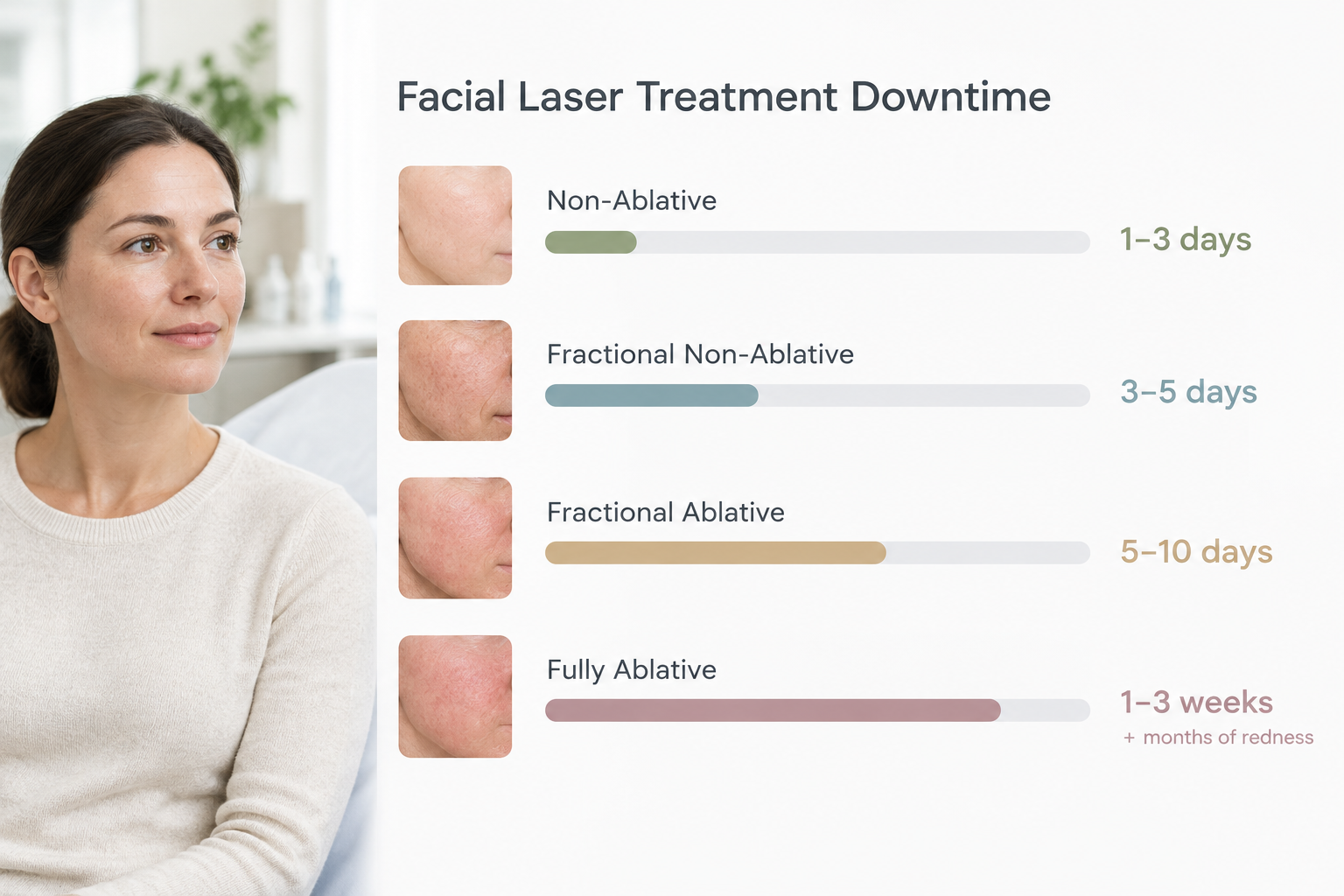
During recovery, the skin is more sensitive and vulnerable to sun damage, infection, and irritation. Strict adherence to aftercare instructions and sun protection is not optional — it directly affects both the healing process and the risk of complications such as post-inflammatory hyperpigmentation.
Expected Results and How Long They May Last
Facial laser treatment results depend on the laser type, the concern being treated, the number of sessions completed, and individual skin biology. Non-ablative treatments typically produce gradual improvement over several months as collagen remodelling progresses, with results that may be maintained with periodic top-up sessions. Fractional ablative treatments can produce more noticeable improvement in skin texture and lines, with results that may last several years depending on ongoing sun exposure, skincare habits, and natural ageing. Fully ablative resurfacing can produce significant and longer-lasting improvement in photoageing and deeper wrinkles, though the skin continues to age naturally after treatment.
Pigmentation treatments with Q-switched or picosecond lasers may clear certain lesions effectively, but pigmentation can recur — particularly melasma, which is influenced by hormonal factors and sun exposure. Vascular treatments with pulsed dye lasers can reduce visible redness and capillaries, though new vessels may develop over time. Realistic expectations, set during a thorough consultation, are essential for patient satisfaction.
Risks and Side Effects of Face Laser Treatment
All facial laser treatments carry potential risks, and these vary in likelihood and severity depending on the laser type, energy settings, practitioner experience, and patient factors. Common side effects that are generally expected and temporary include redness, swelling, mild discomfort, and skin sensitivity during the healing period. More significant risks include:
- Post-inflammatory hyperpigmentation (PIH): Darkening of the skin following treatment, more common in individuals with darker skin tones (Fitzpatrick types IV–VI) and with more aggressive laser settings. Proper patient selection and pre-treatment skin preparation can reduce but not eliminate this risk.
- Post-inflammatory hypopigmentation: Lightening of the skin, more commonly associated with aggressive ablative treatments and more likely in darker skin tones.
- Infection: Bacterial, viral (particularly herpes simplex reactivation), or fungal infection can occur during the healing phase. Prophylactic antiviral medication is often prescribed before ablative treatments in patients with a history of cold sores.
- Scarring: Uncommon but possible, particularly with aggressive ablative treatments or if aftercare instructions are not followed.
- Prolonged redness: Erythema lasting several months is a recognised outcome of ablative resurfacing.
- Worsening of pigmentation: Certain laser types can aggravate melasma if not used with appropriate caution and patient preparation.
- Eye injury: Appropriate protective eyewear must be used during all laser procedures near the face.
The risk profile of any laser treatment is significantly influenced by practitioner training, device quality, and the appropriateness of the treatment for the individual patient. Choosing a qualified and experienced practitioner working in a regulated clinical environment is an important safety consideration.
Who May Be Suitable for Facial Laser Treatment
Suitability for face laser treatment depends on several factors that a practitioner will assess during consultation. Patients who may be considered for facial laser treatment generally include those with:
- Skin concerns such as photoageing, fine lines, acne scarring, pigmentation, or vascular redness that have not responded adequately to topical treatments alone.
- Lighter skin tones (Fitzpatrick types I–III) for more aggressive ablative approaches, where the risk of pigmentation complications is lower.
- Realistic expectations about the degree of improvement and the number of sessions that may be required.
- Ability to follow pre- and post-treatment care instructions, including strict sun avoidance.
- No active skin infections, open wounds, or inflammatory skin conditions in the treatment area at the time of treatment.
Who May Not Be Suitable
Certain factors may make some laser treatments inadvisable or require modification of the approach. These include:
- Darker skin tones: Individuals with Fitzpatrick types IV–VI face a higher risk of pigmentation complications with many laser types. Some devices and settings can be used more safely in darker skin, but this requires specialist assessment.
- Active acne or skin infection: Treating inflamed or infected skin increases the risk of spreading infection and poor healing.
- Recent isotretinoin use: Isotretinoin (a medication used for acne) can affect skin healing; most practitioners advise waiting six to twelve months after completing a course before ablative laser treatment, though guidance varies.
- Pregnancy and breastfeeding: Laser treatments are generally avoided during pregnancy and breastfeeding.
- History of keloid scarring: Individuals prone to keloid or hypertrophic scarring may face a higher risk of abnormal healing.
- Certain medications: Photosensitising medications, anticoagulants, and some other drugs may affect suitability or require management before treatment.
- Unrealistic expectations: Laser treatment can improve but not eliminate skin concerns, and patients expecting perfection are unlikely to be satisfied.
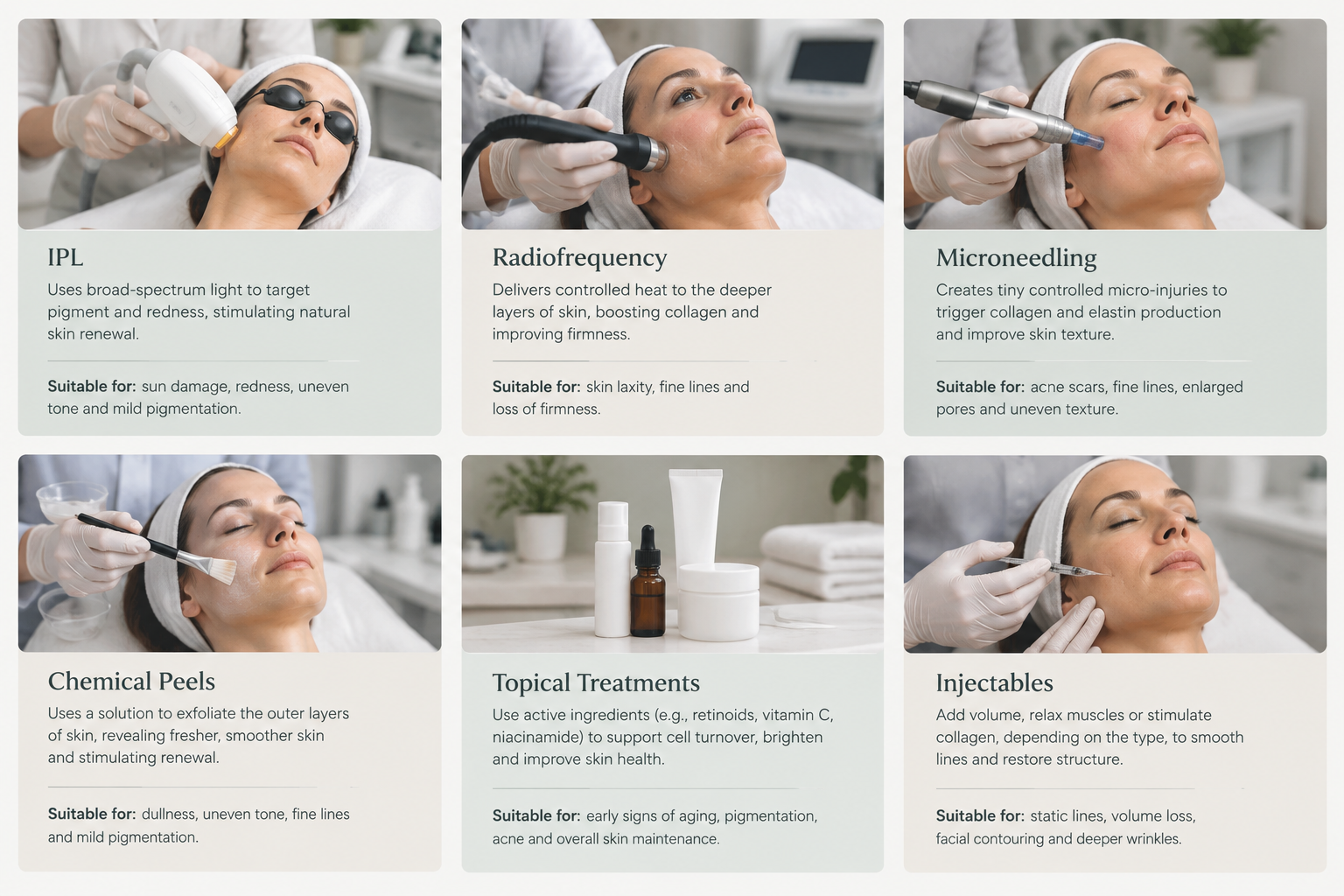
Alternatives to Facial Laser Treatment
Facial laser treatment is one of several approaches available for skin rejuvenation and targeted skin concerns. Alternatives worth discussing with a practitioner include:
- Intense Pulsed Light (IPL): IPL uses broad-spectrum light rather than a single laser wavelength and is commonly used for pigmentation, redness, and general skin rejuvenation. It is not a laser but is often discussed alongside laser treatments. IPL is generally less precise than laser for specific targets and may carry a higher risk of pigmentation complications in darker skin tones.
- Radiofrequency (RF) treatments: RF devices deliver energy as heat to stimulate collagen and may improve skin laxity and texture. Some RF devices are combined with microneedling (RF microneedling) for enhanced dermal remodelling. RF treatments are generally considered safer across a wider range of skin tones than ablative lasers.
- Microneedling: Mechanical microneedling creates controlled micro-injuries to stimulate collagen production. It is used for acne scarring, skin texture, and mild laxity. Results are generally more modest than fractional laser but with a lower risk profile across skin tones.
- Chemical peels: Chemical peels use acids to exfoliate and resurface the skin at varying depths. Superficial peels have minimal downtime; medium and deep peels carry risks similar to ablative laser treatment and require careful patient selection.
- Topical treatments: Evidence-based topical ingredients such as retinoids, vitamin C, niacinamide, and broad-spectrum sunscreen form the foundation of skin health and can complement or, for mild concerns, replace procedural treatments.
- Injectable treatments: Botulinum toxin and dermal fillers address dynamic lines and volume loss respectively — concerns that laser treatment does not directly target.
Frequently Asked Questions
How many sessions of facial laser treatment will I need?
The number of sessions depends on the laser type and the concern being treated. A single ablative resurfacing treatment may produce significant improvement, while non-ablative and fractional non-ablative treatments typically require a course of three to six sessions. Pigmentation and vascular treatments may need two to four sessions. A practitioner will give a more specific recommendation after assessing your skin.
Is face laser treatment painful?
Most patients experience some discomfort during facial laser treatment. Non-ablative and fractional non-ablative treatments are generally well tolerated with topical anaesthetic cream, producing a warm or snapping sensation. Ablative treatments are more uncomfortable and may require stronger anaesthesia. Practitioners take steps to manage discomfort, and most patients find the experience manageable.
Can facial laser treatment be used on darker skin tones?
Some laser treatments carry a higher risk of pigmentation complications in individuals with darker skin tones. However, certain laser types and settings — such as longer-wavelength Nd:YAG lasers and some fractional non-ablative devices — can be used more safely in darker skin when selected and applied by an experienced practitioner. A thorough assessment of your Fitzpatrick skin type and individual risk factors is essential before any laser treatment.
How long do the results of facial laser treatment last?
Results vary by treatment type and individual factors. Non-ablative treatments may require periodic maintenance sessions to sustain improvement. Fractional ablative results can last several years, and fully ablative resurfacing results may be longer-lasting, though the skin continues to age naturally. Sun protection and a good skincare routine help preserve results.
Can I wear makeup after facial laser treatment?
After non-ablative treatments, many patients can apply mineral makeup within a day or two. After fractional or ablative treatments, makeup should generally be avoided until the skin has healed sufficiently — typically five to ten days or longer for ablative procedures. Your practitioner will advise on the appropriate timeline for your specific treatment.
Is there a risk that laser treatment will make my pigmentation worse?
Yes, this is a recognised risk, particularly for individuals with darker skin tones or those with melasma. Post-inflammatory hyperpigmentation can occur after laser treatment if the skin is not properly prepared, if inappropriate settings are used, or if sun protection is not followed diligently after treatment. Discussing your pigmentation history and skin tone with your practitioner before treatment is important.
What is the difference between laser treatment and IPL?
Laser devices emit a single, focused wavelength of light, allowing precise targeting of specific chromophores. IPL (Intense Pulsed Light) emits a broad spectrum of light wavelengths and is filtered to target different concerns. IPL is not a laser, though it is often grouped with laser treatments in discussions of light-based skin treatments. Lasers are generally more precise for specific targets; IPL can address multiple concerns simultaneously but with less selectivity.
Choosing the Right Facial Laser Treatment for Your Skin Concerns
Face laser treatment is not a single procedure — it is a category of technologies with meaningfully different mechanisms, applications, recovery profiles, and risk considerations. The most appropriate option depends on your specific skin concern, skin tone, medical history, lifestyle, and tolerance for downtime. A treatment that produces excellent results for one patient may be unsuitable or even harmful for another.
For patients with lighter skin tones and significant photoageing or acne scarring, ablative or fractional ablative laser treatment may offer the most noticeable improvement, balanced against a longer recovery period. For those seeking gradual improvement with minimal disruption to daily life, non-ablative or fractional non-ablative options may be more practical. Targeted vascular or pigment-specific lasers are appropriate when the primary concern is redness, visible capillaries, or discrete pigmented lesions rather than overall skin resurfacing.
Before committing to any facial laser treatment, a consultation with a qualified and experienced practitioner is essential. This should include a full skin assessment, a discussion of your goals and medical history, a clear explanation of what the recommended treatment can and cannot achieve, and an honest account of the expected recovery and potential risks. Asking about the practitioner’s training, the device being used, and what aftercare support is provided are all reasonable and important questions. Laser treatment can be a valuable tool for skin improvement when used appropriately — but realistic expectations and proper patient selection are the foundation of a safe and satisfying outcome.