

Key Takeaways
- Eggs are generally considered a rosacea-friendly food for most people, but a subset of rosacea sufferers with egg white sensitivity may experience flare-ups.
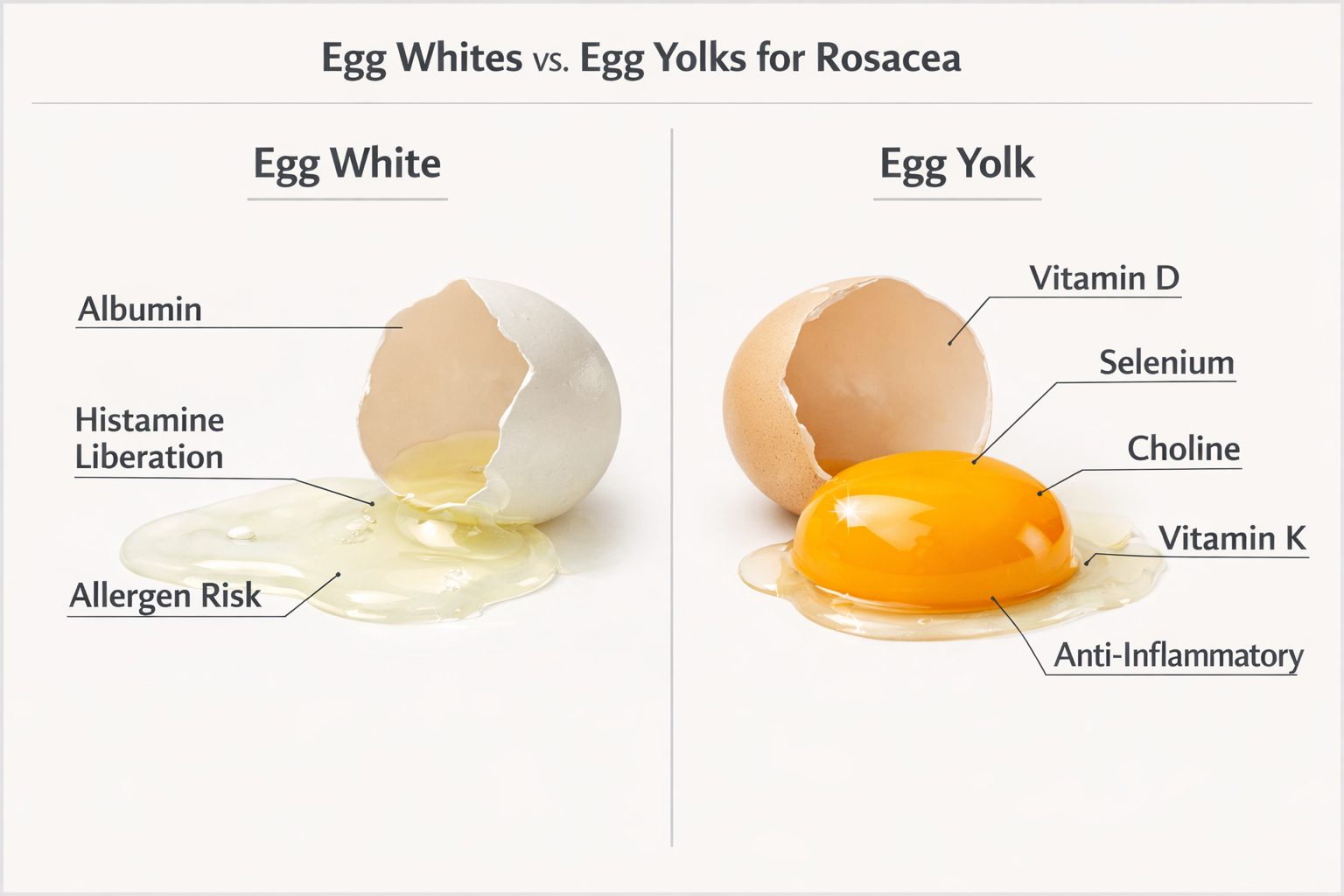
- Egg whites contain albumin and other proteins that can act as histamine-liberating foods, triggering the body to release histamine rather than containing it directly.
- Egg yolks provide Vitamin D, selenium, choline, and Vitamin K — nutrients that may support blood vessel health and reduce inflammation relevant to rosacea.
- Cooking method matters: poached, soft-boiled, or lightly scrambled eggs are generally preferable to fried preparations for those managing a chronic inflammatory skin condition.
- An elimination diet combined with a food diary is the most reliable way to determine whether eggs are a personal trigger for your rosacea flare-ups.
Understanding Rosacea and the Role of Diet
Rosacea is a chronic inflammatory skin condition primarily affecting the face, characterised by persistent erythema (redness), visible blood vessels, and episodes of facial flushing. It affects an estimated one in ten people of Northern European descent and, while its exact cause remains incompletely understood, research consistently points to a combination of immune dysregulation, neurovascular reactivity, and environmental triggers.
Diet is one of the most frequently discussed — and most misunderstood — aspects of rosacea management. A large survey conducted by the National Rosacea Society found that nearly 80% of rosacea sufferers had modified their diet in some way to manage symptoms, with alcohol, spicy foods, and hot beverages cited most commonly as dietary triggers. However, the relationship between specific foods and rosacea is highly individual. What provokes a rosacea flare-up in one person may be entirely well-tolerated by another.
Eggs sit in an interesting position within this dietary landscape. They appear on both sides of the conversation: recommended as a beneficial, anti-inflammatory food by some dermatologists and nutritional therapists, yet flagged as a potential concern by others due to the properties of egg whites. Understanding why requires looking at eggs not as a single food, but as two nutritionally distinct components with different implications for rosacea.
Are Eggs a Rosacea Trigger?
For the majority of rosacea sufferers, eggs are not a recognised dietary trigger. Unlike alcohol, spicy foods containing capsaicin, or cinnamaldehyde-containing foods such as tomatoes and citrus, eggs do not directly cause vasodilation — the widening of blood vessels that produces the characteristic facial flushing associated with rosacea flares.
However, egg whites deserve specific attention. Egg whites contain several proteins — including albumin (also called ovalbumin), ovomucin, ovotransferrin, and lysozyme — that are known allergens and can provoke immune responses in sensitive individuals. Crucially, egg whites are classified among histamine-liberating foods. This means they do not contain significant amounts of histamine themselves, but they can stimulate the body to release histamine from mast cells. In individuals with heightened skin sensitivity or an underlying histamine intolerance, this histamine release may contribute to facial redness, flushing, or a worsening of rosacea symptoms.
This distinction — histamine-liberating versus histamine-containing — is frequently misunderstood. Foods that are genuinely high in histamine include aged cheeses, cured meats, fermented foods, and certain alcoholic beverages. Egg whites occupy a different category: they prompt histamine release rather than delivering it directly. For most people, this distinction is clinically insignificant. For those with egg white sensitivity or a compromised ability to break down histamine, it may be meaningful.
It is also worth separating egg allergy from egg sensitivity. A true egg allergy involves an IgE-mediated immune response and typically produces rapid, systemic symptoms. Egg sensitivity or intolerance is a subtler, slower reaction that may manifest as skin changes, digestive discomfort, or a gradual worsening of inflammatory conditions like rosacea. Neither is universal among rosacea sufferers, and neither means eggs must be permanently avoided without first testing individual response.
Egg Whites vs Egg Yolks: Is There a Meaningful Difference?
When considering eggs in the context of rosacea, separating the white from the yolk is genuinely useful — they have different nutritional profiles and different implications for skin inflammation.
Egg whites are almost entirely protein. Their primary proteins — albumin, ovomucin, and ovotransferrin — are the components associated with histamine liberation and potential allergenicity. Cooking denatures these proteins to some degree, which is one reason why cooking method may influence how well egg whites are tolerated. Raw or lightly cooked egg whites retain more of their native protein structure and may be more likely to provoke a response in sensitive individuals.
Egg yolks, by contrast, are nutritionally dense in ways that are directly relevant to rosacea management. Key egg yolk nutrients include:
- Vitamin D: Rosacea sufferers are often advised to limit sun exposure, which is a primary source of Vitamin D. Vitamin D deficiency has been associated with increased inflammatory activity, and egg yolks are one of the few dietary sources of this nutrient. Maintaining adequate Vitamin D levels may support immune regulation relevant to rosacea.
- Selenium: Selenium and rosacea have an emerging connection through selenium’s role in strengthening capillary walls and reducing oxidative stress. Fragile or reactive capillaries contribute to the visible redness and flushing characteristic of rosacea, and selenium’s antioxidant properties may offer some protective benefit.
- Choline: Research published in peer-reviewed literature has linked higher choline intake with reduced levels of inflammatory markers. As rosacea is fundamentally an inflammatory condition, choline’s anti-inflammatory potential makes it a nutritionally relevant component of egg yolks.
- Vitamin K: Vitamin K plays a role in healthy blood vessel function and may help reduce the appearance of visible blood vessels — a common concern in rosacea. Egg yolks provide a modest but useful dietary source.
Taken together, egg yolks offer a nutritional profile that aligns well with an anti-inflammatory diet approach to rosacea management. The concern, where it exists, lies primarily with egg whites in sensitive individuals rather than with eggs as a whole food.
| Characteristic | Egg Whites | Egg Yolks |
|---|---|---|
| Primary components | Albumin, ovomucin, ovotransferrin (proteins) | Fats, Vitamin D, selenium, choline, Vitamin K |
| Rosacea trigger risk | Low-moderate in sensitive individuals (histamine liberation) | Low — generally well tolerated |
| Anti-inflammatory potential | Limited | Moderate — via choline, selenium, Vitamin D |
| Allergen concern | Higher — albumin is a recognised allergen | Lower |
| Cooking method impact | More significant — denaturing proteins may reduce reactivity | Less significant |
Does Cooking Method Affect Rosacea Risk?
Cooking method is a practical consideration that is often mentioned but rarely explained. The reason it matters relates to protein structure. Heat denatures proteins — it changes their three-dimensional shape, which can reduce their ability to trigger immune responses. Egg white proteins such as albumin are more reactive in their native, uncooked state. Thorough cooking may reduce, though not eliminate, their potential to act as histamine-liberating foods in sensitive individuals.
Poached, soft-boiled, and lightly scrambled eggs are generally recommended for rosacea sufferers who wish to include eggs in their diet. These methods cook the egg white sufficiently to denature the key proteins while avoiding the addition of inflammatory fats associated with frying. Deep-frying or cooking eggs in large amounts of butter or refined oils introduces saturated and trans fats that may independently promote inflammation — an unnecessary addition for someone managing a chronic inflammatory skin condition.
Fried eggs prepared in extra-virgin olive oil represent a middle ground, as olive oil is itself considered an anti-inflammatory food. However, for those with known egg white sensitivity, the cooking method alone is unlikely to make egg whites fully safe — in that case, egg yolks consumed separately may be a more practical option.
Organic and Omega-3 Enriched Eggs: Does Sourcing Matter?
The question of whether organic eggs or free-range eggs make a meaningful difference for rosacea sufferers is reasonable, though the evidence is limited. Organic eggs are produced without synthetic pesticides in the feed, and some researchers have theorised that pesticide residues in conventional eggs may contribute to low-level inflammatory responses in sensitive individuals. This remains a hypothesis rather than an established finding, and the clinical significance for rosacea specifically has not been studied in controlled trials.
Omega-3 enriched eggs represent a more evidence-supported option. These eggs are produced by hens fed a diet rich in flaxseed or fish meal, resulting in eggs with a higher omega-3 fatty acid content than standard eggs. Omega-3 fatty acids — particularly EPA and DHA — have well-documented anti-inflammatory properties and are frequently recommended as part of an anti-inflammatory diet for inflammatory skin conditions. While omega-3 enriched eggs are not a substitute for oily fish or dedicated omega-3 supplementation, they offer a practical way to increase anti-inflammatory fatty acid intake through a familiar food.
For rosacea sufferers who already tolerate eggs well, choosing organic or omega-3 enriched eggs is a reasonable dietary preference. It is unlikely to cause harm and may offer marginal additional benefit, though it should not be presented as a primary treatment strategy.
The Gut-Skin Axis and Eggs
An emerging area of rosacea research concerns the gut-skin axis — the bidirectional relationship between gut microbiome health and skin inflammatory conditions. Studies have found higher rates of small intestinal bacterial overgrowth (SIBO) and gut microbiome imbalance among rosacea sufferers compared to the general population, and some research suggests that improving gut health through dietary changes, probiotics, and prebiotics may have a positive effect on rosacea symptoms.
Eggs interact with gut health in several ways. Choline, found in egg yolks, is a precursor to acetylcholine and plays a role in gut motility and the integrity of the intestinal lining. A healthy gut lining supports the skin barrier function by reducing systemic inflammation driven by intestinal permeability. Conversely, in individuals with existing gut dysbiosis or histamine intolerance, egg whites may exacerbate symptoms by adding to the histamine burden the gut is already struggling to process.
This connection reinforces the importance of individual assessment. Eggs are not inherently problematic for gut health, but their effect on the gut-skin axis will vary depending on the individual’s baseline gut microbiome, histamine tolerance, and overall dietary pattern.
How to Identify Whether Eggs Are a Personal Trigger
Because individual triggers vary so significantly in rosacea, the most reliable approach to understanding your personal response to eggs is a structured elimination diet combined with careful symptom tracking using a food diary.
The general protocol involves three stages:
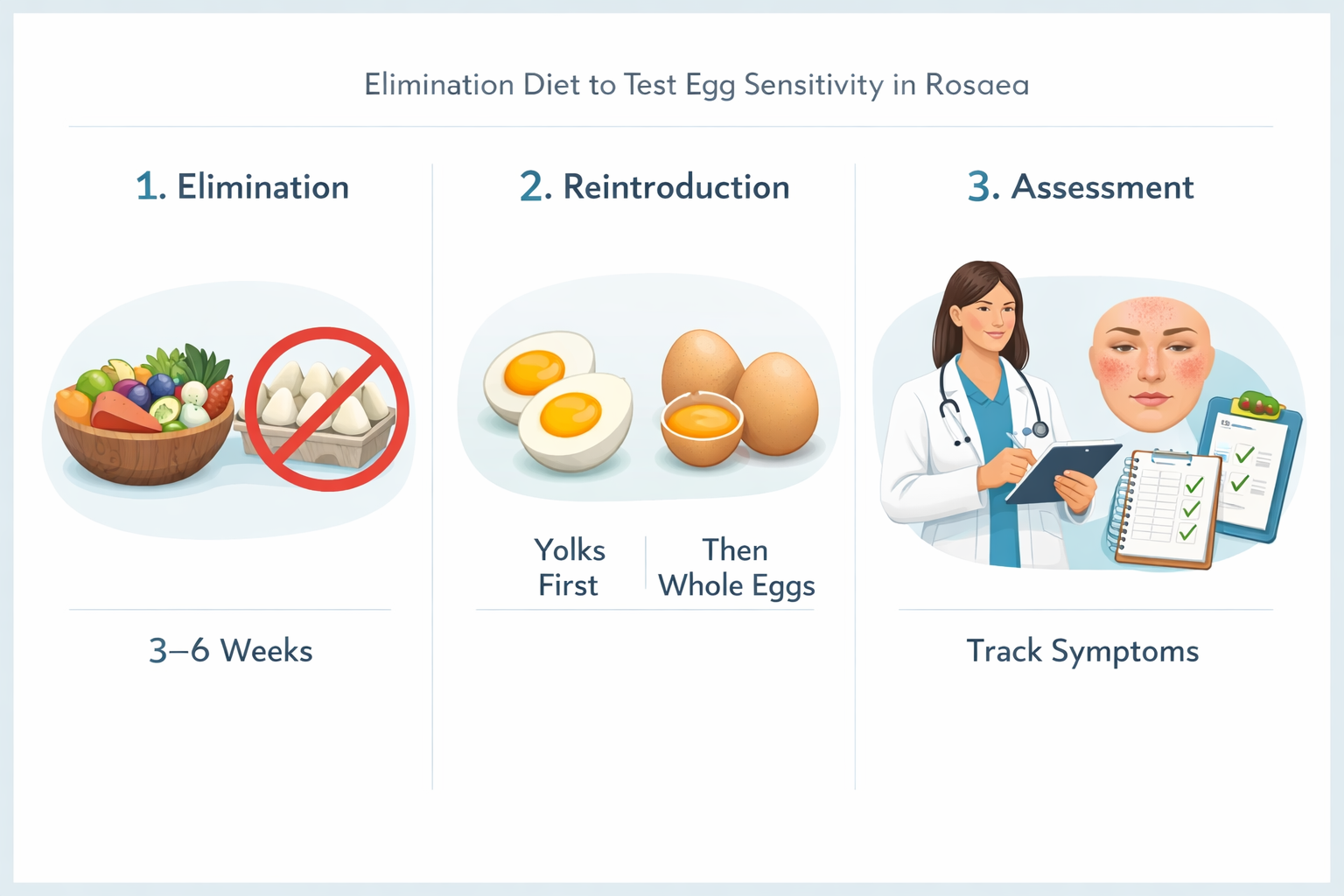
- Elimination phase (3–6 weeks): Remove eggs entirely from the diet. During this period, monitor rosacea symptoms carefully — noting frequency of facial flushing, intensity of redness, and any new flare-ups. A food diary should record everything consumed alongside any skin changes observed.
- Reintroduction protocol: Reintroduce eggs one form at a time. Begin with egg yolks only for one week, observing any change in symptoms. If yolks are well tolerated, introduce whole eggs in a cooked form (poached or soft-boiled) for a further week. This staged approach allows you to identify whether egg whites specifically are the issue.
- Assessment: If symptoms worsen during reintroduction, eggs — or specifically egg whites — may be a personal trigger. If symptoms remain stable, eggs are likely safe to include in your diet and may even be beneficial given their nutritional profile.
It is important to conduct this process during a period when other known triggers are controlled as much as possible. Running an elimination diet while also consuming alcohol regularly or during a period of high stress makes it difficult to attribute symptom changes to any single food. Consulting a dermatologist or registered nutritionist before beginning an elimination diet is advisable, particularly if rosacea symptoms are severe or if there are other dietary concerns to consider.
Foods That May Help and Foods to Limit with Rosacea
Eggs sit within a broader dietary context for rosacea management. Understanding which other foods are generally considered supportive — and which are more commonly associated with flares — helps place eggs in perspective.
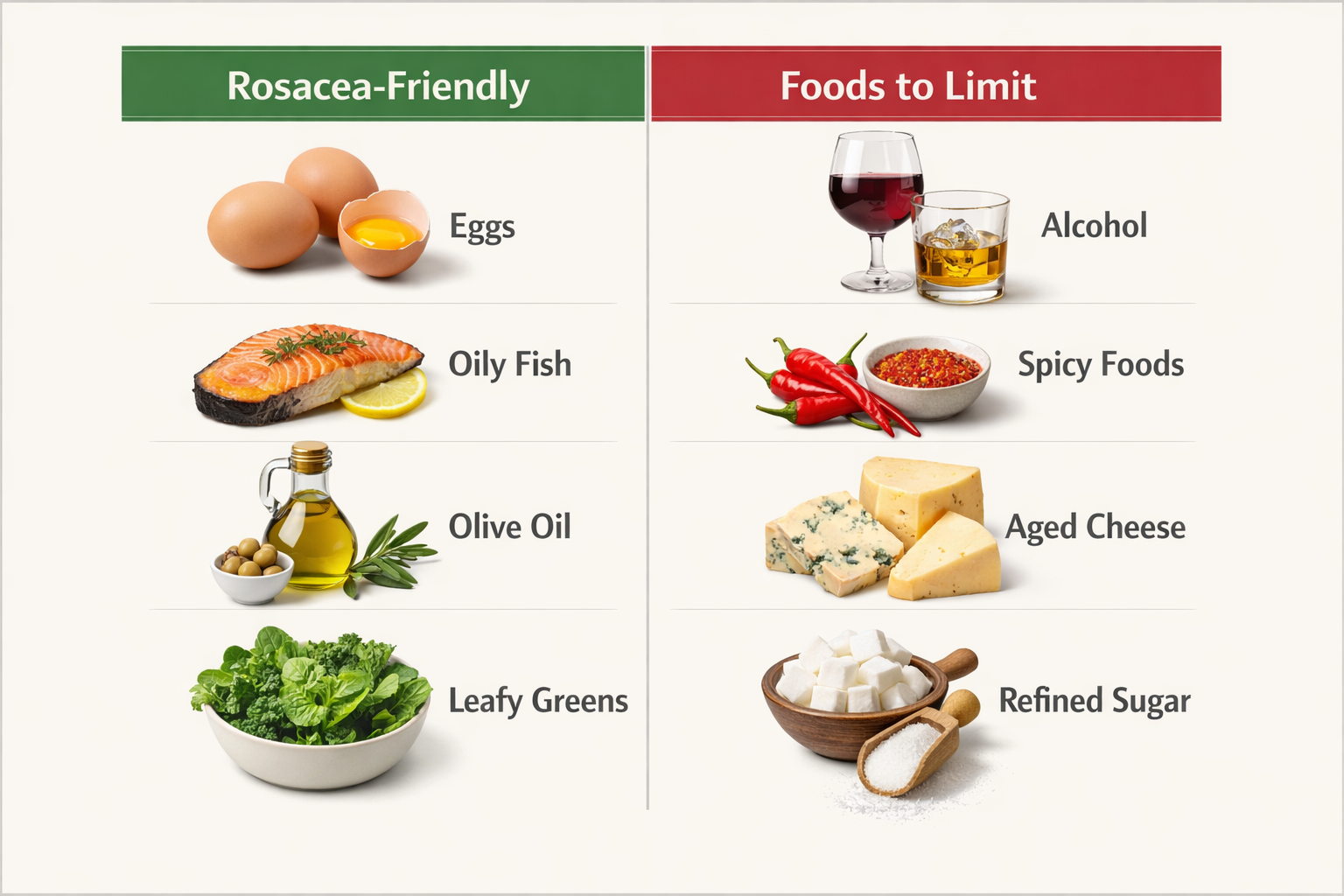
Foods generally considered rosacea-friendly:
- Eggs (particularly yolks, and whites if individually tolerated)
- Oily fish rich in omega-3 fatty acids (salmon, mackerel, sardines)
- Leafy green vegetables and colourful vegetables
- Extra-virgin olive oil
- Whole grains with a low glycaemic index
- Probiotic-rich foods such as live yoghurt and kefir (if dairy is tolerated)
- Nuts and seeds, particularly those rich in omega-3 fatty acids
Foods more commonly associated with rosacea flare-ups:
- Alcohol, particularly red wine (vasodilation effect)
- Spicy foods containing capsaicin
- Cinnamaldehyde-containing foods: tomatoes, citrus fruits, chocolate, cinnamon
- Aged cheeses, cured meats, and fermented foods (high histamine content)
- Hot beverages (temperature trigger rather than ingredient trigger)
- Refined sugars and high-glycaemic foods (promote systemic inflammation)
- Dairy products in some individuals (lactose and saturated fat)
This list reflects population-level patterns from survey data and clinical observation. Individual responses vary, and no food should be permanently eliminated without first testing personal tolerance through a structured reintroduction protocol.
Frequently Asked Questions
Can I eat eggs if I have rosacea?
Most people with rosacea can eat eggs without triggering a flare-up. Eggs — particularly egg yolks — are generally considered a rosacea-friendly food due to their anti-inflammatory nutrient profile. A smaller subset of individuals with egg white sensitivity may notice a worsening of symptoms, which is why testing personal tolerance through an elimination diet is recommended if you are unsure.
Are egg whites worse than egg yolks for rosacea?
Egg whites carry a higher potential for triggering reactions in sensitive individuals because they contain albumin and other proteins that can act as histamine-liberating foods. Egg yolks, by contrast, provide Vitamin D, selenium, choline, and Vitamin K — nutrients with anti-inflammatory relevance to rosacea. If you suspect eggs are affecting your skin, testing egg yolks separately from egg whites during a reintroduction protocol can help identify which component is responsible.
Do eggs cause facial flushing?
Eggs do not directly cause vasodilation in the way that alcohol or capsaicin-containing spicy foods do. Facial flushing from eggs would most likely occur in individuals with a specific egg white sensitivity or histamine intolerance, where the histamine-liberating effect of egg white proteins triggers a skin response. For most rosacea sufferers, eggs are not associated with facial flushing.
What is the best way to cook eggs if I have rosacea?
Poached, soft-boiled, or lightly scrambled eggs are generally preferred. These cooking methods denature egg white proteins sufficiently to reduce their reactive potential while avoiding the addition of inflammatory fats associated with deep frying. Cooking eggs in extra-virgin olive oil is a reasonable option if frying is preferred.
Are organic eggs better for rosacea?
The evidence for organic eggs specifically benefiting rosacea is limited. However, organic eggs avoid synthetic pesticide residues in feed, and omega-3 enriched eggs offer a higher content of anti-inflammatory fatty acids. If you already tolerate eggs well, choosing organic or omega-3 enriched eggs is a sensible dietary preference, though it is unlikely to produce dramatic changes in rosacea symptoms on its own.
Should I see a dermatologist about my diet and rosacea?
Yes, particularly if your rosacea symptoms are persistent, worsening, or significantly affecting quality of life. A dermatologist can assess your rosacea subtype, recommend appropriate medical treatments, and refer you to a registered nutritionist for personalised dietary guidance. Dietary changes alone are rarely sufficient to manage rosacea comprehensively and work best as part of a broader management plan.
Making an Informed Decision About Eggs and Your Rosacea Diet
The evidence suggests that eggs are a beneficial food for the majority of rosacea sufferers rather than a food to avoid. Egg yolks in particular offer a nutritional profile — Vitamin D, selenium, choline, and Vitamin K — that supports the anti-inflammatory dietary approach increasingly recommended for managing this chronic inflammatory skin condition. The concern around eggs is real but specific: it applies primarily to individuals with egg white sensitivity or histamine intolerance, and it relates to the histamine-liberating properties of egg white proteins such as albumin rather than to eggs as a whole.
If you are uncertain whether eggs affect your rosacea, the most practical step is to keep a food diary and, if warranted, undertake a structured elimination diet with a staged reintroduction protocol. This approach removes guesswork and gives you reliable, personalised information about your individual triggers — which is ultimately more useful than any population-level food list.
Rosacea management is most effective when dietary strategies are combined with appropriate medical treatment, sun protection, and trigger avoidance tailored to the individual. If you have not yet discussed your rosacea with a dermatologist or skin specialist, a consultation is a worthwhile step — both to confirm your diagnosis and to explore the full range of treatment options available alongside dietary support.