

Microneedling is one of the most frequently asked-about skin treatments, and the question of how much it hurts is usually at the top of the list. The honest answer is that most patients experience some discomfort rather than significant pain, particularly when a topical anaesthetic is applied beforehand. However, the sensation varies depending on the depth of treatment, the area being treated, and individual pain tolerance. This article explains what microneedling actually feels like, how practitioners manage discomfort, what to expect during recovery, and which factors influence the overall experience.
Key Takeaways
- Most patients describe microneedling as uncomfortable rather than painful, especially with topical numbing cream applied before treatment.
- Sensation varies by treatment area, needle depth, and individual pain sensitivity — bony areas such as the forehead and jawline tend to feel more intense.
- Redness, sensitivity, and mild swelling are normal in the first 24–72 hours and are not signs that something has gone wrong.
- Deeper treatments, such as those targeting acne scars or stretch marks, generally involve more discomfort than superficial skin-quality sessions.
- A qualified practitioner can adjust needle depth and numbing protocols to make the experience more manageable for most patients.
What Is Microneedling and How Does It Work?
Microneedling — also called collagen induction therapy — is a minimally invasive skin treatment that uses a device fitted with fine needles to create controlled micro-injuries in the skin’s surface. These tiny punctures trigger the skin’s natural wound-healing response, stimulating the production of collagen and elastin. Over time, this process can improve skin texture, reduce the appearance of fine lines, minimise acne scarring, and address uneven skin tone.
The needles used in professional microneedling devices typically range from 0.5 mm to 2.5 mm in depth, depending on the concern being treated and the area of the face or body. Superficial depths around 0.5–1.0 mm are commonly used for general skin quality and fine lines, while deeper settings of 1.5–2.5 mm may be used for more established acne scars or stretch marks. The depth selected directly influences how much discomfort a patient is likely to feel.
Professional microneedling devices — such as motorised pen-style tools — differ significantly from at-home dermarollers. Clinical devices deliver more consistent needle penetration, allow precise depth control, and are used by trained practitioners in a clinical setting. At-home rollers operate at much shallower depths and carry different risk profiles. This article focuses on professional in-clinic microneedling.
How Much Does Microneedling Hurt?
On a standard pain scale of one to ten, most patients who have received topical anaesthetic rate microneedling between two and four. Without numbing cream, the same treatment might feel closer to a five or six in sensitive areas. The sensation is often described as a scratching or prickling feeling, similar to light sandpaper being moved across the skin. Some patients compare it to the feeling of a mild sunburn being touched during the procedure.
The experience is rarely described as sharp or stabbing pain. Instead, most people notice a continuous low-level discomfort that varies in intensity as the device moves across different parts of the face. The treatment typically takes between 20 and 45 minutes for a full-face session, and the discomfort is present throughout rather than concentrated in a single moment.
Individual pain tolerance plays a meaningful role. Patients who are generally sensitive to skin procedures, who have thinner skin, or who are treating particularly sensitive areas may find the experience more noticeable. Conversely, patients who have had multiple sessions often report that subsequent treatments feel more tolerable, possibly because they know what to expect and are less anxious.
Which Areas Hurt More?
Certain facial areas are consistently reported as more sensitive than others during microneedling. The forehead, particularly near the hairline, tends to feel more intense because the skin sits closer to the bone with less underlying soft tissue to cushion the sensation. The jawline, chin, and nose are similarly reported as more uncomfortable. The cheeks and mid-face, where there is more soft tissue beneath the skin, are generally better tolerated.
When microneedling is performed on the body — for example, to address stretch marks on the abdomen, thighs, or décolletage — the experience can differ from facial treatment. Body skin is often thicker, and deeper needle depths are sometimes required, which can increase discomfort. The scalp, when treated for hair loss concerns, is another area that patients frequently describe as more sensitive.
Numbing Cream and Pain Management
Topical anaesthetic cream — most commonly containing lidocaine, sometimes combined with prilocaine or tetracaine — is the standard approach to managing discomfort during microneedling. In a professional clinic setting, numbing cream is typically applied to the treatment area 20 to 45 minutes before the procedure begins, allowing sufficient time for the anaesthetic to take effect in the superficial layers of the skin.
When applied correctly and given adequate time to work, topical numbing cream significantly reduces the sensation of the needles. Most patients find the treatment much more manageable with numbing than without it. However, topical anaesthetics do not eliminate sensation entirely — they reduce it. Patients should still expect to feel some pressure and movement of the device across the skin.
It is important that numbing cream is applied and removed by a trained practitioner, particularly when used before a procedure that creates micro-channels in the skin. Applying excessive amounts of topical anaesthetic or leaving it on for too long carries its own risks, including systemic absorption. A qualified practitioner will manage this appropriately as part of the pre-treatment protocol.
Some clinics also use cooling devices, chilled air, or cold compresses during or after treatment to help manage discomfort and reduce post-treatment redness. These are supportive measures rather than replacements for proper numbing.
What Does Microneedling Feel Like During the Procedure?
Once the numbing cream has been removed and the treatment begins, most patients notice the device moving systematically across the skin in overlapping passes. The sensation is typically described as a vibrating or rolling pressure with a mild prickling quality. The intensity increases slightly when the device passes over bonier areas or when the needle depth is increased for specific zones.
The sound of the device — a faint mechanical hum — is something patients often notice for the first time and can feel slightly alarming if they are not prepared for it. Practitioners usually explain what to expect before starting, which helps reduce anxiety and makes the experience more comfortable overall.
During the treatment, the skin is typically stretched slightly to allow the device to glide smoothly. A serum or sterile solution is often applied to the skin surface to reduce friction and support the treatment. Patients are usually asked to keep their face still and relaxed, and the practitioner works methodically across the treatment area.
Towards the end of the session, some patients notice that the skin feels increasingly warm and sensitive as the cumulative effect of the passes builds up. This is normal and typically settles within minutes of the treatment finishing.
Pain During Deeper Microneedling Treatments
Microneedling for acne scars, surgical scars, or stretch marks often requires deeper needle penetration than a standard skin-quality session. At depths of 1.5 mm or greater, the treatment reaches the deeper layers of the dermis, and the sensation is correspondingly more noticeable — even with numbing cream in place.
Patients undergoing deeper microneedling sessions should be prepared for a more intense experience, particularly in areas where the scarring is dense or where the skin is less mobile. Some practitioners use a combination of topical anaesthetic and additional comfort measures for these sessions. It is reasonable to discuss pain management options with your practitioner before booking a deeper treatment, particularly if you have a lower pain threshold.
Radiofrequency microneedling — a variation that combines standard microneedling with radiofrequency energy delivered through the needles — is generally reported as more uncomfortable than standard microneedling. The radiofrequency energy creates an additional heating sensation beneath the skin surface, and adequate numbing is particularly important for these treatments.
What to Expect After Microneedling: Sensitivity and Recovery
The immediate post-treatment period is when many patients notice the most significant discomfort. In the hours following microneedling, the skin typically feels warm, tight, and sensitive — similar to mild sunburn. This is a normal inflammatory response and is part of the healing process that drives the treatment’s benefits.
Redness is expected and usually most pronounced in the first 12 to 24 hours. For most patients undergoing a standard facial microneedling session, visible redness settles significantly within 24 to 48 hours, though some mild pinkness may persist for up to 72 hours. Deeper treatments or those targeting body areas may involve a longer period of visible redness and sensitivity.
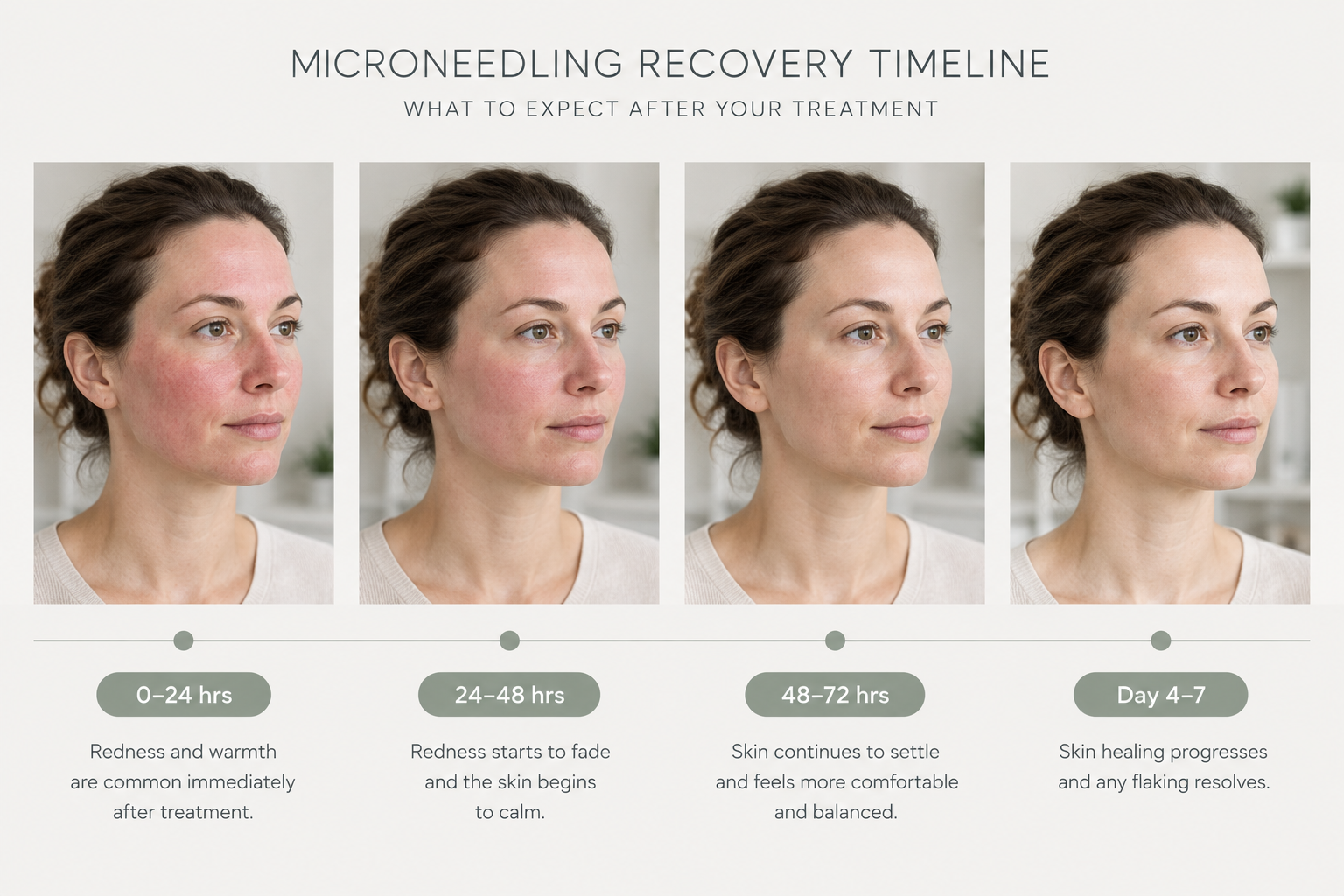
Mild swelling, particularly around the eyes and cheeks, can occur in the first 24 hours and is generally not a cause for concern. Some patients also notice small areas of pinpoint bleeding or bruising, which typically resolve within a few days. Skin may feel dry and slightly rough as it heals, and some flaking is possible in the days following treatment.
Managing Post-Treatment Discomfort
Most post-treatment discomfort can be managed with simple measures. Applying a gentle, fragrance-free moisturiser or a practitioner-recommended recovery serum helps soothe the skin and supports the healing process. Avoiding active skincare ingredients — such as retinoids, alpha hydroxy acids, and vitamin C — for the first few days after treatment is important, as the skin’s barrier is temporarily compromised and these ingredients can cause irritation.
Sun protection is essential after microneedling. The skin is more vulnerable to UV damage during the healing period, and sun exposure can worsen redness and increase the risk of post-inflammatory hyperpigmentation, particularly in patients with darker skin tones. A broad-spectrum SPF 30 or higher should be applied daily and reapplied as needed.
Patients are generally advised to avoid heat exposure — including saunas, steam rooms, and intense exercise — for 24 to 48 hours after treatment, as heat can exacerbate inflammation. Makeup is typically avoided for the first 24 hours to reduce the risk of introducing bacteria into the micro-channels.
Factors That Influence How Much Microneedling Hurts
Several variables affect the overall pain experience during microneedling, and understanding them can help patients set realistic expectations before their appointment.
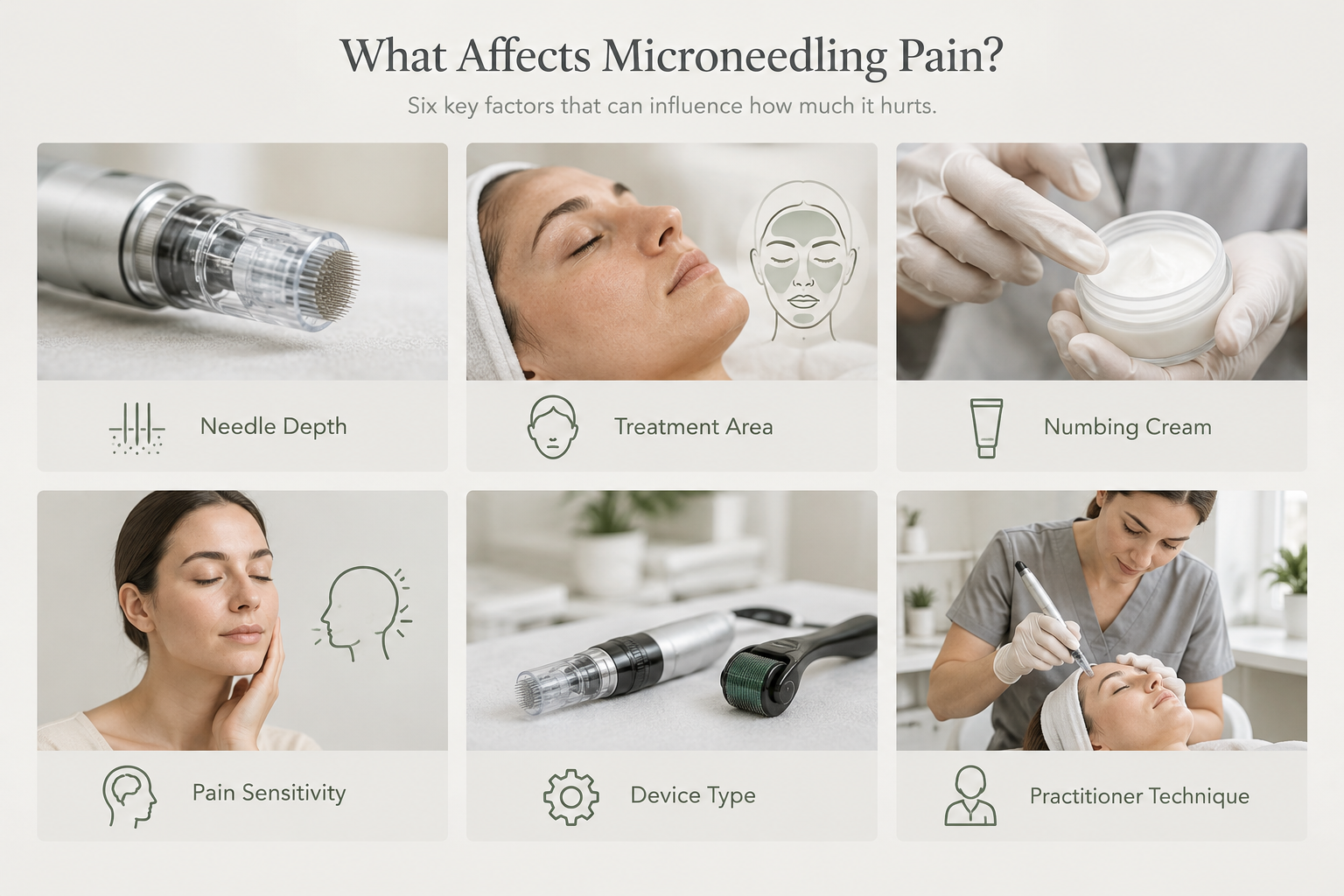
- Needle depth: Deeper settings cause more discomfort. Superficial treatments for skin texture are generally well tolerated; deeper treatments for scarring are more intense.
- Treatment area: Bony areas with less soft tissue — forehead, jawline, nose — tend to be more sensitive than the cheeks or mid-face.
- Numbing cream effectiveness: The quality of the anaesthetic, how long it is left on, and how evenly it is applied all affect how well it works.
- Individual pain sensitivity: Pain tolerance varies between patients. Anxiety, fatigue, and hormonal fluctuations can all influence how discomfort is perceived on a given day.
- Device type: Motorised pen devices with adjustable speed and depth settings can be calibrated to reduce trauma. Older or lower-quality devices may cause more discomfort for the same depth.
- Practitioner technique: An experienced practitioner who applies consistent pressure, uses appropriate speed settings, and adjusts the approach for sensitive areas can meaningfully reduce discomfort.
- Skin condition: Active inflammation, very dry skin, or compromised skin barrier may increase sensitivity during treatment.
Risks and Side Effects Beyond Discomfort
While pain and temporary redness are the most commonly discussed aspects of the microneedling experience, patients should also be aware of the broader range of possible side effects and risks associated with the treatment.
Common and expected side effects include redness, mild swelling, skin sensitivity, and temporary dryness or flaking. These typically resolve within a few days and are part of the normal healing process.
Less common but possible side effects include bruising, prolonged redness lasting more than a week, and post-inflammatory hyperpigmentation — a darkening of the skin that can occur as it heals, particularly in patients with medium to darker skin tones. The risk of hyperpigmentation is one reason why sun protection after treatment is strongly recommended.
Infection is a risk with any procedure that creates openings in the skin, though it is uncommon when treatment is performed in a clean clinical environment with sterile equipment. Patients with a history of cold sores (herpes simplex) may experience a flare following microneedling, and antiviral prophylaxis is sometimes recommended for these individuals before treatment.
Microneedling is generally not recommended for patients with active acne breakouts, rosacea flares, eczema, psoriasis, or other active inflammatory skin conditions in the treatment area. It is also not suitable during pregnancy. Patients taking certain medications — including blood thinners or isotretinoin — should discuss this with their practitioner before proceeding, as these can affect healing and treatment suitability.
Who May Be Suitable for Microneedling
Microneedling may be appropriate for adults seeking to improve skin texture, reduce the appearance of fine lines, address mild to moderate acne scarring, or improve overall skin quality. It can be used on a range of skin tones, though the approach and aftercare may need to be adapted for patients with darker skin to minimise the risk of post-inflammatory hyperpigmentation.
Patients who are concerned about pain but interested in the treatment should discuss their anxiety with their practitioner before booking. A practitioner can explain the numbing protocol, adjust the treatment depth for a first session, and help manage expectations so that the experience is as comfortable as possible.
A thorough consultation before treatment is important. This should include a review of medical history, current medications, skin concerns, and previous treatments. Individual suitability depends on a range of factors that a qualified practitioner is best placed to assess in person.
Alternatives to Microneedling
Patients who are concerned about the discomfort associated with microneedling, or who are not suitable candidates, may wish to explore alternative treatments for similar skin concerns.
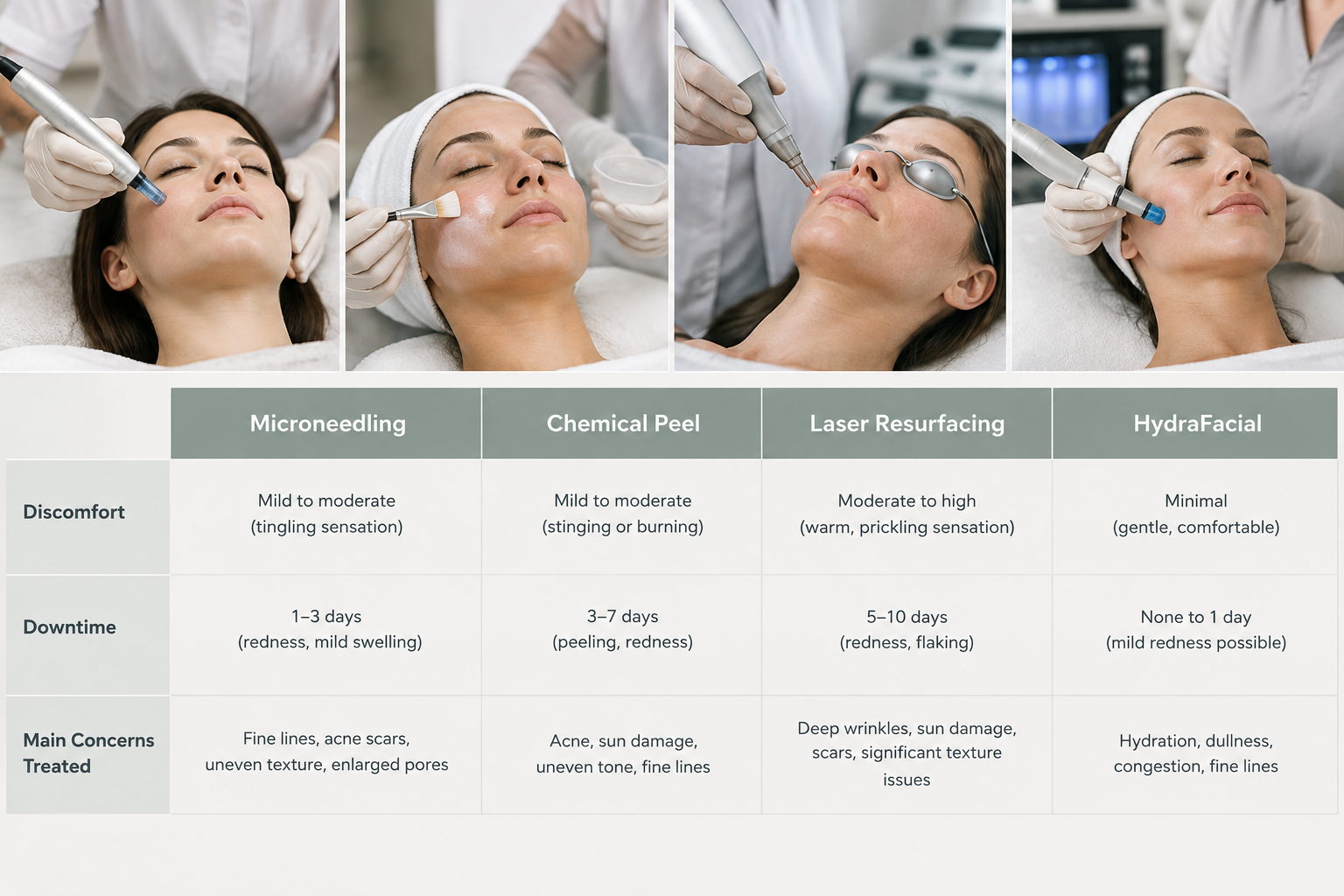
Chemical peels use exfoliating acids to resurface the skin and can address texture, pigmentation, and mild scarring. Superficial peels involve minimal discomfort — typically a tingling or mild stinging sensation — while medium-depth peels may cause more significant discomfort and longer recovery. The appropriate peel depth depends on the concern being treated and the patient’s skin type.
Laser skin resurfacing treatments, including fractional laser and ablative laser options, can address similar concerns to microneedling — including scarring, texture, and fine lines — often with greater intensity. These treatments typically involve more downtime and may require stronger anaesthesia, but can produce more pronounced results in a single session for some patients.
Polynucleotide injections and other biostimulator treatments work differently from microneedling, stimulating collagen through injected compounds rather than mechanical injury. These may be suitable for patients seeking skin quality improvements with a different treatment experience.
HydraFacial and similar hydradermabrasion treatments offer a gentler approach to skin texture and radiance with minimal discomfort and no downtime, though they address different concerns and work through a different mechanism than microneedling.
The most appropriate alternative depends on the patient’s specific skin concern, skin type, pain tolerance, and downtime availability. A qualified practitioner can help identify which option may be most suitable following an individual assessment.
Frequently Asked Questions
Is microneedling painful without numbing cream?
Without topical anaesthetic, microneedling is noticeably more uncomfortable — particularly at deeper treatment depths or over bony areas. Most professional clinics apply numbing cream as standard practice. If you are concerned about pain, confirm with your clinic that numbing is included in the protocol before your appointment.
How long does the discomfort last after microneedling?
The immediate post-treatment sensitivity — warmth, tightness, and mild stinging — typically settles within a few hours. Redness and skin sensitivity may persist for 24 to 72 hours depending on the depth of treatment. Deeper sessions targeting acne scars may involve sensitivity lasting slightly longer.
Can I take a painkiller before microneedling?
Some patients ask about taking over-the-counter pain relief before treatment. Non-steroidal anti-inflammatory drugs (NSAIDs) such as ibuprofen may affect platelet function and could theoretically increase bruising. It is best to discuss this with your practitioner before taking any medication ahead of your appointment rather than self-medicating without guidance.
Does microneedling hurt more on the second or third session?
Many patients report that subsequent sessions feel similar to or slightly more tolerable than the first, partly because they know what to expect and feel less anxious. The treatment depth may be increased in later sessions as the skin adapts, which can affect the sensation. Your practitioner should discuss any planned changes to the protocol before each session.
Is radiofrequency microneedling more painful than standard microneedling?
Radiofrequency microneedling is generally reported as more intense than standard microneedling because the radiofrequency energy creates an additional heating sensation beneath the skin. Adequate numbing is particularly important for these treatments, and some clinics use stronger anaesthetic protocols for radiofrequency microneedling sessions.
Can microneedling cause lasting skin damage?
When performed by a trained practitioner using appropriate equipment and technique, microneedling is considered a low-risk procedure. Serious complications are uncommon. However, infection, scarring, and prolonged pigmentation changes are possible, particularly if aftercare instructions are not followed or if the treatment is performed on unsuitable skin. Choosing a qualified and experienced practitioner significantly reduces these risks.
Is Microneedling Worth the Discomfort for Your Skin Goals?
For most patients, the level of discomfort associated with professional microneedling is manageable — particularly with appropriate numbing and a practitioner who adjusts the treatment to individual sensitivity. The temporary discomfort during and immediately after the session is generally considered acceptable by patients who are seeking meaningful improvements in skin texture, acne scarring, or fine lines.
That said, microneedling is not the right choice for every patient or every concern. The treatment requires multiple sessions for best results, involves a short recovery period after each appointment, and carries a small but real risk of side effects. Patients with lower pain tolerance, active skin conditions, or specific medical considerations may find that an alternative approach is more appropriate.
The most useful step before committing to microneedling is a thorough consultation with a qualified practitioner who can assess your skin, discuss your goals, explain the expected experience in the context of your specific treatment plan, and help you decide whether microneedling is the right option for you.