

Dissolving lip filler with hyaluronidase is one of the few genuinely reversible options in aesthetic medicine, offering patients a way to correct unwanted results, address complications, or simply return to their natural lip appearance. Whether you are unhappy with the outcome of a previous treatment, experiencing an adverse reaction, or reconsidering filler altogether, understanding how hyaluronidase works, what the process involves, and what realistic outcomes look like will help you make a more informed decision before booking a consultation.
Key Takeaways
- Hyaluronidase is an enzyme that breaks down hyaluronic acid filler and can be used to partially or fully dissolve lip filler, often within 24 to 48 hours.
- The procedure is generally well tolerated but carries real risks including allergic reaction, over-dissolution, and temporary swelling, so it should only be performed by a qualified medical practitioner.
- Results depend on the type and volume of filler present, how long it has been in place, and individual tissue response — outcomes are not always perfectly predictable.
- Hyaluronidase only dissolves hyaluronic acid-based fillers; it has no effect on other filler types such as calcium hydroxylapatite or poly-L-lactic acid.
- After dissolution, most patients can safely receive new hyaluronic acid filler if desired, typically after a waiting period recommended by their practitioner.
What Is Hyaluronidase and How Does It Dissolve Lip Filler?
Hyaluronidase is an enzyme that occurs naturally in the human body, where it plays a role in breaking down hyaluronic acid — a substance found in connective tissue, skin, and the extracellular matrix. In aesthetic medicine, a pharmaceutical-grade form of hyaluronidase is injected directly into the area where hyaluronic acid filler is present. The enzyme cleaves the molecular bonds within the hyaluronic acid gel, breaking it down into smaller fragments that the body can then absorb and clear through normal metabolic processes.
Because most modern lip fillers are formulated from cross-linked hyaluronic acid, hyaluronidase is highly effective at dissolving them. The cross-linking process that gives fillers their structure and longevity does not prevent hyaluronidase from working, though heavily cross-linked or high-density fillers may require a higher dose or a repeat treatment session to achieve full dissolution. The enzyme acts relatively quickly — visible softening of the filler can often be observed within hours, and the majority of the dissolving effect is typically complete within 24 to 48 hours.
It is important to understand that hyaluronidase is not selective: it will break down both the injected filler and some of the body’s own naturally occurring hyaluronic acid in the surrounding tissue. This is one reason why temporary swelling, tenderness, and a deflated appearance can occur immediately after treatment. The body generally replenishes its natural hyaluronic acid over the following weeks, which is why the lips may look and feel more normal over time even if they initially appear very flat or uneven after dissolution.
Why Patients Choose to Dissolve Lip Filler
There are several clinically relevant reasons why a patient might seek hyaluronidase lip reversal. Understanding the underlying reason matters because it influences how the treatment is approached and what outcome is realistic.
Aesthetic dissatisfaction is among the most common reasons. This may include lips that appear overfilled, asymmetrical, unnaturally shaped, or that have developed a lumpy or irregular texture over time. Filler migration — where product moves away from the original injection site — can also create an undesirable appearance, sometimes described as a blurred or poorly defined lip border.

Complications requiring urgent treatment represent a more medically urgent indication. Vascular occlusion, where filler compresses or enters a blood vessel and restricts blood flow, is a rare but serious complication of lip filler that may require immediate hyaluronidase injection as part of emergency management. In this context, dissolving the filler is a clinical priority rather than an elective choice.
Accumulated filler over multiple treatments is another reason. Hyaluronic acid fillers do not always fully dissolve between appointments, and repeated treatments over months or years can lead to a gradual build-up of product. Some patients seek dissolution to effectively reset the lips before deciding whether to continue with filler.
Lifestyle or preference changes also bring patients forward. Some individuals simply decide they no longer want lip augmentation and prefer to return to their natural appearance.
Which Lip Fillers Can Be Dissolved?
Hyaluronidase is effective only against hyaluronic acid-based fillers. This category includes the majority of lip fillers used in clinical practice, including well-known brands such as Juvederm, Restylane, Belotero, and Teosyal, among others. These products are all formulated from hyaluronic acid and will respond to hyaluronidase treatment.
Fillers made from other materials cannot be dissolved with hyaluronidase. Calcium hydroxylapatite products, poly-L-lactic acid stimulators, and permanent or semi-permanent fillers such as polymethylmethacrylate (PMMA) do not respond to this enzyme. If a patient has received a non-hyaluronic acid filler in the lips, dissolution is not possible with hyaluronidase, and management of any complications or unwanted results requires a different approach. This is one reason why a thorough treatment history is essential before any reversal procedure is planned.
In some cases, patients may be uncertain about what type of filler they received, particularly if treatment was performed elsewhere or some time ago. A qualified practitioner can often assess this through clinical examination and patient history, though definitive identification of filler type is not always possible without additional investigation.
What Happens During a Hyaluronidase Treatment Appointment
A hyaluronidase lip reversal appointment typically begins with a consultation to review the patient’s treatment history, assess the current appearance of the lips, discuss the goals of dissolution, and identify any relevant contraindications. The practitioner will ask about previous filler treatments, known allergies — particularly to bee stings or wasp venom, which may indicate a higher risk of hyaluronidase allergy — and any medications or medical conditions that could affect treatment safety.
Before the injection, a topical anaesthetic cream may be applied to the lips to reduce discomfort, though many practitioners find that the procedure is well tolerated without it. Some practitioners perform a small skin test dose of hyaluronidase before the full treatment to check for an allergic reaction, though the evidence on whether routine skin testing reliably predicts allergy is mixed, and practice varies between clinicians.
The hyaluronidase is then injected into the lip tissue using a fine needle or cannula. The number of injection points and the dose used will depend on the volume of filler present, its distribution, and the degree of dissolution required. The appointment itself is usually brief, often completed within 15 to 30 minutes including the consultation component.
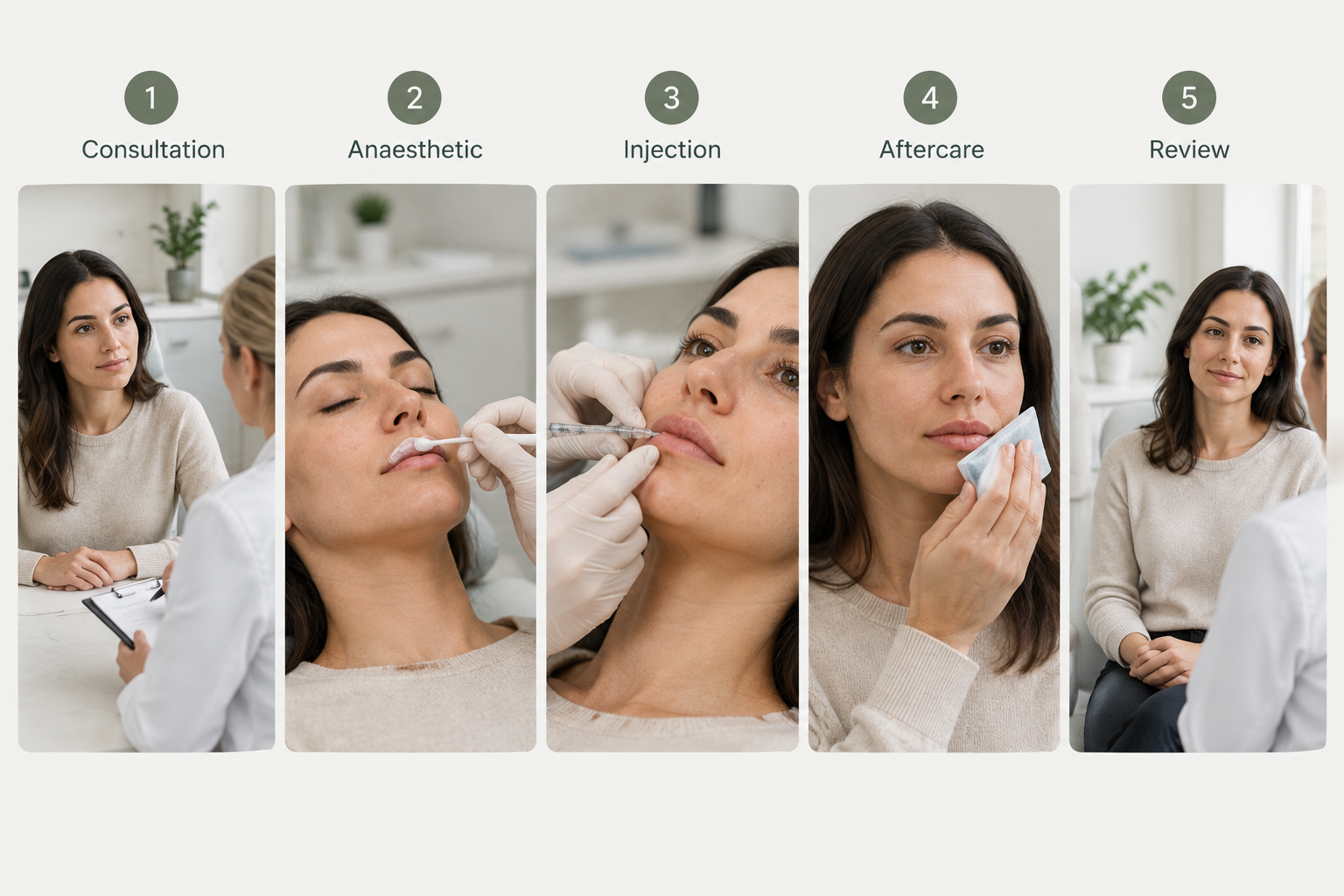
Patients should expect immediate swelling and possibly some bruising after the injections. The lips may look uneven, very flat, or temporarily worse immediately after treatment — this is a normal part of the process and does not reflect the final result. Practitioners typically advise waiting at least two to four weeks before assessing the outcome or considering any further treatment.
Results: What to Realistically Expect
The speed of hyaluronidase action is one of its notable characteristics. Softening of the filler is often perceptible within a few hours of injection, and the primary dissolving effect is generally complete within 24 to 48 hours. However, the final appearance of the lips after dissolution may take two to four weeks to stabilise, as post-treatment swelling resolves and the surrounding tissue settles.
The degree of dissolution achieved depends on several factors. The volume of filler present, the specific product used, how long it has been in place, and the dose of hyaluronidase administered all influence the outcome. In most cases, a single treatment session is sufficient to dissolve a moderate amount of filler, but patients with significant filler accumulation from multiple previous treatments may require more than one session to achieve the desired result.
It is also worth noting that complete dissolution does not always mean the lips will return to exactly their pre-filler appearance. Repeated filler treatments over time can cause changes to the surrounding tissue, and some patients notice that their lips look slightly different from their original baseline even after full dissolution. This is not a complication of hyaluronidase itself but rather a reflection of the cumulative effects of previous filler treatments on the tissue.
Over-dissolution — where more of the natural tissue hyaluronic acid is broken down than intended — can cause the lips to appear temporarily deflated or thinner than the patient’s natural baseline. This effect is usually temporary, as the body replenishes its own hyaluronic acid over the following weeks, but it can be distressing in the short term. Patients should be counselled about this possibility before treatment.
Risks and Side Effects of Dissolving Lip Filler
Hyaluronidase treatment is generally considered safe when performed by a qualified practitioner, but it is not without risk. Patients should be aware of the following potential side effects and complications before proceeding.
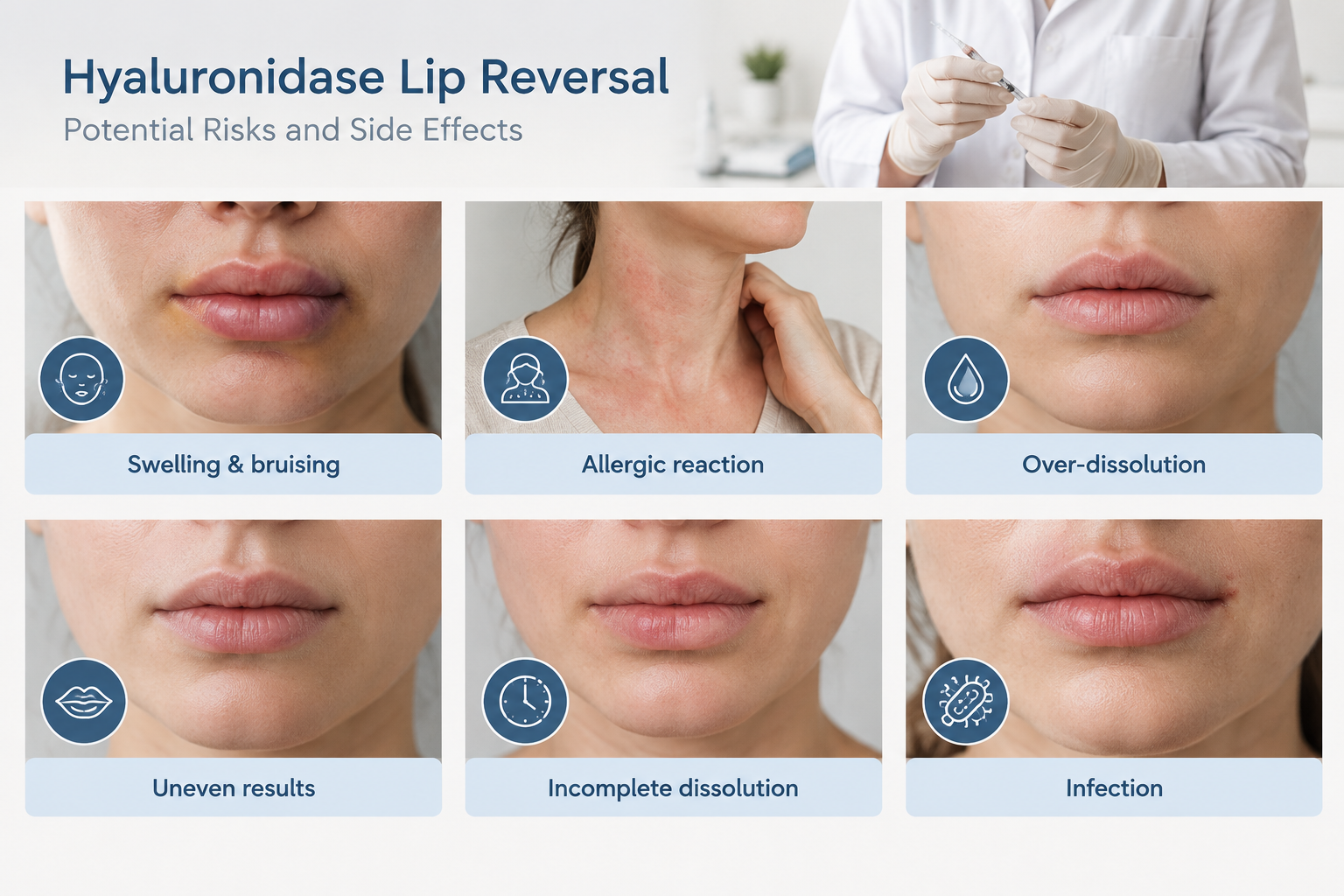
- Swelling and bruising: These are the most common immediate side effects and are expected to some degree in most patients. Swelling can be pronounced in the first 24 to 48 hours and usually resolves within one to two weeks.
- Tenderness and discomfort: The injection sites may feel sore for a few days after treatment. This is typically mild and manageable without prescription medication.
- Allergic reaction: Hyaluronidase can cause allergic reactions ranging from localised redness and itching to, in rare cases, a more serious systemic reaction. Patients with a known allergy to bee or wasp venom may be at higher risk. Practitioners should have appropriate emergency equipment and medications available.
- Over-dissolution: As described above, hyaluronidase can break down the body’s own hyaluronic acid as well as the filler, potentially causing temporary thinning or deflation of the lips beyond the patient’s natural baseline.
- Uneven results: Dissolution may not be perfectly uniform, and some areas may dissolve more completely than others, leading to temporary asymmetry or irregularity.
- Incomplete dissolution: In some cases, particularly with older or heavily cross-linked filler, a single treatment may not fully dissolve all of the product. A repeat session may be needed.
- Infection: As with any injectable procedure, there is a small risk of infection at the injection site. This risk is minimised by appropriate sterile technique.
Serious complications are uncommon but possible. Any patient who experiences significant pain, skin colour changes, difficulty breathing, or signs of a severe allergic reaction after hyaluronidase treatment should seek urgent medical attention.
Who May Be Suitable for Hyaluronidase Lip Reversal
Hyaluronidase lip reversal may be appropriate for patients who have received hyaluronic acid lip filler and are experiencing dissatisfaction with the result, complications, or filler migration. It may also be considered as part of emergency management for vascular complications. Suitability depends on a clinical assessment that takes into account the patient’s full medical history, the type and volume of filler present, and the specific goals of treatment.
Patients who may not be suitable, or for whom extra caution is warranted, include those with a known allergy to hyaluronidase or bee venom, those who are pregnant or breastfeeding, those with active infection or inflammation in the treatment area, and those who have received non-hyaluronic acid fillers. Certain medications that affect the immune system or blood clotting may also be relevant. A thorough pre-treatment consultation is essential to identify any factors that could affect safety or outcome.
Recovery and Aftercare
Recovery after dissolving lip filler is generally straightforward. Most patients experience swelling and some bruising for the first few days, with the majority of visible swelling resolving within one to two weeks. Applying a cold compress gently to the area in the first 24 hours may help to reduce swelling, though patients should follow their practitioner’s specific aftercare instructions.
Strenuous exercise, alcohol, and excessive heat — such as saunas or hot baths — are typically advised against for the first 24 to 48 hours, as these can increase blood flow to the area and worsen swelling or bruising. Patients should also avoid touching or massaging the lips unless specifically instructed to do so by their practitioner.
Most patients are able to return to normal daily activities immediately or the following day. Makeup can usually be applied after 24 hours, though this should be confirmed with the treating practitioner. A follow-up appointment is often recommended two to four weeks after treatment to assess the result and determine whether any further dissolution or corrective treatment is needed.
Dissolving Lip Filler Before Getting New Filler
Some patients choose to dissolve existing lip filler before receiving a new treatment, either because they want to correct a previous result or because they want to start fresh with a different product or technique. This is a clinically reasonable approach in many cases, but it requires careful timing.
After hyaluronidase treatment, practitioners generally recommend waiting at least two to four weeks before injecting new hyaluronic acid filler. This waiting period allows the residual hyaluronidase activity to subside, the tissue to settle, and any swelling to resolve so that the practitioner can accurately assess the baseline anatomy before planning the new treatment. Injecting filler too soon after hyaluronidase may result in the new product being partially broken down by residual enzyme activity, leading to a shorter duration of effect or unpredictable results.
The decision about whether to dissolve and re-treat, or to simply add a small corrective amount of filler, depends on the specific clinical situation and should be made in consultation with a qualified practitioner who can assess the lips in person.
Alternatives to Dissolving Lip Filler
Hyaluronidase dissolution is not the only option for patients who are unhappy with their lip filler results. Depending on the nature of the concern, other approaches may be worth discussing with a practitioner.
Waiting for natural filler degradation is an option for patients whose concerns are mild and who are not experiencing complications. Hyaluronic acid fillers gradually break down over time — the rate varies depending on the product, the individual’s metabolism, and the treatment area, but most lip fillers have a clinical duration of six to eighteen months. Patients who are only mildly dissatisfied may prefer to allow the filler to dissolve naturally rather than undergoing an additional procedure.
Corrective filler placement may be appropriate in some cases where the issue is asymmetry or a specific area of irregularity rather than overall volume. A small amount of additional filler placed strategically can sometimes improve the appearance without requiring full dissolution. This approach is only suitable in certain situations and requires careful assessment.
Massage and monitoring may be recommended by a practitioner for minor lumps or irregularities that appear shortly after a filler treatment, as some of these resolve on their own within a few weeks as the product settles and swelling subsides.
None of these alternatives is appropriate for managing serious complications such as vascular occlusion, where hyaluronidase dissolution is a clinical priority.
Frequently Asked Questions
How quickly does hyaluronidase dissolve lip filler?
The enzyme begins working within hours of injection. Most of the dissolving effect is complete within 24 to 48 hours, but the final appearance of the lips may take two to four weeks to stabilise as swelling resolves and tissue settles.
Does dissolving lip filler hurt?
The injections may cause some discomfort, similar to the original filler treatment. Topical anaesthetic cream can be applied beforehand to reduce this. Post-treatment tenderness is common for a few days but is usually mild.
Will my lips look the same as before I had filler?
In most cases, the lips return close to their natural appearance after dissolution, but this is not guaranteed. Repeated filler treatments over time can cause subtle changes to the surrounding tissue, and some patients notice a slight difference from their original baseline even after full dissolution.
Can I have new lip filler immediately after dissolving?
Most practitioners recommend waiting at least two to four weeks after hyaluronidase treatment before injecting new filler. This allows residual enzyme activity to subside and the tissue to settle so that the new treatment can be planned accurately.
Is hyaluronidase safe?
Hyaluronidase has a well-established safety profile when used by qualified practitioners, but it is not without risk. Allergic reactions, over-dissolution, swelling, and bruising are among the possible side effects. A thorough consultation and appropriate aftercare reduce the risk of complications.
What if my lip filler is not hyaluronic acid?
Hyaluronidase only works on hyaluronic acid-based fillers. If you have received a different type of filler — such as calcium hydroxylapatite or a permanent filler — dissolution with hyaluronidase is not possible, and a different management approach would be needed.
How do I know if I have filler migration?
Filler migration occurs when product moves away from the original injection site, often appearing as fullness or blurring above the lip border. A qualified practitioner can assess whether migration is present during a clinical examination and advise on whether dissolution is appropriate.
Is Dissolving Lip Filler the Right Decision for You?
Dissolving lip filler with hyaluronidase is a well-established and generally effective option for patients who have received hyaluronic acid-based lip filler and are seeking reversal, whether for aesthetic reasons, to address complications, or to reset before a new treatment. The procedure works relatively quickly, is usually well tolerated, and offers a meaningful degree of reversibility that is not available with other filler types.
At the same time, it is not a risk-free procedure, and outcomes are not always perfectly predictable. The degree of dissolution, the final appearance of the lips, and the likelihood of needing more than one session all depend on individual factors that can only be properly assessed in person. Patients should seek treatment from a qualified medical practitioner with experience in both filler treatments and their reversal, rather than choosing a provider based on price alone.
If you are considering dissolving lip filler, a consultation with a qualified aesthetic practitioner is the appropriate first step. A thorough assessment of your treatment history, the type and volume of filler present, and your goals will allow a practitioner to advise you on whether hyaluronidase dissolution is suitable, what outcome is realistic, and how to plan any subsequent treatment if desired.