

Key Takeaways
- Dark circles under the eyes are not a single condition — they may be caused by volume loss, pigmentation, visible blood vessels, or a combination of these, and treatment should be matched to the underlying cause.
- Tear trough filler remains the most widely used non-surgical treatment for structural hollowing, but polynucleotides, PRP, and laser treatments address different aspects of the problem.
- No treatment permanently eliminates dark circles, because contributing factors such as ageing, genetics, and lifestyle continue over time — realistic expectations and maintenance planning are important.
- Choosing a GMC-registered, doctor-led clinic with a thorough consultation process significantly reduces the risk of complications such as the Tyndall effect from filler placed too superficially.
- Combination treatment protocols often produce better outcomes than a single treatment, particularly when more than one cause is present.
Why Dark Circles Are More Complex Than They Appear
Dark circles under the eyes are one of the most common aesthetic concerns brought to London clinics, yet they are frequently misunderstood — both by patients and, occasionally, by practitioners. The term covers several distinct presentations that look similar but have different underlying mechanisms. Treating the wrong cause with the wrong approach can produce disappointing results or, in the case of poorly placed filler, visible complications.
A cause-led approach is therefore the foundation of effective dark circle treatment. Before any procedure is recommended, a thorough assessment should identify whether the darkness is primarily structural (hollow tear trough), vascular (visible blood vessels beneath thin skin), pigmentary (melanin overproduction or periorbital hyperpigmentation), or a combination of all three. Most adults presenting with dark circles have more than one contributing factor, which is why tailored treatment plans — sometimes involving more than one modality — tend to produce the most satisfying outcomes.
What Causes Dark Circles Under the Eyes?
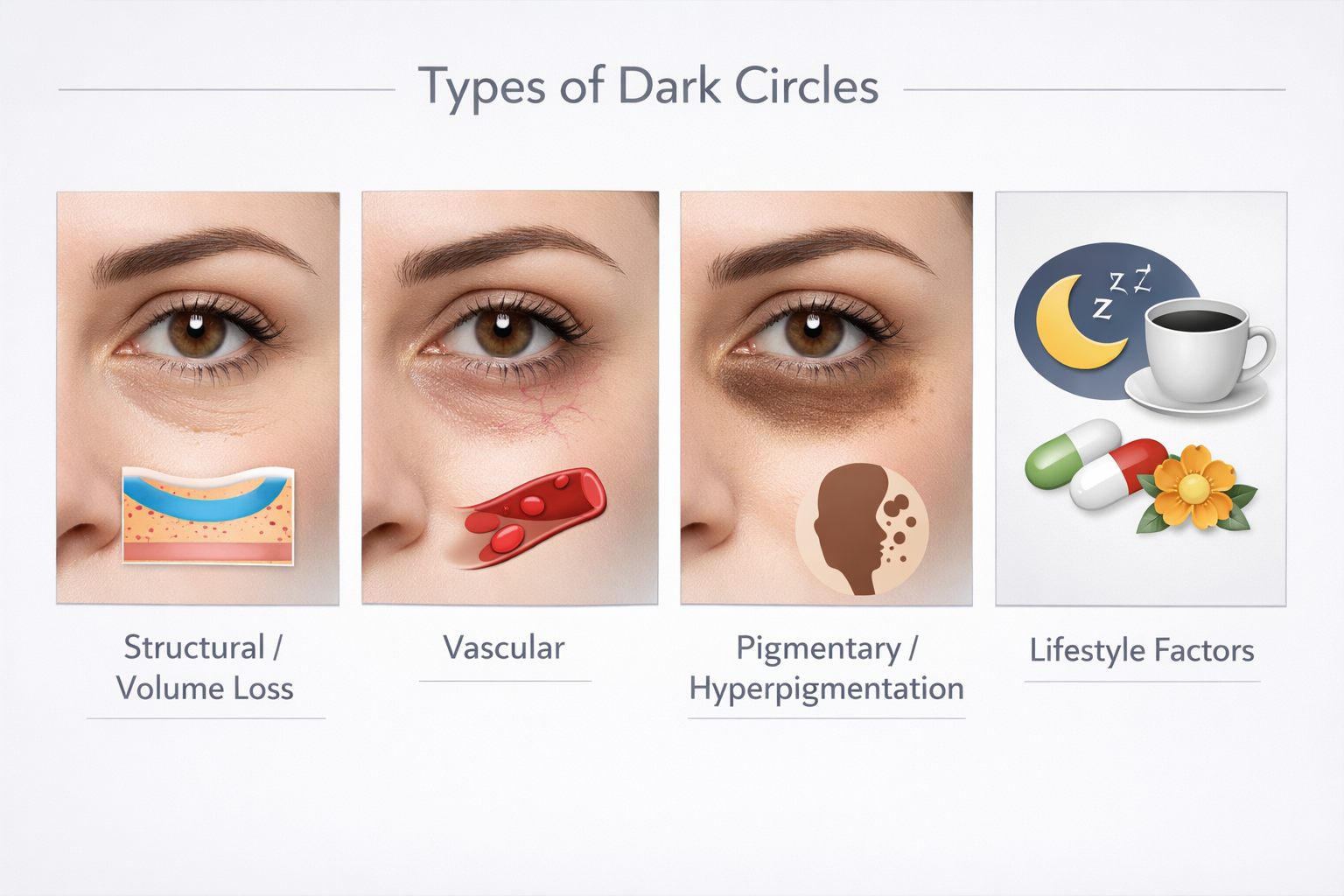
Understanding the cause of your dark circles is the single most important step before exploring treatment. The four main categories are structural, vascular, pigmentary, and lifestyle-related, and they often overlap.
Structural and Volume-Related Dark Circles
As the face ages, fat pads beneath the eye shrink and the orbital septum weakens, creating a hollow or sunken appearance in the tear trough — the groove that runs from the inner corner of the eye towards the cheek. This under-eye hollowing casts a shadow that reads as darkness, even when the skin itself is not discoloured. Volume loss in this area is one of the most common causes of dark circles in patients over 30, and it tends to worsen progressively with age due to ongoing collagen loss and fat pad shrinkage. Genetics also plays a role; some people inherit a naturally deep tear trough that creates shadowing from a young age.
Vascular Dark Circles
The skin beneath the eyes is among the thinnest on the body — often less than one millimetre thick. When the underlying orbicularis oculi muscle and blood vessels are visible through this thin skin, they create a bluish or purplish tint. Vascular dark circles are worsened by fatigue, poor sleep quality, alcohol, smoking, and nasal congestion, all of which cause blood vessel dilation or poor circulation in the periorbital area. Allergies that lead to eye rubbing can also damage the delicate capillaries and worsen discolouration over time.
Pigmentary Dark Circles
Periorbital hyperpigmentation refers to excess melanin production in the skin around the eyes, producing a brown or greyish discolouration. This type is particularly common in people with darker skin tones (Fitzpatrick skin types IV–VI) and has a strong hereditary component. Sun exposure accelerates melanin production in this area, making daily broad-spectrum SPF an important part of both prevention and post-treatment maintenance. Hormonal changes, certain medications, and post-inflammatory hyperpigmentation following eye rubbing or eczema can also contribute.
Lifestyle and Medical Factors
Chronic sleep deprivation, dehydration, a diet low in iron or vitamins, anaemia, and thyroid imbalance can all worsen the appearance of dark circles by affecting skin pallor, circulation, and fluid retention. While addressing these factors alone rarely eliminates established dark circles, they significantly influence how well clinical treatments perform and how long results last.
Non-Surgical Dark Circle Treatments Available in London
London clinics offer a broad range of non-surgical options, and the most appropriate choice depends on which cause — or combination of causes — has been identified during consultation. The table below provides an overview of the main treatments, their primary targets, typical longevity, and approximate cost ranges.
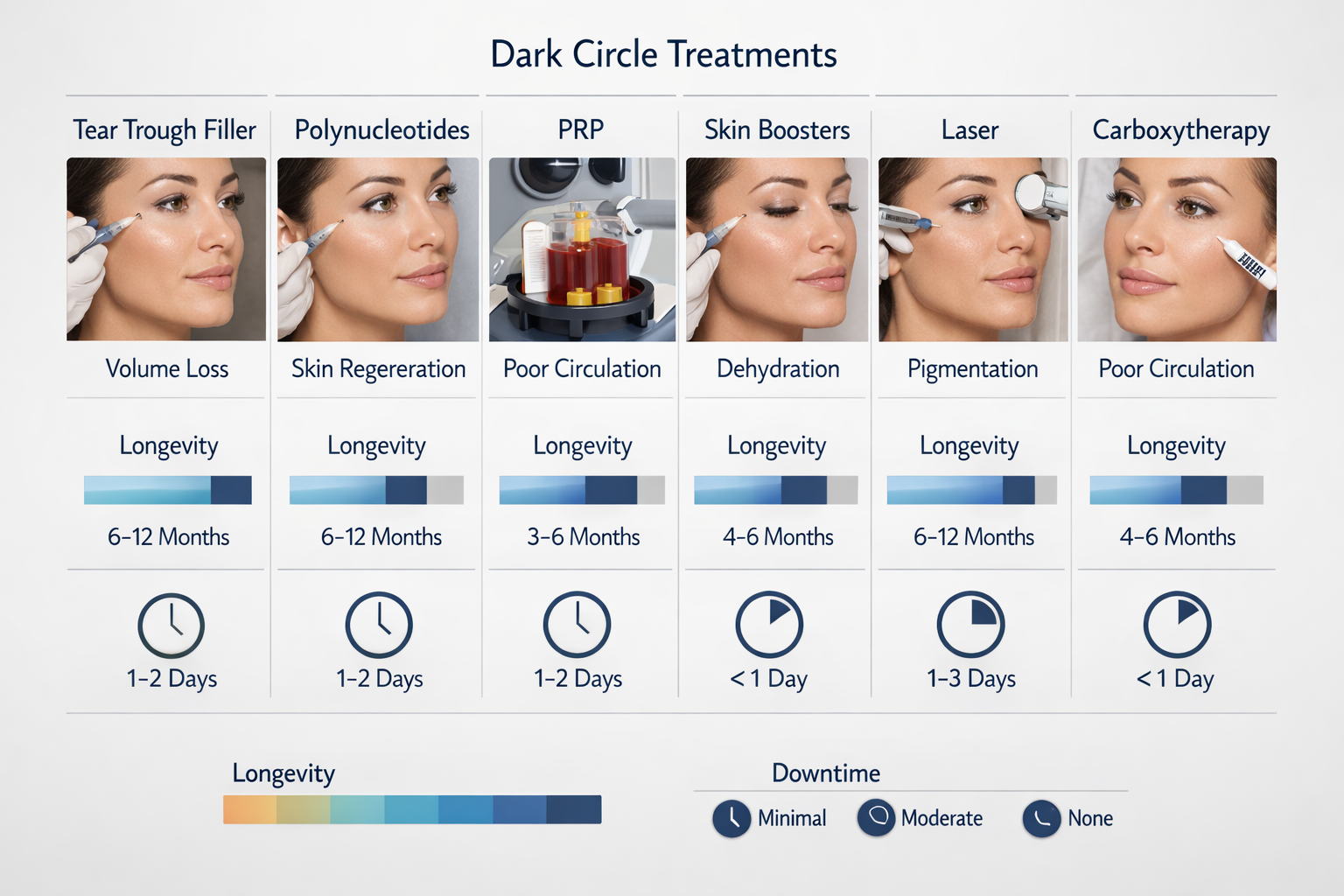
| Treatment | Primary Target | Typical Longevity | Approximate Cost (London) | Downtime |
|---|---|---|---|---|
| Tear trough filler (hyaluronic acid) | Volume loss / hollowing | 9–18 months | £500–£1,200 | Minimal (24–72 hrs swelling/bruising) |
| Polynucleotides (e.g. Lumi Eyes, Ami Eyes) | Skin quality, hydration, collagen stimulation | 6–12 months | £250–£500 per session | Minimal |
| PRP (platelet-rich plasma) | Skin regeneration, vascular improvement, collagen remodelling | 6–12 months | £250–£500 per session | Minimal |
| Profhilo / skin boosters (biorevitalisation) | Skin hydration, laxity, collagen and elastin stimulation | 6–9 months | £350–£600 per session | Minimal |
| Mesotherapy / tranexamic acid injections | Pigmentation, vascular dark circles | 3–6 months | £150–£350 per session | Minimal |
| Carboxytherapy | Vascular dark circles, skin laxity | 3–6 months | £100–£200 per session | Minimal |
| Laser (Nd:YAG, fractional CO2, Aerolase) | Pigmentation, vascular visibility, collagen stimulation | 12–24 months | £300–£800 per session | Low to moderate (varies by laser type) |
| Microneedling / Morpheus8 | Skin texture, collagen remodelling, mild pigmentation | 12–18 months | £250–£600 per session | Low to moderate |
Tear Trough Filler
Tear trough filler using hyaluronic acid (HA) is the most established non-surgical treatment for dark circles caused by under-eye hollowing. By restoring volume to the tear trough, filler reduces the shadow cast by the hollow and creates a smoother transition between the lower eyelid and cheek. Commonly used products include Restylane and Juvederm Vollure, both of which are soft, cohesive formulations suited to the delicate periorbital anatomy.
The cannula technique — using a blunt-tipped flexible cannula rather than a sharp needle — is preferred by many experienced practitioners because it reduces the risk of bruising and vascular injury in this highly vascularised area. Results typically last between 9 and 18 months, though this varies with the product used, the volume placed, and individual metabolism.
The most significant complication specific to tear trough filler is the Tyndall effect — a bluish discolouration caused by filler placed too superficially beneath thin under-eye skin. This is why product selection and injection depth are critical, and why this treatment should only be performed by practitioners with specific experience in periorbital anatomy. If the Tyndall effect does occur, it can be corrected using hyaluronidase, an enzyme that dissolves hyaluronic acid filler. Filler migration, while uncommon in experienced hands, is another reason to seek a doctor-led clinic with a thorough assessment process.
Polynucleotides for Dark Circles
Polynucleotides — marketed under brand names such as Lumi Eyes and Ami Eyes — are an increasingly popular treatment for under-eye concerns, and one that many London clinics now offer alongside or instead of filler. Polynucleotides are fragments of purified DNA derived from salmon or trout sperm, injected into the skin to stimulate fibroblast activity, collagen production, and tissue hydration.
Unlike tear trough filler, polynucleotides do not add volume. Their primary benefit is improving skin quality — reducing the thinness and translucency of the under-eye skin that makes blood vessels and dark tissue visible. They may also have a mild brightening effect on pigmentary dark circles. Results develop gradually over four to six weeks and typically require a course of two to four sessions. Polynucleotides are often combined with tear trough filler in patients who have both volume loss and poor skin quality, as the two treatments address different aspects of the problem.
PRP Under Eyes
Platelet-rich plasma (PRP) treatment involves drawing a small amount of the patient’s own blood, processing it to concentrate the growth factors in the plasma, and injecting this back into the under-eye area. The growth factors stimulate collagen remodelling, improve local circulation, and support tissue regeneration — making PRP particularly relevant for vascular dark circles and thin, crepey under-eye skin.
PRP under eyes in London is offered by a growing number of clinics, and the evidence base — while still developing — is more established than for some newer regenerative treatments. Because PRP uses the patient’s own biological material, the risk of allergic reaction is very low. A typical course involves two to three sessions spaced four to six weeks apart, with maintenance treatments recommended every six to twelve months to sustain results.
Skin Boosters and Biorevitalisation
Profhilo and similar biorevitalisation treatments use highly concentrated hyaluronic acid to hydrate and remodel the skin from within, stimulating collagen and elastin production without adding significant volume. In the under-eye area, skin boosters can improve skin laxity and surface quality, making them a useful option for patients whose dark circles are partly driven by dehydrated or ageing skin rather than structural hollowing alone. Results from a standard two-session protocol typically last six to nine months.
Laser Treatment for Dark Circles
Laser treatments target different aspects of dark circles depending on the wavelength and technology used. Nd:YAG lasers can reduce vascular visibility by targeting haemoglobin in superficial blood vessels. Fractional CO2 and similar resurfacing lasers stimulate collagen production and may improve mild pigmentation. Aerolase Neo Elite is a newer platform used by some London clinics for periorbital pigmentation with a lower risk profile on darker skin tones.
Laser treatment requires particular care in patients with darker skin tones (Fitzpatrick IV–VI), as certain wavelengths carry a higher risk of post-inflammatory hyperpigmentation in these skin types. A thorough skin assessment before laser treatment is essential, and practitioners should have specific experience treating periorbital hyperpigmentation across a range of ethnicities. Laser is generally more effective for pigmentary and vascular dark circles than for structural hollowing.
Carboxytherapy and Mesotherapy
Carboxytherapy involves injecting small amounts of medical-grade carbon dioxide gas beneath the skin, which triggers a local increase in blood flow and oxygen delivery. This can improve the bluish discolouration associated with vascular dark circles and has some evidence supporting its use in periorbital skin quality improvement. Mesotherapy — microinjections of a customised cocktail of vitamins, amino acids, and active ingredients such as tranexamic acid — targets pigmentation and overall skin health. Both treatments typically require a course of sessions and offer shorter-lasting results than filler or laser, but they carry minimal downtime and can be useful as part of a combination protocol.
Ethnic Skin Considerations
Periorbital hyperpigmentation is significantly more prevalent in people with South Asian, Middle Eastern, African, and East Asian heritage, and it often has a stronger genetic component in these groups. The presentation tends to be brown or greyish rather than the bluish tint more common in lighter skin tones, and the underlying mechanism is primarily melanin overproduction rather than vascular visibility.
Treatment selection for darker skin types requires additional care. Certain laser wavelengths and aggressive resurfacing treatments carry a higher risk of post-inflammatory hyperpigmentation in Fitzpatrick IV–VI skin, potentially worsening the very problem being treated. Safer first-line options for pigmentary dark circles in darker skin tones often include polynucleotides, mesotherapy with tranexamic acid, carefully selected skin boosters, and topical regimens incorporating vitamin C, niacinamide, and broad-spectrum SPF. When laser is used, lower-fluence settings and wavelengths with a better safety profile for darker skin — such as Nd:YAG — are generally preferred. Discussing your skin tone and heritage with your practitioner before any treatment is important.
Combination Treatment Protocols
Most patients presenting with dark circles have more than one contributing cause, and a single treatment rarely addresses all of them. Combination protocols — where two or more treatments are used together or in sequence — are increasingly the standard of care at experienced London clinics.
Common combinations include tear trough filler paired with polynucleotides (addressing both volume loss and skin quality), PRP combined with microneedling (enhancing collagen remodelling and growth factor delivery), and skin boosters used alongside laser treatment for patients with both laxity and pigmentation. The sequencing and interval between treatments matters — for example, filler is typically placed before skin-quality treatments, and laser is usually avoided immediately after injectable procedures. A practitioner experienced in combination approaches will plan the protocol based on your specific anatomy, skin type, and goals.
Surgical Option: Lower Blepharoplasty
For patients with significant excess skin, prominent fat herniation (puffy bags beneath the eyes), or structural changes that cannot be adequately addressed with non-surgical treatments, lower blepharoplasty (lower eyelid surgery) may be the most appropriate option. This procedure removes or repositions fat pads and, where necessary, tightens the lower eyelid skin. It is performed under local or general anaesthesia and carries a longer recovery period than non-surgical treatments — typically one to two weeks of visible bruising and swelling.
Lower blepharoplasty is not suitable for everyone, and the decision requires a detailed assessment by an oculoplastic surgeon or plastic surgeon with specific eyelid experience. It is worth noting that surgery addresses structural causes but does not correct pigmentary or vascular dark circles, so some patients benefit from a combination of surgery and non-surgical treatments. A reputable London clinic should be able to refer patients to an appropriate surgical specialist when non-surgical options are unlikely to achieve the desired result.
At-Home Support and Maintenance
Clinical treatments produce better and longer-lasting results when supported by an appropriate at-home skincare routine. The most evidence-supported topical ingredients for the under-eye area include vitamin C (an antioxidant that may help reduce pigmentation and support collagen synthesis), retinoids or retinol (which stimulate collagen production and improve skin texture over time), caffeine-based eye creams (which may temporarily reduce puffiness by constricting blood vessels), and broad-spectrum SPF 30 or higher applied daily to prevent UV-driven melanin production.
Lifestyle factors also matter. Consistent sleep of seven to nine hours, adequate hydration, a diet rich in iron and antioxidants, limiting alcohol and smoking, and managing allergies that cause eye rubbing all contribute to maintaining the results of clinical treatment. These measures will not eliminate established dark circles on their own, but they meaningfully extend the longevity of professional treatments and reduce the frequency of maintenance sessions required.
How to Choose a Dark Circle Treatment Clinic in London
London has hundreds of clinics offering injectable and aesthetic treatments, and the quality of assessment, technique, and aftercare varies considerably. When researching non-surgical dark circle treatment in London, the following factors are worth prioritising.
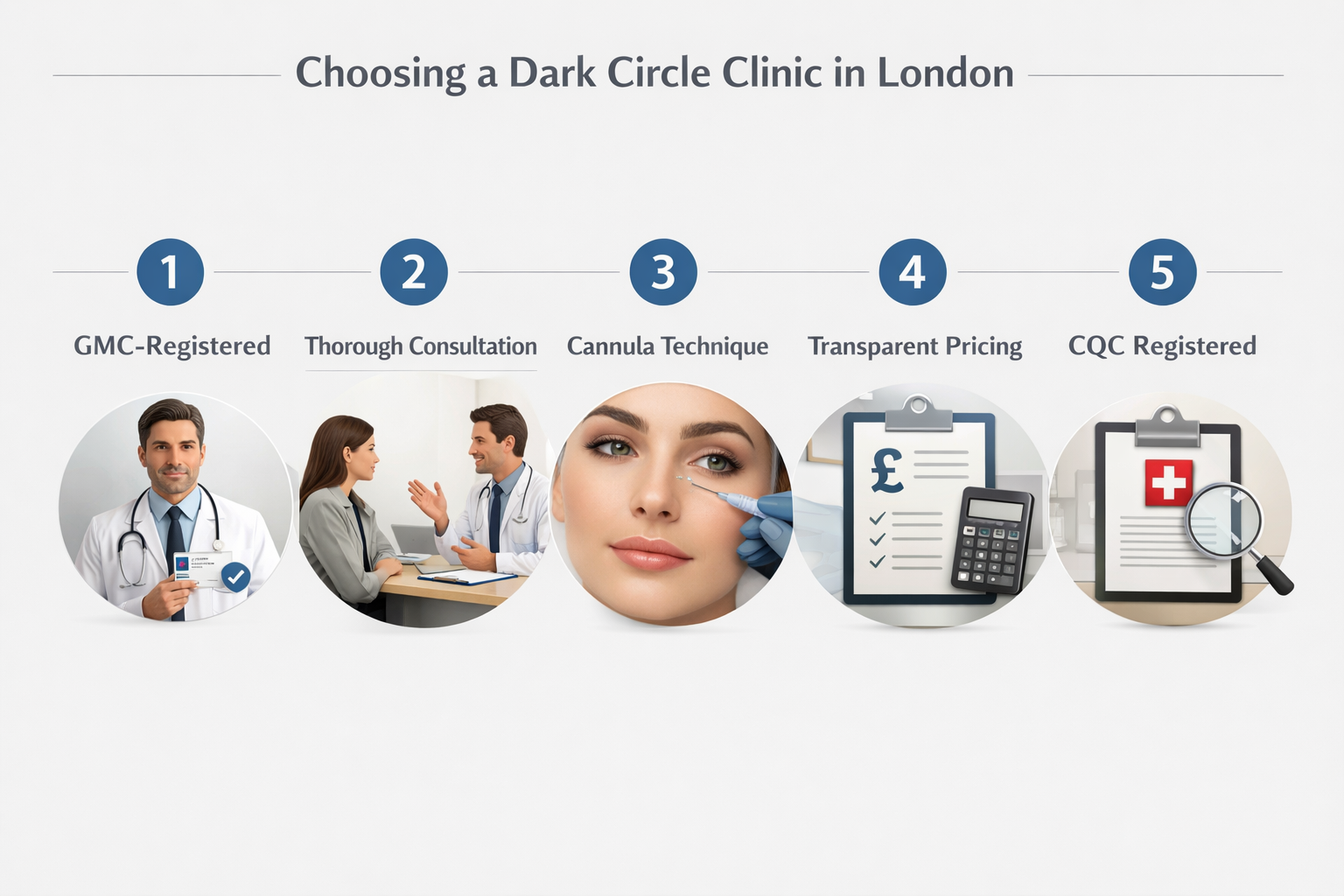
- GMC-registered practitioners: Tear trough filler and injectable treatments in the periorbital area carry meaningful risks if performed incorrectly. Choosing a doctor-led clinic where the treating practitioner is registered with the General Medical Council provides an important layer of accountability and clinical oversight.
- Thorough initial consultation: A reputable clinic will conduct a detailed root cause assessment before recommending any treatment. Be cautious of clinics that recommend tear trough filler without first examining whether volume loss is actually the primary cause.
- Cannula technique availability: For tear trough filler specifically, the cannula technique is generally considered safer than sharp needle injection in this area. Ask whether your practitioner uses a cannula.
- Transparent pricing: Clinics that provide clear pricing ranges — even approximate ones — demonstrate confidence in their offering. Unusually low prices for tear trough filler may indicate less experienced practitioners or lower-quality products.
- CQC registration: Clinics registered with the Care Quality Commission are subject to regulatory inspection and standards. This is a useful indicator of clinical governance.
- Honest discussion of limitations: A trustworthy practitioner will explain what a treatment can and cannot achieve, discuss realistic timelines, and advise on maintenance. If a clinic promises to permanently eliminate your dark circles, treat this as a warning sign.
Realistic Expectations: What Treatment Can and Cannot Do
No treatment currently available — surgical or non-surgical — permanently eliminates dark circles. The underlying causes, including genetic predisposition, progressive collagen loss, and ongoing skin ageing, continue over time. Clinical treatments can produce significant and often dramatic improvements, but they require maintenance to sustain results. Tear trough filler typically needs a top-up session every 9 to 18 months; polynucleotides and PRP every 6 to 12 months; and laser results may last longer but still benefit from periodic maintenance treatments.
Patients with very dark pigmentation, particularly those with a strong hereditary component, may find that improvement is meaningful but incomplete. Similarly, patients with very thin skin and prominent blood vessels may see improvement with PRP or polynucleotides but are unlikely to achieve complete resolution without addressing the structural thinness of the skin over time. Setting realistic expectations before treatment — and understanding that a tailored treatment plan may evolve over several sessions — leads to greater satisfaction with outcomes.
Frequently Asked Questions
Is tear trough filler safe for dark circles?
Tear trough filler is considered safe when performed by an experienced, GMC-registered practitioner using appropriate technique and product selection. The main risks specific to this area include the Tyndall effect (a bluish discolouration from superficially placed filler), bruising, swelling, and — rarely — vascular complications. Using the cannula technique and a soft, low-viscosity hyaluronic acid product reduces these risks. Filler placed incorrectly can be dissolved with hyaluronidase, which is an important safety net.
Can polynucleotides replace tear trough filler?
Polynucleotides and tear trough filler address different problems. Filler restores volume to a hollow tear trough; polynucleotides improve skin quality, hydration, and collagen production. For patients whose dark circles are primarily caused by volume loss, polynucleotides alone are unlikely to produce the same structural correction as filler. However, for patients with thin, translucent skin and vascular or mild pigmentary dark circles — without significant hollowing — polynucleotides may be the more appropriate first-line treatment. Many patients benefit from both.
How many sessions of PRP are needed for dark circles?
A typical PRP protocol for under-eye dark circles involves two to three sessions spaced four to six weeks apart. Results develop gradually as collagen remodelling and tissue regeneration progress, with the most noticeable improvement usually visible six to eight weeks after the final session in the initial course. Maintenance treatments every six to twelve months are generally recommended to sustain results.
Are dark circle treatments suitable for men?
Yes. Dark circles affect men and women equally, and all of the treatments described in this article are suitable for male patients. Men may have slightly different anatomical considerations — for example, thicker skin in some areas — but the cause-led assessment and treatment selection process is the same. Men are an underserved group in aesthetic medicine, and a good clinic will provide the same thorough consultation regardless of gender.
What is the Tyndall effect and how is it avoided?
The Tyndall effect is a bluish or greyish discolouration that can occur when hyaluronic acid filler is placed too close to the surface of the skin beneath the eyes. Because the under-eye skin is very thin, superficially placed filler scatters light in a way that creates visible discolouration. It is avoided by using a soft, appropriately formulated filler product, placing it at the correct depth, and using the cannula technique where appropriate. If it does occur, it can be corrected by dissolving the filler with hyaluronidase.
How much does dark circle treatment cost in London?
Costs vary considerably depending on the treatment chosen and the clinic. As a general guide: tear trough filler typically ranges from £500 to £1,200; polynucleotide sessions from £250 to £500 each; PRP from £250 to £500 per session; and laser treatments from £300 to £800 per session. Most non-surgical treatments require more than one session for optimal results, so the total investment over a course of treatment should be factored into planning. Unusually low prices — particularly for tear trough filler — may indicate less experienced practitioners or lower-quality products.
Can dark circles be treated in patients with darker skin tones?
Yes, but treatment selection requires additional care. Certain laser wavelengths carry a higher risk of post-inflammatory hyperpigmentation in darker skin tones (Fitzpatrick IV–VI), potentially worsening pigmentation. Safer options for these patients often include polynucleotides, mesotherapy with tranexamic acid, skin boosters, and carefully selected topical regimens. When laser is used, lower-fluence settings and wavelengths with a better safety profile for darker skin are preferred. Always ensure your practitioner has specific experience treating periorbital concerns across a range of skin tones.
Choosing the Right Dark Circle Treatment for Your Concerns
Effective dark circle treatment in London begins with an honest, thorough assessment of what is actually causing the darkness — whether that is under-eye hollowing, visible blood vessels, excess melanin, or a combination of factors. No single treatment addresses all causes, and the most successful outcomes typically come from a tailored treatment plan that matches the intervention to the underlying problem.
Tear trough filler remains the most effective option for structural volume loss, while polynucleotides and PRP offer meaningful improvements in skin quality and vascular dark circles. Laser and mesotherapy are better suited to pigmentary concerns, with careful consideration of skin tone. For patients with significant structural changes that non-surgical treatments cannot adequately address, a referral for surgical assessment may be the most appropriate path.
If you are considering treatment, a consultation with a GMC-registered, doctor-led clinic that takes a cause-led approach — rather than defaulting to a single treatment for every patient — is the most important first step. Realistic expectations, a clear maintenance plan, and a practitioner who is transparent about both the benefits and limitations of each option will give you the best foundation for a result you are genuinely satisfied with.