

A chin dimple — sometimes called a cleft chin or mentalis dimple — is one of the most recognisable facial features a person can have. For some it is a defining characteristic they were born with; for others it appears gradually or changes in appearance over time. Understanding what actually causes a chin dimple, why it looks the way it does, and how anatomy, genetics, and ageing all play a role can help you make sense of your own face and decide whether any intervention is worth exploring.
Key Takeaways
- Most chin dimples are inherited structural features caused by the underlying shape of the chin bone or the way the mentalis muscle attaches, rather than a skin defect.
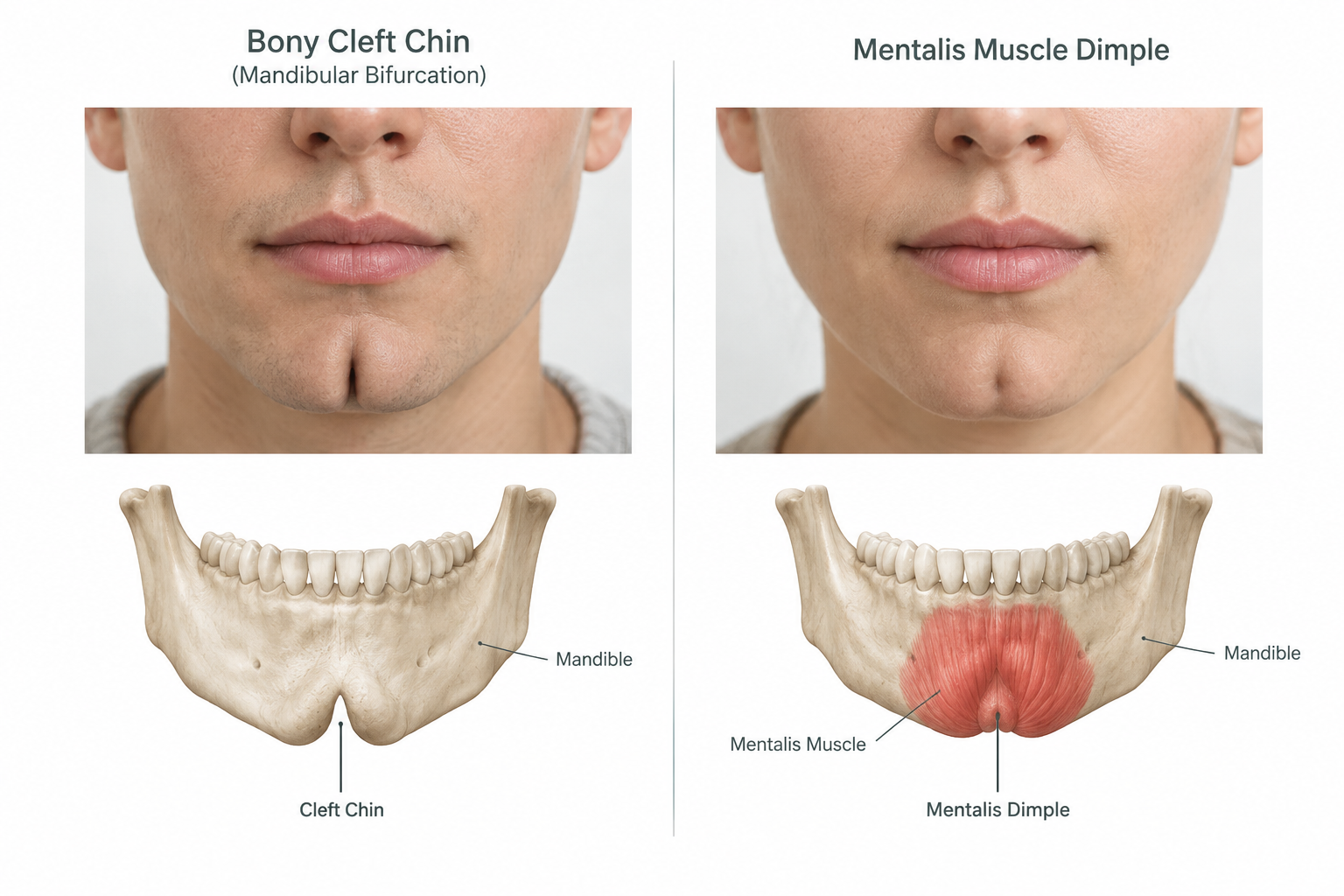
- A cleft chin and a mentalis dimple are anatomically different: one involves the mandible, the other involves soft tissue and muscle.
- Chin dimples can change in appearance with age, weight fluctuation, or changes in facial fat distribution.
- Non-surgical options such as dermal filler or botulinum toxin may reduce the appearance of a chin dimple, while surgical approaches can deepen or remove one more permanently.
- A qualified aesthetic practitioner or plastic surgeon can assess your individual anatomy and discuss realistic options before any treatment decision is made.
What Is a Chin Dimple?
The term chin dimple is used to describe two related but anatomically distinct features. The first is the classic cleft chin, a vertical groove or indentation running down the centre of the chin. The second is a mentalis dimple, a small rounded depression — sometimes described as a pebbled or cobblestone texture — that sits on the surface of the chin skin. Both are commonly referred to as chin dimples in everyday language, but their underlying causes differ, which matters when considering any treatment.
A cleft chin is primarily a skeletal feature. The groove visible on the surface reflects an underlying bifurcation or incomplete fusion of the two halves of the mandible (lower jawbone) during foetal development. The skin and soft tissue above simply follow the contour of the bone beneath. A mentalis dimple, by contrast, is a soft tissue phenomenon related to the mentalis muscle — the paired muscle that runs vertically in the chin and is responsible for raising the lower lip and wrinkling the chin skin. When the mentalis muscle fibres are unevenly distributed or when the muscle contracts, it can create a persistent or dynamic indentation in the overlying skin.
The Main Causes of a Chin Dimple
Genetics and Inherited Bone Structure
Genetics is the most significant factor behind a cleft chin. The trait is often described in basic biology as a dominant inherited characteristic, meaning a child has a reasonable chance of inheriting it if one or both parents carry the relevant genetic variation. However, the genetics of facial morphology are considerably more complex than simple dominant-recessive models suggest, and the precise genes involved in chin shape are still being studied. What is well established is that the underlying bony architecture of the chin — including whether the two ossification centres of the mandibular symphysis fuse completely during development — is largely determined before birth.
If the two halves of the chin bone do not fuse into a perfectly smooth midline, a groove or notch remains. The depth and width of this groove varies considerably between individuals, which is why cleft chins range from a subtle vertical line to a pronounced V-shaped indentation. Ethnicity and broader craniofacial structure also influence how prominent the feature appears.
Mentalis Muscle Anatomy
The mentalis muscle is a paired structure, meaning it consists of two muscle bellies that sit side by side in the chin. The way these two bellies are arranged, how they attach to the overlying dermis, and how much subcutaneous fat lies between the muscle and the skin surface all influence whether a dimple is visible. When the mentalis muscle contracts — during speaking, chewing, or expressing emotion — it can pull the overlying skin inward, creating a dynamic dimple that appears and disappears with movement. In some individuals, the resting tone of the muscle or the pattern of dermal attachments means a dimple is visible even at rest.
This muscle-related dimpling is distinct from the bony cleft chin, though both can coexist in the same person. The mentalis muscle is also the target of botulinum toxin injections when practitioners aim to smooth a pebbled or dimpled chin texture, because relaxing the muscle reduces the pulling force on the overlying skin.
Subcutaneous Fat and Soft Tissue Distribution
The amount and distribution of subcutaneous fat in the chin region affects how visible any underlying structural feature appears. A person with generous soft tissue padding over the chin may have a bony cleft that is barely noticeable at the surface. Conversely, someone with very little subcutaneous fat in the chin area may find that even a modest bony irregularity or muscle attachment pattern creates a clearly visible dimple. This explains why chin dimples can appear to become more or less prominent with significant weight changes — as facial fat volume shifts, the surface contour changes accordingly.
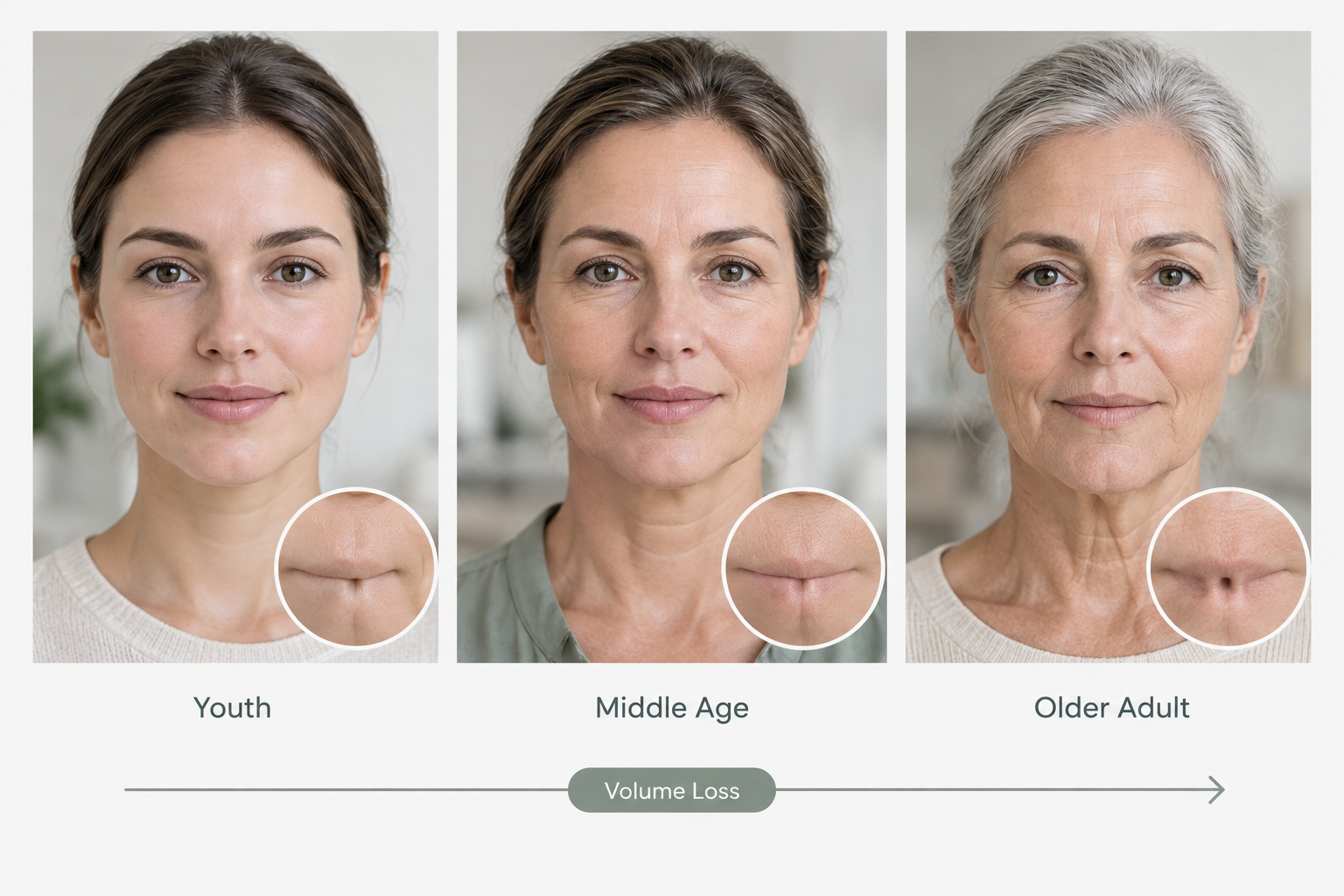
Ageing and Volume Loss
Facial ageing involves a gradual reduction in subcutaneous fat, collagen, and bone density across multiple areas of the face, including the lower face and chin. As the soft tissue padding over the chin diminishes with age, any underlying structural feature — whether bony or muscular — may become more visible. A chin dimple that was subtle in a person’s twenties may appear more pronounced in their forties or fifties, not because the bone has changed, but because the overlying tissue has thinned. Additionally, the mentalis muscle can become more hyperactive with age as it compensates for changes in lip support, which may increase the degree of chin dimpling or pebbling visible at rest.
Trauma and Scarring
An acquired chin dimple — one that was not present from birth — can occasionally result from trauma, surgery, or scarring in the chin area. A deep laceration, a previous surgical incision, or significant soft tissue injury can create adhesions between the skin and deeper structures, producing a tethered depression that resembles a natural dimple. This type of dimple has a different underlying cause and may respond differently to treatment compared with a congenital or genetic chin dimple.
Is a Chin Dimple a Medical Concern?
In the vast majority of cases, a chin dimple is a normal anatomical variation with no medical significance. It does not indicate any underlying health condition, does not affect jaw function, and does not require treatment. Whether a person chooses to address a chin dimple is entirely a matter of personal preference and aesthetic goals. That said, if a dimple appears suddenly in adulthood without an obvious cause such as weight loss or trauma, or if it is accompanied by other changes in the chin or jaw area, a medical assessment is sensible to rule out any unrelated cause.
How Chin Dimples Change Over Time
A chin dimple is not necessarily a static feature. Several factors can alter its appearance across a person’s lifetime. During childhood and adolescence, as the face grows and soft tissue develops, a dimple may become more or less prominent. Pregnancy and significant hormonal changes can affect facial fat distribution, temporarily altering how a dimple looks. Weight gain tends to add soft tissue padding that can soften the appearance of a chin dimple, while weight loss may make it more visible. The natural ageing process, as described above, generally tends to make structural chin features more apparent over time as volume is lost from the lower face.
Mentalis muscle activity also changes with age and with habits such as habitual lip compression or certain patterns of facial expression. Individuals who frequently tense the chin — sometimes unconsciously — may notice that a mentalis dimple becomes more pronounced over years of repeated muscle contraction.
Non-Surgical Options for Chin Dimples
Dermal Filler for Chin Dimples
Hyaluronic acid dermal filler is one of the most commonly used non-surgical approaches for reducing the appearance of a chin dimple. By carefully placing small amounts of filler beneath the depression, a practitioner can add volume to the area and smooth the surface contour. This approach works best for dimples that are primarily caused by a lack of soft tissue volume rather than a deep bony cleft. Results are temporary — hyaluronic acid filler in the chin area typically lasts between nine and eighteen months depending on the product used, the volume placed, and individual metabolism, though this varies between patients. The treatment is reversible using hyaluronidase if the result is unsatisfactory, which is a meaningful safety advantage.
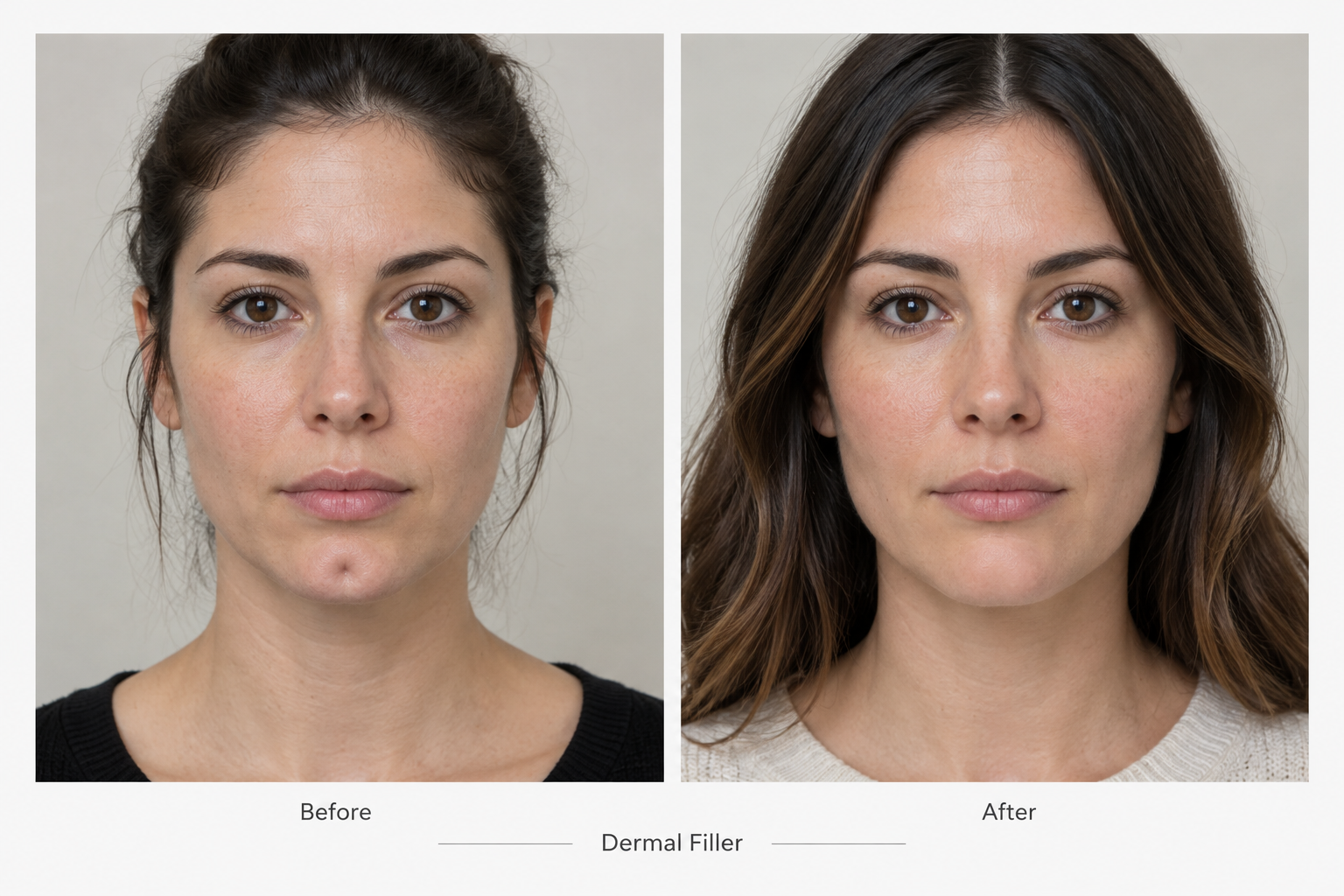
Filler treatment for a chin dimple carries the same risks as filler in any area of the lower face, including bruising, swelling, asymmetry, lumpiness, and in rare cases vascular complications. A thorough consultation with a qualified and experienced practitioner is essential before proceeding, and the treatment should only be performed by someone with appropriate training in facial anatomy and injectable techniques.
Botulinum Toxin for Chin Dimpling
When a chin dimple or pebbled chin texture is primarily caused by mentalis muscle activity, botulinum toxin injections — commonly known by brand names such as Botox or Dysport — may help by relaxing the muscle and reducing its pull on the overlying skin. This can smooth a dynamic dimple or reduce the cobblestone appearance that some people find bothersome. The effect is temporary, typically lasting three to four months before the muscle gradually regains its activity and a repeat treatment may be needed to maintain the result.
Botulinum toxin treatment in the chin area requires careful assessment because the mentalis muscle plays an important role in lower lip support and movement. Injecting too much product or placing it incorrectly can affect lip function, cause asymmetry, or create an unnatural appearance. This is not a treatment to approach casually, and the dose and placement should be tailored to each individual’s anatomy by a practitioner with specific experience in lower face injections.
Combination Approaches
In practice, many patients with a chin dimple have both a structural component and a muscular component contributing to the appearance. A combination of botulinum toxin to relax the mentalis muscle and a small amount of dermal filler to restore volume may produce a more balanced result than either treatment alone. The appropriateness of a combination approach depends on individual anatomy and goals, and should be discussed in detail during a consultation.
Surgical Options for Chin Dimples
For individuals who want a more permanent change to their chin dimple, surgical options exist, though they carry greater risks and recovery demands than non-surgical treatments.
A genioplasty (chin surgery) or the placement of a chin implant can alter the underlying bony structure and soft tissue contour of the chin, potentially reducing or eliminating a cleft chin. These procedures are performed under anaesthesia and involve a recovery period of several weeks. Swelling, bruising, temporary numbness, and the risks associated with any surgical procedure — including infection and scarring — are relevant considerations.
Conversely, some individuals seek surgery to create a chin dimple rather than remove one, as the feature is considered attractive in many cultures. Surgical chin dimple creation typically involves a small incision inside the mouth or beneath the chin, with a suture placed to create a tethered depression in the skin. Results can be variable and the dimple may soften or change over time as tissues heal and remodel.
Surgical decisions of this nature require consultation with a qualified plastic or maxillofacial surgeon who can assess bone structure, soft tissue, and realistic outcomes for the individual patient.
Who May Be Suitable for Non-Surgical Chin Dimple Treatment
Non-surgical treatment for a chin dimple may be worth discussing with a practitioner if the dimple causes genuine aesthetic concern, if the appearance has changed with age or volume loss, or if the texture of the chin skin is bothersome due to mentalis muscle activity. Suitable candidates are generally adults in good general health who have realistic expectations about what non-surgical treatment can achieve.
Non-surgical treatment is unlikely to be appropriate for individuals who are pregnant or breastfeeding, those with active skin infection or inflammation in the treatment area, those with certain autoimmune or neurological conditions, or those with a history of severe allergic reactions to injectable products. A full medical history and face-to-face assessment are necessary before any treatment is recommended.
Frequently Asked Questions
Are chin dimples genetic?
Chin dimples — particularly the cleft chin type — are strongly influenced by genetics and the inherited shape of the underlying jaw bone. However, the genetics of facial structure are complex, and a chin dimple can appear in a child even when neither parent has a prominent one, depending on the combination of genetic variants inherited.
Can a chin dimple appear later in life?
A structural cleft chin is present from birth, but it may become more or less visible over time due to changes in facial fat, muscle activity, and skin thickness. A mentalis dimple can become more noticeable with age as soft tissue thins and the muscle becomes more active. Trauma or scarring can also create an acquired dimple in adulthood.
Can dermal filler completely remove a chin dimple?
Dermal filler can significantly reduce the appearance of a chin dimple by adding volume beneath the depression, but it is unlikely to eliminate a deep bony cleft entirely. Results depend on the depth and cause of the dimple, the amount of filler used, and individual anatomy. A practitioner can give a realistic assessment during consultation.
Does botulinum toxin work for all types of chin dimple?
Botulinum toxin is most effective for chin dimpling caused by mentalis muscle activity — the pebbled or cobblestone texture that worsens with muscle contraction. It is less likely to be helpful for a deep structural cleft chin caused by the underlying bone shape, where filler or surgery may be more appropriate.
Is it possible to create a chin dimple non-surgically?
Non-surgical methods cannot reliably create a new chin dimple. Surgical techniques involving sutures or implants are the established approach for those who wish to add a dimple. Non-surgical injectables are generally used to reduce rather than create chin dimples.
How long does non-surgical chin dimple treatment last?
Hyaluronic acid filler in the chin area typically lasts between nine and eighteen months, though individual results vary. Botulinum toxin effects in the mentalis muscle generally last three to four months. Both treatments require maintenance to sustain the result over time.
Is a chin dimple the same as a cleft chin?
The terms are often used interchangeably, but they can describe slightly different features. A cleft chin specifically refers to the vertical groove caused by the underlying bone structure. A chin dimple can also refer to a softer, rounder depression caused by the mentalis muscle or soft tissue, which is a distinct anatomical feature.
Understanding Your Chin Dimple Before Making Any Decision
A chin dimple is almost always a natural anatomical feature rooted in genetics, bone structure, or muscle anatomy — not a flaw or a condition requiring correction. Whether you find yours distinctive and worth keeping, or whether it causes you aesthetic concern, the most important first step is understanding what is actually causing it. A cleft chin driven by bone structure, a mentalis dimple driven by muscle activity, and a dimple that has become more visible through volume loss with age all have different underlying mechanisms and respond differently to available treatments.
Non-surgical options such as hyaluronic acid dermal filler and botulinum toxin can offer meaningful improvement for the right candidate, with the advantage of being temporary and adjustable. Surgical options provide more lasting change but carry greater risk and recovery. Neither path is universally right or wrong — the appropriate choice depends entirely on individual anatomy, the specific cause of the dimple, personal goals, and a realistic understanding of what each approach can and cannot achieve.
If you are considering any treatment for a chin dimple, a face-to-face consultation with a qualified aesthetic practitioner or plastic surgeon is the appropriate starting point. A thorough assessment of your anatomy, a clear discussion of realistic outcomes, and an honest conversation about risks and alternatives will give you the information you need to make a genuinely informed decision.