

Choosing the best wrinkle filler depends on far more than picking a popular brand name. The right option depends on the type of wrinkle being treated, its depth and location, the underlying cause, and your individual anatomy. This guide explains the main categories of wrinkle fillers available today, how each works, what realistic results look like, and what to consider before booking a consultation.
Key Takeaways
- No single wrinkle filler is universally best — the most appropriate option depends on the treatment area, wrinkle depth, skin quality, and individual goals.
- Hyaluronic acid fillers are the most widely used and offer the advantage of reversibility with an enzyme called hyaluronidase.
- Collagen-stimulating fillers such as poly-L-lactic acid and calcium hydroxylapatite work differently and may suit patients seeking gradual, longer-lasting volume improvement.
- Botulinum toxin is not a filler but is frequently used alongside dermal fillers to address dynamic wrinkles caused by muscle movement.
- All injectable treatments carry risks, and results vary between individuals — a thorough consultation with a qualified practitioner is essential before treatment.
What Are Wrinkle Fillers and How Do They Work?
Wrinkle fillers are injectable substances placed beneath the skin to restore volume, smooth lines, and improve facial contours. They work by physically filling the space beneath a wrinkle or area of volume loss, which lifts the overlying skin and reduces the visible depth of lines. Some fillers also stimulate the body’s own collagen production over time, providing a more gradual and longer-lasting improvement in skin structure.
It is important to understand that wrinkles have different causes. Static wrinkles — those visible at rest — are typically addressed with dermal fillers. Dynamic wrinkles — those that appear or deepen during facial expressions such as frowning or squinting — are more commonly treated with botulinum toxin injections, though fillers may sometimes be used in combination. Understanding which type of wrinkle you have helps determine which treatment category is most appropriate.
Dermal fillers are regulated medical devices or medicines depending on the country, and their administration should only be carried out by trained and qualified practitioners. The safety profile, longevity, and suitability of each filler type differ meaningfully, which is why a clinical assessment is required before any treatment.
Types of Wrinkle Fillers: The Main Options
Several distinct categories of wrinkle filler are used in aesthetic medicine. Each has a different composition, mechanism of action, typical treatment areas, and longevity profile.
Hyaluronic Acid Fillers
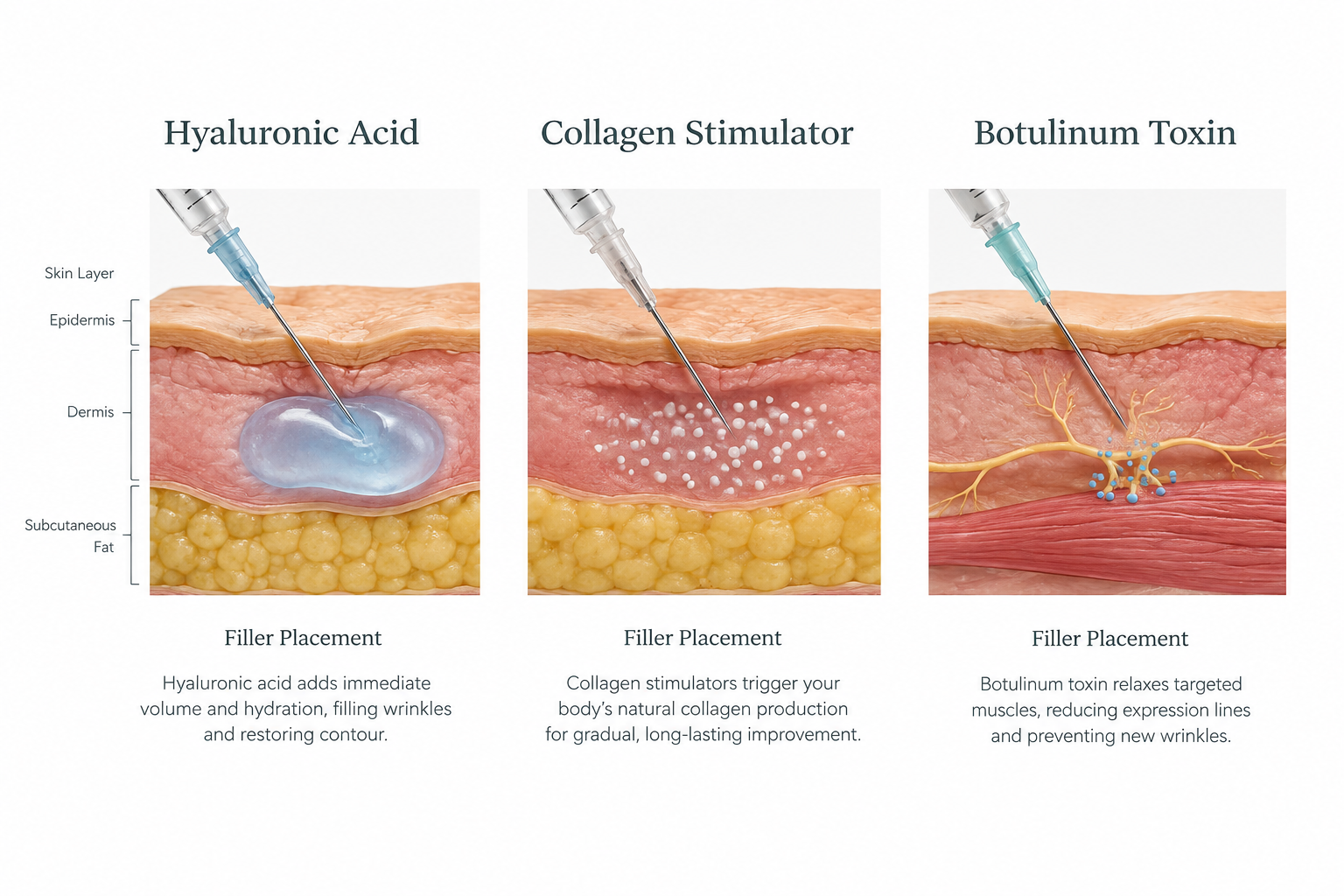
Hyaluronic acid (HA) fillers are the most commonly used dermal fillers worldwide. Hyaluronic acid is a naturally occurring substance found in the skin and connective tissue, where it helps retain moisture and maintain volume. When injected, HA fillers add immediate volume beneath the skin, smoothing lines and restoring facial contours. Well-known brands include Juvederm, Restylane, Belotero, and Teosyal, each offering a range of formulations with different thicknesses and cross-linking densities suited to different treatment areas.
One of the most clinically significant advantages of hyaluronic acid fillers is reversibility. If a result is unsatisfactory or a complication occurs, an enzyme called hyaluronidase can be injected to dissolve the filler relatively quickly. This makes HA fillers a preferred starting point for many patients and practitioners. Results typically last between six and eighteen months depending on the specific product, the area treated, and individual metabolism. Areas with more movement, such as the lips, tend to break down filler more quickly than less mobile areas.
Hyaluronic acid fillers are commonly used for nasolabial folds (the lines running from the nose to the corners of the mouth), marionette lines, lip lines, under-eye hollows, cheek volume loss, and fine lines around the mouth. Thinner, softer formulations are generally used for delicate areas such as fine perioral lines, while thicker, more cohesive gels are used for deeper structural support in the cheeks or jawline.
Poly-L-Lactic Acid (PLLA) Fillers
Poly-L-lactic acid is a synthetic, biocompatible, biodegradable substance that works as a collagen stimulator rather than a traditional volumising filler. Sculptra is the most widely recognised brand. Unlike hyaluronic acid fillers, PLLA does not provide immediate visible volume. Instead, it triggers a gradual inflammatory response that stimulates the body to produce new collagen over several weeks and months. The result is a progressive improvement in skin thickness, firmness, and overall facial volume.
Because the improvement is gradual, PLLA typically requires a series of treatment sessions — often two to four — spaced several weeks apart. Final results may take three to six months to become fully apparent, but they can last up to two years or longer in some patients. Poly-L-lactic acid is particularly suited to patients experiencing diffuse facial volume loss rather than isolated wrinkles, and it is often used across the temples, cheeks, and lower face. It is not reversible in the same way as hyaluronic acid fillers, which is an important consideration during the decision-making process.
Calcium Hydroxylapatite (CaHA) Fillers
Calcium hydroxylapatite is a mineral-like compound naturally found in bone. In aesthetic medicine, it is used in a gel suspension form, with Radiesse being the most recognised brand. CaHA fillers provide immediate volumising effect and also stimulate collagen production over time, offering a dual mechanism of action. Results typically last twelve to eighteen months or longer in some patients.
Calcium hydroxylapatite has a thicker consistency than most hyaluronic acid fillers, making it well suited to deeper facial folds, cheek augmentation, jawline definition, and hand rejuvenation. It is not reversible with an enzyme, which means precise placement by an experienced practitioner is particularly important. CaHA is generally not recommended for use in the lips or very superficial skin layers due to the risk of visible nodule formation.
Polymethylmethacrylate (PMMA) Fillers
Polymethylmethacrylate is a synthetic, non-biodegradable microsphere filler suspended in a collagen gel carrier. Bellafill is the most recognised product in this category. Because PMMA microspheres are not absorbed by the body, results are considered long-lasting — potentially permanent. The collagen carrier is gradually absorbed, but the microspheres remain and provide ongoing structural support while also stimulating the body’s own collagen production around them.
The permanent nature of PMMA fillers is both their main advantage and their most significant limitation. Correction of an unsatisfactory result or complication is considerably more difficult than with reversible fillers, and surgical removal may be required in some cases. PMMA fillers are generally reserved for patients with established facial anatomy who have previously responded well to temporary fillers, and they require careful patient selection and experienced administration.
Botulinum Toxin: A Complementary Approach
Botulinum toxin injections — available under brand names including Botox, Dysport, and Azzalure — are not dermal fillers, but they are frequently discussed alongside wrinkle filler options because they address a different but related concern. Botulinum toxin works by temporarily relaxing the muscles responsible for dynamic wrinkles such as forehead lines, frown lines between the eyebrows (glabellar lines), and crow’s feet around the eyes. It does not add volume or fill a line in the way a dermal filler does.
Many patients benefit from a combination approach, using botulinum toxin to address dynamic wrinkles and dermal fillers to restore volume and smooth static lines. This combination is sometimes referred to as a liquid facelift or non-surgical facial rejuvenation. The two treatments work through entirely different mechanisms and are not interchangeable, but they can complement each other effectively when used appropriately by a skilled practitioner.
Comparing Wrinkle Filler Options at a Glance
| Filler Type | Mechanism | Common Areas | Longevity | Reversible? | Key Consideration |
|---|---|---|---|---|---|
| Hyaluronic Acid | Immediate volume replacement | Nasolabial folds, lips, cheeks, under-eyes, perioral lines | 6–18 months | Yes (hyaluronidase) | Most versatile; preferred starting option |
| Poly-L-Lactic Acid | Collagen stimulation | Temples, cheeks, lower face | Up to 2+ years | No | Gradual results; multiple sessions needed |
| Calcium Hydroxylapatite | Immediate volume + collagen stimulation | Deep folds, cheeks, jawline, hands | 12–18+ months | No | Not suitable for lips or superficial lines |
| PMMA | Permanent microspheres + collagen stimulation | Nasolabial folds, acne scars | Long-lasting / potentially permanent | No (very difficult) | Requires careful patient selection |
| Botulinum Toxin | Muscle relaxation | Forehead, glabella, crow’s feet | 3–6 months | No (wears off naturally) | For dynamic wrinkles only; not a filler |
Which Treatment Areas Can Wrinkle Fillers Address?
Different wrinkle fillers are suited to different areas of the face and body, and the choice of product should reflect the specific anatomy and concern being treated. Nasolabial folds and marionette lines are among the most commonly treated areas, typically addressed with medium-density hyaluronic acid fillers or calcium hydroxylapatite. Lip lines and perioral wrinkles — the fine vertical lines around the mouth — generally respond well to softer, thinner HA formulations that integrate smoothly into delicate tissue.
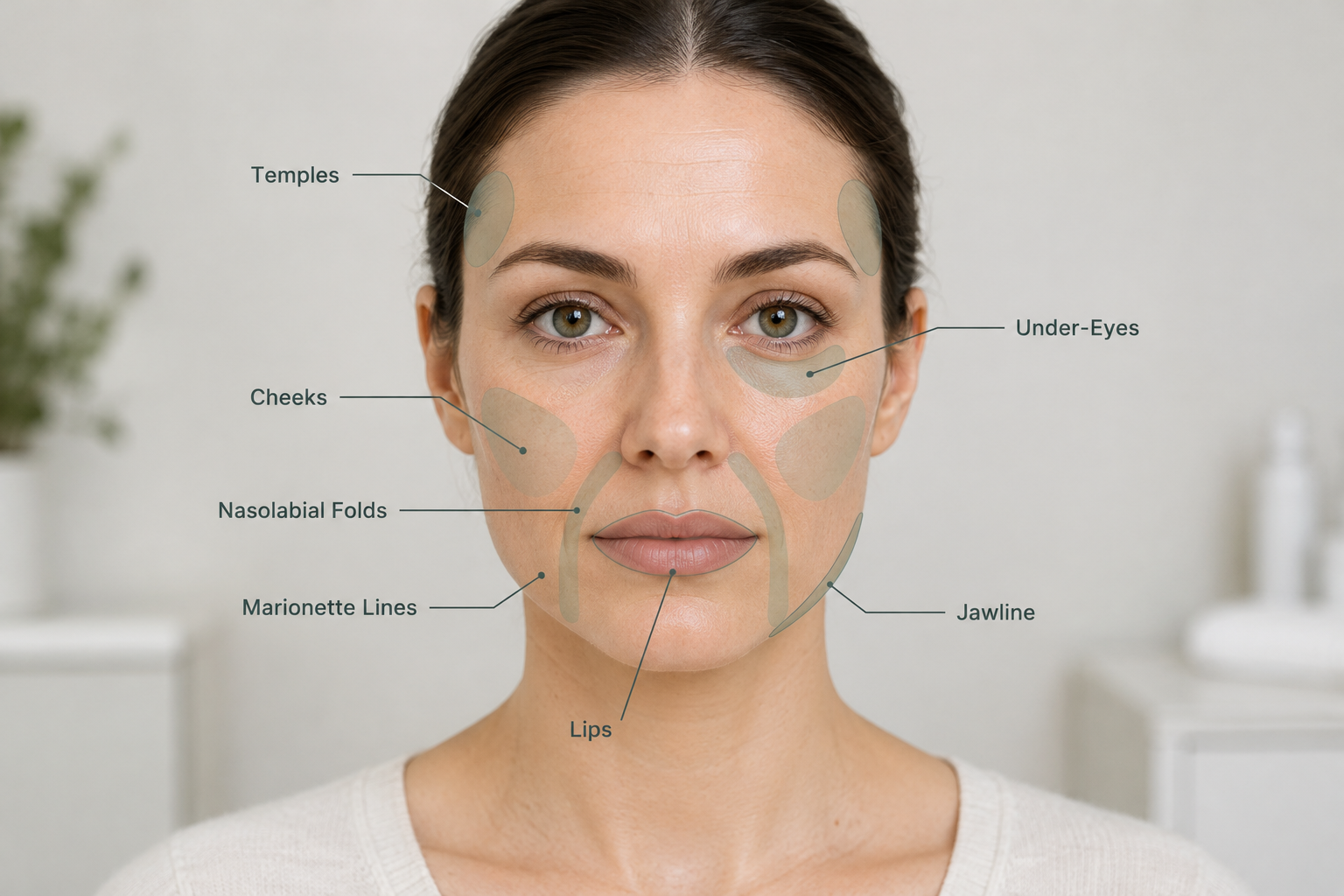
Cheek volume loss and mid-face hollowing may be addressed with thicker HA fillers, CaHA, or PLLA depending on the degree of volume loss and the patient’s preference for immediate versus gradual results. Under-eye hollows, sometimes called tear trough deformity, can be treated with carefully selected soft HA fillers, though this area requires particular expertise due to the delicate anatomy and the risk of complications including the Tyndall effect — a bluish discolouration caused by superficially placed filler.
Jawline definition and chin projection are increasingly popular treatment goals, often addressed with firmer, more structured HA fillers or CaHA. Hand rejuvenation, where volume loss makes tendons and veins more prominent, can also be addressed with CaHA or HA fillers. The appropriate product for each area should be determined by a qualified practitioner based on individual assessment rather than a one-size-fits-all approach.
What to Expect During and After Treatment
Most dermal filler appointments begin with a consultation to assess facial anatomy, discuss goals, review medical history, and agree on a treatment plan. Before injection, the skin is typically cleansed and a topical anaesthetic cream may be applied to reduce discomfort. Many filler products also contain lidocaine, a local anaesthetic, within the formulation itself, which helps improve comfort during injection.
The injection process itself usually takes between fifteen and forty-five minutes depending on the number of areas being treated. Some practitioners use needles, while others prefer blunt-tipped cannulas for certain areas, as cannulas may reduce the risk of bruising and vascular injury in some locations. Mild swelling, redness, and tenderness at the injection sites are common immediately after treatment and typically resolve within a few days. Bruising may occur and can last up to one to two weeks.
With hyaluronic acid fillers, results are visible immediately, though initial swelling may make the result appear more pronounced than the final outcome. Swelling generally settles within one to two weeks, after which the true result becomes apparent. With collagen-stimulating fillers such as PLLA, visible improvement develops gradually over several weeks to months as new collagen forms. Most patients can return to normal daily activities shortly after treatment, though strenuous exercise, alcohol, and significant sun or heat exposure are generally advised against for the first twenty-four to forty-eight hours.
Risks and Side Effects of Wrinkle Fillers
All injectable wrinkle fillers carry risks, and patients should be fully informed before proceeding with treatment. Common side effects include temporary swelling, bruising, redness, tenderness, and mild asymmetry. These typically resolve within days to weeks without intervention.

More significant complications, though less common, include infection, nodule or granuloma formation, filler migration, and skin irregularities. The most serious risk associated with dermal filler injection is vascular occlusion — where filler is inadvertently injected into or compresses a blood vessel, potentially restricting blood supply to the skin or, in rare cases, causing vision changes or blindness if the ophthalmic artery is affected. This is a rare but recognised complication that underscores the importance of treatment by a practitioner with thorough knowledge of facial anatomy and emergency protocols.
Delayed-onset nodules and inflammatory reactions can occur weeks, months, or even years after treatment, sometimes triggered by illness or dental procedures. These are more commonly associated with non-HA fillers that cannot be dissolved with hyaluronidase. Patients with a history of cold sores should inform their practitioner, as filler treatment around the mouth may trigger a herpes simplex outbreak. Certain medical conditions, medications including blood thinners, pregnancy, and breastfeeding may affect suitability for treatment.
Who May Be Suitable — and Who May Not
Wrinkle fillers may be suitable for adults experiencing volume loss, static facial lines, or contour changes they wish to address without surgery. Good candidates are generally in good overall health, have realistic expectations about the degree of improvement achievable, and understand that results are temporary and maintenance treatments will be needed.
Wrinkle fillers may not be appropriate for individuals who are pregnant or breastfeeding, have active skin infections or inflammatory skin conditions in the treatment area, have certain autoimmune conditions, are taking medications that significantly increase bleeding risk, or have a known allergy to any component of the filler product. Patients with a history of severe allergic reactions or anaphylaxis should discuss this carefully with their practitioner. Those who have previously had permanent fillers in an area may face additional complexity and risk with subsequent treatments.
Age is not a strict barrier, but the goals and appropriate treatment approach differ between younger patients seeking preventative or subtle enhancement and older patients addressing more significant volume loss or skin laxity. A qualified practitioner will assess whether fillers alone are likely to achieve the desired result or whether other treatments — including skin tightening procedures or surgical options — may be more appropriate.
Alternatives to Injectable Wrinkle Fillers
Injectable fillers are not the only option for addressing wrinkles and facial ageing. Several non-injectable and surgical alternatives may be worth discussing depending on individual goals and the nature of the concern.
Botulinum toxin, as discussed, remains the primary treatment for dynamic wrinkles and is often used alongside fillers rather than as a direct alternative. Skin resurfacing treatments including chemical peels, laser resurfacing, and microneedling can improve skin texture, fine lines, and overall skin quality by stimulating collagen remodelling, though they do not replace lost volume. Radiofrequency and ultrasound-based skin tightening devices such as Thermage and Ultherapy may help address mild to moderate skin laxity, again without adding volume.
Polynucleotide (PDRN) injections are an emerging option that may improve skin quality and hydration through biostimulation, though evidence for their effect on established wrinkles is still developing. Surgical options including facelift, brow lift, and blepharoplasty offer more significant and longer-lasting correction of facial ageing but involve greater recovery time, cost, and surgical risk. The most appropriate approach depends on the individual’s anatomy, degree of ageing change, goals, and tolerance for downtime and risk.
Frequently Asked Questions
How long do wrinkle fillers last?
Longevity varies by filler type and treatment area. Hyaluronic acid fillers typically last six to eighteen months. Calcium hydroxylapatite may last twelve to eighteen months or longer. Poly-L-lactic acid results can persist for two years or more. Areas with greater movement, such as the lips, tend to metabolise filler more quickly than less mobile areas.
Are wrinkle fillers painful?
Most patients experience mild to moderate discomfort during injection. Topical anaesthetic cream applied before treatment and lidocaine within many filler formulations help reduce pain. Sensitivity varies between individuals and treatment areas, with the lips and perioral region generally being more sensitive than the cheeks or jawline.
Can wrinkle fillers be reversed?
Hyaluronic acid fillers can be dissolved using hyaluronidase, an enzyme that breaks down hyaluronic acid relatively quickly. This is one of the key safety advantages of HA fillers. Other filler types — including PLLA, CaHA, and PMMA — cannot be dissolved in the same way, making precise placement and careful patient selection particularly important.
How soon will I see results?
With hyaluronic acid and calcium hydroxylapatite fillers, results are visible immediately, though initial swelling may temporarily affect the appearance. The final result is usually apparent within one to two weeks once swelling has settled. With poly-L-lactic acid, improvement develops gradually over several months as collagen production increases.
How often will I need repeat treatments?
Most dermal fillers require maintenance treatments to sustain results as the product is gradually absorbed. The frequency depends on the filler type, the area treated, and individual metabolism. Many patients return for top-up treatments every six to eighteen months. A practitioner can advise on a realistic maintenance schedule based on your individual response.
Is there any downtime after wrinkle filler treatment?
Most patients can resume normal daily activities shortly after treatment. Swelling, redness, and mild bruising are common and typically resolve within a few days to two weeks. Strenuous exercise, alcohol, and prolonged sun or heat exposure are generally advised against for the first twenty-four to forty-eight hours. Social downtime varies between individuals.
What should I look for when choosing a practitioner?
Look for a practitioner with recognised medical qualifications, specific training in facial anatomy and injectable treatments, experience with the filler type being considered, and access to emergency protocols including hyaluronidase. A thorough consultation before treatment — not just a brief assessment on the day — is an important indicator of a responsible approach.
Choosing the Right Wrinkle Filler for Your Goals
There is no universally best wrinkle filler. The most appropriate option depends on the specific concern being addressed, the treatment area, the degree of volume loss or line depth, how quickly you want to see results, how long you want them to last, and your tolerance for the limitations of each product. Hyaluronic acid fillers offer versatility and reversibility that make them a sensible starting point for many patients, particularly those new to injectable treatments. Collagen-stimulating options such as poly-L-lactic acid or calcium hydroxylapatite may suit patients seeking longer-lasting, more gradual improvement in facial volume and structure. Permanent fillers require careful consideration given the difficulty of correction if results are unsatisfactory.
Equally important is the practitioner administering the treatment. The safety and quality of the outcome depend heavily on clinical knowledge, injection technique, product selection, and the ability to manage complications if they arise. A thorough consultation — one that includes a discussion of your goals, medical history, realistic expectations, and the full range of options — is the essential first step. If you are considering wrinkle filler treatment, speaking with a qualified aesthetic practitioner will help you understand which approach may be most appropriate for your individual anatomy and goals.