

Key Takeaways
- Home fat freezing devices use controlled cooling to target subcutaneous fat, but most operate at temperatures that are insufficient to replicate true clinical cryolipolysis.
- Professional CoolSculpting reaches −5°C to −11°C; most home devices only achieve 0°C to −5°C, which limits their ability to trigger meaningful fat cell apoptosis.
- No home fat freezing device currently holds FDA clearance for cryolipolysis — a meaningful distinction when evaluating safety and efficacy claims.
- Risks including frostbite, skin damage, and the rare but serious complication paradoxical adipose hyperplasia (PAH) apply to home use as well as clinical settings.
- Home devices may offer modest body contouring benefits for some users, but they are not a substitute for medically supervised treatment and should not be used without understanding their limitations.
What Is Fat Freezing and How Does Cryolipolysis Work?
Fat freezing — clinically known as cryolipolysis — is a non-invasive body contouring technique that uses controlled cooling to selectively damage subcutaneous fat cells without harming the overlying skin. The principle is based on the observation that fat cells (adipocytes) are more sensitive to cold temperatures than surrounding tissue. When cooled to a precise temperature range, fat cells undergo a process called apoptosis — a form of programmed cell death — rather than the immediate destruction caused by freezing water in other tissues.
Following a cryolipolysis session, the damaged fat cells are gradually cleared from the body through the lymphatic system over a period of several weeks. This lymphatic clearance process means results are not immediate; most people begin to notice changes between three and eight weeks after treatment, with full results typically visible at two to four months. It is important to understand that cryolipolysis is a body sculpting tool, not a weight loss treatment. It is designed to reduce localised stubborn fat pockets in specific areas rather than produce overall weight reduction.
Clinical cryolipolysis devices — including the well-known CoolSculpting system — use vacuum-assisted applicators to draw tissue into a controlled cooling chamber, maintaining precise temperatures between −5°C and −11°C for a defined session duration. This combination of suction, temperature precision, and treatment time is what drives the fat cell death observed in clinical studies, which report an average fat layer reduction of approximately 20–25% per treated area per session.
Home Fat Freezing vs. Professional Cryolipolysis: The Critical Differences
| Factor | Home Fat Freezing Device | Professional Cryolipolysis (e.g. CoolSculpting) |
|---|---|---|
| Temperature range | Typically 0°C to −5°C | −5°C to −11°C |
| Temperature precision | Variable; limited sensor accuracy | Continuous real-time monitoring |
| Applicator type | Flat pads or basic cups; limited suction | Vacuum-assisted applicators in multiple sizes |
| FDA regulatory status | No FDA clearance for cryolipolysis | FDA-cleared for multiple body areas |
| Medical oversight | None | Trained practitioner assessment and supervision |
| Antifreeze membrane | Often included or sold separately; user-applied | Applied by practitioner; standardised protocol |
| Fat reduction per session | Modest and variable; not clinically established | Approximately 20–25% fat layer reduction |
| Cost per session | Device: £60–£500+; membranes ongoing | £600–£1,200+ per treatment area |
| PAH risk | Present; no clinical monitoring | Present; estimated at under 1% of treated areas |
| Suitable for | Mild contouring; motivated, informed users | Clinically assessed candidates with realistic goals |
The most significant practical difference between a home portable fat freezing device and a professional system is temperature precision. Clinical cryolipolysis requires sustained cooling in the range of −5°C to −11°C to reliably trigger fat cell apoptosis. Most home devices are only capable of reaching 0°C to −5°C — a range that may produce some cooling effect on adipose tissue but is unlikely to replicate the degree of controlled cold lipolysis achieved in a clinic. This temperature gap is not a minor technical detail; it directly determines whether enough fat cells are damaged to produce a visible reduction in fat layer thickness.
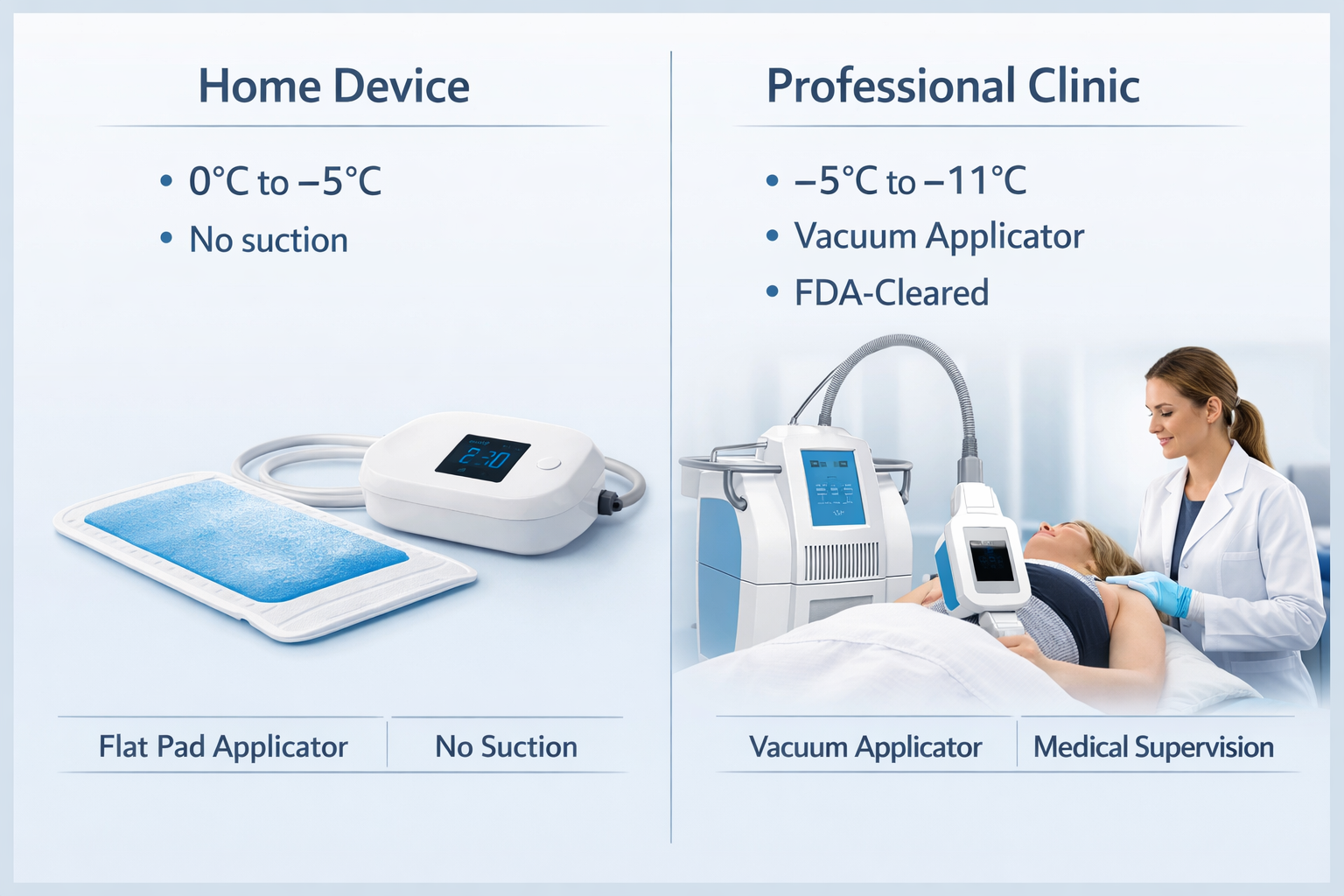
Vacuum suction is the second major differentiator. Professional vacuum-assisted applicators draw a precise volume of tissue into the cooling chamber, ensuring consistent contact and uniform temperature distribution across the treatment area. Most home devices use flat pads or simple cups with minimal or no suction, which means cooling is less uniform and the depth of penetration into subcutaneous fat is less controlled.
What Is an Antifreeze Membrane and Why Does It Matter?
An antifreeze membrane is a gel-coated protective pad placed between the skin and the cooling applicator before every fat freezing session. Its purpose is to prevent direct skin contact with the cold surface, which would otherwise risk frostbite, ice crystal formation in the skin, or surface tissue damage. In professional settings, the antifreeze membrane is a standardised consumable applied by the treating practitioner as part of a defined protocol.
For home fat freezing devices, the antifreeze membrane is equally important — but it is the user’s responsibility to apply it correctly every single time. Using a home device without an appropriate membrane, using a membrane that is too thin, or repositioning the applicator without replacing the membrane significantly increases the risk of skin burns, blistering, and frostbite. Most reputable home devices include membranes in the initial kit, but these are consumables that need to be replaced with each session, adding an ongoing cost that is not always prominently advertised at the point of purchase.
When evaluating any home fat freezing device, confirm that compatible antifreeze membranes are readily available, clearly sized for the applicator, and affordable enough to use consistently. A device that becomes impractical to use safely because membranes are expensive or hard to source is not a good long-term investment.
Home Fat Freezing Devices Worth Evaluating
The home cryolipolysis market includes a wide range of devices at very different price points and quality levels. The following devices are among those most frequently reviewed and discussed, though individual results vary and none carry FDA clearance for cryolipolysis.
Isavera Fat Freezing System
The Isavera system uses a wrap-style design intended primarily for the abdomen and flanks. It works by holding gel packs against the skin rather than using active electronic cooling, which means the temperature is determined by how cold the gel packs are when applied rather than by a controlled electronic system. This approach is among the most affordable but also the least precise in terms of temperature control. It is best understood as a cold compression wrap rather than a true cryolipolysis device.
Sharper Image Ultimate Fat Freezer
The Sharper Image device uses active electronic cooling and is one of the more widely available consumer-grade options. It includes a basic LCD display and adjustable settings, and is designed for use on the abdomen. Temperature range and suction capability are limited compared to clinical systems, but it represents a mid-range option for users who want active cooling rather than passive gel packs.
FreezeFats Home Cryolipolysis Device
FreezeFats devices are marketed specifically as home cryolipolysis tools and typically include multiple applicator sizes for different body areas including the abdomen, flanks, and thighs. Some models include a basic vacuum suction function, which improves tissue contact compared to flat-pad designs. These devices sit at the higher end of the home market in terms of both price and feature set, though their temperature range still falls short of clinical standards.
Cryo Pad and Similar Flat-Pad Devices
Flat cryo pad devices are among the most affordable options and are widely available online. They typically consist of a cooling pad worn against the skin using a compression band. Like gel-pack systems, they offer limited temperature precision and no suction. They may produce a mild cooling effect on superficial tissue but are unlikely to achieve the depth of cooling required for meaningful fat cell apoptosis in subcutaneous fat layers.
| Device | Cooling Type | Approx. Temperature | Suction | Applicator Areas | Approx. Price |
|---|---|---|---|---|---|
| Isavera | Passive gel pack | Variable | No | Abdomen, flanks | £60–£100 |
| Sharper Image Ultimate Fat Freezer | Active electronic | ~0°C to −3°C | No | Abdomen | £150–£250 |
| FreezeFats | Active electronic | ~−2°C to −5°C | Basic (some models) | Abdomen, flanks, thighs | £250–£500+ |
| Cryo Pad / generic flat pad | Passive cooling | Variable | No | Single area | £30–£80 |
How to Use a Home Fat Freezing Device Safely
If you decide to use a home fat freezing device, following a consistent and careful protocol reduces the risk of skin injury. The steps below reflect general safe-use principles; always read the specific instructions supplied with your device.
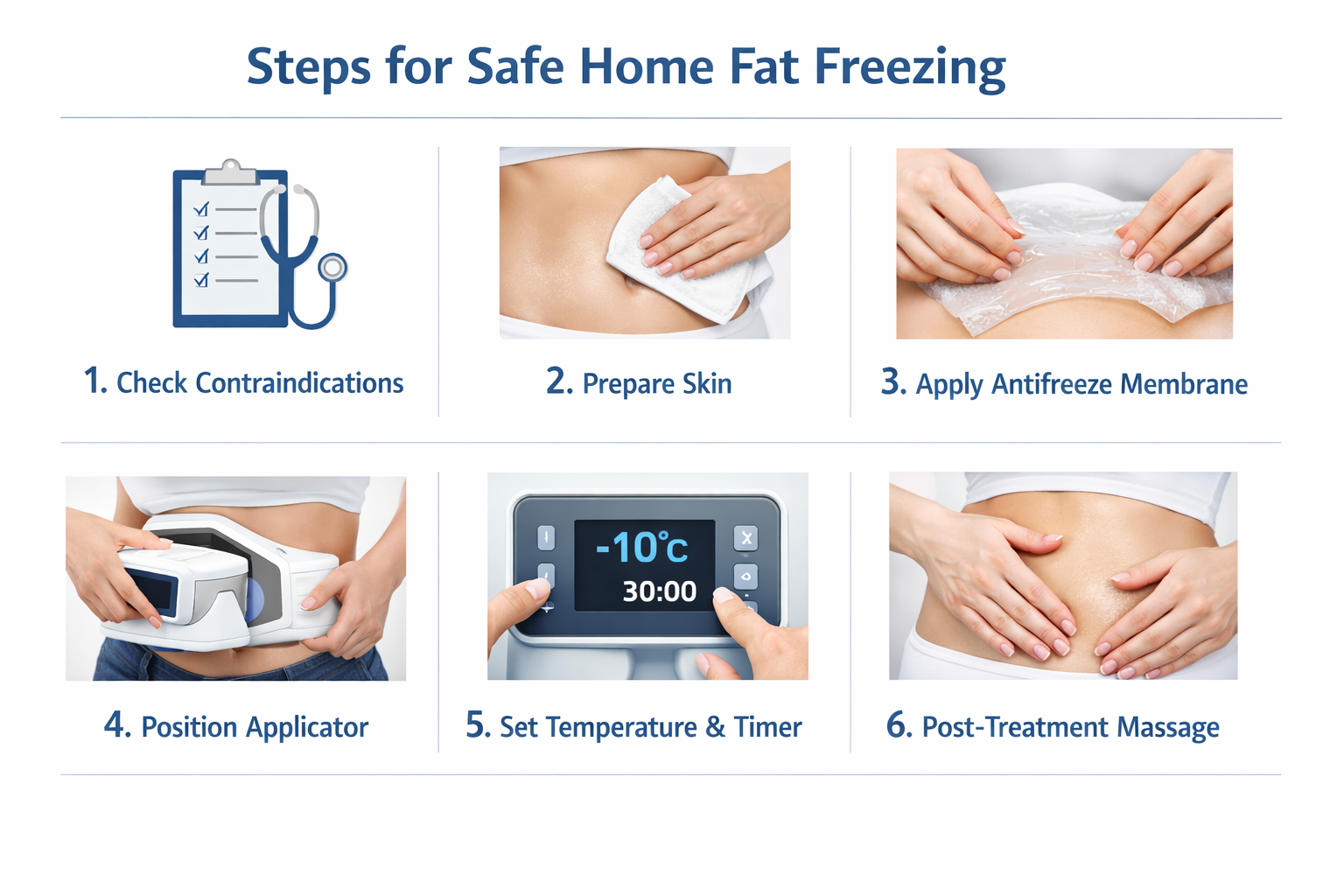
- Check contraindications first. Do not use a fat freezing device if you are pregnant or breastfeeding, have a pacemaker or implanted electronic device, have a history of cold urticaria (cold-triggered allergic reactions), Raynaud’s disease, cryoglobulinaemia, or blood clotting disorders. People with reduced skin sensation in the treatment area should also avoid home use.
- Prepare the skin. The treatment area should be clean, dry, and free from cuts, active skin conditions, or recent sunburn. Do not apply creams or oils before treatment.
- Apply the antifreeze membrane. Place a correctly sized antifreeze membrane flat against the skin before attaching the applicator. Never skip this step.
- Position the applicator correctly. Follow the device instructions for placement. Avoid bony areas, the spine, and areas with prominent veins or nerves.
- Set temperature and session duration. Start with the mildest setting for your first session. Typical home session durations range from 30 to 60 minutes. Do not exceed the manufacturer’s recommended session duration.
- Monitor throughout. Check the skin every 10–15 minutes. If you notice unusual pain, blistering, or skin colour changes beyond normal redness, stop immediately.
- Post-treatment massage. After removing the applicator, gently massage the treated area for two to three minutes. Some devices include a massage function for this purpose. Post-treatment massage may support lymphatic drainage and is a standard step in professional protocols.
- Allow adequate recovery time between sessions. Do not treat the same area more frequently than the manufacturer recommends, typically no more than once every four to six weeks.
Risks and Side Effects of Home Fat Freezing
Home fat freezing carries the same category of risks as professional cryolipolysis, with the added concern that there is no trained practitioner present to identify problems early or adjust the treatment in real time.
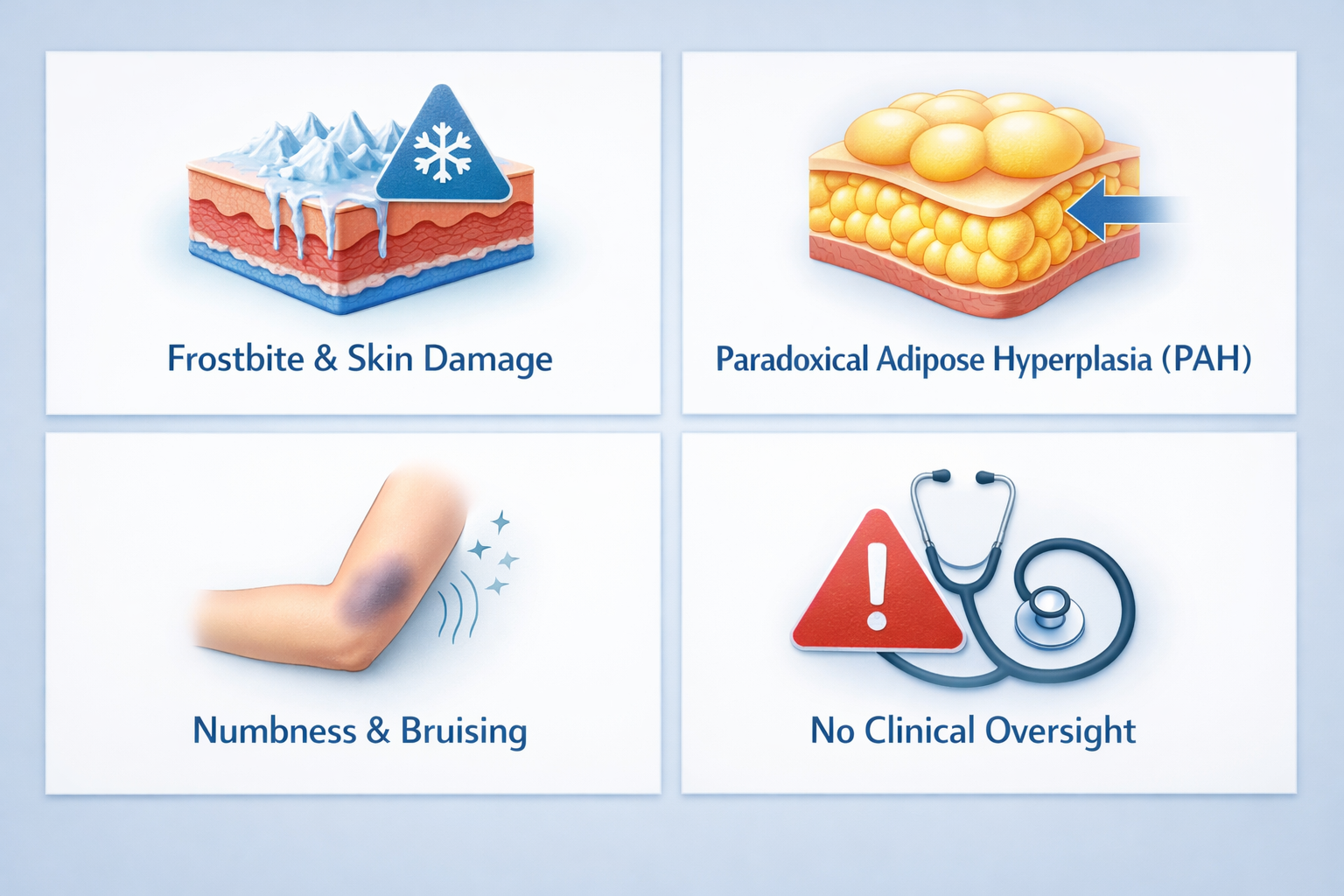
Common side effects include temporary redness, numbness, tingling, and mild bruising in the treated area. These typically resolve within a few days to two weeks and are considered a normal response to cold exposure.
Frostbite and skin damage are the most serious risks associated with home use. These occur when the skin is exposed to temperatures that are too low for too long, or when the antifreeze membrane is absent, incorrectly positioned, or insufficient. Frostbite can cause blistering, tissue damage, and in severe cases, permanent scarring. The risk is higher with home devices because temperature precision is lower and there is no clinical oversight.
Paradoxical adipose hyperplasia (PAH) is a rare but clinically significant complication in which the treated fat tissue grows larger rather than reducing. PAH is estimated to occur in under 1% of treated areas in professional settings, though some analyses suggest the true incidence may be higher. The mechanism is not fully understood, and PAH typically requires surgical correction. It is important to be aware that PAH has been reported following home cryolipolysis use, not only in clinical settings. If you notice the treated area becoming firmer or larger in the weeks following treatment, seek medical assessment promptly.
Contraindications that make home fat freezing unsuitable include pregnancy, breastfeeding, pacemakers or implanted devices, cold-related conditions (cold urticaria, Raynaud’s, cryoglobulinaemia), active skin conditions in the treatment area, blood clotting disorders, and reduced skin sensation.
Realistic Results and What to Expect
Managing expectations is essential before investing in any home fat freezing device. Clinical cryolipolysis with professional equipment produces an average fat layer reduction of approximately 20–25% per treated area per session, with results becoming visible from three to eight weeks and reaching their maximum at two to four months. These figures come from studies using professional-grade devices operating at validated temperatures with vacuum-assisted applicators.
Home devices operating at milder temperatures and without effective suction are unlikely to achieve comparable results. Some users report modest improvements in the appearance of stubborn fat pockets after multiple sessions, but there is currently no peer-reviewed clinical evidence establishing the efficacy of consumer-grade home fat freezing devices. Any changes observed may reflect a combination of mild cold lipolysis, temporary fluid shifts, and the placebo effect of a consistent self-care routine.
Results from any form of cryolipolysis — home or clinical — are not permanent in the sense that remaining fat cells can still enlarge with weight gain. Maintaining results requires a stable weight through diet and exercise. Cryolipolysis is a body contouring tool for people who are already close to their target weight and want to address specific stubborn fat pockets that have not responded to lifestyle measures.
Cost Comparison: Home Device vs. Clinic Treatment
The upfront cost of a home fat freezing device ranges from approximately £60 for a basic gel-pack system to £500 or more for an active electronic device with multiple applicators. However, the true cost includes ongoing antifreeze membrane purchases, which typically cost £10–£30 per pack depending on the brand and size. If you are treating multiple areas or running multiple sessions per month, membrane costs accumulate quickly.
Professional CoolSculpting or equivalent clinical cryolipolysis typically costs between £600 and £1,200 per treatment area per session in the UK, with most practitioners recommending one to three sessions per area for optimal results. The total investment for treating two or three areas professionally can reach several thousand pounds.
A home device becomes cost-competitive only if it produces meaningful results over multiple sessions — which, given the temperature limitations discussed above, is not guaranteed. The more honest framing is that a home device is a lower-cost option with lower efficacy expectations, not a direct substitute for clinical treatment at a fraction of the price.
Alternatives to Home Fat Freezing
If home fat freezing does not seem like the right fit — whether due to safety concerns, the temperature limitations of available devices, or the desire for more reliable results — several other non-invasive body contouring options are worth considering.
Ultrasound cavitation uses low-frequency ultrasound waves to disrupt fat cell membranes. Home cavitation devices are widely available and, like home fat freezing devices, produce more modest results than clinical-grade equipment. They are generally considered lower risk than cold-based treatments in terms of skin injury.
Radiofrequency (RF) body contouring uses heat energy to target fat and stimulate collagen production, which can also improve skin laxity in the treatment area. Some home RF devices have a reasonable evidence base for skin tightening, though fat reduction effects at home-device power levels are modest.
EMSculpt and EMSculpt Neo use high-intensity focused electromagnetic energy to stimulate muscle contractions, building muscle while also reducing fat in the treatment area. These are clinic-only treatments with no meaningful home equivalent, but they may be worth considering for people whose goals include both fat reduction and muscle definition.
Fat dissolving injections (such as those using deoxycholic acid or phosphatidylcholine-based formulations) are a clinic-based injectable option for small, localised fat deposits such as under the chin or along the jawline. They require multiple sessions and carry their own risk profile, but they are performed under medical supervision.
Liposuction remains the most effective single-session option for significant fat removal, but it is a surgical procedure with associated recovery time, anaesthesia risks, and cost. It is not comparable to non-invasive contouring and is appropriate only for specific candidates assessed by a surgeon.
Frequently Asked Questions
Do home fat freezing machines actually work?
Home fat freezing devices can produce a cooling effect on subcutaneous fat, but most operate at temperatures (0°C to −5°C) that are below the range required for reliable fat cell apoptosis in clinical cryolipolysis (−5°C to −11°C). Some users report modest improvements after multiple sessions, but there is no peer-reviewed clinical evidence confirming the efficacy of consumer-grade devices. Results are likely to be more limited than professional treatment.
Are home fat freezing devices safe?
Home fat freezing devices carry real risks including frostbite, skin burns, and paradoxical adipose hyperplasia (PAH). These risks are manageable with careful use — particularly consistent use of an antifreeze membrane — but the absence of clinical oversight means problems may not be identified early. People with certain medical conditions should not use these devices at all. Reading the contraindications carefully before purchase is essential.
What is an antifreeze membrane and do I really need one?
An antifreeze membrane is a gel-coated protective pad placed between the skin and the cooling applicator. It prevents direct skin contact with the cold surface and is essential for avoiding frostbite and skin damage. It must be used every session without exception. Membranes are consumables and need to be replaced regularly, so factor this into the ongoing cost of home treatment.
How long does it take to see results from home fat freezing?
If a home device produces any measurable fat reduction, results would follow the same biological timeline as clinical cryolipolysis — gradual lymphatic clearance of damaged fat cells over three to eight weeks, with maximum changes visible at two to four months. Do not expect immediate visible changes after a single session.
Can I use a home fat freezing device on my stomach, thighs, and chin?
Most home devices are designed primarily for the abdomen and flanks. Some higher-end models include smaller applicators for the thighs or arms. The chin and jawline are particularly sensitive areas where the risk of skin injury is higher; home devices are generally not recommended for the submental area. Always check that the device you are considering includes an applicator sized appropriately for your intended treatment area.
What is paradoxical adipose hyperplasia (PAH)?
PAH is a rare complication of cryolipolysis in which the treated fat tissue becomes larger and firmer rather than reducing. It typically becomes apparent two to five months after treatment. PAH usually requires surgical correction and does not resolve on its own. Although rare, it has been reported in both clinical and home-use settings. If you notice the treated area enlarging after fat freezing, seek medical assessment.
Is a home fat freezing device worth the money?
This depends on your expectations. If you are looking for a modest, gradual improvement in the appearance of a stubborn fat area and understand the temperature limitations of home devices, a mid-range active-cooling device used consistently and safely may offer some benefit. If you are expecting results comparable to professional cryolipolysis, a home device is unlikely to deliver that outcome. For significant or reliable fat reduction, professional treatment with a clinically validated device remains the more evidence-supported option.
Should You Buy a Home Fat Freezing Device or Book a Clinic Appointment?
The honest answer depends on what you are trying to achieve and how much risk you are comfortable managing independently. Home fat freezing devices occupy a genuine middle ground: they are not simply useless, but they are also not a clinical-grade treatment. The temperature gap between home devices and professional cryolipolysis systems is real and meaningful, and no home device currently holds FDA clearance for cryolipolysis. That regulatory status matters — it reflects the absence of independently verified safety and efficacy data for these products in the way that cleared clinical devices have been evaluated.
For someone with mild concerns about a specific stubborn fat pocket, a realistic understanding of what home devices can achieve, and the discipline to use an antifreeze membrane every session and monitor their skin carefully, a higher-quality home device may be a reasonable starting point. For anyone with medical contraindications, a history of cold-related conditions, or expectations of clinically meaningful fat reduction, professional assessment and treatment is the more appropriate path.
If you are considering professional non-invasive body contouring, a consultation with a qualified aesthetic practitioner will allow your suitability to be assessed properly, your treatment areas to be mapped accurately, and your expectations to be aligned with what the evidence supports. That clinical oversight is not just a formality — it is what separates a safe, effective treatment from an uncertain DIY experiment.