

BBL laser treatment — short for BroadBand Light — is a light-based therapy increasingly used not only for facial skin concerns but also for body areas where patients want to improve skin quality, tone, and texture. While BBL is not a fat-reduction procedure in the traditional sense, it plays a meaningful role in a broader body contouring approach by addressing surface-level skin concerns that affect the overall appearance of treated areas. Understanding what BBL can and cannot do for body contouring helps set realistic expectations before any consultation.
Key Takeaways
- BBL (BroadBand Light) is an intense pulsed light technology that targets pigmentation, redness, and skin texture — it does not remove fat or replace surgical body contouring.
- On the body, BBL may help improve uneven skin tone, sun damage, vascular irregularities, and mild skin laxity when used with appropriate settings.
- Multiple treatment sessions are typically required, and results vary depending on skin type, treatment area, and individual response.
- BBL is generally well tolerated with minimal downtime, though temporary redness, swelling, and sensitivity are common after treatment.
- A thorough clinical assessment is essential to determine whether BBL is appropriate for your skin type, concerns, and goals.
What Is BBL Laser Treatment?
BBL stands for BroadBand Light, a technology developed by Sciton that delivers high-intensity pulses of light across a broad spectrum of wavelengths. Despite the common use of the term “BBL laser,” the device is technically an advanced form of intense pulsed light (IPL) rather than a true laser. The distinction matters clinically: while lasers emit a single focused wavelength, BBL emits a range of wavelengths that can be filtered and adjusted to target different chromophores — the biological molecules in skin that absorb light energy, such as melanin (responsible for pigmentation) and oxyhaemoglobin (responsible for redness and visible blood vessels).
The Sciton BBL platform has evolved through several generations, with the BBL HERO (High Energy Rapid Output) variant offering faster delivery and higher fluence settings suitable for larger body surface areas. This makes it more practical for treating body regions beyond the face, including the chest, arms, hands, legs, and back — areas commonly associated with sun damage, uneven pigmentation, and visible vascular changes.
How Does BBL Work on the Body?
When BBL light energy is delivered to the skin, it is absorbed selectively by targeted chromophores. Melanin in pigmented lesions absorbs the light energy, causing those cells to break down and gradually shed from the skin surface. Oxyhaemoglobin in superficial blood vessels absorbs the energy, causing those vessels to coagulate and become less visible over time. This selective photothermolysis — the precise targeting of specific structures using light and heat — allows BBL to address multiple skin concerns without broadly damaging surrounding tissue.
Beyond pigmentation and vascular concerns, research published in peer-reviewed dermatology journals has suggested that repeated BBL treatments may influence gene expression in skin cells, potentially encouraging skin to behave in ways more consistent with younger tissue. This area of research, sometimes referred to as molecular rejuvenation, remains an active and developing field. While early findings are interesting, the clinical significance for body contouring specifically is still being studied, and results should not be assumed to be equivalent across all patients or treatment areas.
For body contouring applications, BBL is typically used to improve the skin surface rather than to alter underlying fat or muscle. It may be combined with other technologies — such as radiofrequency, ultrasound-based treatments, or body sculpting devices — as part of a multi-modal approach to overall body appearance improvement.
What Can BBL Treat on the Body?
On body areas, BBL treatment may be used to address a range of skin concerns that affect the visual quality of the skin surface. Common applications include:
- Sun damage and age spots: Hyperpigmented lesions caused by cumulative ultraviolet exposure are among the most responsive targets for BBL on the body, particularly on the chest, hands, arms, and shoulders.
- Uneven skin tone: Diffuse pigmentation irregularities that create a patchy or mottled appearance may improve with a course of BBL treatments.
- Visible superficial blood vessels: Telangiectasias and diffuse redness on the body, including areas such as the legs and chest, may respond to BBL’s vascular targeting wavelengths.
- Mild skin texture concerns: Some patients report improvement in overall skin smoothness and radiance following a series of treatments, though this is a more variable outcome.
- Poikiloderma of Civatte: A specific pattern of sun-related pigmentation and redness affecting the neck and chest is a well-recognised indication for BBL and IPL-based treatments.
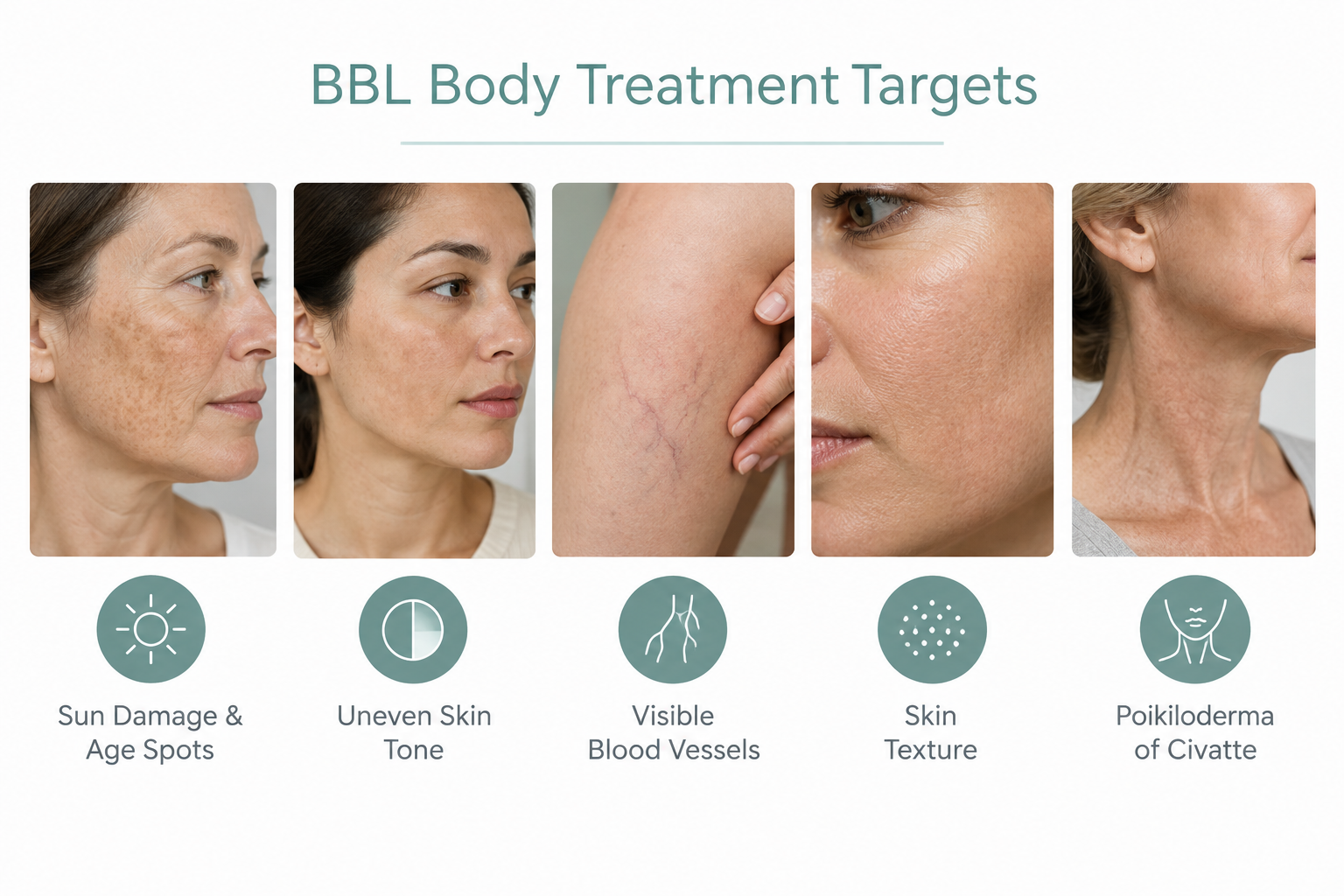
It is important to note that BBL does not reduce fat deposits, tighten significantly lax skin, or build muscle. Patients seeking these outcomes would need to discuss alternative or complementary treatments with a qualified practitioner.
BBL for Body Contouring: Understanding the Role of Light Therapy
The phrase “body contouring” covers a wide spectrum of treatments, from surgical liposuction to non-invasive fat reduction, muscle stimulation, and skin tightening. BBL occupies a specific and limited position within this spectrum. Its primary contribution to body contouring is aesthetic skin improvement — helping the skin surface look clearer, more even, and more uniform — rather than physically reshaping the body’s underlying structure.
In clinical practice, BBL is sometimes incorporated into body contouring treatment plans as a skin quality step. For example, a patient who has undergone fat reduction treatment may have residual skin pigmentation or vascular irregularities that affect the overall result. BBL may be used to address these surface concerns as part of a staged approach. Similarly, patients who have experienced significant sun exposure on the arms or legs may find that improving skin tone with BBL enhances the overall appearance of those areas, even without any structural change to fat or muscle.
Some practitioners also use BBL in combination with devices that deliver radiofrequency or laser energy for skin tightening, creating a combined approach that addresses both surface pigmentation and deeper tissue laxity. The evidence for specific combination protocols varies, and patients should ask their practitioner about the rationale and evidence base for any proposed combination treatment plan.
What Happens During a BBL Treatment Session?
A BBL treatment session for body areas typically begins with a consultation and skin assessment to confirm suitability, identify the specific concerns to be addressed, and select appropriate device settings. Patients are usually asked to avoid sun exposure and self-tanning products for several weeks before treatment, as tanned skin increases the risk of unwanted pigmentation changes.
During the appointment, protective eyewear is worn by both the patient and the practitioner. A cool gel is applied to the treatment area to improve light transmission and patient comfort. The BBL handpiece is then passed over the skin, delivering controlled pulses of light. Each pulse produces a brief sensation often described as a warm snap or mild elastic-band flick. The intensity of this sensation varies depending on the treatment area, the settings used, and individual pain tolerance.
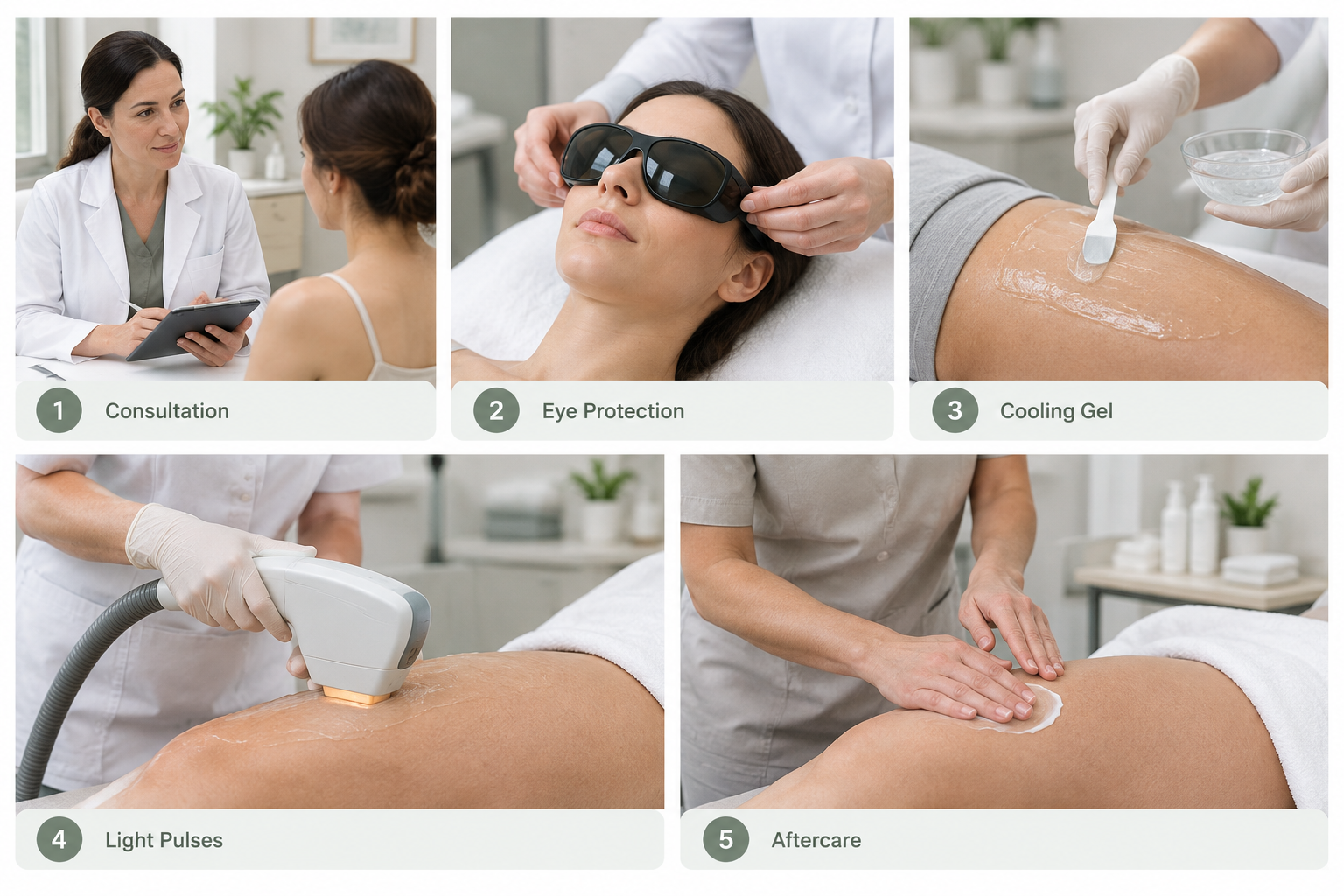
Treatment duration depends on the size of the area being treated. A small area such as the hands may take fifteen to twenty minutes, while larger body areas such as the back or legs may require considerably longer. The BBL HERO variant, with its faster delivery rate, can reduce treatment time for larger areas compared with earlier BBL generations.
After the session, the skin may appear pink or mildly flushed, and pigmented lesions often darken temporarily before they shed from the skin surface over the following one to two weeks. Patients are typically advised to apply a broad-spectrum sunscreen and avoid direct sun exposure during the recovery period.
Downtime and Recovery After BBL
One of the practical advantages of BBL treatment is its relatively limited downtime compared with more ablative procedures. Most patients can return to normal daily activities immediately or within a day of treatment. However, several temporary effects are common and should be anticipated:
- Redness and warmth: The treated area may feel warm and appear red for several hours to a day after treatment.
- Darkening of pigmented lesions: Treated sun spots and age spots typically darken and may develop a coffee-ground texture before gradually flaking away over one to two weeks. This is a normal part of the treatment process.
- Mild swelling: Some swelling around treated areas is possible, particularly in areas with thinner skin.
- Sensitivity: The skin may feel more sensitive to touch and temperature for a few days after treatment.
Makeup can generally be applied to facial areas the following day, though body areas may require slightly different aftercare depending on the treatment intensity. Strenuous exercise and activities that cause significant sweating are usually advised against for twenty-four to forty-eight hours. Sun protection is essential throughout the recovery period and beyond, as treated skin is more vulnerable to UV-induced pigmentation changes.
How Many Sessions Are Typically Needed?
The number of BBL sessions required depends on the specific concerns being treated, the severity of those concerns, the treatment area, and the individual patient’s skin response. For body pigmentation and sun damage, a typical initial course may involve three to five sessions spaced approximately four weeks apart, though this varies between patients and practitioners.
Maintenance treatments are often recommended after the initial course to sustain results, particularly for patients with ongoing sun exposure or progressive skin ageing. Some practitioners recommend annual or biannual maintenance sessions. The frequency and number of treatments should be discussed and agreed upon during the consultation, with realistic expectations established before treatment begins.
When Will Results Become Visible?
Some improvement in pigmented lesions may be visible within one to two weeks of the first session, as darkened spots shed from the skin surface. However, the full benefit of a BBL treatment course for body skin quality typically becomes more apparent after multiple sessions and over several weeks to months as the skin continues to respond and remodel.
Results are not permanent. Sun exposure, ageing, hormonal changes, and lifestyle factors can cause pigmentation and vascular concerns to recur over time. Patients who maintain diligent sun protection and attend recommended maintenance sessions tend to sustain their results for longer periods, though individual outcomes vary considerably.
Risks and Side Effects of BBL Treatment
BBL is generally considered a well-tolerated treatment when performed by a trained and experienced practitioner using appropriate settings for the patient’s skin type. However, as with any light-based treatment, risks and side effects exist and should be understood before proceeding.
Common and expected effects include temporary redness, warmth, darkening of pigmented lesions, and mild swelling. These typically resolve within days to two weeks.
Less common but possible risks include:
- Post-inflammatory hyperpigmentation (PIH): Darkening of the skin in treated areas, more common in patients with darker skin tones or those who have had recent sun exposure. This can be prolonged and may require additional treatment.
- Hypopigmentation: Lightening of the skin in treated areas, which may be temporary or, in rare cases, more persistent.
- Blistering or crusting: Possible if settings are too aggressive for the patient’s skin type or if the skin was recently tanned.
- Paradoxical darkening: In some cases, pigmented lesions may temporarily worsen before improving, or may not respond as expected.
- Scarring: Rare but possible, particularly if post-treatment care instructions are not followed or if the skin is not assessed correctly before treatment.
The risk of adverse effects is significantly influenced by practitioner experience, device calibration, pre-treatment skin assessment, and patient adherence to aftercare guidance. Patients with darker skin tones (Fitzpatrick skin types IV–VI) require careful assessment and conservative settings, as the risk of pigmentation complications is higher. BBL may not be appropriate for all skin types, and a thorough consultation is essential.
Who May Be Suitable for BBL Body Treatment?
BBL treatment for body skin concerns may be suitable for adults who have realistic expectations and specific skin quality goals such as reducing sun damage, improving uneven pigmentation, or addressing visible superficial blood vessels on body areas. Patients with lighter skin tones (Fitzpatrick types I–III) tend to be the most straightforward candidates, though experienced practitioners may treat some patients with medium skin tones using adjusted protocols.
Suitability depends on a clinical assessment that considers:
- Skin type and tone
- Recent sun exposure or use of self-tanning products
- Current medications, including photosensitising drugs
- History of keloid scarring or abnormal wound healing
- Active skin infections, open wounds, or inflammatory skin conditions in the treatment area
- Pregnancy or breastfeeding
- History of photosensitivity disorders
- Use of isotretinoin (acne medication) within a specified period before treatment
Patients with active tans, very dark skin tones, or certain medical conditions affecting light sensitivity may not be suitable candidates. A qualified practitioner will assess these factors during consultation and advise accordingly.
Alternatives to BBL for Body Skin and Contouring Concerns
Depending on the specific concern, several alternative or complementary treatments may be worth discussing with a practitioner:
- Traditional IPL (Intense Pulsed Light): Similar technology to BBL, available from multiple manufacturers. Results and safety profiles are broadly comparable, though device specifications and practitioner experience vary.
- Fractional laser resurfacing: Devices such as fractional CO2 or erbium lasers can address skin texture, mild laxity, and pigmentation with potentially more significant results for some concerns, but typically involve more downtime.
- Radiofrequency (RF) treatments: Devices delivering radiofrequency energy can target skin laxity and stimulate collagen production in body areas. RF may be combined with BBL for patients with both pigmentation and laxity concerns.
- Chemical peels: Medium-depth peels can address pigmentation and skin texture on body areas, though they carry their own downtime and risk profile.
- Topical treatments: Prescription-strength topical agents such as hydroquinone, retinoids, or azelaic acid may be appropriate for mild pigmentation concerns and are sometimes used alongside or between light-based treatments.
- Body contouring devices: For patients whose primary goal is fat reduction or muscle definition rather than skin quality, treatments such as cryolipolysis (fat freezing), high-intensity focused electromagnetic (HIFEM) muscle stimulation, or ultrasound-based fat reduction may be more appropriate. These address different tissue layers and different concerns than BBL.
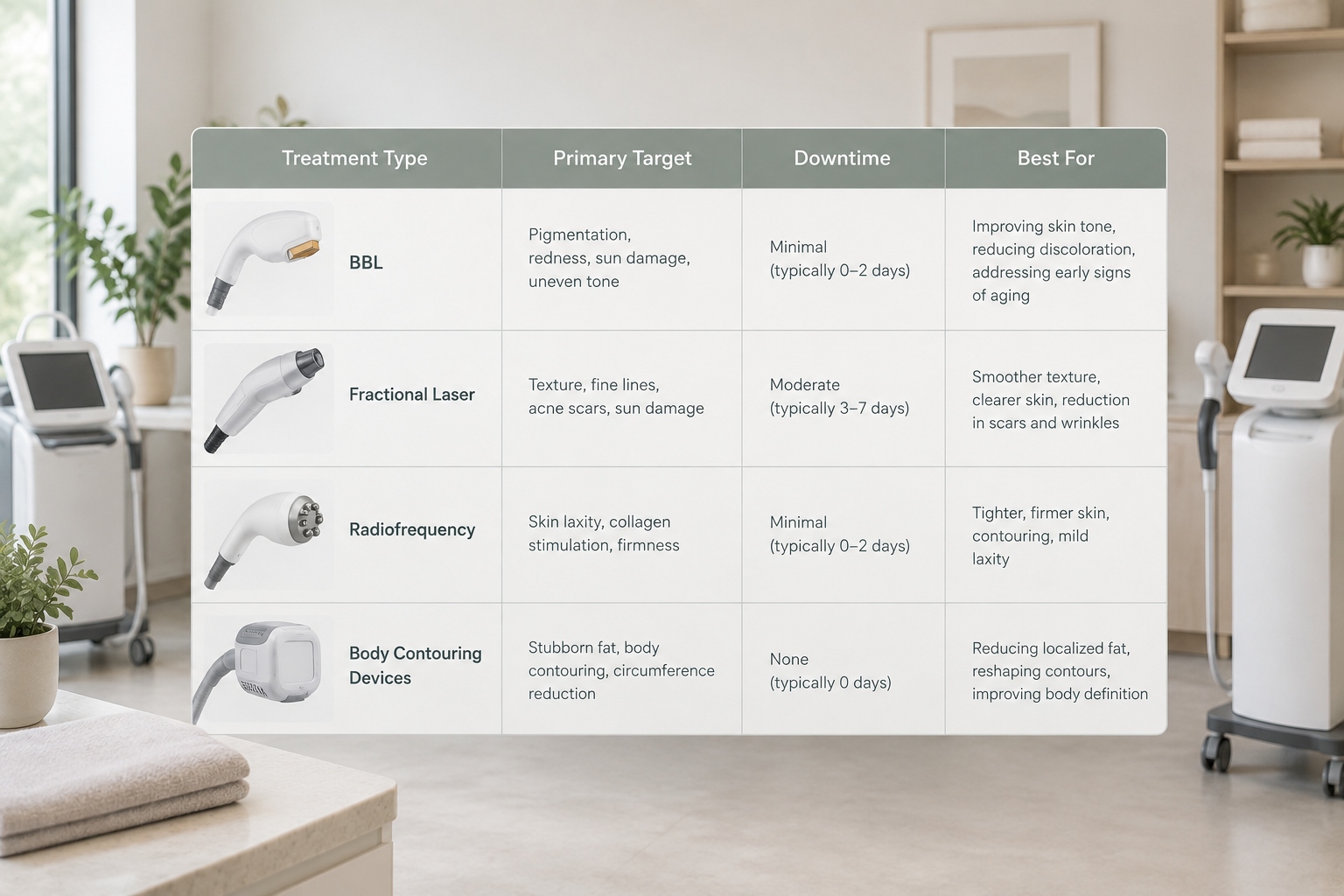
The most appropriate treatment depends on the individual patient’s concerns, skin type, goals, and medical history. A practitioner experienced in multiple modalities is best placed to recommend a tailored approach.
Frequently Asked Questions
Is BBL the same as a laser?
BBL (BroadBand Light) is technically an advanced form of intense pulsed light (IPL) rather than a true laser. Lasers emit a single wavelength of light, while BBL emits a broad spectrum of wavelengths that can be filtered to target specific skin concerns. The distinction affects how the device is used and which concerns it can address most effectively.
Can BBL reduce fat on the body?
No. BBL is a light-based skin treatment that targets surface-level concerns such as pigmentation, redness, and skin texture. It does not penetrate deeply enough to affect fat cells and should not be considered a fat reduction treatment. Patients seeking fat reduction should discuss dedicated body contouring technologies with a qualified practitioner.
How long do BBL results last on body areas?
Results from BBL treatment are not permanent. Improvement in pigmentation and skin tone may last for months to years depending on the patient’s sun exposure habits, skin type, and ageing process. Maintenance sessions and consistent sun protection help sustain results over time, but individual longevity varies considerably.
Is BBL treatment painful?
Most patients describe BBL as producing a brief warm snapping sensation with each pulse of light. Discomfort is generally mild and well tolerated without anaesthesia, though some areas of the body may be more sensitive than others. The built-in cooling system in BBL devices helps manage heat and improve comfort during treatment.
How many BBL sessions will I need for body skin concerns?
The number of sessions varies depending on the severity of the concern, the treatment area, and individual skin response. A typical initial course for body pigmentation or sun damage involves three to five sessions spaced approximately four weeks apart, followed by maintenance treatments as recommended by the practitioner.
Can BBL be used on all skin tones?
BBL is most commonly used on lighter skin tones (Fitzpatrick types I–III) where the risk of pigmentation complications is lower. Patients with medium to darker skin tones require careful assessment and adjusted settings. BBL may not be appropriate for very dark skin tones, and a thorough consultation with an experienced practitioner is essential before proceeding.
Can BBL be combined with other body contouring treatments?
Yes, BBL is sometimes used alongside other treatments as part of a multi-modal approach to body appearance. For example, it may be combined with radiofrequency skin tightening or used after fat reduction procedures to address residual skin quality concerns. The appropriateness of any combination approach should be assessed individually by a qualified practitioner.
Is BBL Light Therapy the Right Choice for Your Body Contouring Goals?
BBL laser treatment offers a well-established approach to improving skin quality on body areas, particularly for patients dealing with sun damage, uneven pigmentation, and visible superficial blood vessels. Its role within body contouring is specific: it addresses the skin surface rather than underlying fat, muscle, or structural tissue. For patients whose primary concern is skin tone and texture on areas such as the chest, arms, hands, or legs, BBL may be a practical and relatively low-downtime option worth discussing with a qualified practitioner.
However, BBL is not a solution for fat reduction, significant skin laxity, or muscle definition. Patients with these goals will need to explore dedicated body contouring technologies that target the appropriate tissue layers. For many patients, the most effective approach combines BBL with complementary treatments tailored to their specific concerns — a plan that can only be developed through a thorough clinical consultation.
If you are considering BBL treatment for body skin concerns, seek a consultation with a practitioner who has experience with light-based devices across a range of skin types and body areas. A realistic discussion of your goals, the likely outcomes, the number of sessions required, and the potential risks will help you make an informed decision about whether BBL is the right step for you.