

Chemical peel aftercare is one of the most important factors in determining how well your skin heals and how good your results will be. Whether you have had a light glycolic peel or a deeper TCA treatment, what you do in the days and weeks that follow directly affects your recovery, your risk of complications, and the quality of your final outcome. This guide covers everything you need to know about post-peel skin recovery, from the first hours after treatment through to safely resuming your normal skincare routine.
Key Takeaways
- Aftercare intensity depends on peel depth: superficial peels typically heal within one to seven days, medium-depth peels within seven to fourteen days, and deep peels may require three weeks or more.
- The three non-negotiable steps after any peel are gentle cleansing, consistent moisturising, and daily broad-spectrum SPF 30 or higher — without exception.
- Do not pick or pull peeling skin; allowing skin to shed naturally reduces the risk of scarring and post-inflammatory hyperpigmentation (PIH).
- People with Fitzpatrick skin types IV–VI face a higher risk of PIH and benefit from specific pre- and post-peel management strategies.
- Knowing the warning signs of infection or abnormal healing allows you to seek timely medical advice and avoid serious complications.
What Happens to Your Skin After a Chemical Peel
A chemical peel works by applying an acid solution to the skin surface, creating a controlled wound healing response. The depth of that controlled injury determines how much of the skin is affected and how long recovery takes. Superficial peels using glycolic acid, lactic acid, or low-concentration salicylic acid target only the outermost layer of the epidermis. Medium-depth peels using trichloroacetic acid (TCA) or Jessner’s solution reach deeper into the epidermis and upper dermis. Deep peels using high-concentration TCA or phenol penetrate into the mid-dermis and require the most intensive aftercare.
Immediately after treatment, most patients notice redness, tightness, and mild swelling. Over the following days, the treated skin begins to darken slightly before it starts to flake and peel away, revealing newer skin underneath. This shedding is the visible sign of accelerated cell turnover and collagen remodeling — the biological processes that ultimately improve skin texture, tone, and clarity. Understanding this process helps set realistic expectations and makes it easier to follow aftercare instructions consistently.
Recovery Timeline by Peel Depth
The recovery timeline by peel depth varies considerably, and knowing what to expect at each stage helps you plan your schedule and avoid unnecessary anxiety about normal healing responses.
| Peel Depth | Examples | Typical Downtime | Active Peeling Phase | Aftercare Intensity |
|---|---|---|---|---|
| Superficial | Glycolic, lactic, low-% salicylic, Vi Peel Precision | 1–5 days | Days 2–4 | Mild: gentle cleanser, moisturiser, SPF |
| Medium-depth | TCA 20–35%, Jessner’s, Vi Peel Original | 7–14 days | Days 3–7 | Moderate: occlusive care, strict sun avoidance, no makeup for several days |
| Deep | Phenol, high-concentration TCA | 14–21+ days | Days 5–14 | Intensive: medical-grade wound care, antiviral prophylaxis may be prescribed, close clinical follow-up |
These timeframes are approximate. Individual healing speed depends on skin type, age, the specific peel formulation used, and how closely aftercare instructions are followed. Your treating practitioner will give you a personalised recovery schedule based on your specific treatment.
Day-by-Day Aftercare Guide
A structured day-by-day aftercare guide helps you stay on track during each phase of healing. The following stages apply broadly to superficial and medium-depth peels; deep peel patients should follow the specific written instructions provided by their clinician.
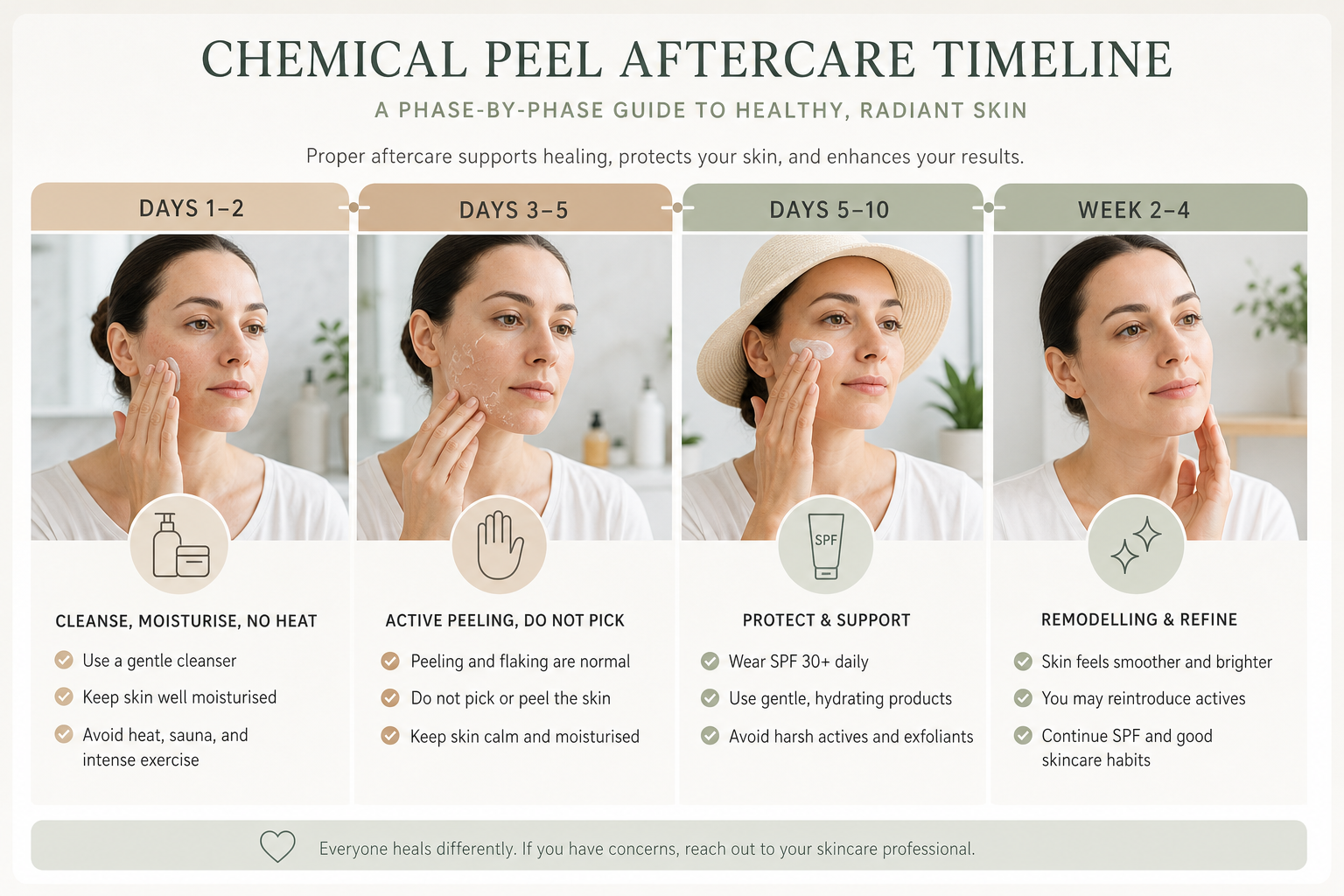
Days 1–2: Immediate Post-Peel Phase
In the first 24 to 48 hours, the skin may feel tight, warm, and sensitive, similar to mild sunburn. Redness and minor swelling are normal. Cleanse the face once or twice daily using a gentle, fragrance-free cleanser and lukewarm water — avoid hot water, which can increase inflammation. Pat the skin dry with a clean, soft cloth; do not rub. Apply a bland, fragrance-free moisturiser immediately after cleansing to support skin barrier repair. Avoid all active skincare ingredients, makeup, and any form of heat exposure during this phase.
Days 3–5: Active Peeling Begins
This is typically when visible flaking and peeling begin. The skin may look uneven, patchy, or darker in areas before it sheds. It is essential to let skin shed naturally during this phase. Pulling, picking, or rubbing at loose skin can cause micro-tears, increase the risk of infection, and lead to post-inflammatory hyperpigmentation or scarring. Continue gentle cleansing and apply moisturiser generously throughout the day to reduce tightness and support the healing process. If itching is uncomfortable, a cool compress or a fragrance-free, hydrating serum containing panthenol or hyaluronic acid (HA) may help soothe the skin.
Days 5–10: Peeling Resolves, New Skin Emerges
By the end of the first week, most superficial peel patients will have completed active peeling. The new skin underneath is typically smoother but also more sensitive and vulnerable to UV damage. Begin applying a mineral sunscreen with broad-spectrum SPF 30 or higher every morning, even if you are staying indoors. Mineral formulations containing zinc oxide or titanium dioxide are generally better tolerated on freshly healed skin than chemical UV filters. Continue using only gentle, fragrance-free products and avoid any form of exfoliation.
Week 2–4: Remodelling Phase
During this phase, collagen remodeling continues beneath the surface even though the skin may look largely healed. Redness and sensitivity may persist, particularly after medium-depth peels. Maintain daily SPF use and a simplified skincare routine. Towards the end of week two, most patients with superficial peels can begin to cautiously reintroduce active ingredients, starting with the most tolerated options first.
The Essential Steps of Chemical Peel Aftercare
Step 1: Cleanse Gently
Use a mild, soap-free, fragrance-free cleanser twice daily. Wash with lukewarm water and avoid any mechanical exfoliation, including face cloths, brushes, or cleansing devices. Brands such as Cetaphil, Vanicream, and similar gentle formulations are commonly recommended by dermatologists for post-peel skin because they clean effectively without disrupting the recovering skin barrier.
Step 2: Moisturise Consistently
Keeping the skin well hydrated is critical to comfortable healing and good outcomes. Choose a fragrance-free moisturiser containing barrier-supportive ingredients such as ceramides, hyaluronic acid, panthenol, or niacinamide. Apply it generously after cleansing and reapply during the day if the skin feels tight or dry. For medium and deep peels, your clinician may recommend a more occlusive product to maintain a moist healing environment.
Step 3: Apply Sunscreen Every Day
Sun protection is arguably the single most important step in chemical peel aftercare. Freshly treated skin is significantly more susceptible to UV damage, and even brief unprotected sun exposure can trigger post-inflammatory hyperpigmentation or reverse the improvements achieved by the peel. Apply a broad-spectrum SPF 30 or higher every morning, reapply every two hours if outdoors, and wear a wide-brimmed hat when in direct sunlight. This habit should continue long after the recovery period ends.
Step 4: Do Not Pick or Pull Peeling Skin
This instruction appears in every reputable aftercare guide for good reason. Removing skin before it is ready to shed disrupts the natural healing process, exposes immature skin to bacteria, and significantly increases the risk of scarring and pigmentation changes. If loose skin is visually distracting, it can be gently rinsed away during cleansing, but it should never be pulled, peeled, or rubbed off manually.
Step 5: Avoid Heat and Sweating
Avoid heat and sweating for at least the first week after treatment. Hot showers, saunas, steam rooms, and intense exercise all increase blood flow to the skin surface, which can worsen redness, prolong swelling, and increase the risk of irritation. Lukewarm showers are preferable, and strenuous workouts should be postponed until the active peeling phase has resolved.
What to Avoid After a Chemical Peel
Knowing what to avoid is just as important as knowing what to do. The following should be avoided during the recovery period unless your clinician advises otherwise.
- Active skincare ingredients: Retinoids, AHAs (including glycolic acid), BHAs (including salicylic acid), benzoyl peroxide, vitamin C in high concentrations, and alcohol-based toners can all irritate healing skin and should be paused.
- Exfoliating scrubs and devices: Physical exfoliation of any kind is contraindicated until the skin has fully healed.
- Fragranced or alcohol-containing products: These can cause stinging, irritation, and barrier disruption on sensitised skin.
- Waxing and hair removal: Waxing near the treated area should be avoided for at least two weeks, as the skin is more fragile and prone to tearing.
- Swimming pools and hot tubs: Chlorinated water and bacteria in pools and hot tubs pose an infection risk to healing skin.
- Tanning beds and sunbeds: UV exposure of any kind during recovery can cause permanent pigmentation changes.
- Other facial treatments: Avoid facials, microdermabrasion, laser treatments, and injectables in the treated area for at least two weeks, or as directed by your practitioner.
Aftercare for Skin of Colour
People with Fitzpatrick skin types IV through VI — including those with South Asian, East Asian, Middle Eastern, Latin American, and African heritage — have a higher concentration of active melanocytes, which makes post-inflammatory hyperpigmentation (PIH) a more significant concern after chemical peels. PIH occurs when the skin produces excess melanin in response to inflammation or injury, resulting in dark patches that can persist for months if not managed appropriately.
For melanated skin, pre-peel priming with a melanin-suppressing agent such as topical hydroquinone, azelaic acid, or kojic acid is often recommended by dermatologists for several weeks before treatment to reduce the risk of rebound hyperpigmentation. After the peel, strict and consistent sun protection is even more critical than for lighter skin tones. Mineral sunscreen with broad-spectrum SPF 30 or higher should be applied daily without exception, and sun exposure should be minimised during the entire recovery period.
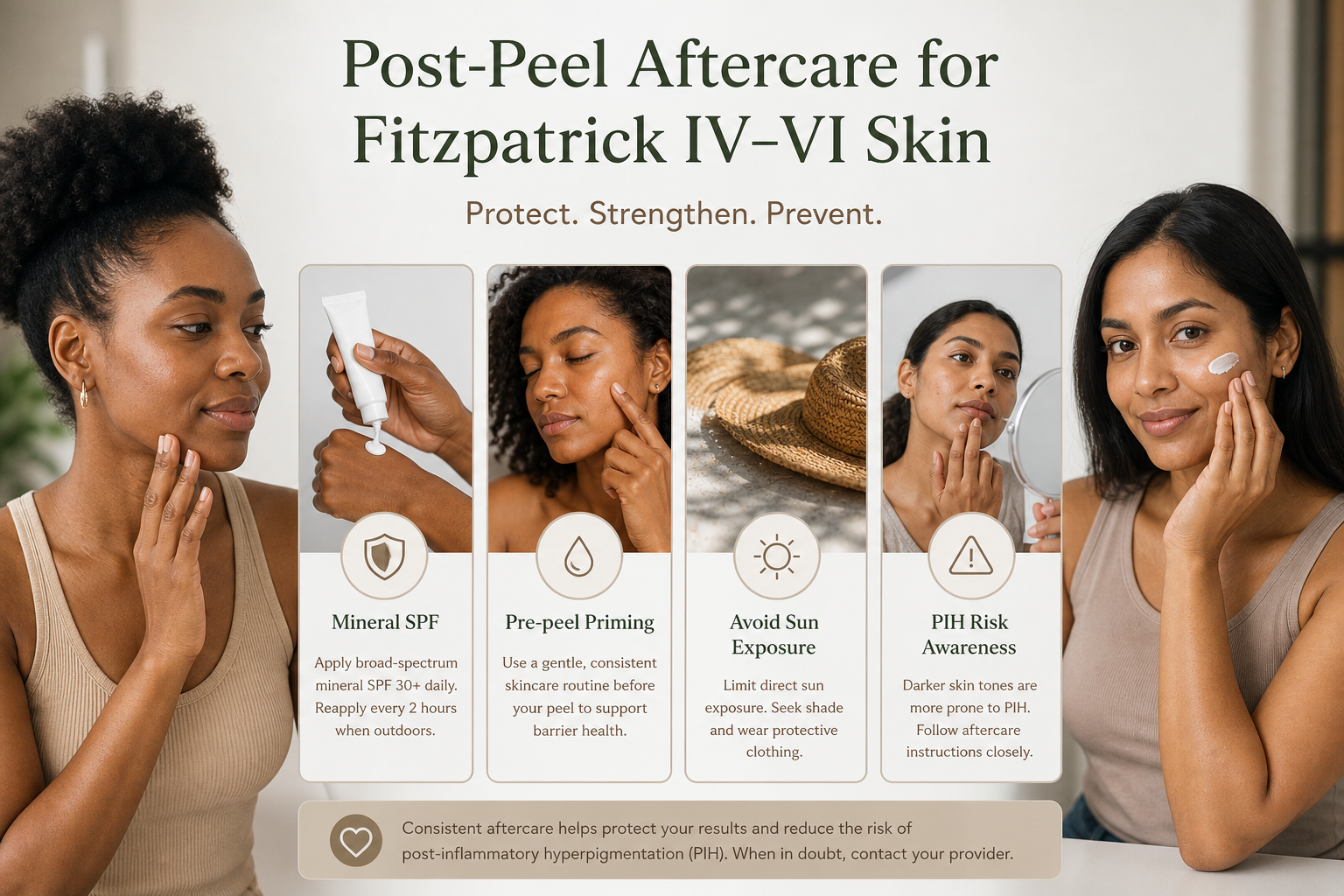
Peel selection also matters. Superficial peels using mandelic acid or low-concentration lactic acid are often preferred for skin of color because they carry a lower risk of triggering PIH compared with stronger TCA formulations. If you have a deeper skin tone, discuss your Fitzpatrick skin type and PIH history with your practitioner before any peel treatment so that the most appropriate peel agent and aftercare protocol can be selected for your skin.
Reintroducing Active Ingredients After a Peel
One of the most common questions patients ask is when they can resume normal skincare routine and reintroduce active ingredients. Returning to actives too soon is a frequent cause of unnecessary irritation and can compromise results. The following phased approach is a general guide; always follow the specific advice of your treating clinician.
- Days 1–10 (superficial peel) or days 1–14 (medium peel): Use only a gentle cleanser, a fragrance-free moisturiser, and mineral SPF. No actives of any kind.
- Week 2 (superficial peel) or week 3 (medium peel): Niacinamide and low-concentration hyaluronic acid serums are generally well tolerated and can be reintroduced first. These support barrier function without risking irritation.
- Week 3–4: Vitamin C (in a stable, low-irritation form such as ascorbyl glucoside) can typically be reintroduced if the skin is no longer sensitive or reactive.
- Week 4–6: AHAs and BHAs can be cautiously reintroduced at low concentrations, starting with once-weekly use and monitoring for any signs of irritation.
- Week 6 or later: Retinoids are generally the last active to be reintroduced. Begin with a low-strength retinol used once or twice weekly and increase frequency gradually. For medium or deep peels, your clinician may advise waiting longer.
Body Peel Aftercare: What Is Different
Chemical peels applied to the chest, hands, arms, or back require a slightly different approach to aftercare compared with facial peels. The skin on the body generally heals more slowly than facial skin due to lower blood supply and fewer sebaceous glands, which means recovery can take up to three weeks even for medium-depth treatments. Moisturising is particularly important for body areas, as the skin tends to become drier and tighter during healing. Clothing choices also matter: loose, breathable fabrics reduce friction against healing skin, while tight or synthetic materials can cause irritation. Sun protection for treated body areas is equally important and often overlooked — apply SPF to any treated area that will be exposed to daylight.
Cold Sore Reactivation: A Risk Worth Knowing
Chemical peels, particularly medium and deep treatments, can trigger reactivation of the herpes simplex virus (HSV-1) in people who carry the virus, even if they have not had a visible cold sore for years. HSV reactivation after a peel can cause painful blistering on the treated area and, if it occurs during the healing phase, may lead to scarring. For this reason, patients with a history of cold sores are typically prescribed antiviral medication such as acyclovir or valacyclovir (Valtrex) before and after medium or deep peel treatments as a preventive measure. If you have a history of cold sores, inform your practitioner before your peel appointment so that appropriate prophylaxis can be arranged.
What Is Normal vs. What Needs Medical Attention
Some degree of redness, tightness, flaking, and sensitivity is a normal part of post-peel skin recovery. However, certain signs indicate that something may be wrong and warrant prompt contact with your treating clinician or a medical professional.
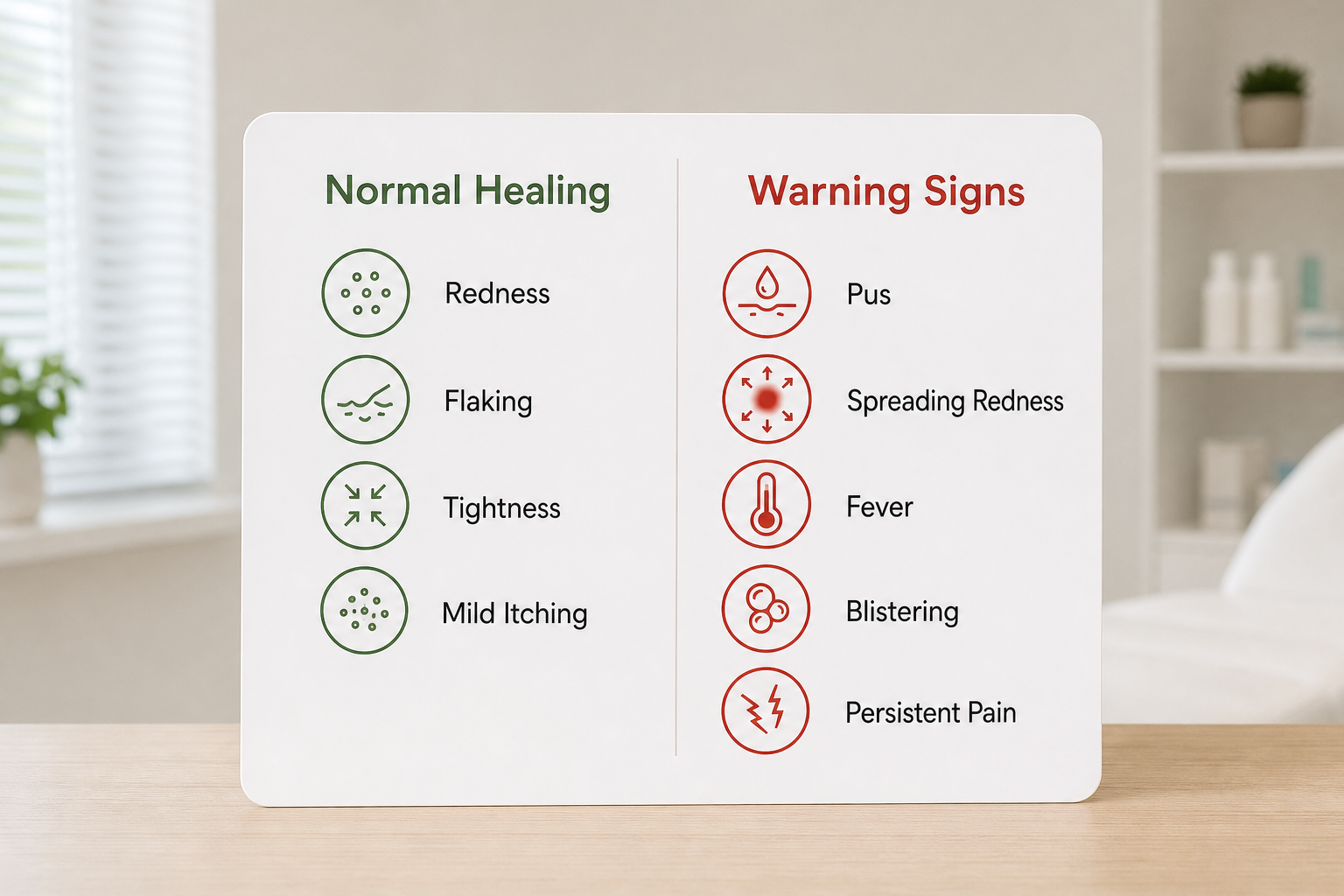
Normal Healing Signs
- Redness and warmth in the first 24–48 hours
- Tightness and mild swelling
- Darkening of the skin before peeling begins
- Flaking and shedding between days 2 and 10
- Mild itching as new skin forms
- Temporary dryness and sensitivity after peeling resolves
Warning Signs of Infection or Abnormal Healing
- Pus, oozing, or a foul smell from the treated area
- Spreading redness beyond the treated zone, particularly with warmth and swelling
- Fever or flu-like symptoms
- Blistering that was not expected for your peel depth
- Persistent or worsening pain beyond the first two days
- Crusting that does not resolve or appears to be spreading
- Significant darkening or white patches appearing after the peeling phase
If you notice any of the warning signs of infection listed above, contact your clinician promptly. Early intervention significantly reduces the risk of lasting complications such as scarring or permanent pigmentation changes.
Maintaining and Extending Your Results Long-Term
Once your skin has fully healed, a few consistent habits will help maintain and extend the improvements achieved by the peel. Daily broad-spectrum SPF use is the single most effective measure for preserving results and preventing new UV-induced pigmentation. A well-formulated skincare routine that includes antioxidants, a retinoid (once the skin has fully recovered), and regular moisturisation supports ongoing collagen production and skin renewal.
If you are considering a series of peels, most practitioners recommend spacing superficial treatments four to six weeks apart to allow full recovery between sessions. Medium-depth peels are typically performed less frequently, often once or twice per year depending on the indication. Your clinician can advise on the most appropriate treatment schedule based on your skin concerns and the results achieved from your first peel.
Frequently Asked Questions
How long does it take for skin to fully recover after a chemical peel?
Recovery time depends on peel depth. Superficial peels typically resolve within one to five days, medium-depth peels within seven to fourteen days, and deep peels may take three weeks or longer. Even after visible peeling has stopped, the skin continues to remodel internally for several weeks, so maintaining sun protection and a gentle routine remains important throughout this period.
Can I wear makeup after a chemical peel?
After a superficial peel, most patients can apply mineral makeup after 24 to 48 hours if the skin is not actively peeling or broken. Mineral formulations are preferred because they are less likely to irritate sensitised skin and do not contain the fragrances or preservatives found in many conventional foundations. After medium or deep peels, makeup should be avoided for at least five to seven days or until the skin has re-epithelialised. Your clinician will advise you on the appropriate timing for your specific treatment.
Why does my skin look worse before it looks better?
This is a very common and entirely normal part of the process. In the days before active peeling begins, the treated skin often darkens, looks uneven, and may feel rough or tight. This is the old, damaged skin preparing to shed. Once peeling is complete, the newer skin underneath is typically smoother and more even in tone. Patients who are not prepared for this temporary phase sometimes become concerned unnecessarily, so it is worth knowing in advance that this appearance is expected and temporary.
Is it safe to exercise after a chemical peel?
Intense exercise that causes significant sweating should be avoided for at least the first five to seven days after a peel. Sweat is mildly acidic and can irritate healing skin, and increased blood flow to the face can worsen redness and swelling. Light walking is generally acceptable, but hot yoga, high-intensity interval training, and similar activities should be postponed until the active peeling phase has resolved.
What should I do if my skin is not peeling at all?
Not all chemical peels produce dramatic visible peeling, particularly superficial treatments. The absence of visible flaking does not mean the peel was ineffective — cellular renewal and collagen stimulation can occur without obvious shedding. Continue following your aftercare instructions as directed. If you are concerned that your treatment did not work as expected, discuss this with your clinician at your follow-up appointment rather than attempting to accelerate peeling with exfoliants.
When can I go back in the sun after a chemical peel?
You should avoid direct, prolonged sun exposure for at least two weeks after any chemical peel, and ideally longer after medium or deep treatments. When you do go outdoors, apply a mineral sunscreen with broad-spectrum SPF 30 or higher, wear a wide-brimmed hat, and seek shade during peak UV hours. This is not just a short-term precaution — consistent sun protection after a peel is essential for maintaining results and preventing pigmentation from returning.
Planning Your Recovery Before You Book Your Peel
The most successful chemical peel outcomes happen when patients are well prepared before treatment and committed to their aftercare plan afterwards. Understanding the recovery timeline by peel depth, stocking up on the right gentle products in advance, and scheduling your treatment around social or professional commitments all contribute to a smoother experience. If you have a history of cold sores, darker skin tone, or active skin conditions, discuss these factors with your practitioner before proceeding so that your peel type and aftercare protocol can be tailored appropriately. A qualified aesthetic clinician or dermatologist can assess your skin, recommend the most suitable peel depth for your concerns, and provide written aftercare instructions specific to your treatment. Following those instructions carefully is the most reliable way to protect your investment and achieve the skin renewal results you are hoping for.