

Skin boosters are a category of injectable skin care designed to improve skin quality from within rather than add volume or reshape facial contours. Unlike traditional dermal fillers, which target structural loss, skin boosters work at the level of the superficial dermis to restore deep hydration, support collagen and elastin production, and gradually improve skin texture, tone, and radiance. If you have noticed dull, dehydrated, or crepey skin and are wondering whether an injectable treatment could help, this guide explains the science, the process, the realistic benefits, and the limitations you should understand before booking a consultation.
Key Takeaways
- Skin boosters are minimally invasive aesthetic treatments delivered by microinjections into the superficial dermis to improve skin quality, hydration, and texture.
- Most formulations use hyaluronic acid, though newer products incorporate polynucleotides, amino acids, vitamins, and other bioactive ingredients.
- Results are progressive rather than immediate, typically becoming visible over two to four weeks and lasting six to twelve months depending on the product and individual factors.
- A treatment course usually involves two to three sessions spaced three to four weeks apart, followed by periodic maintenance.
- Skin boosters are not the same as dermal fillers and are not intended to add volume or correct deep structural concerns.
What Is a Skin Booster?
A skin booster is an injectable treatment that delivers hydrating, regenerative, or biostimulating substances directly into the dermis. The term covers a broad family of products, but the shared goal is improving skin quality — meaning hydration levels, elasticity, firmness, texture, and luminosity — rather than filling lines or augmenting volume. The concept emerged from the observation that many signs of skin aging, including fine lines, dullness, and crepey skin, are partly driven by declining moisture retention and a reduction in the skin’s natural collagen and elastin framework.
Skin boosters are sometimes described as injectable moisturisers, though this understates their function. While topical moisturisers work on the skin’s surface, skin booster injections deposit active ingredients directly into the dermal layer where they can interact with skin cells, support the extracellular matrix, and trigger longer-lasting biological responses. This distinction is important for patients who have tried high-quality topical products without achieving the improvement in skin quality they were hoping for.
It is also worth clarifying that the term “skin booster” is used in the cosmetics industry to describe topical serums marketed as boosters. These are entirely different products. This article focuses exclusively on injectable skin boosters administered by trained aesthetic practitioners.
How Do Skin Boosters Work?
The mechanism of action depends on the specific formulation, but most skin boosters share a common pathway: microinjections place the active substance into the superficial dermis, where it interacts with the local tissue environment. In the case of hyaluronic acid-based skin boosters, the HA molecules bind water at a ratio of up to one thousand times their own weight, creating a reservoir of moisture within the dermal layer. This improves moisture retention, plumps the skin from within, and creates the characteristic dewy glow associated with well-hydrated skin.
Beyond direct hydration, hyaluronic acid in the dermis also supports the extracellular matrix — the structural scaffold of proteins and polysaccharides that surrounds skin cells. Healthy extracellular matrix function is associated with better collagen and elastin stimulation, and some research suggests that HA can inhibit enzymes that break down collagen, helping to preserve the skin’s structural integrity over time. This is why skin boosters are often described as having a bio-remodelling effect rather than simply a filling effect.
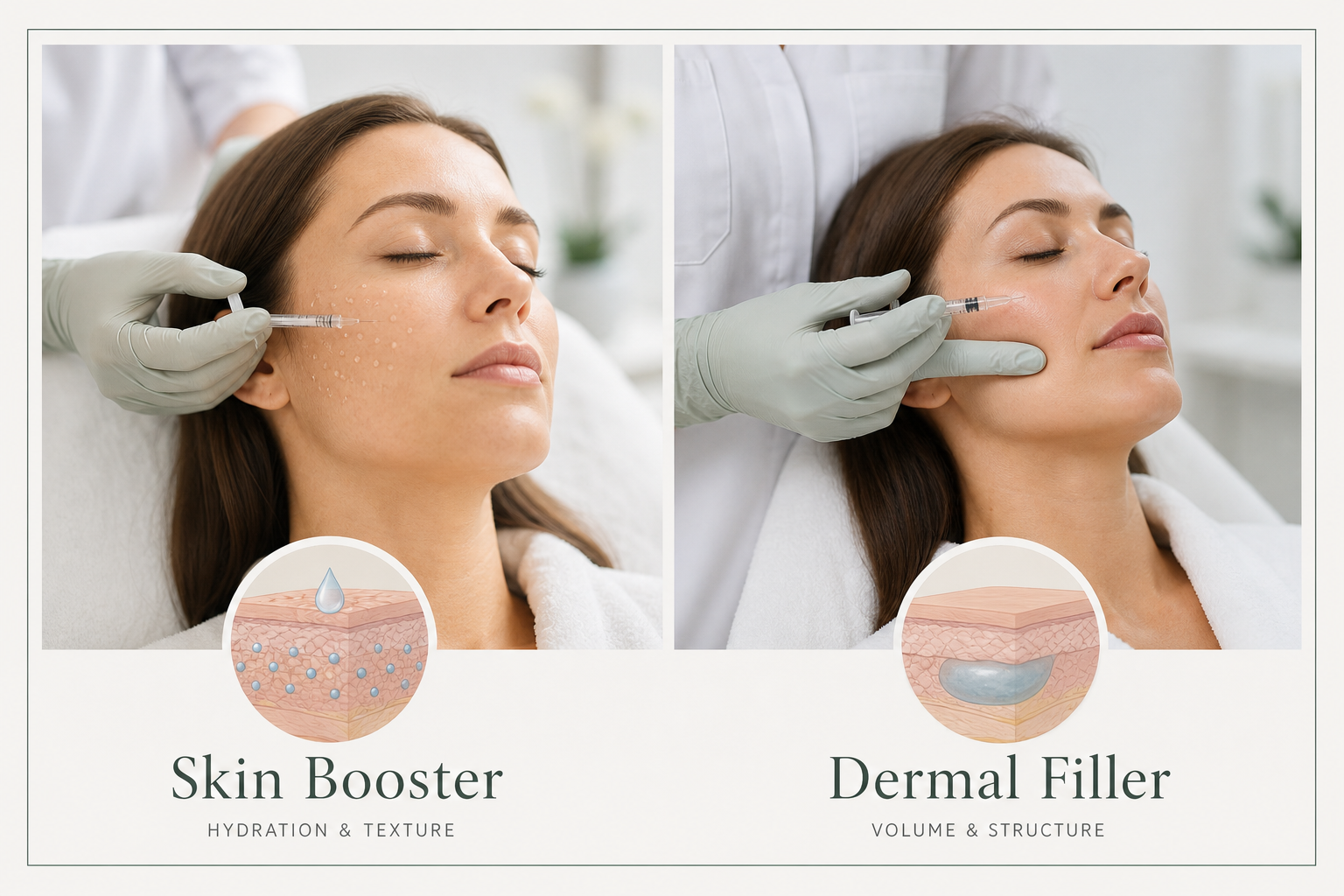
An important technical distinction separates skin boosters from dermal fillers: the degree of hyaluronic acid cross-linking. Cross-linking is a chemical process that links HA molecules together to create a firmer, more durable gel. Dermal fillers use highly cross-linked HA to create structure and volume. Skin boosters use minimally cross-linked or non-cross-linked HA, which spreads evenly through the tissue, integrates with the dermis, and improves skin quality without adding visible bulk. This is why skin boosters do not change facial shape — they improve the quality of the skin itself.
Products based on polynucleotides (PN or PDRN) work through a different mechanism. Polynucleotides are fragments of purified DNA, typically derived from salmon or trout sperm, that interact with cellular receptors to promote tissue repair, reduce inflammation, and stimulate fibroblast activity. Fibroblasts are the cells responsible for producing collagen and elastin, so polynucleotide-based skin boosters may support skin regeneration at a cellular level. These products are sometimes classified as biostimulators rather than hydrators, though in practice many patients use them for similar skin quality goals.
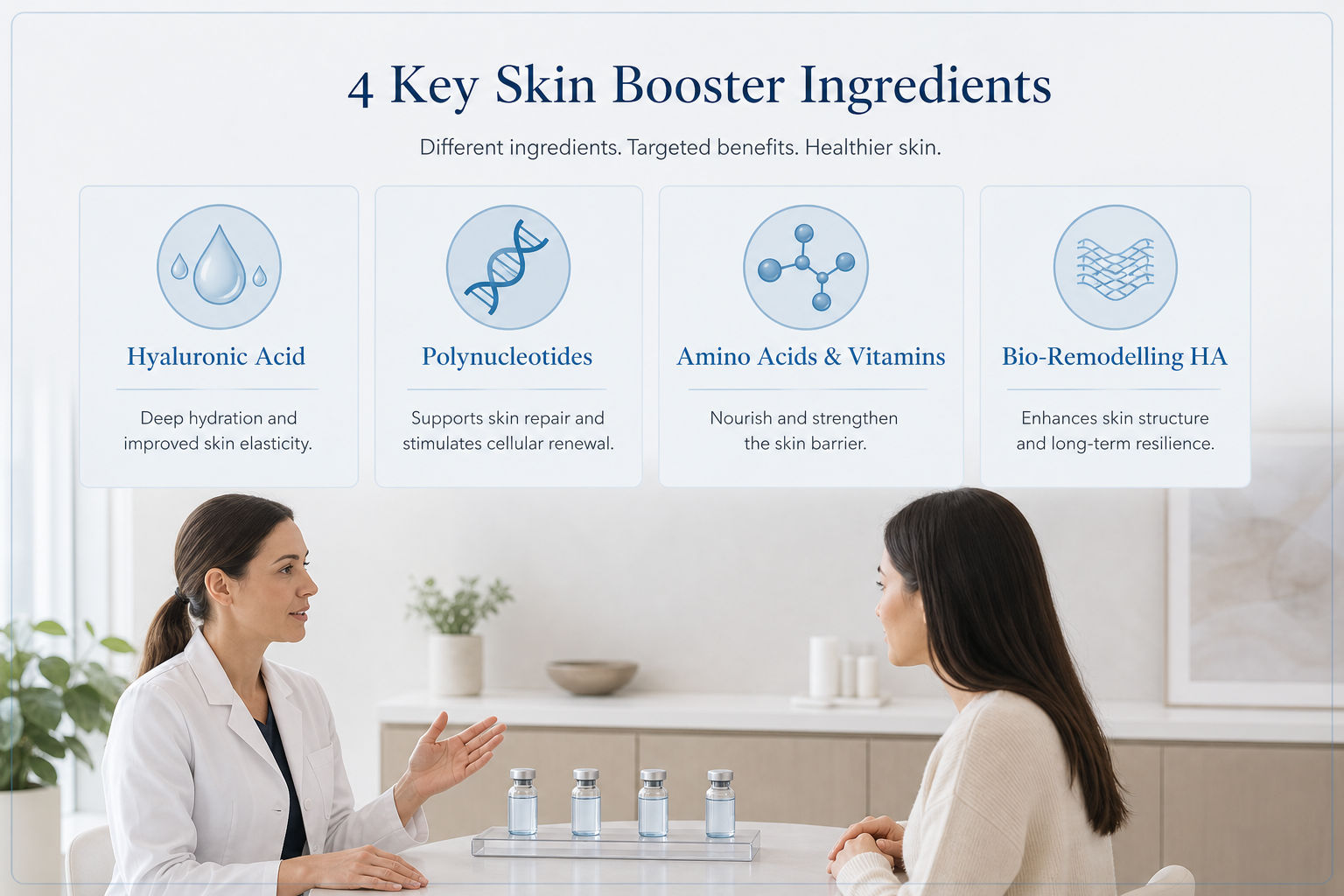
Key Ingredients Found in Skin Boosters
The skin booster category has expanded significantly beyond single-ingredient hyaluronic acid products. Understanding the main ingredient types helps clarify what different products are designed to achieve.
| Ingredient | Primary Function | Example Products |
|---|---|---|
| Hyaluronic acid (HA) | Deep hydration, moisture retention, extracellular matrix support | Restylane Vital, Juvéderm Volite / Skinvive, Belotero Revive, Teosyal Redensity 1 |
| Polynucleotides (PN/PDRN) | Cellular repair, fibroblast stimulation, collagen and elastin production | Rejuran Healer, Lumi Eyes (periorbital) |
| HA with amino acids and vitamins | Hydration combined with nutritional support for skin cells | NCTF 135HA, Sunekos, Jalupro |
| Highly concentrated HA (bio-remodelling) | Tissue remodelling, collagen stimulation, skin laxity improvement | Profhilo |
| Poly-L-lactic acid (PLLA) | Collagen stimulation, gradual volume restoration (biostimulator) | Sculptra (often compared, though classified separately) |
Profhilo deserves a specific note because it is frequently discussed alongside skin boosters but has a distinct formulation. It contains a very high concentration of both high- and low-molecular-weight HA in a non-cross-linked form, injected at specific anatomical points using the BAP (Bio Aesthetic Points) technique. Its primary action is bio-remodelling — stimulating collagen and elastin production and improving skin laxity — rather than simply hydrating. It is often grouped with skin boosters in consumer discussions, and the overlap in goals makes this reasonable, though clinicians may classify it separately.
Skin Boosters vs. Dermal Fillers
One of the most common points of confusion is the difference between skin boosters and dermal fillers. Both are injectable treatments using hyaluronic acid, but their formulations, injection depths, and intended outcomes are meaningfully different.
| Characteristic | Skin Boosters | Dermal Fillers |
|---|---|---|
| Primary purpose | Improve skin quality, hydration, texture | Restore volume, define contours, fill deep lines |
| HA cross-linking | Minimal or none | High (creates firm gel) |
| Injection depth | Superficial dermis | Mid-to-deep dermis or subcutaneous tissue |
| Injection technique | Multiple microinjections across treatment area | Targeted placement at specific anatomical points |
| Visible effect | Improved glow, texture, hydration — no shape change | Visible volume, lift, or structural change |
| Typical duration | 6–12 months (product-dependent) | 9–18 months (product and area-dependent) |
| Suitable for | Overall skin quality, dehydrated or aging skin | Volume loss, deep folds, lip augmentation, contouring |
Some patients benefit from both treatments used together: a dermal filler to address structural concerns such as volume loss or deep nasolabial folds, and a skin booster to improve the overall quality and radiance of the overlying skin. These are complementary rather than competing treatments.
Benefits of Skin Booster Injections
The benefits reported in clinical studies and patient experience include improvements across several dimensions of skin quality. It is important to note that individual results vary, and no treatment guarantees a specific outcome.
- Deep hydration: Skin boosters hydrate from within the dermis, improving moisture levels in a way that topical products cannot replicate. Patients with chronically dehydrated skin often notice a meaningful improvement in skin plumpness and comfort.
- Improved skin texture: Regular treatment can smooth rough or uneven skin texture, including mild acne scarring and sun-damaged skin, by supporting dermal repair processes.
- Skin elasticity and firmness: Collagen and elastin stimulation over a treatment course may improve skin elasticity, making skin feel firmer and more resilient.
- Reduction in fine lines: Improved hydration and dermal support can soften the appearance of fine lines, particularly those caused by dehydration and early skin laxity rather than deep structural loss.
- Radiant, dewy glow: One of the most consistently reported outcomes is an improvement in skin luminosity — skin appears more awake, refreshed, and radiant.
- Pore refinement: Some patients notice a reduction in the appearance of enlarged pores, likely related to improved skin hydration and texture.
- Improved skin tone: Skin tone and brightness may improve, particularly in patients with dull or uneven complexions related to dehydration or early photoaging.
These benefits are generally progressive. Most patients do not see dramatic results immediately after the first session. Improvement builds over the treatment course and continues for several weeks after the final session as collagen remodelling occurs.
Who May Be a Suitable Candidate?
Skin boosters are broadly suitable across skin types and Fitzpatrick skin tones, and they are used in both men and women. The treatment is relevant for a wide age range, from younger patients in their twenties and thirties seeking prejuvenation — using treatment proactively to maintain skin quality before significant aging occurs — to older patients addressing established concerns such as skin laxity, crepey skin, and loss of radiance.
Patients who may benefit include those with chronically dehydrated or dull skin that does not respond adequately to topical skincare, those with early fine lines related to dehydration or mild skin laxity, those with sun-damaged or uneven skin texture, and those who want to improve overall skin quality as part of a broader aesthetic maintenance plan. Skin boosters are also used on the neck, hands, and décolletage — areas that often show signs of aging earlier than the face and are frequently undertreated.
Skin boosters are generally not appropriate for patients who are pregnant or breastfeeding, have an active skin infection or inflammatory skin condition in the treatment area, have a known allergy to hyaluronic acid or lidocaine (which is included in some formulations), have autoimmune conditions that are currently flaring, or have bleeding disorders that increase bruising risk. A thorough consultation with a qualified practitioner is essential to assess individual suitability.
Treatment Areas
The face is the most common treatment area, with skin boosters applied across the cheeks, forehead, perioral area, and lip contour. The under-eye and periorbital area can be treated with specific formulations designed for delicate skin, though this area requires particular care and practitioner experience. Beyond the face, skin boosters are well suited to the neck, where skin is often thinner and more prone to crepiness; the décolletage, which is frequently exposed to sun damage; and the backs of the hands, where skin thinning and loss of hydration are common early signs of aging.
What Happens During a Skin Booster Treatment?
A skin booster appointment typically begins with a consultation to assess skin quality, discuss goals, review medical history, and confirm suitability. Before the injections, a topical numbing cream containing lidocaine is usually applied to the treatment area and left for twenty to thirty minutes to minimise discomfort. Many skin booster formulations also contain lidocaine within the product itself, which further reduces discomfort during injection.
The treatment involves multiple microinjections delivered across the treatment area using a fine needle or, in some cases, a cannula. The injection pattern and depth vary by product: some products use a grid or fanning technique across the skin surface, while Profhilo uses the specific BAP technique with a small number of defined injection points. The appointment itself typically takes thirty to sixty minutes including numbing time.
Most patients describe the sensation as mild to moderate discomfort — a series of small pinpricks — rather than significant pain. Immediately after treatment, the skin may appear slightly red and small raised papules or bumps may be visible at injection sites. These typically resolve within twenty-four to seventy-two hours. Bruising is possible, particularly in thinner-skinned areas. Most patients can return to normal activities the same day, making skin booster treatment a practical option for those with limited downtime — sometimes described as a lunchtime procedure, though some visible redness or swelling may persist for a day or two.
How Many Sessions Are Needed and How Long Do Results Last?
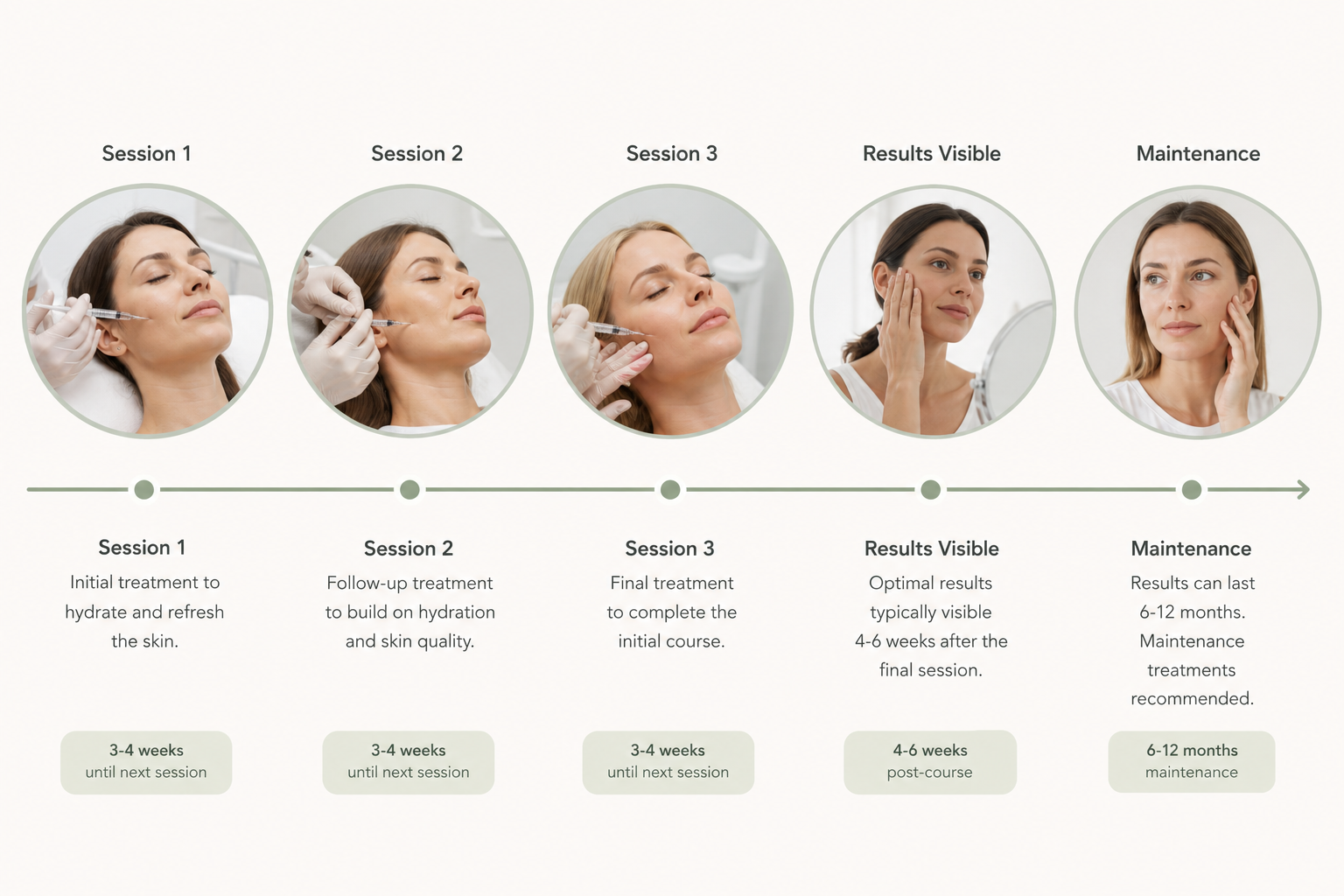
A standard treatment course for most skin booster products involves two to three sessions spaced approximately three to four weeks apart. This spacing allows the skin to respond to each treatment before the next session builds on those changes. Results are cumulative: the improvement in skin quality after a full course is generally more significant than after a single session.
Results typically become visible two to four weeks after each session as the skin responds to the treatment. The full benefit of a complete course is usually apparent four to six weeks after the final session. How long results last depends on the specific product, the patient’s age, skin condition, lifestyle factors such as sun exposure, smoking, and hydration habits, and the number of sessions completed. Most products offer results lasting six to twelve months. Maintenance sessions — typically one session every six to twelve months — are usually recommended to sustain the improvement.
It is worth addressing a concern some patients raise: whether stopping treatment causes the skin to deteriorate below its original baseline. The evidence does not support this. If treatment is discontinued, skin gradually returns toward its pre-treatment state as the product is naturally metabolised. The skin does not become worse than it was before treatment began.
Risks and Side Effects
Skin boosters are considered a low-risk minimally invasive aesthetic treatment when performed by a trained and experienced practitioner, but no injectable procedure is entirely without risk. Common and expected side effects include redness, mild swelling, tenderness, and small papules or bumps at injection sites. These effects are temporary and typically resolve within one to three days.
Bruising is possible, particularly in areas with more superficial blood vessels such as the periorbital region. Less common but more serious risks include infection at injection sites, allergic reaction to the product or lidocaine, and — rarely — vascular occlusion if product is inadvertently injected into or near a blood vessel. Vascular occlusion is a medical emergency requiring immediate treatment, and it underscores the importance of choosing a qualified practitioner with appropriate training and access to hyaluronidase (the enzyme used to dissolve HA if needed).
Practitioner skill and product selection significantly influence both the safety and the outcome of skin booster treatment. Patients should seek treatment from a registered medical professional or appropriately qualified aesthetic practitioner who can conduct a thorough assessment, select the most appropriate product, and manage any complications.
Skin Boosters and Combination Treatments
An emerging area of clinical practice involves combining skin boosters with other aesthetic treatments to address multiple concerns simultaneously or sequentially. For example, a patient with both structural volume loss and poor skin quality might benefit from a collagen-stimulating biostimulator such as Sculptra to address deeper tissue changes, combined with a hyaluronic acid skin booster to improve surface skin quality and radiance. Similarly, microneedling and skin boosters are sometimes used in combination, with microneedling creating channels that may enhance product absorption and simultaneously stimulating collagen production.
Combination approaches should always be planned by an experienced practitioner who can assess the patient’s overall aesthetic goals and determine the appropriate sequence and timing of treatments. Not all combinations are suitable for every patient, and some treatments require a recovery interval before another procedure can be safely performed.
Understanding the Skin Booster Classification
The academic literature distinguishes several categories within the broader skin booster family, and understanding this classification helps patients have more informed conversations with their practitioners. Non-cross-linked HA products integrate rapidly into the dermis and provide hydration and mild biostimulation. Minimally cross-linked HA products offer slightly longer duration while retaining the soft, spreadable quality needed for skin quality improvement rather than volumisation. Biostimulators — including polynucleotide-based products and PLLA-based products — work primarily through cellular stimulation rather than direct hydration, and their effects develop more gradually. Newer formulations incorporating exosomes, growth factors, and combinations of bioactive molecules represent an evolving frontier in injectable skin care, though the evidence base for some of these newer ingredients is still developing.
This classification matters practically because different products are better suited to different concerns. A patient primarily seeking hydration and glow may respond well to a standard HA skin booster, while a patient with more significant skin laxity or a preference for cellular regeneration may be better served by a polynucleotide-based product or a bio-remodelling treatment. A qualified practitioner can help identify the most appropriate option based on individual assessment.
Aftercare Following Skin Booster Treatment
Aftercare is straightforward but important for optimising results and minimising side effects. In the first twenty-four to forty-eight hours, patients are generally advised to avoid touching or massaging the treated area, avoid strenuous exercise, avoid alcohol, and avoid exposure to heat sources such as saunas, steam rooms, and direct sunlight. Applying a broad-spectrum SPF is particularly important after skin booster treatment, as the skin may be more sensitive to UV exposure, and sun damage is one of the primary factors that accelerates the breakdown of both natural and injected hyaluronic acid.
Maintaining good skin hydration through adequate water intake and a suitable topical moisturiser supports the treatment’s effects. Patients should avoid other facial treatments such as chemical peels, laser procedures, or microneedling for at least two weeks after skin booster injections unless advised otherwise by their practitioner. Any persistent swelling, increasing redness, pain, or signs of infection should be reported to the treating practitioner promptly.
Frequently Asked Questions
Are skin boosters the same as Profhilo?
Profhilo is often grouped with skin boosters because it shares the goal of improving skin quality, but it has a distinct formulation — a very high concentration of non-cross-linked HA — and uses a specific injection technique. It is more accurately described as a bio-remodelling treatment. Some clinicians classify it separately from conventional skin boosters, though the overlap in patient goals means the distinction is often blurred in consumer discussions.
How much do skin boosters cost?
Pricing varies considerably depending on the product used, the number of sessions in the treatment course, the treatment area, and the clinic’s location and practitioner experience. As a general guide, individual sessions typically range from around £150 to £500 or more per session in the UK, with a full course of two to three sessions representing the primary investment. Maintenance sessions add to the ongoing cost. A consultation with a qualified practitioner will provide a personalised cost estimate.
Do skin boosters hurt?
Most patients describe the sensation as mild to moderate discomfort. Topical numbing cream is applied before treatment, and many formulations contain lidocaine, which reduces discomfort during injection. Pain tolerance varies between individuals and treatment areas, with more sensitive areas such as the lips and periorbital region typically feeling more uncomfortable.
Can skin boosters be used on all skin tones?
Yes. Skin boosters are suitable across all Fitzpatrick skin types and skin tones. Unlike some laser or light-based treatments, injectable skin boosters do not carry a risk of post-inflammatory hyperpigmentation related to skin tone, making them a broadly accessible option.
Will my skin look worse if I stop having skin boosters?
No. If treatment is discontinued, the skin gradually returns to its pre-treatment baseline as the product is naturally broken down by the body. There is no evidence that stopping skin booster treatment causes the skin to deteriorate below its original condition.
At what age should someone start skin boosters?
There is no fixed minimum age, and the appropriate starting point depends on individual skin concerns and goals. Some patients in their mid-twenties to thirties use skin boosters as a prejuvenation strategy — maintaining skin quality proactively before significant aging occurs. Others begin treatment in their forties, fifties, or later to address established concerns. A practitioner assessment is the most reliable way to determine whether treatment is appropriate at any given stage.
How do skin boosters differ from mesotherapy?
Mesotherapy is a broader technique involving microinjections of a cocktail of vitamins, minerals, amino acids, and other nutrients into the skin. Skin boosters are a more defined product category with standardised formulations and clinical evidence behind specific products. There is overlap in technique, but skin boosters generally refer to specific licensed or regulated products rather than custom-mixed cocktails.
Is a Skin Booster Treatment Worth Considering?
Skin boosters offer a clinically supported approach to improving skin quality that goes beyond what topical skincare can achieve. For patients with dehydrated, dull, or crepey skin, or those noticing early fine lines and reduced skin elasticity, a treatment course of skin booster injections may produce meaningful improvements in hydration, texture, radiance, and firmness. Results are progressive and require a commitment to a treatment course and periodic maintenance, and they are not permanent — but for many patients, the improvement in skin quality is a worthwhile outcome.
Skin boosters are not a replacement for dermal fillers when structural volume loss is the primary concern, and they will not produce the dramatic reshaping effects of surgical procedures. They work best as part of a considered approach to skin health, potentially alongside other treatments tailored to individual goals. The wide range of available formulations — from hyaluronic acid-based products to polynucleotide biostimulators and bio-remodelling treatments — means that the most appropriate product depends on a thorough assessment of your skin, your concerns, and your goals.
If you are considering skin booster treatment, a consultation with a qualified and experienced aesthetic practitioner is the essential first step. They can assess your skin quality, discuss realistic expectations, recommend the most suitable product and treatment plan, and ensure the treatment is performed safely.