

Testosterone cypionate is one of the most widely discussed testosterone formulations for treating hypogonadism, yet its pricing in the UK is far from straightforward. Whether you are exploring treatment through the NHS, a private TRT clinic, or a compounding pharmacy, the cost you encounter will depend on a combination of regulatory, clinical, and supply-chain factors that are rarely explained in full. This guide breaks down every meaningful pricing variable so you can approach your options with realistic expectations.
Key Takeaways
- Testosterone cypionate is not a licensed medicine in the UK, which means it is typically sourced on a named-patient basis or through a compounding pharmacy, adding cost compared to licensed alternatives such as testosterone enanthate.
- NHS patients in England pay the standard NHS prescription charge (currently £9.90 per item), but access to testosterone cypionate specifically on the NHS is limited and subject to regional variation.
- Private TRT clinic costs vary significantly depending on whether pricing is bundled into an all-inclusive monthly plan or itemised separately for medication, consultations, and monitoring blood tests.
- Pharmacy-grade testosterone cypionate from a licensed UK pharmacy can cost £199–£249 per vial, while grey-market suppliers list comparable volumes for £30–£50 — a gap explained by manufacturing standards, regulatory compliance, and prescription overhead.
- Calculating price per milligram rather than price per vial gives a more accurate comparison across different concentrations and pack sizes.
What Is Testosterone Cypionate and Why Does Its UK Status Affect Price?
Testosterone cypionate is an oil-based injectable testosterone with a long-acting ester attached to the testosterone molecule. The cypionate ester slows the release of testosterone into the bloodstream after intramuscular injection, producing a relatively stable hormonal profile over approximately seven to ten days per dose. This pharmacokinetic profile makes it a practical choice for testosterone replacement therapy (TRT) in men diagnosed with hypogonadism — a clinical condition in which the body does not produce sufficient testosterone.
The critical pricing factor that distinguishes testosterone cypionate from other TRT formulations in the UK is its regulatory status. Unlike testosterone enanthate, which has licensed products available through the standard UK medicines supply chain, testosterone cypionate does not hold a UK marketing authorisation. This means it cannot be dispensed as a standard licensed medicine. Instead, it must be obtained either on a named-patient basis — where a UK-registered healthcare professional takes clinical responsibility for importing an unlicensed product for a specific patient — or manufactured by a compounding pharmacy to order. Both routes involve additional regulatory steps, professional liability, and supply complexity, all of which are reflected in the final price.
This is the single most important structural reason why testosterone cypionate vs enanthate UK pricing differs so markedly. Testosterone enanthate can be prescribed and dispensed through conventional NHS and private pharmacy channels at relatively low cost. Testosterone cypionate cannot, and that distinction flows through every tier of the pricing structure.
NHS vs Private TRT: How the Cost Structures Differ
For patients who qualify for NHS treatment of hypogonadism, the medication cost is largely absorbed by the health service. In England, patients pay the standard NHS prescription charge — currently £9.90 per item — regardless of the actual cost of the medicine. In Scotland, Wales, and Northern Ireland, NHS prescriptions are free of charge, meaning eligible patients in those nations pay nothing for their medication at the point of dispensing.
However, NHS access to testosterone cypionate specifically is highly restricted. Most NHS endocrinology and urology services prescribe licensed testosterone formulations such as Sustanon 250, Nebido (testosterone undecanoate), or testosterone gel products including Testogel and Tostran. Testosterone cypionate is rarely, if ever, prescribed through standard NHS pathways. Patients who want testosterone cypionate on the NHS face what is commonly described as a postcode lottery: access depends heavily on the policies of the local Integrated Care Board (ICB), the prescribing clinician’s familiarity with the formulation, and whether the trust has an established named-patient import process. In practice, most NHS patients who specifically want testosterone cypionate will need to pursue private treatment.
Private TRT costs are structured very differently. A private TRT clinic typically charges separately or in combination for: an initial consultation fee, a diagnostic blood panel, the medication itself, follow-up consultations, and ongoing monitoring blood tests. Understanding whether these are bundled into an all-inclusive monthly plan or charged as individual line items is essential before committing to any provider.
Typical Private TRT Cost Ranges
| Cost Component | Approximate Range | Notes |
|---|---|---|
| Initial consultation fee | £100–£250 | One-off; may include initial blood review |
| Diagnostic blood panel | £80–£200 | Includes total testosterone, SHBG, free testosterone, oestradiol, PSA, haematocrit |
| Testosterone cypionate (pharmacy-grade, per vial) | £199–£249 | Licensed pharmacy; named-patient import |
| Follow-up consultations | £50–£150 each | Frequency varies by clinic protocol |
| Monitoring blood tests (ongoing) | £80–£150 per panel | Typically every 3–6 months |
| All-inclusive monthly plan | £100–£250/month | Varies widely; check what is actually included |
Pharmacy-Grade vs Grey-Market Testosterone Cypionate: Understanding the Price Gap
One of the most striking features of the testosterone cypionate market in the UK is the enormous spread between pharmacy-grade and grey-market pricing. A licensed UK pharmacy supplying testosterone cypionate on a named-patient basis may charge £199–£249 for a single vial. Grey-market suppliers — operating outside the regulated medicines supply chain — list comparable volumes for £30–£50. Understanding why this gap exists is important for anyone evaluating their options.
Pharmacy-grade testosterone cypionate sourced through a legitimate compounding pharmacy or named-patient import route is manufactured under Good Manufacturing Practice (GMP) conditions. The product undergoes quality testing, is handled by MHRA-regulated supply chains, and is dispensed against a valid private prescription issued by a UK-registered healthcare professional. The price reflects manufacturing standards, regulatory compliance, professional liability, import logistics, and pharmacy dispensing costs. The prescribing clinician also carries legal and clinical responsibility for the patient’s treatment.
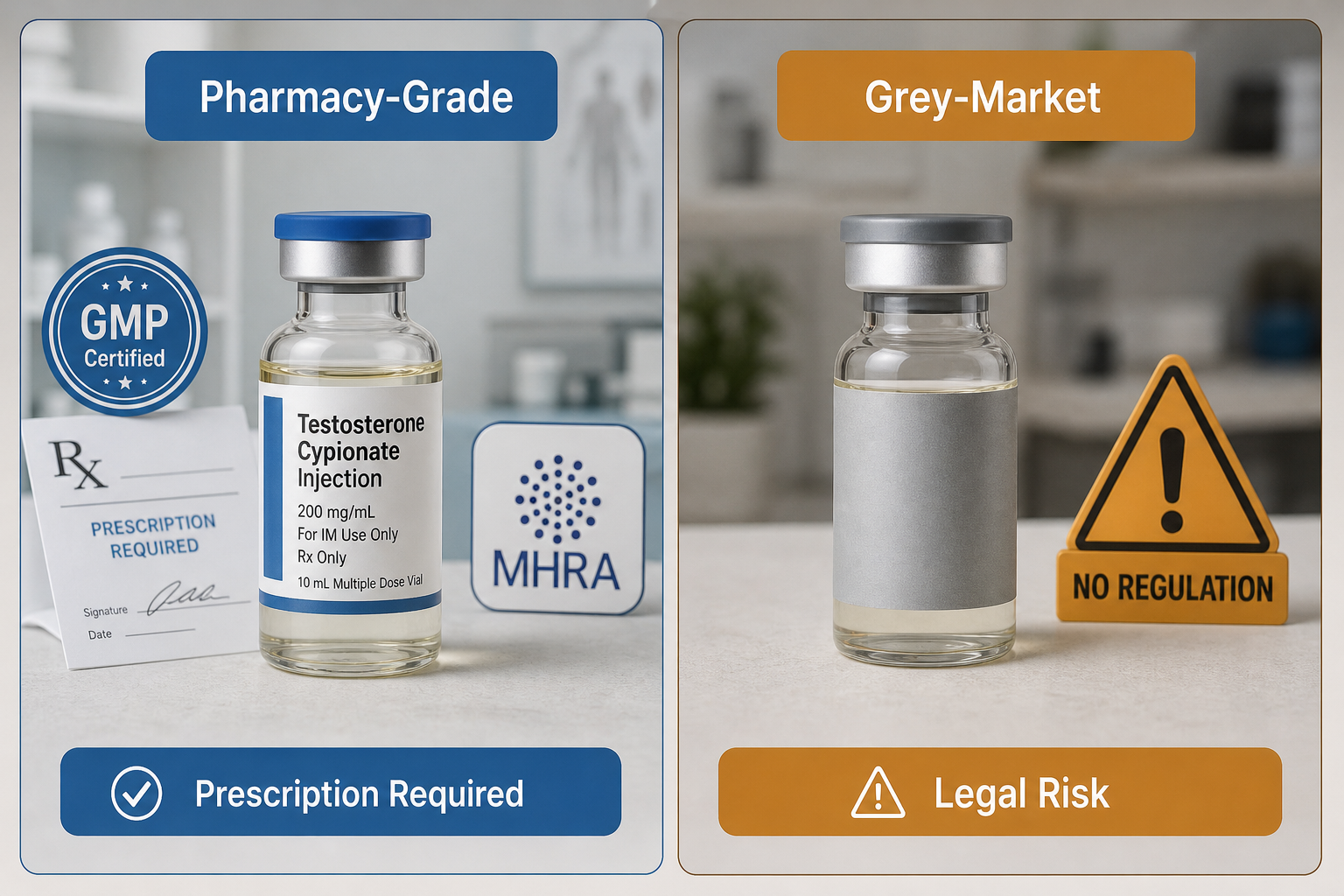
Grey-market suppliers, by contrast, operate outside this framework entirely. Products sold without a prescription through unregulated online channels are not subject to GMP oversight, independent quality verification, or any form of regulatory accountability. Testosterone cypionate is a Class C controlled substance under the Misuse of Drugs Act 1971 in the UK. Purchasing it without a valid prescription is illegal, and the quality, concentration, and sterility of unlicensed products cannot be guaranteed. Some grey-market listings reference third-party laboratory testing (sometimes called Janoshik testing), but this does not constitute pharmaceutical-grade quality assurance and does not confer legal status.
The price gap between these two channels is therefore not simply a margin difference — it reflects fundamentally different levels of safety, accountability, and legal standing. Patients considering TRT should be aware that using a grey-market supplier carries clinical, legal, and financial risks that are not present when treatment is managed through a regulated healthcare provider.
How to Compare Prices Accurately: Price Per Milligram
Comparing testosterone cypionate products by vial price alone is misleading because vials differ in both volume and concentration. A more accurate comparison uses price per milligram of testosterone cypionate, which accounts for these differences and allows a like-for-like evaluation.
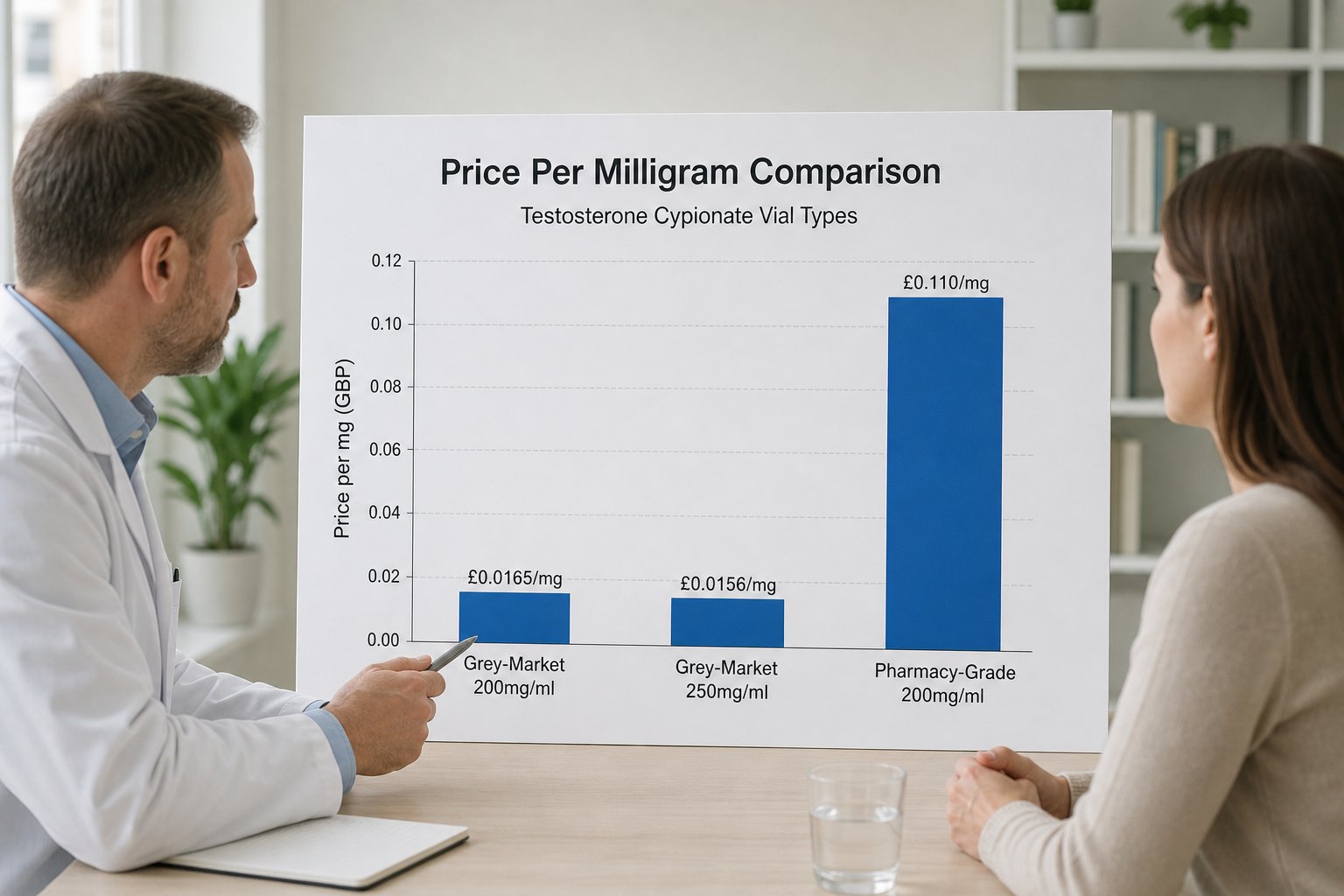
The calculation is straightforward: divide the total price of the vial by the total milligrams of testosterone cypionate it contains. Total milligrams equals the concentration in mg/ml multiplied by the volume in ml.
Worked Price-Per-Milligram Examples
| Product Format | Concentration | Volume | Total mg | Price | Price per mg |
|---|---|---|---|---|---|
| Grey-market 10ml vial | 200 mg/ml | 10 ml | 2,000 mg | £33 | £0.0165/mg |
| Grey-market 10ml vial | 250 mg/ml | 10 ml | 2,500 mg | £39 | £0.0156/mg |
| Pharmacy-grade named-patient vial | 200 mg/ml | 10 ml | 2,000 mg | £220 | £0.110/mg |
This comparison illustrates that the 250 mg/ml grey-market vial offers a marginally lower price per milligram than the 200 mg/ml version at similar price points — a detail that is easy to miss when comparing headline vial prices. More importantly, it shows the scale of the cost difference between regulated and unregulated supply channels. The higher price per milligram for pharmacy-grade testosterone cypionate reflects the regulatory and clinical infrastructure described above, not simply a commercial markup.
When evaluating private clinic pricing, applying the same price-per-milligram logic to the medication component of any plan helps identify whether the medication cost is competitive or inflated relative to the market.
The Named-Patient Import Process and Its Cost Implications
Because testosterone cypionate lacks a UK marketing authorisation, any legitimate supply to a UK patient must go through a named-patient basis arrangement. Under this framework, a UK-registered healthcare professional — typically a doctor at a private TRT clinic — takes clinical responsibility for a specific patient and arranges for an unlicensed medicine to be imported or compounded for that individual. The MHRA permits this under specific conditions, and the prescribing clinician must be satisfied that no suitable licensed alternative exists or that the unlicensed product is clinically preferable for that patient.
The named-patient import process adds cost at several points. The importing pharmacy or specialist supplier must source the product from a licensed manufacturer abroad, manage import documentation, ensure cold-chain integrity where required, and maintain records for regulatory purposes. These logistical steps are reflected in the dispensing price. Additionally, because the prescribing clinician carries personal clinical and legal responsibility for the unlicensed product, the consultation and monitoring fees associated with named-patient prescribing tend to be higher than for standard licensed medicines.
A compounding pharmacy operating in the UK may offer an alternative route, preparing testosterone cypionate to a specific formulation for a named patient. Compounded preparations are not licensed medicines, but when produced by a registered pharmacy under appropriate quality standards, they can represent a legitimate and sometimes more cost-effective option than importing a finished product. Prices from compounding pharmacies vary and should be compared carefully on a price-per-milligram basis.
Reducing Costs: The Prescription Prepayment Certificate and Other Strategies
For patients who do access testosterone cypionate through NHS channels — which, as noted, is uncommon but not impossible — the Prescription Prepayment Certificate (PPC) is a meaningful cost-saving tool that is frequently overlooked. A PPC covers all NHS prescription items for a fixed fee: approximately £32.05 for three months or £114.50 for twelve months (charges are subject to annual revision). For a patient receiving multiple prescription items — for example, testosterone alongside ancillary medications — a PPC can reduce the effective cost per item substantially compared to paying the standard NHS prescription charge for each item individually.
Patients in Scotland, Wales, and Northern Ireland do not pay NHS prescription charges at all, so the PPC is not relevant in those nations. However, for eligible patients in England on long-term TRT, calculating whether a PPC saves money relative to individual prescription charges is a straightforward and worthwhile exercise.
For private patients, the most effective cost-reduction strategy is to scrutinise bundled vs itemised pricing carefully before choosing a provider. An all-inclusive monthly plan that covers medication, consultations, and monitoring blood tests may appear more expensive at first glance than a low headline medication price, but itemised costs can accumulate rapidly once consultation fees and blood panel charges are added. Requesting a full cost breakdown — including the frequency and cost of follow-up appointments and monitoring blood tests — before committing to a clinic is advisable.
Hidden Costs in Private TRT: What to Check Before You Commit
Private TRT pricing is not always as transparent as it appears. Several cost categories are commonly underemphasised in clinic marketing materials but can significantly affect the total annual spend.
- Year-one vs year-two costs: Many private TRT clinics charge higher fees in the first year due to the initial consultation fee, comprehensive diagnostic blood panel, and more frequent follow-up appointments during the dose-optimisation phase. From year two onwards, costs often reduce as monitoring frequency decreases and the treatment protocol stabilises. Asking a clinic to estimate both year-one and ongoing annual costs gives a more accurate picture.
- Monitoring blood test frequency: Responsible TRT management requires regular monitoring blood tests to assess total testosterone levels, SHBG, free testosterone, oestradiol, haematocrit, and PSA. Some clinics include these in their monthly fee; others charge per panel. A comprehensive blood panel can cost £80–£200 each time, and if required every three months, this adds £320–£800 annually to the treatment cost.
- Consumables: Needles, syringes, and sharps disposal containers are not always included in medication pricing. These are modest costs individually but should be factored into monthly budgeting.
- Dose adjustments and additional consultations: If your dose requires adjustment — which is common during the first six to twelve months of TRT — additional consultations may be charged separately unless the plan explicitly covers them.
- Storage and wastage: Testosterone cypionate in multi-dose vials can crystallise if stored incorrectly, particularly if exposed to cold temperatures. Crystallised product may appear unusable, leading some patients to discard vials prematurely. Warming the vial gently and allowing crystals to dissolve is usually sufficient, but patients unaware of this may incur unnecessary replacement costs. Clinics should advise patients on correct storage at the point of prescribing.
Testosterone Cypionate vs Other TRT Formulations: Cost Comparison
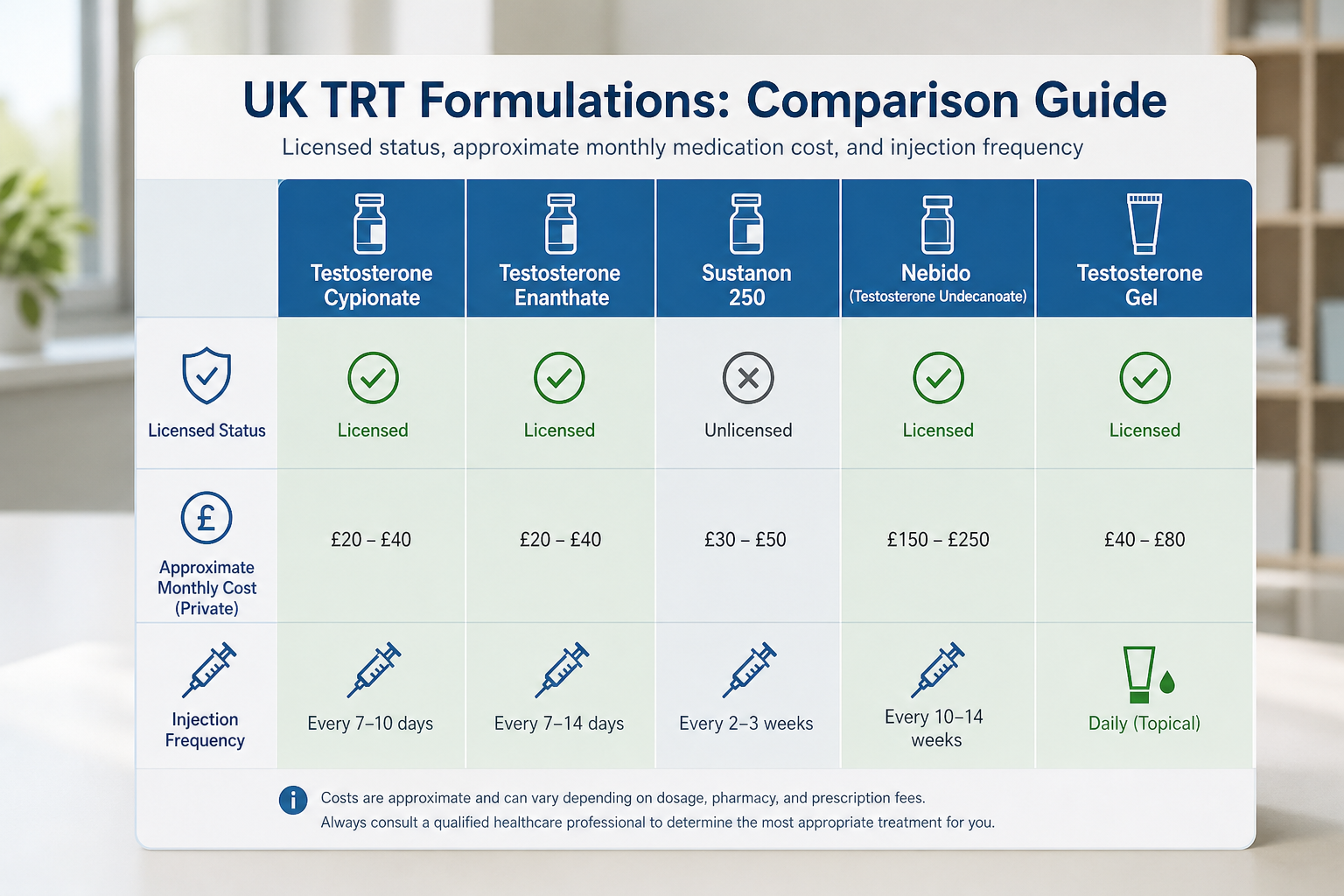
Testosterone cypionate is one of several formulations available for TRT in the UK. Understanding how its cost compares to alternatives helps contextualise whether it represents good value for a given patient’s circumstances.
| Formulation | Licensed in UK? | Typical Private Cost (medication only) | Injection Frequency | Notes |
|---|---|---|---|---|
| Testosterone cypionate | No (named-patient/compounded) | £199–£249/vial (10ml) | Weekly or every 10–14 days | Long-acting ester; not licensed in UK |
| Testosterone enanthate | Yes (licensed products available) | £30–£80/vial (varies) | Every 1–2 weeks | Similar half-life to cypionate; lower cost due to licensed status |
| Sustanon 250 | Yes | £20–£60/ampoule | Every 2–3 weeks (or more frequently in TRT) | Blend of four esters; licensed and widely available |
| Nebido (testosterone undecanoate) | Yes | £80–£150/vial | Every 10–14 weeks | Very long-acting; fewer injections per year |
| Testosterone gel (e.g. Testogel) | Yes | £30–£80/month | Daily application | Non-injectable; transfer risk to others |
Testosterone enanthate is pharmacologically very similar to testosterone cypionate — both are long-acting ester formulations with comparable half-lives and clinical profiles — and its licensed status in the UK makes it considerably more affordable through private pharmacy channels. For many patients, the clinical difference between the two formulations is minimal, and a prescribing clinician may reasonably recommend testosterone enanthate as a cost-effective alternative. Patients who specifically prefer testosterone cypionate, often due to familiarity from previous treatment in other countries, should understand that this preference carries a meaningful price premium in the UK context.
Frequently Asked Questions
Is testosterone cypionate legal to buy in the UK?
Testosterone cypionate is a Class C controlled substance under the Misuse of Drugs Act 1971. It is a prescription-only medicine (POM) and can only be legally supplied against a valid prescription issued by a UK-registered healthcare professional. Purchasing it without a prescription — including from online grey-market suppliers — is illegal. Possession for personal use is not a criminal offence under the Act, but supply without authorisation is.
Why is testosterone cypionate more expensive than testosterone enanthate in the UK?
Testosterone enanthate has licensed products available within the standard UK medicines supply chain, allowing it to be dispensed through conventional NHS and private pharmacy routes at relatively low cost. Testosterone cypionate has no UK marketing authorisation, so it must be sourced on a named-patient basis or through a compounding pharmacy. These routes involve additional regulatory steps, import logistics, and professional liability, all of which increase the final price.
What does an all-inclusive private TRT plan typically include?
This varies significantly between providers. Some all-inclusive monthly plans cover medication, consultations, and monitoring blood tests within a single fee. Others include only the medication and charge separately for clinical reviews and blood panels. Always request a written breakdown of exactly what is and is not included before signing up, and ask specifically about the frequency and cost of monitoring blood tests and follow-up appointments.
Can I get testosterone cypionate on the NHS?
NHS access to testosterone cypionate is very limited. Most NHS services prescribe licensed testosterone formulations such as Sustanon 250, Nebido, or testosterone gel. Access to testosterone cypionate specifically depends on local ICB policies and individual prescriber decisions, making it subject to significant regional variation. Patients in England who do obtain it on the NHS pay the standard NHS prescription charge per item; patients in Scotland, Wales, and Northern Ireland pay nothing.
What is a Prescription Prepayment Certificate and could it save me money?
A Prescription Prepayment Certificate (PPC) is an NHS scheme available to patients in England that covers all prescription items for a fixed annual or quarterly fee, regardless of how many items are prescribed. For patients on long-term TRT who receive multiple prescription items, a PPC can reduce the effective cost per item below the standard NHS prescription charge. It is not applicable in Scotland, Wales, or Northern Ireland, where prescriptions are free.
What monitoring is required during testosterone cypionate treatment?
Responsible TRT management requires regular monitoring blood tests throughout treatment. A standard monitoring panel typically includes total testosterone, SHBG, free testosterone, oestradiol, haematocrit (to assess red blood cell concentration), and PSA (prostate-specific antigen). The frequency of testing is usually higher during the initial dose-optimisation phase and may reduce to every three to six months once the treatment is stable. These monitoring costs should be factored into the total cost of treatment.
Does vial concentration affect the price I pay?
Vial concentration (expressed in mg/ml) affects the total milligrams of testosterone cypionate per vial, which in turn affects the true value of each purchase. A 250 mg/ml vial contains more active compound per millilitre than a 200 mg/ml vial of the same volume. Comparing products on a price-per-milligram basis — rather than price per vial — gives a more accurate picture of relative cost and helps avoid overpaying for a lower-concentration product at a similar headline price.
Making an Informed Decision About Testosterone Cypionate Costs in the UK
The price of testosterone cypionate in the UK is shaped by a layered set of factors: its unlicensed status requiring named-patient or compounded supply, the regulatory and clinical infrastructure of legitimate prescribing, the choice between NHS and private pathways, and the significant difference between pharmacy-grade and grey-market products. No single price point applies universally, and the lowest available price is not necessarily the most appropriate or legally sound option.
For patients with confirmed hypogonadism seeking treatment through a regulated private TRT clinic, the realistic total cost of testosterone cypionate-based TRT — including the initial consultation fee, diagnostic blood panel, medication, and ongoing monitoring blood tests — is likely to fall in the range of £150–£350 per month in year one, with potential for lower ongoing costs once the treatment protocol is established. Patients who are cost-sensitive and clinically suitable may find that testosterone enanthate offers a comparable therapeutic outcome at meaningfully lower cost, given its licensed status in the UK.
Before committing to any provider or formulation, it is worth requesting a full itemised cost breakdown, clarifying whether pricing is bundled or itemised, and confirming that the clinic operates within the UK’s regulated medicines framework. A consultation with a qualified clinician who specialises in testosterone replacement therapy is the appropriate starting point for any patient considering treatment for suspected hypogonadism.