

Back fat is one of the most common body contouring concerns for both men and women, yet it remains stubbornly resistant to diet and exercise alone. Fat-freezing — clinically known as cryolipolysis — has become one of the most requested non-surgical options for reducing subcutaneous fat on the upper and lower back, including the bra line area. This guide explains how the treatment works, what it can realistically achieve on the back specifically, who is likely to benefit, and what the limitations are — so you can approach a consultation with clear, informed expectations.
Key Takeaways
- Cryolipolysis (fat freezing) uses controlled cooling technology to permanently destroy subcutaneous fat cells without surgery or significant downtime.
- The back — including bra bulge, upper back, and lower back — is a treatable area, but results depend on fat thickness, skin elasticity, and the number of sessions completed.
- Clinical studies suggest an average of 20–25% fat reduction per session in treated areas; most patients require one to two sessions per zone.
- Fat freezing is not a weight-loss procedure — it is a body contouring treatment suited to people close to their target weight with pinchable, localized fat deposits.
- Rare but serious risks exist, including paradoxical adipose hyperplasia (PAH); a thorough consultation with a qualified practitioner is essential before proceeding.
What Is Back Fat and Why Is It Difficult to Lose?
Back fat refers to localized deposits of subcutaneous fat — fat stored just beneath the skin — along the upper, mid, and lower back. Unlike visceral fat (the deeper fat surrounding internal organs), subcutaneous fat is the soft, pinchable layer that responds to body contouring treatments. However, where the body stores and releases subcutaneous fat is largely determined by genetics and hormones, not by which muscles you train or which foods you avoid. This is why targeted spot reduction through exercise alone does not work: the body draws on fat stores systemically, not from the area being exercised.
Hormonal changes play a meaningful role, particularly in women. Declining oestrogen levels during perimenopause and menopause shift fat distribution toward the back, flanks, and abdomen. In men, back fat tends to accumulate along the mid-back and flanks. Poor posture can also make back fat appear more prominent by compressing soft tissue, though posture correction alone will not remove actual fat deposits.
It is also worth distinguishing between true back fat and what might be called false back fat — the appearance of bulging tissue caused by an ill-fitting bra that is too tight across the band. If the bulge disappears when you remove your bra and wear a correctly fitted one, the issue may be bra fit rather than a significant fat deposit. A practitioner can help clarify this during a consultation, since treating minimal or non-existent fat with cryolipolysis would not produce meaningful results.
Types of Back Fat That Can Be Treated
The back is not a single uniform area, and different zones may require different applicator placements or numbers of treatment cycles. Understanding which type of back fat you have helps set realistic expectations.
| Zone | Location | Common Description | Typical Causes |
|---|---|---|---|
| Upper back fat | Below the shoulders, above the bra line | Fullness near shoulder blades or axillary area | Genetics, weight gain, aging |
| Bra line fat (bra roll / bra bulge) | Across the back at bra band level | Horizontal fold or roll of tissue | Genetics, hormonal changes, bra fit |
| Mid-back fat | Between the bra line and the waist | Soft fullness along the mid-spine area | Genetics, sedentary lifestyle, weight gain |
| Lower back fat / love handles | Above the hips, wrapping toward the flanks | Muffin top, lumbar bulge | Genetics, hormonal changes, caloric surplus |
Each of these zones can potentially be addressed with cryolipolysis, provided there is sufficient pinchable fat to engage the applicator. A practitioner will assess fat layer thickness and skin quality at each zone before recommending a treatment plan.
How Does Fat Freezing Work?
Cryolipolysis is based on the principle that fat cells (adipocytes) are more vulnerable to cold temperatures than the surrounding skin and tissue. When subcutaneous fat is exposed to precisely controlled cooling — typically in the range of approximately 39°F to 30°F (4°C to −1°C) — the fat cells begin to crystallize and undergo a process called fat cell apoptosis: a form of programmed, natural cell death. The surrounding skin, nerves, and blood vessels are not permanently damaged because they tolerate cold at these temperatures better than fat cells do.
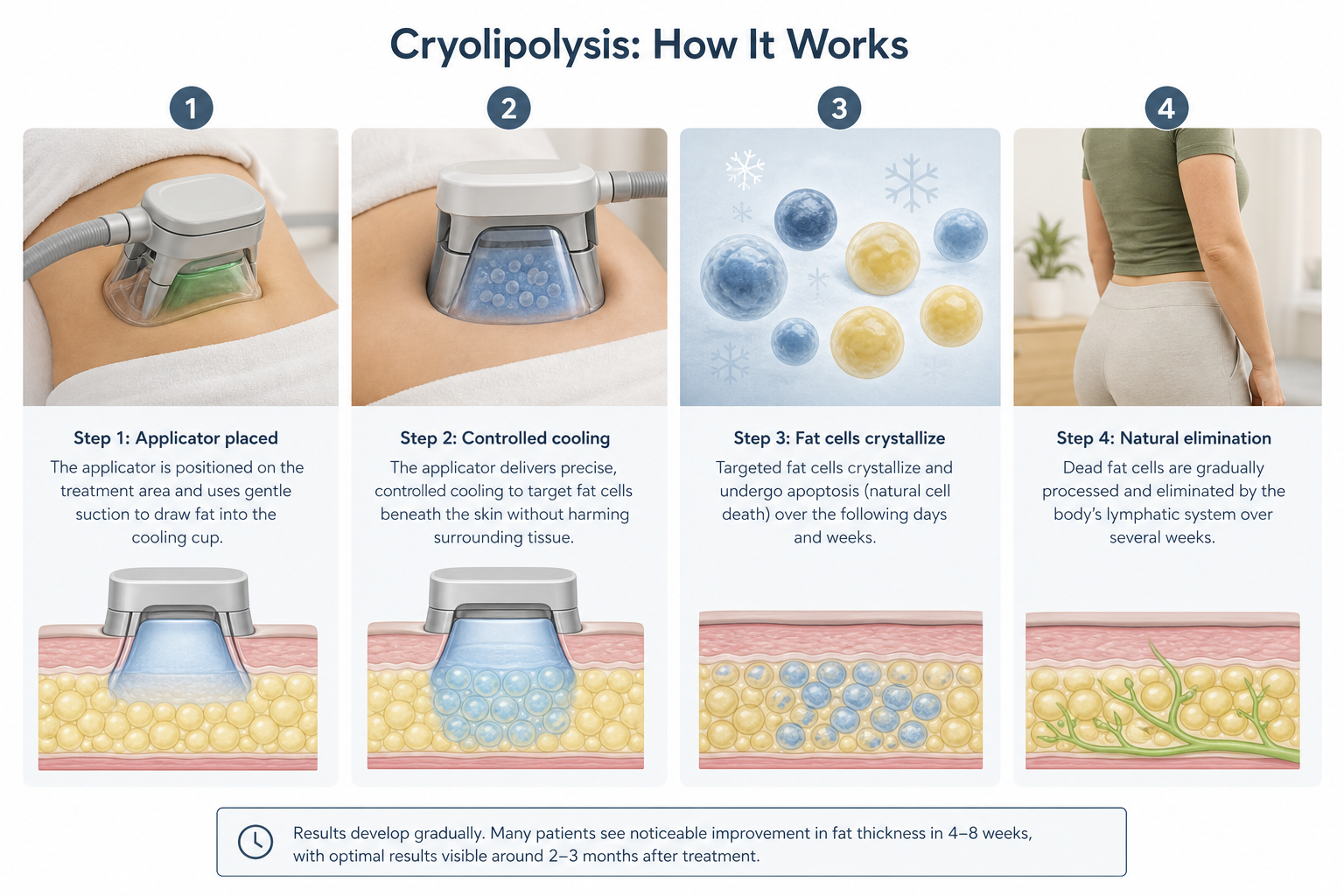
Over the weeks following treatment, the body’s immune system recognizes the damaged fat cells and gradually clears them through the lymphatic system — a process called natural elimination. This is why results are not immediate. The dead fat cells are processed and removed over a period of weeks to months, and the fat layer in the treated area becomes measurably thinner. Importantly, the fat cells that are eliminated do not regenerate; once destroyed, they are gone. However, remaining fat cells in the area can still enlarge if significant weight is gained after treatment, which is why maintaining a stable, healthy lifestyle supports long-term results.
One common question is whether the lipids released from destroyed fat cells affect cholesterol or blood lipid levels. Current evidence suggests that the gradual, localized nature of the elimination process does not produce clinically significant changes in blood lipid profiles in healthy individuals, though this is worth discussing with a practitioner if you have an existing lipid disorder.
CoolSculpting and CoolSculpting Elite for Back Fat
CoolSculpting is the most widely recognized FDA-cleared cryolipolysis device and the one with the largest body of published clinical data. The newer CoolSculpting Elite system uses redesigned applicators intended to treat a larger surface area per cycle compared to the original platform, which can reduce overall treatment time for multi-zone plans such as the full back.
For back fat specifically, the applicator design matters more than many patients realize. The back has a curved, irregular surface — particularly along the bra line — and standard flat applicators may not achieve consistent contact across the entire treatment zone. Back-specific and curved applicators are designed to conform more closely to the contours of the back, improving suction contact and cooling efficiency. A clinic that offers a range of applicator sizes and shapes is better positioned to treat the back effectively than one using a single applicator type.
During a back fat treatment session, the applicator is placed against the skin and a gentle suction draws the tissue between two cooling panels. Most patients describe an initial sensation of intense cold, pulling, and mild pressure that typically subsides within the first five to ten minutes as the area becomes numb. A single treatment cycle on the back usually lasts between 35 and 60 minutes per zone. Because the back may involve multiple zones — for example, both sides of the bra line plus the lower back — a full back treatment plan may require several cycles, sometimes completed across more than one appointment.
What Results Can You Expect from Freezing Back Fat?
Clinical evidence for cryolipolysis consistently shows an average of 20–25% fat reduction per session in the treated area, as measured by imaging studies. For back fat, this translates to a visible reduction in the thickness of the fat layer, a smoother contour along the bra line, and a reduction in the prominence of love handles or lower back rolls. However, results vary depending on the individual’s starting fat layer thickness, the number of sessions completed, and how well the applicator engages the treatment area.
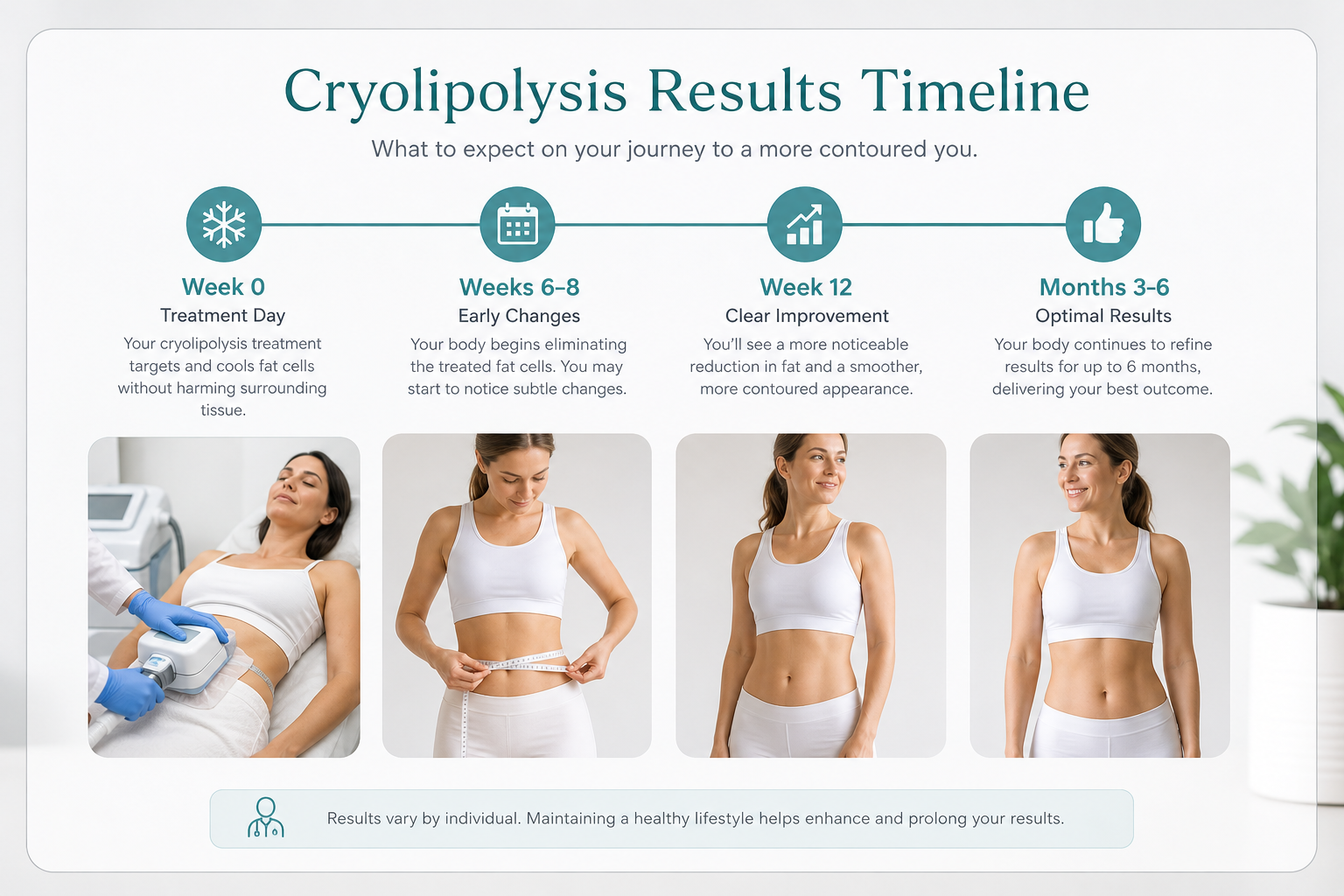
The timeline for visible results follows a predictable pattern. Most patients notice early changes at around six to eight weeks as the body begins clearing destroyed fat cells. The most significant visible improvement typically appears at around 12 weeks, with optimal results often reached between three and six months after the final session. Because the process is gradual, the changes tend to look natural rather than sudden.
It is important to hold realistic expectations. Cryolipolysis produces a meaningful reduction in fat volume, not a dramatic transformation. Patients who are close to their target weight with moderate, localized back fat deposits tend to see the most satisfying outcomes. Those with thicker fat deposits may see a greater absolute reduction in fat volume but may need more sessions to achieve their goal. Patients with significant excess weight or very thick fat layers are generally better served by a different approach, such as liposuction.
How Many Sessions Are Needed for Back Fat?
Most patients require one to two treatment cycles per back zone to achieve their desired result. Because the back encompasses several distinct areas — upper back, bra line, mid-back, and lower back or flanks — a comprehensive treatment plan may involve treating multiple zones, either in the same session or across separate appointments. A practitioner will design a treatment plan based on your specific anatomy, the number of zones involved, and your goals.
Some patients are satisfied after a single session per zone; others with more prominent fat deposits or higher aesthetic goals choose a second session after allowing the full three-to-six-month result period to elapse. Attempting a second session too soon — before the body has finished clearing the first round of destroyed fat cells — makes it difficult to assess the true outcome of the initial treatment.
Who Is a Good Candidate for Freezing Back Fat?
Cryolipolysis is a non-invasive body contouring treatment, not a weight-loss procedure. The distinction matters: it is designed to reduce localized, stubborn fat deposits in people who are already at or near a healthy weight, not to produce significant overall weight reduction.
You may be a suitable candidate if you:
- Have pinchable fat on the back that has not responded adequately to diet and exercise
- Are within approximately 20–30 lbs (9–14 kg) of your target weight
- Have good skin elasticity — skin that can contract smoothly after the fat layer is reduced
- Have realistic expectations about the degree of improvement achievable
- Are in generally good health with no relevant contraindications
You may not be a suitable candidate if you:
- Have significant loose or sagging skin in the treatment area — fat reduction without skin tightening can make laxity more visible
- Have cold-related conditions such as cryoglobulinemia, cold urticaria, or Raynaud’s disease
- Are pregnant or breastfeeding
- Have a pacemaker, defibrillator, or other implanted electrical device near the treatment area
- Have peripheral neuropathy or significantly reduced sensation in the back
- Are significantly overweight — cryolipolysis is unlikely to produce satisfying results and a different approach would be more appropriate
Skin laxity deserves particular attention for back fat patients. The bra line area and lower back can develop mild skin looseness after fat reduction, especially in older patients or those with reduced skin elasticity. A practitioner may recommend combining cryolipolysis with a skin-tightening treatment such as radiofrequency (RF) therapy to address both the fat layer and skin quality — a combination that is increasingly offered at body contouring clinics.
Side Effects and Risks
Cryolipolysis has a well-established safety profile when performed by a trained practitioner using an appropriate device, but it is not without risks. Understanding both common and rare adverse effects helps patients make an informed decision.
Common Side Effects
Most patients experience temporary side effects in the treated area that resolve within days to a few weeks. These include redness, swelling, bruising, numbness, tingling, stinging, and a sensation of firmness or tenderness in the skin. The back is generally well tolerated, though the bra line area can be more sensitive. Numbness may persist for several weeks in some patients before sensation fully returns.
Paradoxical Adipose Hyperplasia (PAH)
Paradoxical adipose hyperplasia (PAH) is the most serious known complication of cryolipolysis. Instead of the fat layer reducing after treatment, PAH causes the treated area to develop a firm, enlarged mass of fat tissue — the opposite of the intended effect. The exact mechanism is not fully understood, but it appears to involve an abnormal proliferative response of fat cells to the cooling stimulus rather than apoptosis.
PAH is rare, with estimates in the published literature ranging from less than 1% to approximately 0.033% of treatment cycles, though some practitioners believe it may be underreported. It is more commonly reported in male patients and in certain treatment areas. PAH does not resolve on its own and typically requires surgical liposuction to correct. Patients should be informed of this risk before consenting to treatment, and any unusual firmness or enlargement developing in the weeks after a session should be assessed promptly by the treating practitioner.
Other Considerations
Patients with cold-related conditions — including cold urticaria (an allergic reaction to cold), cryoglobulinemia (abnormal proteins in the blood that react to cold), or Raynaud’s disease — should not undergo cryolipolysis, as these conditions significantly increase the risk of adverse reactions. A thorough medical history review at consultation is essential.
How Does Fat Freezing Compare to Other Back Fat Treatments?
| Treatment | Type | Mechanism | Fat Reduction | Downtime | Sessions Needed | Permanence | Best For |
|---|---|---|---|---|---|---|---|
| Cryolipolysis (e.g. CoolSculpting) | Non-surgical | Controlled cooling destroys fat cells | ~20–25% per session | Minimal | 1–2 per zone | Yes (treated cells) | Moderate, localized back fat |
| Liposuction | Surgical | Physical removal of fat via cannula | 50–70% or more | 1–2 weeks+ | Usually one | Yes (removed cells) | Larger volumes, more dramatic results |
| SculpSure | Non-surgical | Laser heat destroys fat cells | ~24% per session | Minimal | 1–2 per zone | Yes (treated cells) | Moderate fat, flatter areas |
| Emsculpt Neo | Non-surgical | RF heat + electromagnetic muscle stimulation | Moderate fat reduction + muscle building | Minimal | 4+ sessions | Partial (maintenance needed) | Fat reduction combined with muscle toning |
| Radiofrequency (RF) skin tightening | Non-surgical | Heat stimulates collagen and tightens skin | Minimal direct fat reduction | Minimal | Multiple | Temporary (maintenance needed) | Skin laxity after fat reduction |
Liposuction remains the most effective single intervention for removing larger volumes of back fat, with fat reduction rates significantly higher than any non-surgical option. The trade-off is surgical risk, anaesthesia, a recovery period of one to two weeks or more, and higher upfront cost. For patients with moderate, localized back fat who prefer to avoid surgery and downtime, cryolipolysis is a clinically reasonable alternative — provided expectations are calibrated to what a 20–25% reduction per session actually looks like in practice.
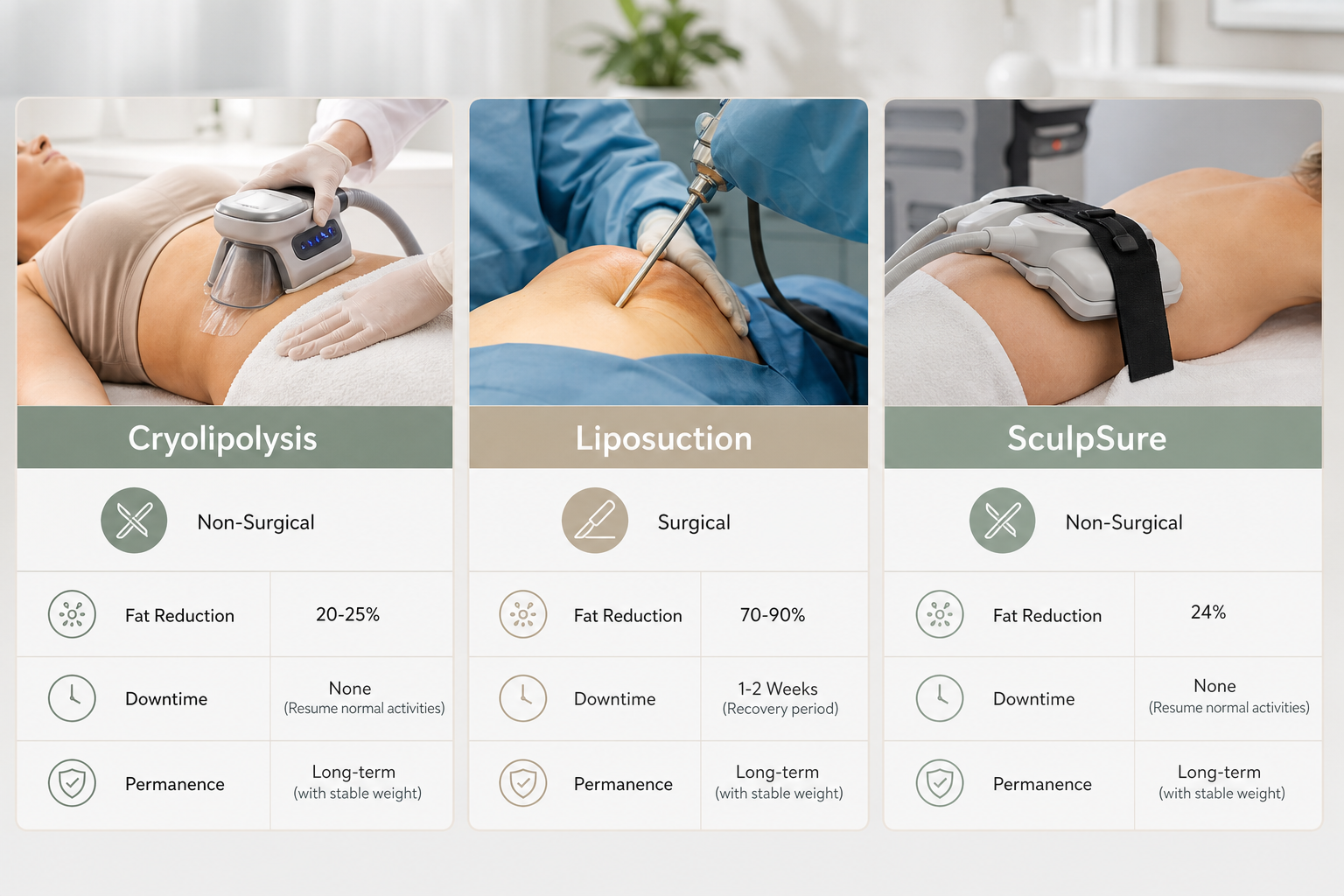
SculpSure uses laser-based heat rather than cold to destroy fat cells and may be better suited to flatter areas of the back where suction-based applicators struggle to achieve consistent contact. The choice between heat-based and cold-based fat reduction is often determined by anatomy and the specific back zone being treated, rather than one being universally superior to the other.
Cost of Freezing Back Fat
The cost of cryolipolysis for back fat varies depending on the number of zones treated, the number of sessions required, the clinic’s location, and the device used. As a general guide, individual treatment cycles typically range from approximately £400 to £900 per cycle in the UK, or $600 to $1,200 per cycle in the US. A full back treatment plan addressing multiple zones — for example, both sides of the bra line plus the lower back — may cost between $2,000 and $4,500 or more in total.
Treating the bra line alone (two applicator placements, one on each side) is generally less expensive than a comprehensive back plan. Lower back and flank treatment may require additional applicator placements depending on the width of the area. Some clinics offer package pricing for multi-zone or multi-session plans, which can reduce the per-cycle cost. Cryolipolysis is a cosmetic procedure and is not covered by health insurance or the NHS.
What Happens During a Back Fat Freezing Session?
- Consultation: A practitioner assesses your back fat, skin quality, and medical history to confirm suitability and design a treatment plan.
- Preparation: The treatment area is marked and a protective gel pad is applied to the skin to protect it from direct contact with the cooling panels.
- Applicator placement: The applicator is positioned over the target zone and suction draws the tissue between the cooling panels.
- Cooling cycle: The device delivers controlled cooling for approximately 35–60 minutes per cycle. Most patients read, use their phone, or rest during this time.
- Massage: Immediately after the applicator is removed, the practitioner manually massages the treated area for approximately two minutes. This step has been shown in studies to improve fat reduction outcomes by breaking up the crystallized fat cells.
- Post-treatment: You can return to normal activities immediately. The area may appear red and feel tender or numb for a period after treatment.
Maintaining Results After Treatment
Because fat freezing permanently eliminates treated fat cells, the results in the treated area are long-lasting — provided body weight remains stable. The remaining fat cells in the back and elsewhere in the body can still expand if caloric intake significantly exceeds expenditure over time. Patients who maintain a balanced diet and regular physical activity after treatment are most likely to preserve their results over the long term.
There is no specific recovery protocol required after cryolipolysis, but some practitioners advise staying well hydrated in the weeks following treatment to support the lymphatic clearance of destroyed fat cells. Avoiding significant weight gain in the months after treatment — while the body is still processing and eliminating dead fat cells — helps ensure the final result reflects the full benefit of the procedure.
Frequently Asked Questions
Is freezing back fat painful?
Most patients find the initial application of the cooling panels uncomfortable due to the intense cold and suction sensation, but this typically subsides within the first few minutes as the area becomes numb. Post-treatment soreness, tenderness, and tingling are common and usually resolve within days to a few weeks.
How long does it take to see results from back fat freezing?
Initial changes may become visible at around six to eight weeks. The most noticeable improvement typically appears at 12 weeks, with optimal results reached between three and six months after the final session, as the body completes the natural elimination of destroyed fat cells.
Can fat freezing tighten loose skin on the back?
Cryolipolysis targets fat cells and does not directly tighten skin. Patients with good skin elasticity generally see a smooth contour improvement as the fat layer reduces. Those with reduced skin laxity may benefit from combining fat freezing with a skin-tightening treatment such as radiofrequency therapy, which a practitioner can advise on.
Does the fat come back after cryolipolysis?
The fat cells destroyed by cryolipolysis do not regenerate. However, remaining fat cells throughout the body — including in the treated area — can enlarge with significant weight gain. Maintaining a stable weight after treatment helps preserve results.
How is back fat freezing different from liposuction?
Liposuction physically removes fat through a surgical procedure, typically achieving 50–70% or greater fat reduction in a single session with a recovery period of one to two weeks or more. Cryolipolysis is non-surgical, requires no anaesthesia, involves minimal downtime, and produces a more gradual 20–25% reduction per session. Liposuction is generally more appropriate for larger volumes of fat or when a more dramatic result is the goal.
Can men have their back fat frozen?
Yes. Cryolipolysis is suitable for both men and women. Male back fat tends to concentrate along the mid-back and flanks, and these areas can be treated with appropriate applicator placement. Men may require slightly different applicator configurations depending on their anatomy, which a practitioner will assess at consultation.
What is paradoxical adipose hyperplasia and how common is it?
Paradoxical adipose hyperplasia (PAH) is a rare complication where the treated area develops a firm, enlarged mass of fat rather than reducing. It does not resolve without surgical intervention. Published estimates suggest it occurs in less than 1% of treatment cycles, though exact rates vary across studies. Patients should be informed of this risk before treatment and should report any unusual firmness or enlargement to their practitioner promptly.
Is Freezing Back Fat the Right Approach for You?
Cryolipolysis is a clinically supported, non-invasive body contouring option for people with localized, stubborn back fat who are close to their target weight and have realistic expectations. It works best on pinchable fat deposits — the bra roll, upper back fullness, and lower back or flank area — where the applicator can achieve good contact and the fat layer is thick enough to respond meaningfully to controlled cooling. The treatment is not a weight-loss solution, and it is not the most effective option for patients with larger volumes of back fat or significant skin laxity.
For those seeking a more dramatic or faster result, or who have a larger volume of fat to address, surgical liposuction remains the most effective single intervention and is worth discussing with a qualified surgeon. For patients with mild skin looseness alongside fat deposits, a combined approach — cryolipolysis followed by radiofrequency skin tightening — may produce a more balanced outcome than fat reduction alone.
The most important step is a thorough in-person consultation with a practitioner experienced in body contouring. A qualified professional can assess your specific anatomy, confirm whether you are a suitable candidate, explain what a realistic outcome looks like for your back, and design a treatment plan that matches your goals. Approaching that conversation with a clear understanding of how the treatment works — and what it cannot do — puts you in the best position to make a decision that is right for you.