

Using a sunbed after filler is one of the most common aftercare questions practitioners hear, and the answer matters more than many patients expect. Heat exposure after filler — whether from a tanning bed, sauna, steam room, or direct sunlight — can amplify swelling, accelerate hyaluronic acid breakdown, and increase the risk of complications during the critical healing window. This guide explains the science behind those risks, gives you a clear aftercare timeline, and covers what to do if you have already been exposed to heat before reading this.
Key Takeaways
- Most UK practitioners recommend avoiding sunbeds and other significant heat sources for at least 10–14 days after dermal filler treatment, with some advising up to four weeks for sensitive areas.
- Heat causes vasodilation, which can worsen swelling and bruising at injection sites and may prolong recovery.
- UV radiation can contribute to UV-induced degradation of hyaluronic acid, potentially shortening filler longevity.
- Tanning over a bruise significantly raises the risk of post-inflammatory hyperpigmentation — a form of long-term skin discolouration that can be difficult to treat.
- Self-tan is a safer alternative to sunbed use during the healing period, provided you wait at least 24–48 hours and avoid direct application over injection sites.
Why Heat and Fillers Are a Problematic Combination
Dermal fillers — most commonly made from crosslinked hyaluronic acid (HA) gel — are injected into the skin and soft tissue, where they integrate gradually over approximately two weeks. During this filler settling period, the surrounding tissue is in an active healing state. Introducing significant heat during this window creates two distinct categories of risk: physiological effects on the healing tissue, and chemical effects on the filler material itself.
On the physiological side, heat causes vasodilation — the widening of blood vessels — which increases blood flow to the treated area. In the first 48–72 hours after injection, when swelling and bruising are already at their peak, this additional blood flow can meaningfully worsen both. Increased vascular pressure at injection sites may also extend the duration of bruising and delay the point at which the filler settles into its final position.
On the chemical side, hyaluronic acid is a polysaccharide that can undergo depolymerisation — the breakdown of its long molecular chains — when exposed to heat or UV radiation. Crosslinked HA fillers such as those used in products like Juvederm, Restylane, and Revolax are more resistant to breakdown than non-crosslinked HA, but they are not immune. Research published in peer-reviewed literature on energy-based devices and HA filler interaction confirms that thermal energy can affect the structural integrity of HA gels, with the degree of effect depending on temperature, duration of exposure, and the specific crosslinking technology used. UV-induced degradation adds a further layer of risk: ultraviolet radiation generates oxidative stress in skin tissue, which can accelerate enzymatic activity — including the activity of hyaluronidase, the enzyme that naturally breaks down hyaluronic acid in the body.
Does Heat Actually Melt Filler? The Myth Explained
The phrase “heat melts filler” circulates widely online, but it is an oversimplification that can mislead patients in both directions. Filler does not liquefy or disappear instantly when you sit in a warm room or take a hot shower. The reality is more nuanced. Sustained, significant heat exposure — particularly from a sunbed, infrared sauna, or prolonged sunbathing — can contribute to gradual hyaluronic acid breakdown over time, reducing filler longevity rather than causing immediate dissolution. The greater short-term concern is not filler loss but the physiological consequences: amplified swelling, worsened bruising, and increased inflammation at injection sites.
That said, the risk is real and cumulative. Repeated heat exposure during the healing window, or very high-intensity heat such as that from a tanning bed used at close range, creates conditions that are genuinely unfavourable for filler integration. The goal of aftercare is to protect both the healing tissue and the structural integrity of the filler during the period when it is most vulnerable.
Aftercare Timeline: When Is It Safe to Use a Sunbed?
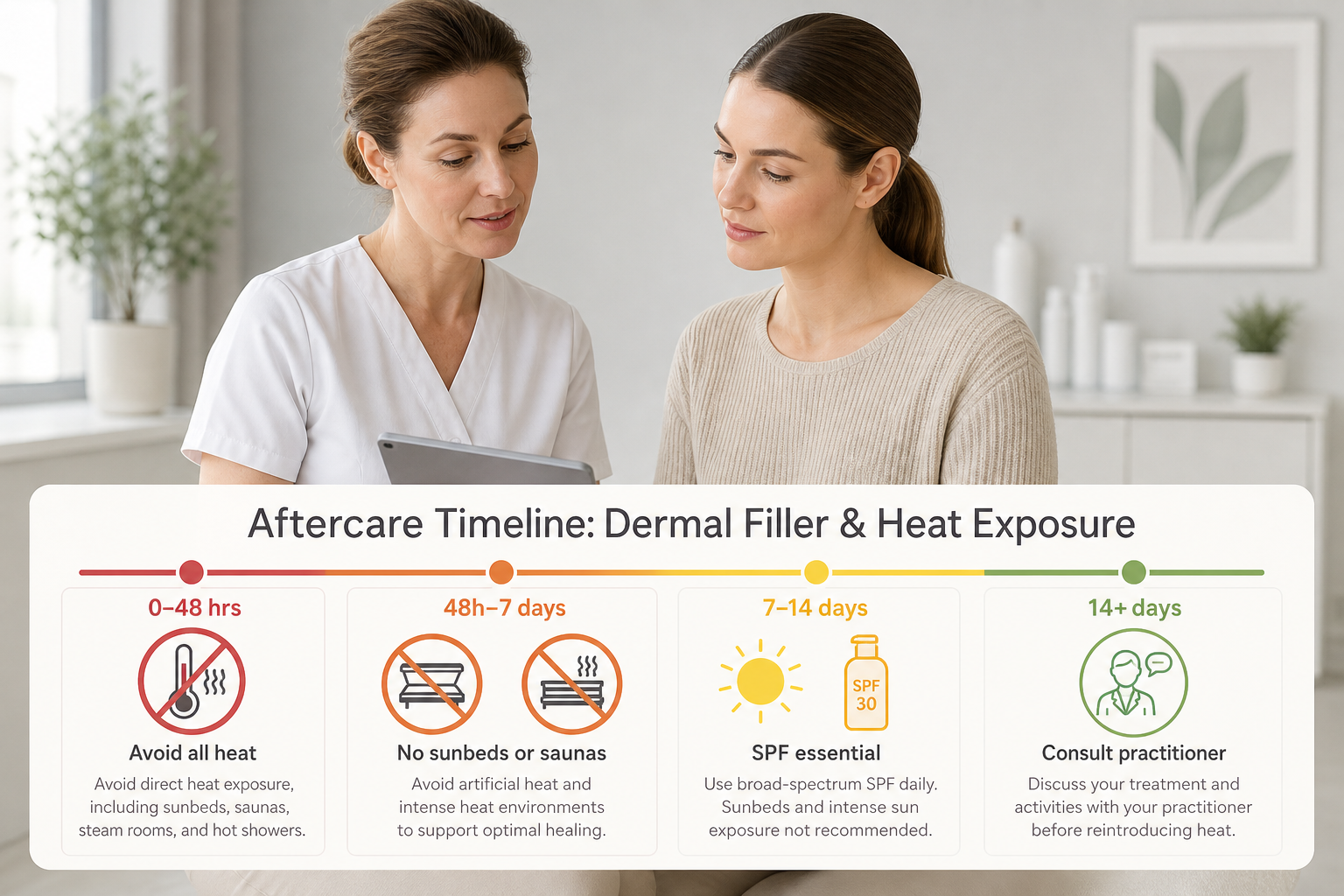
The aftercare timeline for heat exposure after filler is not one-size-fits-all. It depends on the treatment area, the volume of filler used, how your skin heals individually, and the type of heat source involved. The table below summarises general guidance; always follow the specific advice given by your practitioner, as individual recommendations may differ.
| Time After Treatment | Sunbed / Tanning Bed | Sauna / Steam Room | Hot Bath / Hot Shower | Direct Sunbathing |
|---|---|---|---|---|
| 0–48 hours | Avoid completely | Avoid completely | Lukewarm only; avoid hot | Avoid completely |
| 48 hours – 7 days | Avoid completely | Avoid completely | Warm acceptable; avoid very hot | Avoid or use SPF 50+ |
| 7–14 days | Still not recommended | Avoid or minimise | Generally acceptable | Broad-spectrum SPF 30–50 essential |
| 14+ days | Discuss with practitioner; caution advised | Generally acceptable | No restriction | Ongoing SPF protection recommended |
The 10–14 day minimum for sunbeds is the most widely cited recommendation among UK aesthetic practitioners, and reflects the approximate time needed for filler to integrate into surrounding tissue and for the initial healing response to resolve. More cautious guidance — particularly for lip filler, tear trough filler, and larger volumes — may extend this to two to four weeks. If you are unsure, contacting your clinic before resuming sunbed use is always the right approach.
Heat Sources: Not All Risks Are Equal
Different heat sources carry different levels of risk, and understanding the distinctions helps you make informed decisions during the healing period.
Sunbeds and Tanning Beds
Sunbeds combine intense UV radiation with elevated ambient heat, making them the highest-risk heat source after filler treatment. The UV component contributes to UV-induced degradation of hyaluronic acid and generates oxidative stress in the skin. The heat component drives vasodilation and can worsen swelling and bruising. If you have any bruising at injection sites, UV exposure from a tanning bed can cause the bruise to darken permanently — a process linked to post-inflammatory hyperpigmentation, where melanin is overproduced in response to inflammation and UV stimulation. This type of skin discolouration can persist for months and is difficult to reverse.
Saunas and Infrared Saunas
Traditional saunas expose the body to high ambient temperatures (typically 70–100°C), which causes significant vasodilation and sweating. This is enough to worsen swelling and bruising in the days following filler treatment. The infrared sauna is an increasingly popular variant that operates at lower ambient temperatures (typically 45–60°C) but uses infrared wavelengths that penetrate more deeply into tissue. Because infrared energy is absorbed at a tissue level rather than simply warming the surrounding air, it may interact with filler material differently from a conventional sauna — though the clinical evidence specifically comparing infrared sauna effects on HA fillers remains limited. As a precaution, infrared saunas should be treated with the same caution as traditional saunas during the healing window.
Steam Rooms and Turkish Baths
Steam rooms combine heat with high humidity, which can cause significant flushing and vasodilation. The risk profile is broadly similar to a traditional sauna. Avoiding steam rooms for at least one to two weeks after filler treatment is a reasonable precaution.
Hot Yoga and Hot Pilates
Hot yoga and hot Pilates classes are conducted in rooms heated to approximately 35–42°C. The combination of elevated ambient temperature, physical exertion, and increased heart rate creates conditions that promote vasodilation and raise blood pressure — both of which can worsen swelling and bruising at injection sites. Most practitioners recommend avoiding hot yoga for at least one week after filler, and some advise two weeks.
Hot Baths and Hot Showers
Brief warm showers are generally considered acceptable from the day after treatment, provided the water is not very hot and you avoid directing a strong jet of water at injection sites. Hot baths — particularly long, hot soaks — should be avoided for the first 48 hours at minimum, as the sustained heat can drive vasodilation and worsen swelling. Lukewarm baths are a reasonable alternative during the first week.
Area-Specific Considerations
The risks of heat exposure after filler are not uniform across all treatment areas. Some zones are more sensitive than others, and the consequences of heat exposure can differ depending on where the filler was placed.
Lip Filler
Lip filler carries the highest sensitivity to heat exposure for several reasons. The lips have thinner skin and a rich blood supply, making them particularly prone to swelling and bruising. UV radiation is also a well-established cold sore trigger: ultraviolet light can reactivate the herpes simplex virus (HSV-1) in people who carry it, and the combination of injection trauma — which temporarily reduces local immune defence — and UV exposure from a sunbed creates a meaningful risk of a cold sore outbreak at or near the injection sites. If you have a history of cold sores, your practitioner may prescribe antiviral medication as a precaution before lip filler treatment. Using an SPF lip balm with broad-spectrum protection is strongly recommended whenever you are outdoors during the healing period.
Cheek, Chin, and Jawline Filler
Cheek filler, chin filler, and jawline filler are placed in areas with more robust tissue and generally carry a lower risk of dramatic swelling compared to lip filler. However, the risks of UV-induced degradation, bruise darkening, and post-inflammatory hyperpigmentation remain relevant, particularly if bruising is present. Broad-spectrum SPF 30–50 sunscreen applied daily is important for all facial filler areas during the healing window.
Tear Trough and Under-Eye Filler
The under-eye area has extremely thin, delicate skin and is one of the most technically demanding areas for filler placement. Swelling in this zone can be pronounced and slow to resolve. Heat exposure that worsens swelling may make it difficult to assess the final result accurately at the two-week review. Extra caution with heat sources is warranted for tear trough filler, and some practitioners recommend a longer avoidance period of up to four weeks.
What If You Accidentally Used a Sunbed After Filler?
If you used a sunbed or were exposed to significant heat before reading this advice, try not to panic. A single brief exposure is unlikely to cause catastrophic filler loss, but it may have worsened swelling or bruising, or increased the risk of skin discolouration if bruising was present. The most useful steps are to avoid further heat exposure immediately, keep the treated area cool, stay well hydrated, and monitor the area over the following days. If you notice unusual or asymmetric swelling, significant skin colour changes, pain that is worsening rather than improving, or any signs of skin blanching or mottling — which can indicate a vascular complication — contact your practitioner promptly. These symptoms are not typical consequences of heat exposure alone, but any unexpected change after filler warrants professional assessment.
Protecting Your Filler: Practical Aftercare Steps
Good dermal filler aftercare during the healing window is straightforward once you understand the reasoning behind each recommendation. The following measures help protect both the healing tissue and filler longevity.
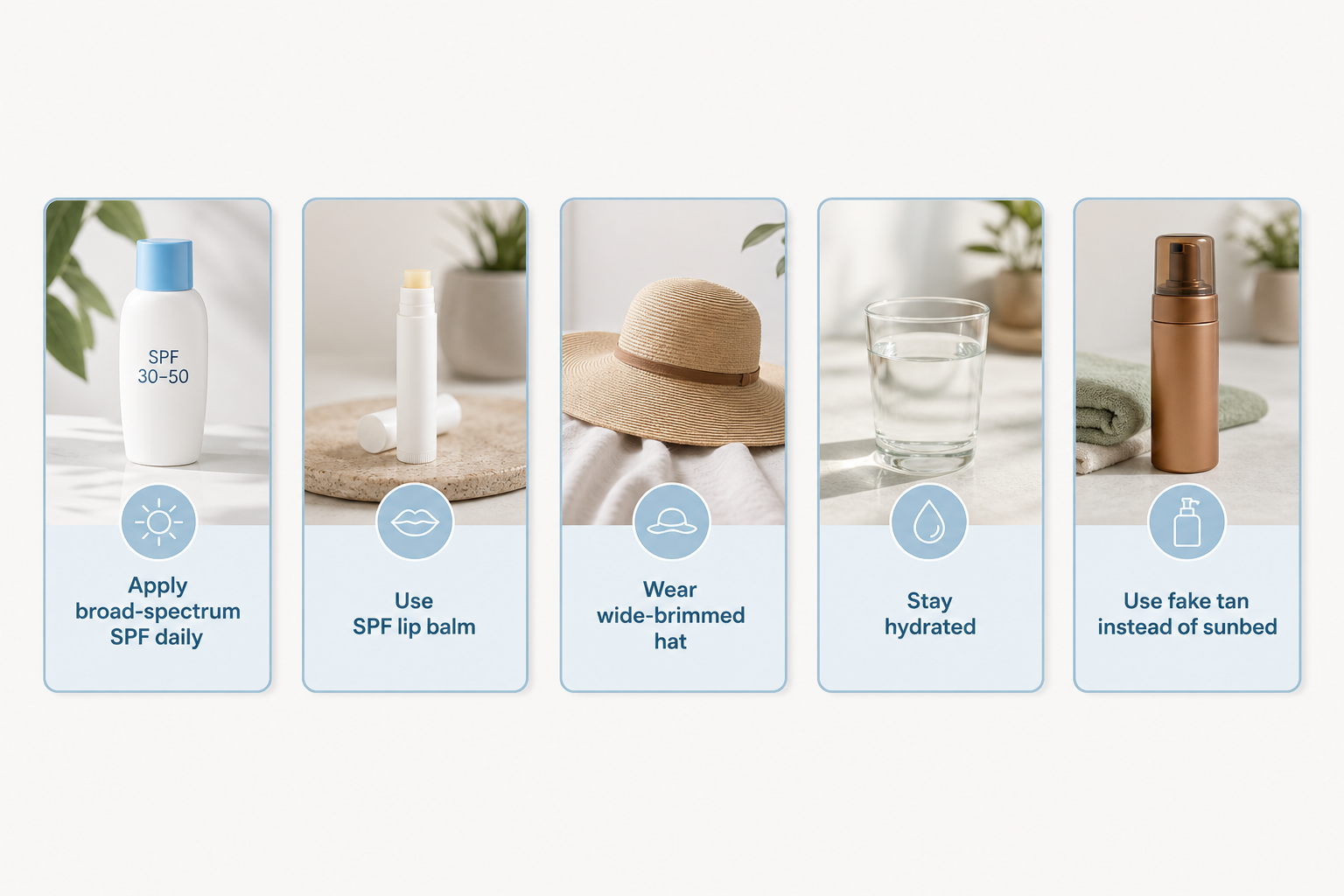
- Apply broad-spectrum SPF daily. A broad-spectrum SPF 30–50 sunscreen applied to all treated areas every morning — and reapplied if you are outdoors — reduces UV-induced degradation and protects against post-inflammatory hyperpigmentation. This applies year-round, not only in summer.
- Use an SPF lip balm. For lip filler specifically, an SPF lip balm provides targeted UV protection for an area that is frequently exposed and particularly vulnerable to cold sore reactivation.
- Wear a wide-brimmed hat outdoors. Physical sun protection complements sunscreen and reduces direct UV exposure to the face.
- Sleep with your head slightly elevated. An elevated sleeping position in the first few nights after treatment can help reduce swelling by minimising fluid pooling in the face.
- Stay well hydrated. Hyaluronic acid is hydrophilic — it attracts and retains water — and adequate hydration supports both tissue healing and filler performance.
- Avoid alcohol in the first 24–48 hours. Alcohol causes vasodilation and can worsen bruising and swelling.
- Consider self-tan as an alternative. If you want a tanned appearance during the healing period, self-tan or fake tan is a reasonable alternative to sunbed use. Wait at least 24–48 hours after treatment before applying, and avoid direct application over injection sites until any swelling or bruising has fully resolved.
Before Your Filler Appointment: Sunbed Advice
Most aftercare guidance focuses on the period after treatment, but avoiding sunbeds before filler is also worth considering. Sunburned or recently UV-exposed skin is more inflamed and sensitive, which can make the injection process more uncomfortable and may increase the risk of post-treatment swelling. Arriving at your appointment with calm, well-protected skin gives the best starting conditions for treatment. Many practitioners recommend avoiding sunbeds for at least one week before filler as well as after.
When to Contact Your Practitioner
Most swelling and bruising after filler resolves within one to two weeks without intervention. However, certain symptoms warrant prompt contact with your practitioner regardless of whether heat exposure has occurred. These include: skin that appears white, pale, or mottled at or near injection sites (which may indicate vascular occlusion — a rare but serious complication requiring urgent treatment); swelling that is worsening rather than improving after the first 48–72 hours; pain that is increasing rather than decreasing; skin that feels unusually hard or nodular; or any signs of infection such as increasing redness, warmth, or discharge. Heat-related complications such as prolonged swelling or bruise darkening are generally less urgent but should still be discussed with your practitioner at your follow-up appointment.
Frequently Asked Questions
How long after lip filler can I use a sunbed?
Most practitioners recommend waiting a minimum of 10–14 days after lip filler before using a sunbed, with some advising up to four weeks. Lip filler is particularly sensitive to heat and UV exposure due to the thin skin, rich blood supply, and cold sore risk associated with UV radiation. Follow your practitioner’s specific guidance.
Can I use a sunbed after cheek or jawline filler?
The same general timeline applies to cheek filler, chin filler, and jawline filler: avoid sunbeds for at least 10–14 days. While these areas are generally less prone to dramatic swelling than the lips, the risks of UV-induced filler degradation and post-inflammatory hyperpigmentation remain relevant, especially if bruising is present.
Does heat dissolve filler immediately?
No. Filler does not dissolve instantly from a single heat exposure. However, sustained or repeated heat and UV exposure during the healing window can contribute to gradual hyaluronic acid breakdown over time, potentially reducing how long your results last. The more immediate concern is worsened swelling and bruising rather than sudden filler loss.
Can I use fake tan after filler?
Self-tan or fake tan is a safer alternative to sunbed use during the healing period. Wait at least 24–48 hours after treatment before applying any product to the face, and avoid applying directly over injection sites until swelling and bruising have fully resolved. Check that the product does not contain ingredients that could irritate recently treated skin.
Why does tanning over a bruise cause skin darkening?
When a bruise is present, the skin is already in an inflammatory state. UV exposure from a sunbed or direct sunlight stimulates melanin production in inflamed skin, which can lead to post-inflammatory hyperpigmentation — a form of skin discolouration where the area becomes persistently darker than the surrounding skin. This can last for months and is one of the most important reasons to avoid UV exposure while bruising is visible.
Is an infrared sauna safer than a traditional sauna after filler?
Not necessarily. While infrared saunas operate at lower ambient temperatures than traditional saunas, they use infrared wavelengths that penetrate more deeply into tissue. The clinical evidence specifically comparing infrared sauna effects on HA fillers is limited, but the potential for tissue-level heat interaction means infrared saunas should be treated with the same caution as traditional saunas during the healing window.
What sunscreen should I use after filler?
A broad-spectrum SPF 30–50 sunscreen applied daily to all treated areas is recommended. Broad-spectrum protection covers both UVA and UVB radiation. For lip filler, an SPF lip balm provides targeted protection for the lip area. Choose a formulation suited to your skin type and reapply every two hours when outdoors.
Making Informed Choices About Heat After Filler
The guidance around sunbed use after filler is not arbitrary caution — it is grounded in the physiology of healing and the chemistry of hyaluronic acid. Heat exposure after filler during the healing window creates real risks: amplified swelling and bruising through vasodilation, potential contribution to hyaluronic acid breakdown through UV-induced degradation, and a meaningful risk of post-inflammatory hyperpigmentation if UV light reaches bruised skin. For lip filler specifically, UV radiation is also a recognised cold sore trigger that deserves serious consideration.
The practical takeaway is straightforward: wait at least 10–14 days before using a sunbed after filler, apply a broad-spectrum SPF daily throughout the healing period, and use an SPF lip balm if you have had lip augmentation. If you are unsure about a specific activity or heat source, your practitioner is the best person to advise based on your individual treatment, the areas involved, and how your healing is progressing. A brief conversation before resuming sunbed use is always worthwhile — protecting your results during the healing window helps ensure you get the most from your treatment over the months ahead.