

A double chin caused by submental fat is one of the most common aesthetic concerns that resists diet and exercise. Freezing chin fat — using a technique called cryolipolysis — has become one of the most requested non-surgical options for reducing this localized fat deposit without surgery or significant downtime. This guide explains how the treatment works, who it may suit, what the experience involves, realistic results, meaningful risks, and how it compares to other approaches, so you can make an informed decision before booking a consultation.
Key Takeaways
- Cryolipolysis uses controlled cooling to destroy fat cells beneath the chin without surgery, injections, or anaesthesia.
- The CoolMini applicator is specifically designed for the smaller contours of the submental area and jawline.
- Most patients see visible improvement within 8–12 weeks; one to two sessions is typical for the chin area.
- Fat freezing is not a weight-loss treatment — it targets pinchable, localized fat in people who are close to their target weight.
- Paradoxical adipose hyperplasia (PAH) is a rare but real complication that requires careful provider selection and informed consent.
What Is Chin Fat Freezing?
Chin fat freezing is a non-invasive body contouring procedure that uses cryolipolysis — the controlled application of cold temperatures — to selectively destroy subcutaneous fat cells beneath the chin. The principle behind cryolipolysis is that fat cells are more vulnerable to cold than the surrounding skin, nerves, and blood vessels. By cooling the tissue to a precise temperature range, fat cells crystallize and undergo a process called apoptosis (programmed cell death), while the overlying skin remains unharmed. The body then gradually clears the damaged cells through the lymphatic system over the following weeks.
The technology was originally developed by researchers at Harvard Medical School and Massachusetts General Hospital, who observed that children who ate ice lollies sometimes developed localized fat loss in their cheeks — a phenomenon they termed “popsicle panniculitis.” This observation led to the development of cryolipolysis as a clinical treatment. The CoolSculpting system, manufactured by Allergan Aesthetics, is the most widely used FDA-cleared platform for cryolipolysis and includes the CoolMini applicator, which is specifically sized and shaped for the chin and neck area.
How the CoolMini Applicator Targets Submental Fat
The submental area — the region directly beneath the chin — presents a unique anatomical challenge for body contouring. The fat pad here is relatively small and sits in a curved, compact space, which is why standard cryolipolysis applicators designed for the abdomen or flanks are not appropriate. The CoolMini applicator was engineered with a smaller cup and curved cooling panels to fit the contours of the chin and neck precisely.
During treatment, the applicator draws the submental fat into the cup using gentle suction, bringing the tissue into contact with the cooling panels. The device then delivers controlled cooling to the targeted fat layer for approximately 35 to 45 minutes. The temperature is carefully regulated to stay within the range that triggers fat cell crystallization without causing frostbite or damage to the skin surface. A protective gel pad is placed between the applicator and the skin to ensure even cooling and protect the skin throughout the session.
One procedural detail worth knowing: immediately after the applicator is removed, the treated area is firm and temporarily shaped like the cup. A two-minute post-treatment massage is performed by the practitioner to break up the crystallized fat cells and restore normal tissue texture. Clinical data suggests this post-treatment massage step may meaningfully improve the overall fat reduction outcome, which is why it is considered a standard part of the protocol rather than an optional aftercare step.
Are You a Suitable Candidate?
Cryolipolysis for the chin works best for a specific type of patient, and understanding candidacy honestly is important for setting realistic expectations before committing to treatment.
Who May Be Well Suited
- Pinchable fat beneath the chin: The treatment targets subcutaneous fat — the kind you can physically pinch between your fingers. If you can grasp a noticeable fold of fat under your chin, there is likely enough tissue for the applicator to draw in effectively. This simple self-assessment, sometimes called the pinchable fat test, is a useful starting point before a formal consultation.
- Close to target weight: Cryolipolysis is a body contouring treatment, not a weight-loss solution. Candidates who are near their healthy weight but have a localized fat deposit that does not respond to diet or exercise tend to see the most satisfying results.
- Good skin elasticity: Because fat freezing reduces the volume of fat beneath the skin but does not tighten the skin itself, candidates with reasonable skin elasticity are more likely to see a smooth, contoured result after treatment. Significant skin laxity — loose or sagging skin — is an important limitation to discuss with your practitioner.
- Genetic or diet-resistant double chin: Some people carry submental fat as a hereditary trait regardless of their overall body weight. This type of localized fat deposit is a particularly appropriate target for cryolipolysis.
Who May Not Be Suitable
- People with significant skin laxity or loose neck skin, where fat reduction alone may worsen the appearance of sagging.
- Those with obesity or a large volume of fat requiring substantial reduction — cryolipolysis is not designed for this purpose.
- Individuals with cold-related conditions such as cryoglobulinaemia, cold agglutinin disease, or paroxysmal cold haemoglobinuria.
- People with a pacemaker or other implanted electronic device in or near the treatment area.
- Those who are pregnant or breastfeeding.
- Anyone with active skin conditions, open wounds, or infection in the submental area.
A thorough consultation with a qualified practitioner is essential to assess your anatomy, skin quality, and medical history before proceeding.
What to Expect During a Chin Fat Freezing Session
Understanding the treatment experience in advance helps reduce anxiety and allows you to plan your day appropriately.
- Consultation and assessment: Before treatment begins, your practitioner will assess the submental area, discuss your goals, review your medical history, and confirm suitability. Photographs are typically taken for comparison.
- Gel pad application: A protective cooling gel pad is placed beneath the chin to protect the skin surface and ensure even contact between the tissue and the cooling panels.
- Applicator placement: The CoolMini applicator is positioned and activated. You will feel a firm suction sensation as the fat is drawn into the cup, followed by an intense cold sensation that typically becomes numbness within a few minutes.
- Cooling phase: The controlled cooling continues for approximately 35 to 45 minutes. Most patients read, use their phone, or rest during this time. The area remains numb throughout, so discomfort is usually minimal once the initial cold sensation passes.
- Post-treatment massage: When the applicator is removed, the practitioner performs a firm two-minute massage of the treated area. This step can feel uncomfortable briefly but is an important part of the protocol.
- Immediate aftercare: There is no requirement for bandaging or wound care. You can return to normal activities the same day.
Results Timeline: What to Expect and When
Cryolipolysis does not produce immediate visible results because the fat cell destruction and clearance process takes time. Understanding this timeline helps avoid disappointment in the early weeks after treatment.
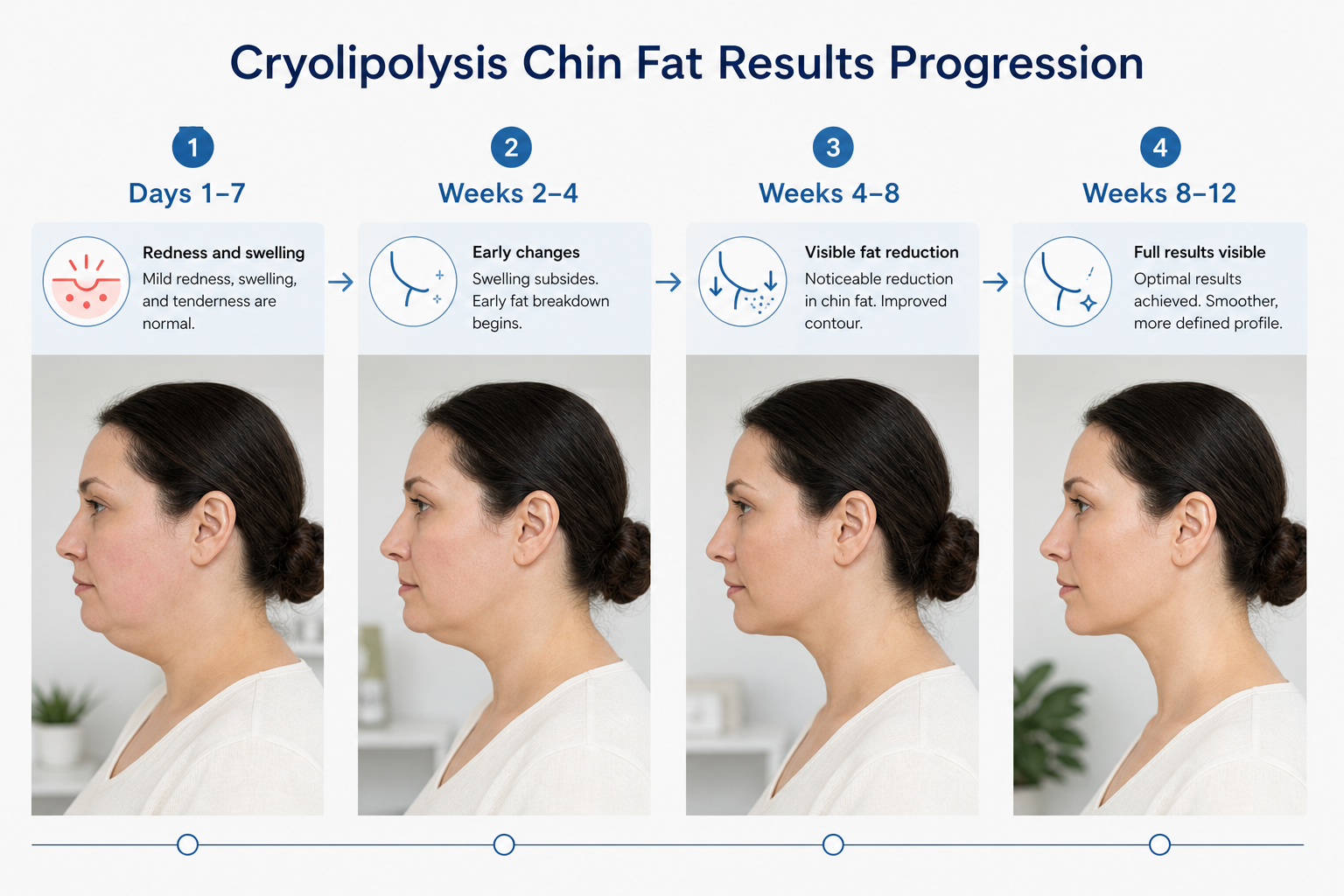
| Timeframe | What Typically Happens |
|---|---|
| Days 1–7 | Redness, swelling, bruising, and temporary numbness or tingling in the treated area. The chin may feel tender or firm. |
| Weeks 2–4 | Swelling subsides. Some patients begin to notice early changes in chin profile, though results are not yet complete. |
| Weeks 4–8 | Visible reduction in submental fat becomes more apparent as the lymphatic system continues to clear destroyed fat cells. |
| Weeks 8–12 | Full results are typically visible. Clinical studies suggest an average fat reduction of approximately 20–27% per treated cycle in the target area. |
| Beyond 12 weeks | Results are considered stable. A second session may be assessed at this point if further reduction is desired. |
The fat cells destroyed by cryolipolysis do not regenerate. In this sense, the reduction in fat cell number is permanent. However, the remaining fat cells in the area can still enlarge if significant weight is gained after treatment, which can diminish the visible result over time. Maintaining a stable weight after treatment helps preserve the outcome.
Side Effects and Risks
Cryolipolysis is generally well tolerated, but it is not without side effects or risks. Being informed about both common and rare complications is an important part of the decision-making process.
Common Side Effects
Most people experience some degree of redness, swelling, bruising, and temporary numbness in the submental area after treatment. Tingling, tenderness, and a sensation of firmness in the treated tissue are also common in the first one to two weeks. These effects are expected responses to the controlled cooling and typically resolve without intervention.
A side effect that is specific to the submental area and less commonly discussed is a transient sensation of fullness or tightness in the throat. This occurs because the chin and upper neck are anatomically close to the throat, and temporary swelling in the submental tissue can create this sensation. It is generally mild and resolves as swelling subsides, but it is worth being aware of before treatment.
Paradoxical Adipose Hyperplasia (PAH)
Paradoxical adipose hyperplasia is the most significant rare complication associated with cryolipolysis. Instead of shrinking after treatment, the fat in the treated area enlarges and hardens, creating a firm, enlarged mass that mirrors the shape of the applicator. This is the opposite of the intended result.
PAH is not dangerous to health, but it is visually significant and does not resolve on its own. Correction typically requires liposuction. The reported incidence of PAH varies across studies, with estimates ranging from approximately 0.01% to 0.22% of treated cycles depending on the source and methodology. While these figures represent a small proportion of treatments, the absolute number of cases has grown as cryolipolysis has become more widely performed. PAH appears to occur more frequently in male patients and with certain applicator types, though the precise mechanism is not fully understood.
Choosing a reputable, experienced provider who uses genuine FDA-cleared equipment and discusses PAH as part of the informed consent process is one of the most important steps you can take to reduce risk and ensure appropriate management if a complication does occur.
Comparing Chin Fat Freezing to Other Treatments
Several other treatments address submental fat, each with a different mechanism, experience, and suitability profile. The table below summarises the key differences to help you understand your options before a consultation.
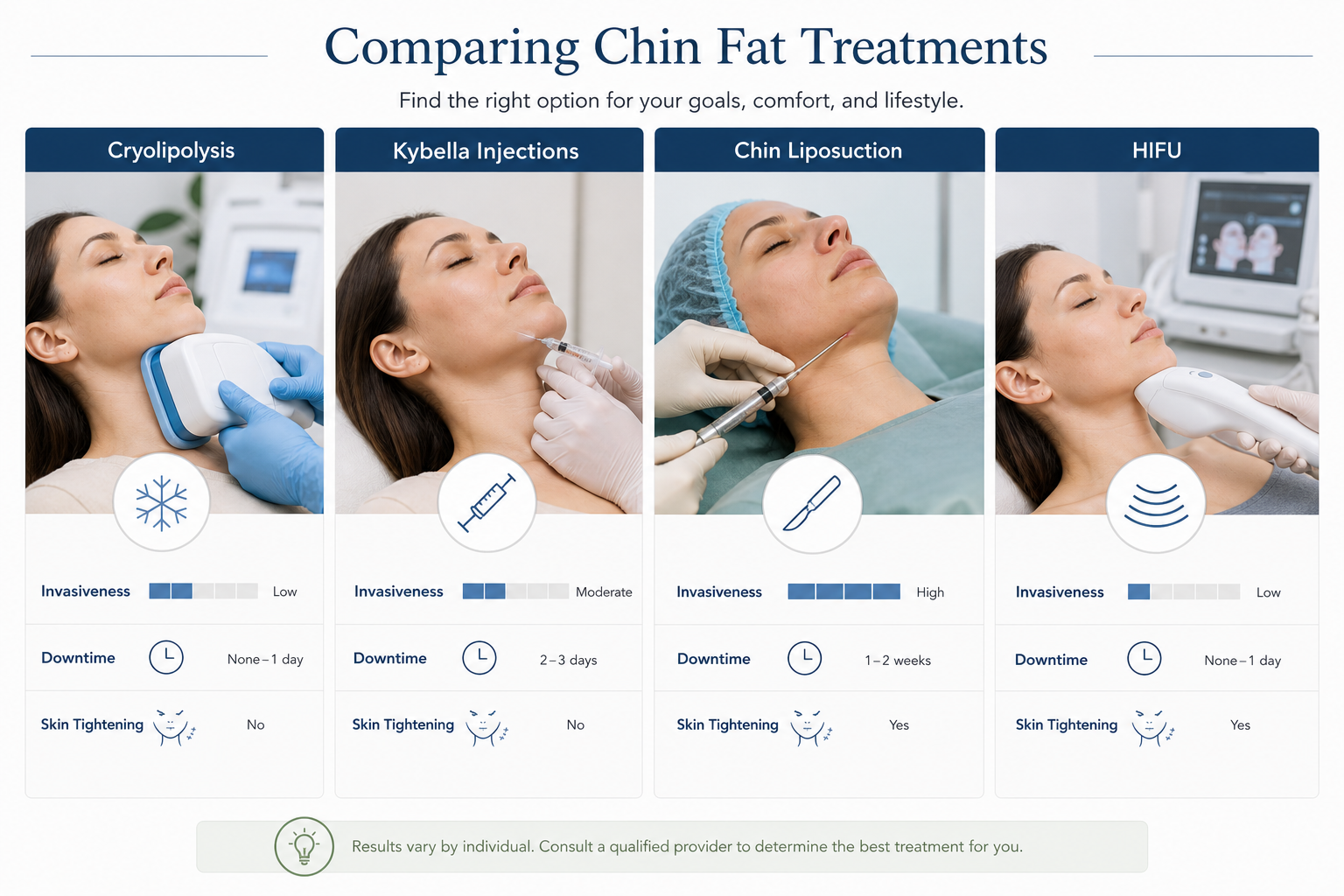
| Treatment | Type | Mechanism | Sessions Typical | Downtime | Skin Tightening | Key Limitation |
|---|---|---|---|---|---|---|
| Cryolipolysis (fat freezing) | Non-invasive | Controlled cooling destroys fat cells | 1–2 | Minimal | No | Does not address skin laxity; PAH risk |
| Kybella (deoxycholic acid) | Injectable | Destroys fat cell membranes | 2–6 | Moderate (significant swelling) | No | Multiple sessions; more swelling and discomfort |
| Chin liposuction | Surgical | Physical removal of fat | 1 | Significant (1–2 weeks) | Some (skin contracts post-surgery) | Surgical risks; recovery time; cost |
| HIFU (e.g. Ultherapy) | Non-invasive | Ultrasound energy tightens skin and superficial tissue | 1–2 | Minimal | Yes | Limited fat reduction; primarily for skin laxity |
Kybella (known in some markets as Belkyra) uses deoxycholic acid — a naturally occurring molecule that disrupts fat cell membranes — to reduce submental fat through a series of injections. It can be effective but typically requires more sessions than cryolipolysis and produces more pronounced swelling in the days following each treatment. For patients with both submental fat and mild skin laxity, combining fat freezing with a skin-tightening treatment such as HIFU or radiofrequency may produce a more complete result than either treatment alone — an option worth discussing with your practitioner.
How to Choose a Provider
The quality and safety of cryolipolysis treatment depends significantly on the provider and the equipment used. The market includes both genuine FDA-cleared devices and unbranded or unregulated alternatives that may not deliver the same controlled cooling parameters or safety standards. Asking the right questions before booking can protect both your safety and your results.
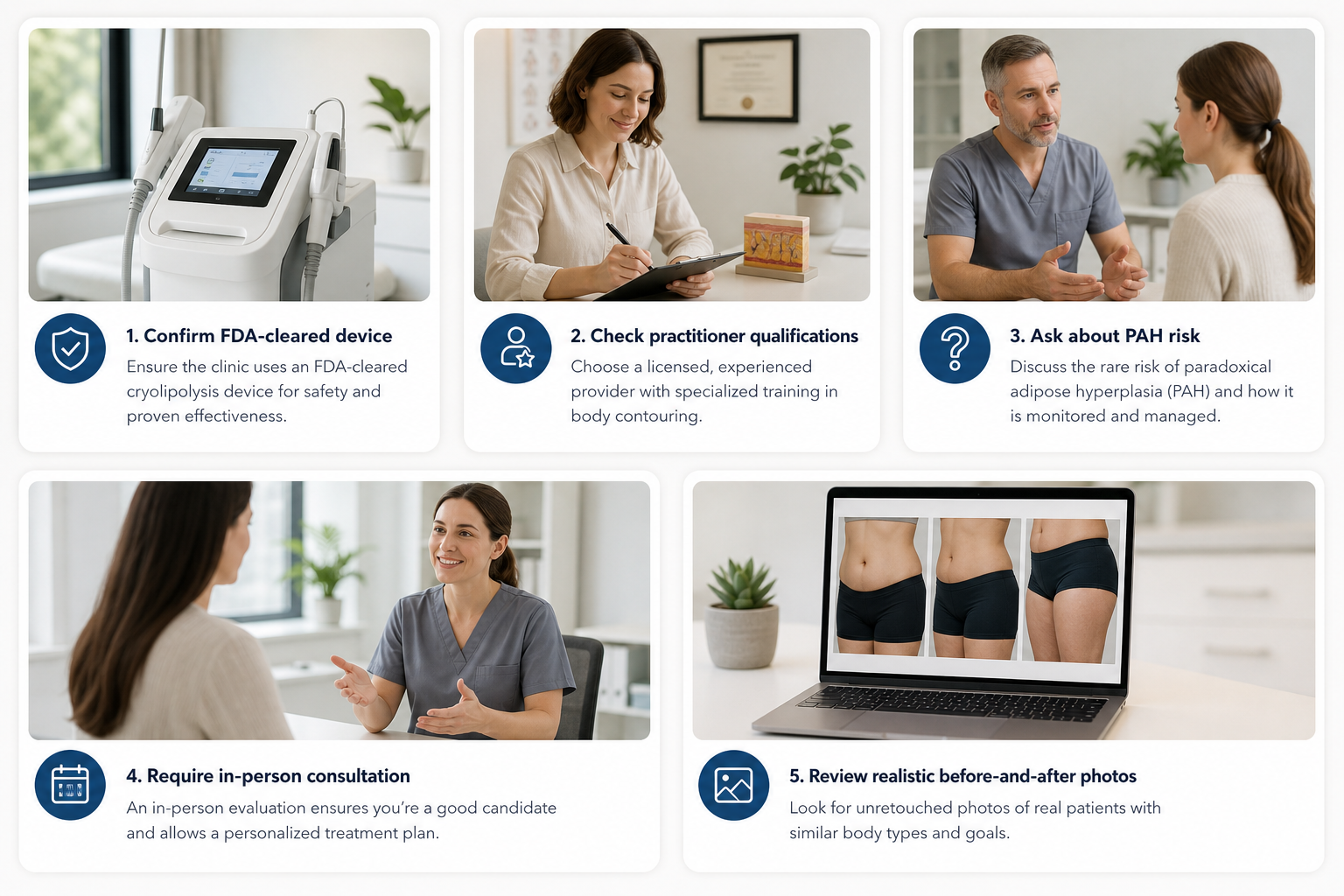
- Confirm the device: Ask specifically whether the clinic uses a genuine FDA-cleared cryolipolysis system and which applicator will be used for the chin area. Legitimate providers will answer this clearly.
- Check practitioner qualifications: Cryolipolysis should be performed or supervised by a qualified medical or aesthetic professional. Ask about the practitioner’s training and experience with submental treatments specifically.
- Ask about PAH: A reputable provider will discuss paradoxical adipose hyperplasia as part of the informed consent process. If a clinic dismisses or minimises this risk entirely, treat that as a warning sign.
- Request a consultation before committing: A proper in-person assessment of your anatomy, skin laxity, and fat volume is necessary before treatment. Be cautious of providers who offer to book treatment without a face-to-face assessment.
- Review before-and-after photographs critically: Look for realistic results across a range of patients, not only best-case outcomes. Ask whether the photographs shown are from the clinic’s own patients.
Aftercare and Maintaining Results
Cryolipolysis requires no significant recovery period, but a few aftercare considerations can support your results and comfort in the days following treatment.
Staying well hydrated — aiming for approximately two to three litres of water daily — supports the lymphatic system as it clears the destroyed fat cells. Gentle exercise in the weeks after treatment may also support lymphatic drainage and metabolic clearance. Avoiding extreme heat such as saunas or hot tubs in the first few days is generally advised while the treated tissue is still sensitive.
Because the permanent fat cell destruction achieved by cryolipolysis reduces the number of fat cells in the submental area, the remaining cells can still respond to weight gain. Maintaining a stable weight through a balanced diet and regular physical activity is the most effective way to preserve your results long term. If you gain significant weight after treatment, the remaining fat cells in the area can enlarge, and the visible improvement may diminish.
Frequently Asked Questions
Does freezing chin fat hurt?
Most patients experience an intense cold sensation and firm suction pressure when the applicator is first applied, which typically transitions to numbness within a few minutes. The post-treatment massage can be briefly uncomfortable. Overall, the procedure is generally well tolerated without anaesthesia, though individual pain thresholds vary.
How many sessions will I need for the chin?
One to two sessions is typical for the submental area. Because the chin fat pad is relatively small compared to areas like the abdomen, many patients achieve a satisfying result after a single session. A second session may be considered after 8–12 weeks if further reduction is desired following assessment of the initial result.
Is the fat reduction permanent?
The fat cells destroyed by cryolipolysis do not regenerate, so the reduction in fat cell number is permanent. However, the remaining fat cells in the area can still enlarge with weight gain, which can reduce the visible benefit over time. Maintaining a stable weight helps preserve the outcome.
Can chin fat freezing tighten loose skin?
No. Cryolipolysis targets subcutaneous fat and does not tighten or firm the overlying skin. If skin laxity is a concern alongside submental fat, your practitioner may recommend combining fat freezing with a skin-tightening treatment such as HIFU or radiofrequency, or may suggest that a different primary treatment is more appropriate for your anatomy.
What is paradoxical adipose hyperplasia and how common is it?
Paradoxical adipose hyperplasia (PAH) is a rare complication in which the treated fat enlarges rather than reduces after cryolipolysis. It does not resolve on its own and typically requires liposuction to correct. Reported incidence rates range from approximately 0.01% to 0.22% of treated cycles. While rare, it is a real risk that should be discussed with your provider before treatment.
How soon can I return to normal activities?
Most people return to their normal routine the same day. There is no downtime requirement, though the treated area may be tender, red, or swollen for several days. Strenuous exercise and extreme heat are generally avoided for the first 24–48 hours.
What if my results are disappointing after one session?
Results should be assessed at 8–12 weeks, when the full effect of the treatment becomes visible. If improvement is less than expected, a second session may be appropriate. In some cases, an alternative treatment such as Kybella or a combination approach may be worth discussing. A small proportion of patients respond less well to cryolipolysis, and a qualified practitioner can help you evaluate your options objectively.
Is Chin Fat Freezing the Right Approach for You?
Cryolipolysis for the submental area is a well-established, non-invasive option for reducing a localized fat deposit beneath the chin. For the right candidate — someone close to their target weight, with pinchable submental fat and reasonable skin elasticity — it can produce a meaningful, lasting improvement in chin profile and jawline definition without surgery, anaesthesia, or significant recovery time. The results develop gradually over 8–12 weeks, and one to two sessions is usually sufficient for the chin area.
The treatment has real limitations. It does not address skin laxity, it is not appropriate for large volumes of fat or for weight management, and it carries a small but genuine risk of paradoxical adipose hyperplasia that requires honest discussion before proceeding. Choosing a qualified, experienced provider using genuine FDA-cleared equipment is one of the most important factors in both safety and outcome.
If you are considering freezing chin fat, a face-to-face consultation with a qualified aesthetic practitioner is the appropriate next step. A thorough assessment of your anatomy, skin quality, and goals will help determine whether cryolipolysis is the most suitable approach, whether a combination of treatments may serve you better, or whether an alternative such as Kybella or chin liposuction may be worth exploring.