

The skin around the eyes is among the thinnest and most delicate on the face, making it particularly prone to fine lines, crepiness, pigmentation changes, and a loss of firmness over time. Laser treatment for the periorbital area — the zone surrounding the eye socket — has become one of the more established approaches for addressing these concerns, but the range of available laser technologies, the variability in individual results, and the specific risks associated with treating tissue so close to the eye mean that understanding the options carefully before booking a consultation is genuinely worthwhile.
Key Takeaways
- Several laser technologies can be used around the eyes, each targeting different concerns such as fine lines, skin laxity, pigmentation, or overall skin texture.
- The periorbital area requires careful patient selection and practitioner expertise because the skin is thin and the eyes themselves must be protected during treatment.
- Results vary depending on the laser type, the individual’s skin, the concern being treated, and the number of sessions completed.
- Downtime ranges from minimal with non-ablative or fractional lasers to one to two weeks or more with fully ablative resurfacing.
- Laser treatment addresses certain under-eye concerns well but is not a universal solution — hollowness, puffiness, and vascular dark circles may respond better to other approaches.
Why the Under-Eye Area Presents Unique Challenges
The periorbital skin is structurally different from skin elsewhere on the face. It is significantly thinner, contains fewer sebaceous glands, and has less underlying subcutaneous fat to buffer it from the effects of energy-based treatments. These characteristics mean it shows signs of ageing earlier and responds differently to laser energy than, for example, the cheeks or forehead. At the same time, the proximity of the eye itself — including the cornea, lens, and retina — introduces safety considerations that do not apply to most other treatment areas.
Under-eye concerns also have multiple distinct causes, and this matters when evaluating whether laser treatment is the right approach. Fine lines and crepey skin texture are primarily structural changes in the dermis and epidermis, and these tend to respond reasonably well to certain laser modalities. Pigmentation — whether from post-inflammatory changes, sun damage, or dermal melanin deposits — may also respond to specific laser wavelengths. However, dark circles caused by visible underlying blood vessels, hollowness from volume loss, or puffiness from fat pad prolapse are not meaningfully addressed by laser treatment alone. A thorough clinical assessment is essential to identify which factors are contributing to a patient’s concerns before any treatment is planned.
Types of Laser Used Around the Eyes
Laser treatments for the periorbital area are broadly divided into ablative, non-ablative, and fractional categories. Each works through a different mechanism and carries a different balance of efficacy, downtime, and risk.
Ablative Lasers
Ablative lasers, most commonly carbon dioxide (CO2) lasers and erbium:YAG lasers, work by removing the outer layers of skin entirely. The controlled thermal injury stimulates collagen remodelling and new skin formation, which can produce significant improvements in fine lines, skin laxity, and surface texture around the eyes. Fully ablative CO2 resurfacing of the periorbital area has a long clinical history and remains one of the more effective options for moderate to severe periorbital rhytids — the technical term for the wrinkles that form around the eyes. However, ablative treatment in this area carries a meaningful recovery period, typically one to two weeks of redness, crusting, and sensitivity, and requires careful post-treatment skin care. The risk of prolonged redness, pigmentation changes, and, in rare cases, scarring is higher with fully ablative approaches, particularly in patients with darker skin tones.
Non-Ablative Lasers
Non-ablative lasers deliver heat energy into the dermis without removing the surface skin. Devices using wavelengths such as 1064 nm Nd:YAG or 1320 nm are used in this category. Because the epidermis is left intact, downtime is considerably shorter — often limited to mild redness for a day or two — but the degree of improvement is generally more modest than with ablative resurfacing. Non-ablative laser treatment around the eyes may be more suitable for patients with early signs of ageing, those who cannot accommodate significant downtime, or those seeking gradual improvement over a series of sessions rather than a single more intensive treatment.
Fractional Lasers
Fractional laser technology, available in both ablative and non-ablative forms, delivers energy in a grid of microscopic columns rather than treating the entire surface uniformly. This leaves surrounding tissue intact, which accelerates healing and reduces the risk profile compared with fully ablative resurfacing while still stimulating meaningful collagen remodelling. Fractional CO2 and fractional erbium lasers are widely used for periorbital skin rejuvenation. Fractional non-ablative devices such as those using 1550 nm or 1927 nm wavelengths offer a gentler option with less downtime. The fractional approach has become particularly popular for under-eye treatment because it allows practitioners to achieve progressive improvement with a more manageable recovery, and the preserved tissue bridges support faster healing in this sensitive area.
Pulsed Dye Laser and Pigment-Targeting Lasers
Where vascular or pigmentation concerns are the primary issue, different laser wavelengths may be more appropriate. Pulsed dye laser (PDL) targets haemoglobin in blood vessels and may help with redness or superficial vascular changes around the eyes. Q-switched lasers and picosecond lasers target melanin and may be used for certain types of periorbital pigmentation, including some presentations of periorbital hyperpigmentation. However, the cause of pigmentation matters significantly — dermal pigmentation, epidermal pigmentation, and vascular contributions each respond differently to laser wavelengths, and treating the wrong type can worsen the appearance rather than improve it.
What Under Eye Laser Treatment May Address
Laser treatment for the periorbital area is most commonly sought for the following concerns, though the degree of improvement varies between individuals and depends on the laser modality selected.
- Fine lines and wrinkles: Periorbital fine lines, including crow’s feet at the outer corners of the eyes and fine crepey lines on the lower eyelid skin, are among the most common indications. Ablative and fractional ablative lasers tend to produce the most noticeable improvements in this category.
- Skin laxity and crepiness: Thinning and loosening of the lower eyelid skin, sometimes described as crepey texture, can be improved through collagen remodelling stimulated by laser energy.
- Skin texture and tone: Overall improvements in skin quality, pore appearance, and surface irregularity are achievable with fractional and ablative approaches.
- Pigmentation: Certain types of periorbital pigmentation, particularly epidermal hyperpigmentation related to sun damage, may respond to appropriate laser wavelengths. Dermal pigmentation is more challenging to treat and may require multiple sessions with less predictable results.
- Mild skin tightening: The thermal stimulation of collagen production can produce a degree of skin tightening, though this is generally modest and should not be expected to replicate the results of surgical blepharoplasty.
It is equally important to be clear about what laser treatment is unlikely to address effectively. Volume loss and hollowness beneath the eyes — a common cause of a tired or sunken appearance — are not corrected by laser energy and may be better approached with dermal filler or other volumising treatments. Puffiness caused by prolapsed orbital fat is a structural issue that typically requires surgical assessment. Dark circles with a strong vascular component, where the bluish or purplish discolouration comes from visible underlying vessels rather than surface pigmentation, are also unlikely to respond well to most laser treatments.
The Treatment Experience: What Typically Happens
A consultation before any periorbital laser treatment should involve a detailed assessment of the skin concerns, skin type, medical history, and treatment goals. Fitzpatrick skin type — a scale used to classify skin’s response to ultraviolet light and its risk of pigmentation changes after treatment — is particularly relevant when planning laser treatment around the eyes, as patients with darker skin tones face a higher risk of post-inflammatory hyperpigmentation with certain laser modalities.
On the day of treatment, the area is typically cleansed and a topical anaesthetic cream may be applied to improve comfort, particularly for ablative or fractional ablative procedures. Eye protection is mandatory during periorbital laser treatment. Depending on the device and the proximity to the eye, this may involve external goggles, corneal shields placed directly on the eye surface, or both. Corneal shields are small protective lenses inserted under local anaesthetic that physically protect the cornea and lens from laser energy. Their use is an important safety measure and should be standard practice for any laser treatment directed at the lower eyelid or very close to the eye margin.
The treatment itself typically takes between fifteen and forty-five minutes depending on the area being treated and the device used. Patients may experience a sensation of heat, snapping, or mild stinging during the procedure. After treatment, the area may appear red, feel warm, and begin to swell, particularly with ablative approaches. Aftercare instructions — including sun avoidance, gentle cleansing, moisturising, and avoiding certain skincare ingredients during healing — are an important part of the process and should be followed carefully.
Recovery and Downtime
Recovery time varies considerably depending on the type of laser used. Understanding the realistic recovery expectation before committing to treatment is important, particularly for patients with professional or social commitments.
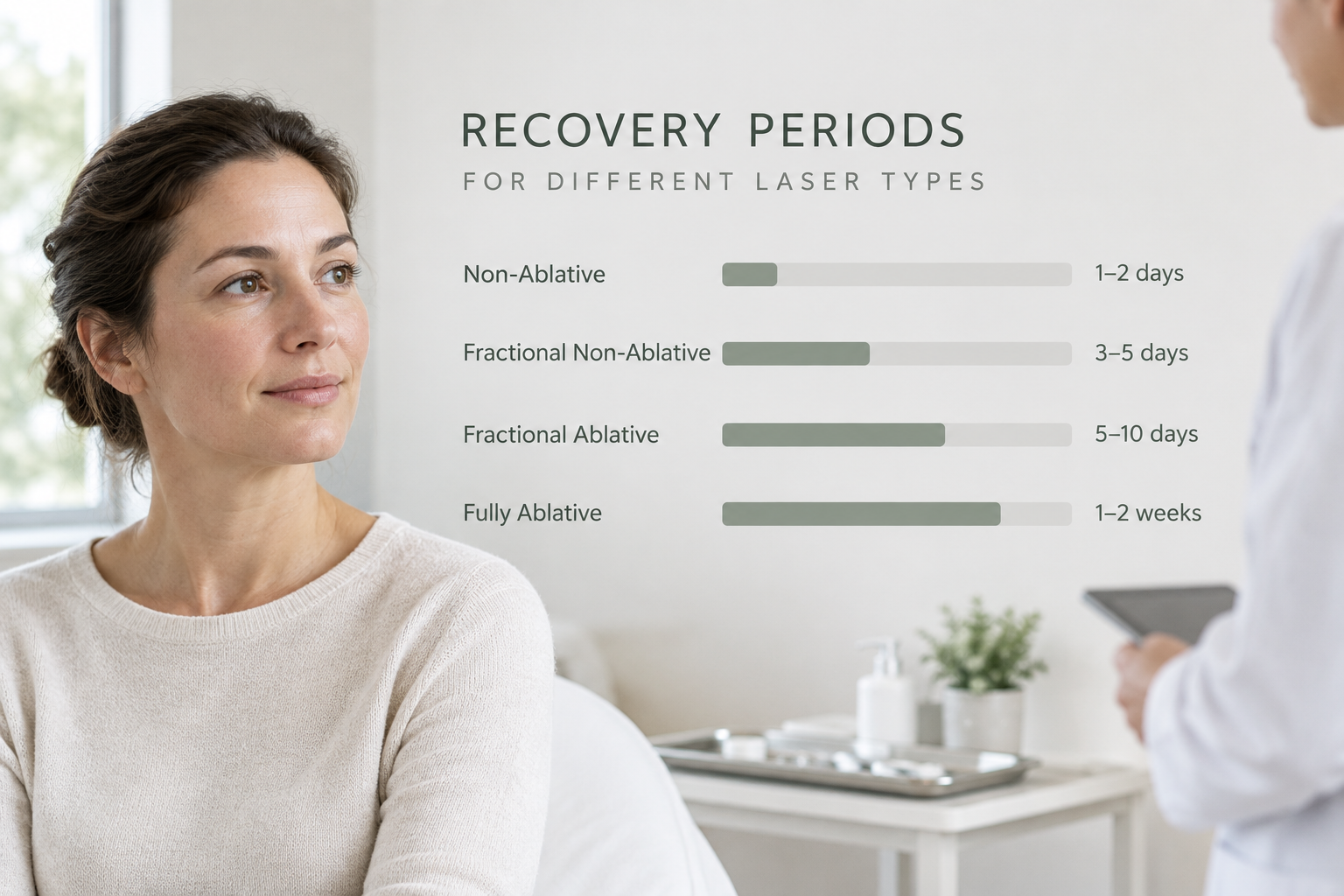
- Non-ablative laser: Redness and mild swelling typically resolve within one to two days. Most patients can return to normal activities quickly, though sun protection remains important.
- Fractional non-ablative laser: Redness, mild swelling, and a bronzed or sandpaper-like texture to the skin may persist for three to five days. Pinpoint bleeding or crusting is uncommon but possible.
- Fractional ablative laser: More noticeable redness, swelling, and crusting are typical, with most of the visible recovery occurring over five to ten days. Residual pinkness may persist for several weeks.
- Fully ablative laser resurfacing: This involves the most significant recovery, with raw, weeping skin in the first few days followed by crusting and peeling over one to two weeks. Redness can persist for several weeks to months. This level of treatment is less commonly performed as a standalone under-eye procedure today, though it remains an option in selected patients.
Swelling around the eyes can be more pronounced than in other areas due to the loose connective tissue in the periorbital region. Sleeping with the head slightly elevated in the first few nights after treatment may help reduce this. Patients should avoid rubbing the treated area, applying makeup until the skin has healed, and exposing the area to direct sunlight without adequate protection.
When Results May Appear and How Long They May Last
The timeline for visible results depends on the laser modality and the concern being treated. With non-ablative and fractional treatments, collagen remodelling is a gradual process. Initial improvements in skin texture may be noticeable within a few weeks as the skin heals, but the more significant changes in firmness and fine line reduction typically develop over three to six months as new collagen matures. With ablative resurfacing, the skin surface changes are more immediately apparent once healing is complete, though collagen remodelling continues for months afterwards.
Results from periorbital laser treatment are not permanent. The ageing process continues after treatment, and factors such as sun exposure, lifestyle, and individual skin biology influence how long improvements are maintained. Many patients choose to have maintenance treatments — either repeat sessions of the same modality or lighter maintenance procedures — to sustain results over time. The interval between treatments varies depending on the laser type and the individual’s response, and this should be discussed with the treating practitioner.
Risks and Side Effects
Laser treatment around the eyes carries specific risks that patients should understand before proceeding. The periorbital area’s thin skin and proximity to the eye make careful technique and appropriate safety measures essential.
- Post-inflammatory hyperpigmentation (PIH): Darkening of the treated skin after the inflammatory response of laser treatment is one of the more common complications, particularly in patients with Fitzpatrick skin types III to VI. This can be temporary but may take months to resolve and, in some cases, may be persistent.
- Post-inflammatory hypopigmentation: Lightening of the skin, which may be more permanent than hyperpigmentation, can occur particularly with aggressive ablative treatments.
- Prolonged redness: Erythema lasting beyond the expected recovery period is possible, particularly with ablative resurfacing.
- Scarring: Rare but possible, particularly if post-treatment care instructions are not followed or if infection occurs during healing.
- Infection: The disrupted skin barrier after ablative treatment creates a risk of bacterial or viral infection. Patients with a history of cold sores (herpes simplex virus) may require antiviral prophylaxis before ablative periorbital laser treatment, as the procedure can trigger an outbreak.
- Ectropion: A rare but serious complication of aggressive lower eyelid laser treatment in which the lower eyelid turns outward. This risk is higher in patients with pre-existing lower eyelid laxity and underscores the importance of thorough pre-treatment assessment.
- Eye injury: Without appropriate eye protection, laser energy can cause serious damage to the cornea, lens, or retina. This risk is effectively managed with proper protective measures but makes practitioner expertise and safety protocols non-negotiable.
- Milia: Small white cysts can form during healing after ablative treatment and usually resolve spontaneously or with gentle treatment.
Who May Be Suitable and Who May Not
Suitability for under eye laser treatment depends on a range of individual factors that a qualified practitioner should assess at consultation.
Patients who may be suitable candidates include those with periorbital fine lines, crepey lower eyelid skin, mild to moderate skin laxity, or certain types of periorbital pigmentation, who have realistic expectations about the degree of improvement achievable, and who are able to follow post-treatment care instructions and avoid sun exposure during recovery.
Laser treatment around the eyes may not be appropriate for patients who are pregnant or breastfeeding, those with active skin infections or inflammatory skin conditions in the treatment area, individuals taking certain photosensitising medications, those with a history of keloid scarring, patients with significant lower eyelid laxity that increases the risk of ectropion, and those with darker skin tones who may face a higher risk of pigmentation complications with certain laser types. Patients with unrealistic expectations — for example, those hoping laser treatment will correct hollowness or eliminate puffiness — are also unlikely to be satisfied with the outcome and should be counselled about more appropriate alternatives.
Alternatives to Laser for Periorbital Concerns
Laser treatment is one of several options for addressing the appearance of the under-eye area, and the most appropriate approach depends on the specific concern.
- Botulinum toxin injections: Commonly used for dynamic crow’s feet wrinkles — those that appear with facial movement — botulinum toxin relaxes the underlying orbicularis oculi muscle and can smooth these lines effectively. It does not address static lines at rest or skin quality changes.
- Dermal fillers: Hyaluronic acid filler placed in the tear trough or periorbital area can address hollowness and volume loss, which laser treatment cannot correct. This is a technically demanding area for filler injection and carries specific risks including vascular complications.
- Polynucleotides: Injectable polynucleotide treatments, which work by stimulating fibroblast activity and improving skin hydration and quality, have gained interest as a treatment for periorbital skin quality and fine lines. Evidence is still developing, but some patients find them useful as a complement to or alternative to energy-based treatments.
- Radiofrequency and microneedling radiofrequency: These energy-based treatments stimulate collagen remodelling through a different mechanism and may be suitable for patients who are not good candidates for laser, including some patients with darker skin tones.
- Chemical peels: Superficial to medium-depth chemical peels can improve skin texture and mild pigmentation around the eyes, though the periorbital area requires careful peel selection and application.
- Surgical blepharoplasty: For significant skin excess, fat prolapse, or structural changes that cannot be meaningfully addressed with non-surgical treatments, surgical assessment may be the most appropriate recommendation.
Frequently Asked Questions
How many sessions of under eye laser treatment are typically needed?
The number of sessions depends on the laser type and the concern being treated. Non-ablative and fractional non-ablative treatments are often performed as a course of three to five sessions spaced several weeks apart. Fractional ablative treatments may achieve meaningful results in one to three sessions. Fully ablative resurfacing is typically a single treatment. A practitioner will recommend a treatment plan based on individual assessment.
Is under eye laser treatment painful?
Discomfort varies with the laser modality. Non-ablative treatments are generally well tolerated with minimal discomfort. Fractional and ablative treatments typically involve more sensation, described as heat or snapping, and topical anaesthetic cream is usually applied beforehand. For more intensive treatments, additional pain management options may be discussed.
Can laser treatment remove dark circles under the eyes?
Laser treatment may help with dark circles caused by surface pigmentation or certain types of epidermal hyperpigmentation. However, dark circles caused by visible underlying blood vessels, hollowness, or volume loss are unlikely to respond to laser treatment. A clinical assessment to identify the cause of dark circles is important before choosing a treatment approach.
Is laser treatment safe for darker skin tones around the eyes?
Certain laser wavelengths and settings carry a higher risk of post-inflammatory hyperpigmentation in patients with darker skin tones. This does not mean laser treatment is never appropriate, but it does mean that careful device selection, conservative settings, and thorough pre-treatment assessment are essential. Some practitioners may recommend alternative approaches for patients with Fitzpatrick skin types IV to VI.
How long does recovery take after periorbital laser treatment?
Recovery ranges from one to two days for non-ablative treatments to one to two weeks for fractional ablative or fully ablative procedures. Residual redness may persist beyond the initial healing phase. Specific recovery expectations should be discussed with the treating practitioner before the appointment.
Can laser treatment replace eyelid surgery?
Laser resurfacing can improve skin texture, fine lines, and mild laxity around the eyes, but it cannot address structural issues such as significant skin excess, fat prolapse causing puffiness, or pronounced lower eyelid laxity. Patients with these concerns may benefit from a surgical consultation to understand whether non-surgical treatments are likely to achieve their goals.
Deciding Whether Under Eye Laser Treatment Is Right for You
Under eye laser treatment can be a genuinely effective option for improving periorbital fine lines, crepey skin texture, mild laxity, and certain types of pigmentation — but the outcome depends heavily on choosing the right laser modality for the specific concern, selecting an appropriately qualified and experienced practitioner, and having realistic expectations about what laser energy can and cannot achieve in this delicate area.
The periorbital region demands a higher standard of care than many other treatment areas. The thin skin, the proximity to the eye, and the range of different factors that can contribute to an aged or tired appearance all mean that a thorough consultation — one that identifies the underlying causes of your concerns and considers your skin type, medical history, and lifestyle — is not optional but essential. A practitioner who takes time to explain which concerns laser treatment is likely to help with, which may be better addressed by other means, and what realistic recovery and results look like is offering something more valuable than a quick booking.
If you are considering laser treatment for the under-eye area, seeking a consultation with a practitioner who has specific experience in periorbital laser treatment and who can discuss the full range of options relevant to your individual concerns is a sensible first step.