

Skin tags are among the most common benign skin growths, affecting a significant proportion of adults at some point in their lives. While they are generally harmless, a skin tag can become infected, irritated, or inflamed — particularly when it is located in an area prone to friction, moisture, or accidental trauma. Recognising the signs of an infected skin tag early is important, because an untreated infection can worsen and may require medical intervention beyond simple removal.
Key Takeaways
- An infected skin tag typically presents with redness, warmth, swelling, pain, or discharge around the growth — symptoms that differ from the normal appearance of a benign skin tag.
- Infection most commonly occurs after attempted home removal, repeated friction, or accidental tearing of the skin tag tissue.
- A suspected infected skin tag should be assessed by a qualified healthcare or aesthetic practitioner rather than treated at home.
- Professional removal of a skin tag — once any active infection has resolved — is the most reliable way to prevent recurrence and further complications.
- Several safe, clinically performed removal methods are available, and the most appropriate option depends on the size, location, and condition of the skin tag.
What Is a Skin Tag?
A skin tag, known medically as an acrochordon, is a small, soft, flesh-coloured growth that hangs from the skin on a narrow stalk called a peduncle. Skin tags are composed of loose collagen fibres, fat cells, and small blood vessels surrounded by a thin layer of skin. They are non-cancerous and do not pose a health risk in their uncomplicated form. Common locations include the neck, armpits, groin, under the breasts, and around the eyelids — areas where skin rubs against skin or clothing.
Skin tags vary in size from a few millimetres to around one centimetre, though larger examples do occur. They tend to develop gradually and are more prevalent in adults over the age of 40, in people with obesity or type 2 diabetes, during pregnancy, and in those with a family history of skin tags. The exact cause is not fully understood, but chronic friction and insulin resistance are considered contributing factors.
Can a Skin Tag Become Infected?
A skin tag itself does not contain active tissue that is prone to spontaneous infection in the way that a wound or open sore might be. However, the skin surrounding a skin tag, or the skin tag tissue itself, can become infected under certain circumstances. The most common trigger is physical disruption — either through attempted home removal using scissors, thread, or over-the-counter products, or through repeated rubbing and tearing caused by clothing, jewellery, or skin-on-skin friction.
When the skin barrier around a skin tag is broken, bacteria that normally live harmlessly on the skin surface — most commonly Staphylococcus aureus or Streptococcus species — can enter the tissue and cause a localised infection. Moisture trapped in skin folds can further encourage bacterial or fungal growth in the area. People with diabetes or a compromised immune system may be at higher risk of developing a more significant infection if a skin tag is disrupted.
Signs of an Infected Skin Tag
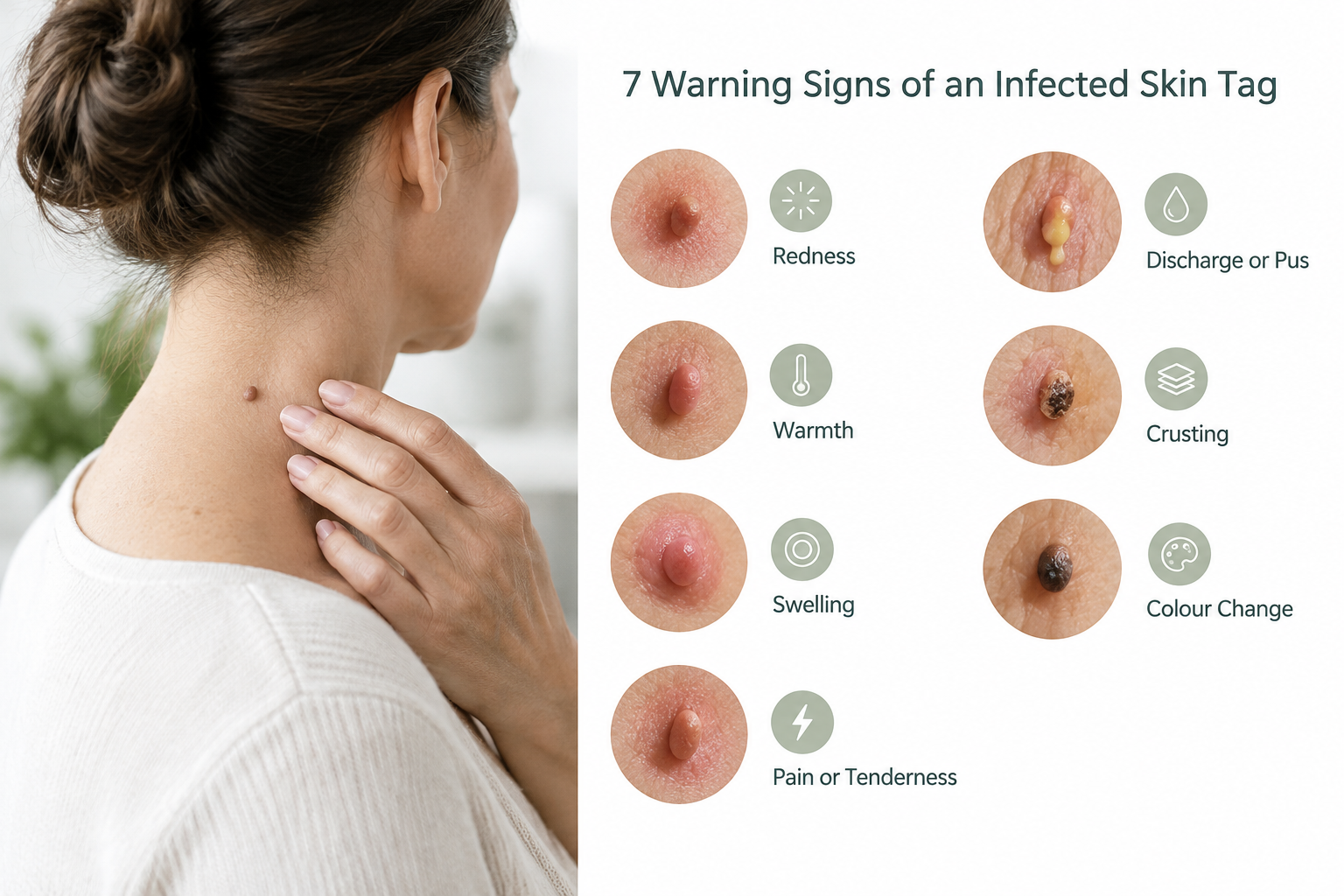
Distinguishing between a normal skin tag and one that has become infected or significantly inflamed is important for deciding whether and how urgently to seek professional assessment. The following signs suggest that a skin tag or the surrounding skin may be infected or inflamed rather than simply irritated.
Redness and Inflammation
A healthy skin tag is typically flesh-coloured or slightly darker than the surrounding skin. Redness spreading around the base of the skin tag or across the surrounding skin is one of the earliest and most recognisable signs of infection or significant irritation. The redness may be localised to the immediate area or, in more advanced cases, may spread outward — a pattern sometimes described as cellulitis, which indicates that the infection has begun to involve the deeper layers of the skin.
Warmth and Swelling
Infected tissue typically feels warmer than the surrounding skin when touched. Swelling around the base of the skin tag, or visible enlargement of the skin tag itself due to fluid accumulation, can accompany redness. These signs reflect the body’s inflammatory response to bacterial invasion and are a clear indication that the area requires professional evaluation rather than home management.
Pain or Tenderness
Uncomplicated skin tags are generally painless, though they may occasionally cause mild discomfort when caught on clothing or jewellery. A skin tag that has become infected is often noticeably tender to the touch, and the surrounding area may ache or throb. Persistent or worsening pain — particularly pain that is disproportionate to any visible injury — warrants prompt assessment by a healthcare professional.
Discharge or Pus
The presence of discharge, particularly cloudy, yellow, or green fluid, is a strong indicator of bacterial infection. Pus forms when the immune system sends white blood cells to fight bacteria, and the resulting fluid collects in the infected tissue. Any discharge from or around a skin tag should be taken seriously and assessed by a qualified practitioner, as it suggests an active infection that may require antibiotic treatment before any removal procedure can safely take place.
Crusting or Scabbing
Crusting or scabbing around the base of a skin tag may indicate that the skin has been broken — either through friction, accidental trauma, or a previous removal attempt — and that the area is healing or has become secondarily infected. While some crusting can be a normal part of healing after minor trauma, crusting accompanied by redness, warmth, or discharge suggests infection rather than straightforward wound healing.
Colour Changes in the Skin Tag Itself
A skin tag that has been twisted, tied off at home, or subjected to repeated trauma may change colour. A skin tag that turns dark red, purple, or black may have had its blood supply interrupted — a process called ischaemia — which can cause the tissue to die. While this is not always a sign of infection, a necrotic or darkened skin tag that is also surrounded by redness, swelling, or discharge should be assessed promptly, as dead tissue can become a focus for bacterial infection.
Fever or Systemic Symptoms
In most cases, an infected skin tag causes only localised symptoms. However, if the infection spreads or the immune response becomes more significant, systemic symptoms such as fever, chills, or swollen lymph nodes near the affected area may develop. These symptoms indicate that the infection may be spreading beyond the immediate skin and require urgent medical attention rather than a routine aesthetic appointment.
Common Causes of Skin Tag Infection
Understanding what typically leads to skin tag infection can help patients avoid the most preventable triggers and make informed decisions about management.
- Home removal attempts: Using scissors, nail clippers, thread, or dental floss to cut off or tie off a skin tag at home is one of the most common causes of infection. These methods introduce bacteria, may leave residual tissue, and can cause bleeding that creates an entry point for pathogens.
- Over-the-counter removal products: Some topical products marketed for skin tag removal can cause chemical irritation or burns to the surrounding skin, disrupting the skin barrier and increasing infection risk.
- Friction and trauma: Skin tags located in areas of repeated friction — such as the neck under a collar, the armpit, or the groin — may be repeatedly abraded, leading to micro-tears in the skin that allow bacteria to enter.
- Moisture and occlusion: Skin folds that trap sweat and moisture create an environment that encourages bacterial and fungal growth, particularly in warmer months or in people who are overweight.
- Accidental tearing: A skin tag that is caught on jewellery, clothing, or a seatbelt and partially torn can bleed and become infected if not cleaned and protected promptly.
When to Seek Professional Assessment
Any skin tag that shows signs of infection — redness, warmth, swelling, pain, or discharge — should be assessed by a qualified healthcare professional or a practitioner experienced in skin lesion management. Self-treatment of an infected skin tag is not recommended, as it can worsen the infection, cause scarring, or delay appropriate treatment.
Seek prompt medical attention if the redness is spreading rapidly, if you develop a fever or feel generally unwell, if you have diabetes or a condition that affects your immune system, or if the skin tag has been partially removed at home and the wound is not healing. In these situations, a GP or urgent care setting is the appropriate first point of contact rather than an aesthetic clinic, as antibiotic treatment may be needed before any removal procedure is considered.
For skin tags that are irritated but not actively infected — for example, a skin tag that is red and sore from friction but shows no signs of pus or spreading redness — an aesthetic practitioner or dermatologist can assess the area and advise on the safest timing and method for removal.
How Infected Skin Tags Are Managed
The management of an infected skin tag depends on the severity of the infection and whether the skin tag itself needs to be removed.
If a localised bacterial infection is present, a healthcare professional may prescribe a course of topical or oral antibiotics to clear the infection before any removal procedure takes place. Attempting to remove an infected skin tag before the infection has resolved increases the risk of spreading bacteria, poor wound healing, and scarring. Once the infection has cleared and the skin has returned to a healthy baseline, removal can be planned safely.
If the skin tag has been partially torn or the surrounding skin is broken, the area may need to be cleaned, dressed, and monitored until it heals. In some cases, a small amount of residual skin tag tissue may remain after accidental tearing, and a practitioner can assess whether this requires formal removal once healing is complete.
Professional Skin Tag Removal Options
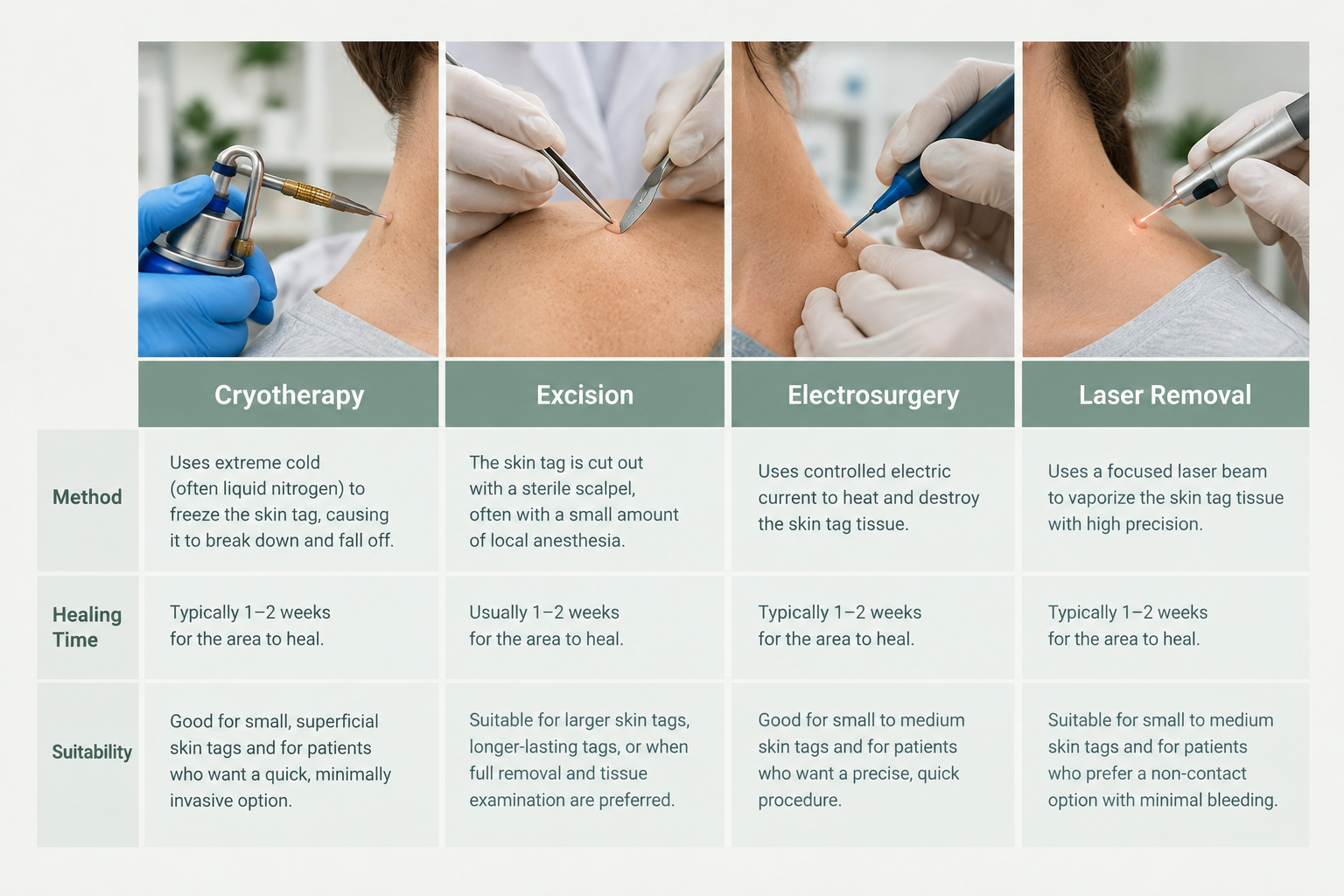
Once any infection has resolved, professional removal of the skin tag is the most reliable way to prevent further episodes of irritation or infection. Several clinically performed methods are available, and the most appropriate choice depends on the size, location, and number of skin tags, as well as the patient’s skin type and medical history.
Cryotherapy
Cryotherapy involves applying liquid nitrogen or a similar freezing agent to the skin tag, causing the tissue to freeze and eventually fall off over one to two weeks. Cryotherapy is a well-established method for removing small to medium-sized skin tags and is commonly performed in both GP and aesthetic clinic settings. It may cause temporary redness, blistering, or mild discomfort at the treatment site. Multiple sessions may occasionally be needed for larger skin tags.
Excision
Surgical excision involves cutting the skin tag away from the skin using a sterile scalpel or surgical scissors, usually after applying a local anaesthetic to the area. Excision provides immediate removal and allows the tissue to be sent for histological examination if there is any clinical uncertainty about the nature of the growth. It is particularly suitable for larger skin tags or those in sensitive locations. A small wound remains after excision, which heals over one to two weeks and may leave a faint scar.
Electrosurgery and Diathermy
Electrosurgery uses a high-frequency electrical current to cut through and cauterise the skin tag tissue, sealing blood vessels at the same time. This method is effective for a range of skin tag sizes and minimises bleeding during the procedure. Diathermy — a related technique — uses heat generated by electrical current to destroy the skin tag tissue. Both methods are performed under local anaesthetic and typically result in a small scab that heals within one to two weeks.
Laser Removal
Laser treatment can be used to ablate or vaporise skin tag tissue using focused light energy. Laser removal may be particularly useful for skin tags in delicate areas such as around the eyelids, where precision is important. Results are generally good, though laser removal may not be available at all clinics and tends to be more expensive than other methods. As with other removal techniques, a small healing period is expected after treatment.
Ligation
Clinical ligation involves a practitioner tying a sterile suture or medical-grade thread around the base of the skin tag to cut off its blood supply, causing the tissue to die and fall away over several days. This is distinct from home ligation attempts, which carry significant infection risk. When performed by a trained practitioner using sterile materials and appropriate aftercare guidance, ligation can be an effective option for pedunculated skin tags with a well-defined stalk.
Skin Tags That May Need Further Investigation
The vast majority of skin tags are benign and do not require investigation beyond a clinical visual assessment. However, a skin lesion that is growing rapidly, bleeding without trauma, changing colour in an irregular pattern, or has an unusual texture may not be a straightforward skin tag. Any lesion that does not have the typical appearance of a skin tag — a soft, pedunculated, flesh-coloured growth — should be assessed by a qualified practitioner before removal is attempted, to ensure that a more significant skin condition is not being overlooked. This is particularly relevant for lesions that have changed in appearance or that the patient has not had assessed before.
Preventing Skin Tag Infection
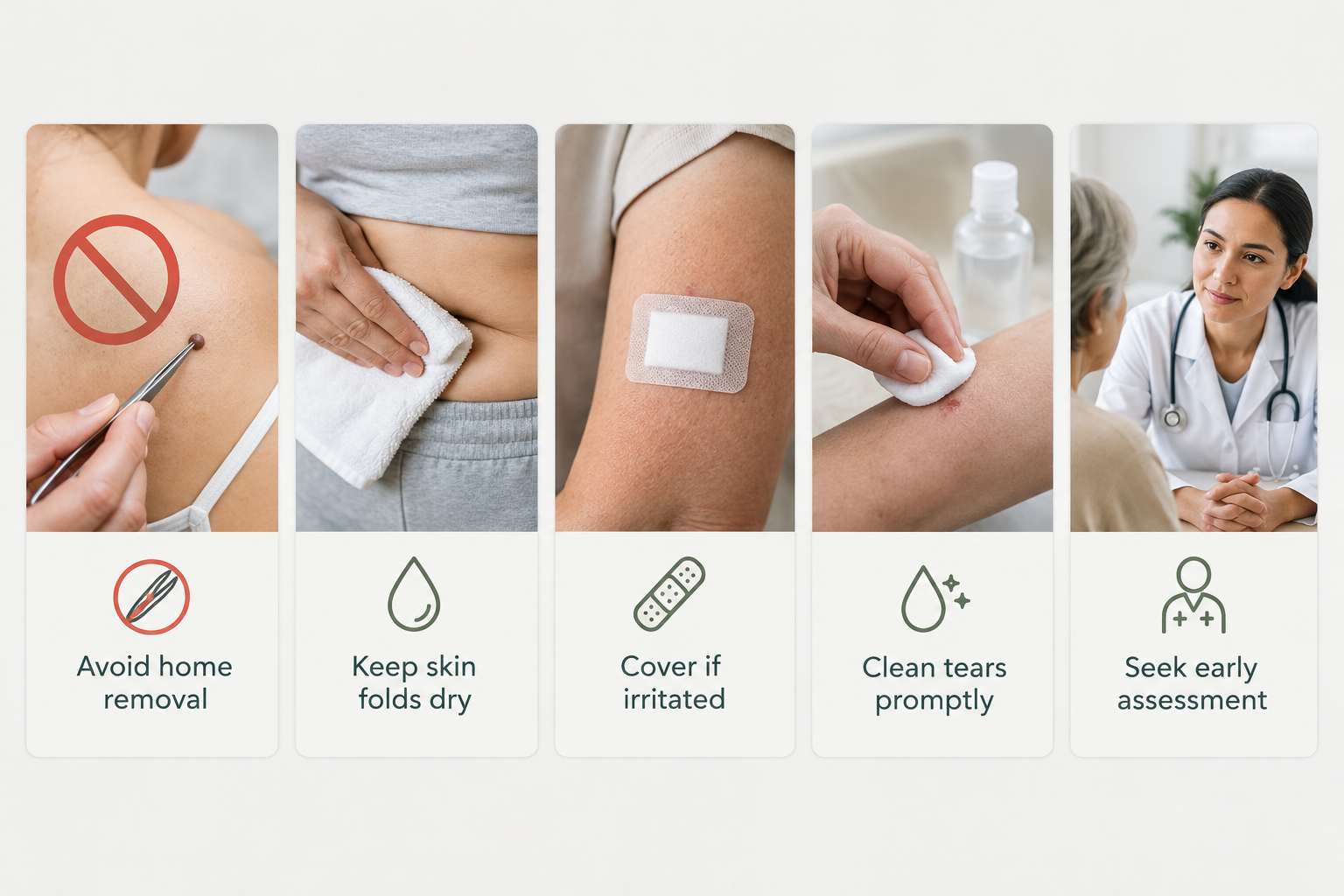
While not all skin tag irritation is preventable, several practical measures can reduce the risk of infection and complications.
- Avoid attempting to remove skin tags at home using scissors, thread, or over-the-counter chemical products.
- Keep skin folds clean and dry, particularly in warm weather or after exercise, to reduce the bacterial and fungal load in areas where skin tags commonly develop.
- If a skin tag is repeatedly caught on clothing or jewellery, consider covering it with a small adhesive dressing to reduce friction while awaiting professional removal.
- If a skin tag is accidentally torn or bleeds, clean the area gently with mild soap and water, apply a clean dressing, and seek professional assessment if signs of infection develop.
- People with diabetes or immune system conditions should be particularly vigilant about any skin changes and should seek professional assessment promptly if a skin tag becomes irritated or shows signs of infection.
Frequently Asked Questions
Can I treat an infected skin tag at home?
Home treatment of an infected skin tag is not recommended. Applying antiseptic to the surface of the skin may help with very minor surface irritation, but a true infection — indicated by redness, warmth, swelling, pain, or discharge — requires professional assessment. A healthcare professional can determine whether antibiotic treatment is needed and advise on safe removal once the infection has cleared.
How long does it take for an infected skin tag to heal?
The healing timeline depends on the severity of the infection and whether antibiotic treatment is required. A mild localised infection that is treated promptly with appropriate antibiotics may resolve within one to two weeks. More significant infections, or those complicated by spreading cellulitis, may take longer. Professional removal of the skin tag can typically be planned once the skin has fully healed.
Is it normal for a skin tag to be red and sore?
A skin tag that is occasionally red or sore after friction from clothing or jewellery is not unusual, but persistent redness, increasing soreness, or redness that spreads beyond the immediate area of the skin tag are signs that warrant professional assessment. These symptoms may indicate infection or significant inflammation rather than simple irritation.
Can a skin tag turn black without being infected?
Yes. A skin tag can turn dark red, purple, or black if its blood supply is interrupted — for example, if it has been twisted or if a thread has been tied around it. This colour change indicates that the tissue is dying rather than necessarily that it is infected, though dead tissue can subsequently become infected. A darkened skin tag should be assessed by a practitioner, particularly if it is also surrounded by redness or discharge.
Will removing a skin tag leave a scar?
Most professionally performed skin tag removal methods leave minimal scarring, particularly for small skin tags. Excision may leave a small, faint scar that typically fades over several months. The risk of scarring is generally higher when skin tags are removed at home or when removal is attempted while the area is infected. A practitioner can advise on the method most likely to produce a good cosmetic outcome for a specific skin tag.
Do skin tags grow back after removal?
A skin tag that has been fully removed by a professional method does not typically regrow at the same site. However, new skin tags may develop elsewhere on the body, particularly if the underlying contributing factors — such as friction, obesity, or insulin resistance — remain present. Addressing these factors where possible may help reduce the likelihood of new skin tags forming.
When to Act on an Infected Skin Tag
An infected skin tag is not a condition to manage with home remedies or to ignore in the hope that it will resolve on its own. The signs described in this article — redness, warmth, swelling, pain, discharge, or spreading inflammation — indicate that the skin barrier has been disrupted and that bacteria may be present in the tissue. Prompt professional assessment allows the infection to be treated appropriately and ensures that removal, when it takes place, is performed safely and with the best possible outcome.
If you have a skin tag that is showing any signs of infection, or if you have a skin tag in a location that causes repeated irritation and you are considering removal, a consultation with a qualified aesthetic practitioner, dermatologist, or GP is the appropriate next step. A clinical assessment will confirm the nature of the growth, identify any signs of infection, and allow a personalised plan to be discussed — including the most suitable removal method for your specific situation.