

Milia are small, keratin-filled cysts that sit just beneath the skin’s surface, appearing as firm white or yellowish bumps most commonly around the eyes, nose, and cheeks. While they are entirely harmless, many people seek removal for cosmetic reasons. Understanding which removal methods are genuinely safe, what the process involves, and what realistic outcomes look like can help you make an informed decision before booking a consultation.
Key Takeaways
- Milia are benign keratin cysts and do not require medical treatment, but professional removal is the safest approach for cosmetic clearance.
- Several evidence-based removal methods exist, including manual extraction, electrocautery, laser ablation, and chemical exfoliation, each with different suitability profiles.
- At-home squeezing or picking carries a meaningful risk of scarring, infection, and post-inflammatory hyperpigmentation, particularly around the delicate eye area.
- Most professionally removed milia clear without significant downtime, though individual healing varies and new milia can develop over time.
- A qualified practitioner should assess the lesions before treatment to confirm the diagnosis and recommend the most appropriate method for your skin type and the location of the milia.
What Are Milia and Why Do They Form?
Milia (singular: milium) are tiny epidermal inclusion cysts filled with keratin, a structural protein naturally produced by skin cells. Unlike whiteheads or comedones, milia are not connected to a pore opening, which is why they cannot simply be squeezed out the way a conventional spot might be. The keratin becomes trapped beneath the skin’s surface and forms a firm, pearlescent bump typically measuring one to two millimetres in diameter.
Milia are classified into two main types. Primary milia arise spontaneously when keratin becomes trapped in hair follicles or sweat ducts, and they are particularly common in newborns, where they resolve on their own within a few weeks. In adults, primary milia most frequently appear around the eyelids, nose, and cheeks without any obvious trigger. Secondary milia develop as a consequence of skin trauma, blistering conditions, prolonged use of heavy occlusive skincare products, or certain topical medications such as corticosteroids. Understanding which type is present can influence both the treatment approach and the likelihood of recurrence.
Several factors may increase the likelihood of developing milia in adults, including sun-damaged skin, which can impair the normal shedding of dead skin cells, and the use of thick creams or oils that block the skin’s natural exfoliation process. Certain skin conditions, including porphyria cutanea tarda and epidermolysis bullosa, are also associated with secondary milia formation, though these cases are less common and typically managed within a dermatological context.
Can Milia Resolve Without Treatment?
Primary milia in adults do not always resolve spontaneously the way they do in newborns. Some may persist for months or years without changing in appearance. Secondary milia occasionally resolve once the underlying cause is addressed, for example, when a blistering wound heals or when an occlusive product is discontinued. However, there is no reliable way to predict which milia will clear on their own and which will remain indefinitely.
For people who find milia cosmetically bothersome, particularly those clustered around the eyes where they can be especially noticeable, waiting for spontaneous resolution may not be a satisfying option. In these cases, professional removal offers a more predictable outcome. It is worth noting that even after successful removal, new milia can develop in the same or different areas if the underlying contributing factors, such as heavy product use or inadequate exfoliation, are not addressed.
Professional Milia Removal Methods
Several clinically recognised methods are used for milia removal, and the most appropriate choice depends on the number of milia, their location, the patient’s skin type, and the practitioner’s assessment. No single method is universally superior; each has specific advantages and limitations.
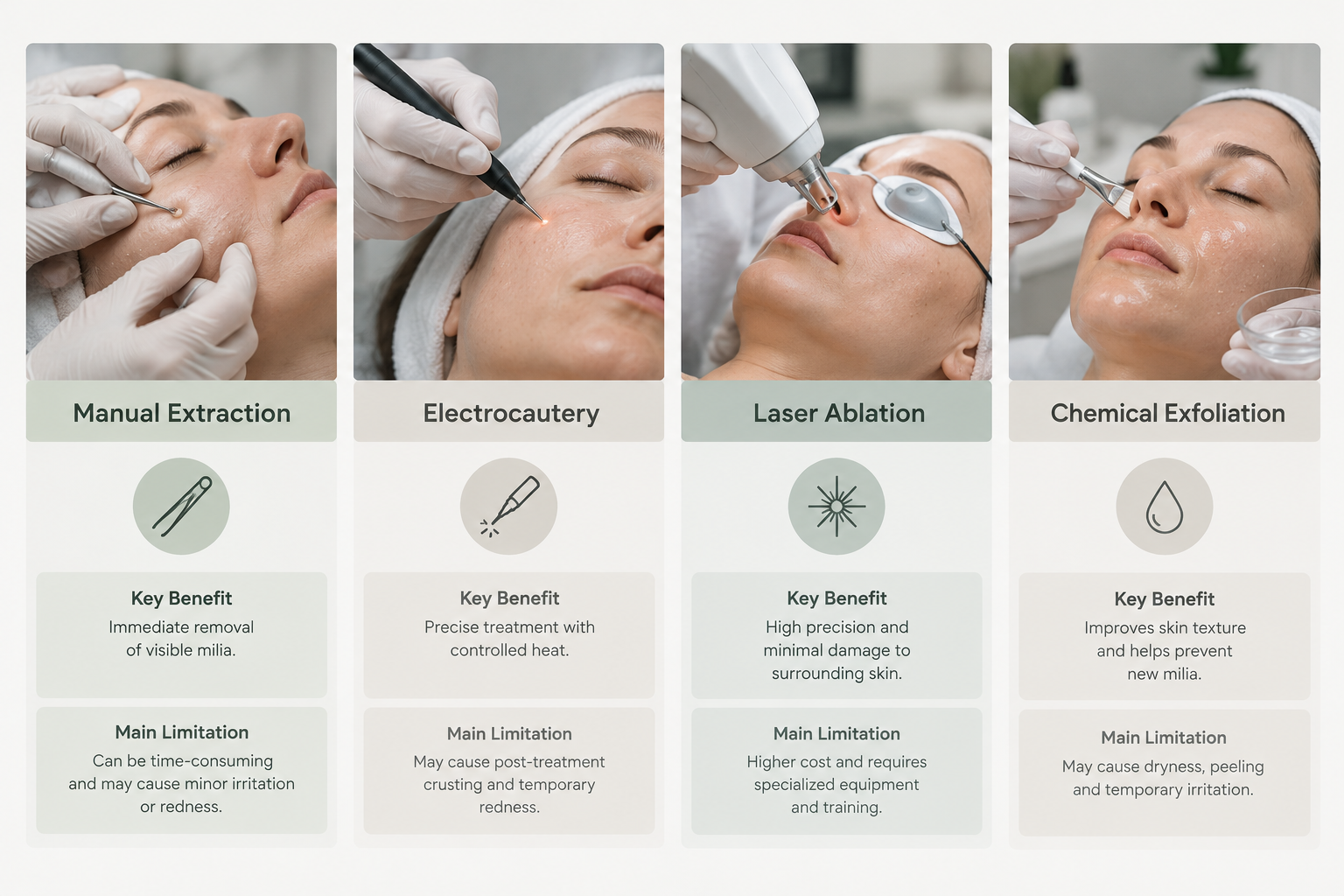
Manual Extraction
Manual extraction is the most widely used method for milia removal in a clinical setting. A trained practitioner uses a sterile lancet or fine needle to create a small opening in the skin directly over the milium, then gently expresses the keratin contents using a comedone extractor or light manual pressure. Because milia lack a natural pore opening, this incision is necessary to access the cyst contents. When performed by a qualified professional using sterile technique, manual extraction is generally well tolerated and carries a low risk of scarring. The procedure causes minimal discomfort, though some patients describe a brief sharp sensation at the moment of incision. Most milia can be removed in a single appointment, and the treated area typically heals within a few days, often leaving no visible mark.
The primary risk with manual extraction is infection or scarring if the technique is not performed correctly or if the patient interferes with the treated area during healing. This is why attempting manual extraction at home using pins, needles, or fingernails is strongly discouraged, particularly around the thin and sensitive skin of the eyelids, where the margin for error is very small.
Electrocautery and Diathermy
Electrocautery, sometimes referred to as electrodesiccation or diathermy, uses a fine electrical current to precisely destroy the milia contents and the surrounding cyst wall. A very fine probe is applied to the surface of each milium, delivering a controlled burst of energy that desiccates the lesion. This method can be particularly useful for multiple milia or for lesions in areas where manual extraction is technically more challenging. Electrocautery typically leaves a small crust at the treatment site that resolves within one to two weeks. There is a small risk of post-inflammatory hyperpigmentation, particularly in patients with medium to darker skin tones, and this should be discussed during the pre-treatment consultation.
Laser Ablation
Laser treatment for milia removal uses focused light energy to vaporise the keratin cyst. Carbon dioxide (CO2) lasers and erbium lasers are the types most commonly used for this purpose. Laser ablation can be precise and effective, particularly for milia that are numerous, located in sensitive areas, or have not responded to other methods. The treatment may cause a brief stinging sensation, and the treated skin typically forms a small crust that heals over one to two weeks. As with electrocautery, the risk of pigmentation changes is relevant for patients with darker skin tones, and a thorough skin assessment is important before proceeding. Laser milia removal is generally performed by a dermatologist or a practitioner with specific laser training.
Chemical Exfoliation
Topical chemical exfoliants, including retinoids such as tretinoin, and alpha-hydroxy acids such as glycolic acid, are sometimes used as part of a longer-term management strategy for milia-prone skin rather than as a direct removal method. These agents work by accelerating the skin’s natural cell turnover, which may help prevent new milia from forming and can, over time, encourage existing superficial milia to migrate closer to the surface where they may resolve or become easier to extract. Prescription-strength retinoids are more likely to produce a meaningful effect than over-the-counter alternatives, and results typically take several weeks to months to become apparent. Chemical exfoliation is not a rapid solution for established milia but may be a useful adjunct to professional removal, particularly for patients who are prone to recurrence.
Cryotherapy
Cryotherapy involves the application of liquid nitrogen to freeze and destroy the milia. This method is less commonly used for milia than for other benign skin lesions, partly because the small size of milia makes precise application important and partly because the risk of hypopigmentation (lightening of the skin) at the treatment site is a relevant consideration. Cryotherapy may be more appropriate in specific clinical contexts and is typically offered by dermatologists rather than aesthetic practitioners.
What Happens During a Professional Milia Removal Appointment?
A professional milia removal appointment typically begins with a brief clinical assessment to confirm that the lesions are indeed milia and not another type of skin lesion such as sebaceous hyperplasia, syringoma, or closed comedones, which can appear similar but require different management. This diagnostic step is important because treating the wrong lesion type with an inappropriate method can cause unnecessary skin trauma.
Once the diagnosis is confirmed, the skin is cleansed and, depending on the method chosen, a topical anaesthetic cream may be applied to improve comfort, though many patients find manual extraction tolerable without anaesthesia. The practitioner then removes each milium individually. A single session can address multiple milia, and for patients with a large number of lesions, the practitioner may recommend treating them in stages to minimise skin stress and allow adequate healing between sessions.
After treatment, the skin may appear slightly red or have small marks at each extraction site. Patients are typically advised to keep the area clean, avoid applying makeup to the treated sites for at least 24 hours, and use a broad-spectrum sunscreen to protect the healing skin from ultraviolet exposure, which can increase the risk of post-inflammatory pigmentation changes.
Risks and Side Effects of Milia Removal
Professional milia removal is generally considered low-risk when performed by a trained and experienced practitioner using appropriate technique and sterile equipment. However, as with any skin procedure, there are potential side effects and risks that patients should understand before proceeding.
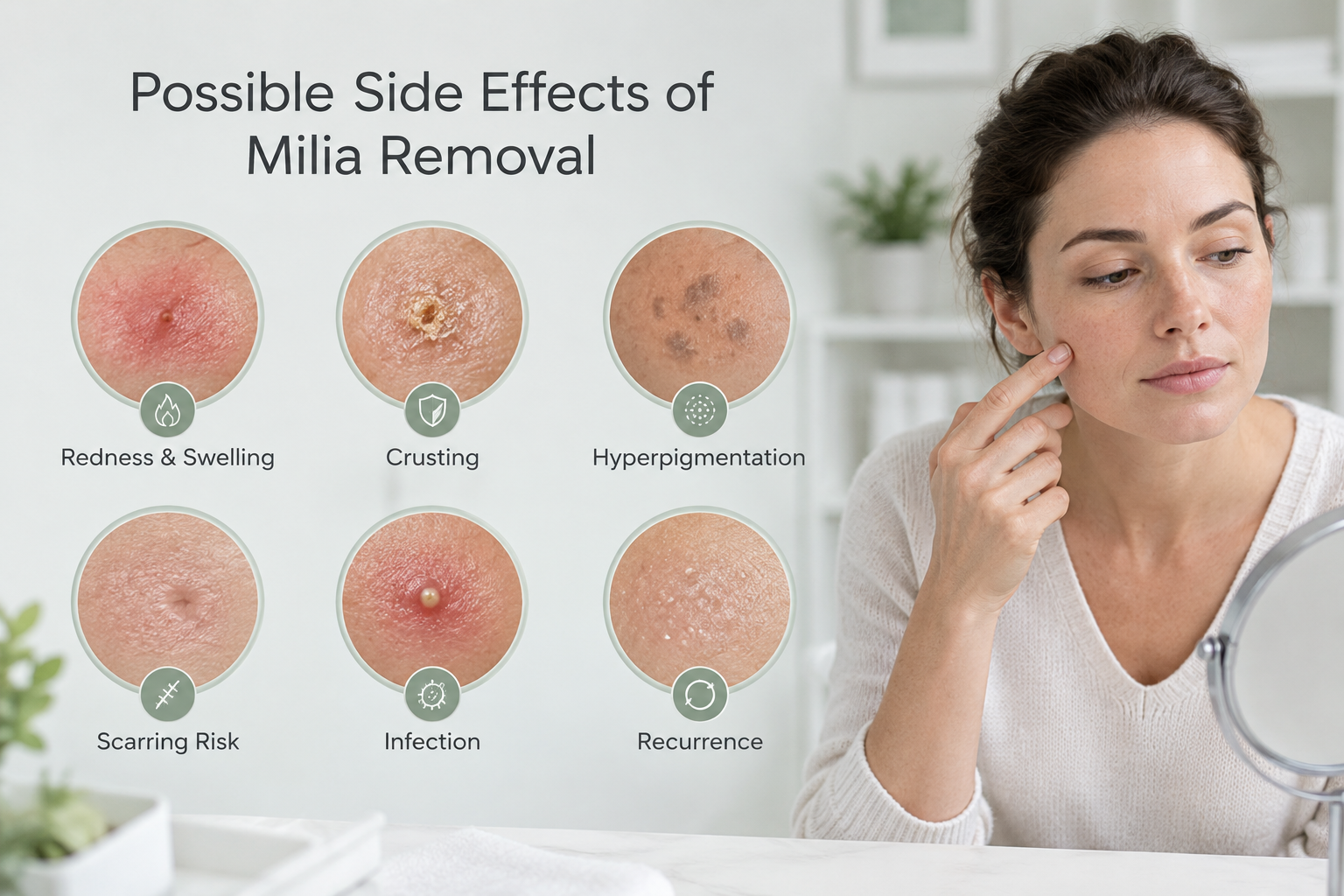
- Temporary redness and swelling: Mild erythema and localised swelling at the treatment sites are common and typically resolve within 24 to 48 hours.
- Crusting: Small crusts may form after electrocautery or laser treatment and should be allowed to shed naturally rather than being picked off, as premature removal can increase scarring risk.
- Post-inflammatory hyperpigmentation: Darkening of the skin at the treatment site can occur, particularly in patients with medium to darker skin tones or those with a history of pigmentation changes after skin trauma. This is usually temporary but may take several weeks or months to fade.
- Scarring: The risk of permanent scarring is low when treatment is performed correctly, but it is not zero. Patients with a history of keloid or hypertrophic scarring should discuss this with their practitioner before proceeding.
- Infection: Any procedure that breaks the skin carries a small risk of infection. Using sterile equipment and following aftercare instructions reduces this risk significantly.
- Incomplete removal: Occasionally, a milium may not be fully removed in a single attempt, particularly if the cyst wall is not completely expressed. A follow-up appointment may be needed.
- Recurrence: Milia removal does not prevent new milia from forming. Patients who are prone to milia may develop new lesions over time, particularly if contributing factors such as heavy skincare products or inadequate exfoliation are not addressed.
Who May Be Suitable for Professional Milia Removal?
Most adults with cosmetically bothersome milia are potential candidates for professional removal. Suitability depends on several factors that a practitioner will assess during consultation.
Patients with active skin infections, open wounds, or inflammatory skin conditions affecting the treatment area are generally not suitable for removal until those conditions have resolved. Patients taking medications that affect skin healing, such as systemic retinoids or anticoagulants, should inform their practitioner, as these may influence the choice of method or the timing of treatment. Patients with a history of keloid scarring require careful discussion about the risk-benefit balance before proceeding with any method that breaks the skin.
Pregnancy is a relevant consideration for certain treatment methods. Laser treatment and some topical agents are generally avoided during pregnancy, and patients who are pregnant or breastfeeding should discuss their options with a qualified practitioner who can advise on the safest approach for their individual circumstances.
Patients with darker skin tones should specifically discuss the risk of post-inflammatory hyperpigmentation with their practitioner, as some methods carry a higher risk of pigmentation changes in these skin types. A practitioner experienced in treating a range of skin tones will be able to recommend the most appropriate method and may suggest a test patch before treating a larger area.
Why At-Home Milia Removal Is Not Recommended
Attempting to remove milia at home by squeezing, picking, or using non-sterile sharp objects is strongly discouraged by dermatologists and aesthetic practitioners. Unlike a conventional whitehead, a milium does not have a natural opening, meaning that applying pressure without first creating a precise incision is unlikely to successfully express the contents and is very likely to cause skin trauma. The skin around the eyes is particularly thin and delicate, making it especially vulnerable to bruising, tearing, and scarring from uncontrolled pressure.
Non-sterile instruments introduce a meaningful infection risk, and repeated trauma to the same area can result in post-inflammatory hyperpigmentation or permanent textural changes. Some people attempt to use over-the-counter extraction tools, but without proper technique and sterile conditions, these carry similar risks. The cost and inconvenience of a professional appointment are generally far outweighed by the reduced risk of complications and the more reliable outcome that professional treatment provides.
Skincare Approaches That May Help Prevent Milia
While no skincare routine can guarantee that milia will not develop, certain habits may reduce the likelihood of new milia forming, particularly in people who are prone to them. Incorporating a gentle chemical exfoliant, such as a low-concentration glycolic acid or lactic acid product, into a regular skincare routine can help maintain normal skin cell turnover and reduce the accumulation of dead skin cells that may contribute to milia formation.

Reviewing the texture and formulation of skincare products is also worthwhile. Very heavy, occlusive creams and oils, particularly those applied around the eye area, may contribute to milia formation in susceptible individuals by impeding the skin’s natural exfoliation process. Switching to lighter, non-comedogenic formulations may help reduce recurrence after professional removal. Broad-spectrum sun protection is relevant not only for post-treatment healing but also as a longer-term measure, since cumulative ultraviolet damage can impair the skin’s ability to shed dead cells normally.
Prescription topical retinoids, when used under medical supervision, may help manage milia-prone skin over time by promoting cell turnover. These are not suitable for everyone and should be introduced gradually to minimise irritation, particularly around the sensitive eye area.
Alternatives to Milia Removal
For patients who prefer not to undergo a removal procedure, or for whom a particular method is not suitable, there are a few alternative approaches worth considering. As noted, some milia do resolve spontaneously over time, and watchful waiting is a reasonable option for lesions that are not causing significant cosmetic concern. Optimising skincare, particularly by reducing heavy occlusive products and incorporating gentle exfoliation, may support natural resolution in some cases.
For patients whose milia are associated with an underlying skin condition or medication, addressing the root cause may be the most effective long-term strategy. A dermatologist can assess whether secondary milia are linked to a treatable condition and advise accordingly. In cases where milia are very numerous or associated with a systemic condition, a dermatological referral is appropriate rather than a purely cosmetic approach.
Frequently Asked Questions
Does milia removal hurt?
Most patients find professional milia removal tolerable. Manual extraction causes a brief sharp sensation at the moment of incision, which most people describe as mild. Electrocautery and laser treatments may cause a stinging sensation. Topical anaesthetic cream can be applied beforehand to improve comfort if needed. The procedure is generally short, and discomfort resolves quickly after treatment.
How long does it take for skin to heal after milia removal?
Healing time depends on the method used. After manual extraction, small marks typically resolve within a few days. Electrocautery and laser treatment may leave small crusts that take one to two weeks to shed naturally. Keeping the area clean, avoiding picking at crusts, and applying sunscreen consistently during healing all support a smoother recovery.
Will milia come back after removal?
Milia removal addresses existing lesions but does not prevent new ones from forming. Patients who are prone to milia may develop new lesions over time, particularly if contributing factors such as heavy skincare products or sun damage are not addressed. Incorporating gentle exfoliation and reviewing product choices may help reduce recurrence.
Can I remove milia at home safely?
Attempting milia removal at home is not recommended. Without a precise sterile incision, squeezing or picking at milia is unlikely to be effective and carries a meaningful risk of infection, scarring, and post-inflammatory pigmentation changes, particularly around the delicate eye area. Professional removal by a trained practitioner is the safer and more reliable option.
How many milia can be removed in one session?
The number of milia that can be treated in a single appointment varies depending on the method used, the location of the lesions, and the practitioner’s assessment. Many patients have all visible milia addressed in one session. For patients with a large number of lesions, the practitioner may recommend treating them in stages to allow adequate healing between appointments.
Is milia removal suitable for the area around the eyes?
Milia around the eyes are among the most common locations in adults and can be treated professionally. The periorbital area requires particular care due to the thinness of the skin, and a practitioner experienced in treating this area will use appropriate technique to minimise the risk of bruising or scarring. Laser treatment near the eyes requires specific eye protection measures.
Do I need a referral to have milia removed?
In most cases, a referral is not required to see an aesthetic practitioner or dermatologist for milia removal. However, if milia are numerous, recurrent, or associated with other skin symptoms, a dermatological assessment may be advisable to rule out an underlying condition before proceeding with cosmetic removal.
Deciding on Safe Milia Removal: What to Consider
Milia removal is a straightforward procedure when performed by a qualified practitioner, and for most patients with cosmetically bothersome lesions, the risk-benefit balance is favourable. The key decision factors are choosing a practitioner with appropriate training and experience, selecting a method suited to your skin type and the location of the milia, and having realistic expectations about healing time and the possibility of recurrence.
If you are considering milia removal, a consultation with a qualified aesthetic practitioner or dermatologist is the appropriate starting point. During that consultation, the practitioner should confirm the diagnosis, explain the available options for your specific situation, discuss the relevant risks, and provide clear aftercare guidance. Patients with darker skin tones, a history of scarring, or milia in particularly sensitive locations such as the eyelid margin should ensure their practitioner has relevant experience with these considerations before proceeding.
Addressing contributing factors, such as reviewing heavy skincare products and incorporating appropriate exfoliation, alongside professional removal gives the best chance of a lasting result and reduces the likelihood of new milia developing in the same areas over time.