

Hair shedding that goes beyond the normal daily loss of around 50 to 100 strands can have many causes, and nutritional deficiency is one of the more commonly overlooked contributors. Identifying which vitamin or mineral shortage is involved matters because the right approach depends entirely on what is actually driving the shedding. This article explains the key nutrients linked to hair loss, how each one affects the hair growth cycle, what the evidence says, and what a clinical assessment typically involves.
Key Takeaways
- Several nutrient deficiencies — including iron, vitamin D, biotin, zinc, and B12 — are associated with increased hair shedding, though the strength of evidence varies between them.
- Deficiency-related hair loss is usually diffuse, meaning it affects the whole scalp rather than producing a defined bald patch, and it often presents as telogen effluvium.
- Blood tests are necessary to confirm a deficiency; supplementing without a confirmed shortage may not improve hair loss and can occasionally cause harm.
- Correcting a confirmed deficiency may slow shedding and support regrowth, but results take time — typically several months — and other causes of hair loss should be ruled out.
- Nutrient deficiency is rarely the sole cause of hair loss; hormonal factors, genetics, stress, and scalp conditions frequently contribute alongside nutritional gaps.
How Nutrient Deficiencies Affect the Hair Growth Cycle
Hair follicles are among the most metabolically active structures in the body. Each follicle cycles through three main phases: anagen (active growth), catagen (transition), and telogen (resting and shedding). This cycle is highly sensitive to internal conditions, including the availability of vitamins, minerals, and amino acids. When the body experiences a nutritional shortage, it prioritises essential organs over non-vital structures like hair follicles. The result is that follicles may shift prematurely from the growth phase into the resting phase, producing a pattern of diffuse shedding known as telogen effluvium.
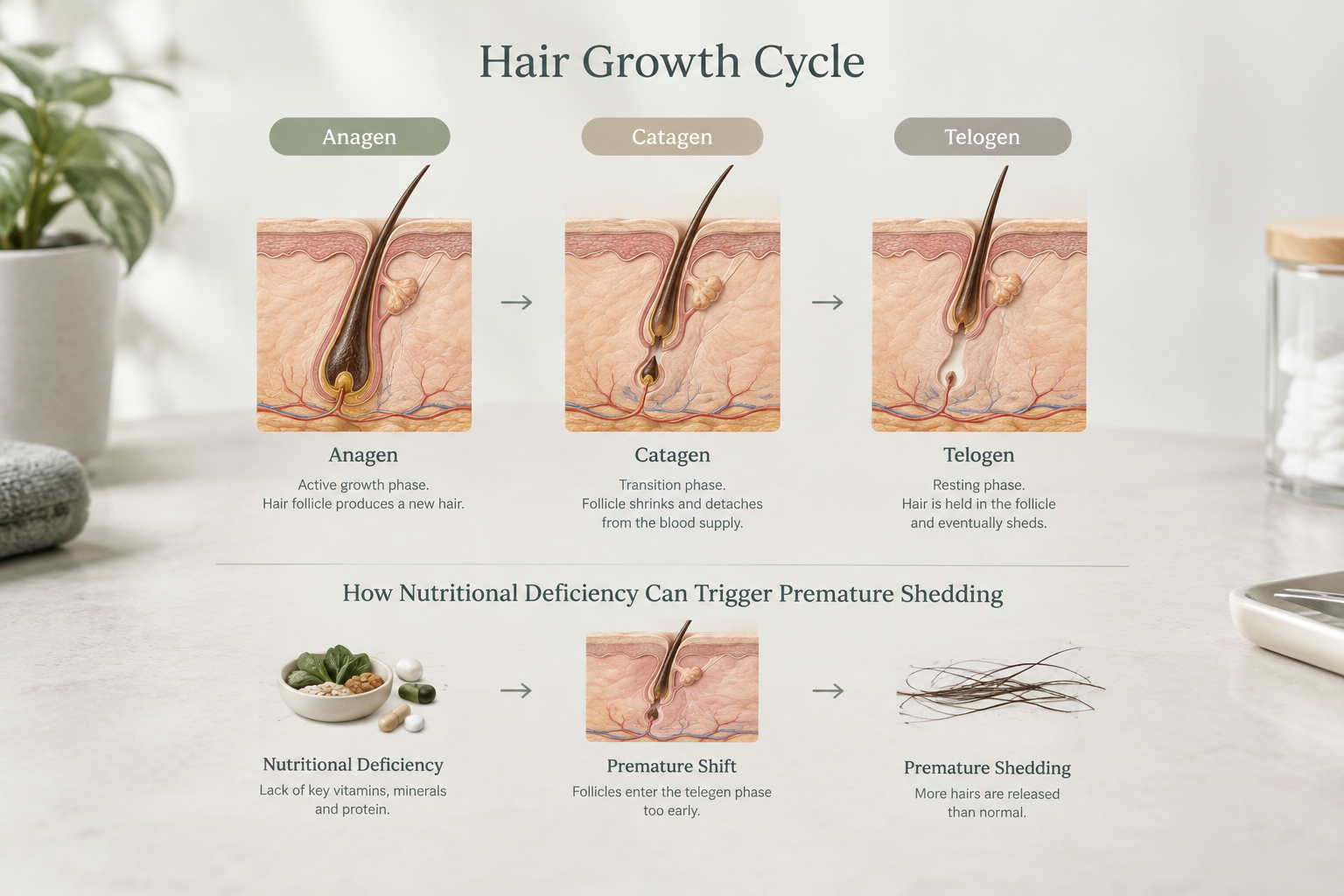
Telogen effluvium typically becomes noticeable two to four months after the triggering event — whether that is a period of poor nutrition, rapid weight loss, illness, or a specific deficiency. This delay can make it difficult to connect the shedding to its cause without a thorough history and appropriate testing. Understanding which nutrients are most critical to follicle function helps explain why certain deficiencies are more consistently linked to hair loss than others.
Iron Deficiency and Hair Loss
Iron deficiency is one of the most frequently identified nutritional causes of hair shedding, particularly in women of reproductive age. Iron is essential for the production of haemoglobin, which carries oxygen to tissues including the scalp and hair follicles. When iron stores are low — even before anaemia develops — follicle function can be impaired. Ferritin, the protein that stores iron in the body, is the most clinically relevant marker to assess in the context of hair loss. Some clinicians consider a ferritin level below 30 micrograms per litre to be potentially significant for hair health, though optimal thresholds remain debated in the literature.
The pattern of hair loss associated with iron deficiency is typically diffuse thinning across the scalp rather than localised patches. Women who experience heavy menstrual periods, follow a plant-based diet, or have conditions affecting iron absorption — such as coeliac disease or inflammatory bowel disease — are at higher risk. Correcting iron deficiency through dietary changes or supplementation under medical supervision may help reduce shedding over several months, though regrowth is gradual and not guaranteed in every case.
Vitamin D Deficiency and Hair Loss
Vitamin D plays a role in the regulation of the hair follicle cycle, and vitamin D receptors have been identified in keratinocytes — the cells that form the hair shaft. Research suggests that low vitamin D levels may be associated with non-scarring alopecia, including alopecia areata and telogen effluvium, though the relationship is not yet fully established. Studies have found lower serum vitamin D levels in individuals with these conditions compared to controls, but whether deficiency directly causes hair loss or is simply a common co-existing finding requires further investigation.
Vitamin D deficiency is widespread, particularly in populations with limited sun exposure, darker skin tones, or diets low in oily fish and fortified foods. Supplementation to correct a confirmed deficiency is generally considered safe within recommended doses and may support overall follicle health, but it should not be viewed as a standalone hair loss treatment. A blood test measuring serum 25-hydroxyvitamin D is the standard way to assess vitamin D status.
Biotin Deficiency and Hair Loss
Biotin — also known as vitamin B7 — is frequently marketed as a hair growth supplement, and it is one of the most commercially promoted nutrients in this context. The clinical reality is more nuanced. True biotin deficiency is rare in people eating a varied diet, because biotin is found in eggs, nuts, seeds, and many other common foods. When genuine biotin deficiency does occur — for example in people with certain inherited metabolic disorders, those on long-term anticonvulsant medication, or those consuming large quantities of raw egg white — hair loss, brittle nails, and skin changes can result.
Correcting confirmed biotin deficiency can reverse these symptoms. However, there is limited high-quality evidence that biotin supplementation improves hair growth in people who are not actually deficient. Despite this, biotin supplements are widely sold and used. One practical concern is that high-dose biotin supplementation can interfere with certain laboratory tests, including thyroid function tests and troponin assays used to assess heart conditions, potentially producing misleading results. Anyone taking biotin supplements should inform their healthcare provider before blood tests are performed.
Zinc Deficiency and Hair Loss
Zinc is involved in protein synthesis, cell division, and the normal functioning of oil glands around the hair follicle. Zinc deficiency has been associated with hair loss in several clinical contexts, including in patients with conditions such as acrodermatitis enteropathica — a rare inherited disorder of zinc absorption — and in individuals with poor dietary intake or malabsorption syndromes. Diffuse hair shedding and changes in hair texture are among the recognised features of zinc deficiency.
Serum zinc levels can be measured through a blood test, though interpreting results requires clinical context because zinc levels can fluctuate with inflammation and other factors. Zinc supplementation in confirmed deficiency may support hair recovery, but excessive zinc intake carries its own risks, including interference with copper absorption, which can itself contribute to hair loss. Supplementing zinc without a confirmed deficiency is therefore not advisable without medical guidance.
Vitamin B12 Deficiency and Hair Loss
Vitamin B12 is essential for red blood cell formation and DNA synthesis, both of which are relevant to rapidly dividing hair follicle cells. B12 deficiency can cause megaloblastic anaemia, which reduces oxygen delivery to tissues including the scalp. Hair loss associated with B12 deficiency tends to be diffuse and may be accompanied by other symptoms such as fatigue, tingling in the extremities, and cognitive changes. People following a strict vegan or vegetarian diet, older adults with reduced gastric acid production, and those with pernicious anaemia or conditions affecting the small intestine are at greater risk of B12 deficiency.
Serum B12 levels can be measured through a standard blood test, though some clinicians also assess methylmalonic acid or homocysteine levels for a more complete picture of B12 status. Correcting B12 deficiency — through dietary adjustment, oral supplementation, or intramuscular injections depending on the cause — may help stabilise hair shedding, though as with other deficiencies, improvement in hair density takes time.
Other Nutrients That May Contribute to Hair Shedding
Beyond the nutrients discussed above, several other micronutrients have been studied in relation to hair loss, with varying degrees of evidence.
- Folate (vitamin B9): Folate works alongside B12 in cell division and red blood cell production. Deficiency may contribute to diffuse hair shedding, particularly in pregnancy or in people with poor dietary intake.
- Vitamin A: Both deficiency and excess of vitamin A can affect hair. Severe deficiency may impair follicle function, while excessive intake — particularly from supplements rather than dietary sources — has been associated with hair loss and is a recognised cause of telogen effluvium.
- Selenium: Selenium deficiency has been linked to hair loss in some clinical reports, particularly in patients receiving long-term parenteral nutrition. Selenium toxicity from over-supplementation can also cause hair loss, making it important not to supplement without confirmed deficiency.
- Protein and amino acids: Adequate dietary protein is fundamental to hair structure, as hair is composed primarily of keratin. Severe protein restriction — as seen in eating disorders or very low-calorie diets — can trigger significant diffuse shedding. This is not a vitamin deficiency per se, but it is a closely related nutritional cause of hair loss.
- Omega-3 fatty acids: Some research suggests that omega-3 and omega-6 fatty acid supplementation may support hair density, though evidence remains limited and this area requires further study.
How Deficiency-Related Hair Loss Is Diagnosed
A clinical assessment for nutrient-related hair loss typically begins with a detailed history covering diet, medical conditions, medications, menstrual history, recent illness or surgery, and the pattern and timeline of shedding. A physical examination of the scalp and hair may include a pull test to assess active shedding and dermoscopy to evaluate follicle health and identify patterns consistent with specific diagnoses.
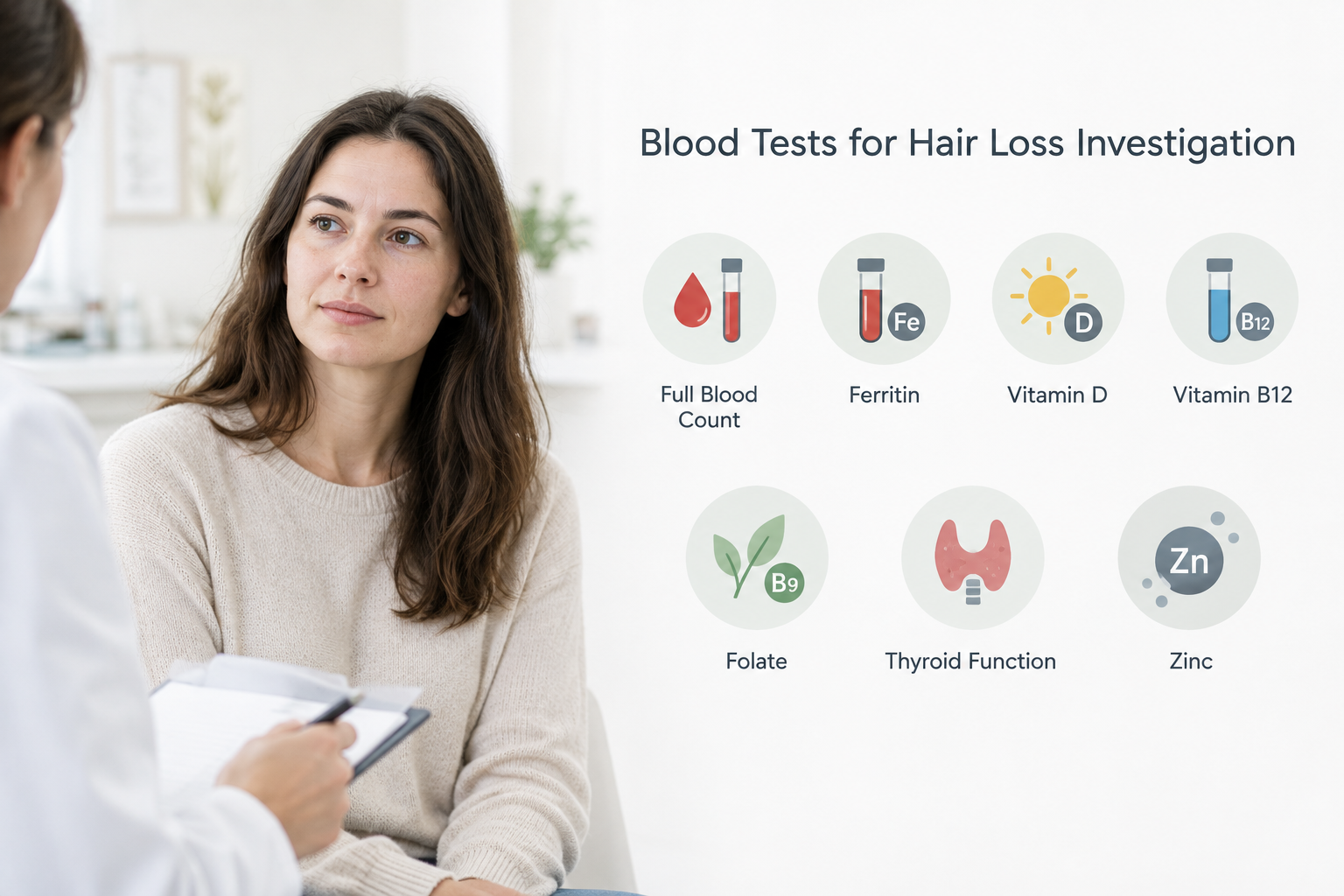
Blood tests are central to identifying nutritional causes. A standard panel for hair loss investigation may include a full blood count, serum ferritin, iron studies, vitamin D, vitamin B12, folate, thyroid function tests, and zinc levels. Thyroid function is particularly important to assess because both hypothyroidism and hyperthyroidism can cause hair loss and may coexist with nutritional deficiencies. In some cases, additional hormonal tests — including androgens — may be relevant, particularly when androgenetic alopecia is suspected alongside a nutritional component.
It is worth noting that hair loss rarely has a single cause. A nutritional deficiency may be one contributing factor among several, and addressing only the deficiency may produce partial rather than complete improvement. A thorough assessment helps identify all relevant factors so that management can be appropriately targeted.
Treatment and Recovery: What to Realistically Expect
Correcting a confirmed nutritional deficiency is the appropriate first step when deficiency is identified as a contributing cause of hair loss. The method of correction depends on the specific nutrient, the severity of the deficiency, and any underlying cause. Dietary changes, oral supplementation, or in some cases intramuscular administration may be recommended by a healthcare provider.
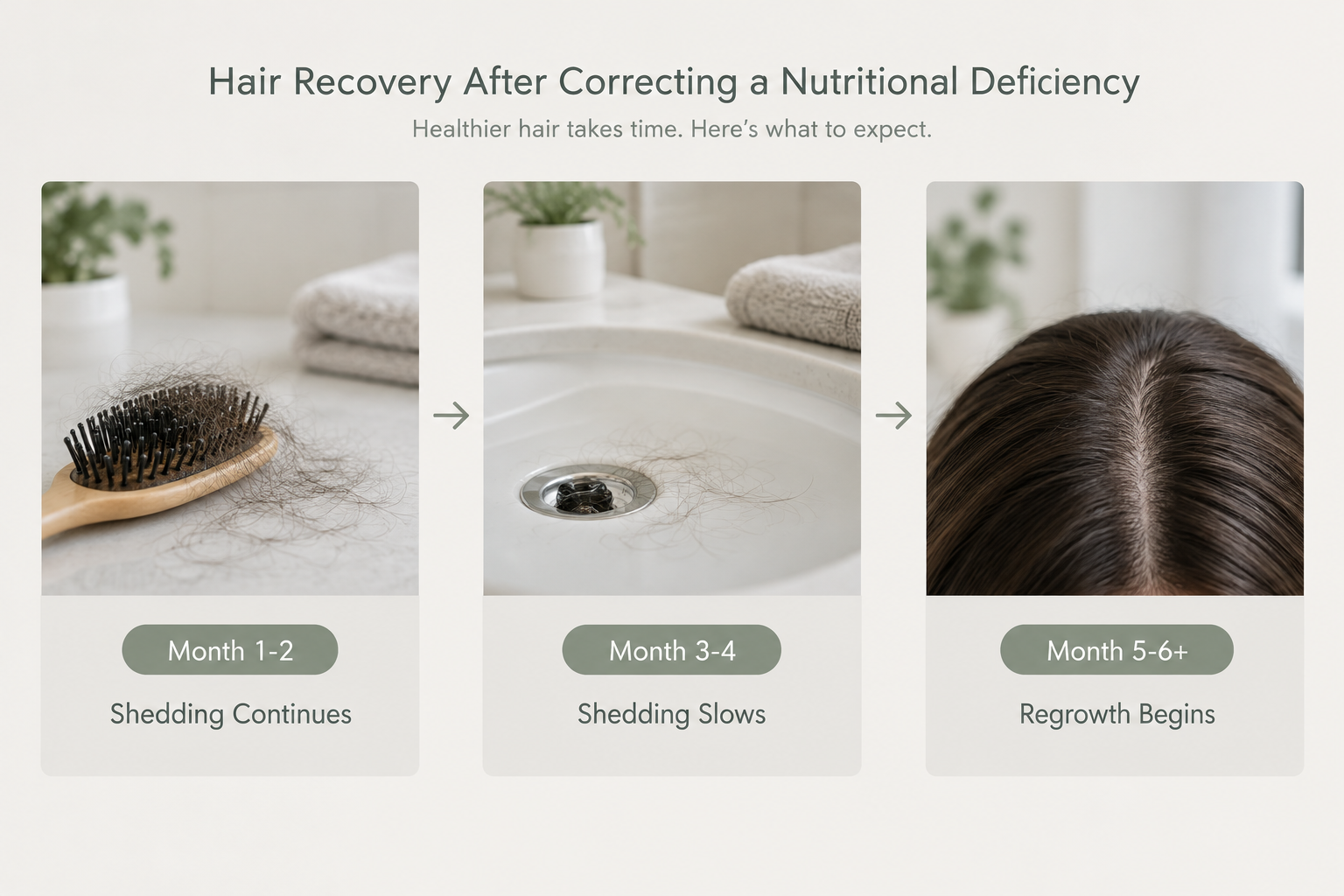
Hair recovery following correction of a deficiency is gradual. The hair growth cycle means that new anagen hairs take time to emerge and grow to a visible length. Most people do not notice meaningful improvement in hair density for at least three to six months after beginning treatment, and in some cases longer. Shedding may continue for a period even after supplementation begins, which can be discouraging but is a normal part of the cycle shifting back toward growth.
Supplementing nutrients that are not deficient is unlikely to accelerate hair growth and may carry risks, as discussed above with zinc, selenium, and vitamin A. Self-prescribing high-dose supplements without testing is therefore not advisable. A confirmed deficiency, treated under appropriate guidance, offers the most realistic prospect of improvement.
When Nutrient Deficiency Is Not the Primary Cause
Many people experiencing hair loss assume a nutritional cause, but in a significant proportion of cases, other factors are primarily responsible. Androgenetic alopecia — the most common form of hair loss in both men and women — is driven by genetic sensitivity to dihydrotestosterone (DHT) and does not respond to nutritional correction alone. Alopecia areata is an autoimmune condition. Scalp conditions such as seborrhoeic dermatitis, psoriasis, and fungal infections can also contribute to shedding and require specific treatment.
Hormonal changes — including those associated with pregnancy, postpartum recovery, perimenopause, and thyroid disorders — are frequent drivers of diffuse hair shedding that may be mistaken for nutritional causes. Chronic stress activates physiological pathways that can push follicles into the telogen phase, producing stress-related hair loss that overlaps in appearance with deficiency-related shedding. Certain medications, including some blood pressure drugs, anticoagulants, and hormonal contraceptives, are also recognised causes of telogen effluvium.
This is why professional assessment matters. Identifying the correct cause — or combination of causes — determines whether nutritional correction, medical treatment, topical therapies, or a combination approach is most appropriate for an individual’s situation.
Alternatives and Complementary Approaches
Where nutritional deficiency is confirmed and corrected but hair loss persists, or where other causes are identified alongside nutritional factors, additional options may be considered following clinical assessment.
- Topical minoxidil: A well-established treatment for androgenetic alopecia and some other forms of hair loss, available over the counter in many countries. It works by prolonging the anagen phase and increasing follicle size. It requires ongoing use to maintain results.
- Oral medications: Finasteride and dutasteride are prescription medications used for androgenetic alopecia in men; spironolactone and low-dose oral minoxidil may be considered for women in appropriate clinical circumstances. These require medical supervision.
- Platelet-rich plasma (PRP) therapy: An injectable treatment using concentrated growth factors from the patient’s own blood, sometimes used to support hair follicle activity. Evidence is developing and results vary.
- Low-level laser therapy (LLLT): Devices using specific wavelengths of light to stimulate follicle activity. Evidence suggests modest benefit for some patients, though response is variable.
- Scalp health treatments: Addressing scalp conditions such as seborrhoeic dermatitis or folliculitis may reduce inflammation that contributes to shedding.
None of these alternatives replaces the need to identify and address underlying causes, including nutritional deficiencies where present.
Frequently Asked Questions
Can taking vitamin supplements prevent hair loss?
Supplements can help correct a confirmed deficiency that is contributing to hair loss, but they are unlikely to prevent or reverse hair loss caused by genetics, hormones, or other non-nutritional factors. Supplementing without a confirmed deficiency is generally not recommended and may carry risks depending on the nutrient involved.
How long does it take for hair to grow back after correcting a deficiency?
Visible improvement in hair density typically takes three to six months or longer after a deficiency is corrected, because new hair must grow through the full cycle before it becomes noticeable. Patience is important, and shedding may continue for a period even after treatment begins.
Is it possible to have a deficiency even if I eat a balanced diet?
Yes. Absorption problems caused by conditions such as coeliac disease, inflammatory bowel disease, or low stomach acid can prevent adequate absorption of nutrients even when dietary intake appears sufficient. This is one reason why blood testing is more reliable than dietary assessment alone.
Should I take a hair, skin, and nails supplement if I am losing hair?
These supplements are widely available but are not a substitute for identifying the actual cause of hair loss. Many contain biotin, which has limited evidence for hair growth in people without a true deficiency, and some contain nutrients at doses that may interfere with laboratory tests. A clinical assessment and targeted testing are more useful first steps.
Can too much of a vitamin cause hair loss?
Yes. Excess vitamin A from supplements is a recognised cause of telogen effluvium. Excessive selenium and zinc can also contribute to hair shedding. This underlines the importance of testing before supplementing rather than assuming that more of a nutrient is always beneficial.
Does iron deficiency always cause anaemia before affecting hair?
No. Hair loss associated with low iron stores can occur before full anaemia develops. Ferritin — the iron storage protein — may be depleted while haemoglobin remains within the normal range. This is why ferritin is an important specific marker to assess in the context of hair loss, rather than relying on a standard blood count alone.
Taking the Next Step if You Are Concerned About Hair Shedding
Nutrient deficiencies — particularly iron, vitamin D, B12, zinc, and biotin — are genuine contributors to hair shedding in some individuals, and identifying them through appropriate blood testing is a practical and worthwhile step. However, deficiency-related hair loss is one part of a broader picture. Hormonal factors, genetics, scalp health, stress, and medication use all play roles that may be equally or more significant in a given person’s situation.
Self-diagnosing and self-supplementing based on symptoms alone carries the risk of missing the actual cause, delaying effective treatment, or inadvertently causing harm through excessive intake of certain nutrients. A consultation with a qualified healthcare provider — whether a GP, dermatologist, or a clinician specialising in hair health — allows for a structured assessment, targeted testing, and a management plan based on what is actually driving the shedding. If a deficiency is confirmed, correcting it under guidance offers a realistic and evidence-supported path toward stabilising hair loss and supporting recovery over time.