

Skin tags are among the most common benign skin growths, yet they cause genuine concern for many people — whether because of their appearance, the discomfort of catching on clothing or jewellery, or simple uncertainty about what they are. Understanding which removal methods are genuinely safe, what each procedure involves, and when professional assessment is necessary can help you make a well-informed decision before seeking treatment.
Key Takeaways
- Skin tags are harmless benign growths, but professional assessment is recommended before removal to confirm the diagnosis and rule out other skin lesions.
- Several clinically used removal methods exist, including cryotherapy, electrocautery, ligation, and surgical excision — each with different suitability depending on tag size, location, and patient factors.
- At-home removal attempts carry real risks including infection, scarring, and incomplete removal, and are generally not recommended by dermatologists.
- Most professional skin tag removal procedures are straightforward with minimal downtime, though individual healing varies.
- Results are typically permanent for removed tags, but new skin tags may develop elsewhere over time.
What Are Skin Tags?
Skin tags, known medically as acrochordons, are small, soft, flesh-coloured or slightly darker growths that hang from the skin on a narrow stalk called a peduncle. They are composed of loose collagen fibres and blood vessels surrounded by skin, and they are entirely benign — meaning they are not cancerous and do not become cancerous. Skin tags typically range from a few millimetres to around one centimetre in size, though occasionally larger ones develop.
Skin tags most commonly appear in areas where skin rubs against skin or clothing, including the neck, armpits, groin, under the breasts, and around the eyelids. They are particularly common in adults over 40, in people with obesity or type 2 diabetes, during pregnancy, and in those with a family history of skin tags. The friction and hormonal factors associated with these conditions are thought to contribute to their development, though the precise mechanism is not fully established.
While skin tags are medically harmless, they can become irritated, bleed if repeatedly caught on clothing or jewellery, or simply cause cosmetic concern. These are all valid reasons to consider removal — but the process should begin with a professional assessment to confirm that the growth is indeed a skin tag and not another type of lesion requiring different management.
Why Professional Assessment Matters Before Removal
Not every small skin growth is a skin tag. Several other skin lesions can resemble acrochordons, including seborrhoeic keratoses, warts, moles (melanocytic naevi), molluscum contagiosum, and in rare cases, early-stage skin cancers. A qualified practitioner — typically a dermatologist, GP with a dermatology interest, or trained aesthetic clinician — can visually assess the lesion and, where there is any doubt, refer for dermoscopy or biopsy before proceeding with removal.
Attempting to remove a growth that has not been properly assessed carries the risk of destroying tissue that should have been examined histologically. This is one of the most important reasons why dermatologists and professional bodies advise against self-removal, particularly for any lesion that has changed in size, shape, or colour, bleeds spontaneously, or has an irregular border. If a growth has any of these features, it should be assessed by a medical professional before any removal is considered.
Professional Skin Tag Removal Methods
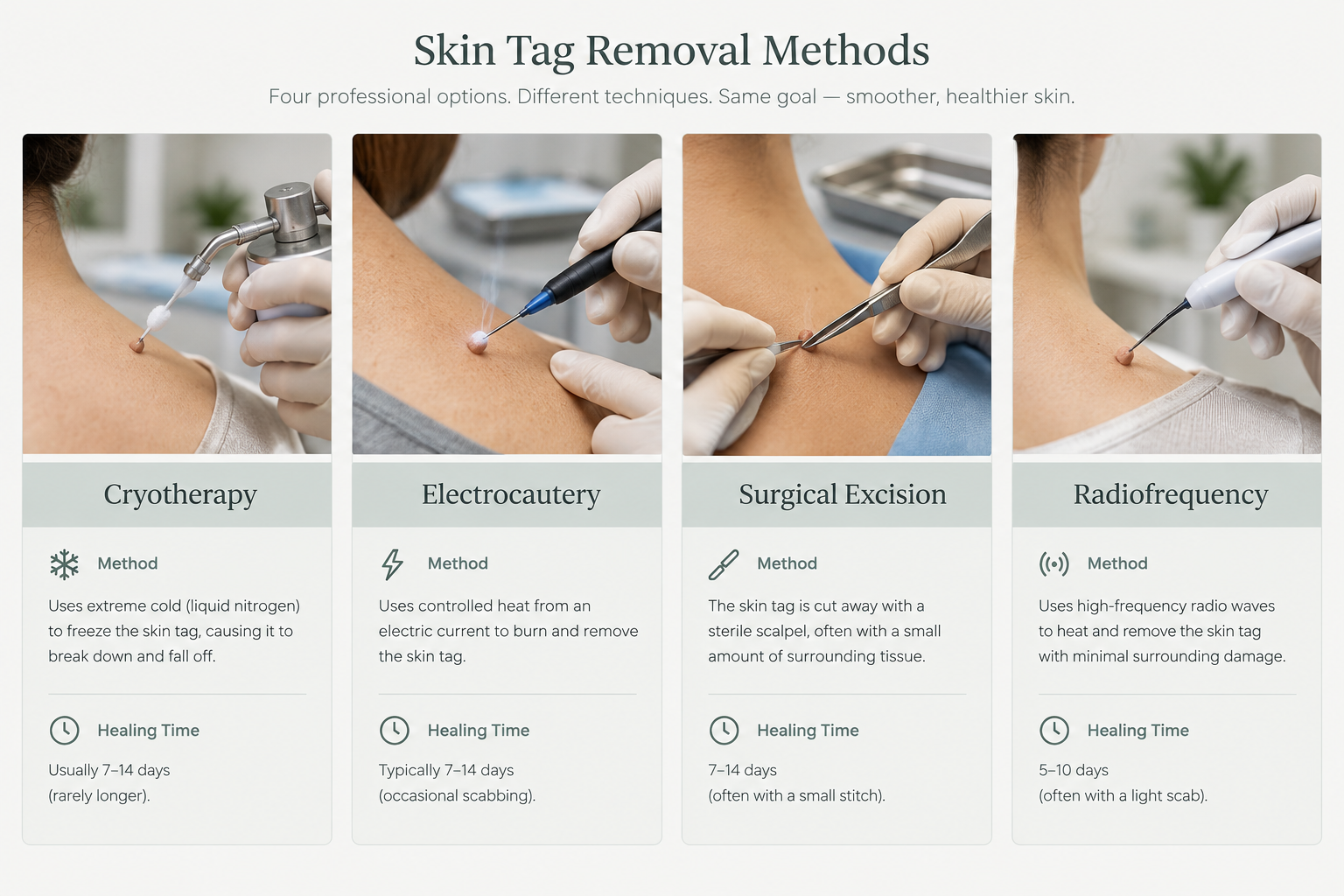
Several clinically established methods are used for skin tag removal in professional settings. The most appropriate technique depends on the size and location of the tag, the number of tags being treated, the patient’s skin type, and the practitioner’s training and available equipment. Most methods are performed under local anaesthetic and are well tolerated.
Cryotherapy
Cryotherapy involves applying liquid nitrogen or another cryogenic agent directly to the skin tag, causing the tissue to freeze and subsequently die. The treated tag typically darkens, forms a small blister or crust, and falls off within one to two weeks. Cryotherapy is a widely used method for small to medium-sized skin tags and is generally quick to perform. Potential side effects include temporary redness, blistering, mild pain during and after treatment, and a small risk of hypopigmentation — a lightening of the skin at the treatment site — which may be more noticeable in people with darker skin tones. Multiple sessions are occasionally needed for larger tags.
Electrocautery and Electrosurgery
Electrocautery uses a precisely controlled electrical current to burn and remove the skin tag. The heat seals the small blood vessels simultaneously, which minimises bleeding. Electrosurgery is effective for a range of tag sizes and is commonly used in dermatology and aesthetic clinic settings. The procedure is usually performed under local anaesthetic. Aftercare typically involves keeping the area clean and dry while a small scab forms and heals. Risks include temporary redness, scabbing, and a low risk of scarring if the area is not cared for properly during healing.
Surgical Excision
Surgical excision involves cutting the skin tag away at its base using sterile scissors or a scalpel, usually under local anaesthetic. This method is particularly suitable for larger skin tags or those in locations where precision is important, such as near the eyelids. Excision provides immediate removal and allows the tissue to be sent for histological examination if there is any diagnostic uncertainty. The small wound heals within one to two weeks in most cases. Risks include minor bleeding, infection, and a small scar, though skilled technique minimises these outcomes.
Ligation
Ligation involves tying a fine suture or sterile thread tightly around the base of the skin tag stalk, cutting off its blood supply. The tag gradually shrinks and falls off over several days to a couple of weeks. This technique is sometimes used in clinical settings for pedunculated tags with a clearly defined stalk. It is generally not recommended as a self-administered method because of the infection risk and the difficulty of applying the correct tension without professional training.
Radiofrequency Treatment
Radiofrequency devices use high-frequency electrical energy to precisely ablate skin tag tissue with minimal thermal spread to surrounding skin. This method is increasingly available in aesthetic clinics and dermatology practices. It is valued for its precision, particularly for tags in sensitive areas, and typically results in minimal scarring when performed correctly. As with other methods, local anaesthetic is usually applied beforehand.
At-Home Removal: Why It Carries Real Risks
A range of at-home skin tag removal products are commercially available, including over-the-counter freezing kits, ligation bands, and topical preparations. While these products are widely marketed, dermatologists generally advise caution. The primary concern is that without professional assessment, there is no certainty that the growth being treated is actually a benign skin tag. Treating an undiagnosed lesion at home could delay the identification of a more serious condition.
Beyond the diagnostic concern, at-home methods carry practical risks. Improper freezing can damage surrounding healthy skin. Self-applied ligation bands may be applied incorrectly, leading to incomplete removal, prolonged discomfort, or infection. Cutting or tying off skin growths without sterile equipment and appropriate technique significantly increases the risk of bacterial infection and scarring. For these reasons, professional removal in a clinical setting is the approach recommended by dermatologists and aesthetic medicine practitioners.
What to Expect During a Professional Skin Tag Removal Appointment
A professional skin tag removal appointment typically begins with a brief consultation in which the practitioner examines the growth, confirms the diagnosis, discusses the most appropriate removal method, and explains what the procedure involves. Any relevant medical history — including medications such as blood thinners, known skin conditions, or a history of keloid scarring — will be discussed, as these factors can influence the choice of method and aftercare requirements.
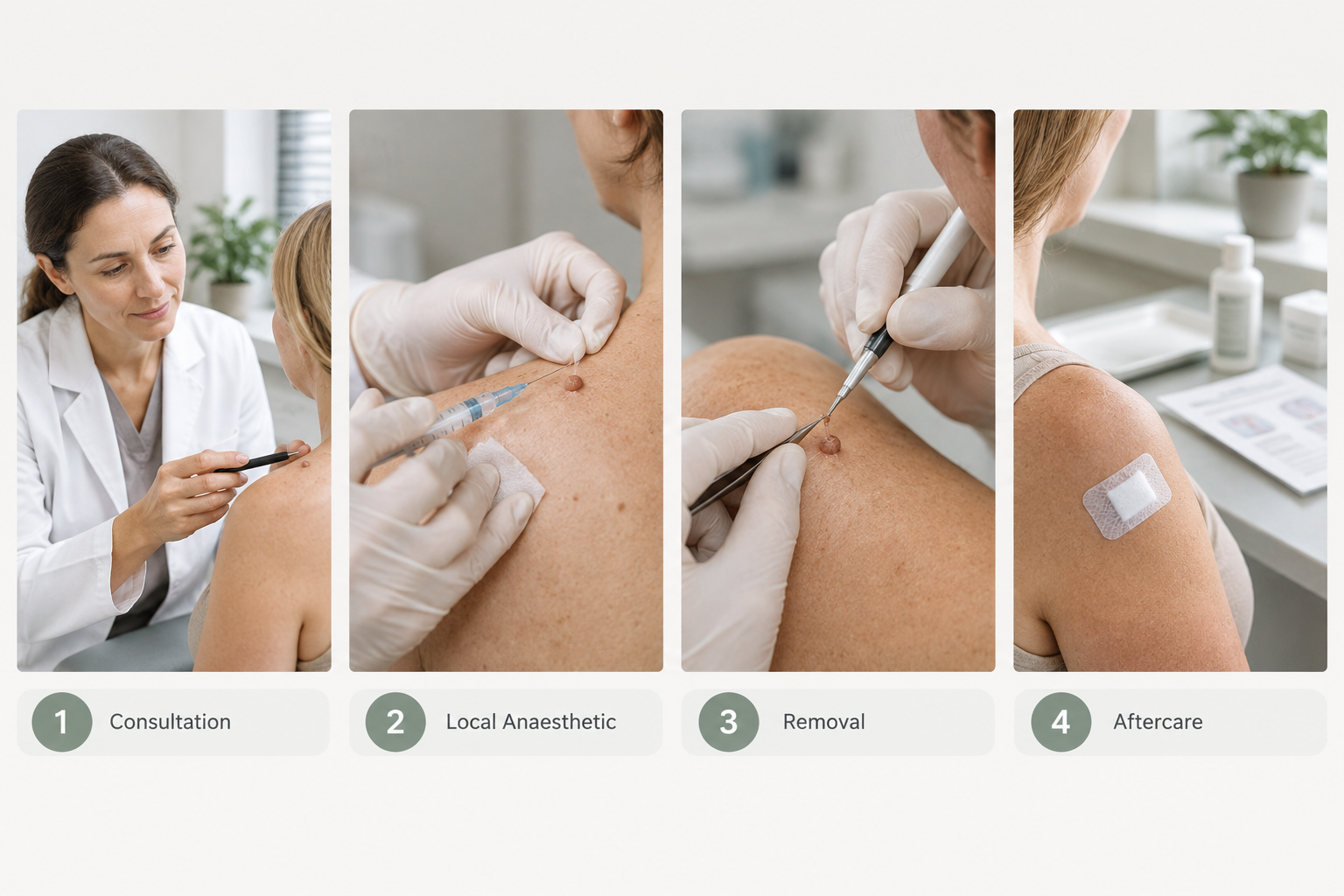
For most small to medium skin tags, the procedure itself takes only a few minutes per tag. Local anaesthetic cream or a small injection is usually applied to the area beforehand to minimise discomfort. Most patients describe the sensation during removal as mild pressure or brief stinging rather than significant pain. After the procedure, the treated area may appear red, slightly swollen, or have a small scab, depending on the method used. The practitioner will provide specific aftercare instructions, which typically include keeping the area clean, avoiding picking at any scab, and protecting the site from sun exposure during healing.
Recovery and Healing After Skin Tag Removal
Recovery after professional skin tag removal is generally straightforward. For most methods, the treated area heals within one to two weeks, leaving minimal or no visible mark in the majority of cases. The exact healing timeline depends on the removal method used, the size and location of the tag, and individual factors such as skin type and general health.
During the healing period, it is important to avoid rubbing or scratching the treated area, to keep it clean and dry, and to avoid applying makeup or skincare products directly to the site unless advised otherwise by the practitioner. Sun protection is particularly important during healing, as UV exposure can increase the risk of post-inflammatory hyperpigmentation — a temporary darkening of the skin — especially in people with medium to darker skin tones.
Signs that warrant contacting the clinic include increasing redness, warmth, swelling, or discharge from the treated area, which may indicate infection. Significant or worsening pain beyond the first day or two should also be assessed. These complications are uncommon when treatment is performed in a professional clinical environment with appropriate aftercare, but they are worth being aware of.
Risks and Side Effects of Skin Tag Removal
All skin tag removal methods carry some degree of risk, even when performed professionally. Understanding these risks helps set realistic expectations and supports informed decision-making.
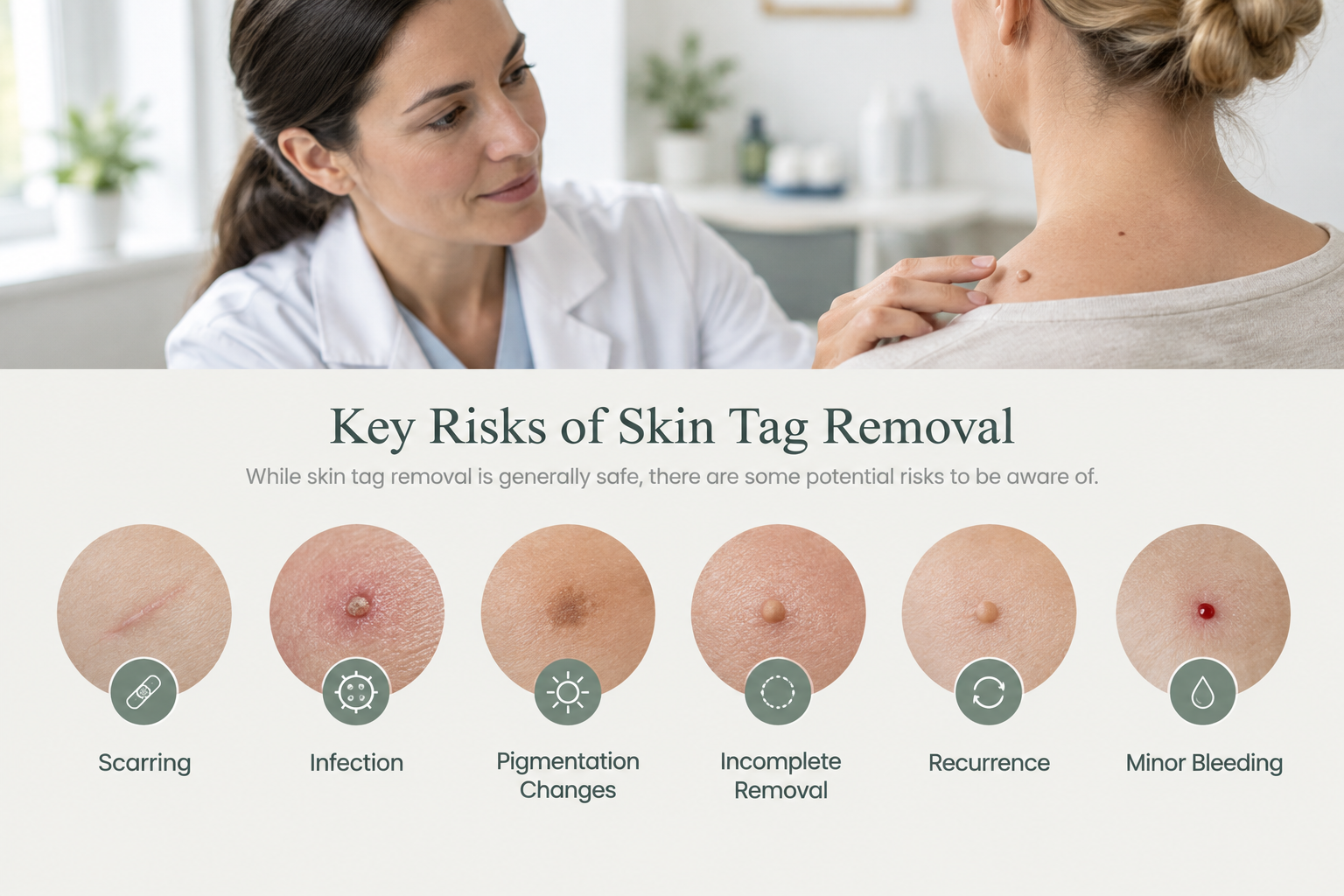
- Scarring: A small scar is possible with any method that breaks the skin. The risk is generally low for small tags removed with good technique, but is higher for larger tags, tags in areas prone to tension, or in individuals with a history of keloid or hypertrophic scarring.
- Infection: Any breach of the skin surface carries a small infection risk. This is minimised by sterile technique in a clinical setting and proper aftercare at home.
- Pigmentation changes: Temporary hyperpigmentation or hypopigmentation can occur, particularly with cryotherapy. This is more common in people with darker skin tones and usually resolves over weeks to months, though in some cases it may be longer-lasting.
- Incomplete removal: Occasionally, a small portion of the tag base remains and may require a second treatment.
- Recurrence at the same site: True recurrence at the exact removal site is uncommon when the tag is fully removed. However, new skin tags can develop in the same general area or elsewhere over time, particularly if the underlying contributing factors — such as friction or metabolic conditions — remain present.
- Bleeding: Minor bleeding during or immediately after removal is normal. Significant or prolonged bleeding is uncommon with professional technique.
Who May Be Suitable for Skin Tag Removal
Most adults with confirmed benign skin tags are suitable candidates for professional removal. Suitability is assessed individually during consultation and may be influenced by several factors.
People who may particularly benefit from discussing removal with a practitioner include those whose skin tags are repeatedly irritated by clothing, jewellery, or shaving; those experiencing discomfort or bleeding from a tag; and those with cosmetic concerns, particularly for tags in visible areas such as the neck or face. Skin tags around the eyelids warrant particular care and are best assessed by a practitioner experienced in periorbital treatments.
Certain factors may affect the choice of removal method or require additional consideration. These include a history of keloid scarring, use of anticoagulant medications, active skin infection in the area, pregnancy, and certain skin conditions affecting the treatment site. A thorough consultation allows the practitioner to identify the most appropriate and safest approach for each individual.
Alternatives to Clinical Removal
For people who prefer not to undergo a clinical procedure, or whose skin tags are very small and cause no discomfort, watchful waiting is a reasonable option. Benign skin tags do not require removal for medical reasons, and many people choose to leave them untreated indefinitely without any health consequence.
Some individuals explore topical preparations marketed for skin tag removal, including products containing salicylic acid or tea tree oil. Evidence supporting the effectiveness of these topical agents specifically for skin tag removal is limited, and they are not a substitute for professional assessment or clinically validated removal methods. If a topical product causes irritation, pain, or any change in the appearance of the lesion, it should be discontinued and the area assessed by a practitioner.
How Long Results Last
When a skin tag is fully removed by a professional using an appropriate method, the tag itself does not regrow at the same site. In this sense, results are permanent for the individual tag that has been treated. However, skin tags removal does not prevent new tags from forming elsewhere on the body, particularly if the factors that contributed to their development — such as skin friction, weight, hormonal changes, or insulin resistance — remain present.
Some patients find that they develop new skin tags over the years and return for periodic treatment. This is entirely normal and does not indicate that the original removal was unsuccessful. Addressing contributing lifestyle factors where possible — such as managing weight or reducing friction in affected areas — may help slow the development of new tags, though this is not guaranteed.
Frequently Asked Questions
Does skin tag removal hurt?
Most professional skin tag removal procedures are performed under local anaesthetic, which significantly reduces discomfort during the procedure. Patients may feel mild pressure, brief stinging from the anaesthetic injection, or a sensation of heat or cold depending on the method used. After the anaesthetic wears off, the area may feel tender for a day or two, which is usually manageable with over-the-counter pain relief if needed.
How many sessions are needed to remove a skin tag?
Most small to medium skin tags are fully removed in a single session. Larger tags or those in particularly sensitive locations may occasionally require a follow-up treatment. The practitioner will advise on this during the initial consultation based on the size, number, and location of the tags being treated.
Can skin tags be removed on the NHS?
In the United Kingdom, skin tag removal is generally considered a cosmetic procedure and is not routinely available on the NHS unless the tag is causing significant medical problems such as repeated bleeding or infection. Most people seek removal through private dermatology clinics or aesthetic medicine practices. Costs vary depending on the number of tags, the method used, and the clinic.
Is it safe to remove a skin tag at home?
Dermatologists generally advise against at-home removal. The main risks are treating an undiagnosed lesion that is not actually a benign skin tag, infection from non-sterile technique, scarring from improper method application, and incomplete removal. Professional assessment and treatment in a clinical setting is the safer approach.
Will skin tag removal leave a scar?
The risk of visible scarring is generally low for small tags removed with appropriate technique. A small flat mark may be visible initially but typically fades over weeks to months. The risk is higher for larger tags, tags in areas of skin tension, and in individuals with a personal or family history of keloid scarring. Discussing this risk with the practitioner before treatment allows for an informed decision.
Can skin tags be a sign of an underlying health condition?
Skin tags are associated with certain conditions including obesity, type 2 diabetes, and insulin resistance, and they are more common during pregnancy due to hormonal changes. Having skin tags does not diagnose any of these conditions, but if you have multiple skin tags and have not had a recent health check, it may be worth discussing this with your GP, particularly if you have other risk factors for metabolic conditions.
What should I look for when choosing a clinic for skin tag removal?
Look for a practitioner with appropriate medical or clinical qualifications, experience in skin lesion assessment, and access to professional-grade equipment. The clinic should offer a consultation before treatment, be willing to discuss the diagnosis and method options, and provide clear aftercare instructions. If there is any uncertainty about the nature of a lesion, the practitioner should be willing to refer for further assessment rather than proceeding directly to removal.
Making an Informed Decision About Skin Tag Removal
Skin tag removal is a straightforward and generally low-risk procedure when carried out by a qualified practitioner using appropriate methods. The most important first step is professional assessment to confirm that the growth is a benign skin tag and to identify the most suitable removal technique for your individual situation. This is particularly important for any lesion that has changed in appearance, bleeds without trauma, or has features that differ from a typical skin tag.
For most people, the procedure involves minimal discomfort, a short healing period, and a permanent result for the treated tag. Realistic expectations include the possibility of new tags developing over time, a small risk of pigmentation change or scarring depending on the method and individual factors, and the need for proper aftercare to support healing. If you are considering skin tag removal, a consultation with a qualified dermatologist or trained aesthetic clinician is the appropriate starting point — both to confirm the diagnosis and to discuss which approach may be most suitable for you.