

Platelet-rich plasma (PRP) hair treatment has become one of the more widely discussed non-surgical options for people experiencing hair thinning or early hair loss. The approach uses a concentration of the patient’s own blood platelets, which are rich in growth factors, to stimulate the scalp and potentially support thicker, healthier hair growth. While PRP is not a cure for hair loss and results vary considerably between individuals, a growing body of clinical research suggests it may offer meaningful improvement for carefully selected patients — particularly those in the earlier stages of androgenetic alopecia, the most common form of pattern hair loss.
Key Takeaways
- PRP hair treatment uses concentrated growth factors derived from your own blood to stimulate hair follicles and may help improve hair thickness and density over a course of sessions.
- Results are not guaranteed and vary depending on the cause and stage of hair loss, individual biology, and treatment protocol; early-stage hair thinning tends to respond better than advanced loss.
- A typical initial course involves three to four sessions spaced four to six weeks apart, followed by maintenance treatments every three to six months to sustain any improvement.
- PRP is generally considered low-risk because it uses the patient’s own blood, but side effects such as scalp tenderness, temporary swelling, and injection-site discomfort are possible.
- PRP is not suitable for everyone; a thorough consultation and, where appropriate, blood tests are important before starting treatment.
What Is PRP Hair Treatment?
Platelet-rich plasma is prepared by drawing a small amount of the patient’s own blood — typically between 10 and 60 millilitres depending on the protocol — and processing it in a centrifuge. The centrifuge separates the blood into its components: red blood cells, platelet-poor plasma, and platelet-rich plasma. The PRP layer, which contains a concentration of platelets several times higher than normal blood, is then extracted and prepared for injection into the scalp.
Platelets are best known for their role in wound healing, but they also carry a range of growth factors including platelet-derived growth factor (PDGF), vascular endothelial growth factor (VEGF), transforming growth factor (TGF), and insulin-like growth factor (IGF). When injected into the scalp, these growth factors are thought to stimulate dormant or weakened hair follicles, promote blood vessel formation around follicles, and extend the anagen (active growth) phase of the hair cycle. The result, when treatment is effective, may be an increase in hair shaft diameter — which is what contributes to the perception of greater hair thickness — as well as improved hair density.
PRP is not a hair transplant and does not create new follicles. Its proposed mechanism is to support and potentially revitalise follicles that are still present but underperforming, which is why the treatment tends to be more relevant for patients who still have a reasonable number of active follicles rather than those with extensive, long-standing hair loss.
How PRP May Improve Hair Thickness
Hair thickness — the diameter of individual hair strands — is one of the first things affected in androgenetic alopecia. As follicles miniaturise under the influence of dihydrotestosterone (DHT), they produce progressively finer, shorter hairs before eventually becoming inactive. PRP treatment targets this miniaturisation process indirectly by delivering growth factors that may support follicle health and prolong the active growth phase.
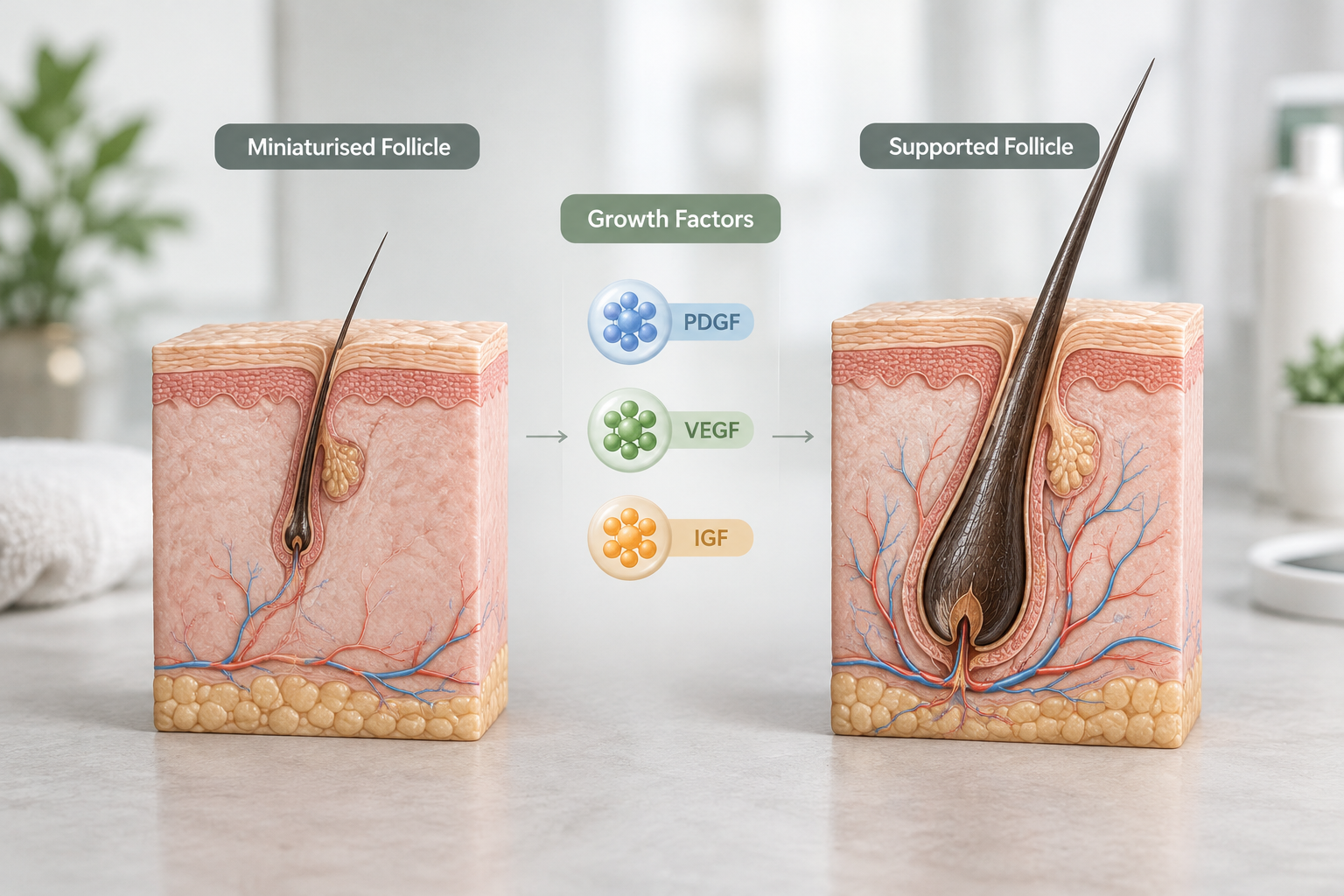
Several randomised controlled trials and systematic reviews have examined PRP for androgenetic alopecia. Findings have generally been positive in terms of hair count and hair thickness measurements, though the quality of evidence varies and study protocols differ considerably — including the number of sessions, centrifugation methods, platelet concentration achieved, and whether activating agents such as calcium chloride or thrombin are used. This variability makes it difficult to draw firm universal conclusions, and the evidence is still developing. What the available research does suggest is that PRP may produce statistically significant improvements in hair density and shaft diameter compared to placebo in patients with mild to moderate androgenetic alopecia, with effects typically becoming visible after two to three months of treatment.
PRP has also been studied in other forms of hair loss, including alopecia areata (an autoimmune condition causing patchy hair loss) and telogen effluvium (diffuse shedding often triggered by stress, illness, or nutritional deficiency). Evidence in these conditions is more limited and less consistent, and PRP should not be considered a first-line or standalone treatment for autoimmune hair conditions without specialist guidance.
Who May Be a Suitable Candidate
Patient selection is one of the most important factors in determining whether PRP hair treatment is likely to be worthwhile. Candidates who tend to respond most favourably include those with early to moderate androgenetic alopecia — male or female pattern hair loss — where follicles are miniaturised but still present and potentially responsive. Patients who are noticing gradual thinning, reduced hair density, or a widening parting rather than complete bald patches are generally considered more suitable than those with advanced or long-standing hair loss.
PRP may also be considered as a complementary approach alongside other evidence-based treatments for hair loss, such as topical minoxidil or oral finasteride (in men), rather than as a standalone solution. Some practitioners use PRP in combination with microneedling of the scalp, a technique sometimes called scalp microneedling or dermaroller treatment, to potentially enhance growth factor absorption, though the additional benefit of this combination over PRP alone has not been definitively established.
Factors that may make a patient a less suitable candidate include:
- Active scalp infection or inflammatory scalp conditions such as seborrhoeic dermatitis that are not well controlled
- Blood disorders affecting platelet function or count, such as thrombocytopenia or platelet dysfunction syndromes
- Current use of anticoagulant medications, which may affect platelet activity and treatment safety
- Systemic conditions such as active cancer, autoimmune disease, or chronic liver disease
- Pregnancy or breastfeeding, where the treatment is generally avoided due to insufficient safety data
- Very advanced hair loss with extensive follicle loss, where there may be insufficient follicles remaining to respond to growth factor stimulation
- Unrealistic expectations about the degree of regrowth or thickness improvement achievable
A thorough consultation with a qualified practitioner — ideally one with experience in hair loss assessment — is essential before proceeding. Blood tests may be recommended to rule out underlying causes of hair thinning such as iron deficiency, thyroid dysfunction, or hormonal imbalances, which would need to be addressed separately.
What Happens During a PRP Hair Treatment Session
A PRP hair treatment appointment typically takes between 60 and 90 minutes from start to finish. The process begins with a blood draw from the patient’s arm, which is then placed in a centrifuge and spun for approximately eight to twelve minutes to separate the platelet-rich plasma from other blood components. The practitioner then prepares the PRP for injection.
Before injections begin, a topical anaesthetic cream is usually applied to the scalp and left for 20 to 30 minutes to reduce discomfort. Some practitioners also offer nerve block injections for greater comfort during the procedure. The PRP is then injected into the scalp using a fine needle, typically at multiple points across the areas of concern — commonly the crown, hairline, or areas of visible thinning. The number of injection points varies depending on the treatment area and the volume of PRP prepared.
Most patients describe the sensation as a series of small pricks or a mild stinging feeling, which is generally tolerable with topical anaesthesia in place. Scalp sensitivity varies between individuals, and some people find the procedure more uncomfortable than others, particularly around the hairline and temples.
After the injections are complete, the scalp may appear slightly red or feel tender. Patients are usually advised to avoid washing their hair for at least 24 hours, to avoid vigorous exercise or activities that cause heavy sweating for 24 to 48 hours, and to refrain from applying styling products directly to the scalp on the day of treatment. Most people are able to return to normal daily activities the same day or the following day.
How Many Sessions Are Typically Needed
PRP for hair thickness is not a single-session treatment. Most clinical protocols involve an initial course of three to four sessions, spaced approximately four to six weeks apart. This loading phase is intended to build up the growth factor stimulus in the scalp over time. Some protocols use monthly sessions for the first three months, while others space sessions slightly further apart; there is no universally agreed standard, and protocols vary between practitioners and clinics.
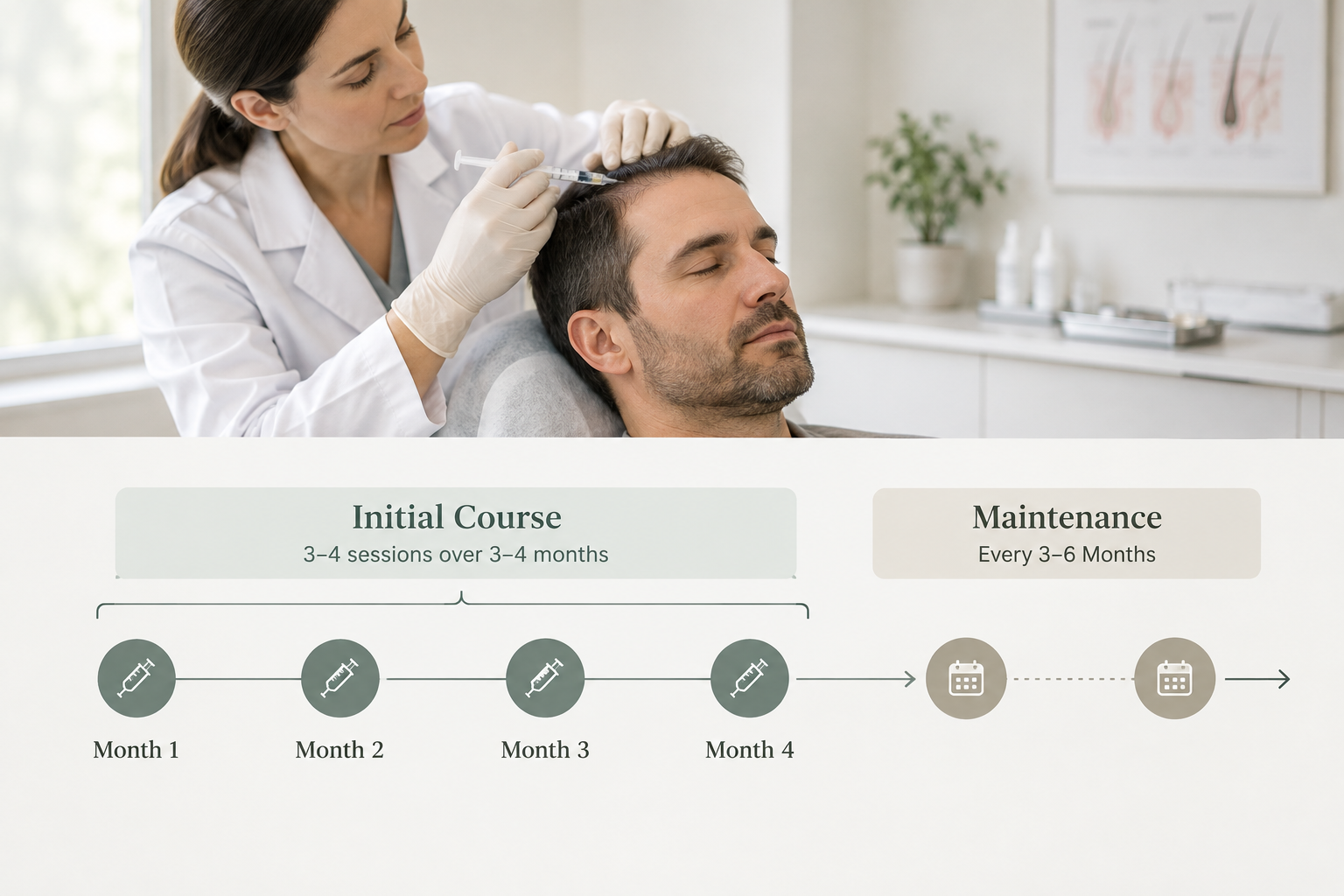
After the initial course, maintenance sessions are generally recommended every three to six months to sustain any improvement achieved. Without ongoing treatment, the effects of PRP are likely to diminish over time, as the underlying cause of hair loss — whether genetic, hormonal, or otherwise — continues to act on the follicles. This means PRP represents an ongoing commitment rather than a one-time fix, which is an important practical and financial consideration for prospective patients.
The number of sessions required and the optimal interval between them may be adjusted based on how an individual responds to treatment. Some patients show noticeable improvement after two or three sessions; others may require the full initial course before any change becomes apparent.
When Results May Become Visible
Hair growth is a slow biological process, and PRP results are not immediate. Most patients who respond to treatment begin to notice changes approximately two to three months after starting their initial course, with more meaningful improvement in hair thickness and density typically becoming apparent at the four to six month mark. Photographs taken before treatment and at regular intervals are a useful way to track progress objectively, as gradual changes can be difficult to perceive day to day.
It is important to understand that PRP may slow or stabilise hair loss rather than dramatically reverse it in all cases. For some patients, the primary benefit is a reduction in the rate of thinning and an improvement in the overall quality and thickness of existing hair, rather than a significant increase in hair count. Managing expectations before treatment begins is an important part of the consultation process.
Risks and Side Effects of PRP Hair Treatment
Because PRP uses the patient’s own blood, the risk of allergic reaction or disease transmission is very low. However, PRP hair treatment is not without potential side effects, and patients should be aware of what to expect and what to watch for.
Common and generally short-lived side effects include:
- Scalp tenderness or soreness at injection sites, which typically resolves within one to three days
- Mild swelling or redness of the scalp, which usually settles within 24 to 48 hours
- Temporary bruising at the blood draw site on the arm
- A sensation of tightness or pressure in the scalp immediately after treatment
- Occasional mild headache following the procedure
Less common but possible complications include infection at injection sites, which is minimised by proper sterile technique, and temporary increased hair shedding in the weeks following treatment — a phenomenon sometimes referred to as a shedding phase, which may occur as follicles transition between growth phases. This shedding, if it occurs, is generally temporary and does not indicate treatment failure, but it can be distressing if patients are not forewarned.
Serious complications from PRP scalp injections are rare when the procedure is performed by a trained and experienced practitioner using appropriate equipment and sterile technique. Choosing a qualified provider and having a thorough pre-treatment assessment significantly reduces the risk of adverse outcomes.
PRP Compared to Other Hair Loss Treatments
PRP hair treatment sits within a broader landscape of options for hair thinning and hair loss. Understanding how it compares to other approaches helps prospective patients make more informed decisions.
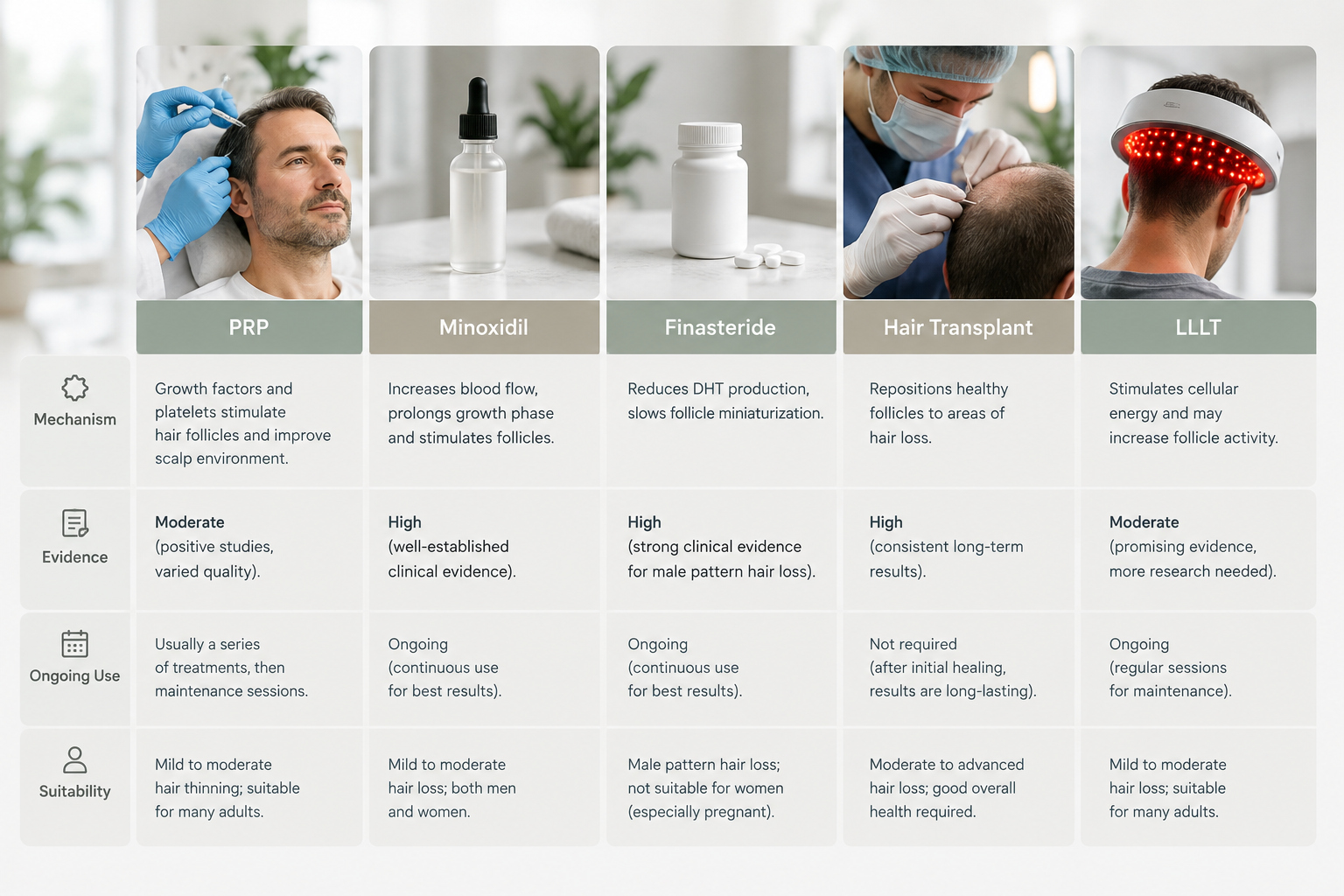
Minoxidil is a topical (and now also oral) treatment with a well-established evidence base for androgenetic alopecia in both men and women. It works by prolonging the anagen phase and increasing blood flow to follicles. Minoxidil requires daily application and ongoing use to maintain results; stopping treatment typically leads to reversal of any benefit. PRP and minoxidil are sometimes used together, and some evidence suggests a complementary effect, though this combination has not been studied as extensively as either treatment alone.
Finasteride is an oral medication licensed for male pattern hair loss that works by reducing DHT levels. It has a strong evidence base for slowing hair loss and promoting regrowth in men, but it is not generally recommended for women of childbearing age due to potential hormonal effects. PRP does not address the hormonal driver of androgenetic alopecia in the way finasteride does, which is one reason some practitioners recommend combining approaches.
Hair transplant surgery — including follicular unit extraction (FUE) and follicular unit transplantation (FUT) — involves physically relocating hair follicles from donor areas to areas of thinning or baldness. Hair transplantation can produce permanent results in suitable candidates but is a surgical procedure with associated costs, recovery time, and risks. PRP is sometimes used alongside hair transplant surgery to potentially support graft survival and recovery, though evidence for this application is still emerging.
Low-level laser therapy (LLLT), delivered via laser caps or in-clinic devices, is another non-invasive option with some supporting evidence for mild to moderate androgenetic alopecia. Like PRP, it requires ongoing use to maintain results and is generally considered more suitable for early-stage hair loss.
Scalp microneedling alone — without PRP — has also been studied as a treatment for hair loss, with some evidence suggesting it may stimulate growth factors and improve hair density. Whether combining microneedling with PRP offers a meaningful advantage over either treatment alone remains an area of ongoing research.
Frequently Asked Questions
How long do PRP hair treatment results last?
The effects of PRP hair treatment are not permanent. Most patients who respond well to an initial course of sessions find that results begin to diminish after six to twelve months without maintenance treatment. Regular maintenance sessions — typically every three to six months — are generally recommended to sustain improvement. The underlying cause of hair loss continues to act on follicles over time, so ongoing treatment is usually necessary to maintain any benefit achieved.
Is PRP hair treatment painful?
Most patients find PRP scalp injections tolerable when a topical anaesthetic cream is applied beforehand. The sensation is typically described as a series of small pricks or mild stinging. Scalp sensitivity varies between individuals, and some areas — such as the hairline and temples — may be more sensitive than others. Practitioners can discuss comfort options, including nerve block injections, for patients who are particularly concerned about discomfort.
Can PRP regrow hair that has already been lost?
PRP is most likely to be beneficial when follicles are still present but miniaturised or weakened, rather than when follicles have been permanently lost. In areas of complete baldness where follicles are no longer active, PRP is unlikely to produce meaningful regrowth. This is why early intervention — before significant follicle loss has occurred — tends to produce better outcomes. A practitioner can assess the degree of follicle activity using trichoscopy or similar scalp analysis tools.
How much does PRP hair treatment cost?
The cost of PRP hair treatment varies depending on the clinic, the practitioner’s experience, the protocol used, and the geographic location. Because multiple sessions are required and maintenance is ongoing, the cumulative cost over time is an important consideration. Prospective patients should ask for a clear breakdown of costs per session and an estimate of the total investment for an initial course plus maintenance before committing to treatment.
Can PRP be combined with other hair loss treatments?
PRP is frequently used alongside other hair loss treatments, including topical minoxidil, oral medications, and scalp microneedling. Some practitioners also use PRP as a supportive treatment following hair transplant surgery. Whether combination approaches offer a meaningful advantage over individual treatments depends on the specific combination and the patient’s circumstances. A practitioner experienced in hair loss management can advise on whether a combined approach may be appropriate.
Are there any blood tests needed before PRP hair treatment?
Many practitioners recommend blood tests before starting PRP hair treatment to rule out underlying causes of hair thinning that would need to be addressed separately. These may include tests for iron levels, ferritin, thyroid function, and hormonal markers. Identifying and treating an underlying deficiency or hormonal imbalance is important, as PRP alone is unlikely to produce lasting improvement if a correctable underlying cause is not addressed.
Is PRP Hair Treatment Worth Considering for Hair Thickness?
PRP hair treatment represents a reasonable option to discuss with a qualified practitioner for patients experiencing early to moderate hair thinning, particularly androgenetic alopecia, who are looking for a non-surgical approach to improving hair thickness and density. The treatment has a growing evidence base, a generally favourable safety profile given its use of the patient’s own blood, and a mechanism that is biologically plausible. For patients who respond well, it may help slow the progression of hair loss and produce a meaningful improvement in hair shaft thickness and overall scalp coverage.
However, PRP is not a cure for hair loss, results are not guaranteed, and the treatment requires a sustained commitment — both in terms of time and cost — to maintain any benefit achieved. It is most likely to be worthwhile for patients who are realistic about what the treatment can and cannot achieve, who are assessed as suitable candidates following a thorough consultation, and who understand that PRP works best as part of a broader hair health strategy rather than as a standalone solution.
If you are considering PRP for hair thickness, a consultation with a practitioner experienced in hair loss assessment is the appropriate starting point. They can evaluate the cause and extent of your hair thinning, discuss whether PRP is likely to be beneficial in your specific situation, and advise on whether combining PRP with other evidence-based treatments may improve your outcomes.