

Sunken eyes — sometimes described as hollow eyes or a deep-set under-eye appearance — are one of the most common aesthetic concerns that patients raise during facial consultations. The area beneath and around the eye is anatomically complex, and the hollow or shadowed look that many people notice can develop for several different reasons, often acting together. Understanding what actually causes sunken eyes is the first step toward choosing an appropriate response, whether that involves lifestyle changes, skincare, or a clinical assessment.
Key Takeaways
- Sunken eyes are most commonly caused by age-related volume loss in the fat compartments and bone structure beneath the eye, but genetics, lifestyle, and medical factors also play a role.
- The under-eye hollow (tear trough) deepens when fat pads diminish, skin thins, and the supporting facial skeleton remodels over time.
- Dehydration, poor sleep, nutritional deficiencies, and certain medications can worsen the appearance of hollowness even in younger patients.
- Some individuals are genetically predisposed to a deep-set or hollow under-eye appearance from early adulthood.
- A clinical assessment is important because the right approach depends on identifying the underlying cause — not all sunken eyes respond to the same treatment.
What Do Sunken Eyes Actually Look Like?
The term sunken eyes refers to a visible hollowing or shadowing in the periorbital area — the region surrounding the eye socket. This typically appears as a dark, recessed groove running from the inner corner of the eye toward the cheek, often called the tear trough or nasojugal groove. In more pronounced cases, the hollowness extends across the entire under-eye area and may make the orbital rim (the bony edge of the eye socket) more visible beneath the skin. The result is a tired, aged, or gaunt facial appearance that many patients find difficult to conceal even with makeup.
It is worth distinguishing sunken eyes from other under-eye concerns. Dark circles can result from pigmentation, visible blood vessels, or shadowing caused by hollowness — and these have different causes and responses. Puffiness or under-eye bags involve fluid accumulation or fat prolapse rather than volume loss. True hollowness specifically refers to a loss of soft tissue volume in the periorbital region, creating a recessed contour. In practice, several of these concerns often coexist, which is why a careful clinical assessment matters before any treatment is considered.
The Primary Cause: Age-Related Volume Loss
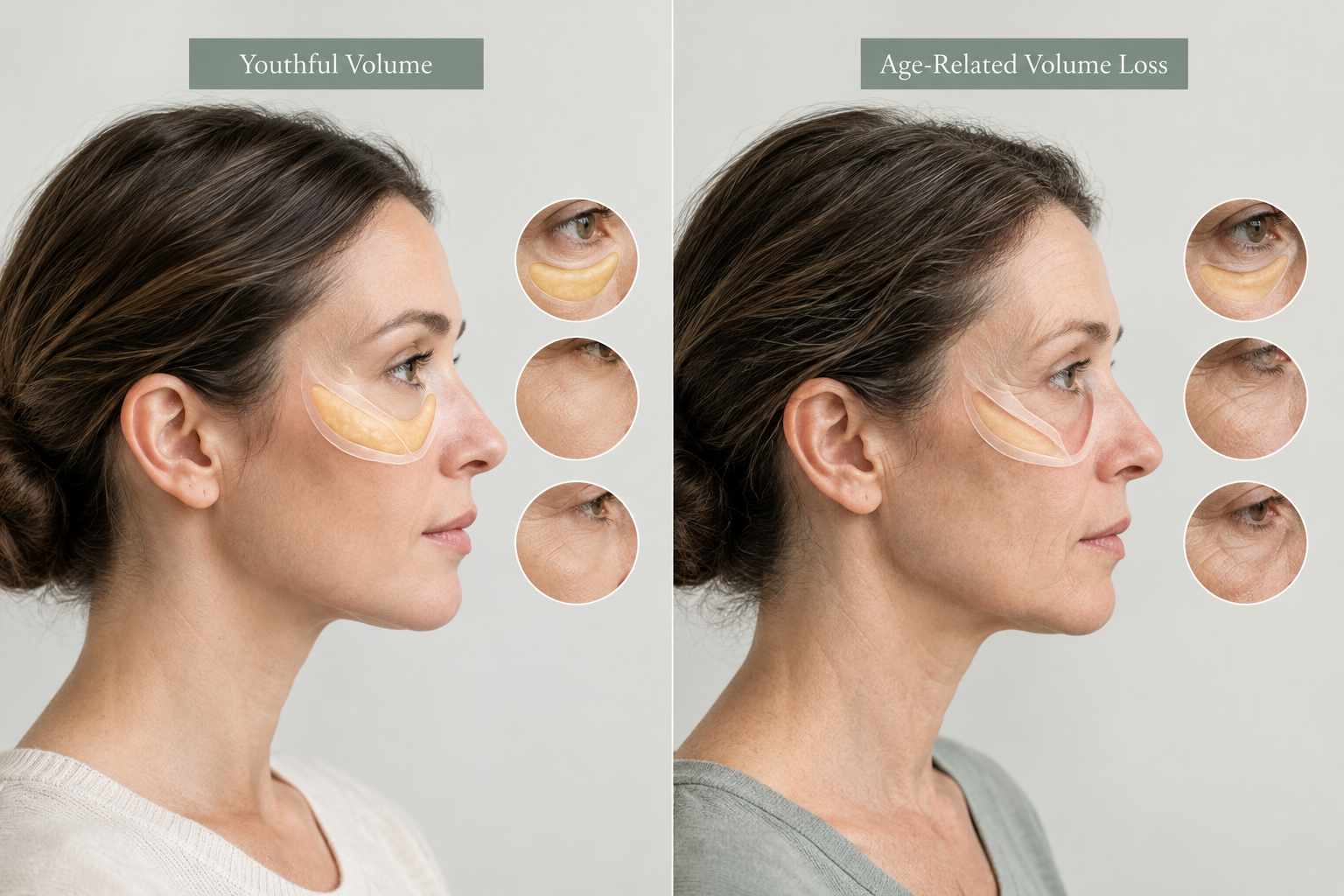
The most significant and well-documented cause of sunken eyes in adults is the gradual loss of soft tissue volume that occurs as part of the natural ageing process. The face is supported by multiple layers: skin, subcutaneous fat, deeper fat compartments, muscle, and the underlying facial skeleton. All of these structures change with age, and the periorbital region is particularly susceptible.
Beneath the lower eyelid and in the upper cheek, there are distinct fat compartments — including the suborbicularis oculi fat (SOOF) and the malar fat pad — that provide volume and support to the mid-face. With age, these fat pads diminish in volume and descend due to ligament laxity, reducing the soft tissue support beneath the eye. As the fat pad volume decreases, the transition between the lower eyelid and the cheek becomes more abrupt, creating the characteristic hollow or groove associated with sunken eyes.
Simultaneously, the skin in the periorbital area becomes thinner and loses elasticity as collagen and elastin production decline. Thinner skin makes the underlying structures — including blood vessels and the orbital rim — more visible, which can intensify the shadowed appearance. The dermis also loses hyaluronic acid content over time, reducing its ability to retain water and maintain a plump, smooth surface.
Facial bone remodelling is a less widely discussed but clinically important contributor. Research using CT imaging has demonstrated that the orbital aperture (the bony opening of the eye socket) expands with age, particularly in the lower and lateral portions. This skeletal change reduces the bony support for the overlying soft tissues, allowing them to descend and creating additional hollowness around the eye. The combination of fat pad loss, skin thinning, and skeletal remodelling means that age-related sunken eyes typically worsen progressively over time.
Genetic and Structural Factors
Not all cases of sunken eyes are age-related. Some individuals have a naturally deep-set orbital anatomy, meaning the eyeball sits further back within the eye socket relative to the surrounding bony rim. This structural characteristic is largely determined by genetics and can create a hollow or shadowed under-eye appearance from early adulthood or even childhood, without any volume loss having occurred.
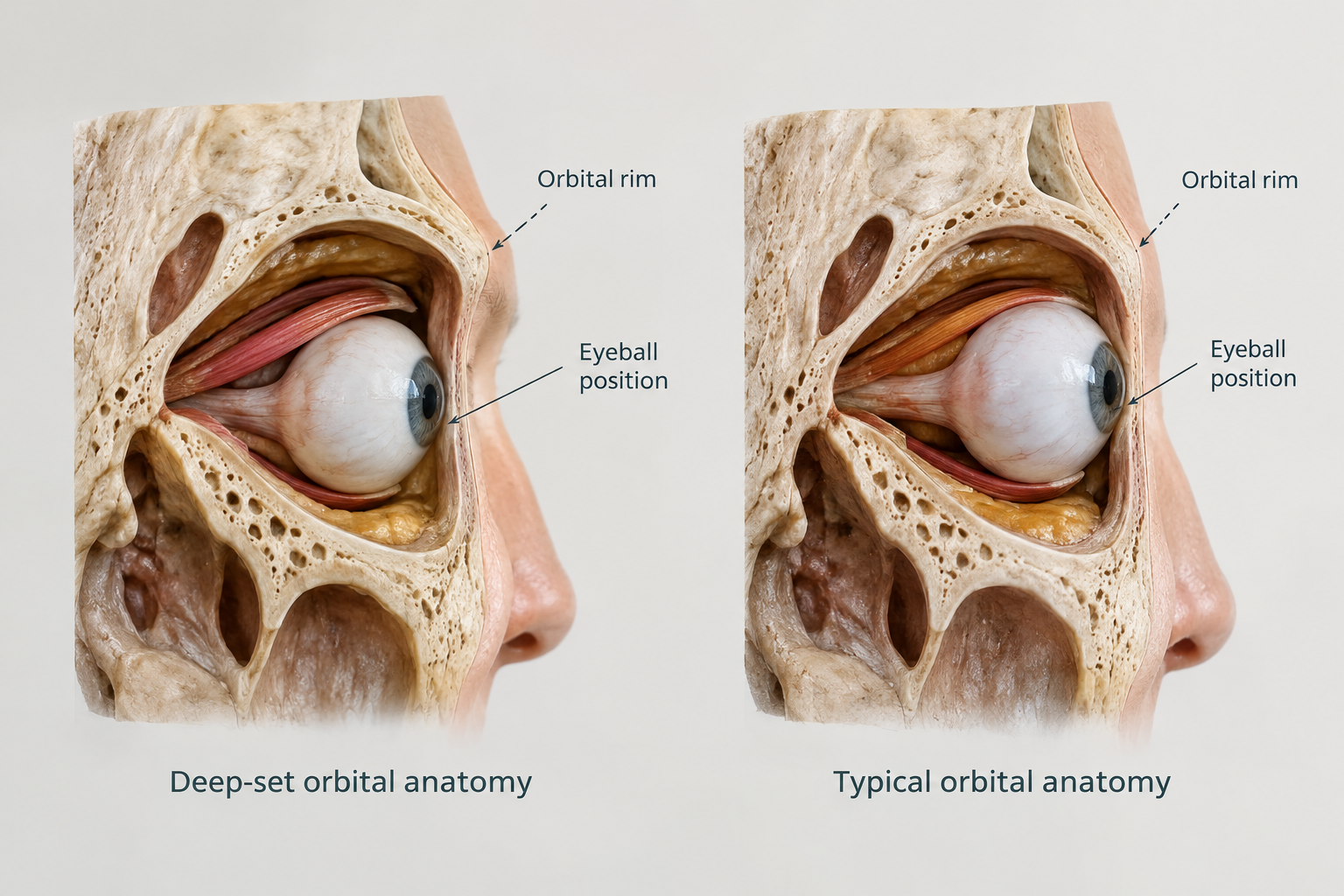
Ethnicity and inherited facial bone structure also influence how prominent the tear trough appears. Individuals with a naturally high orbital rim, prominent cheekbones, or less subcutaneous fat in the periorbital region may notice a more defined hollow beneath the eye regardless of age. Family history is therefore a relevant factor when assessing sunken eyes in younger patients who have not experienced significant ageing changes.
Skin tone and undertone can affect how noticeable the hollow appears. In individuals with lighter skin, the shadow cast by the hollow is often more visible, while in those with deeper skin tones, post-inflammatory pigmentation or vascular visibility may compound the appearance. These factors do not cause hollowness but can influence how pronounced it looks.
Lifestyle Factors That Worsen Sunken Eyes
Several modifiable lifestyle factors can contribute to or worsen the appearance of sunken eyes, even when the underlying anatomy is not significantly changed.
Dehydration
The skin around the eye is among the thinnest on the body, typically measuring less than one millimetre in depth. This makes it particularly sensitive to changes in hydration status. When the body is dehydrated, the skin loses turgor — its ability to spring back when gently pressed — and the periorbital tissue can appear more sunken and shadowed. Chronic mild dehydration, which is common and often unrecognised, may contribute to a persistently hollow under-eye appearance. Adequate daily fluid intake supports skin hydration from within, though it cannot reverse structural volume loss.
Sleep Deprivation
Poor or insufficient sleep is one of the most frequently cited causes of a tired, hollow under-eye appearance. During sleep, the body undergoes tissue repair and fluid redistribution. Sleep deprivation can cause fluid to pool unevenly, increase the visibility of blood vessels beneath the thin periorbital skin, and reduce the skin’s overall tone and brightness. Chronic sleep deprivation may also elevate cortisol levels, which over time can contribute to collagen breakdown and skin thinning. While a single night of poor sleep typically causes temporary changes, persistent sleep disruption can have a cumulative effect on the periorbital appearance.
Sun Exposure
Ultraviolet radiation is a well-established driver of premature skin ageing. Repeated sun exposure accelerates the breakdown of collagen and elastin in the skin, causing it to thin and lose elasticity more rapidly than it would through intrinsic ageing alone. In the periorbital region, this photoageing effect can worsen the appearance of hollowness by reducing the skin’s ability to maintain a smooth, supported contour. Consistent use of broad-spectrum sun protection is one of the most evidence-supported measures for slowing periorbital skin ageing.
Smoking
Smoking impairs circulation, reduces oxygen delivery to skin cells, and accelerates collagen degradation through oxidative stress and the direct toxic effects of cigarette smoke constituents. These mechanisms contribute to premature skin thinning and loss of elasticity throughout the face, including the periorbital area. Smokers tend to show signs of facial volume loss and skin ageing earlier than non-smokers, which can make sunken eyes more pronounced at a younger age.
Alcohol Consumption
Alcohol has a dehydrating effect and can disrupt sleep quality, both of which temporarily worsen the under-eye appearance. Chronic heavy alcohol use may also impair nutritional absorption and contribute to systemic inflammation, which can affect skin health over time.
Nutritional Deficiencies and Weight Loss
The periorbital fat compartments that support the under-eye area are sensitive to significant changes in overall body fat. Rapid or substantial weight loss — whether through dietary restriction, illness, or bariatric surgery — can reduce facial fat volume, including in the periorbital region, leading to a more hollow or gaunt appearance. This is sometimes referred to as facial lipoatrophy and can be a noticeable side effect of aggressive weight loss programmes.
Nutritional deficiencies may also play a role. Iron deficiency anaemia can cause pallor and increased visibility of the dark blood vessels beneath the thin periorbital skin, contributing to a shadowed appearance. Vitamin C deficiency impairs collagen synthesis, which may affect skin integrity over time. Vitamin K has been studied in relation to under-eye dark circles due to its role in blood coagulation and vascular health, though evidence for topical application remains limited. A balanced diet that supports overall skin health is relevant to periorbital appearance, though it cannot reverse established structural volume loss.
Medical Conditions Associated with Sunken Eyes
In some cases, sunken eyes may be a sign of an underlying medical condition rather than a purely cosmetic concern. It is important to be aware of these possibilities, particularly when hollowness develops rapidly, is accompanied by other symptoms, or occurs in a younger person without an obvious lifestyle explanation.
Dehydration and Illness
Severe dehydration — such as that caused by prolonged vomiting, diarrhoea, fever, or inadequate fluid intake — can cause the eyes to appear markedly sunken. This is a recognised clinical sign of significant fluid deficit and is more commonly seen in children, in whom it can indicate a medical emergency. In adults, acute illness causing dehydration can temporarily worsen the under-eye appearance, which typically improves with rehydration.
Thyroid Disorders
Both hypothyroidism (underactive thyroid) and hyperthyroidism (overactive thyroid) can affect the periorbital area, though through different mechanisms. Hypothyroidism can cause generalised facial puffiness that may make the under-eye area appear less hollow, while hyperthyroidism is associated with proptosis (forward protrusion of the eyeball) in some cases. Thyroid eye disease, an autoimmune condition associated with Graves’ disease, can cause significant changes to the periorbital tissues and should be assessed by a specialist.
Allergies and Chronic Sinusitis
Chronic nasal allergies and sinusitis can cause venous congestion in the periorbital region, leading to darkening and puffiness beneath the eyes. The repeated rubbing associated with allergic symptoms can also thin the delicate periorbital skin over time. While these conditions are more commonly associated with dark circles and puffiness than with true hollowness, they can contribute to an overall tired or sunken appearance.
Enophthalmos
Enophthalmos is a medical term for the posterior displacement of the eyeball within the orbit — the eye sitting further back than normal. It can result from trauma to the orbital bones, certain tumours, or conditions affecting the orbital fat. True enophthalmos is a clinical finding that requires medical assessment and is distinct from the cosmetic appearance of sunken eyes caused by soft tissue volume loss.
Medications
Certain medications can affect facial appearance, including the periorbital region. Prolonged use of topical or systemic corticosteroids can cause skin thinning and, paradoxically, may contribute to fat redistribution. Some antiretroviral medications used in HIV treatment are associated with facial lipoatrophy, including periorbital hollowing. If a patient notices a change in under-eye appearance that coincides with starting a new medication, this should be discussed with the prescribing clinician.
The Role of the Tear Trough in Sunken Eye Appearance
The tear trough is the anatomical groove that runs from the inner corner of the eye diagonally toward the cheek. It forms at the junction between the lower eyelid and the cheek, where the orbicularis oculi muscle attaches to the underlying bone via the orbicularis retaining ligament. In youth, adequate fat volume above and below this ligament creates a smooth, continuous contour from the lower eyelid to the cheek. As volume is lost and the ligament becomes more prominent with age, the tear trough deepens and the transition becomes more abrupt, creating the hollow shadow characteristic of sunken eyes.
The depth and visibility of the tear trough varies considerably between individuals and is influenced by genetics, facial anatomy, and the rate of age-related volume loss. Some patients have a prominent tear trough from their twenties, while others do not notice significant hollowing until their forties or fifties. The tear trough is one of the most technically challenging areas to treat because of the thin overlying skin, the proximity of important anatomical structures, and the risk of visible irregularities if treatment is not performed carefully.
How Sunken Eyes Are Assessed Clinically
A thorough clinical assessment of sunken eyes considers multiple factors: the patient’s age, medical history, medications, lifestyle, and the specific anatomical characteristics of their periorbital region. A practitioner will typically evaluate the depth and extent of the tear trough, the quality and thickness of the overlying skin, the presence of any fat prolapse or puffiness, the degree of mid-face volume loss, and whether the concern is primarily hollowness, pigmentation, vascular visibility, or a combination.
This assessment matters because the appropriate response differs depending on the cause. Hollowness caused by structural volume loss may be addressed with dermal filler or other volumising approaches, while pigmentation-related dark circles may respond better to treatments targeting melanin or vascular visibility. Lifestyle-related changes may improve with targeted modifications. A practitioner who does not distinguish between these causes risks recommending a treatment that does not address the actual problem — or that could worsen the appearance if applied inappropriately.
Treatment Approaches: An Overview
When sunken eyes are caused by structural volume loss, several clinical approaches may be considered, depending on the severity, the patient’s anatomy, and their overall facial structure. These are discussed briefly here as context; a detailed treatment guide is beyond the scope of this article, and individual suitability should always be assessed by a qualified practitioner.
Dermal fillers — typically hyaluronic acid-based products — are among the most commonly used treatments for tear trough hollowness. When placed carefully by an experienced injector, they can restore volume to the periorbital region and soften the shadow caused by the hollow. The tear trough is considered a high-risk area for filler treatment due to the thin skin, the proximity of blood vessels, and the potential for visible lumps (the Tyndall effect) if a product is placed too superficially. Results are temporary, typically lasting from several months to over a year depending on the product and individual metabolism.

Polynucleotides (PDRN or PN injections) are an emerging treatment option that works by stimulating collagen production and improving skin quality in the periorbital area rather than directly adding volume. They may be suitable for patients whose primary concern is skin thinning and quality rather than deep hollowness, and are sometimes used alongside filler for a combined approach. Evidence for polynucleotides in the under-eye area is still developing.
Surgical options, such as lower blepharoplasty (eyelid surgery) or fat transfer, may be considered for more significant volume loss or when skin laxity is a major component. These carry greater risks and recovery time than non-surgical approaches and require assessment by a surgeon experienced in periorbital anatomy.
Skincare can support the periorbital area by improving hydration, stimulating collagen, and protecting against further photoageing. Ingredients such as retinoids, vitamin C, peptides, and broad-spectrum SPF are relevant, though skincare alone cannot reverse established structural hollowness.
Frequently Asked Questions
Can sunken eyes be caused by stress?
Chronic stress can indirectly contribute to a hollow under-eye appearance through its effects on sleep quality, cortisol levels, and overall skin health. Elevated cortisol over time may accelerate collagen breakdown and skin thinning. However, stress alone is unlikely to cause significant structural hollowness; it more commonly worsens an existing tendency toward a tired periorbital appearance.
Are sunken eyes always a sign of ageing?
No. While age-related volume loss is the most common cause in adults, sunken eyes can also result from genetics, low body weight, dehydration, illness, certain medications, or a naturally deep-set orbital anatomy. Some people notice a hollow under-eye appearance from their twenties or earlier without any significant ageing having occurred.
Can drinking more water improve sunken eyes?
Adequate hydration supports skin turgor and may reduce the temporary worsening of hollowness caused by dehydration. However, drinking more water cannot restore fat pad volume or reverse structural changes caused by ageing or genetics. It is a supportive measure rather than a treatment for established hollowness.
At what age do sunken eyes typically develop?
This varies considerably between individuals. Many people begin to notice tear trough deepening in their thirties or forties as mid-face volume loss becomes more apparent. Those with a genetic predisposition to a deep-set orbital anatomy or less periorbital fat may notice hollowness earlier. Lifestyle factors such as significant weight loss, smoking, or chronic sun exposure can accelerate the timeline.
Should I see a doctor if my eyes suddenly appear more sunken?
A sudden or rapid change in the appearance of the periorbital area — particularly if accompanied by other symptoms such as weight loss, fatigue, or changes in vision — warrants a medical assessment to rule out an underlying health condition. Gradual changes over years are more typically related to ageing or lifestyle, but any unexplained change should be discussed with a healthcare professional.
Can sunken eyes be prevented?
While the structural changes of ageing cannot be entirely prevented, certain measures may slow their progression. These include consistent broad-spectrum sun protection, not smoking, maintaining stable body weight, adequate sleep and hydration, and a skincare routine that supports collagen and skin barrier function. These measures support overall facial skin health rather than specifically targeting the periorbital area.
Understanding the Cause Is the Starting Point for Sunken Eyes
Sunken eyes develop through a combination of structural, genetic, lifestyle, and sometimes medical factors. Age-related loss of periorbital fat volume, skin thinning, and facial bone remodelling are the most significant contributors in most adults, but genetics, dehydration, sleep quality, nutritional status, and certain health conditions can all play a role. Because the causes vary, the appropriate response also varies — and an approach that works well for one patient may not be suitable for another.
If you are concerned about a hollow or shadowed under-eye appearance, a consultation with a qualified aesthetic practitioner or dermatologist can help identify the primary contributing factors and discuss whether any clinical options may be appropriate for your specific anatomy and goals. Realistic expectations are important: most treatments can soften the appearance of hollowness rather than eliminate it entirely, and results depend on the individual’s anatomy, skin quality, and the skill of the treating practitioner.