

Sweating is a normal and essential bodily function, but when it becomes excessive, unpredictable, or socially disruptive, it can significantly affect quality of life. Whether you experience heavy underarm sweating, damp palms, or sweat that soaks through clothing without obvious cause, understanding why it happens and what can realistically be done about it is the first step toward finding an approach that works for you.
Key Takeaways
- Excessive sweating, known medically as hyperhidrosis, can affect the underarms, hands, feet, face, and other areas, and may occur without heat or exercise as a trigger.
- Lifestyle adjustments and clinical-strength antiperspirants are usually the first line of management, but they do not work for everyone.
- Botulinum toxin injections are a well-established, clinically supported option for reducing excessive underarm sweating, with effects typically lasting several months.
- Other options including iontophoresis, prescription medications, and energy-based devices may be suitable depending on the affected area and severity.
- A medical assessment is important to rule out secondary causes before pursuing any treatment.
What Is Excessive Sweating and Why Does It Happen?
Excessive sweating, or hyperhidrosis, is a condition in which the sweat glands produce more sweat than the body needs for temperature regulation. It is more common than many people realise, affecting an estimated 1–5% of the population, though it is frequently underreported because people feel embarrassed to raise it with a healthcare professional. Hyperhidrosis can be primary or secondary, and distinguishing between the two matters because the underlying cause influences which management approach is appropriate.
Primary hyperhidrosis has no identifiable underlying medical cause. It tends to begin in childhood or adolescence, often affects specific areas such as the underarms (axillary hyperhidrosis), palms (palmar hyperhidrosis), soles of the feet (plantar hyperhidrosis), or face and scalp (craniofacial hyperhidrosis), and typically does not occur during sleep. There is thought to be a genetic component, as it often runs in families. The exact mechanism involves overactivity of the sympathetic nervous system, which stimulates eccrine sweat glands beyond what is physiologically necessary.
Secondary hyperhidrosis is caused by an underlying condition or medication. Common causes include thyroid disorders, diabetes, menopause, infections, certain cancers, and medications such as antidepressants or opioids. Secondary hyperhidrosis tends to affect the body more diffusely and may occur during sleep. If you have recently developed excessive sweating without a clear trigger, or if it is accompanied by other symptoms such as unexplained weight loss, fever, or night sweats, a medical evaluation is essential before pursuing any cosmetic or aesthetic treatment.
Everyday Strategies That May Help Reduce Sweating
Before considering clinical treatments, several practical measures may help manage excessive sweating, particularly for milder cases. These approaches are unlikely to eliminate hyperhidrosis entirely in moderate to severe cases, but they can reduce discomfort and improve day-to-day confidence.
Antiperspirants
Standard deodorants mask odour but do not reduce sweat production. Antiperspirants, by contrast, contain aluminium-based compounds that temporarily block sweat ducts. Over-the-counter products typically contain aluminium chlorohydrate at lower concentrations. For people with excessive sweating, clinical-strength or prescription antiperspirants containing aluminium chloride hexahydrate at higher concentrations may be more effective. These are usually applied to dry skin at night and washed off in the morning. Skin irritation is a common side effect, particularly in the underarm area, and some people find them insufficient for managing significant hyperhidrosis.
Clothing and Fabric Choices
Wearing loose-fitting, breathable fabrics such as natural cotton or moisture-wicking technical materials can reduce the visible impact of sweating. Avoiding synthetic fabrics that trap heat and moisture, and choosing lighter colours or patterned clothing that conceals sweat marks, are practical adjustments that many people find helpful alongside other management strategies.
Dietary and Lifestyle Factors
Certain foods and drinks can temporarily increase sweating. Spicy foods, caffeine, and alcohol are common triggers that stimulate the sympathetic nervous system and raise core body temperature. Reducing intake of these may help some individuals. Maintaining a healthy weight is also relevant, as excess body weight increases the metabolic heat the body needs to dissipate. Stress and anxiety are significant triggers for many people with primary hyperhidrosis, and techniques such as mindfulness, cognitive behavioural approaches, or stress management may reduce the frequency of episodes, though they are unlikely to resolve the condition on their own.
Clinical Treatments for Excessive Sweating
When lifestyle measures and over-the-counter products are insufficient, a range of clinical treatments may be considered. The most appropriate option depends on the area affected, the severity of sweating, individual health factors, and patient preference. A qualified practitioner or dermatologist can help assess which approach may be suitable.
Botulinum Toxin Injections
Botulinum toxin injections are one of the most well-established clinical treatments for excessive underarm sweating. The treatment works by temporarily blocking the nerve signals that stimulate eccrine sweat glands in the treated area. When injected into the skin of the underarms, botulinum toxin reduces sweat production in that specific zone without affecting the body’s overall ability to regulate temperature, since the underarms account for only a small proportion of the body’s total sweat output.
Clinical evidence supporting botulinum toxin for axillary hyperhidrosis is substantial. Multiple randomised controlled trials have demonstrated significant reductions in sweat production, and the treatment is approved for this indication in many countries. Results typically become noticeable within one to two weeks of treatment and may last between four and twelve months, with individual variation. Most people require repeat treatments to maintain the effect. Botulinum toxin has also been used off-label for palmar and plantar hyperhidrosis, though injections in these areas can be more uncomfortable and the evidence base, while positive, is less extensive than for the underarms.
The treatment itself involves a series of small injections across the affected area using a fine needle. Discomfort is generally mild in the underarms, though topical anaesthetic cream can be applied beforehand if preferred. Side effects are usually localised and temporary, including minor bruising, redness, or tenderness at injection sites. Compensatory sweating — where the body increases sweating in untreated areas — is occasionally reported but is generally considered uncommon with localised treatment. A consultation with a qualified practitioner is necessary to assess suitability, discuss realistic expectations, and review any relevant medical history or medications.
Iontophoresis
Iontophoresis is a non-invasive treatment primarily used for palmar and plantar hyperhidrosis, though it can also be used for the underarms with appropriate equipment. The procedure involves immersing the hands or feet in shallow trays of water through which a low-level electrical current is passed. The mechanism is not fully understood, but it is thought to temporarily disrupt sweat gland function in the treated area. Iontophoresis devices are available for home use as well as in clinical settings.
The treatment requires consistency — typically several sessions per week initially, reducing to maintenance sessions once sweating is controlled. It is generally well tolerated, with mild tingling or skin irritation as the most common side effects. Iontophoresis is not suitable for people who are pregnant, have metal implants or pacemakers, or have broken skin in the treatment area. Results vary between individuals, and some people find the time commitment of regular sessions challenging to sustain.
Prescription Medications
Oral anticholinergic medications, such as oxybutynin or glycopyrronium, can reduce sweating by blocking the neurotransmitter acetylcholine, which stimulates sweat glands throughout the body. These medications may be prescribed when sweating affects multiple areas or when other treatments have not provided sufficient relief. However, because they act systemically rather than locally, they carry a range of potential side effects including dry mouth, blurred vision, urinary retention, constipation, and cognitive effects, particularly in older adults. They are not suitable for everyone and require medical supervision.
Topical glycopyrronium has also been developed in wipe or gel formulations for localised use, offering a more targeted approach with a potentially reduced systemic side effect profile compared to oral medications. Availability and prescribing practices vary by country.
Energy-Based and Device Treatments
Several device-based treatments have been developed specifically for axillary hyperhidrosis. Microwave energy devices, such as miraDry, use controlled microwave energy delivered to the underarm skin to permanently destroy eccrine and apocrine sweat glands in the treated area. Because sweat gland destruction is permanent, the reduction in sweating may be long-lasting, though the treatment does not affect sweat glands elsewhere on the body. Side effects can include swelling, numbness, altered sensation, and temporary discomfort in the underarm area. Multiple sessions may be recommended depending on the device protocol and individual response.
Laser treatments targeting sweat glands have also been explored, though the evidence base is less established than for botulinum toxin or microwave devices. These options are typically available at specialist dermatology or aesthetic clinics and require a thorough consultation to assess suitability.
Surgical Options
Surgical approaches are generally considered only when other treatments have not provided adequate relief. Endoscopic thoracic sympathectomy (ETS) is a procedure that involves cutting or clamping the sympathetic nerve chain responsible for triggering sweating in the hands and, to a lesser extent, the underarms. While it can produce significant reductions in palmar sweating, it carries a notable risk of compensatory hyperhidrosis — increased sweating in other areas of the body, sometimes severely — as well as other surgical risks. ETS is typically regarded as a last resort and requires careful specialist assessment and informed consent. Local surgical removal of underarm sweat glands (subcutaneous curettage or excision) is another option that has been used for axillary hyperhidrosis, with variable outcomes reported in the literature.
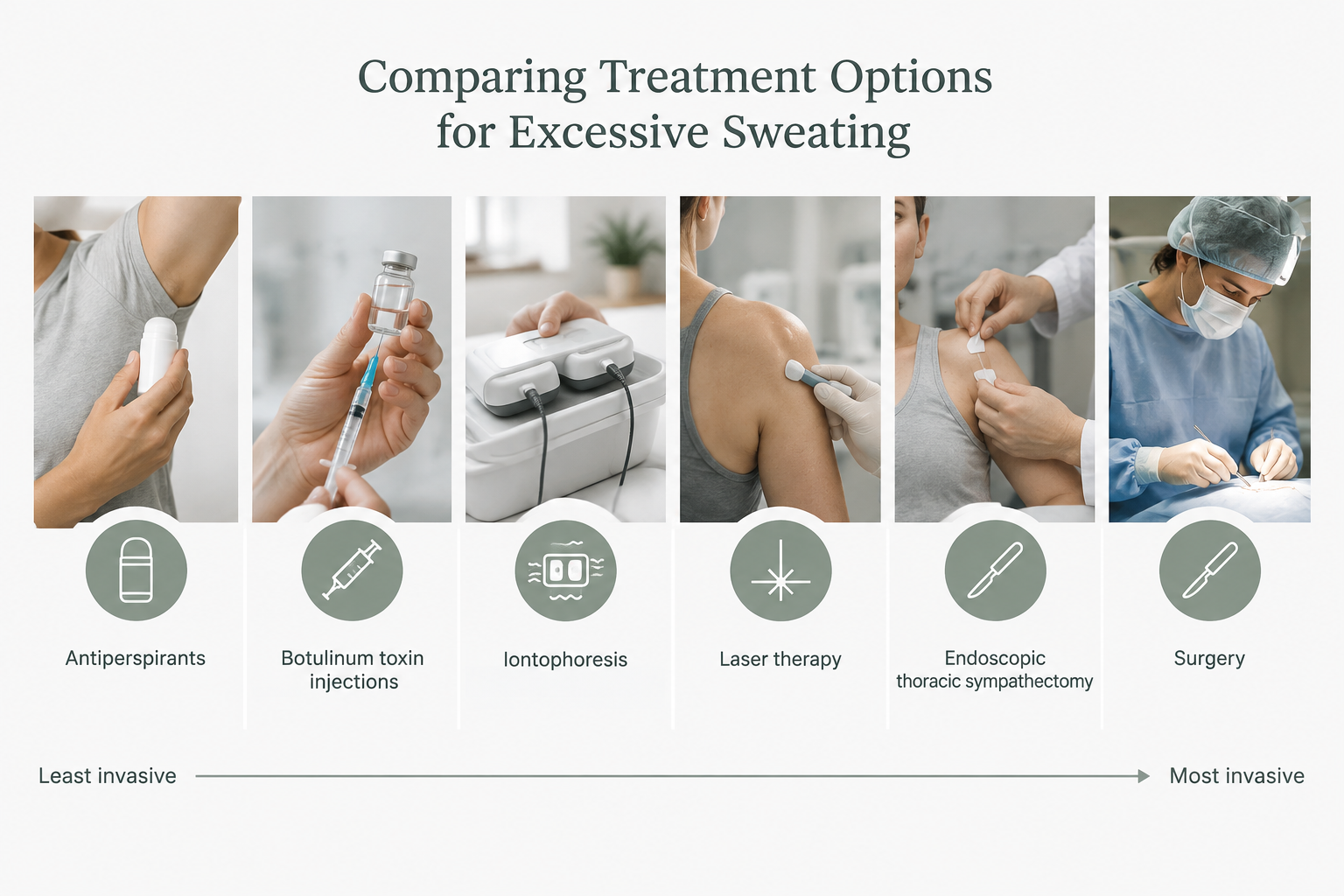
Comparing Treatment Options for Excessive Sweating
| Treatment | Best For | How It Works | Duration of Effect | Downtime | Key Limitations |
|---|---|---|---|---|---|
| Clinical-strength antiperspirant | Mild to moderate underarm sweating | Blocks sweat ducts with aluminium compounds | Daily use required | None | Skin irritation; may be insufficient for severe cases |
| Botulinum toxin injections | Underarms; also palms and soles | Blocks nerve signals to sweat glands | 4–12 months typically | Minimal | Repeat treatments needed; cost; discomfort in palms/soles |
| Iontophoresis | Palms and soles primarily | Low electrical current disrupts sweat gland function | Ongoing maintenance sessions | None | Time-intensive; not suitable for all patients |
| Oral anticholinergics | Generalised or multi-area sweating | Blocks acetylcholine systemically | While taking medication | None | Systemic side effects; requires medical supervision |
| Microwave energy device (e.g. miraDry) | Underarms | Destroys sweat glands with microwave energy | Potentially long-lasting | Swelling and discomfort for days to weeks | Cost; side effects; not reversible |
| Surgical (ETS or gland removal) | Severe palmar or axillary hyperhidrosis | Nerve interruption or gland removal | Potentially permanent | Significant | Risk of compensatory sweating; surgical risks; last resort |
Who May Be Suitable for Professional Treatment
Professional treatment for excessive sweating may be worth discussing with a qualified practitioner if sweating is affecting your daily activities, work, social life, or emotional wellbeing, and if over-the-counter measures have not provided adequate relief. Hyperhidrosis is a recognised medical condition, not simply a cosmetic concern, and it is appropriate to seek professional assessment rather than managing it in isolation.
Botulinum toxin treatment for underarm sweating is generally suitable for adults who have confirmed primary axillary hyperhidrosis and no contraindications to the treatment. It is not appropriate during pregnancy or breastfeeding, and a full medical history review is necessary before proceeding. People taking certain medications, including blood thinners, may need to discuss timing with their practitioner. Those with neuromuscular conditions such as myasthenia gravis are generally not suitable candidates for botulinum toxin treatment.
Iontophoresis is typically suitable for people with palmar or plantar hyperhidrosis who are not pregnant and do not have metal implants, pacemakers, or broken skin in the treatment area. Oral medications require a medical consultation to assess suitability given the systemic side effect profile. Energy-based device treatments and surgical options require specialist assessment and are generally considered after other approaches have been tried.
What to Expect During and After Botulinum Toxin Treatment for Sweating
For those considering botulinum toxin as a treatment for excessive underarm sweating, understanding what the appointment involves and what to expect afterwards can help set realistic expectations. The consultation typically involves a discussion of your sweating history, affected areas, previous treatments tried, and relevant medical history. Some practitioners use a starch-iodine test — a simple topical test that visually maps the areas of most active sweating — to guide injection placement.
The treatment itself usually takes around 20 to 30 minutes. A series of small injections are administered across the underarm area using a fine needle. Most people describe the discomfort as mild, similar to a light pinching sensation. Topical anaesthetic cream can be applied beforehand to minimise discomfort if preferred. There is no significant downtime, and most people return to normal activities the same day. Strenuous exercise and heat exposure are usually advised against for 24 hours following treatment.
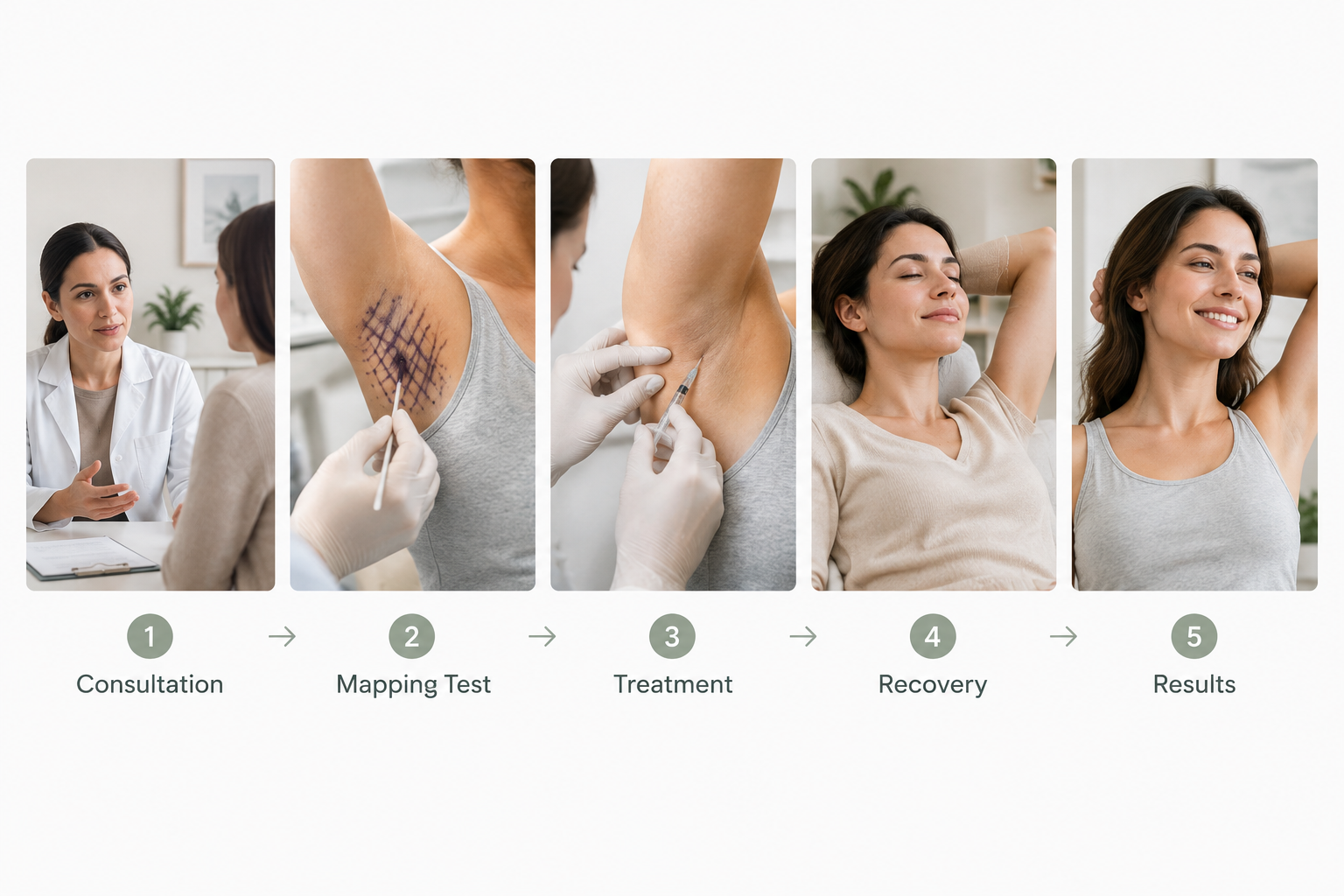
Sweating reduction typically becomes noticeable within one to two weeks, with the full effect apparent by around two weeks post-treatment. The duration of effect varies between individuals, with most people experiencing results lasting between four and twelve months. When sweating begins to return, a repeat treatment can be considered. Over time, some people find that the interval between treatments extends, though this is not guaranteed and individual response varies.
Risks and Limitations to Be Aware Of
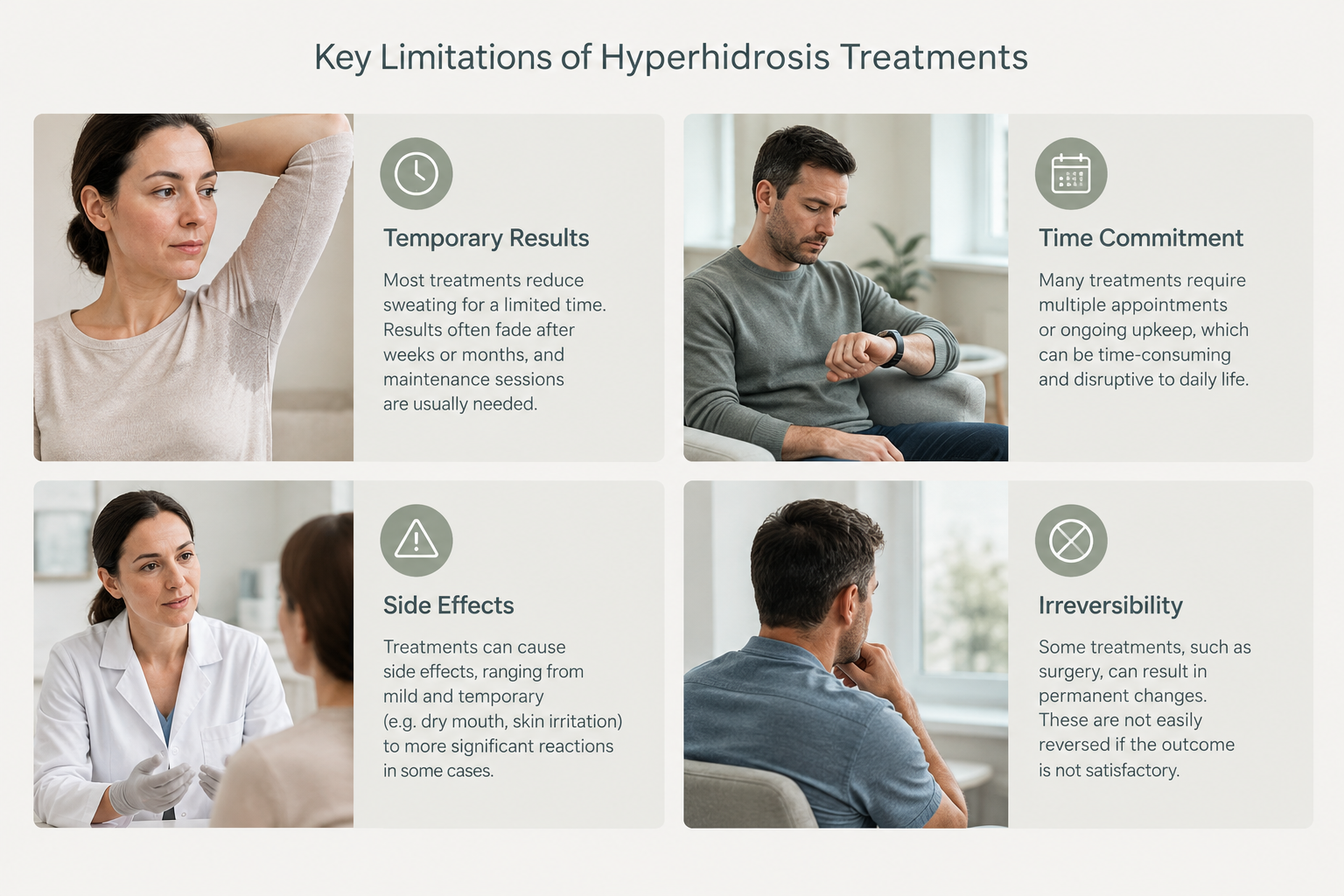
No treatment for excessive sweating is without limitations, and it is important to have a realistic understanding of what each approach can and cannot achieve. Botulinum toxin injections for hyperhidrosis are generally well tolerated, but potential side effects include temporary bruising, redness, or tenderness at injection sites. Muscle weakness in adjacent areas is a theoretical risk if the product diffuses beyond the intended zone, though this is uncommon with experienced practitioners using appropriate technique in the underarm area. The effect is temporary, meaning ongoing treatments are required to maintain results, which has both cost and time implications.
Iontophoresis requires a significant time commitment and consistent use to maintain results. Oral anticholinergic medications carry systemic side effects that may be poorly tolerated by some individuals. Microwave energy treatments can cause prolonged swelling, altered sensation, or numbness in the underarm area, and because sweat gland destruction is not reversible, the decision to pursue this option warrants careful consideration. Surgical options carry the most significant risk profile, including the possibility of compensatory hyperhidrosis that may be more distressing than the original condition.
It is also worth noting that no treatment completely eliminates sweating, nor should it aim to — sweating is a physiologically important function. The goal of treatment is to reduce excessive sweating to a level that is manageable and no longer significantly impacts daily life.
Frequently Asked Questions
Can excessive sweating be cured permanently?
Primary hyperhidrosis does not currently have a universally permanent cure. Some treatments, such as microwave energy devices or surgery, may produce long-lasting reductions in sweating in specific areas, but they carry their own risks and limitations. Most non-surgical treatments require ongoing maintenance. A qualified practitioner can help you understand which options may offer the most durable results for your specific situation.
Is sweating too much always a medical problem?
Not necessarily. Some people naturally produce more sweat than others without it causing significant disruption. Hyperhidrosis is generally considered clinically significant when sweating interferes with daily activities, work, or social interactions, or when it causes emotional distress. If you are concerned about your level of sweating, a GP or dermatologist can help assess whether it warrants investigation or treatment.
How do I know if my sweating is primary or secondary hyperhidrosis?
Primary hyperhidrosis typically begins in childhood or adolescence, affects specific areas such as the underarms, palms, or soles, and does not occur during sleep. Secondary hyperhidrosis tends to be more generalised, may occur at night, and is associated with an underlying condition or medication. A medical assessment is the appropriate way to distinguish between the two, particularly if sweating has developed recently or is accompanied by other symptoms.
How long do botulinum toxin injections last for sweating?
Results from botulinum toxin treatment for underarm sweating typically last between four and twelve months, though individual variation is significant. Factors including the dose used, the individual’s response, and the area treated can all influence duration. Most people require repeat treatments to maintain the effect.
Are there any foods or drinks that make sweating worse?
Yes. Spicy foods, caffeine, and alcohol are common dietary triggers that can temporarily increase sweating by stimulating the sympathetic nervous system or raising body temperature. Reducing intake of these may help some individuals manage their symptoms, though dietary changes alone are unlikely to resolve moderate to severe hyperhidrosis.
Can stress and anxiety cause excessive sweating?
Stress and anxiety are recognised triggers for sweating, particularly in people with primary hyperhidrosis. Emotional stimuli activate the sympathetic nervous system, which in turn stimulates eccrine sweat glands. Managing stress through evidence-based approaches may help reduce the frequency or severity of episodes, but it is generally not sufficient as a standalone treatment for significant hyperhidrosis.
Is botulinum toxin treatment for sweating available on the NHS?
In the United Kingdom, botulinum toxin for axillary hyperhidrosis may be available through the NHS in some areas, typically after other treatments such as clinical-strength antiperspirants have been tried without adequate effect. Availability varies by region and is subject to local commissioning decisions. Many people access this treatment privately through dermatology or aesthetic clinics. It is worth discussing options with your GP in the first instance.
Deciding on the Right Approach to Excessive Sweating
Managing excessive sweating effectively usually involves a stepwise approach — starting with the least invasive options and progressing to clinical treatments if needed. For many people, clinical-strength antiperspirants provide a useful starting point, but those with moderate to severe hyperhidrosis often find that more targeted treatments are necessary to achieve meaningful relief. Botulinum toxin injections remain one of the most evidence-supported non-surgical options for underarm sweating, offering a well-tolerated treatment with a predictable duration of effect and a strong safety record when administered by a qualified practitioner.
The right approach depends on where you are sweating, how severely it affects your life, your medical history, and your preferences regarding treatment frequency, downtime, and cost. A consultation with a qualified dermatologist or aesthetic practitioner experienced in treating hyperhidrosis is the most reliable way to identify which options may be appropriate for your individual circumstances. Excessive sweating is a recognised and treatable condition — seeking professional advice is a reasonable and worthwhile step if it is affecting your quality of life.